
加载中...
共找到 40,174 条相关资讯

New York AG Letitia James and other state prosecutors sued to block Trump's new tariffs and demand refunds after the Supreme Court struck down his previous IEEPA tariffs. The lawsuit says Trump is misusing Section 122 of the Trade Act of 1974 and violating the Constitution and statutory rules requiring consistent tariff application.

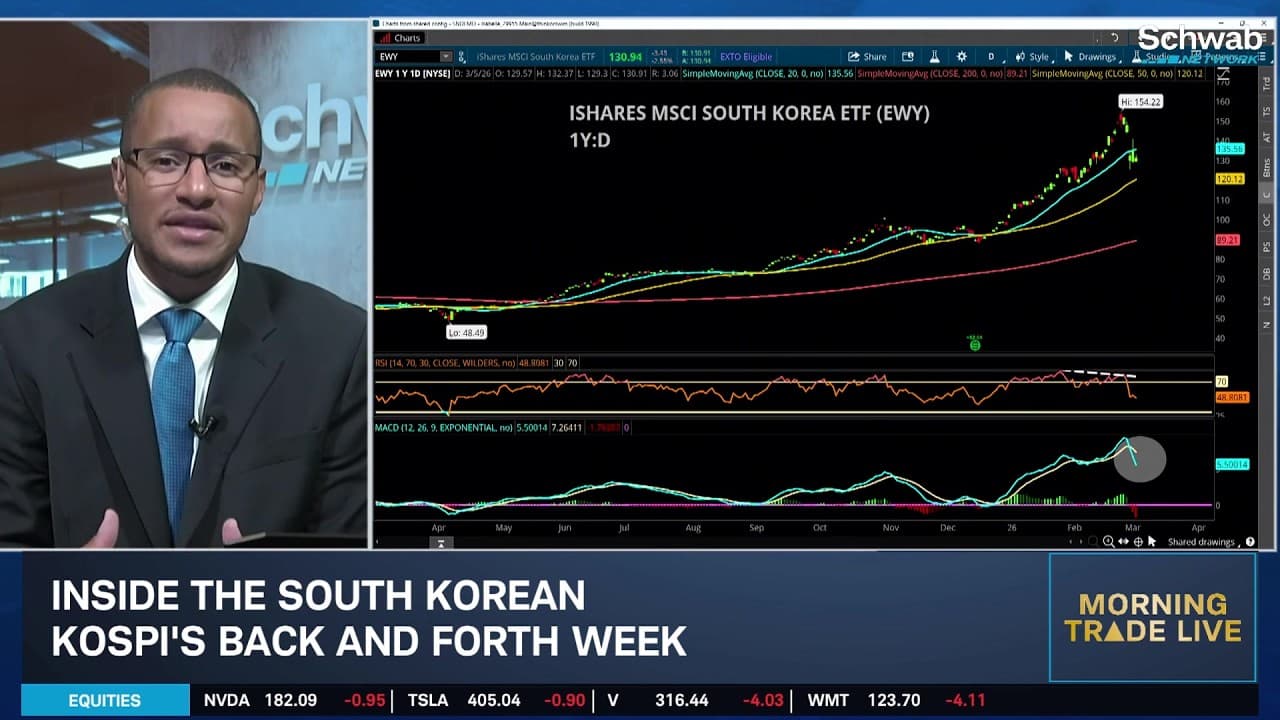
A "mixed at best" economic data slate Thursday has Kevin Green questioning the Fed's interest rate outlook as the balance between inflation and jobs shift. He talks about the latest challenger jobs cuts and jobless claims prints, and previews Friday's February jobs report.

Apollo Global Management CEO Marc Rowan commented on the conflict in Iran and what geopolitics does to the market. He said, "We always have an overreaction to the confrontation of problems, but this is a problem that needed to be dealt with.

Federal Reserve Bank of Minneapolis President Neel Kashkari, who had penciled in one interest-rate cut this year, said the attacks on Iran make him less certain about that. “Now, with the geopolitical events, we need to get a lot more data in,” Kashkari said Tuesday at the Bloomberg Invest conference in New York.

Goldman Sachs Chair and CEO David Solomon says he is surprised by the benign reaction to the Iran attacks but doesn't see complacency in the markets during an interview with Haidi Stroud-Watts on "Bloomberg: The Asia Trade."
The Trump administration's efforts to support some transit in the strait won't be enough to stabilize the energy market over the longer run, Ben Cahill writes in a guest commentary.

AI concerns are forcing a rapid reset of software stocks. But disruption rarely unfolds as fast as markets expect.

An increase of about 50,000 in February would be seen as another sign the labor market is thawing.

The structural stability of the S&P 500 is more threatened by East Asian financial dynamics than by Middle Eastern conflicts. Recent sharp declines in Japan's and Korea's equity markets have more potential to affect S&P 500 valuations.

Driven by rising oil and gas prices, energy shares are the leading sector performer by far, based on a set of ETFs through yesterday's close (Mar. 4). The State Street Energy Select Sector SPDR ETF (XLE), a Big Oil proxy, has surged more than 25% year-to-date.

The Supreme Court ruled that the International Emergency Economic Powers Act does not authorize the president to impose tariffs, invalidating those imposed under that authority by the Trump administration. This decision, made on Feb. 20, was the first of many dominoes to fall to shed light on the economic consequences associated with these tariff refunds.

With the conflict in the Middle East entering its sixth day on Thursday, Citi suggested that volatility for stock markets is set to continue as it assessed "how much preexisting market froth" had been unwound amid selling at the start of the week. "Three observations stand out," said Beata Manthey, the bank's European equity strategy head.
Iran's drone and missile strikes exposed weaknesses in regional air defenses. Drone stocks reacted strongly in the market, but the share price moves did not necessarily align with the companies that have the most capable counter-drone technologies.
Federal Reserve Bank of Richmond President Tom Barkin says it's too soon to tell how policymakers will respond to the Iran war, but he says they are tracking the price of gasoline closely. He also says policy is modestly restrictive right now and we've seen "a couple months of relatively high inflation.
European equities have weakened sharply, with the Euro STOXX 50 falling 6% over two days before a modest rebound, while the DAX remains down 4.3% since February 27 amid heightened geopolitical tensions. Ongoing conflict involving Iran and military actions authorised in the United States Senate risk prolonging Middle East energy disruptions, potentially raising energy costs for the European Union and weighing on regional equities.

This is a developing story.

The U.S. economy is gaining strength in early 2026, with robust service sector growth and easing input costs. Market upside is supported by improving corporate profits and expectations for lower interest rates in the second half of the year.

U.S. jobless claims held steady last week as employers preferred to retain staff rather than implement layoffs.
As of March 5, 2026, two stocks in the industrials sector could be flashing a real warning to investors who value momentum as a key criteria in their trading decisions.

The number of people who lost jobs and applied for unemployment benefits at the end of February clung to recent lows and added to a flurry of signals suggesting the labor market has stabilized.