
加载中...
共找到 39,802 条相关资讯

DoubleLine Capital CEO Jeffrey Gundlach told CNBC on Monday that the market is in a "reevaluation" phase. "It's hard to make money this year," Gundlach said.


The Reserve Bank of New Zealand has indicated it could raise interest rates if the surge in oil prices related to the Iran war drags on, threatening a sustained rise in inflation.
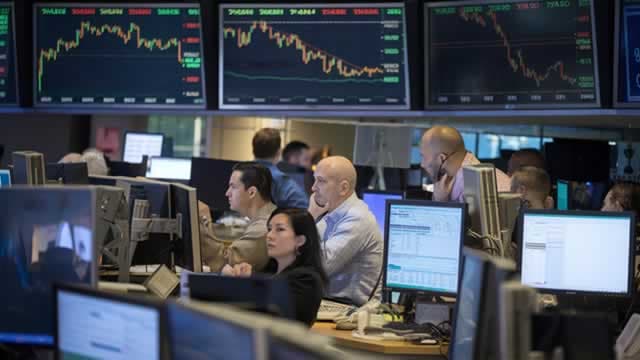
Investors welcomed efforts to end a war that has driven up energy prices. Oil fell 11%, and major stock indexes rose over 1%.

US equities staged a sharp rebound on Monday, with all three major indexes closing more than 1% higher as oil prices plunged following comments from Donald Trump about delaying military action against Iran. The rally marked a turnaround from last week's declines, as investors reacted to signs of potential de-escalation in the Middle East conflict, even as uncertainty lingered over the credibility of reported talks between Washington and Tehran.
'The Big Money Show' discusses President Donald Trump's pause in Iran strikes and breaks down the market rally that ensued. #foxbusiness #bigmoneyshow 0:00 Wall Street's Rally & Iran Deal Hopes 1:08 Market Swings & Buying Opportunities 2:54 Bond Yields & Inflationary Nerves 3:53 Gold's Volatility & Market Speculation 4:45 Trump's Iran Strategy & Deal Quality 10:18 Strait of Hormuz, Oil & Energy Margins 11:17 Earnings Growth & Consumer Discretionary Bets

Trump on Monday said the U.S. held “very good” and “productive” talks with Iran for a “complete and total resolution” to the war, despite Iran's foreign ministry later denying having held talks with the U.S., while also accusing Trump of market manipulation. Trump said he ordered the Pentagon to postpone strikes against Iranian power plants and energy infrastructure for five days.
Since the beginning of the year, I've referenced our Calendar Range framework, which has been cautious to bearish for some time now. “PRIME” is a reference to another framework.

Stocks rallied Monday after President Donald Trump said the U.S. and Iran have held talks and that he was halting strikes on Iranian power plants and energy infrastructure, giving investors hope that the Middle East conflict that spiked oil prices and raised fears of a global recession was nearing an end.

Comprehensive cross-platform coverage of the U.S. market close on Bloomberg Television, Bloomberg Radio, and YouTube with Romaine Bostick, Katie Greifeld, Carol Massar and Tim Stenovec. -------- More on Bloomberg Television and Markets Like this video?

Australia and the European Union on Tuesday signed a trade deal marking the culmination of years of negotiations, as Europe seeks to diversify its export markets and expand ties beyond its traditional partners.
Operator: Hello, everyone, and welcome to Lithium Argentina Fourth Quarter and Full Year 2025 Earnings Conference Call. Please note that this call is being recorded. [Operator Instructions] I'd now like to hand the call over to Kelly O'Brien, Investor Relations. Please go ahead. Kelly O'Brien: Thank you for the introduction. I want to welcome everyone to our conference call this morning. Joining me on the call today to discuss the fourth quarter and full year 2025 results is Sam Pigott, CEO of Lithium Argentina. Alex Shulga, our CFO, will also be available for Q&A. Before we begin, I would like to cover a few items. Our fourth quarter 2025 earnings results were press released earlier this morning, and the corresponding documents are available on our website. I remind you that some of the statements made during this call, including any production guidance, expected company performance, update on development plans, the timing of our project and market conditions may be considered forward-looking statements. Please note the cautionary language about forward-looking statements in our presentation, MD&A and news releases. I now turn the call over to Sam Pigott. Sam Pigott: Thanks, Kelly. Good morning, everyone, and thank you for joining us. 2025 marked an important year for Lithium Argentina. Cauchari-Olaroz demonstrated its ability as a stable cash generating operation while we significantly advanced our next phase of growth. Starting with operations. Cauchari is performing exceptionally well. For the year, production was over 34,000 tonnes, reaching the high end of our guidance range and ending the year near capacity with fourth quarter production at 97%. We are now seeing this strong operational performance translated into lower costs with fourth quarter operating cash cost is around $5,600 per tonne. Following year-end, the operation distributed $85 million of cash, $42 million for Lithium Argentina share, and we completed a $130 million 6-year loan facility strengthening our balance sheet and highlighting the financial capacity of our assets. In parallel, we were able to make meaningful progress across our growth pipeline. This included the consolidation of PPG supporting a more efficient development plan as outlined in the Scoping Study released late last year as well as the submission of RIGI applications for both PPG and Stage 2. Since completion of the chemical plant in late 2023, production has steadily increased. 2024 represented our first full year production, while in 2025, the focus has shifted to consistency, recoveries and sustaining higher production levels for longer periods of time. During the year, the team made continued improvements across several areas, including brine management, well field optimization, process stability in the plant and reduced reagent usage which together supported more reliable and consistent operating performance. That progress resulted in the operations achieving close to nameplate capacity in the fourth quarter with production of approximately 9,700 tonnes. This operational performance translated into strong financial results, which, despite the low lithium price environment in 2025, Cauchari-Olaroz generated $56 million in adjusted EBITDA. I want to spend a moment on cost because I'd argue this is just as important as the production story, if not more so. Since Q1 2024, cash costs have declined 30% and from over $8,000 per tonne to around $5,600 in Q4. That improvement is broad-based, reagents, maintenance, camp services overhead. Every major cost line moved in the right direction. This is not just fixed cost at higher volumes. Much of this reduction is in variable costs driven by our efforts to optimize the operation following the ramp-up. The best way to show this structural change is from looking at the impact to our revised long-term estimates. Based on the current cost structure at full capacity, we now forecast costs of approximately $5,400 per tonne down from $6,500 a year ago. That's a 17% reduction to our own prior estimates. And it's important to note that we're not done. We and our partner, Ganfeng, remain fully focused on driving further efficiencies with both Stage 1 and as we grow. On the next slide is an updated cost curve, which includes actual operating performance at Cauchari-Olaroz, not a feasibility study, it's not a projection. These are actual costs from an operation that has now been running and improving quarter-over-quarter. This operation is one of the few sources of lithium chemical production to come online outside of China in the past 10 years. And we are -- we now have the opportunity to scale from 40,000 to over 200,000 tonnes of lithium chemicals to serve global markets directly from the Americas. Turning briefly to the market. Since mid-2025, there has been a significant recovery in lithium prices. supported by strengthening demand across both electric vehicles and increasingly energy storage systems. On ESS specifically, the wide range of forecast you'll see from global banks and consultants reflects how new and large this demand is becoming. This gap is particularly visible even in 2025, where estimates, especially those outside of Asia are still adjusting to how material ESS has become as a driver of overall lithium demand. For Lithium Argentina, this rising ESS demand aligns well with our existing operations and growth platform that we've developed in terms of scale, cost and ability to integrate with a more global customer base. Looking ahead to 2026, we expect production in the range of 35,000 to 40,000 tonnes of lithium carbonate, reflecting our focus on sustaining stable operations at current levels and long-term optimization. Based on our production targets for 2026, Cauchari-Olaroz's expected to support significant EBITDA through a range of lithium price scenarios. Using today's market price of about $20,000 per tonne, the midpoint of production guidance would imply around $460 million... Operator: Ladies and gentlemen, please be on standby. We will just address a quick technical issue. [Technical Difficulty] Sam Pigott: Apologies for that. My line dropped. Obviously, we're not recording this. And so I'll carry off, where I left off. Based on our production targets for 2026, Cauchari-Olaroz is expected to support significant EBITDA under a range of lithium price scenarios. Using today's market price of about $20,000 per tonne and the midpoint of production guidance would imply around $460 million in EBITDA for 2026. This incorporates actual results year-to-date and adjustments to market price. From a cash flow perspective, this should translate into strong cash conversion, supported by accelerated depreciation and low sustaining capital requirements of approximately $15 million to $20 million per year. Following year-end, the operation distributed $85 million of cash, increasing Lithium Argentina's cash position in Q1 to now around $95 million. In March, at the corporate level, we also completed a $130 million debt facility with Ganfeng, increasing our balance sheet flexibility. With Cauchari-Olaroz's now operating at close to capacity and costs well below $6,000 per tonne, we are turning our attention to what comes next. And the opportunity in front of us is significant. We have the potential to grow from approximately 40,000 tonnes per annum today to over 200,000 across a series of phases using Cauchari-Olaroz Stage 1 as the foundation. In 2025, we laid the groundwork. The resource base is defined the permits and RIGI applications are advancing and the economics at the PPG Scoping Study showed are compelling in nearly all pricing scenarios. We recently published an updated resource and reserve estimate for Cauchari-Olaroz, reinforcing the scale of the basin with total measured and indicated resources increasing by approximately 42%, positioning Cauchari-Olaroz among the largest lithium brine assets globally. Beyond this, our platform includes PPG, another large-scale brine resource with over 15 million tonnes of measured and indicated LCE resources. Together with Cauchari-Olaroz and PPG, we are advancing 2 of the largest lithium brine resources globally, providing the right scale and brine chemistry to support our growth plans. We continue to see a more supportive investment environment emerging in Argentina with the RIGI helping to attract long-term capital and improve project economics as reflected in the more than $70 billion of investment applications submitted or approved under the program. RIGI applications for both Cauchari Stage 2 and PPG have been submitted. As we look ahead, we are scaling our lithium platform in Argentina. At Cauchari-Olaroz, we are advancing the Stage 2 expansion plan of 45,000 tonnes, leveraging our operating track record, existing infrastructure, resource scale and using the significant cash flow from Stage 1 to provide a strong foundation to support the execution of this expansion. In parallel at PPG, we are progressing what is targeted to be Argentina's largest lithium operation with a phased development plan to grow to 150,000 tonnes LCE. Here, we are working closely with Ganfeng to bring in the necessary financing and are seeing strong engagement from customers and potential minority partners. The next phase of execution is defined by a series of clear milestones to derisk this growth, including RIGI approvals, finalizing the Stage 2 development plan and financing PPG. In conclusion, we're incredibly proud of what we have accomplished and excited for the years to come. In 2025, we delivered what we set out to do, established a strong operating foundation with industry-leading costs, strengthened our balance sheet and have taken meaningful steps to derisk our growth pipeline. Looking ahead, we are in a very strong position to build off what we have already accomplished at Cauchari-Olaroz Stage 1 and scale from 40,000 to 200,000 tonnes. We have world-class teams a proven track record two of the largest and highest quality lithium brine resources globally, a much improved investment environment in Argentina and a market that is undergoing strong demand tailwinds from continued EV growth and accelerating demand from energy storage build-outs. We are focused on derisking and advancing a path to more than 4x our lithium production and creating the largest lithium platform in Argentina. And with that, we're ready to open up the line for questions. Kelly O'Brien: And with that, we're ready to open up the line for questions. Operator: [Operator Instructions] Your first question comes from the line of Anthony Taglieri of Canaccord Genuity. Anthony Taglieri: So first of all, congrats on the excellent cost performance in Q4. My first question is related to cash cost expectations for 2026, noting your new long-term goal of $5,400 a tonne. So how should we expect this to evolve in 2026? Is $5,600 a tonne the new base case for Q1 moving forward between that 35,000 to 40,000 tonnes of production on an annual basis? Sam Pigott: Yes. Thanks for the question. So yes, in Q4, we delivered $5,600 per tonne in cash costs. These were really driven not just by volume increases, reaching 97% capacity but also structural changes we made to the cost profile. So that would include things like reagents, camp services, maintenance and optimization of our workforce at camp. With all those changes and what we realized in Q4, we did update our long-term cost estimate at full capacity to $5,400, which is a 17% decrease from what we put out last year at $6,500 per tonne. So we would expect some variability quarter-over-quarter tied to volumes produced and timing of cost, but certainly sub-$6,000 in that $5,600 is a pretty good indication of where things are likely to settle throughout the year. Anthony Taglieri: Okay. Great. That's helpful. And maybe as a follow-up on Q1 realized price expectations. Could you bridge us from sort of the average Chinese benchmark price of approximately $21,000 a tonne to date in Q1 versus the expected price of realized price of $17,000 a tonne? So simple math after considering that, maybe that implies around $1,900 a tonne of processing costs there. So is that something we should expect moving forward for the rest of the year? Sam Pigott: Yes. I mean as a general statement, our pricing today is based on the market price for battery-quality lithium carbonate outside of China. So that does strip out VAT from the export reference prices you've typically seen quoted by SMM, fast markets, et cetera. Beyond that, the adjustments for quality are around mid-single digits from that reference price. And that's something that we continue to monitor with our partner Ganfeng. But at the moment, that's what we're realizing. Operator: Your next question comes from the line of Joel Jackson of BMO Capital Markets. Joel Jackson: You talked about the different opportunities working at any price level. I think your partner, Ganfeng, would sort of say similar things. Can you talk about some of the volatility we've seen in the global markets in the last few weeks, if that's changed? And the risk factors when you think about Cauchari-Olaroz Phase 2 of PPG? And then also would your objectives be the same as Ganfeng? Obviously, not your different companies. But could you talk about maybe how some of your objectives for growth in the next couple of years could be similar or different versus your partner? Sam Pigott: Sure. Thanks, Joel. I mean, as a broad statement, like we are obviously monitoring the impact of the situation in the Middle East, we're not seeing any material impact to our operations. In a lot of ways, we're pretty well set up and insulated from increased cost to oil and gas prices. Our largest energy input by far is kind of the solar radiation onto our ponds. We've done a series of analysis over the past couple of weeks, just given the developments in the Middle East and the energy complex. And our direct energy exposure is very limited to approximately or less than 2% of our total operating costs are tied to diesel and natural gas and then looking further afield into our indirect costs associated with logistics and other cost lines. It all remains below 15% of our OpEx, which is exposed to that. So we're very well insulated. We're not a traditional kind of mining operation with heavy reliance on diesel for mining or crushing or ore haulage. So from that perspective, we're doing very well. All of our deliveries and shipments are meeting their targets on schedule, demand is still being pulled very strongly from China in our offtake agreement with Ganfeng. So we obviously do monitor it, but we're very pleased to report the minimal, if any, impacts are being experienced to date and very limited likelihood for escalation. In terms of our growth ambitions with Ganfeng. I think both of us understand the unique position that we have here today. We've brought online Cauchari-Olaroz exceptionally well. costs are, again, below where we thought they'd be at full capacity going back last year, $5,600 in Q4, the ability to kind of more than double production at Cauchari-Olaroz and then similarly, the largest potential lithium project in Argentina, 150,000 tonnes phased across 350,000 tonne phases. Expecting operating costs to be low $5,000 a tonne. So I think we have the right type of growth. We now have proven that we can execute. I think the partnership is working very well. Ganfeng want -- Ganfeng has set pretty ambitious targets for where they want to see their lithium production by 2030. A big part of that growth is through their portfolio with us in Argentina. I think it's around financing. So Ganfeng is a $20 billion market cap company, huge access to capital in China. I think the question was always, are we going to get pulled in one direction or another. I think the answer to that is, one, our shareholder agreements provide joint control over key decisions, including expansions. So we do have some control over our destiny, but the way things are developing now, Cauchari Stage 2 at today's prices, Stage 1 will be generating somewhere in the order of $460 million in EBITDA, which provides quite a bit of cash flow to execute on Stage 2. We're obviously waiting for a development plan mid-year and then PPG, when we decided to put all these assets together with Ganfeng, we made it very clear, and it's a formal agreement to work together on financing plans that wouldn't require shareholders to contribute equity, and we're seeing a lot of engagement around that. There are a lot of groups that really appreciate the scale of this business. They appreciate the team that's been able to execute at Cauchari. And so we're very confident we'll be able to put together a financing package that does not require equity contributions from shareholders. So I think we're -- in today's market, I think we're very much aligned in terms of pursuing both growth plans simultaneously. Joel Jackson: Okay. And then I'll just follow up with -- I know you and Ganfeng talked about wanting to put on some DLE plants and trial it out at different assets in Argentina, [ Olaroz ], Mariana. Can you talk about, at least for Cauchari, what is the DLE plan there? Or is it more going to be a Stage 2 idea? Sam Pigott: It's going to be a Stage 2. So the DLE -- all the results that we're working with Ganfeng on they're really taking the lead, as you would expect in terms of new technologies, applying new technologies to brine assets in Argentina. So right now, the focus for us is completing this development plan with Ganfeng and we're targeting mid-2026. With that, we'll obviously have a lot more to share through that report and other disclosures. But it's -- I would say the bar has been raised in terms of what we'd want to see from that new technology. Conventional has pluses and minuses, but we're seeing a lot more of the pluses right now. I mean our cost profile has come to a level that I think we were all very impressed with these are structural changes to the cost profile, the business, a long-term target of $5,400 a tonne, which is very, very real. I mean we just came out of Q4 at $5,600 a tonne. This already placed Cauchari certainly in the first quartile of the cost curve. And so we look favorably on the technology that Ganfeng has been pushing ahead but it has to deliver better CapEx and better OpEx, which we're confident it will, and we'll disclose more when the development plan is finalized mid-2026. Operator: Next question comes from the line of Corinne Blanchard of Deutsche Bank. Corinne Blanchard: Maybe the first question, I want to come back on the pricing. Obviously, this is quite a big jump from 4Q to 1Q due to the spot market. But can you maybe share your view on expectations throughout 2026 and maybe kind of a sequential view here? That will be helpful. And then maybe the second question, maybe if you can just comment on the financing environment for the expansion. I know you cannot comment extensively on Ganfeng, but there is definitely as well question coming from the conveyors and balance sheet. So anything you can address there? Sam Pigott: I mean pricing, as you know, Corinne, very difficult to predict. I think the visibility that we get is largely through our partner, Ganfeng, which is the largest lithium producer in China. They're seeing very, very strong demand, and it is really based on -- largely on ESS. I think the view is pricing could remain volatile, but expectations are for pricing to remain in and around where it is trading today. I'm not saying that's necessarily our expectation, but that's what we're hearing through our partner in China. And I think part of that is just around -- and I think we had it in one of our slides because ESS is relatively new, it's growing very quickly. It's relatively opaque versus tracking EVs, there's just not the same maturity of data collection and disclosure that there is in the automotive business. So there is a huge divergence of views in terms of what the market is going to be in 2030. Even in 2025, I think people are still trying to reconcile what the actual kind of lithium demand pull-through from ESS installations or shipments was. So I mean Ganfeng's used it in China, and this is shared by many of the other kind of customers that we've discussed over the last couple of months is that energy storage is certainly on the high end of the bank and consultant range. So that should be very supportive to lithium prices going forward. And sorry, just a second question. Do you mind repeating that? Corinne Blanchard: Yes, no problem. Just asking about financing. And again, you kind of [ translate it ]previously with Ganfeng view, but if you can talk about the balance sheet and conveyor and what you intend to do there? Sam Pigott: Yes. So I mean I think we're very, very pleased with the progress we've made and strengthening our balance sheet over the last year. So we've closed the $130 million 6-year debt facility with Ganfeng. We distributed $85 million from the operation, $42 million of which came to LAR. Our cash position is just under $100 million. And meanwhile, at today's prices are anywhere near them. The project is generating meaningful cash flow. So I think taken together, the cash we have on hand, the cash flow capacity of our operations and a wide range of pricing scenarios provides us with a lot of flexibility and optionality to deal -- to address with the convert. I'd say one thing that I think is important to note is that the lithium price environment has been very challenging over the last couple of years. Anybody following the space would appreciate that for being a fact. Meanwhile, LAR has not issued a single share for any financing purposes. And I think that speaks to our discipline, quality of our approach. And we're in a very, very good position right now. So that's on the convert. In terms of the financing plan for our growth, I think there are 2 different, 2 different distinct paths between PPG and Cauchari. Cauchari Stage 2 has [ a bit of ] Stage 1 as a foundational backstop. So today's price is $460 million which can provide some funding of the project. It can also allow us to access debt to finance Phase 2, and we'll have a lot more information midyear with the development plan. On PPG, this is a joint effort with Ganfeng, working with some of Ganfeng's global customers to look at different potential minority partners to bring into that project to provide the majority, if not all, the equity financing required. Operator: Your next question comes from the line of Benjamin Isaacson of Scotiabank. Ben Isaacson: Hoping I could ask 3 quick ones. Sam, your costs have improved dramatically over the past 8 quarters or so. And I'm just curious, do you think your costs are at sub-$6,000 are a competitive advantage? And why I'm asking that is, do you feel that competitive projects in Argentina have the ability to also reach that sub-$6,000 area? Or do you think LAR is unique? Sam Pigott: I mean there are a lot of different projects in Argentina. So it's hard to paint them all with the same brush. Chemistry composition is obviously a very important factor. Scale is an important factor to get costs down and then the ability to kind of execute in the technology and selection. So all different factors, but certainly, brines do represent a very attractive resource base to deliver low-cost lithium units into the market. I think the second factor is just in terms of what it represents overall is brine seems to be like the lowest cost in some ways, most resilient, reliable source of lithium chemical production outside of China. In the entire industry is fixated on how to deliver these chemicals without going through China eventually. There have been a number of attempts and efforts to bring in conversion capacity outside of China to process spodumene concentrate. I think to date, those plans have been challenging from a cost perspective, from an execution perspective. So I think my answer is, yes, Argentina can be low-cost producers. Yes, I think there is something fundamentally different about what LAR has been able to accomplish at Cauchari and I think that's related to the quality of our underlying resource as well as the design of our Stage 1 plant. Ben Isaacson: Great. And then just second question. I see that Stage 2 for Cauchari is weighted at 45,000 tonnes. Can you talk about debottlenecking opportunities at Stage 1? Is it possible to get that to 45,000 tonnes? Why or why not? Sam Pigott: Yes, I think it could with further investment, I think we probably could push it above 40,000 tonnes. I think one of the realities in planning Stage 2 is that we're currently under a RIGI application process. RIGI is a very attractive investment framework in Argentina. It provides a number of fiscal benefits, lower tax rates from 35% to 25% some changes in terms of VAT treatment, it's a noncash item. But more importantly, any qualified RIGI approved RIGI project has very clear ability to take cash out of Argentina and keep it out of Argentina. So I think our preference certainly is to make investments in Stage 2, whereby all of that production sales profit will be captured under the RIGI. Ben Isaacson: Great. And then just my last one, Sam, you have a lot of experience in lithium and in China. And I was hoping you could shed some insights into how you think sodium batteries are evolving and what it means to lithium demand growth rates and maybe on the EV and on the battery storage side? Sam Pigott: Yes. I mean we typically hear a lot about sodium-ion batteries, whenever the lithium price starts to spike. And the start of this cycle is no different. So I think our view is that both technologies are improving. LFP has a significant advantage right now in terms of energy density in terms of weight. And so -- and in terms of cycle life, I should say. So all those are very important for, obviously, the EV segment, any mobility applications, but also energy storage, there's still a significant economic advantage. I think sodium is a legitimate risk if lithium prices were to kind of approach where they were last cycle. That starts to really eat into the economics and forces people to look at substitution. But I don't think we view it as a material threat at today's price level or even significantly higher than today. Operator: [Operator Instructions] Your next question comes from the line of Mohamed Sidibe from National Bank. Mohamed Sidibe: Congrats on a good quarterly cost performance. You answered my questions on the growth -- the cadence of your growth projects as well as financing on that. But maybe back on the cash operating costs that you have I know you touched on no impact on fuel and diesel, but are you seeing anything from reagents pricing impacting your costs right now at your operations? Sam Pigott: As of now, we are seeing a very limited impact -- most of the impact will obviously be the input cost of producing the reagents that we have. So we obviously use soda ash lime hydrochloric acid. I mean, some obviously, all of those do use diesel as an input to the actual production of the reagent itself. None of it travels through the Strait of Hormuz, none of it travels through the Middle East, the Red Sea. So from a shipping logistics standpoint, it is somewhat unaffected. We do understand that the war in the Middle East, the conflict in the Middle East is creating some issues for various kind of fertilizer inputs. We're not exposed to anything of that worth of magnitude. Our exposure is really around what is the diesel price going to do? And are those diesel prices going to be forced down into higher input cost for us. And so far, it seems minimal, if at all. Operator: As right now, we don't have any pending questions. I'd now like to hand the call back to Kelly for closing remarks. Kelly O'Brien: Great. Thank you, Ellie, and thank you, everyone, for joining us this morning. Please feel free to reach out directly to the team if you have any additional questions. Have a great day. Thanks. Operator: Thank you for attending today's call. You may now disconnect. Goodbye.

Operator: Hello, everyone, and welcome to Lithium Argentina Fourth Quarter and Full Year 2025 Earnings Conference Call. Please note that this call is being recorded. [Operator Instructions] I'd now like to hand the call over to Kelly O'Brien, Investor Relations. Please go ahead. Kelly O'Brien: Thank you for the introduction. I want to welcome everyone to our conference call this morning. Joining me on the call today to discuss the fourth quarter and full year 2025 results is Sam Pigott, CEO of Lithium Argentina. Alex Shulga, our CFO, will also be available for Q&A. Before we begin, I would like to cover a few items. Our fourth quarter 2025 earnings results were press released earlier this morning, and the corresponding documents are available on our website. I remind you that some of the statements made during this call, including any production guidance, expected company performance, update on development plans, the timing of our project and market conditions may be considered forward-looking statements. Please note the cautionary language about forward-looking statements in our presentation, MD&A and news releases. I now turn the call over to Sam Pigott. Sam Pigott: Thanks, Kelly. Good morning, everyone, and thank you for joining us. 2025 marked an important year for Lithium Argentina. Cauchari-Olaroz demonstrated its ability as a stable cash generating operation while we significantly advanced our next phase of growth. Starting with operations. Cauchari is performing exceptionally well. For the year, production was over 34,000 tonnes, reaching the high end of our guidance range and ending the year near capacity with fourth quarter production at 97%. We are now seeing this strong operational performance translated into lower costs with fourth quarter operating cash cost is around $5,600 per tonne. Following year-end, the operation distributed $85 million of cash, $42 million for Lithium Argentina share, and we completed a $130 million 6-year loan facility strengthening our balance sheet and highlighting the financial capacity of our assets. In parallel, we were able to make meaningful progress across our growth pipeline. This included the consolidation of PPG supporting a more efficient development plan as outlined in the Scoping Study released late last year as well as the submission of RIGI applications for both PPG and Stage 2. Since completion of the chemical plant in late 2023, production has steadily increased. 2024 represented our first full year production, while in 2025, the focus has shifted to consistency, recoveries and sustaining higher production levels for longer periods of time. During the year, the team made continued improvements across several areas, including brine management, well field optimization, process stability in the plant and reduced reagent usage which together supported more reliable and consistent operating performance. That progress resulted in the operations achieving close to nameplate capacity in the fourth quarter with production of approximately 9,700 tonnes. This operational performance translated into strong financial results, which, despite the low lithium price environment in 2025, Cauchari-Olaroz generated $56 million in adjusted EBITDA. I want to spend a moment on cost because I'd argue this is just as important as the production story, if not more so. Since Q1 2024, cash costs have declined 30% and from over $8,000 per tonne to around $5,600 in Q4. That improvement is broad-based, reagents, maintenance, camp services overhead. Every major cost line moved in the right direction. This is not just fixed cost at higher volumes. Much of this reduction is in variable costs driven by our efforts to optimize the operation following the ramp-up. The best way to show this structural change is from looking at the impact to our revised long-term estimates. Based on the current cost structure at full capacity, we now forecast costs of approximately $5,400 per tonne down from $6,500 a year ago. That's a 17% reduction to our own prior estimates. And it's important to note that we're not done. We and our partner, Ganfeng, remain fully focused on driving further efficiencies with both Stage 1 and as we grow. On the next slide is an updated cost curve, which includes actual operating performance at Cauchari-Olaroz, not a feasibility study, it's not a projection. These are actual costs from an operation that has now been running and improving quarter-over-quarter. This operation is one of the few sources of lithium chemical production to come online outside of China in the past 10 years. And we are -- we now have the opportunity to scale from 40,000 to over 200,000 tonnes of lithium chemicals to serve global markets directly from the Americas. Turning briefly to the market. Since mid-2025, there has been a significant recovery in lithium prices. supported by strengthening demand across both electric vehicles and increasingly energy storage systems. On ESS specifically, the wide range of forecast you'll see from global banks and consultants reflects how new and large this demand is becoming. This gap is particularly visible even in 2025, where estimates, especially those outside of Asia are still adjusting to how material ESS has become as a driver of overall lithium demand. For Lithium Argentina, this rising ESS demand aligns well with our existing operations and growth platform that we've developed in terms of scale, cost and ability to integrate with a more global customer base. Looking ahead to 2026, we expect production in the range of 35,000 to 40,000 tonnes of lithium carbonate, reflecting our focus on sustaining stable operations at current levels and long-term optimization. Based on our production targets for 2026, Cauchari-Olaroz's expected to support significant EBITDA through a range of lithium price scenarios. Using today's market price of about $20,000 per tonne, the midpoint of production guidance would imply around $460 million... Operator: Ladies and gentlemen, please be on standby. We will just address a quick technical issue. [Technical Difficulty] Sam Pigott: Apologies for that. My line dropped. Obviously, we're not recording this. And so I'll carry off, where I left off. Based on our production targets for 2026, Cauchari-Olaroz is expected to support significant EBITDA under a range of lithium price scenarios. Using today's market price of about $20,000 per tonne and the midpoint of production guidance would imply around $460 million in EBITDA for 2026. This incorporates actual results year-to-date and adjustments to market price. From a cash flow perspective, this should translate into strong cash conversion, supported by accelerated depreciation and low sustaining capital requirements of approximately $15 million to $20 million per year. Following year-end, the operation distributed $85 million of cash, increasing Lithium Argentina's cash position in Q1 to now around $95 million. In March, at the corporate level, we also completed a $130 million debt facility with Ganfeng, increasing our balance sheet flexibility. With Cauchari-Olaroz's now operating at close to capacity and costs well below $6,000 per tonne, we are turning our attention to what comes next. And the opportunity in front of us is significant. We have the potential to grow from approximately 40,000 tonnes per annum today to over 200,000 across a series of phases using Cauchari-Olaroz Stage 1 as the foundation. In 2025, we laid the groundwork. The resource base is defined the permits and RIGI applications are advancing and the economics at the PPG Scoping Study showed are compelling in nearly all pricing scenarios. We recently published an updated resource and reserve estimate for Cauchari-Olaroz, reinforcing the scale of the basin with total measured and indicated resources increasing by approximately 42%, positioning Cauchari-Olaroz among the largest lithium brine assets globally. Beyond this, our platform includes PPG, another large-scale brine resource with over 15 million tonnes of measured and indicated LCE resources. Together with Cauchari-Olaroz and PPG, we are advancing 2 of the largest lithium brine resources globally, providing the right scale and brine chemistry to support our growth plans. We continue to see a more supportive investment environment emerging in Argentina with the RIGI helping to attract long-term capital and improve project economics as reflected in the more than $70 billion of investment applications submitted or approved under the program. RIGI applications for both Cauchari Stage 2 and PPG have been submitted. As we look ahead, we are scaling our lithium platform in Argentina. At Cauchari-Olaroz, we are advancing the Stage 2 expansion plan of 45,000 tonnes, leveraging our operating track record, existing infrastructure, resource scale and using the significant cash flow from Stage 1 to provide a strong foundation to support the execution of this expansion. In parallel at PPG, we are progressing what is targeted to be Argentina's largest lithium operation with a phased development plan to grow to 150,000 tonnes LCE. Here, we are working closely with Ganfeng to bring in the necessary financing and are seeing strong engagement from customers and potential minority partners. The next phase of execution is defined by a series of clear milestones to derisk this growth, including RIGI approvals, finalizing the Stage 2 development plan and financing PPG. In conclusion, we're incredibly proud of what we have accomplished and excited for the years to come. In 2025, we delivered what we set out to do, established a strong operating foundation with industry-leading costs, strengthened our balance sheet and have taken meaningful steps to derisk our growth pipeline. Looking ahead, we are in a very strong position to build off what we have already accomplished at Cauchari-Olaroz Stage 1 and scale from 40,000 to 200,000 tonnes. We have world-class teams a proven track record two of the largest and highest quality lithium brine resources globally, a much improved investment environment in Argentina and a market that is undergoing strong demand tailwinds from continued EV growth and accelerating demand from energy storage build-outs. We are focused on derisking and advancing a path to more than 4x our lithium production and creating the largest lithium platform in Argentina. And with that, we're ready to open up the line for questions. Kelly O'Brien: And with that, we're ready to open up the line for questions. Operator: [Operator Instructions] Your first question comes from the line of Anthony Taglieri of Canaccord Genuity. Anthony Taglieri: So first of all, congrats on the excellent cost performance in Q4. My first question is related to cash cost expectations for 2026, noting your new long-term goal of $5,400 a tonne. So how should we expect this to evolve in 2026? Is $5,600 a tonne the new base case for Q1 moving forward between that 35,000 to 40,000 tonnes of production on an annual basis? Sam Pigott: Yes. Thanks for the question. So yes, in Q4, we delivered $5,600 per tonne in cash costs. These were really driven not just by volume increases, reaching 97% capacity but also structural changes we made to the cost profile. So that would include things like reagents, camp services, maintenance and optimization of our workforce at camp. With all those changes and what we realized in Q4, we did update our long-term cost estimate at full capacity to $5,400, which is a 17% decrease from what we put out last year at $6,500 per tonne. So we would expect some variability quarter-over-quarter tied to volumes produced and timing of cost, but certainly sub-$6,000 in that $5,600 is a pretty good indication of where things are likely to settle throughout the year. Anthony Taglieri: Okay. Great. That's helpful. And maybe as a follow-up on Q1 realized price expectations. Could you bridge us from sort of the average Chinese benchmark price of approximately $21,000 a tonne to date in Q1 versus the expected price of realized price of $17,000 a tonne? So simple math after considering that, maybe that implies around $1,900 a tonne of processing costs there. So is that something we should expect moving forward for the rest of the year? Sam Pigott: Yes. I mean as a general statement, our pricing today is based on the market price for battery-quality lithium carbonate outside of China. So that does strip out VAT from the export reference prices you've typically seen quoted by SMM, fast markets, et cetera. Beyond that, the adjustments for quality are around mid-single digits from that reference price. And that's something that we continue to monitor with our partner Ganfeng. But at the moment, that's what we're realizing. Operator: Your next question comes from the line of Joel Jackson of BMO Capital Markets. Joel Jackson: You talked about the different opportunities working at any price level. I think your partner, Ganfeng, would sort of say similar things. Can you talk about some of the volatility we've seen in the global markets in the last few weeks, if that's changed? And the risk factors when you think about Cauchari-Olaroz Phase 2 of PPG? And then also would your objectives be the same as Ganfeng? Obviously, not your different companies. But could you talk about maybe how some of your objectives for growth in the next couple of years could be similar or different versus your partner? Sam Pigott: Sure. Thanks, Joel. I mean, as a broad statement, like we are obviously monitoring the impact of the situation in the Middle East, we're not seeing any material impact to our operations. In a lot of ways, we're pretty well set up and insulated from increased cost to oil and gas prices. Our largest energy input by far is kind of the solar radiation onto our ponds. We've done a series of analysis over the past couple of weeks, just given the developments in the Middle East and the energy complex. And our direct energy exposure is very limited to approximately or less than 2% of our total operating costs are tied to diesel and natural gas and then looking further afield into our indirect costs associated with logistics and other cost lines. It all remains below 15% of our OpEx, which is exposed to that. So we're very well insulated. We're not a traditional kind of mining operation with heavy reliance on diesel for mining or crushing or ore haulage. So from that perspective, we're doing very well. All of our deliveries and shipments are meeting their targets on schedule, demand is still being pulled very strongly from China in our offtake agreement with Ganfeng. So we obviously do monitor it, but we're very pleased to report the minimal, if any, impacts are being experienced to date and very limited likelihood for escalation. In terms of our growth ambitions with Ganfeng. I think both of us understand the unique position that we have here today. We've brought online Cauchari-Olaroz exceptionally well. costs are, again, below where we thought they'd be at full capacity going back last year, $5,600 in Q4, the ability to kind of more than double production at Cauchari-Olaroz and then similarly, the largest potential lithium project in Argentina, 150,000 tonnes phased across 350,000 tonne phases. Expecting operating costs to be low $5,000 a tonne. So I think we have the right type of growth. We now have proven that we can execute. I think the partnership is working very well. Ganfeng want -- Ganfeng has set pretty ambitious targets for where they want to see their lithium production by 2030. A big part of that growth is through their portfolio with us in Argentina. I think it's around financing. So Ganfeng is a $20 billion market cap company, huge access to capital in China. I think the question was always, are we going to get pulled in one direction or another. I think the answer to that is, one, our shareholder agreements provide joint control over key decisions, including expansions. So we do have some control over our destiny, but the way things are developing now, Cauchari Stage 2 at today's prices, Stage 1 will be generating somewhere in the order of $460 million in EBITDA, which provides quite a bit of cash flow to execute on Stage 2. We're obviously waiting for a development plan mid-year and then PPG, when we decided to put all these assets together with Ganfeng, we made it very clear, and it's a formal agreement to work together on financing plans that wouldn't require shareholders to contribute equity, and we're seeing a lot of engagement around that. There are a lot of groups that really appreciate the scale of this business. They appreciate the team that's been able to execute at Cauchari. And so we're very confident we'll be able to put together a financing package that does not require equity contributions from shareholders. So I think we're -- in today's market, I think we're very much aligned in terms of pursuing both growth plans simultaneously. Joel Jackson: Okay. And then I'll just follow up with -- I know you and Ganfeng talked about wanting to put on some DLE plants and trial it out at different assets in Argentina, [ Olaroz ], Mariana. Can you talk about, at least for Cauchari, what is the DLE plan there? Or is it more going to be a Stage 2 idea? Sam Pigott: It's going to be a Stage 2. So the DLE -- all the results that we're working with Ganfeng on they're really taking the lead, as you would expect in terms of new technologies, applying new technologies to brine assets in Argentina. So right now, the focus for us is completing this development plan with Ganfeng and we're targeting mid-2026. With that, we'll obviously have a lot more to share through that report and other disclosures. But it's -- I would say the bar has been raised in terms of what we'd want to see from that new technology. Conventional has pluses and minuses, but we're seeing a lot more of the pluses right now. I mean our cost profile has come to a level that I think we were all very impressed with these are structural changes to the cost profile, the business, a long-term target of $5,400 a tonne, which is very, very real. I mean we just came out of Q4 at $5,600 a tonne. This already placed Cauchari certainly in the first quartile of the cost curve. And so we look favorably on the technology that Ganfeng has been pushing ahead but it has to deliver better CapEx and better OpEx, which we're confident it will, and we'll disclose more when the development plan is finalized mid-2026. Operator: Next question comes from the line of Corinne Blanchard of Deutsche Bank. Corinne Blanchard: Maybe the first question, I want to come back on the pricing. Obviously, this is quite a big jump from 4Q to 1Q due to the spot market. But can you maybe share your view on expectations throughout 2026 and maybe kind of a sequential view here? That will be helpful. And then maybe the second question, maybe if you can just comment on the financing environment for the expansion. I know you cannot comment extensively on Ganfeng, but there is definitely as well question coming from the conveyors and balance sheet. So anything you can address there? Sam Pigott: I mean pricing, as you know, Corinne, very difficult to predict. I think the visibility that we get is largely through our partner, Ganfeng, which is the largest lithium producer in China. They're seeing very, very strong demand, and it is really based on -- largely on ESS. I think the view is pricing could remain volatile, but expectations are for pricing to remain in and around where it is trading today. I'm not saying that's necessarily our expectation, but that's what we're hearing through our partner in China. And I think part of that is just around -- and I think we had it in one of our slides because ESS is relatively new, it's growing very quickly. It's relatively opaque versus tracking EVs, there's just not the same maturity of data collection and disclosure that there is in the automotive business. So there is a huge divergence of views in terms of what the market is going to be in 2030. Even in 2025, I think people are still trying to reconcile what the actual kind of lithium demand pull-through from ESS installations or shipments was. So I mean Ganfeng's used it in China, and this is shared by many of the other kind of customers that we've discussed over the last couple of months is that energy storage is certainly on the high end of the bank and consultant range. So that should be very supportive to lithium prices going forward. And sorry, just a second question. Do you mind repeating that? Corinne Blanchard: Yes, no problem. Just asking about financing. And again, you kind of [ translate it ]previously with Ganfeng view, but if you can talk about the balance sheet and conveyor and what you intend to do there? Sam Pigott: Yes. So I mean I think we're very, very pleased with the progress we've made and strengthening our balance sheet over the last year. So we've closed the $130 million 6-year debt facility with Ganfeng. We distributed $85 million from the operation, $42 million of which came to LAR. Our cash position is just under $100 million. And meanwhile, at today's prices are anywhere near them. The project is generating meaningful cash flow. So I think taken together, the cash we have on hand, the cash flow capacity of our operations and a wide range of pricing scenarios provides us with a lot of flexibility and optionality to deal -- to address with the convert. I'd say one thing that I think is important to note is that the lithium price environment has been very challenging over the last couple of years. Anybody following the space would appreciate that for being a fact. Meanwhile, LAR has not issued a single share for any financing purposes. And I think that speaks to our discipline, quality of our approach. And we're in a very, very good position right now. So that's on the convert. In terms of the financing plan for our growth, I think there are 2 different, 2 different distinct paths between PPG and Cauchari. Cauchari Stage 2 has [ a bit of ] Stage 1 as a foundational backstop. So today's price is $460 million which can provide some funding of the project. It can also allow us to access debt to finance Phase 2, and we'll have a lot more information midyear with the development plan. On PPG, this is a joint effort with Ganfeng, working with some of Ganfeng's global customers to look at different potential minority partners to bring into that project to provide the majority, if not all, the equity financing required. Operator: Your next question comes from the line of Benjamin Isaacson of Scotiabank. Ben Isaacson: Hoping I could ask 3 quick ones. Sam, your costs have improved dramatically over the past 8 quarters or so. And I'm just curious, do you think your costs are at sub-$6,000 are a competitive advantage? And why I'm asking that is, do you feel that competitive projects in Argentina have the ability to also reach that sub-$6,000 area? Or do you think LAR is unique? Sam Pigott: I mean there are a lot of different projects in Argentina. So it's hard to paint them all with the same brush. Chemistry composition is obviously a very important factor. Scale is an important factor to get costs down and then the ability to kind of execute in the technology and selection. So all different factors, but certainly, brines do represent a very attractive resource base to deliver low-cost lithium units into the market. I think the second factor is just in terms of what it represents overall is brine seems to be like the lowest cost in some ways, most resilient, reliable source of lithium chemical production outside of China. In the entire industry is fixated on how to deliver these chemicals without going through China eventually. There have been a number of attempts and efforts to bring in conversion capacity outside of China to process spodumene concentrate. I think to date, those plans have been challenging from a cost perspective, from an execution perspective. So I think my answer is, yes, Argentina can be low-cost producers. Yes, I think there is something fundamentally different about what LAR has been able to accomplish at Cauchari and I think that's related to the quality of our underlying resource as well as the design of our Stage 1 plant. Ben Isaacson: Great. And then just second question. I see that Stage 2 for Cauchari is weighted at 45,000 tonnes. Can you talk about debottlenecking opportunities at Stage 1? Is it possible to get that to 45,000 tonnes? Why or why not? Sam Pigott: Yes, I think it could with further investment, I think we probably could push it above 40,000 tonnes. I think one of the realities in planning Stage 2 is that we're currently under a RIGI application process. RIGI is a very attractive investment framework in Argentina. It provides a number of fiscal benefits, lower tax rates from 35% to 25% some changes in terms of VAT treatment, it's a noncash item. But more importantly, any qualified RIGI approved RIGI project has very clear ability to take cash out of Argentina and keep it out of Argentina. So I think our preference certainly is to make investments in Stage 2, whereby all of that production sales profit will be captured under the RIGI. Ben Isaacson: Great. And then just my last one, Sam, you have a lot of experience in lithium and in China. And I was hoping you could shed some insights into how you think sodium batteries are evolving and what it means to lithium demand growth rates and maybe on the EV and on the battery storage side? Sam Pigott: Yes. I mean we typically hear a lot about sodium-ion batteries, whenever the lithium price starts to spike. And the start of this cycle is no different. So I think our view is that both technologies are improving. LFP has a significant advantage right now in terms of energy density in terms of weight. And so -- and in terms of cycle life, I should say. So all those are very important for, obviously, the EV segment, any mobility applications, but also energy storage, there's still a significant economic advantage. I think sodium is a legitimate risk if lithium prices were to kind of approach where they were last cycle. That starts to really eat into the economics and forces people to look at substitution. But I don't think we view it as a material threat at today's price level or even significantly higher than today. Operator: [Operator Instructions] Your next question comes from the line of Mohamed Sidibe from National Bank. Mohamed Sidibe: Congrats on a good quarterly cost performance. You answered my questions on the growth -- the cadence of your growth projects as well as financing on that. But maybe back on the cash operating costs that you have I know you touched on no impact on fuel and diesel, but are you seeing anything from reagents pricing impacting your costs right now at your operations? Sam Pigott: As of now, we are seeing a very limited impact -- most of the impact will obviously be the input cost of producing the reagents that we have. So we obviously use soda ash lime hydrochloric acid. I mean, some obviously, all of those do use diesel as an input to the actual production of the reagent itself. None of it travels through the Strait of Hormuz, none of it travels through the Middle East, the Red Sea. So from a shipping logistics standpoint, it is somewhat unaffected. We do understand that the war in the Middle East, the conflict in the Middle East is creating some issues for various kind of fertilizer inputs. We're not exposed to anything of that worth of magnitude. Our exposure is really around what is the diesel price going to do? And are those diesel prices going to be forced down into higher input cost for us. And so far, it seems minimal, if at all. Operator: As right now, we don't have any pending questions. I'd now like to hand the call back to Kelly for closing remarks. Kelly O'Brien: Great. Thank you, Ellie, and thank you, everyone, for joining us this morning. Please feel free to reach out directly to the team if you have any additional questions. Have a great day. Thanks. Operator: Thank you for attending today's call. You may now disconnect. Goodbye.
Operator: Hello, and welcome to Iren's conference call. [Operator Instructions] I will now hand the floor over to Dubini Dacco, Head of IR, to begin today's call. Please go ahead. Carlo Dubini Dacco: Good afternoon, everybody. Thank you for joining this conference call to present the results as of December 31, 2025 for Iren. The results will be presented by the Executive President, Luca dal Fabbro; and by the CFO, Giovanni Gazza. At the end of the presentation, there will be the usual Q&A session. I will now give the floor to Luca to present the results of the period. Luca Fabbro: Thank you, Carlo. Good afternoon to all of you, and thank you for joining us today. The Board of Directors meeting today approved results as of December 31, 2025, showing a growth at the EBITDA level of up 6%, exceeded the EUR 1,050 million and 12% at group net profit, reaching about EUR 300 million. The increase of the EBITDA is supported by the organic growth for the investments over the last few years, of the synergy plans and the consolidation of the group EGEA. That contributed to the growth for about EUR 60 million. 22% of EBITDA of the group was by regulated or semi-regulated activities, confirming the strengthening and the strategic positioning of the core regulated businesses, and this is a stability element in such uncertain period. The net financial position grew by about EUR 140 million, reaching about EUR 4.2 billion. The increment at 2% allowed decrease in the debt to EBITDA ratio at 3.1x, as anticipated in the last guidance last November. Operating cash flow fully covered more than EUR 120 million in technical investments. There's also the group in line with the strategic plan presented in November '25, allow us to propose in the next shareholders meeting a dividend amounting to EUR 0.1386 per share. Growing by 8% compared to last year with a payout of about 6%. Sustainability, which is one of the pillars of our group strategy, continues to guide the strategic choices of investment. That's why at the end of the year, I would like to share with us the main results reached. During 2025, 73% of investments were invested to projects. The support of the transition plan towards 2040. Concerning the transition, we confirm what we anticipated in November during the Transition Plan toward 2040. That is, for some indicators, we need more time so that the planned interventions can really become measurable results. This is the case, for example, that remain stable compared to last year. The investments made in the environmental sector, a further increase of 1% point, in separate waste collection, bringing to 70.5%. There's a slight decrease in materials recovery to facilities due to the unavailability of the plastic recovery plant in Calle Bosca, following the fire that occurred in August 2024. 2025 was particularly important due to standing in our local presence, thanks to the consolidation of EGEA. This contributed to an increase in the municipalities served in waste collection customer base and the volumes for district heating. Finally, the services is the base of the management of our activities that are stable with a stable customer satisfaction at excellent level with [indiscernible] up 21% due to the extension of the management period. And thanks to the excellent services of IrenPlus and the wind energy sold at the final customers, as foreseen in the investor plan. As usual, moving to Page 4 in our presentation, we can see the main economic financial indicators and the moving parts of the period. EBITDA reaches EUR 1.25 billion, up 6%. The positive contribution of EGEA for EUR 60 million are more positive results than foreseen at the beginning of the year, thanks to EUR 5 million synergies. The efficiency gains were, in fact, made possible by the early full consolidation of EGEA at 100%, which enabled an acceleration of integration of activities, this in line with various holding financials and the direct coordination business operations. In 2026, we foresee that we will complete the integration at the company level. And today, we already integrated the Market and the Environment business units and also at operating level. The second element is the positive contribution to organic growth of regulated businesses, around EUR 22 million, driven by the full execution of planned investments and the strategy, understanding the group's presence in regulated segments, the strong focus on improving service quality. The third item is synergies that are in line with the planned expectations at about EUR 20 million. And the amount of the synergies in 2025 is 2.5x higher than in 2024, signaling that this is a good lever for an increase in the profitability. The energy value chain reported an overall increase of EUR 7 million despite being negatively affected by several factors: the absence of the strong margins recorded in 2024 gas segment, low hydroelectric generation volumes and lower prices for renewable technologies compared to the previous year. EBIT amounts at EUR 430 million, up 2%, due to the higher amortization and provisions about that. Group net profit instead amounts to EUR 301 million, up to 12%. And it benefits from the acquisition of the minority interest of the Iren Acqua company and the reduction of the tax rate. Overall investments of the year amount to EUR 1.35 billion, of which EUR 125 million in technical investments, up 12%, mainly destined to the development of the hydroelectric electricity network, waste treatment and the completion of waste treatment plants. The financing of these investments of about EUR 500 million hybrid bond may be possible to contain the increase in net financial debt to EUR 4.2 billion, resulting in a reduction in EBITDA ratio at 3.1x. I will now give the floor to Giovanni for an in-depth analysis of business dynamics. Giovanni Gazza: Thank you, Luca, and good afternoon, everybody. We'll now go more in depth in the business unit performance, starting with the Networks business unit that you can see at Page 5. The EBITDA increase of 11% amounted to EUR 51 million. That was generated by all 3 business lines. In general, we can see that the organic growth generated EUR 22 million, partially offset by the reduction of WACC on the gas energy distribution, down of EUR 7 million, and the consolidation of EGEA that contributed for EUR 12 million. Finally, the efficiency plan delivered a positive contribution of approximately EUR 8 million. More in detail. We can see the integrated service and the organic growth and the consolidation of contributing for EUR 50 million overall. The positive result of the period is also supported by 2 nonrecurrent extraordinary items: EUR 8 million related to the area award for technical quality and EUR 3 million for our previous adjustment. These positive elements offset the absence of extraordinary recovery of the inflation amounted to EUR 9 million that was accounted for in the first quarter of 2024. In the Electricity and Energy business line, an increase of EUR 30 million is mainly due to the increase of strength due to an increase of RAB, up 7%. Finally, the gas distribution business, the result is by EUR 21 million, benefiting from the consolidation of EGEA's networks for EUR 5 million, the external recovery of operating costs recognized for the 2020-2025 period under ARERA Resolution 570, amounting to approximately EUR 30 million, and from other minor items totaling EUR 4 million. The investments made during the period exceeding EUR 387 million registered 8% growth compared to 2024. This demonstrates the strategy of the group, which is aimed at strengthening the regulated businesses. These investments are focused on improving the quality of the services provided with the aim of ensuring high-quality standards and continuity in achieving the incentives established by ARERA. Moving to the Environment business units on Page 6. EBITDA 2025 reached EUR 277 million, growing by 8% compared to 2024. Waste collection activities recorded an increase of EUR 60 million driven by the consolidation of EGEA, up EUR 3 million, and the one-off recognition of past operating costs in the latter part of the year amounting to EUR 30 million. Treatment and disposal activities positively contributed to the business unit's results with higher contribution going back to 2024 of EUR 5 million. This result was achieved mainly thanks to the launch of the efficiency plan of waste treatment and material recovery plants. These positive elements for the period include also the contribution for environmental remediation activities and the lower volumes of waste disposal of inland fills due to saturation and the lower prices for electricity generated from WTE plants offset the positive factors. Overall, the volumes of waste managed during the year increased by 3%, supported by growth, both in municipal and special waste, mainly as a result of the integration of EGEA. Continuing the analysis with the Energy business unit on Page 7. We note reversal of the trend at the end of the year compared to previous periods due to a contraction in prices and high relative volumes, which led to a decrease of EUR 6 million in the fourth quarter of 2025 alone. Looking at the overall effects according to the year, which result in a decline for renewables generation of EUR 35 million. We note that PUN values were lower than in 2024, hydroelectric production was down by 165 GWh, and we also recorded a lower solar radiation, offset by the full contribution of the 38.5 MW photovoltaic plant, which had only became operating in the second half of 2024. Regarding photovoltaic capacity, 20 MW plant DCC became active in October. At the beginning of this month, an 8.5 MW plant was in province Bologna and became operational. Thermal and cogeneration production reported growth of EUR 90 million due to the higher capital spreads and increase production volumes, up 170 GWh, also thanks to the full availability and efficiency of the new 400 MW thermal unit in Turbigo. The higher contribution from the capacity market, up EUR 17 million, was almost entirely offset by the decline in the ancillary services market, MSD, with a performance that was EUR 15 million lower than in 2024. Heat increased by EUR 9 million, driven by higher volumes resulting from networks in function and the consolidation of EGEA. These factors were partially offset by a slight decline in unit margins. In particular, the reduction in thermal spark spread is linked to the high margins achieved in 2024, supported by particularly favorable and repeatable hedging operations. Finally, also the segment of energy efficiency is a positive, up EUR 3 million due to increase in building activities. We conclude the rest of the business units with the Market segment on Page 8, which reports an increase of EUR 12 million, up 5%, driven by the consolidation of EGEA, up EUR 29 million and by synergies achieved due to the optimization of commercial processes. This model offset both the lower margins on electricity sales and the absence of the extra margins recorded last year in gas sales. Volumes sold increased both for electricity, up 18%, and gas, up 10% as a result of the consolidation of EGEA. And the customer base increased by 3%, exceeding 2,350,000 the customers served. The contactor strategy implemented after the 2022 energy crisis allows us to be more resilient to potential commodity price fluctuations with 72% of contracts with variable prices and only 28% at the fixed prices. Market competition remained high with higher rates than in previous years. However, towards the end of the year, we observed some stabilization in the indicator, which did not increase compared to September's level. Finally, we confirm a positive commercial trend in the sale of high value-added products and services, which recorded an increase of EUR 2 million compared to 2024. Moving to Slide 9. We can identify the main elements that enable the group to achieve a net profit of EUR 301 million in more detail. Depreciation and amortization increased by EUR 61 million, driven by investments as well as consolidation of EGEA, which contributed to EUR 43 million. Provisions for bad debt increased by EUR 12 million mainly in the Environment BU due to the shift in revenue recognition for environmental sanitation services from tax collected [indiscernible] to a fee collected directly from customers by the group. The average cost of debt stood at 2.4% higher than in 2024, mainly due to the interest rate differential between new bond issuances and those that were paid, which are particularly favorable rates. We recorded a higher contribution from cost consolidated companies at equity, up EUR 7 million. Net profit attributable to the group for the period amounted to EUR 301 million, up 12% compared to last year, thanks to the higher the EBITDA, a lower net profit attributable to minorities and a lower tax rate, which as already highlighted during the year, stands at 27.8%, benefiting from nonrecurring tax items related to the consolidation of EGEA. I conclude the economic and financial analysis with the evolution of the net financial position, which stands at EUR 4.22 billion, up 2% compared to 2024. It should be noted that the operating cash flow amounted to EUR 943 million, fully covered the EUR 925 million cash-out for tactical investments. Within operating cash flow, we recorded an increase for Superbonus of EUR 43 million as the credits accrued from rebuilding activities exceeded the credits sold and offset. The increase in net working capital by EUR 148 million is mainly attributable to three factors. One, tariffs receivables in regulated businesses, the so called extra cap due beyond 12 months, amounted to approximately EUR 80 million, of which around EUR 40 million were related with the service and EUR 25 million to waste collection, plus other smaller receivables related to deferred incentive collections. Two, EUR 60 million due to a reduction in trade payables linked to the seasonal factor of investments. In 2025, they were more concentrated in the first part of the year, but also to the decline in energy prices that characterized the latter part of the year. Three, finally, around EUR 10 million receivables to be collected for contributions relating to RRN funded projects. The cash outflow from M&A transactions acquisition of minority stake in Iren Acqua and EGEA was offset by the issuance of our hybrid bond in January 2025. I will now hand the floor back to Luca for the conclusion of the presentation. Luca Fabbro: Thank you, Giovanni. To conclude the presentation, we will now look at the 2026, the current year, which we characterize, according to us, by the implementation of the strategic plan, primarily focused on regulated businesses with the rollout of the first actions and the finer sharpening our business model; two, the maintenance of financial targets and the current rating assessments; three, the continuation of the efficiency plan, which was a target of approximately EUR 20 million in additional synergies by the year-end. Regarding energy production, in the first quarter of 2026, we can see that while gas price generation and heat production are broadly line with last year. Hydroelectric production is down by approximately 80 GWh. This trend is attributable to the start of 2026 with hydro reservoirs depleted due to scheduled maintenance works on the reservoirs. Therefore, 2026, we expect and EBITDA growth of 4% compared to 2025, taking investments of approximately EUR 950 million and, thus, a stable EBITDA ratio of 3.1x. We will now move to the Q&A session. Thank you very much. Operator: [Operator Instructions] The first question comes from Javier Suarez from Mediobanca. Javier Suarez Hernandez: I have two questions. The first is a bit about the context in a situation of emergency for Europe due to the geopolitical crisis, how do you see the impact for the company like Iren of the measures introduced by the government in the energy sector? Can you give us an update about your forecast for '26 and '27, and how the strategy may compensate higher volatility in the sector in energy crisis. This was the first question. The second question was related to the net income guidance. What do you think may be the impact in 2026 and 2027? Can you share guidance on the net impact also for 2026? And third and last question. I would like to have an update on the supply business. The dynamics, that you mentioned, but I would like to have a more insights on the first quarter of 2026, what you're seeing at the moment. And do you think there should be updates or changes to your policies and activities? Luca Fabbro: I will give an introduction and then I will give the floor to Giovanni. Talking about the context, it is a very volatile context. And concerning the impact of the government measures on the energy sector, we are waiting to see what they will say about ABS, but we cannot see a high economic impact. I will now give the floor to Giovanni. Giovanni Gazza: In 2026, we already did an important hedging strategy. So concerning supply, we cover contracts with a fixed rate at 5%. And concerning production, we covered all our renewables production at 65% with a price of EUR 105. We would also like to note that a small part of our production would not be subject to these provisions due to the green certificates. So this hedging strategy allows us to say that we have about 600 GWh uncovered and that are subject to interventions to regulated prices in a very low [ weight ]. Referring to bills, the increase of 2% of Europe on the energy consumption was estimated at EUR 7 million. So we expect that this provision will be cut. With this percentage, there will be a negative result of EUR 7 million. Will we foresee in 2026 regarding supply. As we already said, we see a stable [ CR ]. Especially in the last part of 2026, we foresee a slight reduction of margins of about EUR 5 per customer compared to 2025. We can say that the first quarter is not marked by particular dynamics regarding churn rate on the supply side. On the production side, as we already said, we point out a reduction on the 2 production compared to last year of about 80 GWh. So these are the main aspects in the Energy line that will be related to the first quarter. Operator: The next question comes Roberto Letizia by Equita. Roberto Letizia: I would like to do a follow-up on some of the questions because you gave the position open for 2026. I would like also some indications about 2027, and if you could clarify if, in 2027, there is more margin for -- more benefits in power generation because the measures of the government can only compensate what the scenario will develop into. If there is an intervention on the side of the government, there could also be positive results. So I would also like you to comment on how you will manage the spark spread dynamic that at the moment had a breakdown, had a collapse. So the gas distribution with the gas is not good, and there was a collapse at 10 GWh in gas production. So how do you foresee the situation to develop. And concerning the scenario, I would like you give us an explanation about gas procurement. So if you have contracts that could have any issues due to force majeure or if there are any issues related to the volumes or to the dynamics of [ guarantee ] liquidation as we saw in 2022. And next question, if you can remind us what could be the elements of 2025 compared to 2026? Unknown Executive: Yes. Compared to 2027, we can already explain our coverages. For 2027, we expect our renewable production of 2.1 GWh. And at the moment, we have covered 20%. So we cover 20% at a price of about 105 MWh. This 2.1 TWh, we have a covered part, a part that we covered by green certificates and with incentives. So we have about 1.5, 1.6 terawatt per hour. And so we could have an advantage related to the prices for 2027. So these are the volumes. Concerning the spark spread, as you said, the dynamics are highly volatile. The forward won't give any signals of results. The spot prices become more positive as we go near every day to the delivery, and they are strongly marked by the gas prices. So on the terminal fixed side, in 2026, we cover 20% of terminal production because this will mean losing the possibility of margins that we generate every day with a high volatility on the delivery phase. Concerning gas procurement, our supply contracts foresee at TSW Italia. We have no force majeure . So they are only to the national territory. So this contractor position puts us in a safer position concerning risks of supply. Also consider the fact that from Qatar, we receive 4% of liquid gas every day. So this is a low volume. And so we don't have force majeure closes unless we have the one on Italian soil. Operator: Next question comes from Francesco Sala by Banca Akros. Francesco Sala: One is on the investments for 2026, concerning the target, they are a bit below the average that you estimated for the following year. And where will the investments be focused in 2026? The second question concerns hydroelectric concessions. Are there any updates on the renewables process? And how do you intend to proceed? Unknown Executive: Yes. Concerning CapEx, we foresee [indiscernible] the investment plan. This is a business unit that we would like to develop and focus on. About EUR 140 million, EUR 150 million for Environment, EUR 250 for million Energy and then EUR 260 million for the Market side. The investments are corporate investments. So also an upgrade of IT systems, also in line with the new directive, which must be complied with by 2026. Concerning hydroelectric aspects, the current directives were put in doubt, and we are now discussing with the government the possibility of us calling [ fourth way ], which is an extension of the concessions by paying a fee to the companies or to the families. This is something that we are monitoring and this applies to all operators, not only to us. So we are expecting the decisions of the institutions by the government by the ARERA. Operator: Next question comes from Emanuele Oggioni from Kepler Cheuvreux. Emanuele Oggioni: I also have a few questions. The first one is a follow-up about the guidance. Concerning EBITDA, could you please sum up the 4% of growth foreseen and a confirmation of the guidance of the comp market of net profit in 2026? I don't know if you already answered these questions. And also the one-off increase of Europe. This is the first question about the guidance. The second question is about [ separation ]. Could you please describe the reasons, the decision to sell the assets? I don't know if only a part of our majority of the renewable assets, in particular, [indiscernible] assets? And could you give a the reason for this decision? And then something more about the numbers for hydro production. I don't know if the reduction GWh is only to a part or to the whole 2026, so in the volume of GWh [indiscernible] and what is the total volume you refer to in 2026? [indiscernible] 2.1 For 2027, but I didn't catch the numbers for 2026. And then I've seen that there was an increase on bad debt of about EUR 10 million. I would like to understand if you have a guidance on 2026, if this was a one-off to 2025 or if this will be -- or if this will continue or it will increase in the 2026? And finally, last question. I saw EUR 43 million concerning credits generated by Superbonus. Could you please remind us if there is still a residual part in 2026 or in the following year? Unknown Executive: Yes. So let me start with the target of hydroelectric production in 2026. This reduction for the first quarter is a reduction of about 550 GWh on year production because it is due to lower reservoirs at the beginning of the year. There were maintenance works on the reservoirs. So we started with little water in the reservoirs. What we foresee for 2026 is 1.2 tera of hydroelectric production, about a 580 GWh for [indiscernible] photovoltaic because we have higher power installed. So as we have said, plant in Sicilia and Bologna plant will be operational. So we have a higher capacity. And we foresee our target of 250, 270 GWh and then the usual 150 GWh from thermo. Concerning provisions, we had an increase due to the change from tax to tariff to a fee. So this was implemented in the foreseen municipalities. And we foresee that there will remain an amount that is stable also for 2026. As for Superbonus, we can say that the activities were terminated. So we don't have more initiatives, only limited initiatives already to nonprofit organizations. So we foresee in 2026 to liquidate the credit generated, EUR 43 million generated in 2025, and also to liquidate a fare amount of about EUR 90 million. This will compensate the increase in working capital linked to extra cap that will characterize 2026 as well. Regarding EBITDA, the growth of 4% is driven by synergies. In 2025, we reached EUR 50 million we are planning to add another EUR 20 million in 2026. And we also activated our specific project for the performance improvement in addition to the ones we had in previous years, and this will contribute for EUR 20 million. Concerning business dynamics, we have organic growth on the Networks, a slight increase in the Environment business unit by recovering the margins for the treatment plants. We believe we can also have generated EUR 5 million in 2026. The Energy side is driven by the price and by a higher contribution of the capacity market of about EUR 50 million more than 2025. And concerning the Market business unit, we foresee a reduction, as we said before, about EUR 5 per customer and overall a reduction of EUR 10 million. Regarding net profit, we don't give a guidance. We'll give during the first quarter analysis as is for us. I will give the floor to the President for the asset rotation. Luca Fabbro: Concerning asset rotation, I confirm that no decision was taken that differentiates from the plan. Of course, with the aim of optimizing and the asset allocation, at the moment, we didn't take any decision. We don't foresee to sell photovoltaic, and we will assess opportunities should there be an opportunity. But this doesn't mean we would like to stop investing in renewable energies. We are one of the major suppliers of hydroelectric in Italy. And in this stage, with the Hormuz crisis, we should look at the opportunities in sale and also in acquisition. I have also had in the [indiscernible], but there are no decisions already made. Operator: Next question comes from Davide Candela, Intesa Sanpaolo. Davide Candela: I have a couple of questions related to debt. The first one is a clarification about approximately EUR 90 million that you reported as a guidance for 2026 in the guidance for extra capital. I would like to ask if this is something that is not [ recurrable ], so about EUR 30 million more than the EUR 60 million. Or if you are investing more and, thus, creating a regulatory capital. And if you have a plan to recover this that at the moment we are not recovering. And also concerning that, in light of the scenario that we are seeing in these weeks, do you see anything that has an impact on the medium term? Or does this force you to ask for credit lines, and this will impact also the financial burdens on the short term? Unknown Executive: Concerning security capital, it is the correct interpretation that this extra cap credit are recognized on an economic and financial point of view will be recovered a little bit. On this credit, the inflation is foreseen. So we foresee to invest about EUR 15 million on the networks and this will generate credits. And this will be recovered in the following years, I will say starting from 2028. So in 2027, there should be less credits, so the amount should be lower. And in 2028, 2029, we should recover the tariffs. These credits are recognized also in the concessions. So the new -- if there will be a succession, the new [indiscernible] should recognize that this is appraisal. Concerned 2026, we don't have significant margin cost because our operations are mainly on the DC market and very low on hedges. So we don't foresee any negative impact on trade. So we are waiting for the conversion of the pre to see if there should be any additional measures that at the moment are not known on the invoice in mechanism. Operator: Thank you. There are no further questions. I would like to give the floor back to the speakers for concluding. Luca Fabbro: Thank you very much for your attention, for your questions. And I would like to wish you a good afternoon. And we will hear from each other next time. Bye. [Statements in English on this transcript were spoken by an interpreter present on the live call.]
Hugo Nunes: Good day, everyone, and welcome to Thungela's 2025 Annual Results Presentation. I'm Hugo Nunes, Head of Investor Relations. And I'd like to take a couple of minutes to introduce today's agenda and to explain how the day will run. But first, allow me to draw your attention to a couple of disclaimers ahead of today's presentation. While you take a moment to read through the cautionary statement, we will start with the CEO, Moses Madondo, who will provide an update on the execution of our strategic priorities, Thungela's 2025 highlights and a market update. Thereafter, the CFO, Deon Smith, will take us through the financial and operational results for 2025, and Moses will then conclude the presentation. This will be followed by a Q&A session, following which today's call will end. Turning to Q&A. [Operator Instructions] Today, I'm pleased to introduce our new Chief Executive Officer, Moses Madondo, who brings deep operational experience and a strong track record in mining. Now please allow me to hand over to Moses. Moses Madondo: Thank you, Hugo, and good day to everyone on the call. Let me start with a matter that is affecting us all at Thungela, our concern for colleagues in Dubai. The events that have unfolded in the Middle East have understandably caused concern, not only because of the implications for the world economy, but primarily for the human impact. We are actively supporting our colleagues in Dubai, prioritizing their safety and well-being and staying close to them every step of the way. Our stakeholders can be assured that as we continue to support our teams through this difficult time, we have the necessary business continuity plans in place and continue to closely monitor the situation. As a new CEO of Thungela, I'm pleased to share with you the 2025 results. Reflecting on my time since joining Thungela, I'm excited at the future prospects of the business. I've been inspired by the people, the business capabilities and the strong culture within the organization. Moving on to strategy execution. We have remained committed to the strategic objectives and have delivered a strong set of operational results. These strategic pillars have served us well and remain core to our purpose. As we look to build the future from the solid foundation already formed, I'm working with the Board as we determine the next chapter for Thungela's journey. We are committed to the safety of our people. Safety remains at the core of everything we do, guided by a zero harm mindset, ensuring that our people return from work safe and healthy each day. I'm pleased to report that we have operated a fatality-free business for 3 consecutive years. We will continue to maximize value from our assets and derive value from the resource endowment. A number of steps have been taken to create a longer life business, and we have now completed 2 key life extension projects, the Annea Colliery, previously known as the Elders project and Zibulo North shaft as well as increase the Thungela ownership of the Ensham mine in Australia to 100%. The capital allocation framework remains central to the strategy, and we will maintain this disciplined approach. I am pleased to announce that the Board has declared a dividend for a ninth consecutive period, showcasing our focus on delivering returns to shareholders and creating long-term sustainable value for stakeholders. Let me now turn to the group highlights for 2025. The group recorded 17.8 million tonnes of export saleable production, exceeding the guidance range in South Africa and landing at the upper end of the range at Ensham. This is on the back of a strong performance at Mafube, the ramp-up at Annea as well as overcoming the challenging geological conditions experienced in the first half of the year at Ensham. We achieved export equity sales of 17.8 million tonnes, up from 16.6 million tonnes in 2024, mainly as a result of higher export saleable production in South Africa, which was further enabled by the improved TFR performance. The 2025 financial results were impacted by lower thermal coal prices in South Africa and Australia, where benchmark prices were significantly lower year-on-year, approximately 15% and 22%, respectively. The financial results were further impacted by the effects of the weaker U.S. dollar and a stronger rand. The group incurred a loss per share of ZAR 54.64 in 2025. This reflects the lower price exchange rate volatility and includes a noncash impairment loss of ZAR 8.8 billion. The impairment loss is as a result of the lower benchmark coal price assumptions and exchange rate forecast. The group's dividend policy is to distribute a minimum of 30% of adjusted operating free cash flow. In the first half of the year, we generated adjusted operating free cash flow of ZAR 484 million. However, in the second half of the year, we incurred a negative adjusted operating free cash flow of ZAR 88 million. As a result, the Board exercised discretion in determining an appropriate ordinary cash dividend. The Board remains committed to prioritizing shareholder returns where the balance sheet allows for it and where the future prospects of the business remain supportive of a distribution. Accordingly, the Board has approved a final dividend of ZAR 2 per share or ZAR 281 million. Together with the interim dividend of ZAR 281 million and the ZAR 139 million share buyback completed following the interim results, this brings the total shareholder returns relating to 2025 performance to ZAR 701 million, representing 177% of adjusted operating free cash flow for the year. Now let me turn to safety. Our unwavering zero harm mindset is guided by 3 critical focus areas: effective risk and work management, doing the basics right as well as driving a strong safety culture. The group's total recordable case frequency rate increased to 2.83, primarily due to the challenging operating environment during the production footprint transition. During the year, Goedehoop North ramped down and Isibonelo transitioned to care maintenance. While we continue to ramp up efforts at Annea and completed the Zibulo North Shaft project. Now to improve our safety performance, we implemented targeted interventions for the increased risk areas and work crews through an innovative leading indicator safety heat map program. I'm happy with the improvements we have made. And yes, we still have work to do to further entrench the zero harm mindset in the business. Moving on to our ESG aspirations. We are committed to driving long-lasting social impact, fostering community partnerships and responsible environmental stewardship. We are very pleased that we have achieved 0 reportable environmental incidents in 2025, the first time since our listing in 2021. Socioeconomic development investments remain integral to our purpose. The Thungela education initiative and enterprise supply development program Thuthukani continue to deliver measurable and meaningful benefits to schools and suppliers within host communities. At schools, we are strengthening the school leadership, enhancing teaching and providing learner support. Together, these programs demonstrate our dedication to creating long-term sustainable value for stakeholders and helping to build communities that drive beyond the life of our mines. Now I will touch on TFR's performance. In 2025, TFR's rail performance increased by 9% to 56.8 million tonnes. This reflects the benefits of ongoing efforts to improve rolling stock availability and strengthen network reliability through various initiatives enabled by collaborative efforts by industry and TFR. Looking ahead, we expect further improvements in performance as these initiatives continue to bear fruit. We are encouraged by the Department of Transport's rail reform program and the facilitation of private sector participation to further improve logistics performance. Strengthening the coal logistics system benefits the broader industry, supporting both established producers and emerging participants while reinforcing Thungela's position in the global coal markets. The seaborne thermal coal market remained depressed for much of the year, largely due to weak demand in key coal consuming countries. In China and India, seaborne demand fell short of expectations as both countries continue to expand or sustain domestic production and accelerate investment in alternative energy sources. India and China's production grew modestly, while Japan, Korea and Taiwan increased their consumption of gas and nuclear power, which further reduced coal imports. On the supply side, the sustained production levels from Indonesia, Australia and South Africa from late 2024 and throughout 2025, created an oversupply imbalance, which the market could not fully absorb. In recent months, however, restocking activity in the major import hubs, combined with a pickup in the Indian sponge iron market has provided price support for the high CV South African coal, which provides us with a competitive advantage. The weak market conditions as well as the impact of linear discounts relating to the qualities we produced and sold widened the discount in South Africa to 16.6%. While at Ensham, we achieved a marginal discount of 0.4%, primarily due to a higher proportion of fixed price agreements concluded on a favorable terms that mitigated the effect of declining prices over the period. We, however, remain confident in the long-term fundamentals of coal in the energy mix. In developing economies, the starting point is energy security. Without reliable, affordable energy, industrialization, job creation and economic growth simply do not happen. Coal continues to provide firm and dependable baseload power at scale, which renewables cannot yet deliver reliably or affordably in most emerging markets. Coal also underpins critical industries such as steel, cement and manufacturing, which are foundational for infrastructure development and economic growth. From a socioeconomic perspective, coal supports millions of direct and indirect jobs, sustains local economies and contributes materially to export revenues and fiscal stability. Therefore, companies with high-quality coal operations like Thungela have a significant structural advantage in this market. The medium-term outlook for thermal coal reflects the market transitioning into a structural plateau, largely due to the continuing shift in demand by emerging markets in Asia, coupled by potential supply side interventions that we have seen from Indonesia. The recent escalation of the conflict in the Middle East provides evidence of how finely balanced the market is today. The disruptions in the flow of oil and gas in the region have again increased energy security fears and pushed up the prices of oil, gas and coal. While coal's contribution to energy security remains evident, the outlook is increasingly influenced by volatile geopolitical conditions and evolving market pressures. Now let me hand over to Deon to cover the financial results for us. Deon? Deon Smith: Thank you, Moses, and to those online for making the time to dial into our results presentation for the year ended 31 December 2025. While production and cost performance was solid, it has been a challenging year from a market perspective with materially lower benchmark coal prices and a stronger rand placing pressure on both revenue and margins. Despite this, we continued to invest in the business in line with our capital allocation approach and benefited from strong cash flows from operations. In the next couple of slides, I will cover the key financial metrics for the year, unpack the major drivers behind the year-on-year movements and close with a net cash position as well as shareholder returns. Let's turn to the results. Adjusted EBITDA for the year was ZAR 1.2 billion, reflecting the impact of materially lower benchmark coal prices and the stronger rand against the U.S. dollar. Despite these headwinds, the operations remained resilient with positive EBITDA contributions from both South Africa and Australia. We incurred a headline loss of ZAR 839 million, primarily driven by the lower pricing environment. After recognizing noncash impairment losses of ZAR 8.8 billion across our operations in South Africa and Australia, the group reported net loss of ZAR 7.1 billion. These impairment losses reflect updated long-term assumptions on prices and exchange rate at the time of finalizing the results, but do not affect liquidity or ability to continue operating sustainably. Against this backdrop, the business continued to generate cash. The group generated ZAR 2.4 billion in operating free cash flows. After accounting for the sustaining capital spend of ZAR 2 billion, we arrive at adjusted operating free cash flow for the year of ZAR 396 million. We ended the year with a robust balance sheet, holding ZAR 6.1 billion in cash and a net cash position of ZAR 5.1 billion after deducting funds held on behalf of the community and employee trusts. Our balance sheet structure provides resilience in the current market environment, preserving our ability to invest through the cycle and to continue to prioritize returns to shareholders. As a result, we are returning ZAR 281 million to shareholders as a final ordinary dividend. This together with the interim dividend of ZAR 281 million and a share buyback of ZAR 139 million completed after the interim results takes total shareholder returns relating to 2025 to ZAR 701 million. Taking a closer look at the income statement, revenue is down mainly due to weaker coal prices combined with relatively stronger producing currencies against the U.S. dollar. Operating costs, excluding depreciation and amort were approximately ZAR 900 million lower than last year. This is a function of actions taken to improve cost discipline and the impact of lower prices through reduced commodity purchases and royalties, offset by inflation and higher selling expenses. These revenue and cost figures resulted in adjusted EBITDA of ZAR 1.2 billion. Earnings were supported by net finance income of ZAR 2.7 billion, which includes ZAR 2.3 billion of gains from derivatives over foreign currency. The tailwinds from these derivatives, of which ZAR 1.3 billion has been realized in cash became more pronounced as the rand continued to strengthen against the U.S. dollar. We do not have the same level of currency protection in place for 2026 and currently do not expect the tailwind to be as pronounced in the current year. The impairment losses of ZAR 8.8 billion have been recognized across our operations in South Africa and Australia and reflect weaker forecast benchmark coal prices and a stronger local currency against the dollar contracting the projected margins over the life of our mines. Impairment losses are measured at a point in time based on information available at 31 December and changing market dynamics may have changed the outcome of the assessment was done at a different date. The impairment reflects a write-off of historical capital and the remaining PPE balance of around ZAR 12 billion and is more effective of the capital spend post our listing in 2021 than the cash spend on the acquisition of Ensham. Income tax for the year is the credit reflecting the impact of net loss incurred in the year. Deferred tax assets of ZAR 1.1 billion have not been recognized based on the same factors contributing to the impairment losses. Turning now to operational performance for 2025. Export saleable production across the group remained resilient at 17.8 million tonnes, reflecting 13.9 million from South Africa and 4 million tonnes from Ensham. FOB costs remained well controlled in a lower price environment. In South Africa, the FOB cost, excluding royalties, increased to ZAR 1,170 per tonne, while in Australia, the FOB cost, excluding royalties, was stable at ZAR 1,435 per tonne. Sustaining CapEx for the group was ZAR 2 billion with ZAR 1.4 billion invested in South Africa and ZAR 600 million at Ensham, whilst expansionary CapEx of ZAR 1.1 billion was primarily directed towards the Zibulo North Shaft project and the Lephalale Coal Bed Methane project. Overall, our operational delivery remained robust with continued progress on productivity, logistics performance and disciplined cost control across both regions. Group revenue for the year declined by 17% to ZAR 29.6 billion. As shown in the graph, this was largely driven by materially lower benchmark coal prices and a stronger rand. In South Africa, revenue reduced to ZAR 22.1 billion. The benchmark price was 15% lower year-on-year, and we also saw wider discounts as market conditions remained weak across most of the year. This impact was partially offset by higher export volumes. Domestic revenue was lower due to reduced production at Isibonelo softer industrial demand and the sale of Rietvlei in late 2024. Revenue from Australia decreased to ZAR 7.5 billion consistent with a 22% decline in the Newcastle Benchmark coal price. Importantly, Ensham discount remained very narrow with realized prices at 99.6% of the benchmark. Finally, the stronger average rand relative to the U.S. dollar also weighed on reported revenue given that export sales are denominated in dollars. Turning to unit costs in South Africa. FOB cost, excluding royalties, increased to ZAR 1,170 per tonne from ZAR 1,130 per tonne in 2024. The key drivers of the increase were inflationary pressures in the mining value chain, lower domestic revenue offsets and higher selling expenses associated with increased rail activity. These pressures were partly offset by stronger export production, lower underlying production costs and a lower noncash charge related to the environmental provisions year-on-year, reflecting updated assessments of future rehabilitation requirements. Together, these factors helped us contain unit cost inflation below typical mining inflation levels in what remains a challenging environment for margins. Including royalties, which were lower due to realized prices, FOB cost increased by 2.2% to ZAR 1,176 per export tonne. At Ensham, the FOB cost performance remained stable year-on-year. Excluding royalties, the FOB cost was ZAR 1,435 per port tonne, broadly in line with the prior year's ZAR 1,433 per tonne. This stability reflects a reduction in the noncash charge related to the environmental provisions, which helped to offset inflationary pressures and higher selling expenses. The increase in selling expenses was driven by above inflation rate adjustments and additional rail capacity that we secured to support our sales commitments in the second half of the year. When including royalties, the FOB cost reduced from ZAR 1,674 per tonne last year to ZAR 1,598 per tonne in 2025. This reduction is consistent with the lower realized coal prices given the progressive royalty regime in Queensland. I would like to pause for a moment on the evolution of our capital spend in South Africa. On the slide, we show total CapEx spend, the sum of sustaining capital from 2022 through to 2025. And as expected in 2026, based on the upper end of the guidance we issued today. In 2022, the total CapEx of ZAR 1.9 billion was largely spent on sustaining CapEx, reflecting a focus on asset integrity and business continuity following the demerger. In 2023 and 2024, CapEx peaked to close to ZAR 3 billion as a result of expansionary CapEx spend to build Elders and the Zibulo North Shaft projects. The successful execution of these projects has transformed Thungela from a short life business at the time of listing into one with longer life assets that should generate attractive returns through the commodity price cycle. In 2025, total CapEx stepped down to ZAR 2.5 billion as the life-ex projects neared completion. Expansionary CapEx in 2025 also included spend on the gas project. Looking to 2026, we expect a reduced CapEx spend rate. Total CapEx is expected to reduce by 56% year-on-year to ZAR 1.1 billion at the upper end of guidance as expansionary CapEx has largely been spent and sustaining CapEx moves into a lower run rate. This reflects the group's commitment to disciplined capital allocation, investing through the cycle and now transitioning the South African business into a lower CapEx phase. Looking at the movement in net cash for the year. We started the year with ZAR 8.7 billion in cash. We paid ZAR 2.2 billion to shareholders through the 2024 final dividend and buyback in the 2025 interim dividend and buyback. We generated ZAR 2.4 billion in cash from operating activities, and that includes the ZAR 1.3 billion in inflows from the settlement of derivative currency instruments. We invested ZAR 1.1 billion and extending the life of the business through the Zibulo North Shaft and gas projects, and a further ZAR 2 billion in sustaining CapEx. In addition, we contributed ZAR 478 million in green funds in South Africa and Australia as required by the providers of environmental guarantees in those jurisdictions. We acquired the additional interest in Ensham for a total of ZAR 511 million. Together with other smaller movements, this leaves us with a total of ZAR 5.1 billion in net cash at the end of the year. Reflecting on what that means for shareholder returns, you'll be aware that the group's dividend policy is to distribute a minimum of 30% of adjusted operating free cash flow in the preceding period to shareholders. The group generated adjusted operating cash flows of ZAR 396 million for the year, which in itself does not necessitate a further distribution in terms of the dividend policy, recognizing the interim dividend of 281% (sic) [ ZAR 281 million ] is well above the minimum of 30%. Notwithstanding this, the Board remains committed to prioritizing shareholder returns where the balance sheet allows for it and to the extent that the future prospects of the group are supportive of such. Accordingly, the Board has declared a final ordinary dividend of ZAR 2 per share, reflecting distribution of ZAR 281 million pertaining to the final 2025 dividend declaration. Together with the interim dividend and the share buyback completed after our interim results, we are returning a total of ZAR 701 million to shareholders or 177% of adjusted operating free cash flow generated in 2025. The trust will also receive a further ZAR 31 million. This leaves the group with a cash buffer of approximately ZAR 4.7 billion, which the Board considers to be appropriate in the current market circumstances. With that, let me hand back to Moses for concluding comments. Moses Madondo: Thanks for that overview, Deon. Now let's turn to guidance for 2026. Starting in South Africa, productivity improvements across the portfolio, coupled with the improvements in TFR rail performance have limited the production hiatus we previously expected in 2026. Accordingly, export saleable production guidance for 2026 is 13 million tonnes to 13.6 million tonnes. Our production footprint is in transition. Annea continues to ramp up and is expected to reach steady-state production run rates in 2026, replacing volumes from Goedehoop. Zibulo North is also in ramp-up and is expected to reach steady-state production run rates in 2027. FOB cost, excluding royalties, is expected to be between ZAR 1,320 and ZAR 1,370 per tonne, in line with the previous guidance assumptions adjusted for inflation. Sustaining CapEx is expected to range between ZAR 700 million and ZAR 1 billion in 2026. With key life extension projects in South Africa now substantively complete, expansionary CapEx of only ZAR 100 million is expected in 2026 related to the completion of activities at the Zibulo North Shaft. At Ensham, export saleable production guidance for 2026 is between 3.9 million tonnes and 4.2 million tonnes. The mine is now better equipped to traverse geological faults while we have also made good progress on improving productivity. FOB cost, excluding royalties, is expected to be between ZAR 1,480 and ZAR 1,570 per tonne. Sustaining CapEx is expected to be between ZAR 500 million and ZAR 700 million. Production in 2027 across both geographies is expected to be broadly in line with 2026. Thungela moves into a new year as a resilient and well-positioned business. We remain focused on operating a fatality-free business and we will reinforce the zero-harm mindset through targeted interventions. Our established track record of controlling the controllables remains firmly in place, and we'll continue to drive operational excellence through cost efficiency and productivity improvements. This will be supported by a successful ramp-up of Annea and Zibulo North. At the gas project, we will continue to validate the commercial viability and marketability of the resource. Thungela's disciplined capital allocation framework remains a cornerstone of our strategic delivery. We will continue to maintain balance sheet resilience, ensuring the long-term sustainability of our assets by investing through the commodity cycle while also prioritizing returns to shareholders. As we look forward to the next chapter of Thungela, we'll build on a solid foundation and seize the opportunity to grow the business to its full potential, emboldened by good assets, resources and supportive stakeholders. Our people remain at the heart of the business, and I look forward to leading this amazing organization with a people-centric culture driven to achieve. I extend my sincere appreciation to the Board, my executive team, our employees, community partners and our shareholders. Thank you. Back to you, Hugo, for Q&A. Hugo Nunes: Thank you very much, Moses. We will now move to Q&A. [Operator Instructions] For those who have questions via the webinar platform, I'll be reading those out. Operator, please could I ask you to open the line for the first question. Operator: The first question we have is from Tim Clark of SBG Securities. J. Clark: Can you hear me? Hugo Nunes: Yes, we can. J. Clark: Perfect. My first question, Moses, is just your point, I think it's still on screen now where you talk about diversification options and creating future diversification options. You also spoke earlier on just about interaction with the Board on working with the Board on the next chapter. So given you've been in the business for a few months, I wonder if you could give us a little more flavor on that. And then my second question, maybe just while I've got the mic is just for Deon on the hedges. The gain was ZAR 2.3 billion. You said it was ZAR 1.3 billion in cash. Does that mean that the other cash is coming in this year? And are there any hedges outstanding at the moment? What is your hedge position as we stand right now? I'll leave it there for now. Moses Madondo: Tim, thank you for that question. Certainly, as I said, we have a business that's really set with a strong foundation and really a base to set up for us for growth. And of course, what we are very clear about is that we are going to chase growth. And that growth is going to come from -- informed by 2 things really. We play where we have really a strength to play and take those opportunities where we can -- we believe we can immediately see value come out of those assets. We, of course, got a strong balance sheet that's supportive for that growth, and the Board has been really supportive of this thinking in terms of our growth. And we are going to keep our discipline on capital allocation, which has been the theme of this business and really has delivered -- helped us deliver on our strategy. And maybe to close, there are no specific assets that we are necessarily targeting, but really driven by value and where we can realize value. J. Clark: Sorry, just to follow up on that. Just to understand playing to your strength, is that a sort of mining strength, the project strength? Where do you see Moses having been there for a few months, where do you see the kind of critical strength where you can add value to other projects? Moses Madondo: Yes. I think that's a very good follow-up, Tim, thanks. Really, the business is a business that has strength in people, capabilities. And some of those capabilities, of course, have showed up in our project delivery, which is incredible. We deliver our projects on time, within budget. And really, that provides us an opportunity to target those things that will allow us to apply those strengths. And technically, the team is strong. And so the ability to realize the value that we've seen out of Ensham also gives us the confidence that our ability to diversify to where the opportunities are that we can take full advantage of those opportunities. Deon Smith: Tim, thanks again for dialing in. In relation to hedges' question, there are 2 parts to the answer. The first one is the ZAR 2.3 billion tailwind in our income statement consists theoretically of 3 parts. Part 1 is you might recall in 2024, we booked a loss in relation to derivatives of about ZAR 450 million through the income statement. Clearly, that was at a point in time assessing the derivatives we had on hand, but that subsequently reversed in 2025. So that's one part. Part 2 is the ZAR 1.3 billion in cash that we made off the back of those derivatives. And then part 3 is essentially recognition that at the end of the year, we still had hedges in place, which will only unwind during 2026. So the most recent check on what we still have in place, which is the second part of the answer to your question, is that we have around $580 million forward sales, the most simplistic instrument to talk about. And the average rate of those was around ZAR 18.13 to $1. So in Jan and Feb, we converted about $170 million of that already at ZAR 18.40. And then clearly, there's another $400-odd million, $410 million that will vest up to the end of November this year, 2026 at an average rate of about ZAR 18.04. Hugo Nunes: Operator, any other calls? Operator: The next question we have comes from Brian Morgan of RMB Morgan Stanley. Brian Morgan: Can you just maybe chat to us about what your marketing team has been seeing in the last 3 weeks in the coal market? Perhaps if you could differentiate between energy customers or your power station customers and the sponge iron customers. I'd be interested to hear what they've been seeing. Hugo Nunes: Bernard, can I ask you to take that one? Bernard Dalton: Can you hear me? Brian Morgan: Yes. Bernard Dalton: Thanks very much, and thanks for the question, Brian. So in the last 2 weeks, we have clearly seen -- obviously seen an increase in the prices across both South Africa and also Richards Bay on the back of the war in the Middle East and Iran. Specifically, in terms of the 2 market sectors you spoke about, Brian, the first being the sponge iron, we had actually started seeing the sponge iron demand increase towards the back end of last year and become very strong during the first quarter of this year. Moses and I, in fact, were in India towards the back end of January and met with a number of the sponge iron customers, and they were extremely bullish. So we had really started to see that increase in demand during that period. Of late, given the energy security. But energy security across all sectors, we have seen an increase in demand. We've seen that in Southeast Asia. We've seen it in parts -- even in parts of Africa. So right now, we are definitely seeing firmer demand for all our products. Hugo Nunes: Sorry, that was Bernard, our Executive Head of Marketing. Any other questions? Brian Morgan: It's fantastic.Yes. Just maybe a follow-up, if I may. Given what's happened to coal prices, would you expect the sponge iron demand to remain firm or would begin to roll off? Bernard Dalton: Brian, it's a good follow-up question. Right now, the demand does remain firm. I guess the only concern we may have is that as we go forward and these prices remain firm that the inflationary pressures may step in and start muting demand a bit. But I have to say, overall, if you look at specifically India and you look at the infrastructure development plans, I remain positive for that sponge iron industry. Brian Morgan: If I can just move on to another question. Kleinkopje sale, how much of the rehab liability was transferred to the buyer? Deon Smith: So Brian, in both the Kleinkopje sale as well as the Goedehoop North transaction, whilst we entered into definitive sale and purchase agreements over the last number of months, both of those transactions are still subject to Section 11 approvals. That process also involves replacing the environmental guarantees in a methodology that we, alongside the regulator need to get ourselves comfortable is sustainable and responsible transfer of those liabilities. We estimate across those 2 transactions, if they are both successfully completed during 2026, which is our current time line, that we would derecognize around ZAR 1 billion of environmental liabilities by the end of the year. Brian Morgan: Do you have any others in the pipeline that you'd be looking at? Deon Smith: At this point in time, nothing to talk to you about, Brian. Hugo Nunes: Operator, any more questions on the line? Operator: There are no further questions, sir. Hugo Nunes: Thanks. I'll be reading out some questions, Moses, Deon Bernard. Perhaps the first one, Deon, for you from Giles at Apex Partners. With the post year-end depreciation of the ZAR relative to the USD and the increases in the benchmark coal prices, is there a likelihood of a portion of the ZAR 8.8 billion impairments being reversed in the first half of 2026? Deon Smith: It's indeed a very good question. And we've said before, we do an impairment check probably every 6 months. It so happens that at the time of end of December, there was a confluence of matters that between the forward-looking coal price and the foreign exchange rates that this impairment was fairly pronounced. The review as to the appropriateness of our PPE balance will continue every 6 months. The hurdle to reverse an impairment is much higher. The Board management needs to be convinced and have high conviction that the structural change in price and FX into the future is indeed sustainable. And therefore, I think it's highly unlikely for such a reversal. Remember, this impairment was noncash and the noncash reversal, I think, would be even less likely. So whilst we will review it and if there is a structural change and we can convince ourselves of the need to reverse fully or partially, but I think that is highly unlikely. Hugo Nunes: Next question, Moses, for you. What is the optimal TFR rail performance volume for Thungela? If it was 56.8 million tonnes in 2025, what would TGA management like to see this improve to in 2026? Moses Madondo: Thank you, Hugo. Richards Bay terminal this year are planning to receive up to 60 million tonnes in 2026. And this is reasonable from what we've seen in the first 3 months of the year. We are comfortable that we can rail our allocation to that 60 million tonnes. Hugo Nunes: A question from Chris Reddy at All Weather Capital. Regarding capital and excess cash going forward, what are the views regarding buybacks and/or special dividends going forward given higher coal prices and weaker currency? Deon Smith: Good to know all those on the call. Thank you very much for your question. So you might recall 2 years ago that we had some of our larger shareholders not vote in favor of our special resolution at the AGM to approve the share buyback. And clearly, we're respectful of all shareholders' perspectives and wishes on whether to receive cash back or through buybacks. What we've demonstrated is that we will, at every cycle, carefully consider the proportion of buybacks versus dividends. But as a general rule, I think what we've said before and we can repeat is that our dividend policy remains. We will pay back a minimum of 30% of our adjusted operating free cash flow. And any excess cash above that 30%, we would split between a buyback and a dividend and probably in the ratio of 1/3 buyback and 2/3 cash dividends. Shareholders are, of course, welcome to reinvest that cash back into the share also. Hugo Nunes: Thanks, Deon. Moses, a question from David Fraser at Peregrine Capital. Please clarify, would you look at acquisitions outside of coal? Moses Madondo: Thank you for that question. We're working with the Board. Again, we're looking at our strategy this year and look towards June to complete that process. Of course, as we again reiterate our position is always we look for those opportunities where we are able to make a difference and add value and where our strengths are the right to play. So of course, opportunities that come and fall within those parameters, we will most certainly consider. Hugo Nunes: Thanks Moses. Deon, a question from Shashi Shekhar from Citi. The FOB cost guidance implies a circa 15% increase in South Africa cost while just 6% increase in Australia. Could you please elaborate more on this? Deon Smith: Shashi, good to hear from you. I know we can unpack this in a lot more detail a bit later on our one-on-one call. In some ways, we are a victim of our success in the cost per tonne in 2025. Previously, we estimated if you look at our guidance range for '25 that we'll spend a lot more per tonne. Clearly, the markets didn't allow us to do that, and we also produced at a much higher run rate than what we anticipated last year, also achieving above run rate production outcomes relative to our guidance. So our cost per tonne benefited very favorably in 2025 from conditions at the time. If you then look at the midpoint increase, so from what we actually achieved in 2025 to the midpoint in 2026, that increase isn't as pronounced. It's slightly higher than inflationary. But we'll unpack that a bit later on today when we speak one-on-one. It is a normalization of that cost. Yet again, for obvious reasons, internally, we will target the lowest possible cost per tonne in 2026, and we hope to surprise you again on that outcome. Hugo Nunes: Thanks, Deon. Deon just a question from Herbert from Absa. With the developments in the Middle East, are you getting any interest from Europe? Are you in any position to service that market? Deon Smith: Good to hear from you, Herbert. The answer is always yes. We -- since -- in the last 2, 3 years, Bernard and his team has broadened the flow of our coals across many, many, many jurisdictions, ranging from Europe, Middle East, Far East, Southeast Asia. And our spread of coals is now much broader. Yes, the heightened tensions in Europe and the recent events even over this past weekend has given Europe much to effect on in terms of energy security and inbound calls from actually many geographies, not only Europe, has continued since the onset of the conflict in Iran. Hugo Nunes: Thanks Deon. Operator, any further calls on -- or any questions on the call? Operator: We have a question from Tim Clark of SBG Securities. J. Clark: Can I just ask about your life of mine? I just noticed on your reserves that there's a bit of a transfer out for the Four Seam at Mafube. Does that affect life of mine? Or we don't seem to -- I mean, I know you're only able to release the full reserve statement later. I just wondered if you could give us that one. And then Deon, just on depreciation for next year. With the massive impairments, it's quite hard for us to back up what the depreciation is likely to come out that given the PPE is down so much. Can you give us some guidance there, please? Moses Madondo: Tim, I can cover the front and you can cover the second question there, Deon. In terms of the life of mine, of course, both Annea as well as Zibulo do have opportunities for us to exploit in terms of the Four Seam opportunities there. So the current life of mine, of course, informed by the Seam work, we are continuing -- starting work now to study the opportunities that Four Seam opportunities provide. Of course, in the right market and the right prices, those opportunities can come to bear. But like I said, we are starting the studies on both of those. Deon Smith: And just in terms of the resource and reserve statement, so the Four Seam at Mafube is not going to affect the life of mine at Mafube. There are options that we are looking at extracting that also. So no, that is just a temporary feature as to where that mine finds itself in its life of mining cycle until the most credible pathway to extract that Four Seam and sell it is redetermined. In terms of your second question on depreciation, you would have seen that if you look at our income statement a bit more closely and again, on our one-on-one call later today, we can unpack that a bit more. But our depreciation has actually increased in 2025. And the reason for that increase is clearly as a result of the Elders or now in near mine and the Zibulo North Shaft capital that has made its way into PPE. So that depreciation has come into our income statement also. We will certainly help with a high-level view on what we believe depreciation is likely to be in 2026. But you are correct that it is probably going to be down by about 40% on what we've seen historically. So that's into 2026 as a result of that. Hugo Nunes: Okay. Last question then just for Moses. Ensham had a good production volumes in the second half of the year to recover full year volumes after the challenging geology in the first half. Is there any more challenging geology expected in the mining plan in 2026? Moses Madondo: Thank you for that question. Of course, mining is always got geology that we need to navigate through. I think the challenges of H1, the team has done good work to land and therefore, you saw the response in H2, as you point out, quite a positive response. It's really informed by our ability to respond to those geological conditions and setting ourselves for success. We've created capacity to with an exceptional team to deal with the geology as well as panels that we can keep the 5 key teams that are operating at Ensham always in full production. Hugo Nunes: Good. I'll wrap up the Q&A session here. If you were not able to get your -- if we were not able to get to your question today, please do get in touch with myself or Shreshini via e-mail. Thank you to everyone for making the time to join our results presentation today, and we wish you a pleasant afternoon further. Thank you.
Operator: Welcome to the live webcast CK Hutchison 2025 Annual Results Presentation. Our speakers today are Mr. Victor Li, our Chairman, who will join us later; Mr. Frank Sixt, our Group Co-Managing Director and Group Finance Director; Mr. Dominic Lai, Group Co-Managing Director of CK Hutchison and Chairman of AS Watson Group; Mr. Kwan Cheung, our group CFO. [Operator Instructions] Before I hand over to Frank, please also pay attention to our disclaimer, which you can find on Page 2 of the presentation. We can start now. Frank Sixt: Very good. Thank you for being with us. Let's move straight through to Slide 3, we'll go through the usual explanatory deck as expeditiously as we can, but hopefully comprehensively. So starting on the left-hand side as you can see revenues for 2025 were well above 2024 levels, which is very good news. In fairness, that 6% increase came as to 2%, right, from ForEx differences. We were in a very strong sterling and euro environment in 2025 compared to 2024. But nevertheless, the remaining 4% underlying, and that's close to HKD 19 billion of incremental revenue. Looking at net earnings in the middle. On an underlying basis, we are up 7%, that's by about HKD 1.5 billion compared to 2024. The underlying, of course, leaves out in both years, the onetime largely noncash items, a write-down in 2024 relating to our assets in Vietnam and the noncash charges that arose out of the Vodafone merger transaction that we explained during the first half. If you look at decline in the reported change, that's about HKD 5.2 billion, and the difference is entirely the difference between those 2 large one-off items, which was about HKD 6.7 billion, in HKD 1.5 billion of improvement, right, on the underlying items and the difference is HKD 5.247 billion, which is the -- which accounts for the reported change. EPS, I think self-explanatory as well as dividends per share. And as you can see, we've related dividends per share, far more to the underlying performance for the year than to the reported performance for pretty obvious reasons. If we can go to the next slide. From this point on, we're actually starting to focus more towards cash generation and understanding the group's cash flows. So that's why we use pre-IFRS numbers on these slides, which someday, Kwan will explain to you the chapter first, but basically means that when you look at EBITDA, you're looking at EBITDA after leases, after actual lease expenses and then you are ignoring notional balance sheet depreciation of lease assets as well as notional financing costs associated with IFRS 16 lease accounting. So those are the key differences. So again, you look at EBITDA, the underlying change was HKD 9.4 billion, which is approximately 9%. And again, 7% of that is fully underlying and 2% out of that, it was driven by favorable ForEx tailwinds during the year. I should just make the point in case anybody is wondering, obviously, the underlying at HKD 115.7 billion does not include the noncash charge, right, for the year, but it also doesn't include the cash proceeds, right, which show up in a different part of the cash flow analysis. EBITDA, I'm not going to dwell on. I think it's quite self-explanatory. Operating free cash flow, we will have a detailed slide on that. But as you can see, a healthy improvement. And not surprisingly, a very significant improvement in our debt profile. At the end of the year, we were at 13.9% consolidated total net debt to net total capital as opposed to 16.2% when we exited 2024. And I can assure you that, that has continued to improved as we've seen the consolidated effects early on this year of good performance as well as, of course, the completion of the U.K. Rails transaction by CKI. Okay. The next slide deserves a bit more of a dwell, right? And this is understanding EBITDA on the left-hand side, right, we're looking at, as I say, HKD 104.8 billion of reported as against an underlying of HKD 115.7 billion, and we'll explain how you get the differences between those in detail on the right-hand side. It's, I think, always best to focus on the underlying. And first of all, in terms of geographical distribution, interestingly, not really all that much change year-on-year. And likewise, in terms of the splits between the contributions, a bit of an uptick, right, in terms of telecoms year-on-year, which is nice to see, significant uptick in terms of infrastructure and the rest is kind of breaking down pretty well in line, right, with last year's breakdown. So the diversification and the spread remains very strong, both between businesses and geographically. So turning to the graph on the right, we're going from left to right from 2024's reported EBITDA to 2024's underlying EBITDA. I think that's relatively simple. That's just taking out the impact of the write-down on our Vietnam asset. So that takes you to a comparable underlying for 2024 of HKD 106.3 billion. And we look at what contributed to this year's increases, and you start with ports. We'll have a detailed discussion of ports in the later slide. But obviously, we've seen a very good performance over the year, in particular, from our European assets and from our assets in the Americas. Dominic will be taking you through that in detail. We've also started to see with the ructions in trade policy having the usual impact when there's disruption in this business, it results in an increasing level of storage charges, and we started seeing that in 2025, and we are continuing to see it for pretty obvious reasons today as we sit here. For A.S. Watson, again, a good healthy growth in EBITDA contribution, largely coming from the growth in the Health and Beauty Asia footprint and in Western and Eastern Europe, Eastern Europe being largely Poland, and Dominic will take you through chapter and verse of that. Infrastructure reported yesterday. And I would say just very well-distributed growth right across the board across almost all of their assets and all of their asset classes. So a very, very solid performance for CK Infrastructure. When you get to CKH Group Telecom, a very healthy uplift. Now one thing that we need to understand, though, is that out of that HKD 2.4 billion, of uplift, about HKD 1 billion of that, right, is the increased contribution, right, from our share of VodafoneThree's EBITDA in the U.K., right? So leaving that aside for a moment, if you look at all of the other businesses, I would say that they all experienced moderate increases in growth. And what did contribute a lot was the comparison year-on-year of corporate expenses because we had a lot less transaction costs booked in '25 than in '24. And we also had some very healthy gains on trading in CKHGT's pound sterling notes, right, which gave us a nice contribution. Lastly, finance investments and others, right? Again, you see a reasonably healthy lift. That's coming from good performances from things like IOH on an underlying basis. Obviously, TPG had quite a remarkable year, and I'm sure Kwan will be talking about that actually later on, but it gave us a very good contribution, right? And we also in financial investment and others, we recognized the proceeds from the sale of a noncore asset in Chi-Med, as an associate. And we had a better contribution from Cenovus, and we were dragged back a little bit, right, by continuing difficult contribution from Marionnaud Group in France and in Europe. So that plus the foreign currency translations that I already mentioned to take you to an underlying EBITDA of HKD 115.7 billion, from which to get to the reported, you take out the HKD 10.9 billion of onetime largely noncash movements relating to the VodafoneThree merger and you end up with HKD 104.8 billion. Okay. So now that we've got that behind us, we can go to the next slide, which is how do you get to operating free cash flow. And this, of course, starting on the left-hand side, it basically starts with the underlying EBITDA of HKD 115.7 billion, and then you back out, right, the portion of EBITDA that is the share of EBITDA of associated companies and you replace that with the actual dividends, right, or distributions that you got from associated companies and, of course, the same treatment for joint ventures. So that's how you get from HKD 115 billion down to HKD 62.9 billion on the first bar. And then you look at CapEx, right, and investment, right, on the right-hand side, the brown bar, and that's how you then get down to the operating level free cash flow, right, which, as I say, is HKD 40.5 billion, an increase of 4%, right, on the year. Again, in the circle diagram at the top, not really much to highlight in terms of changes, although infrastructure was a pickup in contribution as was telecom, as was retail year-on-year. Now if you go to the right-hand side, we do exactly the same analysis, but we do it by division. So if you look at ports, right, long and the short of it, year-on-year, you are looking at CapEx and investment having increased, right, but you're looking at a somewhat more significant increase, right, year-on-year, that is of earnings from subsidiaries and associates. So basically, it washes out and you've got a couple of hundred million dollar difference in operating free cash flow from ports over the course of the year. So slightly higher reinvestment, but higher operating contribution as well, right, to fund that CapEx investment. On the retail side, again, Dominic can take you through that, but we had a year-on-year overall increase of HKD 900 million. So that's operating free cash flow of HKD 11.3 billion, which I think if I remember right, was HKD 10.4 billion last year. And that HKD 900 million comes in part from very, very disciplined capital management and very solid overall management. And of course, the EBITDA increase, right, that we talked about right for retail earlier on. Infrastructure, right, again, a strong lift, right? And that is despite some incremental spending in CapEx and investment by comparison to last year. CKH Group Telecom, well, there, you see the big difference, right, between the EBITDA growth for the year, right, and the operating free cash flow growth, and that's simply because the EBITDA lift is not reflected in operating free cash flow. And indeed, probably will not be meaningfully anyway for the next year or 2 as the company is in the full implementation stage of its combination plan, and that means no scope for dividends, right, or distributions likely, right, in the near term. So that really explains the profile for CKH Group Telecom, better year-on-year, nevertheless, right? And that is in part due to the reduction in capital spending, right? And that in itself is also partially due to the deconsolidation of the capital spending in 3 U.K. for the 7 months after the merger. Lastly, we go to the next slide, and we get down to free cash flow, right, an increase, right, of 102%. But this is where we do include the cash proceeds from the VodafoneThree merger in the U.K. So if you exclude those, it's still a very good performance. We're still up 29%, right, for the year. Just going through the waterfall, I'm quite sure what you call that on the left-hand side, right? So you start, obviously, with the operating free cash flow that we just went through. Then you look at interest and taxes, and you'll find that interest interestingly was lower, and Kwan will explain that later when he goes through the financial profile of the company. Taxes were a little bit higher, largely because governments are looking for more taxes just about everywhere, but not a meaningfully higher amount. Working capital changes are very interesting and quite complex. Working capital is generally well managed. But you have to remember that there are huge FX impacts, right, on the inventory components and other components of working capital, particularly with the strength of the euro last year. So in that improvement of HKD 3.3 billion, right, you actually had favorable exchange movements, right, of almost HKD 6 billion right? And the same exchange movements give you negatives such as in our consolidation of CKI, the cash flow impact of mark-to-market collateral requirements, right, under currency swaps, that they -- or currency hedges rather that they go into, which I'm sure they've explained many times in their own results announcements. So that kind of explains the working capital changes. The changes to others, it's mainly the deconsolidation of cash, right, and the consumer acquisition costs that are capitalized when you look at EBITDA, but are still cash going out. And those are, by and large, the main drivers with some disposals in terms of listed investments during the year, right, and some new investments during the year. That takes you down to the underlying free cash flow. That's up 29%, as I said at the outset, at HKD 26.3 billion. And then you add to that the cash proceeds that we took in from the VodafoneThree merger and you end up with the HKD 41.201 billion. If I just take you then across the division-by-division contribution, right, to that movement from HKD 20.4 billion to HKD 26.3 billion underlying, right? We've already talked about the EBITDA differences. We've talked about the dividends from associates and JVs. We've talked about interests and taxes. Working capital, you will find -- this is the year-on-year comparison. So it's actually a bit of a reduction, but part of the reason is that when you look at A.S. Watson in particular, right, there was -- again, I mean, a year-on-year comparison is not just the actual close to HKD 6 billion, right, in the year. It's also that in 2024, right, we had a negative profile in terms of foreign exchange movements on working capital of another HKD 2 billion. So that's how you get to the roughly HKD 8.6 billion upside for A.S. Watson's free cash flow compared to 2024. Infrastructure, I think, just goes with the performance of the businesses and CKH Group Telecom, again, that includes the deconsolidation impact of about HKD 2.4 billion of CapEx, and the other cash flow improvements that I referred to earlier on. So all of that, right? Others, I think we've basically talked about that is the proceeds on some sales of some investments, right? And it's year-on-year less proceeds coming out of -- remember that in 2024, we sold almost HKD 7 billion worth of Cellnex stock. Now we didn't have anything of that comparable scale in 2025. So that's how you get to your HKD 26.3 billion, add in the cash proceeds and you're back up to the underlying at HKD 41.2 billion. And with that, I'll take a breath and hand you over to our CFO to take you through the group's resulting financial profile. Kwan Hoi Cheung: Thanks, Frank. So on Slide 8, I'm happy, very happy to report, of course, as Frank has alluded to, the group's financial profile continues to improve. Net debt as of 31st December 2025, was approximately HKD 113 billion, a reduction of around HKD 16 billion from 2024 and represent a net debt to net total capital ratio of just under 14% on a pre-IFRS 16 basis. The group's gross debt of HKD 263 billion is very well laddered, as you can see on the chart with average maturity of 4.8 years. Approximately 37% of the gross debt is from banks and 63% is from issuance of bonds and notes. After swaps, 65% of the gross debt carry fixed interest rates and 35% is floating. The average cost of debt has reduced from 3.6% for 2024 to 3.3% for 2025. The group's cash and liquid assets holding of HKD 151 billion as of 31st of December 2025 provides a lot of comfort in today's very volatile financial markets. So we're very happy to have such a high liquidity. And with the recent upgrade from Fitch following a change in Fitch's rating methodology, the group is now rated single A by all 3 credit rating agencies of A2 from Moody's and A from both S&P and Fitch. I can then hand to Dominic perhaps you talk about the ports business. Kai Ming Lai: Okay. Now we talk about or we look at each division, respectively. On Slide 9, we start with the Ports division. The Ports division actually has delivered a very respectable year. It has a footprint in 24 countries, 53 ports and 295 booths. And revenue for 2025 reached HKD 48.9 billion, representing an increase of 8% over that of 2024. In terms of throughput, throughput increased 3% to 90.1 million TEUs and the throughput growth was supported by a 3% increase in HPH Trust, a 6% growth in Chinese Mainland and other Hong Kong, a relatively stable Europe and a 3% growth in Asia and Australia. And on EBITDA, you can see on the chart there on the -- in the center, EBITDA increased 8% in reported currency or 7% in local currencies to HKD 17.4 billion, with major contribution of 27% from Europe and the rest from Asia, Australia and others. If you go down on the EBITDA year-on-year change chart below, we can see the following, starting from the left. 2% or HKD 21 million increase in HPH Trust mainly attributed to good performance in Yantian, where throughput increased 7%. For Chinese Mainland and other Hong Kong, we see a HKD 43 million or 6% increase. And Shanghai Port is doing well, in particular, with 10% throughput growth and HKD 67 million increase in EBITDA. This is Shanghai. Shanghai is doing well. And then for Europe, EBITDA increased 12% or HKD 465 million. This is mainly due to the increase in storage income, which is quite good under the circumstances in the U.K., Barcelona and Rotterdam. Now for Asia, Australia and others, EBITDA increased 15% to reach almost HKD 1.3 billion. This is mainly attributed by the increases in storage income in Mexico and good underlying improved performances in Mexico, Pakistan, Panama and Alexandria in Egypt. And then when you look at the column for corporate costs and other port-related services, we see a decrease of HKD 764 million, mainly due to one-off items in 2024, which did not recur in 2025. And on Slide 10, basically, all these are put together to show a track record of sustained growth, both in terms of revenue and EBITDA, even amid a complex global trade environment and it also demonstrates a speedy recovery from the COVID. If you look at the COVID period and then we illustrate that we have a good and speedy recovery during that period, illustrating the resilience of the port business. As for the outlook for port business this year, of course, the global trade growth is expected to slow down amid geopolitical risk and China-U.S. trade tensions, which we hope will improve. The current conflict in the Middle East region, of course, if prolonged, will also shift trade routes away from the region. However, with the ports division's geographically diversified portfolio, the impact is expected to be mostly mitigated as other ports in the division may benefit from the trade route diversions. So Middle East, prolonged, we see some trade route shift. But given the footprint of the ports operation, we hope that we will see that the business will be picked up by other ports. At the same time, the group in the earlier section on Panama, which aroused, I'm sure, interest from the media as well as the analysts, we will continue to work to resolve these legal disputes with the Panamanian state and other related parties in a way that is fair, in a way that protects the interest of the shareholders of the group. So now let's turn to retail on Page or Slide 11. Frank Sixt: Your own domain. Kai Ming Lai: I hope so, getting a little bit rusty. The Retail division has a solid year in 2025 with a revenue growth of 10% to reach HKD 209.3 billion. As for the store number, the division continues to carry out its store expansion program, whereby we have opened 988 new stores while closing down 749 underperforming stores in the year. As a result, the store number stood at 17,114 at the end of 2025. That's the number that you saw on the slide, representing a 2% store number growth over 2024. And the store portfolio split is about 48 and 52 between Asia and Europe. So Asia, 48%; and Europe, 52% of the store network. On EBITDA, as you can see again, at the center of the slide, EBITDA for the year is about HKD 18.2 billion, an 11% increase over previous year in reported currency or 5% in local currencies. And the EBITDA split is 24% from Asia and 76% from Europe. Now let's move to the EBITDA waterfall chart, which shows the year-on-year EBITDA change of each subdivision. First, you can see Health and Beauty China. This subdivision, as we all know, is under a lot of pressure as a result of subdued consumer spending and investing profit margins to promote sales for the business. So as a result, EBITDA decreased 73% to -- or decreased by HKD 341 million, 73% dropped. Next, for Health and Beauty Asia, EBITDA increased HKD 304 million or 8%. And then the growth is primarily driven by good trading performances in the Philippines and Malaysia. Then we move to Western Europe, Health and Beauty. EBITDA increased $377 million or 4% and then the increase is mainly driven by good sales growth in the United Kingdom and the Benelux countries. So in U.K., we have Superdrug, we have Savers. And in Benelux, basically, we have the Kruidvat and Trekpleister. They're very well-established home brands for the population. If we move to Health and Beauty Eastern Europe, EBITDA increased by 9% or $301 million, and then the growth is predominantly attributed to the good and robust trading performance in Rossmann Poland. For other retail, which comprises our supermarket and electrical retail business in Hong Kong as well as our Manufacturing division, the EBITDA has increased by HKD 254 million, primarily attributed to a much improved performance in our PARKnSHOP Hong Kong supermarket business and also our beverage business in Hong Kong and China. So all in all, the underlying EBITDA of the Retail division increased 5% to reach HKD 17.3 billion. And of course, with a HKD 948 million foreign exchange translation tailwind, the EBITDA or the reported EBITDA for 2025 is HKD 18.24 billion. And for this business, looking ahead for 2026, for Health and Beauty Europe and Health and Beauty Asia, we think we are well poised to maintain a healthy growth momentum despite economic headwinds. For Health and Beauty China, I'm sure all of you are very interested to see what happened. In fact, in our business in China, we're aiming and also working to mitigate the challenging market conditions through assortment enhancement, focusing on key things like own brand products, developing new products and then working with suppliers on exclusives and also optimizing the existing store network quality and enhancing online capabilities so that we can drive more on the online plus off-line traffic. Division-wise, so we are also focusing on expanding and nurturing our 183 million loyalty member base, which is a lot as well as expanding our physical store network, which now stands at over 17,000, as I just mentioned. And then the new store CapEx payback period has been kept at less than 12 months. And then the Slide 12, basically, similar to the port division, the slide is put together to demonstrate our history of resilient growth through economic cycles, through COVID and driven by the division's geographic diversity. So from here, I pass it back to Frank to talk about our infrastructure business. Frank Sixt: Yes. Just before we go there on that last slide on retail, I mean, I think that's a picture of what resilience looks like because if you look very closely, you have the externalities hitting you like COVID and changes in economic circumstances. You also have Mainland China going from a very high growth contributor to the more difficult stage that it is in today. And yet despite that, the growth offsets from Asia and even from Europe, give you a very, very large-scale business that has an extremely resilient and solid, both revenue, and EBITDA margin performance, which is, I think it's quite unique in the world actually. On the infrastructure side, I'm not going to dwell for too long because CKI, a, has announced their own results; and b, hold their own investor conference. So I'm sure that most of the questions have been answered. Just to point out that the -- at the parent company level, CKI is obviously very modestly geared. So not like some infrastructure investors who will remain nameless, having geared to the max at the asset level and gear up to the max at the holding company level. That's just not in the nature of the beast. And actually, if you look through to the underlying financing at the asset level and its various associates and joint ventures, you'll typically find a net debt ratio closer to 50%, right, which is very reasonable given that I think 75-some-odd percent of the asset basis is regulated asset value. So the regulated -- the ratings for obvious reasons, are still very stable. Regulated businesses are generating returns that are supporting now steady dividend growth since 2006. And I think we've talked a lot about the impact of the disposal of U.K. Power Networks. Again, I think that is a very, very good development for the group as a whole and actually should give you some insight as to the value in the world that we live in today of these kinds of very long life, very stable, very yielding, right, cash yielding assets, of which despite the sale of UKPN and the smaller sale of Rails, CKI and its partners still have a lot of assets of the same nature and quality. So that -- their reported numbers end up making a very, very nice contribution to CKH's EBITDA. That's down at the bottom on the right-hand side. That was up 6% year-on-year, 5% in local currencies. So we treasure our investment in CK Infrastructure for as long as we can. Kwan is going to talk to you about the Telecommunications Group. Kwan Hoi Cheung: Okay. So we can go to Slide 14. The Free Group Europe division has had a very steady performance for 2025 with underlying EBITDA growing by 6% in local currency. In the U.K., Free U.K. merged Vodafone U.K. at the end of May 2025. And the numbers you see represent Free U.K. stand-alone numbers from January to May and 49% of the merged entity's performance from June to December. From an EBITDA point of view, the U.K. merged entity, of course, has benefited from the enlarged scale from the merger. Just want to also point out to you in Sweden, the increase in EBITDA also includes an exchange gain on an intercompany loan. However, even after excluding this gain, Free Sweden's EBITDA grew 7% year-on-year. The one-off item of negative HKD 774 million represents transaction-related expenses incurred for the U.K. merger, so that you end up with a growth of 6% before the one-off gain and still a growth year-on-year after the one-off -- negative one-off expense. Going forward, the division is expected to deliver stable underlying performance through growing customer base, expanding beyond the core offering, which I'll go through a little bit more in detail later on and implementing cost efficiency initiatives. Slide 15 provides a year-on-year comparison of the individual business units in local currency for the Free Group Europe division. Frank has already mentioned the performance of the businesses, so I won't go through it in detail. But one particular point I'd like to highlight is whilst U.K. operations EBITDA grew 19% year-on-year, EBIT has turned from positive to negative as the merged entity is incurring significant depletion charges as it integrates the 2 legacy company networks and systems. This is expected to continue in the near term as the integration work continues. Now we can quickly turn to Slide 16. This slide focuses on the U.K. operations. Upon completion of the merger, Frank has already mentioned that the group received approximately GBP 1.3 billion from the transaction. And whilst the merged entity will not be providing much earnings or cash flow contribution to the group in the near term as it proceeds with the integration task in hand, is providing, of course, value accretion as it works to deliver the GBP 700 million of synergies on an annual basis by the fifth year following merger completion. I'm happy again to report here that the integration is progressing well and is on track to deliver on plan. So this is progressing in line with the plan that we put together for the merger. On Slide 17, this slide provides a bit more detail where the growth, earnings and cash flow growth in this division will come from. First is beyond the core where the division is providing new services to its customers based on this trusted brand. As new services get piloted and successfully tested in one market is rolled out to other markets. For example, in utilities, Wind Tre has moved from a white label provider of gas and electricity to a full integrated offering. The division, of course, also continues to look at improving costs by leveraging on group scale and leveraging on new technology with the potential to use AI across the operations. A working group with participants from the different operations have been formed to share learnings and also to look for some cost-sharing opportunities. And this work is ongoing to try to drive more earnings and more cash flow from this division. And of course, on the last pillar, there's a continued focus on investments, both in terms of investment amount, but also the reinvestment cycle and revenue opportunities. Clearly, M&A activities like the merger in U.K. could provide the benefit of increased scale and the group continues to look for opportunities in this area as well. And if I can then now hand back to Frank. Frank Sixt: Good. Well, this is quite a happy slide. These are four associated companies, all of which did very well in 2025, starting on the left-hand side, of course, with Cenovus Energy. And I mean, as you can imagine, the impact of the current oil price, gas price and refined products environment for Cenovus is very, very positive. And we grew the company this year with the acquisition of MEG Energy, which adds barrels that would take us to close to 1 million barrels a day of oil equivalent this year. And that's been reflected very significantly in the current share price. It was moving very favorably all across the end of last year and has continued to move favorably. As we sit here today, our 16.4% interest was at the low point in 2024, which was in April, was worth CAD 15 a share. It's now worth CAD 32-some-odd a share. The difference there is between a valuation on our holding, right, that was under CAD 5 billion to today just slightly over CAD 10 billion. So the hedge benefit associated with Cenovus is terrific from a value hedge point of view. Indosat Ooredoo Hutchison staged a very good recovery during the course of last year. I think the slide pretty well speaks for itself because I have to move quickly because our Chairman has arrived. Tzar Kuoi Li: Sorry, I have to finish the CKA Analyst Meeting first. Frank Sixt: TPG in Australia actually had a phenomenal year, maintained a very solid operating profile in the businesses that it has retained, but also disposed of, right, a very material set of assets at, we think, very good value, bringing in AUD 4.7 billion in net cash, of which AUD 3 billion was in effect distributed to shareholders by way of return of capital and dividend. And at the same time, it repaid AUD 2.7 billion of debt to really result in a very, very strong financial position for the company going forward. Part of that was through a very innovative structure, right, to handle handset receivable financing so that, that financing is being done by third parties to put handsets in people's hands, not just by us, which is a very good thing. And of course, we also had a reinvestment plan put in place, which enabled the float to be enlarged, which was very important because the liquidity in the stock, right, was subpar just because of the size of the public float. And then lastly, HUTCHMED, again, this speaks for itself, but encouraging stuff in terms of sales of existing drugs, a very, very interesting ATTC platform advances, which they will be -- have announced and will be continuing to announce, and the divestment of a noncore asset, which I referred to in the financials. I'll go to the next Slide 19, which is on sustainability. And I won't read it. I think you can read it for yourself. I think we're making very good progress. We're dealing with an increasingly complex regulatory disclosure requirements, but it's in hand. And our green spending, as you can see, is very elevated about USD 1.9 billion of what we spend in any year, or what we spent in 2025, it counts as green spending. And that's quite natural because as you go through the replacement cycles in our very capital-intensive industries, you're almost always replacing whatever with something that is greener by its nature, right, whether that's sourcing power, whether it's managing power and telecoms networks, whether it's electrifying cranes, whether it's electrifying trucks or tractors in the ports. So it's very natural for us to have a very substantial green spend, and we do. So I will stop there. And I think we turn you over to Q&A. Operator: [Operator Instructions] It seems that CK Hutchison has signs of more corporate actions in the past 12 months. What are the drivers? And what does the group want to achieve through these exercises? Are there any priorities? Tzar Kuoi Li: Well, our recent corporate actions reflect a consistent strategy rather than a shift in directions. One of the group's key objective is to unlock value of our assets and strengthen our financial position. We're responding to opportunities that allow us to recycle capital efficiently and reinforce the group's long-term resilience. One recent example is the disposal of UKPN at a very good premium to RAV, which will result in attractive return crystallization with significant cash flow and disposal gain to the group upon completion. We have always tried to convince the market that our stock is undervalued by engaging in value-accretive corporate transactions and improving earnings prospect. We believe the market will acknowledge our efforts and ability to continue creating value for shareholders while maintaining a strong financial profile, which ultimately should lead to a gradual narrowing of the discount to NAV of our stock. If you look closely, you'll see that by their nature, most of our businesses benefit from achieving and growing scale in their sector and markets. Conversely, they are disadvantaged in cases where they are subscale. This will be increasingly true as we move into the age of AI. Productivity and cost improvements on AI will be more valuable the more they are implemented at scale. Subscale players will be increasingly at a competitive disadvantage. This is why generally when we buy businesses, it is to increase the scale of our existing businesses. For example, Cenovus' recent acquisition of MEG. I mean, we're finally over 1 million barrels a day of production. Conversely, when we sell businesses, this is generally because we're being paid an attractive premium by a buyer who wants to increase scale at a price higher than we would be prepared to pay for it. For example, a recently announced sale of UKPN. It works on both sides. Thank you. Operator: The next question, what are the group's latest thoughts of this stake in Cenovus? Is there any desire to sell down further as earnings from the energy segment are inherently much more volatile compared to most of the rest of the group's businesses? Tzar Kuoi Li: Frank? Frank Sixt: Sure. I mean I've covered a lot of that already in the presentation. So I'm not going to repeat the value hedge effect that Cenovus has for us. Look, we've been in the energy sector in Canada now for 40 years, believe it or not. And it has always been a good asset despite the so-called volatility. If you look at Cenovus post MEG with the levels of production that we're talking about, when MEG was priced oil $58 a barrel. And I'm sure Cenovus has said on many occasions that they're breakeven price for producing a barrel of oil in WTI terms is less than $45 a barrel. So volatility is volatility, but if you look at history, not very often have the WTI prices sunk below that threshold. So this is a company that has such a level of scale and of course, very integrated production along with refining and transportation assets that enable it to take quite a bit of the volatility out of the picture. And it's -- they're bad days from time to time when WTI goes way down, and the elevator can go down fast. But you look at it over a period of time, and this has been a tremendous value to the group. Tzar Kuoi Li: Yes, a lot of producers, of course, face around $60. So when prices drop below $60, those producer will leave the table. Operator: Next question, a lot of people asking this one. What are the HPH's operations from escalating conflict in the Middle East? Tzar Kuoi Li: Dominic? Can you help me answer that? Kai Ming Lai: Okay. Operationally, we expect the vessel calls at our port in UAE will reduce, as major carriers have paused sailings to the Strait of Hormuz. On the other hand, to compensate, there has been an increase of requests for ad hoc calls at our other ports outside the strait, such as Sohar and Pakistan, for cargo diversion. We lose some here, and then we got new business in other ports because of the diversity of the portfolio. However, if you look at the overall things, the contribution of the Middle East ports in the conflict zone accounts for less than 0.5% of our group's overall throughput. If we look at the Red Sea disruption, which started in 2023, you know, its figures prove that the impact to HPH overall was not significant. As I said, you know, some ports have benefited from the increase in transshipment volume from the route of diversion. The geographical spread of our portfolio is very important in mitigating this downside or any regional disruptions. Thank you. Operator: Next question. Also a lot of investors are asking this one. Given the latest development of PPC Panama, could you provide an update on the progress of the larger transaction? Tzar Kuoi Li: Frank, your favorite topic. Frank Sixt: My favorite topic. Yes. Well, obviously, there's 2 aspects to this. I mean, in terms of the situation in Panama itself, we've been issuing regular updates, and we'll continue to issue regular updates on a number of very serious and very substantial legal proceedings that we have underway to try and make sure that we are not in the long run unfairly treated or harmed in economic terms, at least by what we consider to be a completely unlawful expropriation of our franchise and confiscation of our working assets in Panama. These developments have not materially affected our ongoing discussions with counterparts on the bigger transaction. And those are still ongoing. But some people may think it's taking long and that's not a good thing actually as a practical matter. The business is getting better, right? Not getting worse and has all the way through '25. So we were not at all unhappy to be holding the business through '25 or indeed to be holding it today. Operator: The next question. What is the group's capital allocation strategy, especially if net debt comes down significantly after asset sale? Will the company consider increasing dividend payout ratio or conducting share buybacks. Tzar Kuoi Li: Well, we're living in a world in turmoil today. So allow me to report is that our free cash flow was up 102% to HKD 41.2 billion in 2025, mainly due to receipt of approximately GBP 1.3 billion net proceeds upon completion of the U.K. merger as well as continued cash flow generation from the measured capital spending and disciplined working capital management. Net debt to net total capital ratio on a pre-IFRS 16 basis improved to 13.9% at the end of 2025, demonstrating our strong resilience in navigating under an extremely volatile macro environment. With the recent row in the Middle East and its repercussions to the market, the group's businesses will undoubtedly face some new and perhaps some foreseeable challenges in 2026. It is therefore very important for us to maintain more financial resilience. We continue to manage our assets and businesses with a focus on delivering sustainable growth in the underlying value while maintaining our current investment-grade ratings. We'll also maintain our long-term objective of exploring value accretive transactions for our shareholders, and looking for earnings and cash flow accretive opportunities that fit into our existing expertise. I think it's quite obvious. We've been doing exactly that. Dividend payout and share buybacks remain a board decision. However, the management believe that share buyback is not the only means of capital return, recurring earnings growth that enables consistent dividend return is another compelling way to reward shareholders. Overall, we aim to achieve a competitive total return for our shareholders over the long term. Operator: Next question is on retail. How does CK Hutchison think about retail division's current geographical exposure? Tzar Kuoi Li: Retail is definitely Dominic's turn. Kai Ming Lai: Okay. Let me try to answer that. As you see, A.S. Watson has a diversified business portfolio, operating 12 retail brands in the U.K. and then Netherlands and others in Asia with over 17,000 stores in 31 markets worldwide. And we think it is already a very good geographical spread. We are also second to none in terms of our online offerings and fulfillment capabilities. So based on this, all the business in this division benefit from the most advanced retail technology including AI to improve our customers' experience, increase productivity and of course, reduce costs. So we are also helping or protected by the group-wise cybersecurity capabilities. That's, again, second to none. So we have technology and then the technologies is well protected. If you look at how our geographies have performed over the past 10 years, as I show in one of the earlier slide, you can see that the U.K. and Europe, providing leading sales and margin growth and competitive earnings return on a steady basis over a very long term. So that's the resilience and a succession of the business. Health and Beauty Asia, on the other hand, has provided a very large opportunity for higher growth rates. If you exclude China and Hong Kong, the Health and Beauty Asia represent 20% -- 22% over the Retail division. EBITDA and 34% of its year-on-year EBITDA growth. So Asia is important for the future growth of ASW. China, in particular, has been the crucible of development. Of course, when people talk about China, people are talking about the issues. But one thing I can always say is never bet against China. Because if you look at the development of our offerings online and fulfillment capabilities, actually, we capitalized on our China experience so that all these developments accrued benefit of all our Retail business around the world. So this is a practice when we have something in one country or one district, we always try to pick it up and then try to benefit the entire group. Tzar Kuoi Li: We have a very strong brand in China. Kai Ming Lai: Oh, yes. We have. Tzar Kuoi Li: And the recognition is trans-generation. And we will see better times in China. I'm quite confident. Thank you. Operator: Next question is on telecom. Are the expected synergies from the U.K. merger on track? Tzar Kuoi Li: Frank? Frank Sixt: Yeah. Actually, we've already answered that question in Slide 16 that Kwan took you through in our presentation, so I'm not gonna dwell on it. We think, yes, right? The integration work is progressing well. We think it's on track. We've had a number of wins which are listed on that Slide 16. And as we look forward, well, we think that we are on track to get to the targeted GBP 700 million of operating and CapEx synergies by the fifth year post-merger. The only thing that I would add is that, you know, it is early days. The merger was completed, right, in the month of May, if I remember right. As we watch through 2026, right? It's quite a crucial year for really understanding whether we have the right momentum, right, in terms of both synergy capture, but also avoiding major dyssynergies as we go through and major cost issues. I have no reason to think that we won't, but it's gonna be a very seminal year to watch whether we're tracking to, ahead of, or hopefully never behind what our aspiration was and our combined business plan to get to that synergy level. Operator: The next question is also on telecom. When will VodafoneThree start to appraise the enterprise value of the business, how far are you from the current level to the threshold of GBP 16.5 billion for exercising the H put option? Tzar Kuoi Li: Frank, It seems Vodafone is your -- it's always the topic. Frank Sixt: All right. Happy to take that one, Chairman. Well, look, I mean, first of all, right, the option structure, right, the put and call option structure is only exercisable after three full financial years post-merger, which is obviously still some time away. You know, the current focus just has to be on the execution of the integration plan, which was agreed jointly between us and Vodafone and delivering the target synergies within the expected timeframe. You know, if you ask me whether we've made progress, of course we have. I mean, I think that there's value in our 49% interest, right, in VodafoneThree, right? And that it has certainly not deteriorated since the day that we agreed to it. Operator: The next question is on CKI. What are the expected returns in the upcoming tariff resets for CKI's Australian portfolio in 2026? Tzar Kuoi Li: Victoria Power Networks and United Energy should receive their final determinations in April 2026. And the new regulatory period will start on first of July 2026. Based on the draft determinations, allowable returns are set to increase with allowed ROE increasing from 5.04% in current period to 7.97% in the next period. Operator: The next question. Three Group has seen solid earnings recovery since 2023. What is the future strategy for the business? Tzar Kuoi Li: Frank? Frank Sixt: Okay. I mean obviously, we've been talking a lot about VodafoneThree, and that is to get it right and get hopefully ahead of our aspirations on the merger integration plan, both in terms of time and in terms of quantum. For the rest of the businesses that we have operating control of, I think, again, Kwan has taken you through all of the multidimensional things that we are doing, all of which are directed to expanding revenues and margins from new areas right to a very big customer base that can be targeted for them. Targeted in the nicest way that can take benefit from it. But also Kwan himself is responsible for running a very significant overall review and implementation as to how we can enhance free cash flow generally from these businesses. And that includes what do we do in terms of AI tools, what are the implications of introducing those AI tools at many, many levels at customer-facing levels, at network management levels at, frankly, IT levels, one of the most significant uses of artificial intelligence today is to reduce the number of people you need to execute programming. And so it may be that there will be some substantive changes in our IT departments. We're looking across the board at that and I think that's the most -- probably the most -- one of the most important things that we can do, right, over the next 12 to 18 months. Operator: Next question is on retail. How have H&B China and other retail as a whole performed in the first 2 months of 2026? Kai Ming Lai: All right. The answer could be short and simple. Both businesses, Watsons China and other retail and Hong Kong actually delivered good results in the first 2 months of this year, 2026 as compared to same period last year. So good news, but we have to bet a lot. Yes. Operator: The next question is also on retail. Foreign retailers, including Mannings, IKEA, Harrods, Zara Home, et cetera, are increasingly exiting or reducing the footprint in Chinese Mainland. What are the latest thoughts on the market from H&B China's perspective? Kai Ming Lai: Well, we will not comment on other retailers. They have the strategy, they have their own views. But as far as we are concerned, ASW's concerned, CK is concerned. China remains hugely important to our group as a whole, not least because it is one of the most advanced economies in the world in terms of rapidly changing customer behavior and trends. It is also one of the most advanced countries in the world in terms of retail technology. If you go to China, the technology in retail is just amazing. And particularly, they're using and implementing AI in retail. And then not to mention the innovation in robotics and in delivery and fulfillment. So in that sense, China is the innovator, okay? So it is also -- we learn most, how to improve the customer experience, increase productivity and reduce costs. A key to success, not just in China, but in all businesses around the world. So yes, as I said just now, regarding China, people are a bit pessimistic on China given what's happening. But on the other hand, we look at China as very important. Although consumption is sluggish, but we don't see it as a prolonged negative because if you look at the statistics, China has huge untapped consumption capacity. Household deposits alone over RMB 168 trillion, is not RMB 168 billion, its RMB 168 trillion. So we'll be there at scale to meet demand when it's unleashed. So we have confidence in China. Thank you. Operator: Next question. How resilient is your business model under different climate policy and demand scenarios? And what is your plan to manage transition and physical risk? Frank Sixt: On this one, it's a pretty complex area, and we are responding to a lot of new regulatory requirements that address precisely these kinds of areas, how resilient is the business model, et cetera. I would say, in general, we're in pretty good nick. We do conduct the TCFD-aligned climate scenario analyses, and additional analyses are underway. If you read our sustainability report, which will come out with our annual report, you'll see that we've completed some. We're in the process of completing some others, right? As to the major risks and the major mitigations across the businesses. We do what are called double materiality assessments across all of the divisions. And we have pretty strong governance. I mean, we have a board sustainability committee, divisional working groups, sustainability working group across all of the businesses. Our transition strategy, specifically in terms of carbon, right, is supported with Science Based Targets initiative, validated target, and 10 specific net zero opportunities. At this point, which go to renewable energy, energy efficiency, electrification, supply chain decarbonization, climate adaptation, and so on. I think all of this keeps us on track to meet our carbon reduction targets, which are set out in detail, as is the performance to date in our sustainability report. Operator: Actually, the next question is on CKI. CKI is actively pursuing growth opportunities with a strong financial position. What will be the geographical focus for CKI in terms of M&A projects going forward? Will CKI consider investing more in unregulated businesses rather than regulated ones going forward. What are the IRR hurdles for project acquisition? Tzar Kuoi Li: Okay. This is many, many questions. I'm not making a division between regulated versus unregulated business. I'm looking at the stability of the cash flow. So that's not where I draw the line. It's mainly on the stability of cash flow. But CKI will continue to look for new M&A opportunities. And we'll focus on locations that have -- that we already have presence and create synergies and scale, such as U.K., Continental Europe, Australia and Canada will evaluate each opportunity on a deal-by-deal basis and open to both, as I said earlier, both regulated and unregulated business, but mainly with the emphasis on predictable cash flow. And an IRR that fits our criteria. Now I'm not going to give a number because if that number goes to my competitor, I should lose my job. So thank you. Operator: Due to time constraints, we have to conclude our webcast today. Our IR team will respond to the unanswered questions. Thank you very much. Tzar Kuoi Li: Thank you. But can I just add that given how the world looks today, I think both CKHH and the other members of our group are at a good place. At a good place. And we feel fortunate that the plans that we did a couple of years ago. Now it's, we're getting the fruits. We're enjoying the fruits. Thank you. Frank Sixt: Thank you. Kai Ming Lai: Thank you. Kwan Hoi Cheung: Thank you
Operator: Good day, and thank you for standing by. Welcome to the PPHC Fourth Quarter and Full Year 2025 Earnings Conference Call. [Operator Instructions] Please be advised that today's conference is being recorded. I would now like to turn the conference over to your speaker for today, Matthew Mazzanti. Please go ahead. Matthew Mazzanti: Thank you, operator. I'm here today with Stewart Hall, CEO of PPHC; Roel Smits, CFO; and Thomas Gensemer, Chief Strategy Officer. A press release detailing our full year 2025 results was released recently and is available on the Investor Relations section of our website. Before we begin, I'd like to remind you that during this call, management will make forward-looking statements within the meaning of the Private Securities Litigation Reform Act of 1995. These statements are based on current expectations and assumptions and are subject to risks and uncertainties that could cause actual results to differ materially. These risks and uncertainties are detailed in the company's filings with the Securities and Exchange Commission. The company undertakes no obligation to update any forward-looking statements, whether as a result of new information, future events or otherwise. In addition, during this call, we may refer to certain non-GAAP financial measures. A reconciliation of these measures to the most directly comparable GAAP measures is available in our earnings press release, which can be found on the Investors section of our website. I will now turn the call over to our CEO, Stewart Hall. George Hall: Thank you, Matthew. Good afternoon to everyone who's joined us. My name is Stewart Hall. I'm one of the Co-Founders and current CEO of PPHC, Public Policy Holding Company. I'm joined here today, as Matthew noted, by Roel Smits, our CFO; and Thomas Gensemer, our Chief Strategy Officer. I'd like to start off by saying this is an important milestone for PPHC. This is our first earnings call as a Nasdaq-listed company and I want to welcome all of our audience who's joining us and many of you who are joining us for the first time. We are pleased with the response from the U.S. investment community. Being public on Nasdaq gives us access to the capital markets that match our scale and our growth ambitions, particularly on the M&A side, which Thomas and Roel will cover shortly. But it's also worth stepping back to explain why we built the company in the first place because the context is important for investors hearing from us for the first time. So why did we build PPHC? Well, from day 1, our mission has been largely unchanged. That was to be the preeminent global strategic communications provider, uniting a diverse group of specialists around the world for the collective success of our clients, employees and shareholders. We started with a foundation in government relations and public affairs. That was our common experience amongst the founders. But we recognized early on that the marketplace was changing in ways that demanded a different kind of platform. A few dynamics in particular stood out, but I will run through 3 that we found and still find are the most significant factors that affect the marketplace that we're addressing. First, policy complexity and its impact on business has been intensifying for a number of years. For over 40 years, government has come into every aspect of the economy. When public companies identify key risk factors today, regulatory and legislative risk is consistently among the top concerns of public and private companies. And that complexity is no longer just federal. In the state level, and the international level, it's a multi-jurisdictional challenge. Our clients are often dealing with the same issues in Washington, Sacramento, Brussels and London simultaneously. Second, reputation and policy have been converging. And a digital world, driven by social media, political problems become instant reputational problems and reputation problems become instant political problems. Companies can no longer separate government relations from corporate communications. They need both, and they have to work together in tandem. Third, clients need integrated specialist advice, not generalists, but the deep specialists who can work across jurisdictions and discipline as one team. The large marketing holding companies tried to build this but their attempts are often faltered, whether for wrong cultural fit, fragmented acquisitions or lack of real integration. That opened the door to a different kind of model, the PPHC model, and that's what we've built and continue to build. These dynamics are exactly why we have constructed PPHC the way we have, and they continue to drive our growth and our differentiation in the market today. So where do we stand today? We operate a complementary portfolio of strategic communications advisory firms across government relations, corporate communications and public affairs, compliance and insights. Our firms operate in the high-end, high-margin segment of the market. These aren't commoditized consumer-oriented marketing services. They're trusted advisory relationships driven by C-suite adjacent budgets, existential corporate budget, so to speak, just like legal, accountancy, et cetera, professional services that companies have to have in their budgets year in and year out. As such, we service over 1,400 clients, including nearly half the Fortune 100. Approximately 90% of our revenues come from retainers or subscriptions. Client revenue retention runs around 80% to 85% on a dollar basis, and we're not politically cyclically dependent. We don't do campaigns and elections work. We relish policy opportunity, regardless of which side of the spectrum it comes from because that's what drives our clients' needs and drives our profitability. The opportunity for scale is enormous in our market. Policy and strategic communications industry is highly fragmented with a total addressable market of approximately $20 billion. Our recent expansion in the corporate communications has significantly broadened that TAM, and so we're just getting started. Just a few highlights in 2025. 2025 was a strong year for PPHC. Revenue grew 25% to $186.5 million. Organic growth was 6%. And just a side note that not a single year in PPHC's history have we ever not had positive organic growth. Our adjusted EBITDA margins came in around 25%. On the M&A side, we completed 2 acquisitions during the year. TrailRunner International joined in the second quarter. This brought 80 professionals across 8 offices globally and marked a massive leap forward into the complementary corporate communications space, as I mentioned earlier. They are a perfect example of the convergence of some of the trends we've talked about. They serve major corporations at their most critical moments and at a premium price point. In August, we added Pine Cove Strategies in Austin, led by former Texas Land Commissioner George P. Bush, giving us a third state level government relations operation alongside California and Massachusetts, in addition to our 50-state coverage we already provided through MultiState. On the people side, we brought in John Green as the Chief Client Officer, and he's already driving more referrals between our firms and a sharper focus on joint pitches for broader mandates. We strengthened our Board announcing 2 new independent directors, Kathleen Casey and Charles Brown, and we're very proud to have them with us. And our head count has now crossed 450 employees through 2025. Our firms continue to be recognized. Seven Letter, a public affairs firm based in Washington, D.C., was named one of PRWeek's Best Places to Work for the third consecutive year. Forbes Tate and Seven Letter were both named PRNEWS' Agency Elite Top 120, also for the third straight year. And many of our people have been recognized for various impressive industry awards. And on a consolidated basis, our 3 government relations brands remain in the top 25 federal lobbying properties in the United States by disclosed revenue. Finally, of course, we completed the Nasdaq listing raising approximately $46 million in gross proceeds. Looking at the year ahead, I think the operating environment for our business is extremely favorable. Starting with the macro picture, federal lobbying spending hit a record $5 billion in 2025. The number of organizations engaged in lobbying itself rose by 12%. That's the core market that we started in and we continue to serve and it continues to grow. Congress has a full plate with their major debates and pending policy developments in energy, transportation, health care and of course, artificial intelligence. From the executive branch, companies are navigating an extraordinary pace of change. Since January of last year, there have been more than 240 executive orders issued touching everything from trade to housing to cybersecurity. And at the state level, the complexity is only compounding further. State legislatures introduced more than 135,000 bills last year. In just the first 6 weeks of 2026, over 300 data center bills were filed across 30 states. More than 250 AI-related bills are in play in the states, health care, energy, financial services. States are filling the gap where federal policy remains uncertain or undefined, and our clients have to be engaged at both levels simultaneously. In November, 36 governors races are up. Every one of those debates becomes amplified as a result. All in all, in our core business, we see a really positive environment for the coming year. And all of that will, in one way or another filter into our corporate strategic communications practice through the natural interconnect activity with our policy practices. We've been clear from the outset that we intend to deploy the capital we raised at IPO in a disciplined and accretive way. We take a long view of these transactions. Roel will walk you through the actual structure of our general deals but the key point is that we're not looking for quick flips. We're building a platform for the long term, and our acquisition approach reflects that. Today, we announced the acquisition of WPI Strategy, adding to our London subsidiary, Pagefield. WPI is a U.K.-based public affairs and economics consultancy, research-driven advocacy and economic modeling being their core. It deepens our presence in London and combined with our Pagefield platform, it now has over 60 client-facing professionals and the transaction is immediately earnings accretive. It's exactly the kind of complementary deal that builds on our set of tools that we deploy for our clients. More broadly, our M&A pipeline remains very active, more than 50 firms under consideration by us at any given stage. It's a really interesting time in the market. We're looking at a mix of deepening specific states and specialty offerings here in the U.S. and broadening set of European, Middle Eastern and Asian targets, driven by where our clients are and where they need to be. Think data centers, AI and financial services as downstream of these potential acquisitions that we're looking at. A few words on AI. Our business is fundamentally about relationships, both in client service execution and business development, deep relationships, experience and expertise. That's not something that technology is going to replace. That said, we also are investing meaningfully in AI across the platform to make our people more effective. We've begun deploying tools that automate legislative and regulatory monitoring across all 50 states, the federal government and over 100 international jurisdictions, surfacing changes in real time, better tools for our practitioners, not to replace the advisory relationships at the heart of what we do, but again, enabling our practitioners to be more efficient and serve clients better. Goal is straightforward, free our people from the mechanical parts of the work so they can spend more time on strategic counsel and relationships that our clients value and pay us for. We're not using AI to replace advisory. We don't think that's possible. We're using it to, again, make our advisers sharper and faster and better for our clients. As far as people, I think it's very important to note that employee ownership is a cornerstone of how we constructed PPHC from its inception 11 years ago. And this is something I and all of our people feel extremely strongly about. Our people are 100% the key to our success. They are our #1 asset. We have to keep those people and attract new talent, and we have to approach that a bit differently than some of our peers. So we believe deeply in the equity story as a retention recruitment and M&A tool. We have more than 135 employee shareholders out of our employee base of 450 people. Beyond that, there are an additional 200 people across the group that have some form of equity instruments. Employee ownership has led to the retention of culture, creation of tangible ownership and a stable means to the transition of leadership in these businesses over time, which is so extremely critical. We use equity provision across our portfolio of brands to deepen both employee loyalty and, therefore, client loyalty. And we're continuing to broaden that base as we anticipate head count growth via acquisitions, and we're committed to getting more equity in more employees' hands over that time. With that, I want to hand it over to Roel Smits, again, our CFO, who can dive deeper into the financial details for '25. Roel? Roeland Jozef Smits: Well, thank you, Stewart. My name is Roel Smits, and let me start with the key highlights for the year, and then I'll also take you through the numbers in a bit more detail. As Stewart already indicated, we're really pleased with the way that 2025 turned out financially. For the full year '25, revenue increased 25% to $187 million. And of that 25%, organic growth contributed 6%, which was a really strong result. Adjusted EBITDA was a record $45 million, up 18% year-over-year at a margin of 24.3%. Then adjusted net income increased 32% to $37 million. And this adjusted net income number provides the foundation for our adjusted EPS calculation and our dividend decisions. So then to the left bottom corner of the chart, we had a very strong free cash flow year, delivered $37 million of free cash flow. And then moving to the EPS results, while our GAAP EPS was still negative, and I'll talk about that on the next chart, our adjusted fully diluted EPS was $1.39, up 25% versus the prior year. And finally, we proposed a final dividend of $0.24 per share, which brings the total dividend for the book year 2025 to $0.355 per share, and that reflects a payout ratio of approximately 30%. Then on the balance sheet, we are going to close off this chart, we ended the year with a net debt of $27 million. And as we noted in the earnings release, following the completion of our U.S. IPO and Nasdaq dual-listing in January '26, debt has by now reverted into a net cash position. Okay. Now let's take a step back. What I think this new chart shows is clearly that we continue to combine strong top line growth with a consistently good level of profitability. As we already mentioned, the revenue in 2025 was up 25%, of which 6% was organic and that extended really a 12-year long record of always reporting positive organic growth and then especially in the recent years, supplemented by contributions from M&A. Below, you see the profit trend. And in that trend, you see that the adjusted EBITDA increased to $45 million, up from the $39 million last year. Margin coming in at 24%. This margin is slightly below the 26% that we reported in '24, but still very close to the level of 25% that we've historically targeted. Primary items explaining the difference between the adjusted EBITDA and the adjusted free cash flow are 3 things. It's interest, it's taxes and a little bit of working capital investments. CapEx, on the other hand, is effectively 0 in our business. So therefore, the conversion from EBITDA to free cash flow has traditionally been really strong, and we've seen, on average, a level of 63% in the prior years. But in 2025, it was as high as 82%. That strong result was really driven by very attentive working capital management, lower tax payments and the timing of our accretive acquisitions. Now let's look at the organic growth by segment because I think organic growth is one of the encouraging parts of our 2025 story and, of course, a key way how we add value. Now on the left, first in red, and you find our overall organic growth picture. And then to the right, you can see how this is broken down into 3 segments that we're active in. First, in Government Relations, which by the way, is our largest segment, representing 58% of our business. Organic growth in 2025 was 4% for the year. And that is a very steady performance in this anchor segment and really in line with prior years, as you can see there. Then in Corporate Communications & Public Affairs, that segment has been growing to 35% while organic growth was 9%, really good outcome. And it also reflected a significant rebound and a much stronger performance after a somewhat softer 2024, which was directly tied to the typical cycle that we see around the U.S. Presidential election. And then finally, in Compliance and Insights Services, net organic growth was 22%, truly spectacular performance again. And that segment represents 7% of our portfolio. It continues really its multiyear double-digit growth streak and this business has really attractive recurring characteristics, continuing to exceed our expectations. So when we put that all together, what you see is that all 3 segments delivered organic growth in 2025, and that's what underpins the group's overall organic growth rate of 6% per year. Now let me go on this side to segment's profitability in a bit more detail. So we already looked at Government Relations and that it generated $108 million of revenue in 2025, up 6% from the '24 results. The segment profit levels depicted in this table are at a level that is pre-bonus and pre-corporate overhead. So when talking about Government Relations, you see that the margin remained very stable at approximately 45%. That's a very strong and stable segment for us, high margins, high client retention. Then in Corporate Communications & Public Affairs, revenues increased to $65 million, which really represents a very strong growth of 79%. Now obviously, a large part of that is M&A and most prominently the addition of TrailRunner. The margin of this segment increased significantly in 2025, going from 21% to 29% and that was really helped by a recovery in the volume that we saw already in the organic growth measure. And then Compliance and Insight Services, truly spectacular performance again. Not only did it grow its top line by 22%, but it also increased its margin from 48% to 55%, helped by this technology that's supporting this line of business. So tying this segment performance now to the adjusted EBITDA that we looked at before. Well, at the bottom of the table, we report 2 remaining expense items. Both these cost items increased in size in '25. First, we restored our bonus pool to regular levels as a percentage of profit after we had a similar bonus pool in 2024. And then secondly, we increased our corporate cost by 13%, which really reflects the investments we've made in our platform and also wanted to be ready to be a U.S. Pubco in 2026. So at the group level, when you take the segment profit and deduct the bonus and corporate costs, we arrived at $45.4 million of adjusted EBITDA that I mentioned earlier. So now let's turn to cash flow because how does all this EBITDA convert to cash? Well, that's an area where we are particularly pleased with outcome. Adjusted free cash flow increased to $37 million in 2025, up from $22 million in 2024. Primary items explaining the difference between the adjusted EBITDA and the adjusted free cash flow are 3 things. It's interest, it's taxes and a little bit of working capital investments. CapEx, on the other hand, is effectively 0 in our business. So therefore, the conversion from EBITDA to free cash flow has traditionally been really strong, and we've seen, on average, a level of 63% in the prior years. But in 2025, it was as high as 82%. That strong result was really driven by very attentive working capital management, lower tax payments and the timing of our accretive acquisitions. So as we also noted in the release, the cash generation by PPHC is typically weighted towards the second half of the year. because annual bonuses are paid in the first half. Now the 2025 cash flow result is strong and also consistent with the profile that we've seen in prior years. Now with all this cash generated, now let's look at the impact on our balance sheet. On December 31, 2025, our total debt was $47 million, whilst at the same time, cash and cash equivalents were $20 million. So that resulted in a net debt position of $27 million. If you compare that against our EBITDA, well, that's just a bit more than 0.5 turns EBITDA. So we're not really any leverage by any standards. Not reflected here because not part of our 2025 results, but also still good to point out is that we raised approximately $46 million in gross proceeds during our IPO early in '26. And therefore, this net debt position that I just talked about, has now turned into a net cash position. Then on dividends, as I mentioned earlier, we proposed a final dividend of $0.24 per share, together with the interim dividend that we already paid in the fall of 2025 of $0.115. That brings the total dividend for 2025 to $0.355 per share. So in dollar terms, absolute terms, the dividends paid in 2025 will be $9.7 million, down from the $11.4 million that we paid in 2024, and that really reflects the dividend policy change that we announced early in 2025. So I think a combination of good cash flow generation, moderate leverage and the capital raise completed in January gives us a very solid financial base to support our next phase of growth. Now I want to go into a little bit more detail going to this P&L. This chart that you see now depicts our more granular view on our P&L. The top side of the table reflects many numbers that I've already quoted, and that's how we, as management, look at our business, which, as you have seen, it's a very profitable business and allowing us to build a track record of dividend payments. But then I do want to also take a moment to reflect on our GAAP results, particularly for investors reviewing PPHC for the first time. At the very bottom of this chart, you'll find a bridge connecting our management P&L to the GAAP reported loss. So yes, on a GAAP basis, we do report a net loss and that's entirely driven by noncash charges. The most important and chief amongst them all is this share-based compensation charge of approximately $30 million. That stems from equity awards at the time of our 2021 London IPO. And this will continue to be part of our P&L until 2026. After 2026, this will have fully amortized and will no longer be part of P&L. The second most important item in these noncash charges are post-combination compensation charges, which are a real direct result from how we structure our M&A deals because we made significant proportion of the purchase price payments subject to continued employment of the recipients, we had to take those purchase price payments through the P&L. Hence, we don't account for them in our balance sheet, but we take them through our P&L in this post-combination compensation line. Now besides those 2 large components, we also account for the changes in fair value of contingent consideration. There's long-term incentive plan charges, amortization of acquired intangibles. And in 2025, we took an impairment charge on one of our prior acquisitions. So that led to a GAAP loss. Now the most important thing I can tell you about this charge is the following. The $30 million of the annual share-based compensation from our AIM listing that will have fully invested by the end of fiscal year 2026. And when that rolls off, it removes $30 million of expense out of our P&L. We, therefore, expect to start reporting GAAP profits beginning as of the fiscal year 2027. Now let me finish the financial review with the overall cash flow picture. So adjusted free cash flow, as I mentioned, was $37 million. Against that, we deployed $30 million -- $34 million on cash payments for acquisitions during the year, which was up from last year. That includes both upfront payments as well as earn-out payments. Then on the financing side, we drew additional debt early on in 2025 to support our acquisitions. And then on the equity side, you'll see we paid dividends during the year, albeit at a structurally lower level than what we used to do at 2024. So altogether, our net cash position for the year increased by $ 5 million. So overall, the business continues to generate strong cash flow, whilst we are funding dividends, doing acquisitions and servicing our debt. Okay. Now before I move to the outlook, let me spend a couple of minutes on our historical M&A because I think that remains a very important differentiator in how we've built PPHC. And then Thomas will talk more about future M&A. So let's look at this chart that depicts our track record since the London IPO in 2021. This slide shows 6 major acquisitions that we've done in the period '22 through '25. I would say we have been disciplined, adding approximately 1 to 2 companies each year, very much in line with our growth strategy of geographic and functional strengthening that Thomas will talk about further. Overall, we typically see that companies that join us enjoy an increase in the revenue growth in year 1 and 2, really benefiting from the network effect being part of PPHC. And also, we do see an improvement in their margins stemming from 3 sources already from the earlier mentioned benefit to the top line from your network effect; second, from stronger financial planning capability; and third, from some savings in the back office costs because we will, as a holding company, take over some of the back opportunities. Now let me take a moment to explain how we structure our acquisitions because we're doing this in a very intentional way, having learned from what is really decades of experience between the 3 of us. There are similarities to how the large holding companies have traditionally structured their transactions, but also some really clear differences. Typically, as is typical for professional services, we do use an earn-out structure, an upfront payment today in combination with 1 or 2 earn-out payments stable after a period of time. And in our structures, that's typically a 5-year earn-out deal. Now the way we structure our earn-outs is that earn-out payments will only materialize if the company grows its profit after the point of acquisition. Therefore, if the company were to remain flat after acquisition, well, then no earn-out payment will be due. Now -- but here's where we're really different. First, we do not only pay in cash, but we pay in a mix of cash and shares, all as a mix. Second, we do want the sellers on the cap table to share some of those earn-out payments with next-generation management. And that's a very important element to us because at the time those payments are being made, then that next-generation management will also become a significant shareholder in PPHC. As a third difference, we make each payment that's made as part of the earn-out conditional upon continued employment. Now yes, that creates significant accounting complexity but we're really happy to take that because we believe it's really the right thing to do from a commercial point of view. So when you add it all up, a typical transaction has a length of 7 to 9 years, which is really a 5-year earn-out structure plus on top of that, a 4-year vesting tail on the final payment. Now that long deal duration is not for everybody. And some sellers may opt to go for a quick buck, for example, by accepting PE offer. But there are certain entrepreneurs for whom this type of deal structure works really well because they're able to crystallize value from the company whilst continuing to grow it as part of a bigger platform. And across our acquired businesses, typically, we've seen, on average, a 30% uptick in our EBITDA post-acquisition as a result. Now one question we often get is, well, with all these acquisitions and earn-outs, what's your total expected earn-out obligation. Well, that's a good question. Obviously, it's reflected in our balance sheet but we also always present the table that you see here at the right bottom. At year-end, based on latest forecasts of the companies under earn-out. We anticipate making approximately $78 million in future earn-out payments. And of that $45 million is in cash and the remainder in stock. Now please also note that the stock portion will be priced at the share price at the time of payment. Now this table, we report every quarter as part of the earnings release. Good. Looking ahead, the way we think about our business remains consistent with what we have reported in our life as a public company in London since 2021. So in general, we expect to continue growing revenue at an average organic rate of approximately 5%. And then that growth number will be supplemented by acquisitions. On the profit side, we generally anticipate our adjusted EBITDA margin to come in around 25%. Although in 2026, we do -- we will experience the impact of U.S. public company costs and certain technology investments we've made. So our focus remains on client retention, new business generation, continued cross-selling across the group's member companies. And with the recent capital raise on Nasdaq uplisting now completed, we believe that we enter this next phase of growth from a position of strength with the balance sheet flexibility for earnings accretive acquisitions and strong cash flow to continue investing in the business. So now that you've seen the financial profile, I'd like to hand it over to Thomas Gensemer, our Chief Strategy Officer, to walk you through how this platform generates its results and where we see growth from here. Thomas? Thomas Gensemer: Thanks, Roel. So you've seen the numbers. Now let me briefly take you inside on how we produce them. As you see, we operate a complementary portfolio of advisory firms, and we've focused our M&A agenda from the start on deepening specialization and broadening our geographic reach. Here on the next slide, we explain in simple terms how these specializations work together to address our clients' most urgent and complicated issues. As mentioned earlier in Stewart's comments, the successful deployment of the lobbying more and more requires the careful coordination of communications and stakeholder engagement sort of across the spectrum, across geographies, jurisdictions versus our competitors, which include names you may be more familiar with like FGS, FTI, Teneo, Brunswick, some others, we've been very deliberate in our multi-branded strategy. There are several reasons for this, and it ties back to our shared experiences, particularly that Stewart and I both sold businesses into big holding companies in previous chapters of our respective careers. The first reason here is about client conflict. Uniquely in the government relations and lobbying segment, every quarter, we file activity reports on behalf of our clients, every person making contact with government authorities and agencies on behalf of that clinic's behalf and every dollar charged. Maintaining separate brands with appropriate divisions allows us to manage different sides of issues, handle competitive brands and ultimately allows us to serve the broader set of clients than a single entity really could. Second, and this is the capstone -- this is the keystone of our sort of founding thesis now over a decade ago. We retain our key leaders and employees. That sounds like obvious, but here you see a picture of about 100 of them and client retention goes hand-in-hand with account retention. If we don't retain our teams, that 85% annual retention of clients just wouldn't be possible. On this chart, you see many of the key leaders. These are some of the best client advisers and issue experts in the world. So as Stewart reported earlier, ownership runs deep and broad with nearly 1/3 of our employees being active shareholders and more than another 1/3 having been introduced to the equity instrument through LTIP and options grants and other things over the years that we've been public in London. To our knowledge, we're unique in the sector for having this depth of employee ownership, so core to the model. Essentially, our model offers the best of both worlds, global scale and sophistication with the workplace culture and client connectivity of a more boutique advisory. As we broke out in the financials minutes ago, we report 3 clear segments and you can see them here. Government Relations is our anchor. We like to call it our moat. This is federal lobbying, state lobbying with issue advocacy across jurisdictions. If you were speaking to us at the time of our London IPO late '21, this was nearly 75% of the business. This is our bread and butter. This is our core where many of our founders began. It's now 58% of the business, that's not because it shrank, it grows healthy year-on-year, but we've built the capabilities around it, both to make the lobbying more successful as we described earlier, and just broaden the wallet opportunity for the client. Government Relations remains our most profitable division and enjoys the highest degree of client longevity and corporate connectivity. None of our other competitors, as I mentioned before, are nearly as deep in this sector in either the BRAC the bipartisan, issue depth, et cetera, et cetera. They are trying to catch up. Next, just in Corporate Communications & Public Affairs. This includes everything from earned media, digital, social campaigning, crisis, financial communications, internal comms, all the things that are sort of non-marketing communications. We're not advertisers. Integration of these specializations are absolutely critical to the success of the policy work that was our foundation. Last, we have the Compliance and Insight Services. It's our third segment. It includes regulatory tracking, lobbying compliance services at the state and federal levels. These are largely subscription-based contracts. They're highly technology supported independent products. It's our highest growth segment, and it's the place where AI is showing an immediate positive impact. There's other aspects that we're getting to as Stewart mentioned, with AI, but this is one that is very close and immediate just given the nature of the business. Next slide, you'll see the client roster speaks for itself. So you here see some of the biggest brands in the world, there are more than 1,400 clients across the portfolio. Also noted along the right column is the breadth of the issue expertise sectors we play in. Obviously, the top 5 or 6 are dominant, but this represents the U.S. and even global economy. This is an incredibly stable portfolio. Speaking to stability, we carefully track spending by clients and are always working to add new services and new geographies to the scope whenever possible. Here you can see the strong upward trajectory of our clients spending more than $100,000 and now more than $250,000 a year, a very healthy gains. That's been a concerted effort as the -- as both the geography and capabilities grow. Importantly, and this is very enviable from our competitors, no single client in the portfolio represents more than 2% of the business. This lack of industry and client concentration is truly unique to what we're building at PPHC. Lastly and perhaps most enviably to our competitors, 90% of our work is retainer based. You see here, our clients renew at nearly 85%. That's why we start January 1, knowing where that much of the business is coming from. It's a huge advantage towards other parts of our competitive sector, again, that deals more with procurement, marketing time budgets, project-based work and far lower renewal rates. Stewart mentioned our large total addressable market in his opening remarks. We've seen estimates far higher up to 5x as high I've recently seen. We'd like to stay conservative on this front. Moving from left to right on the estimates, U.S. federal and state lobbying are reported figures due to the disclosure laws I've described. So that $6.5 billion to $7 billion is quite exact but it's highly fragmented. Thousands of individual firms register and disclose their clients. Last year, 2,400 firms filed each quarter in the federal space. Moving then left to right, again, trade estimates for global corporate communications. That's a non-marketing spend that I mentioned. Then global public affairs is basically the equivalent to what our lobbyists in Washington do, but they don't use the vernacular. And in many capitals, it's not nearly as transparent or disclosed and defined as it is in the federal space that was our start. In other words, there's a lot of room here for PPHC to grow. And grow we have. Here, you've seen the revenue history with organic and acquired. We are proud that we've always driven organic growth even in periods where the market has not been up or our competitors have not been as fortunate. You see at the bottom, how we've added capabilities and geographies via M&A and at a pretty deliberate pace, always focusing on the integration, both on client side and talent side and picking the geographies that our clients need us most. California, for example, was the first thing outside of Washington, D.C. years ago. And finally, just a few comments on our 2026 growth strategy. As we've described here today, it's all a bit of a virtuous circle. By careful design, our growth strategy is premised on the commitment to our people, investing in the platform, working with our entrepreneurs and founders on succession planning, refreshing and building their organizations for the longer term. From the very start of PPHC, back when the first 2 lobbying firms merged, we've maintained a referral bonus of 10% for the life of the contract on all internal referrals. You'd be surprised at how unique and powerful this simple program is. More recently, we've created the role of Chief Client Officer early last year to better coordinate referrals or see joint pitches as an integrated group and to deepen the industry expertise globally. In Q3 last year, for example, we launched cross company practice groups to pursue group-wide business in energy, AI, health care, media, transportation. You'll be seeing more about that in our communications in the months to come. And finally, there's M&A. Simply put, we've never bought revenue for revenue sake. We buy for a strategic fit, quality of leadership and to enhance the geographic reach of our offer. As Stewart and Roel both discussed, we enjoy a very active pipeline of M&A prospects from around the world, while our recent Nasdaq listing has helped raise the profile and creates more inbound. We've long found the best place to find new targets to our clients through our people. It's a small world in the work that we do. Beyond platform level acquisitions, we also make investments into our existing firms, adding capabilities, deepening specializations and expand in adjacent markets. What we're doing in London now with the addition of WPI Strategy is very much to deepen the team there and to also add a new specialization to the group. And as Roel pointed out, we've seen significant average uplift in EBITDA across our acquired businesses over the years. That's just table stakes though. More importantly, we've successfully brought newly acquired teams into an expanding set of international markets into the PPHC growth story for the years to come. And with that, I'll hand it back to Stewart to close. Thank you. George Hall: Thanks, Thomas. Let me bring it together with what we really think makes PPHC such a compelling story. First is stability. We operate a growing market, a steady growing market and low political dependency, low client concentration, high retention and approximately 90% of our revenue remains retainer-based. We're advisers. As such, our clients pay us largely on retainer and as such, they stay. That makes for a highly predictable, highly recurring business with great visibility into future performance. Second, profitability. We operate on the high margin end of the world that we live in. We've consistently delivered around 25% adjusted EBITDA. We're a capital-light organization. We have very little in CapEx. It's really our people that we invest in and that results in strong free cash flow conversion. And our largest single noncash charge rolls off at the end of this year, putting us on a clear path to GAAP profitability in '27. Third, growth. We have a proven disciplined M&A engine. More than 50 firms are in our pipeline. Our balance sheet has a significant capacity and on top of that, consistent and mid-single-digit organic growth in a market where our clients are facing more complexity, not less. Our clients are asking for breadth and simplicity, one platform to rely on, and we're building that platform. Fourth, our people. More than 135 employee shareholders, as we noted earlier, more than 200 with equity instruments on top of that and a growing team that's committed to the long-term success of the company. Being a public company allows us to bring people into the equity story in a way that will keep them here and keeping our people is how we keep our clients. So we're excited about where PPHC is headed. We built something differentiated and again, a fragmented market and addressable market. We have a scale platform with the stability of a recurring advisory business and a growth dynamic of a great M&A engine. We appreciate your time today and your interest in our company, and we'll take your questions. Thank you. Operator: [Operator Instructions] And our first question today will be coming from the line of Jason Tilchen of Canaccord. Jason Tilchen: I really appreciate all the helpful color in the prepared remarks. One thing I want to talk about was the commentary around growth expectations. And I believe you said you expect mid-single-digit organic growth over the next few years. Wondering how we should be thinking about some of the various building blocks to achieving this in terms of new client growth, more spend at existing clients, increases in retainer values and some of the other factors? And then specifically, as it relates to 2026, can you talk about some of the key puts and takes that may drive upside or downside relative to those targets? George Hall: Thanks, Jason. Appreciate you joining us today. I think you started out with a point on organic growth and expectations going forward, too, on pricing. So I'm going to hand that to Roel and let him start off. Roeland Jozef Smits: Yes. So thanks, Jason. Good question. Listen, from a growth expectation perspective, first of all, we have a bottom, let's say, of what we call market growth, and that really provides a nice bottom in overall growth. Then on top of that, we like to grow like a tad faster than the market just because we believe that our efforts on creating cross collaboration between our companies allows us to grow like 1, perhaps 2 points faster than the market. Now when you look at it from a client perspective, I think, Jason, we've always worked on a mix of upselling and adding clients. And there will be no change on that going forward. The actual mix between increase in revenue per client and new clients varies a bit. But roughly, as you could generally say it's 50-50. Now all of that always changes once we add a new acquisition because a new acquisition will add a new profile and sometimes, they work with smaller clients, larger clients, more client concentration, less client concentration. So therefore, we typically stopped disclosing those numbers, because it's very hard to extrapolate them with all this M&A going on. I hope that gives you some color on how we continue to target 5% organic growth in the midterm. Jason Tilchen: Absolutely. And just one quick follow-up for me. In terms of the acquisition you announced today, it seems like obviously more of a sort of a tuck-in acquisition of specific capabilities. Maybe you could talk us through the balance between a deal like that? And as you're looking at sort of what is closest to execution within the pipeline that you're consistently managing through, how the balance is, between those sort of smaller types of deals where you're adding a specific capability in a certain area versus some -- a larger deal, maybe like a TrailRunner that is more sort of across sectors, across geographies. Thomas Gensemer: Great. It's Thomas here, Jason. Thanks for the question. They are a nice tuck-in from a geographic standpoint, wanting for scale in London. But interestingly, this economic consultancy cuts across the horizontal as well. So we're already seeing sort of appetite for their work for some of the public comparers work we do in California. So was, yes, a specialization, but also a play for better scale there. As we look at the next handful of deals, it will be that careful mix. We have a couple of larger things. Still keep in mind, Pagefield is not that big of a business in the grand scheme. So we have a really healthy range of, call it, that $4 million or $5 million up to $25 million in the portfolio or in the pipeline as we see it now. Operator: [Operator Instructions]And our next question will be coming from the line of Scott Schneeberger of Oppenheimer. Scott Schneeberger: Congrats on your first quarter reporting after becoming publicly listed on the Nasdaq. I guess to start off, I'll follow on Jason's question, specifically on WPI Strategy. Why this one now and you guys did a nice job addressing the pipeline. But curious on -- and Thomas, I think on your comments on horizontal, maybe a little discussion of the cross-sell potential here? Thomas Gensemer: Yes. I mean they have -- specific for what they offer, they can work in any geography, and they have some really high credential economists. So what was a public affairs business in London has sort of grown the specialization. As to why now, it was in conversations over recent months. It wasn't the big deal that could have come out of a Nasdaq listing with, but we're just going along with the game plan. And we'll have more to come on it, big, small and otherwise. I think what's unique about them again is their profitability for a London market sort of is it aligned with Pagefield. They're sort of shared by partisan bench. They came out of sort of similar partisan. It's just a nice tuck-in for Pagefield. But again, we'll have the added value of extending the European presence and cross-selling from California and beyond. George Hall: Scott, let me add just quickly. This is Stewart. As we look in why economic research, and it goes back to kind of the principle we talked about with the interplay begin between strategic corporate communications frankly, and public affairs communications and even lobbying. And that is that frequently, more often than not, we're finding that people with economic interest with those are actually companies that are looking to deploy assets, do projects, et cetera, located in certain places, et cetera, feel the need to obviously evaluate the political risk and opportunity and influence political institutions on their economic prospects of investment. So we're finding everything and we've seen this for a while from private funds to public entities to banking institutions, et cetera, along with, again, actual corporates are doing deeper and deeper due diligence on these matters. So again, it all works with the same interplay and the cross-sell, as Thomas noted, but also, again, it just shows again the coming together, frankly, economic interest but again, the need for the management of political risk and opportunity. Scott Schneeberger: Appreciate that both. I think Stewart probably next one for you. It's a 2-parter. It's kind of 2 separate things along the same theme. But I was impressed with -- you mentioned I think 300 data center bills, 250 AI bills and then in November, 36 governor races for grabs. That's just a lot at the state level. If you could just kind of speak to what you all are doing to position around such opportunities and then also just maybe a clarification for all. You highlight you don't work on campaigns elections. So maybe a little bit more elaboration on the work that you do, do with regard to the policy. George Hall: Sure. So Scott, in short, we don't do campaign elections work because frankly, there's a number of reasons. It's lumpy financially, but also it tends to breed a certain level, I think, of sometimes animas and things that we don't want to absorb as a company. But more importantly, we pay close attention, obviously, to election cycles, at least again in our core PA and lobbying businesses. And the reason for that is, obviously, our view is that policy and policy production creates obviously opportunity for us and challenges for our clients. So as a result, as we look out on the landscape, what drives things AI just being an example, but it's not just the economic and social disruptions that are resulting from the mass deployment of the technologies exist today, but energy infrastructure, et cetera, the things that are needed to power this transition. So again, we pay close attention. And as was mentioned earlier, what we find is that often issues don't live in the Washington Ecosphere exclusively. And that's why we pay a lot of attention to the states and pay a lot of attention to international, again, enhance our continuing investments in London and other areas of the world. And frankly, we know that no matter what happens in an election depending on where you stand politically, there will be some level of activity, red state, blue state, European Capital, again, international hubs in the Middle East, other places. So again, we stay heavily attuned to that. And the good news is, again, in our actual, what you call, again, lobbying and PA assets they're thoroughly bipartisan. So we really don't worry about the outcome of elections. We worry instead about making sure that, again, we're economically positioned to deal with those issues. We know our clients are already facing it, are going to phase even more intensely in many cases. When you get down in the micro weeds of how we address that, it was mentioned that our CCO efforts, we think are really paying dividends. While our companies always paid attention to these things individually, what we now have established really are issue-based working groups across company lines that collaborate regularly and are now looking at these problems from a global and a local perspective. So we continue to put a lot of effort in being ahead of that curve. And again, it's just in some sense, it's like a lot of our business. Scott Schneeberger: Great answer. Appreciate that. The last question I was alluding to, kind of AI themed I like that you all addressed gear that early on, Stewart, in your remarks, the investors are looking these days is AI a disruptor to a company or is it an enabler? I think clearly, an enabler. In your situation, you did a nice job outlining that and adding that to the slide deck and it segues into you alluded to maybe, Roel, for you, technology investments in 2026 and then, of course, new U.S. public company costs. Can you talk about what the technology investments are and maybe what type of impact we should be considering with regard to OpEx of the public company and the technology investments? George Hall: Go ahead, Thomas. Thomas Gensemer: I'll start with on the strategy side. Most of that is just in data sets and things to fuel some of the initial AI efforts that we put from internal development. So we've done a couple of contracts with data providers. We're also deepening our offer in investor services. And this gets a bit to your question about the states and the crowded policy environment in the states. There's a lot of area doing sort of risk scoring for capital investments against public policy. And we have this golden asset in MultiState, which has boots on the ground in every state, and more and more of these disruptions, I mean are coming for tech, health care, energy, AI at the state level. So we really have an unpolished jewel in the work that we can provide for investor services against the state level. So a bit of a combo of your answers. But from the data side of the investment, it's not a major impact at all. We're talking about a couple of hundred thousand dollars. Scott Schneeberger: Great. Understood. Appreciate the very powerful answer. It was very helpful. Operator: [Operator Instructions] And our next question will be coming from the line of Raj Sharma of Texas Capital Bank. Raj Sharma: Again, congratulations on your first public call. George Hall: Thanks, Raj. Appreciate it. Raj Sharma: Yes. I wanted to touch upon the -- you have new money, with the new money, what pace of acquisitions could we expect this year? Just this year and sort of ongoing? I know you've talked a lot about it. Any particular segment or geographic focus? And you're just seeing WPI is small. Will the size of the acquisition be hard to predict you will -- I'm presuming you will acquire what you've come across and what looks good. Can you just kind of talk about the size? George Hall: Well, Raj, I think the one thing that we all huddled up shortly after the listing. And I think we agreed that as Roel outlined and Thomas outlined. Our M&A strategy to date has proved very, very sound and building the company, both from a complementary portfolio standpoint, but also the long-term stability of the acquisitions. So I think on pace of deployment, if it fits, we're interested. And we continue to organically dig some of these opportunities up ourselves. Some are brought to us, obviously, from sell-side bankers, et cetera. And so size will also depend on the intake there. If you look at again WPI, incredibly nice small investment, easily affordable that we could do for -- to continue to grow our beachhead in London. But then you look at our TrailRunner from last year, sell-side opportunity that came to us that we thought again was a great fit and certainly more aggressive about trying to see if we could find a way to get them in the family. So I think we don't model in or look at changing our M&A pace per se. The size could definitely vary. But again, I think every time you hear about something we've done going forward, it's always going to fit that overall puzzle. Does it add geography? Does it add opportunity to provide new services to our clients? And is there a distinct cross-sell possibility amongst the family? Roel, you want to add something? Roeland Jozef Smits: Yes. No indeed. So we'll be in disciplined strategically. But we'll also set to be disciplined financially. I mean you wouldn't expect to hear anything else from me as a CFO. But it is true. We have a model laid out typically components are that make up our acquisition structure. And we'll continue to buy that. That's what they keep or to say also about us huddling soon after the IPO was completed that, hey, yes, we had money on the balance sheet now, but we're not going to change the parameters suddenly of what we're going to pay for companies. Thomas Gensemer: Exactly. I think we've long previewed that we might go -- if you look at the pace over the past 5 years, that we're circa 2 up to 3 to 4 is something that you could plan on, right? We're going to broaden our appetite and geographies, but we're not going crazy. And the sweet spot of things that we're seeing is in that sort of $5 million to $20 million revenue. And what's really important for us, keeping the sort of mid-20s margin profile is it's got to be profitably added to the portfolio and sort of play in a piece of the client wallet that shares the regularity, consistency and sort of deep inventory kind of moat that we enjoy. Raj Sharma: I think that was super helpful. And then just wanted to get a sense of, given your acquisition strategy, do you foresee needing extra capital again? Or do you plan on sort of funding those with your yearly high internal cash flow, the pace of acquisitions? Roeland Jozef Smits: We should be able, to a large extent, to fund it with our internally generated cash plus what we have on the balance sheet. But if, let's say, in the future, we might have a certain cash needs because there was a sequence of acquisitions to be done, then we will probably go back to our debt instruments that we've also been successfully deploying over the past few years, which does tend to be highly flexible because when we acquire some debt, it will help us to get an acquisition done, but we'll immediately start repaying that debt basically the month after we've acquired it. Raj Sharma: Got it. Just lastly for me, with the first quarter is almost over. How have your government and public group affairs and corporate sort of business trends? Are they holding up given the recent heightened geopolitical volatility? George Hall: Yes. So I think that Q1 has started sort of in line with expectations. And we'll talk more about that in a future release. But right now, I think that's all we can say about it right. Raj Sharma: Great. Great. And congratulations again on your fantastic review in the U.S. Operator: And our final question today will be coming from the line of Samuel Dindol of Stifel. Samuel Dindol: Congratulations on the results. Two questions from me, please. Firstly, on a very good increase in clients -- number of clients spending more than $100,000, $50,000 in the year. Just wondering how crosses going particularly with TrailRunner given you've been out for about a year now and that significantly increased our corporate communications capability? And then secondly, just a more broader question. In terms of your experience and as you expand the number of operating companies? Do you think there is an optimal number of operating companies to have? And do they get too big at some future point? Or how you're going to sort of manage that? Roeland Jozef Smits: Okay. Let me take number one, Sam. So number of clients indeed spending more than $100,000 or even more than $250,000 has indeed been increasing. I would say, for 2 reasons, TrailRunner has had a good implement on that. First of all, they're an amazing new business machine and have a very new business driving culture that actually you can see is contagious, and John Green has been happily using that to help that cross-calibration that's fostering of more doing together that we've been talking about. And that's sort of shining through in the numbers already. The second component that TrailRunner brings, generally, their clients are pretty big. When they bring in a new client, very often those clients would bring -- while coming in all come in at a monthly rate, for instance, of $50,000 or $75,000 sometimes even $100,000. Those are big numbers. And so that is not a component why our number of clients paying more than $100,000 a year is going up. Thomas Gensemer: On the second question, I'll just -- I mean, even in showing WPI is moving in to bolster scale at Pagefield, we realized there's a limited number. Part of this is going to be done in succession planning of founders that are coming out of the business. We're just not rushing it because of the health of their existing businesses that we're buying. But these working groups across the issue sets. And then as Roel said, the broadening of the capabilities has really brought teams together even while they live within and are retained within the brands. There's a lot happening behind the scenes on the specialty -- development of specializations that doesn't show through on our 12 -- now 12 brands. Is the magic number going to be 20, it really depends. But because succession planning sort of starts from day 1 after the transaction, some of that is in emerging brands, too. So it's a bit wait to be seen. We just know our model since we're working a lot better than others. George Hall: Yes. And Sam, I'd add to that -- this is Stewart. I would add to that, too, is just a punctuation our ability to invest further in our existing brands, whether that be key talent intake, especially those that might bring clients or client goodwill with them. Obviously, we like that. And so again, I don't know the right number, as Thomas said, but certainly, you're going to continue to see us make ongoing commitments either to talented teams or again, tuck-in acquisitions into our existing companies, obviously to grow their ability to, again, offer greater services to clients. Operator: Thank you. And I would like to now turn the call back over to Stewart Hall, CEO, for closing remarks. Please go ahead. George Hall: Thanks. I think we've covered the war front today. We appreciate all of your time. We know the setup was a little bit long, but probably longer than you'll hear in the future. Obviously, we felt for the first call that was important that we gave some really complete background on the company. So we appreciate everyone's time and attention today, and we look forward to seeing you all regularly as we go forward. Thank you. Operator: Thank you all for attending today's conference. You may now disconnect.
Operator: Welcome to the live webcast CK Hutchison 2025 Annual Results Presentation. Our speakers today are Mr. Victor Li, our Chairman, who will join us later; Mr. Frank Sixt, our Group Co-Managing Director and Group Finance Director; Mr. Dominic Lai, Group Co-Managing Director of CK Hutchison and Chairman of AS Watson Group; Mr. Kwan Cheung, our group CFO. [Operator Instructions] Before I hand over to Frank, please also pay attention to our disclaimer, which you can find on Page 2 of the presentation. We can start now. Frank Sixt: Very good. Thank you for being with us. Let's move straight through to Slide 3, we'll go through the usual explanatory deck as expeditiously as we can, but hopefully comprehensively. So starting on the left-hand side as you can see revenues for 2025 were well above 2024 levels, which is very good news. In fairness, that 6% increase came as to 2%, right, from ForEx differences. We were in a very strong sterling and euro environment in 2025 compared to 2024. But nevertheless, the remaining 4% underlying, and that's close to HKD 19 billion of incremental revenue. Looking at net earnings in the middle. On an underlying basis, we are up 7%, that's by about HKD 1.5 billion compared to 2024. The underlying, of course, leaves out in both years, the onetime largely noncash items, a write-down in 2024 relating to our assets in Vietnam and the noncash charges that arose out of the Vodafone merger transaction that we explained during the first half. If you look at decline in the reported change, that's about HKD 5.2 billion, and the difference is entirely the difference between those 2 large one-off items, which was about HKD 6.7 billion, in HKD 1.5 billion of improvement, right, on the underlying items and the difference is HKD 5.247 billion, which is the -- which accounts for the reported change. EPS, I think self-explanatory as well as dividends per share. And as you can see, we've related dividends per share, far more to the underlying performance for the year than to the reported performance for pretty obvious reasons. If we can go to the next slide. From this point on, we're actually starting to focus more towards cash generation and understanding the group's cash flows. So that's why we use pre-IFRS numbers on these slides, which someday, Kwan will explain to you the chapter first, but basically means that when you look at EBITDA, you're looking at EBITDA after leases, after actual lease expenses and then you are ignoring notional balance sheet depreciation of lease assets as well as notional financing costs associated with IFRS 16 lease accounting. So those are the key differences. So again, you look at EBITDA, the underlying change was HKD 9.4 billion, which is approximately 9%. And again, 7% of that is fully underlying and 2% out of that, it was driven by favorable ForEx tailwinds during the year. I should just make the point in case anybody is wondering, obviously, the underlying at HKD 115.7 billion does not include the noncash charge, right, for the year, but it also doesn't include the cash proceeds, right, which show up in a different part of the cash flow analysis. EBITDA, I'm not going to dwell on. I think it's quite self-explanatory. Operating free cash flow, we will have a detailed slide on that. But as you can see, a healthy improvement. And not surprisingly, a very significant improvement in our debt profile. At the end of the year, we were at 13.9% consolidated total net debt to net total capital as opposed to 16.2% when we exited 2024. And I can assure you that, that has continued to improved as we've seen the consolidated effects early on this year of good performance as well as, of course, the completion of the U.K. Rails transaction by CKI. Okay. The next slide deserves a bit more of a dwell, right? And this is understanding EBITDA on the left-hand side, right, we're looking at, as I say, HKD 104.8 billion of reported as against an underlying of HKD 115.7 billion, and we'll explain how you get the differences between those in detail on the right-hand side. It's, I think, always best to focus on the underlying. And first of all, in terms of geographical distribution, interestingly, not really all that much change year-on-year. And likewise, in terms of the splits between the contributions, a bit of an uptick, right, in terms of telecoms year-on-year, which is nice to see, significant uptick in terms of infrastructure and the rest is kind of breaking down pretty well in line, right, with last year's breakdown. So the diversification and the spread remains very strong, both between businesses and geographically. So turning to the graph on the right, we're going from left to right from 2024's reported EBITDA to 2024's underlying EBITDA. I think that's relatively simple. That's just taking out the impact of the write-down on our Vietnam asset. So that takes you to a comparable underlying for 2024 of HKD 106.3 billion. And we look at what contributed to this year's increases, and you start with ports. We'll have a detailed discussion of ports in the later slide. But obviously, we've seen a very good performance over the year, in particular, from our European assets and from our assets in the Americas. Dominic will be taking you through that in detail. We've also started to see with the ructions in trade policy having the usual impact when there's disruption in this business, it results in an increasing level of storage charges, and we started seeing that in 2025, and we are continuing to see it for pretty obvious reasons today as we sit here. For A.S. Watson, again, a good healthy growth in EBITDA contribution, largely coming from the growth in the Health and Beauty Asia footprint and in Western and Eastern Europe, Eastern Europe being largely Poland, and Dominic will take you through chapter and verse of that. Infrastructure reported yesterday. And I would say just very well-distributed growth right across the board across almost all of their assets and all of their asset classes. So a very, very solid performance for CK Infrastructure. When you get to CKH Group Telecom, a very healthy uplift. Now one thing that we need to understand, though, is that out of that HKD 2.4 billion, of uplift, about HKD 1 billion of that, right, is the increased contribution, right, from our share of VodafoneThree's EBITDA in the U.K., right? So leaving that aside for a moment, if you look at all of the other businesses, I would say that they all experienced moderate increases in growth. And what did contribute a lot was the comparison year-on-year of corporate expenses because we had a lot less transaction costs booked in '25 than in '24. And we also had some very healthy gains on trading in CKHGT's pound sterling notes, right, which gave us a nice contribution. Lastly, finance investments and others, right? Again, you see a reasonably healthy lift. That's coming from good performances from things like IOH on an underlying basis. Obviously, TPG had quite a remarkable year, and I'm sure Kwan will be talking about that actually later on, but it gave us a very good contribution, right? And we also in financial investment and others, we recognized the proceeds from the sale of a noncore asset in Chi-Med, as an associate. And we had a better contribution from Cenovus, and we were dragged back a little bit, right, by continuing difficult contribution from Marionnaud Group in France and in Europe. So that plus the foreign currency translations that I already mentioned to take you to an underlying EBITDA of HKD 115.7 billion, from which to get to the reported, you take out the HKD 10.9 billion of onetime largely noncash movements relating to the VodafoneThree merger and you end up with HKD 104.8 billion. Okay. So now that we've got that behind us, we can go to the next slide, which is how do you get to operating free cash flow. And this, of course, starting on the left-hand side, it basically starts with the underlying EBITDA of HKD 115.7 billion, and then you back out, right, the portion of EBITDA that is the share of EBITDA of associated companies and you replace that with the actual dividends, right, or distributions that you got from associated companies and, of course, the same treatment for joint ventures. So that's how you get from HKD 115 billion down to HKD 62.9 billion on the first bar. And then you look at CapEx, right, and investment, right, on the right-hand side, the brown bar, and that's how you then get down to the operating level free cash flow, right, which, as I say, is HKD 40.5 billion, an increase of 4%, right, on the year. Again, in the circle diagram at the top, not really much to highlight in terms of changes, although infrastructure was a pickup in contribution as was telecom, as was retail year-on-year. Now if you go to the right-hand side, we do exactly the same analysis, but we do it by division. So if you look at ports, right, long and the short of it, year-on-year, you are looking at CapEx and investment having increased, right, but you're looking at a somewhat more significant increase, right, year-on-year, that is of earnings from subsidiaries and associates. So basically, it washes out and you've got a couple of hundred million dollar difference in operating free cash flow from ports over the course of the year. So slightly higher reinvestment, but higher operating contribution as well, right, to fund that CapEx investment. On the retail side, again, Dominic can take you through that, but we had a year-on-year overall increase of HKD 900 million. So that's operating free cash flow of HKD 11.3 billion, which I think if I remember right, was HKD 10.4 billion last year. And that HKD 900 million comes in part from very, very disciplined capital management and very solid overall management. And of course, the EBITDA increase, right, that we talked about right for retail earlier on. Infrastructure, right, again, a strong lift, right? And that is despite some incremental spending in CapEx and investment by comparison to last year. CKH Group Telecom, well, there, you see the big difference, right, between the EBITDA growth for the year, right, and the operating free cash flow growth, and that's simply because the EBITDA lift is not reflected in operating free cash flow. And indeed, probably will not be meaningfully anyway for the next year or 2 as the company is in the full implementation stage of its combination plan, and that means no scope for dividends, right, or distributions likely, right, in the near term. So that really explains the profile for CKH Group Telecom, better year-on-year, nevertheless, right? And that is in part due to the reduction in capital spending, right? And that in itself is also partially due to the deconsolidation of the capital spending in 3 U.K. for the 7 months after the merger. Lastly, we go to the next slide, and we get down to free cash flow, right, an increase, right, of 102%. But this is where we do include the cash proceeds from the VodafoneThree merger in the U.K. So if you exclude those, it's still a very good performance. We're still up 29%, right, for the year. Just going through the waterfall, I'm quite sure what you call that on the left-hand side, right? So you start, obviously, with the operating free cash flow that we just went through. Then you look at interest and taxes, and you'll find that interest interestingly was lower, and Kwan will explain that later when he goes through the financial profile of the company. Taxes were a little bit higher, largely because governments are looking for more taxes just about everywhere, but not a meaningfully higher amount. Working capital changes are very interesting and quite complex. Working capital is generally well managed. But you have to remember that there are huge FX impacts, right, on the inventory components and other components of working capital, particularly with the strength of the euro last year. So in that improvement of HKD 3.3 billion, right, you actually had favorable exchange movements, right, of almost HKD 6 billion right? And the same exchange movements give you negatives such as in our consolidation of CKI, the cash flow impact of mark-to-market collateral requirements, right, under currency swaps, that they -- or currency hedges rather that they go into, which I'm sure they've explained many times in their own results announcements. So that kind of explains the working capital changes. The changes to others, it's mainly the deconsolidation of cash, right, and the consumer acquisition costs that are capitalized when you look at EBITDA, but are still cash going out. And those are, by and large, the main drivers with some disposals in terms of listed investments during the year, right, and some new investments during the year. That takes you down to the underlying free cash flow. That's up 29%, as I said at the outset, at HKD 26.3 billion. And then you add to that the cash proceeds that we took in from the VodafoneThree merger and you end up with the HKD 41.201 billion. If I just take you then across the division-by-division contribution, right, to that movement from HKD 20.4 billion to HKD 26.3 billion underlying, right? We've already talked about the EBITDA differences. We've talked about the dividends from associates and JVs. We've talked about interests and taxes. Working capital, you will find -- this is the year-on-year comparison. So it's actually a bit of a reduction, but part of the reason is that when you look at A.S. Watson in particular, right, there was -- again, I mean, a year-on-year comparison is not just the actual close to HKD 6 billion, right, in the year. It's also that in 2024, right, we had a negative profile in terms of foreign exchange movements on working capital of another HKD 2 billion. So that's how you get to the roughly HKD 8.6 billion upside for A.S. Watson's free cash flow compared to 2024. Infrastructure, I think, just goes with the performance of the businesses and CKH Group Telecom, again, that includes the deconsolidation impact of about HKD 2.4 billion of CapEx, and the other cash flow improvements that I referred to earlier on. So all of that, right? Others, I think we've basically talked about that is the proceeds on some sales of some investments, right? And it's year-on-year less proceeds coming out of -- remember that in 2024, we sold almost HKD 7 billion worth of Cellnex stock. Now we didn't have anything of that comparable scale in 2025. So that's how you get to your HKD 26.3 billion, add in the cash proceeds and you're back up to the underlying at HKD 41.2 billion. And with that, I'll take a breath and hand you over to our CFO to take you through the group's resulting financial profile. Kwan Hoi Cheung: Thanks, Frank. So on Slide 8, I'm happy, very happy to report, of course, as Frank has alluded to, the group's financial profile continues to improve. Net debt as of 31st December 2025, was approximately HKD 113 billion, a reduction of around HKD 16 billion from 2024 and represent a net debt to net total capital ratio of just under 14% on a pre-IFRS 16 basis. The group's gross debt of HKD 263 billion is very well laddered, as you can see on the chart with average maturity of 4.8 years. Approximately 37% of the gross debt is from banks and 63% is from issuance of bonds and notes. After swaps, 65% of the gross debt carry fixed interest rates and 35% is floating. The average cost of debt has reduced from 3.6% for 2024 to 3.3% for 2025. The group's cash and liquid assets holding of HKD 151 billion as of 31st of December 2025 provides a lot of comfort in today's very volatile financial markets. So we're very happy to have such a high liquidity. And with the recent upgrade from Fitch following a change in Fitch's rating methodology, the group is now rated single A by all 3 credit rating agencies of A2 from Moody's and A from both S&P and Fitch. I can then hand to Dominic perhaps you talk about the ports business. Kai Ming Lai: Okay. Now we talk about or we look at each division, respectively. On Slide 9, we start with the Ports division. The Ports division actually has delivered a very respectable year. It has a footprint in 24 countries, 53 ports and 295 booths. And revenue for 2025 reached HKD 48.9 billion, representing an increase of 8% over that of 2024. In terms of throughput, throughput increased 3% to 90.1 million TEUs and the throughput growth was supported by a 3% increase in HPH Trust, a 6% growth in Chinese Mainland and other Hong Kong, a relatively stable Europe and a 3% growth in Asia and Australia. And on EBITDA, you can see on the chart there on the -- in the center, EBITDA increased 8% in reported currency or 7% in local currencies to HKD 17.4 billion, with major contribution of 27% from Europe and the rest from Asia, Australia and others. If you go down on the EBITDA year-on-year change chart below, we can see the following, starting from the left. 2% or HKD 21 million increase in HPH Trust mainly attributed to good performance in Yantian, where throughput increased 7%. For Chinese Mainland and other Hong Kong, we see a HKD 43 million or 6% increase. And Shanghai Port is doing well, in particular, with 10% throughput growth and HKD 67 million increase in EBITDA. This is Shanghai. Shanghai is doing well. And then for Europe, EBITDA increased 12% or HKD 465 million. This is mainly due to the increase in storage income, which is quite good under the circumstances in the U.K., Barcelona and Rotterdam. Now for Asia, Australia and others, EBITDA increased 15% to reach almost HKD 1.3 billion. This is mainly attributed by the increases in storage income in Mexico and good underlying improved performances in Mexico, Pakistan, Panama and Alexandria in Egypt. And then when you look at the column for corporate costs and other port-related services, we see a decrease of HKD 764 million, mainly due to one-off items in 2024, which did not recur in 2025. And on Slide 10, basically, all these are put together to show a track record of sustained growth, both in terms of revenue and EBITDA, even amid a complex global trade environment and it also demonstrates a speedy recovery from the COVID. If you look at the COVID period and then we illustrate that we have a good and speedy recovery during that period, illustrating the resilience of the port business. As for the outlook for port business this year, of course, the global trade growth is expected to slow down amid geopolitical risk and China-U.S. trade tensions, which we hope will improve. The current conflict in the Middle East region, of course, if prolonged, will also shift trade routes away from the region. However, with the ports division's geographically diversified portfolio, the impact is expected to be mostly mitigated as other ports in the division may benefit from the trade route diversions. So Middle East, prolonged, we see some trade route shift. But given the footprint of the ports operation, we hope that we will see that the business will be picked up by other ports. At the same time, the group in the earlier section on Panama, which aroused, I'm sure, interest from the media as well as the analysts, we will continue to work to resolve these legal disputes with the Panamanian state and other related parties in a way that is fair, in a way that protects the interest of the shareholders of the group. So now let's turn to retail on Page or Slide 11. Frank Sixt: Your own domain. Kai Ming Lai: I hope so, getting a little bit rusty. The Retail division has a solid year in 2025 with a revenue growth of 10% to reach HKD 209.3 billion. As for the store number, the division continues to carry out its store expansion program, whereby we have opened 988 new stores while closing down 749 underperforming stores in the year. As a result, the store number stood at 17,114 at the end of 2025. That's the number that you saw on the slide, representing a 2% store number growth over 2024. And the store portfolio split is about 48 and 52 between Asia and Europe. So Asia, 48%; and Europe, 52% of the store network. On EBITDA, as you can see again, at the center of the slide, EBITDA for the year is about HKD 18.2 billion, an 11% increase over previous year in reported currency or 5% in local currencies. And the EBITDA split is 24% from Asia and 76% from Europe. Now let's move to the EBITDA waterfall chart, which shows the year-on-year EBITDA change of each subdivision. First, you can see Health and Beauty China. This subdivision, as we all know, is under a lot of pressure as a result of subdued consumer spending and investing profit margins to promote sales for the business. So as a result, EBITDA decreased 73% to -- or decreased by HKD 341 million, 73% dropped. Next, for Health and Beauty Asia, EBITDA increased HKD 304 million or 8%. And then the growth is primarily driven by good trading performances in the Philippines and Malaysia. Then we move to Western Europe, Health and Beauty. EBITDA increased $377 million or 4% and then the increase is mainly driven by good sales growth in the United Kingdom and the Benelux countries. So in U.K., we have Superdrug, we have Savers. And in Benelux, basically, we have the Kruidvat and Trekpleister. They're very well-established home brands for the population. If we move to Health and Beauty Eastern Europe, EBITDA increased by 9% or $301 million, and then the growth is predominantly attributed to the good and robust trading performance in Rossmann Poland. For other retail, which comprises our supermarket and electrical retail business in Hong Kong as well as our Manufacturing division, the EBITDA has increased by HKD 254 million, primarily attributed to a much improved performance in our PARKnSHOP Hong Kong supermarket business and also our beverage business in Hong Kong and China. So all in all, the underlying EBITDA of the Retail division increased 5% to reach HKD 17.3 billion. And of course, with a HKD 948 million foreign exchange translation tailwind, the EBITDA or the reported EBITDA for 2025 is HKD 18.24 billion. And for this business, looking ahead for 2026, for Health and Beauty Europe and Health and Beauty Asia, we think we are well poised to maintain a healthy growth momentum despite economic headwinds. For Health and Beauty China, I'm sure all of you are very interested to see what happened. In fact, in our business in China, we're aiming and also working to mitigate the challenging market conditions through assortment enhancement, focusing on key things like own brand products, developing new products and then working with suppliers on exclusives and also optimizing the existing store network quality and enhancing online capabilities so that we can drive more on the online plus off-line traffic. Division-wise, so we are also focusing on expanding and nurturing our 183 million loyalty member base, which is a lot as well as expanding our physical store network, which now stands at over 17,000, as I just mentioned. And then the new store CapEx payback period has been kept at less than 12 months. And then the Slide 12, basically, similar to the port division, the slide is put together to demonstrate our history of resilient growth through economic cycles, through COVID and driven by the division's geographic diversity. So from here, I pass it back to Frank to talk about our infrastructure business. Frank Sixt: Yes. Just before we go there on that last slide on retail, I mean, I think that's a picture of what resilience looks like because if you look very closely, you have the externalities hitting you like COVID and changes in economic circumstances. You also have Mainland China going from a very high growth contributor to the more difficult stage that it is in today. And yet despite that, the growth offsets from Asia and even from Europe, give you a very, very large-scale business that has an extremely resilient and solid, both revenue, and EBITDA margin performance, which is, I think it's quite unique in the world actually. On the infrastructure side, I'm not going to dwell for too long because CKI, a, has announced their own results; and b, hold their own investor conference. So I'm sure that most of the questions have been answered. Just to point out that the -- at the parent company level, CKI is obviously very modestly geared. So not like some infrastructure investors who will remain nameless, having geared to the max at the asset level and gear up to the max at the holding company level. That's just not in the nature of the beast. And actually, if you look through to the underlying financing at the asset level and its various associates and joint ventures, you'll typically find a net debt ratio closer to 50%, right, which is very reasonable given that I think 75-some-odd percent of the asset basis is regulated asset value. So the regulated -- the ratings for obvious reasons, are still very stable. Regulated businesses are generating returns that are supporting now steady dividend growth since 2006. And I think we've talked a lot about the impact of the disposal of U.K. Power Networks. Again, I think that is a very, very good development for the group as a whole and actually should give you some insight as to the value in the world that we live in today of these kinds of very long life, very stable, very yielding, right, cash yielding assets, of which despite the sale of UKPN and the smaller sale of Rails, CKI and its partners still have a lot of assets of the same nature and quality. So that -- their reported numbers end up making a very, very nice contribution to CKH's EBITDA. That's down at the bottom on the right-hand side. That was up 6% year-on-year, 5% in local currencies. So we treasure our investment in CK Infrastructure for as long as we can. Kwan is going to talk to you about the Telecommunications Group. Kwan Hoi Cheung: Okay. So we can go to Slide 14. The Free Group Europe division has had a very steady performance for 2025 with underlying EBITDA growing by 6% in local currency. In the U.K., Free U.K. merged Vodafone U.K. at the end of May 2025. And the numbers you see represent Free U.K. stand-alone numbers from January to May and 49% of the merged entity's performance from June to December. From an EBITDA point of view, the U.K. merged entity, of course, has benefited from the enlarged scale from the merger. Just want to also point out to you in Sweden, the increase in EBITDA also includes an exchange gain on an intercompany loan. However, even after excluding this gain, Free Sweden's EBITDA grew 7% year-on-year. The one-off item of negative HKD 774 million represents transaction-related expenses incurred for the U.K. merger, so that you end up with a growth of 6% before the one-off gain and still a growth year-on-year after the one-off -- negative one-off expense. Going forward, the division is expected to deliver stable underlying performance through growing customer base, expanding beyond the core offering, which I'll go through a little bit more in detail later on and implementing cost efficiency initiatives. Slide 15 provides a year-on-year comparison of the individual business units in local currency for the Free Group Europe division. Frank has already mentioned the performance of the businesses, so I won't go through it in detail. But one particular point I'd like to highlight is whilst U.K. operations EBITDA grew 19% year-on-year, EBIT has turned from positive to negative as the merged entity is incurring significant depletion charges as it integrates the 2 legacy company networks and systems. This is expected to continue in the near term as the integration work continues. Now we can quickly turn to Slide 16. This slide focuses on the U.K. operations. Upon completion of the merger, Frank has already mentioned that the group received approximately GBP 1.3 billion from the transaction. And whilst the merged entity will not be providing much earnings or cash flow contribution to the group in the near term as it proceeds with the integration task in hand, is providing, of course, value accretion as it works to deliver the GBP 700 million of synergies on an annual basis by the fifth year following merger completion. I'm happy again to report here that the integration is progressing well and is on track to deliver on plan. So this is progressing in line with the plan that we put together for the merger. On Slide 17, this slide provides a bit more detail where the growth, earnings and cash flow growth in this division will come from. First is beyond the core where the division is providing new services to its customers based on this trusted brand. As new services get piloted and successfully tested in one market is rolled out to other markets. For example, in utilities, Wind Tre has moved from a white label provider of gas and electricity to a full integrated offering. The division, of course, also continues to look at improving costs by leveraging on group scale and leveraging on new technology with the potential to use AI across the operations. A working group with participants from the different operations have been formed to share learnings and also to look for some cost-sharing opportunities. And this work is ongoing to try to drive more earnings and more cash flow from this division. And of course, on the last pillar, there's a continued focus on investments, both in terms of investment amount, but also the reinvestment cycle and revenue opportunities. Clearly, M&A activities like the merger in U.K. could provide the benefit of increased scale and the group continues to look for opportunities in this area as well. And if I can then now hand back to Frank. Frank Sixt: Good. Well, this is quite a happy slide. These are four associated companies, all of which did very well in 2025, starting on the left-hand side, of course, with Cenovus Energy. And I mean, as you can imagine, the impact of the current oil price, gas price and refined products environment for Cenovus is very, very positive. And we grew the company this year with the acquisition of MEG Energy, which adds barrels that would take us to close to 1 million barrels a day of oil equivalent this year. And that's been reflected very significantly in the current share price. It was moving very favorably all across the end of last year and has continued to move favorably. As we sit here today, our 16.4% interest was at the low point in 2024, which was in April, was worth CAD 15 a share. It's now worth CAD 32-some-odd a share. The difference there is between a valuation on our holding, right, that was under CAD 5 billion to today just slightly over CAD 10 billion. So the hedge benefit associated with Cenovus is terrific from a value hedge point of view. Indosat Ooredoo Hutchison staged a very good recovery during the course of last year. I think the slide pretty well speaks for itself because I have to move quickly because our Chairman has arrived. Tzar Kuoi Li: Sorry, I have to finish the CKA Analyst Meeting first. Frank Sixt: TPG in Australia actually had a phenomenal year, maintained a very solid operating profile in the businesses that it has retained, but also disposed of, right, a very material set of assets at, we think, very good value, bringing in AUD 4.7 billion in net cash, of which AUD 3 billion was in effect distributed to shareholders by way of return of capital and dividend. And at the same time, it repaid AUD 2.7 billion of debt to really result in a very, very strong financial position for the company going forward. Part of that was through a very innovative structure, right, to handle handset receivable financing so that, that financing is being done by third parties to put handsets in people's hands, not just by us, which is a very good thing. And of course, we also had a reinvestment plan put in place, which enabled the float to be enlarged, which was very important because the liquidity in the stock, right, was subpar just because of the size of the public float. And then lastly, HUTCHMED, again, this speaks for itself, but encouraging stuff in terms of sales of existing drugs, a very, very interesting ATTC platform advances, which they will be -- have announced and will be continuing to announce, and the divestment of a noncore asset, which I referred to in the financials. I'll go to the next Slide 19, which is on sustainability. And I won't read it. I think you can read it for yourself. I think we're making very good progress. We're dealing with an increasingly complex regulatory disclosure requirements, but it's in hand. And our green spending, as you can see, is very elevated about USD 1.9 billion of what we spend in any year, or what we spent in 2025, it counts as green spending. And that's quite natural because as you go through the replacement cycles in our very capital-intensive industries, you're almost always replacing whatever with something that is greener by its nature, right, whether that's sourcing power, whether it's managing power and telecoms networks, whether it's electrifying cranes, whether it's electrifying trucks or tractors in the ports. So it's very natural for us to have a very substantial green spend, and we do. So I will stop there. And I think we turn you over to Q&A. Operator: [Operator Instructions] It seems that CK Hutchison has signs of more corporate actions in the past 12 months. What are the drivers? And what does the group want to achieve through these exercises? Are there any priorities? Tzar Kuoi Li: Well, our recent corporate actions reflect a consistent strategy rather than a shift in directions. One of the group's key objective is to unlock value of our assets and strengthen our financial position. We're responding to opportunities that allow us to recycle capital efficiently and reinforce the group's long-term resilience. One recent example is the disposal of UKPN at a very good premium to RAV, which will result in attractive return crystallization with significant cash flow and disposal gain to the group upon completion. We have always tried to convince the market that our stock is undervalued by engaging in value-accretive corporate transactions and improving earnings prospect. We believe the market will acknowledge our efforts and ability to continue creating value for shareholders while maintaining a strong financial profile, which ultimately should lead to a gradual narrowing of the discount to NAV of our stock. If you look closely, you'll see that by their nature, most of our businesses benefit from achieving and growing scale in their sector and markets. Conversely, they are disadvantaged in cases where they are subscale. This will be increasingly true as we move into the age of AI. Productivity and cost improvements on AI will be more valuable the more they are implemented at scale. Subscale players will be increasingly at a competitive disadvantage. This is why generally when we buy businesses, it is to increase the scale of our existing businesses. For example, Cenovus' recent acquisition of MEG. I mean, we're finally over 1 million barrels a day of production. Conversely, when we sell businesses, this is generally because we're being paid an attractive premium by a buyer who wants to increase scale at a price higher than we would be prepared to pay for it. For example, a recently announced sale of UKPN. It works on both sides. Thank you. Operator: The next question, what are the group's latest thoughts of this stake in Cenovus? Is there any desire to sell down further as earnings from the energy segment are inherently much more volatile compared to most of the rest of the group's businesses? Tzar Kuoi Li: Frank? Frank Sixt: Sure. I mean I've covered a lot of that already in the presentation. So I'm not going to repeat the value hedge effect that Cenovus has for us. Look, we've been in the energy sector in Canada now for 40 years, believe it or not. And it has always been a good asset despite the so-called volatility. If you look at Cenovus post MEG with the levels of production that we're talking about, when MEG was priced oil $58 a barrel. And I'm sure Cenovus has said on many occasions that they're breakeven price for producing a barrel of oil in WTI terms is less than $45 a barrel. So volatility is volatility, but if you look at history, not very often have the WTI prices sunk below that threshold. So this is a company that has such a level of scale and of course, very integrated production along with refining and transportation assets that enable it to take quite a bit of the volatility out of the picture. And it's -- they're bad days from time to time when WTI goes way down, and the elevator can go down fast. But you look at it over a period of time, and this has been a tremendous value to the group. Tzar Kuoi Li: Yes, a lot of producers, of course, face around $60. So when prices drop below $60, those producer will leave the table. Operator: Next question, a lot of people asking this one. What are the HPH's operations from escalating conflict in the Middle East? Tzar Kuoi Li: Dominic? Can you help me answer that? Kai Ming Lai: Okay. Operationally, we expect the vessel calls at our port in UAE will reduce, as major carriers have paused sailings to the Strait of Hormuz. On the other hand, to compensate, there has been an increase of requests for ad hoc calls at our other ports outside the strait, such as Sohar and Pakistan, for cargo diversion. We lose some here, and then we got new business in other ports because of the diversity of the portfolio. However, if you look at the overall things, the contribution of the Middle East ports in the conflict zone accounts for less than 0.5% of our group's overall throughput. If we look at the Red Sea disruption, which started in 2023, you know, its figures prove that the impact to HPH overall was not significant. As I said, you know, some ports have benefited from the increase in transshipment volume from the route of diversion. The geographical spread of our portfolio is very important in mitigating this downside or any regional disruptions. Thank you. Operator: Next question. Also a lot of investors are asking this one. Given the latest development of PPC Panama, could you provide an update on the progress of the larger transaction? Tzar Kuoi Li: Frank, your favorite topic. Frank Sixt: My favorite topic. Yes. Well, obviously, there's 2 aspects to this. I mean, in terms of the situation in Panama itself, we've been issuing regular updates, and we'll continue to issue regular updates on a number of very serious and very substantial legal proceedings that we have underway to try and make sure that we are not in the long run unfairly treated or harmed in economic terms, at least by what we consider to be a completely unlawful expropriation of our franchise and confiscation of our working assets in Panama. These developments have not materially affected our ongoing discussions with counterparts on the bigger transaction. And those are still ongoing. But some people may think it's taking long and that's not a good thing actually as a practical matter. The business is getting better, right? Not getting worse and has all the way through '25. So we were not at all unhappy to be holding the business through '25 or indeed to be holding it today. Operator: The next question. What is the group's capital allocation strategy, especially if net debt comes down significantly after asset sale? Will the company consider increasing dividend payout ratio or conducting share buybacks. Tzar Kuoi Li: Well, we're living in a world in turmoil today. So allow me to report is that our free cash flow was up 102% to HKD 41.2 billion in 2025, mainly due to receipt of approximately GBP 1.3 billion net proceeds upon completion of the U.K. merger as well as continued cash flow generation from the measured capital spending and disciplined working capital management. Net debt to net total capital ratio on a pre-IFRS 16 basis improved to 13.9% at the end of 2025, demonstrating our strong resilience in navigating under an extremely volatile macro environment. With the recent row in the Middle East and its repercussions to the market, the group's businesses will undoubtedly face some new and perhaps some foreseeable challenges in 2026. It is therefore very important for us to maintain more financial resilience. We continue to manage our assets and businesses with a focus on delivering sustainable growth in the underlying value while maintaining our current investment-grade ratings. We'll also maintain our long-term objective of exploring value accretive transactions for our shareholders, and looking for earnings and cash flow accretive opportunities that fit into our existing expertise. I think it's quite obvious. We've been doing exactly that. Dividend payout and share buybacks remain a board decision. However, the management believe that share buyback is not the only means of capital return, recurring earnings growth that enables consistent dividend return is another compelling way to reward shareholders. Overall, we aim to achieve a competitive total return for our shareholders over the long term. Operator: Next question is on retail. How does CK Hutchison think about retail division's current geographical exposure? Tzar Kuoi Li: Retail is definitely Dominic's turn. Kai Ming Lai: Okay. Let me try to answer that. As you see, A.S. Watson has a diversified business portfolio, operating 12 retail brands in the U.K. and then Netherlands and others in Asia with over 17,000 stores in 31 markets worldwide. And we think it is already a very good geographical spread. We are also second to none in terms of our online offerings and fulfillment capabilities. So based on this, all the business in this division benefit from the most advanced retail technology including AI to improve our customers' experience, increase productivity and of course, reduce costs. So we are also helping or protected by the group-wise cybersecurity capabilities. That's, again, second to none. So we have technology and then the technologies is well protected. If you look at how our geographies have performed over the past 10 years, as I show in one of the earlier slide, you can see that the U.K. and Europe, providing leading sales and margin growth and competitive earnings return on a steady basis over a very long term. So that's the resilience and a succession of the business. Health and Beauty Asia, on the other hand, has provided a very large opportunity for higher growth rates. If you exclude China and Hong Kong, the Health and Beauty Asia represent 20% -- 22% over the Retail division. EBITDA and 34% of its year-on-year EBITDA growth. So Asia is important for the future growth of ASW. China, in particular, has been the crucible of development. Of course, when people talk about China, people are talking about the issues. But one thing I can always say is never bet against China. Because if you look at the development of our offerings online and fulfillment capabilities, actually, we capitalized on our China experience so that all these developments accrued benefit of all our Retail business around the world. So this is a practice when we have something in one country or one district, we always try to pick it up and then try to benefit the entire group. Tzar Kuoi Li: We have a very strong brand in China. Kai Ming Lai: Oh, yes. We have. Tzar Kuoi Li: And the recognition is trans-generation. And we will see better times in China. I'm quite confident. Thank you. Operator: Next question is on telecom. Are the expected synergies from the U.K. merger on track? Tzar Kuoi Li: Frank? Frank Sixt: Yeah. Actually, we've already answered that question in Slide 16 that Kwan took you through in our presentation, so I'm not gonna dwell on it. We think, yes, right? The integration work is progressing well. We think it's on track. We've had a number of wins which are listed on that Slide 16. And as we look forward, well, we think that we are on track to get to the targeted GBP 700 million of operating and CapEx synergies by the fifth year post-merger. The only thing that I would add is that, you know, it is early days. The merger was completed, right, in the month of May, if I remember right. As we watch through 2026, right? It's quite a crucial year for really understanding whether we have the right momentum, right, in terms of both synergy capture, but also avoiding major dyssynergies as we go through and major cost issues. I have no reason to think that we won't, but it's gonna be a very seminal year to watch whether we're tracking to, ahead of, or hopefully never behind what our aspiration was and our combined business plan to get to that synergy level. Operator: The next question is also on telecom. When will VodafoneThree start to appraise the enterprise value of the business, how far are you from the current level to the threshold of GBP 16.5 billion for exercising the H put option? Tzar Kuoi Li: Frank, It seems Vodafone is your -- it's always the topic. Frank Sixt: All right. Happy to take that one, Chairman. Well, look, I mean, first of all, right, the option structure, right, the put and call option structure is only exercisable after three full financial years post-merger, which is obviously still some time away. You know, the current focus just has to be on the execution of the integration plan, which was agreed jointly between us and Vodafone and delivering the target synergies within the expected timeframe. You know, if you ask me whether we've made progress, of course we have. I mean, I think that there's value in our 49% interest, right, in VodafoneThree, right? And that it has certainly not deteriorated since the day that we agreed to it. Operator: The next question is on CKI. What are the expected returns in the upcoming tariff resets for CKI's Australian portfolio in 2026? Tzar Kuoi Li: Victoria Power Networks and United Energy should receive their final determinations in April 2026. And the new regulatory period will start on first of July 2026. Based on the draft determinations, allowable returns are set to increase with allowed ROE increasing from 5.04% in current period to 7.97% in the next period. Operator: The next question. Three Group has seen solid earnings recovery since 2023. What is the future strategy for the business? Tzar Kuoi Li: Frank? Frank Sixt: Okay. I mean obviously, we've been talking a lot about VodafoneThree, and that is to get it right and get hopefully ahead of our aspirations on the merger integration plan, both in terms of time and in terms of quantum. For the rest of the businesses that we have operating control of, I think, again, Kwan has taken you through all of the multidimensional things that we are doing, all of which are directed to expanding revenues and margins from new areas right to a very big customer base that can be targeted for them. Targeted in the nicest way that can take benefit from it. But also Kwan himself is responsible for running a very significant overall review and implementation as to how we can enhance free cash flow generally from these businesses. And that includes what do we do in terms of AI tools, what are the implications of introducing those AI tools at many, many levels at customer-facing levels, at network management levels at, frankly, IT levels, one of the most significant uses of artificial intelligence today is to reduce the number of people you need to execute programming. And so it may be that there will be some substantive changes in our IT departments. We're looking across the board at that and I think that's the most -- probably the most -- one of the most important things that we can do, right, over the next 12 to 18 months. Operator: Next question is on retail. How have H&B China and other retail as a whole performed in the first 2 months of 2026? Kai Ming Lai: All right. The answer could be short and simple. Both businesses, Watsons China and other retail and Hong Kong actually delivered good results in the first 2 months of this year, 2026 as compared to same period last year. So good news, but we have to bet a lot. Yes. Operator: The next question is also on retail. Foreign retailers, including Mannings, IKEA, Harrods, Zara Home, et cetera, are increasingly exiting or reducing the footprint in Chinese Mainland. What are the latest thoughts on the market from H&B China's perspective? Kai Ming Lai: Well, we will not comment on other retailers. They have the strategy, they have their own views. But as far as we are concerned, ASW's concerned, CK is concerned. China remains hugely important to our group as a whole, not least because it is one of the most advanced economies in the world in terms of rapidly changing customer behavior and trends. It is also one of the most advanced countries in the world in terms of retail technology. If you go to China, the technology in retail is just amazing. And particularly, they're using and implementing AI in retail. And then not to mention the innovation in robotics and in delivery and fulfillment. So in that sense, China is the innovator, okay? So it is also -- we learn most, how to improve the customer experience, increase productivity and reduce costs. A key to success, not just in China, but in all businesses around the world. So yes, as I said just now, regarding China, people are a bit pessimistic on China given what's happening. But on the other hand, we look at China as very important. Although consumption is sluggish, but we don't see it as a prolonged negative because if you look at the statistics, China has huge untapped consumption capacity. Household deposits alone over RMB 168 trillion, is not RMB 168 billion, its RMB 168 trillion. So we'll be there at scale to meet demand when it's unleashed. So we have confidence in China. Thank you. Operator: Next question. How resilient is your business model under different climate policy and demand scenarios? And what is your plan to manage transition and physical risk? Frank Sixt: On this one, it's a pretty complex area, and we are responding to a lot of new regulatory requirements that address precisely these kinds of areas, how resilient is the business model, et cetera. I would say, in general, we're in pretty good nick. We do conduct the TCFD-aligned climate scenario analyses, and additional analyses are underway. If you read our sustainability report, which will come out with our annual report, you'll see that we've completed some. We're in the process of completing some others, right? As to the major risks and the major mitigations across the businesses. We do what are called double materiality assessments across all of the divisions. And we have pretty strong governance. I mean, we have a board sustainability committee, divisional working groups, sustainability working group across all of the businesses. Our transition strategy, specifically in terms of carbon, right, is supported with Science Based Targets initiative, validated target, and 10 specific net zero opportunities. At this point, which go to renewable energy, energy efficiency, electrification, supply chain decarbonization, climate adaptation, and so on. I think all of this keeps us on track to meet our carbon reduction targets, which are set out in detail, as is the performance to date in our sustainability report. Operator: Actually, the next question is on CKI. CKI is actively pursuing growth opportunities with a strong financial position. What will be the geographical focus for CKI in terms of M&A projects going forward? Will CKI consider investing more in unregulated businesses rather than regulated ones going forward. What are the IRR hurdles for project acquisition? Tzar Kuoi Li: Okay. This is many, many questions. I'm not making a division between regulated versus unregulated business. I'm looking at the stability of the cash flow. So that's not where I draw the line. It's mainly on the stability of cash flow. But CKI will continue to look for new M&A opportunities. And we'll focus on locations that have -- that we already have presence and create synergies and scale, such as U.K., Continental Europe, Australia and Canada will evaluate each opportunity on a deal-by-deal basis and open to both, as I said earlier, both regulated and unregulated business, but mainly with the emphasis on predictable cash flow. And an IRR that fits our criteria. Now I'm not going to give a number because if that number goes to my competitor, I should lose my job. So thank you. Operator: Due to time constraints, we have to conclude our webcast today. Our IR team will respond to the unanswered questions. Thank you very much. Tzar Kuoi Li: Thank you. But can I just add that given how the world looks today, I think both CKHH and the other members of our group are at a good place. At a good place. And we feel fortunate that the plans that we did a couple of years ago. Now it's, we're getting the fruits. We're enjoying the fruits. Thank you. Frank Sixt: Thank you. Kai Ming Lai: Thank you. Kwan Hoi Cheung: Thank you
Operator: Hello, and welcome to Iren's conference call. [Operator Instructions] I will now hand the floor over to Dubini Dacco, Head of IR, to begin today's call. Please go ahead. Carlo Dubini Dacco: Good afternoon, everybody. Thank you for joining this conference call to present the results as of December 31, 2025 for Iren. The results will be presented by the Executive President, Luca dal Fabbro; and by the CFO, Giovanni Gazza. At the end of the presentation, there will be the usual Q&A session. I will now give the floor to Luca to present the results of the period. Luca Fabbro: Thank you, Carlo. Good afternoon to all of you, and thank you for joining us today. The Board of Directors meeting today approved results as of December 31, 2025, showing a growth at the EBITDA level of up 6%, exceeded the EUR 1,050 million and 12% at group net profit, reaching about EUR 300 million. The increase of the EBITDA is supported by the organic growth for the investments over the last few years, of the synergy plans and the consolidation of the group EGEA. That contributed to the growth for about EUR 60 million. 22% of EBITDA of the group was by regulated or semi-regulated activities, confirming the strengthening and the strategic positioning of the core regulated businesses, and this is a stability element in such uncertain period. The net financial position grew by about EUR 140 million, reaching about EUR 4.2 billion. The increment at 2% allowed decrease in the debt to EBITDA ratio at 3.1x, as anticipated in the last guidance last November. Operating cash flow fully covered more than EUR 120 million in technical investments. There's also the group in line with the strategic plan presented in November '25, allow us to propose in the next shareholders meeting a dividend amounting to EUR 0.1386 per share. Growing by 8% compared to last year with a payout of about 6%. Sustainability, which is one of the pillars of our group strategy, continues to guide the strategic choices of investment. That's why at the end of the year, I would like to share with us the main results reached. During 2025, 73% of investments were invested to projects. The support of the transition plan towards 2040. Concerning the transition, we confirm what we anticipated in November during the Transition Plan toward 2040. That is, for some indicators, we need more time so that the planned interventions can really become measurable results. This is the case, for example, that remain stable compared to last year. The investments made in the environmental sector, a further increase of 1% point, in separate waste collection, bringing to 70.5%. There's a slight decrease in materials recovery to facilities due to the unavailability of the plastic recovery plant in Calle Bosca, following the fire that occurred in August 2024. 2025 was particularly important due to standing in our local presence, thanks to the consolidation of EGEA. This contributed to an increase in the municipalities served in waste collection customer base and the volumes for district heating. Finally, the services is the base of the management of our activities that are stable with a stable customer satisfaction at excellent level with [indiscernible] up 21% due to the extension of the management period. And thanks to the excellent services of IrenPlus and the wind energy sold at the final customers, as foreseen in the investor plan. As usual, moving to Page 4 in our presentation, we can see the main economic financial indicators and the moving parts of the period. EBITDA reaches EUR 1.25 billion, up 6%. The positive contribution of EGEA for EUR 60 million are more positive results than foreseen at the beginning of the year, thanks to EUR 5 million synergies. The efficiency gains were, in fact, made possible by the early full consolidation of EGEA at 100%, which enabled an acceleration of integration of activities, this in line with various holding financials and the direct coordination business operations. In 2026, we foresee that we will complete the integration at the company level. And today, we already integrated the Market and the Environment business units and also at operating level. The second element is the positive contribution to organic growth of regulated businesses, around EUR 22 million, driven by the full execution of planned investments and the strategy, understanding the group's presence in regulated segments, the strong focus on improving service quality. The third item is synergies that are in line with the planned expectations at about EUR 20 million. And the amount of the synergies in 2025 is 2.5x higher than in 2024, signaling that this is a good lever for an increase in the profitability. The energy value chain reported an overall increase of EUR 7 million despite being negatively affected by several factors: the absence of the strong margins recorded in 2024 gas segment, low hydroelectric generation volumes and lower prices for renewable technologies compared to the previous year. EBIT amounts at EUR 430 million, up 2%, due to the higher amortization and provisions about that. Group net profit instead amounts to EUR 301 million, up to 12%. And it benefits from the acquisition of the minority interest of the Iren Acqua company and the reduction of the tax rate. Overall investments of the year amount to EUR 1.35 billion, of which EUR 125 million in technical investments, up 12%, mainly destined to the development of the hydroelectric electricity network, waste treatment and the completion of waste treatment plants. The financing of these investments of about EUR 500 million hybrid bond may be possible to contain the increase in net financial debt to EUR 4.2 billion, resulting in a reduction in EBITDA ratio at 3.1x. I will now give the floor to Giovanni for an in-depth analysis of business dynamics. Giovanni Gazza: Thank you, Luca, and good afternoon, everybody. We'll now go more in depth in the business unit performance, starting with the Networks business unit that you can see at Page 5. The EBITDA increase of 11% amounted to EUR 51 million. That was generated by all 3 business lines. In general, we can see that the organic growth generated EUR 22 million, partially offset by the reduction of WACC on the gas energy distribution, down of EUR 7 million, and the consolidation of EGEA that contributed for EUR 12 million. Finally, the efficiency plan delivered a positive contribution of approximately EUR 8 million. More in detail. We can see the integrated service and the organic growth and the consolidation of contributing for EUR 50 million overall. The positive result of the period is also supported by 2 nonrecurrent extraordinary items: EUR 8 million related to the area award for technical quality and EUR 3 million for our previous adjustment. These positive elements offset the absence of extraordinary recovery of the inflation amounted to EUR 9 million that was accounted for in the first quarter of 2024. In the Electricity and Energy business line, an increase of EUR 30 million is mainly due to the increase of strength due to an increase of RAB, up 7%. Finally, the gas distribution business, the result is by EUR 21 million, benefiting from the consolidation of EGEA's networks for EUR 5 million, the external recovery of operating costs recognized for the 2020-2025 period under ARERA Resolution 570, amounting to approximately EUR 30 million, and from other minor items totaling EUR 4 million. The investments made during the period exceeding EUR 387 million registered 8% growth compared to 2024. This demonstrates the strategy of the group, which is aimed at strengthening the regulated businesses. These investments are focused on improving the quality of the services provided with the aim of ensuring high-quality standards and continuity in achieving the incentives established by ARERA. Moving to the Environment business units on Page 6. EBITDA 2025 reached EUR 277 million, growing by 8% compared to 2024. Waste collection activities recorded an increase of EUR 60 million driven by the consolidation of EGEA, up EUR 3 million, and the one-off recognition of past operating costs in the latter part of the year amounting to EUR 30 million. Treatment and disposal activities positively contributed to the business unit's results with higher contribution going back to 2024 of EUR 5 million. This result was achieved mainly thanks to the launch of the efficiency plan of waste treatment and material recovery plants. These positive elements for the period include also the contribution for environmental remediation activities and the lower volumes of waste disposal of inland fills due to saturation and the lower prices for electricity generated from WTE plants offset the positive factors. Overall, the volumes of waste managed during the year increased by 3%, supported by growth, both in municipal and special waste, mainly as a result of the integration of EGEA. Continuing the analysis with the Energy business unit on Page 7. We note reversal of the trend at the end of the year compared to previous periods due to a contraction in prices and high relative volumes, which led to a decrease of EUR 6 million in the fourth quarter of 2025 alone. Looking at the overall effects according to the year, which result in a decline for renewables generation of EUR 35 million. We note that PUN values were lower than in 2024, hydroelectric production was down by 165 GWh, and we also recorded a lower solar radiation, offset by the full contribution of the 38.5 MW photovoltaic plant, which had only became operating in the second half of 2024. Regarding photovoltaic capacity, 20 MW plant DCC became active in October. At the beginning of this month, an 8.5 MW plant was in province Bologna and became operational. Thermal and cogeneration production reported growth of EUR 90 million due to the higher capital spreads and increase production volumes, up 170 GWh, also thanks to the full availability and efficiency of the new 400 MW thermal unit in Turbigo. The higher contribution from the capacity market, up EUR 17 million, was almost entirely offset by the decline in the ancillary services market, MSD, with a performance that was EUR 15 million lower than in 2024. Heat increased by EUR 9 million, driven by higher volumes resulting from networks in function and the consolidation of EGEA. These factors were partially offset by a slight decline in unit margins. In particular, the reduction in thermal spark spread is linked to the high margins achieved in 2024, supported by particularly favorable and repeatable hedging operations. Finally, also the segment of energy efficiency is a positive, up EUR 3 million due to increase in building activities. We conclude the rest of the business units with the Market segment on Page 8, which reports an increase of EUR 12 million, up 5%, driven by the consolidation of EGEA, up EUR 29 million and by synergies achieved due to the optimization of commercial processes. This model offset both the lower margins on electricity sales and the absence of the extra margins recorded last year in gas sales. Volumes sold increased both for electricity, up 18%, and gas, up 10% as a result of the consolidation of EGEA. And the customer base increased by 3%, exceeding 2,350,000 the customers served. The contactor strategy implemented after the 2022 energy crisis allows us to be more resilient to potential commodity price fluctuations with 72% of contracts with variable prices and only 28% at the fixed prices. Market competition remained high with higher rates than in previous years. However, towards the end of the year, we observed some stabilization in the indicator, which did not increase compared to September's level. Finally, we confirm a positive commercial trend in the sale of high value-added products and services, which recorded an increase of EUR 2 million compared to 2024. Moving to Slide 9. We can identify the main elements that enable the group to achieve a net profit of EUR 301 million in more detail. Depreciation and amortization increased by EUR 61 million, driven by investments as well as consolidation of EGEA, which contributed to EUR 43 million. Provisions for bad debt increased by EUR 12 million mainly in the Environment BU due to the shift in revenue recognition for environmental sanitation services from tax collected [indiscernible] to a fee collected directly from customers by the group. The average cost of debt stood at 2.4% higher than in 2024, mainly due to the interest rate differential between new bond issuances and those that were paid, which are particularly favorable rates. We recorded a higher contribution from cost consolidated companies at equity, up EUR 7 million. Net profit attributable to the group for the period amounted to EUR 301 million, up 12% compared to last year, thanks to the higher the EBITDA, a lower net profit attributable to minorities and a lower tax rate, which as already highlighted during the year, stands at 27.8%, benefiting from nonrecurring tax items related to the consolidation of EGEA. I conclude the economic and financial analysis with the evolution of the net financial position, which stands at EUR 4.22 billion, up 2% compared to 2024. It should be noted that the operating cash flow amounted to EUR 943 million, fully covered the EUR 925 million cash-out for tactical investments. Within operating cash flow, we recorded an increase for Superbonus of EUR 43 million as the credits accrued from rebuilding activities exceeded the credits sold and offset. The increase in net working capital by EUR 148 million is mainly attributable to three factors. One, tariffs receivables in regulated businesses, the so called extra cap due beyond 12 months, amounted to approximately EUR 80 million, of which around EUR 40 million were related with the service and EUR 25 million to waste collection, plus other smaller receivables related to deferred incentive collections. Two, EUR 60 million due to a reduction in trade payables linked to the seasonal factor of investments. In 2025, they were more concentrated in the first part of the year, but also to the decline in energy prices that characterized the latter part of the year. Three, finally, around EUR 10 million receivables to be collected for contributions relating to RRN funded projects. The cash outflow from M&A transactions acquisition of minority stake in Iren Acqua and EGEA was offset by the issuance of our hybrid bond in January 2025. I will now hand the floor back to Luca for the conclusion of the presentation. Luca Fabbro: Thank you, Giovanni. To conclude the presentation, we will now look at the 2026, the current year, which we characterize, according to us, by the implementation of the strategic plan, primarily focused on regulated businesses with the rollout of the first actions and the finer sharpening our business model; two, the maintenance of financial targets and the current rating assessments; three, the continuation of the efficiency plan, which was a target of approximately EUR 20 million in additional synergies by the year-end. Regarding energy production, in the first quarter of 2026, we can see that while gas price generation and heat production are broadly line with last year. Hydroelectric production is down by approximately 80 GWh. This trend is attributable to the start of 2026 with hydro reservoirs depleted due to scheduled maintenance works on the reservoirs. Therefore, 2026, we expect and EBITDA growth of 4% compared to 2025, taking investments of approximately EUR 950 million and, thus, a stable EBITDA ratio of 3.1x. We will now move to the Q&A session. Thank you very much. Operator: [Operator Instructions] The first question comes from Javier Suarez from Mediobanca. Javier Suarez Hernandez: I have two questions. The first is a bit about the context in a situation of emergency for Europe due to the geopolitical crisis, how do you see the impact for the company like Iren of the measures introduced by the government in the energy sector? Can you give us an update about your forecast for '26 and '27, and how the strategy may compensate higher volatility in the sector in energy crisis. This was the first question. The second question was related to the net income guidance. What do you think may be the impact in 2026 and 2027? Can you share guidance on the net impact also for 2026? And third and last question. I would like to have an update on the supply business. The dynamics, that you mentioned, but I would like to have a more insights on the first quarter of 2026, what you're seeing at the moment. And do you think there should be updates or changes to your policies and activities? Luca Fabbro: I will give an introduction and then I will give the floor to Giovanni. Talking about the context, it is a very volatile context. And concerning the impact of the government measures on the energy sector, we are waiting to see what they will say about ABS, but we cannot see a high economic impact. I will now give the floor to Giovanni. Giovanni Gazza: In 2026, we already did an important hedging strategy. So concerning supply, we cover contracts with a fixed rate at 5%. And concerning production, we covered all our renewables production at 65% with a price of EUR 105. We would also like to note that a small part of our production would not be subject to these provisions due to the green certificates. So this hedging strategy allows us to say that we have about 600 GWh uncovered and that are subject to interventions to regulated prices in a very low [ weight ]. Referring to bills, the increase of 2% of Europe on the energy consumption was estimated at EUR 7 million. So we expect that this provision will be cut. With this percentage, there will be a negative result of EUR 7 million. Will we foresee in 2026 regarding supply. As we already said, we see a stable [ CR ]. Especially in the last part of 2026, we foresee a slight reduction of margins of about EUR 5 per customer compared to 2025. We can say that the first quarter is not marked by particular dynamics regarding churn rate on the supply side. On the production side, as we already said, we point out a reduction on the 2 production compared to last year of about 80 GWh. So these are the main aspects in the Energy line that will be related to the first quarter. Operator: The next question comes Roberto Letizia by Equita. Roberto Letizia: I would like to do a follow-up on some of the questions because you gave the position open for 2026. I would like also some indications about 2027, and if you could clarify if, in 2027, there is more margin for -- more benefits in power generation because the measures of the government can only compensate what the scenario will develop into. If there is an intervention on the side of the government, there could also be positive results. So I would also like you to comment on how you will manage the spark spread dynamic that at the moment had a breakdown, had a collapse. So the gas distribution with the gas is not good, and there was a collapse at 10 GWh in gas production. So how do you foresee the situation to develop. And concerning the scenario, I would like you give us an explanation about gas procurement. So if you have contracts that could have any issues due to force majeure or if there are any issues related to the volumes or to the dynamics of [ guarantee ] liquidation as we saw in 2022. And next question, if you can remind us what could be the elements of 2025 compared to 2026? Unknown Executive: Yes. Compared to 2027, we can already explain our coverages. For 2027, we expect our renewable production of 2.1 GWh. And at the moment, we have covered 20%. So we cover 20% at a price of about 105 MWh. This 2.1 TWh, we have a covered part, a part that we covered by green certificates and with incentives. So we have about 1.5, 1.6 terawatt per hour. And so we could have an advantage related to the prices for 2027. So these are the volumes. Concerning the spark spread, as you said, the dynamics are highly volatile. The forward won't give any signals of results. The spot prices become more positive as we go near every day to the delivery, and they are strongly marked by the gas prices. So on the terminal fixed side, in 2026, we cover 20% of terminal production because this will mean losing the possibility of margins that we generate every day with a high volatility on the delivery phase. Concerning gas procurement, our supply contracts foresee at TSW Italia. We have no force majeure . So they are only to the national territory. So this contractor position puts us in a safer position concerning risks of supply. Also consider the fact that from Qatar, we receive 4% of liquid gas every day. So this is a low volume. And so we don't have force majeure closes unless we have the one on Italian soil. Operator: Next question comes from Francesco Sala by Banca Akros. Francesco Sala: One is on the investments for 2026, concerning the target, they are a bit below the average that you estimated for the following year. And where will the investments be focused in 2026? The second question concerns hydroelectric concessions. Are there any updates on the renewables process? And how do you intend to proceed? Unknown Executive: Yes. Concerning CapEx, we foresee [indiscernible] the investment plan. This is a business unit that we would like to develop and focus on. About EUR 140 million, EUR 150 million for Environment, EUR 250 for million Energy and then EUR 260 million for the Market side. The investments are corporate investments. So also an upgrade of IT systems, also in line with the new directive, which must be complied with by 2026. Concerning hydroelectric aspects, the current directives were put in doubt, and we are now discussing with the government the possibility of us calling [ fourth way ], which is an extension of the concessions by paying a fee to the companies or to the families. This is something that we are monitoring and this applies to all operators, not only to us. So we are expecting the decisions of the institutions by the government by the ARERA. Operator: Next question comes from Emanuele Oggioni from Kepler Cheuvreux. Emanuele Oggioni: I also have a few questions. The first one is a follow-up about the guidance. Concerning EBITDA, could you please sum up the 4% of growth foreseen and a confirmation of the guidance of the comp market of net profit in 2026? I don't know if you already answered these questions. And also the one-off increase of Europe. This is the first question about the guidance. The second question is about [ separation ]. Could you please describe the reasons, the decision to sell the assets? I don't know if only a part of our majority of the renewable assets, in particular, [indiscernible] assets? And could you give a the reason for this decision? And then something more about the numbers for hydro production. I don't know if the reduction GWh is only to a part or to the whole 2026, so in the volume of GWh [indiscernible] and what is the total volume you refer to in 2026? [indiscernible] 2.1 For 2027, but I didn't catch the numbers for 2026. And then I've seen that there was an increase on bad debt of about EUR 10 million. I would like to understand if you have a guidance on 2026, if this was a one-off to 2025 or if this will be -- or if this will continue or it will increase in the 2026? And finally, last question. I saw EUR 43 million concerning credits generated by Superbonus. Could you please remind us if there is still a residual part in 2026 or in the following year? Unknown Executive: Yes. So let me start with the target of hydroelectric production in 2026. This reduction for the first quarter is a reduction of about 550 GWh on year production because it is due to lower reservoirs at the beginning of the year. There were maintenance works on the reservoirs. So we started with little water in the reservoirs. What we foresee for 2026 is 1.2 tera of hydroelectric production, about a 580 GWh for [indiscernible] photovoltaic because we have higher power installed. So as we have said, plant in Sicilia and Bologna plant will be operational. So we have a higher capacity. And we foresee our target of 250, 270 GWh and then the usual 150 GWh from thermo. Concerning provisions, we had an increase due to the change from tax to tariff to a fee. So this was implemented in the foreseen municipalities. And we foresee that there will remain an amount that is stable also for 2026. As for Superbonus, we can say that the activities were terminated. So we don't have more initiatives, only limited initiatives already to nonprofit organizations. So we foresee in 2026 to liquidate the credit generated, EUR 43 million generated in 2025, and also to liquidate a fare amount of about EUR 90 million. This will compensate the increase in working capital linked to extra cap that will characterize 2026 as well. Regarding EBITDA, the growth of 4% is driven by synergies. In 2025, we reached EUR 50 million we are planning to add another EUR 20 million in 2026. And we also activated our specific project for the performance improvement in addition to the ones we had in previous years, and this will contribute for EUR 20 million. Concerning business dynamics, we have organic growth on the Networks, a slight increase in the Environment business unit by recovering the margins for the treatment plants. We believe we can also have generated EUR 5 million in 2026. The Energy side is driven by the price and by a higher contribution of the capacity market of about EUR 50 million more than 2025. And concerning the Market business unit, we foresee a reduction, as we said before, about EUR 5 per customer and overall a reduction of EUR 10 million. Regarding net profit, we don't give a guidance. We'll give during the first quarter analysis as is for us. I will give the floor to the President for the asset rotation. Luca Fabbro: Concerning asset rotation, I confirm that no decision was taken that differentiates from the plan. Of course, with the aim of optimizing and the asset allocation, at the moment, we didn't take any decision. We don't foresee to sell photovoltaic, and we will assess opportunities should there be an opportunity. But this doesn't mean we would like to stop investing in renewable energies. We are one of the major suppliers of hydroelectric in Italy. And in this stage, with the Hormuz crisis, we should look at the opportunities in sale and also in acquisition. I have also had in the [indiscernible], but there are no decisions already made. Operator: Next question comes from Davide Candela, Intesa Sanpaolo. Davide Candela: I have a couple of questions related to debt. The first one is a clarification about approximately EUR 90 million that you reported as a guidance for 2026 in the guidance for extra capital. I would like to ask if this is something that is not [ recurrable ], so about EUR 30 million more than the EUR 60 million. Or if you are investing more and, thus, creating a regulatory capital. And if you have a plan to recover this that at the moment we are not recovering. And also concerning that, in light of the scenario that we are seeing in these weeks, do you see anything that has an impact on the medium term? Or does this force you to ask for credit lines, and this will impact also the financial burdens on the short term? Unknown Executive: Concerning security capital, it is the correct interpretation that this extra cap credit are recognized on an economic and financial point of view will be recovered a little bit. On this credit, the inflation is foreseen. So we foresee to invest about EUR 15 million on the networks and this will generate credits. And this will be recovered in the following years, I will say starting from 2028. So in 2027, there should be less credits, so the amount should be lower. And in 2028, 2029, we should recover the tariffs. These credits are recognized also in the concessions. So the new -- if there will be a succession, the new [indiscernible] should recognize that this is appraisal. Concerned 2026, we don't have significant margin cost because our operations are mainly on the DC market and very low on hedges. So we don't foresee any negative impact on trade. So we are waiting for the conversion of the pre to see if there should be any additional measures that at the moment are not known on the invoice in mechanism. Operator: Thank you. There are no further questions. I would like to give the floor back to the speakers for concluding. Luca Fabbro: Thank you very much for your attention, for your questions. And I would like to wish you a good afternoon. And we will hear from each other next time. Bye. [Statements in English on this transcript were spoken by an interpreter present on the live call.]
Operator: Good afternoon, ladies and gentlemen, and welcome to the Central Asia Metals plc Full Year Results Investor Presentation. [Operator Instructions] The company may not be in a position to answer every question received during the meeting itself. However, the company can review all questions submitted today and we publish those responses where it's appropriate to do so on the Investor Meet Company platform. Before we begin, as usual, we would just like to submit the following poll. And if you could give that your kind attention, I'm sure the company would be most grateful. And I would now like to hand you over to the executive management team from Central Asia Metals plc. Gavin, good afternoon, sir. Gavin Ferrar: Good afternoon, everyone, and thank you for joining us in this presentation of Central Asia Metals annual results for 2025. I'll start by giving you a snapshot of the results for the end of the year. We have had a solid business with strong underlying operational performance during the year, and these have driven a really solid set of financial numbers. What you can see on your screen there is the production achieved at Kounrad in Kazakhstan and Sasa, North Macedonia. We produced 13,311 tonnes of copper during the year, 17,881 tonnes in zinc and 25,156 tonnes of lead. The revenue generated from the sales of those metals amounted to $230 million for EBITDA of $102 million and an EBITDA margin of 44%. Cash in the bank at the end of the year was $80 million, and that was generated by free cash flow of $56 million, which in turn translates into a final dividend, which we intend to pay of 7.5p, taking the total dividend full-year to 12p. Now 12p equates to $28 million and is therefore 50% of our annual free cash flow that we generated. That is the top end of the dividend policy range of 30% to 50%. Most of you know us pretty well by now. To give you a quick overview of our asset base and where our current operations reside. We have the Kounrad asset in Kazakhstan. That is a copper production facility, and it remains the bedrock of our business. It has been producing copper cathode at a high profit margin since inception in 2012. Sasa, a lead zinc mine in North Macedonia, which we acquired in 2017, has produced consistently since and has undergone modernization under our ownership. We have Aberdeen Minerals. It's an investment in a private company. This is exploring for base metal mineralization in Scotland at its Arthrath project, and we own 33% of that. Plus also, we have an exploration program live in Kazakhstan through CAML X and CAML XD. That is an asset that we own 80%, 20% of the remaining ownership is in the hands of the geologists. So they are very well geared towards success there. And we're looking to drill on a couple of licenses, and I'll tell a bit more about that in a minute in 2026. Before we get there though, Louise is going to walk us through the financial results. Louise Wrathall: Thanks, Gavin. Firstly, we'll look at the market conditions that informed our 2025 financial results. So firstly, looking at commodity markets. Commodity markets were generally pretty supportive for us during the year. While the lead price was down 2%, the zinc price during the year was up 3% versus 2024 and the copper price was up 10%, and we achieved an average copper price of over $10,000 per tonne during the financial year. Looking at some other important macroeconomic aspects. Firstly, treatment charges. It was a positive year for us in terms of treatment charges. And just to give you some comparisons, in 2024, we paid $15 million in treatment charges. And last year, that was down to $8 million. So a $7 million reduction in the treatment charges that we incurred last year. Looking now at Sasa in terms of currencies, there was a challenge there because the U.S. dollar weakened 5% versus the denar. The denar is the Macedonian currency, but that is pegged to the euro. So really, we're looking at the U.S. dollar-euro exchange rate. And the impact of that is effectively to increase our cost base in U.S. dollar terms. At Kounrad, the story was the opposite way around where the local currency, the Kazakhstan tenge weakened 11% versus the dollar. So that helps us with our costs in Kazakhstan. Inflation, still in double digits, Kazakhstan inflation, 12.3% and inflation for 2025 in North Macedonia was 4.1%. So if we now look at the income statement, we've reported revenue of $230 million this morning. That's up 7% year-on-year. And that's really been driven by those high commodity prices that I mentioned on the previous slide, but also a 55% increase in the silver price. The silver that we produce at Sasa has been streamed off, but we receive the fixed silver price from the smelters. But in cost of sales, we have to buy that exact amount of silver for pretty much the exact price. So that number comes off in cost of sales as well. But that has been a factor in our increasing revenue. We were also positively affected by those lower treatment charges because they're already netted off in the revenue line that we report. Cost of sales was up 14% year-on-year. A few of the main aspects there, $4.1 million of those silver purchases that I've just mentioned. We have an extra $3 million of Sasa depreciation, and that's because we completed the commissioning of the dry stack tailings landfill and plant at the end of Q1 last year. We also have $3.5 million extra in revenue royalties. That was about $2.5 million extra at Sasa because the government doubled the rate at the beginning of last year and also higher what we call MET royalty in Kazakhstan, and that was because of the higher copper prices. And all that at Sasa was overlaid by effectively this strong operating currency. Admin expenses, they're up 12% year-on-year, which sounds like a big percentage. In absolute terms, that's $3.4 million. But just to highlight that during the year, we spent $3.6 million on business development. That was mainly the New World Resources bid. We also incurred costs of $0.4 million because we disposed of the Copper Bay entity, which we've written off some years previously in the first half of last year. And also, we incurred some additional exploration-related admin costs in Kazakhstan for the CAML X business. So taking those things into account, this morning, we reported EBITDA of just under $102 million at a margin of 44%. Looking at some of the other important factors in the P&L. Key to these results has been the impairment that we've announced this morning of $117.5 million for Sasa that was flagged in our announcements on the 3rd of March. And there's also a very small impairment of $0.3 million for one of the CAML X exploration licenses that we're no longer interested in. It's also important to highlight almost a $10 million negative swing in foreign exchange from 2024 to 2025 as well, and that obviously adversely affects our profitability. Tax, that's down and that looks lower than -- that looks considerably lower than 2024. That tax number has been positively impacted by the impairment because we're reflecting lower deferred tax liability effectively within that taxation line. And that impairment related positive tax number is about $10.9 million. And then just finally to point out EPS. We've stated our EPS there as a negative $0.4256 while we adjusted the EPS to $0.1851. That's stripping out the impairment, stripping out the -- sorry, the impairment for Sasa and the impairment for CAML X and also $1.2 million of unrealized hedges. We -- right at the end of December, we put 2 hedge positions in place for Sasa was a 50% hedge of our zinc production for 2026 and 50% of our operating cost exposure to the euro. And we put those hedges in place because we put them in place within 2025, we've effectively got to value them and report this unrealized loss at the end of 2025. If you look now at the cost base for the 2 operations at Kounrad, that was a very positive year for us in terms of costs. Our costs in absolute terms were up by only $0.2 million or $0.02 per pound from $0.80 to $0.82 per pound. And that was reflecting strong cost control, but also the tenge devaluation, which helps our cost base. We have $0.4 million lower cost of reagents and electricity. Those are variable costs, and they're reflecting the fact that we produced slightly less copper in 2025 than we did produce in 2024. We've got a little bit of an increase of payroll costs of $200,000 and that was inflation-related salary rises, but that was in large part offset by the tenge devaluation as well. And we've also reported a slightly higher Traxys offtake fee of $0.01 per pound. And taking all that into account, we reported an EBITDA margin for the Kounrad business of 75% for 2025. If we look now at Sasa. During the year, our run-of-mine costs were up $5 per tonne. That's really related to 3 key factors, which is an increase in payroll costs about $2.5 million, an increase in the costs for us to dispose of the tailings in the 2 new methods, the dry stack tailing and the paste backfill. That was an increase of $1.5 million versus 2024. And there was also a rise in some key inputs for reagents, power, et cetera. Those are the main aspects that increased the unit cost base by $5 per tonne for last year. But if we look at our C1 costs in absolute terms for Sasa, they were lower year-on-year by $0.4 million. That's reflecting the lower treatment charges, which I mentioned previously. That's within that realization figure and that's $6.6 million lower year-on-year. For Sasa, we've reported an EBITDA margin of 26% for 2025. If we look now at our capital expenditure, group CapEx for 2025 was $19 million. That's down by $1.8 million versus the previous year. At Sasa, we spent $14.1 million, $11.3 million of that was sustaining CapEx and $2.8 million was on concluding the capital projects that we've been running for some years, and that was the dry stack tailings plant and the landform. Going forward, we do expect some additional costs on the landform in particular as we continue to expand that in the next few years, but we're going to be treating that as sustaining CapEx now. At Kounrad, our CapEx was higher than our usual at $4.9 million. And one of the more notable aspects for that is we spent $1 million relocating a portion of Dump 15. Our CapEx at Kounrad will be back to much more normal levels around the $2 million mark for 2026. And all in all for 2026, we're expecting CapEx giving guidance between $14.5 million and $17.5 million. We've also capitalized more exploration this year in 2025 versus 2024. And that's really largely because these projects in Kazakhstan through CAML X have matured to the point where the specific projects which we've done dedicated exploration work on. So not dissimilar to previous years, we spent $0.3 million on Sasa capitalized exploration. We spent $1.4 million on CAML X during 2025. And actually, in 2026, we expect to increase that between $3 million and $3.5 million. Looking now at the balance sheet, probably the key factor to point out again there is that, that impairment for Sasa of GBP 117.5 million, that comes through the PPE line that you can see there. We've reported strong cash balances of $80.1 million. That includes restricted cash of $0.4 million. The investment in associate, that's our investment in Aberdeen Minerals. At the end of -- sorry, post the period end in January this year, we exercised a portion of our warrants GBP 850,000 or $1.1 million. And so we've now increased our ownership from 28.4% to 32.6% in Aberdeen Minerals. The only other aspect I wanted to point out on this slide is we have had a prior year adjustment and restated our 2024 account. This was due to an error made when we had inventory movements between our 2 Kazakh subsidiaries. These should have been reversed out on consolidation into CAML plc, but they haven't been doing. So this restatement increases inventory, reduces costs and therefore, increases our retained earnings, which occurs within the equity and reserves line. It increases the retained earnings by $3.6 million. That's because these minor adjustments have been added up over the years. The actual change to 2024 itself in terms of cost of inventory is about $500,000. I move to my final slide, which is to look at our cash flow and our free cash flow. So starting on the waterfall chart on the left-hand side, we started 2025 with $67.6 million of cash in the bank. We generated $89.6 million of cash from our operations. During the year, we paid $31.4 million of dividends. That represents the 2024 final dividend of 9p and H1 2025 interim dividend of 4.5p that was paid in the year. Our income tax and withholding tax of $25.9 million, that was up considerably from $19.6 million in 2024. That's pretty much all related to Kazakhstan, $5 million increase in corporate income tax and around about $1 million increase in withholding tax. We've talked about CapEx and capitalized exploration. The $4.1 million you can see there in the middle of the waterfall chart, that's our break fee of $1.6 million for the New World Resources transaction, which didn't conclude. And also, we made a gain on selling the shares that we acquired as part of that process of $2.5 million. At the interim stage last year, when we announced our results in September, we announced a $10 million share buyback. We've undertaken $5.2 million of that in 2025, and we've concluded that program in 2026. Taking all that into account, we've ended the year with cash in the bank of $80.1 million. That does include an overdraft of $0.9 million and also that restricted cash of $0.4 million. That leads to an adjusted free cash flow for us for the year of $56 million. I'll hand back to Gavin now to run through the operations. Gavin Ferrar: Thanks, Louise. So let's start with Kounrad where -- which is our in-situ leach operation in Kazakhstan, which produces copper cathodes. We've produced, as I said earlier, 13,300 tonnes of copper in 2025, which is right in the middle of the fairway for guidance. Guidance was 13,000 to 14,000 tonnes, and we're guiding 12,000 to 13,000 tonnes for 2026. We produced around 178,000 tonnes of copper since we started producing in 2012, which is enough to use in over 3 million electric vehicles. And each one of these takes about 50 kilograms of copper. So in the context of today's world, whilst we're a small producer, we are pretty significant in terms of the electrification story. We're also exploiting an area roughly the size of 1,500 football pictures. Just to give you an idea of the scale of the operation, you can see on the top right-hand side of your slide there, the open pit in the top center, that's about 2 kilometers north to south. So the dumps on the East, which is to the right and down to the Southwest bottom left, those constitute 600 million tonnes of material, which contain around 600,000 tonnes of copper. And our original forecast was to take around 270,000 tonnes of that copper out of these dumps. So as I said, we've taken 178,000 tonnes before. That is actually slightly ahead of forecast. And the next slide will show you why. If we look at that leach curve, the dotted line represents the forecast leach curve and the solid line is the actuals. So we're actually receiving or recovering a little more copper than we first expected. So what that indicates is that as we go towards the mature end of those leach curves towards the right, the rate of recovery will be going a little lower, but the ultimate final recoveries are going to be a little higher. During 2025, as Louise said, we were fortunate enough to receive some of the highest copper prices or record high copper prices, in fact, towards the end of the year, and that leveraged the strong operational performance that we achieved there. In terms of cost, the solar plant on the top right-hand photograph, that was something we've had in place since 2023. That has -- is now producing consistently just shy of 16% of the power requirement for the plant and generating a useful saving at the same time. Somebody told me that's enough to drive one of those electric cars I mentioned earlier, 45 million kilometers, which means you need a lot of charging infrastructure and hence, more copper. So a good story all around there. If we move on to the next slide, please. Getting on to Sasa. This is a much more conventional mine where we mine underground, crush and grind material, put it through a flotation plant to produce 2 concentrates. These are not metals themselves, but a metal-rich material, which are then sold to the smelters. And in 2025, we did meet our revised guidance. Those of you will remember from our -- I think it was back in July last year, we revised our guidance down in response to some of the production problems that we were having there and produced 17,881 tonnes of zinc and 25,156 tonnes of lead, which was slightly below guidance. Guidance this year, we've moved up again to 18,000 to 20,000 tonnes of zinc and 26,000 to 28,000 tonnes of lead, which is much more to the normal end of the range that we've experienced in the past at Sasa. This is because we are in the final quarter of 2025, had really good production statistics coming through and managed to actually produce at a rate higher than the 800,000 tonne annualized rate that we achieved for 2025. Now back a year ago, we were talking about the 764,000 tonnes we produced of all throughput in 2024 and how we were targeting getting to the 800,000 tonnes. So we're pleased to say that we did achieve that. On the other hand, unfortunately, geological variations impacted the amount of metal we produced. And this is both in terms of geometry, which is the shape of the ore body, but also the grade, which is the concentrate of the metals in the rocks that we encounter underground. Despite this, as I said, we achieved that revised guidance, and we've also now completed the capital projects at Sasa. And as Louise said, from now on, we'll be looking to return to a much more stable sustaining capital run rate at Sasa. So -- let's talk a little bit about some of the issues at Sasa. Last September, we talked about this review that we've undertaken, one of several independent reviews that we thought was necessary to start turning Sasa around that we conducted last year. And 2026 is all about implementing a lot of those recommendations. So far, we've made good progress on controlling costs. And as Louise was talking about in 2025, and that will continue into 2026 and also managing staff levels. We've to date lost around 11% of our colleagues at Sasa as we try to rightsize the workforce for the mine going forward. We've also focused on improving production efficiencies and also improving the geological understanding. That's going to be key. And in doing that, we are doing a lot of what we call infill drilling, much more drilling to understand the ore body and drilling on a closer spacing, improving the laboratory performance so we get quicker turnaround of assays to inform our decision-making. And also digitalization of all the stages of mine planning, so making sure that the systems and geologists use speak to the mine planners without having to go through a stage in between and saving time and also improving decision-making underground. We've got many technical projects underway to look at mine life extensions. So nobody here is thinking we're going to be shutting the door at Sasa in 2034, certainly with these narrow underground vein ore bodies that do tend to extend the life from time to time. And we're doing that through 3 methods. One is this drilling I was talking about, not only we're doing infill drilling, but we're also exploring for new material around the Svinja Reka ore body, which is the ore body we're currently exploiting. We're also looking at upgrading some of that material within Svinja Reka from one resource category to another resource category, which gives you higher confidence and you can then put it into the mine plan. And there's a satellite ore body called Golema Reka, we're going to be starting a full-blown scoping study on that to ascertain how many of the 9 million tonnes of resource that we have at Golema Reka can be brought into a future mine plan. Part of that will be application of different technologies again. For example, ore sorting. This is something that effectively upgrades your head grade and discard some of the lower-grade material in the ore body and allows the plant again to run profitably, which is the key that we're trying to aim at here. And last but not least, with the dry stack tailings plant, which is the photograph on the right-hand side up and running since March last year. We've managed to put 75% of the tailings or the waste that we've generated either back underground through the previously constructed paste backfill plant or on to the dry stack landform where we dewater all this material and put what's called a filter cake onto the dry stack landform with the benefits being no future CapEx on another wet tailings facility, a much smaller footprint, a much more environmentally friendly way of disposing of the tailings and fewer social issues. If we did expand the footprint, we'd have to get into discussions with the local communities around land acquisitions and potential relocations of dwellings and the like, which we obviously want to avoid, which brings us nicely on to sustainability. We have 5 key pillars of sustainability. Simply because it makes good business sense to do so. On the left-hand side, it's pretty obvious to maintain health and safety standards. And it's first and foremost in our minds every day. We want everybody home safely at the end of every shift. And we've had independent reviews conducted for us, and we're currently implementing some of those findings. The review itself was fairly positive. But clearly, we wouldn't have done it if we didn't learn anything. So happy to make the workplace much more safe for all of our staff. We've also instituted an alarm system around the tailings stands and that alarm system has actually now been integrated into the national alert network in Macedonia. Secondly, we value our people. I won't go through this in exhaustive detail, but what struck me as the Chief Executive that we spent 44,000 hours training our people. So continuous development of the people will ensure that we have a sustainable business that people are well trained and highly motivated to generate the profit margins that we're looking for. Clear, we care for the environment. That should go without saying. And as I said earlier, 75% of the tailings we put back underground or on to the dry stack landform last year exceeds the target that we have of 70%. We also continue to create value for our communities to ensure we have a social license to operate. And we do that via our 2 foundations to which we contribute 0.5% of our revenue every year. And these foundations focus on educational initiatives, business start-up initiatives plus also some of the needs assessments, things like upgrading clinics, helping with schools, those sorts of things just to make sure that we are good corporate citizens within the communities that we operate in. And last but not least, ensuring ethical practices. Again, emphasis here is on policies that ensure that we are not doing anything untoward as a business, and this involves training and regular reviews as well. And we've also ensured that our staff has access to a whistleblowing channel, which we tested last year to make sure that these things are all working properly and the messages we're getting to the group of right people. So as shareholders, you're obviously going to be very keen to hear about our capital allocation and outlook. And I'll start by talking about the exploration activities I touched on at the beginning of the presentation. CAML X and CAML XD have done a fantastic job in moving from target generation in a lot of desktop studies to securing licenses and doing some field work on licenses. And in the last 2 years, we've advanced to the point where now we have drill targets on 2 of our licenses. And I can assure you that's very quick from a pure greenfields perspective from what is effectively just those fields you see in the background, no previous workings to generating drill targets is a fantastic result, and we've got 2,000 meters each to be drilled at our Otyar and Yuzhnoe licenses in the summer this year, and we look forward to receiving the results from those. Third license Shaindy, we've advanced to the point where we're going to be doing a number of line kilometers of geophysics, again, with a view to establishing drill targets either late 2026 or early 2027. Aberdeen, both the reasons I've spoken about, the funding that we've put in is going to finance 6 new drill holes, and that is really to hone in on where we think the feeder zone or the higher grade portion of this mineralized system is. So far, we've hit mineralization in several holes. It's tantalizing, but we've taken a lot of advice and a lot of interpretation and think that the 4 holes that we've got sited right now are going to give us the best chance of intersecting this high-grade portion of the mineralization, which hopefully will constitute a discovery. We've got 2 holes in the back pocket just in case we miss with those. But this just shows the disciplined approach that CAML has in terms of financing exploration where we've churned through the licenses of CAML X and at Aberdeen, we're making sure that the money is being injected in a stepwise fashion and each step is going to give us more information and hopefully more results going forward. So looking forward to an exciting 2026 on the exploration front. Now we still continue to look at larger scale growth opportunities after the disappointment last year of missing our New World, the strategy remains the same. The Board has reviewed the strategy and discussed it exhaustively over the last 2 Board meetings, and we continue to look for an acquisition of a material size that will populate the area between those 2 exploration assets plus the production assets that we have right now. And that will allow us as a business drive a huge amount of value into these projects as we develop them from, say, a resource through to the engineering studies through to a final investment decision. We'll move them up what we call the [ P/NAV ] curve and get close to the full value of these assets through that. We're doing it in a way that we're comfortable with using our skills, our sort of ethos of between low cost at high margin and engineering the assets exactly where we want them to. So watch this space. We have, however, got a long-term track record of creating value for our investors. CAML has generated extraordinary returns for a small mining company so far. We've paid over $420 million in dividends and buybacks since inception, and this is against the total amount raised from the market of $214 million. Our full year dividend, I mentioned earlier of 12p represents 50% of the free cash flow that we generated in 2025. That's at the top end of the range. And we will continue with this disciplined approach to capital allocation. In terms of the business case, we are producing base metals that are essential for modern living. And I think that is key now with the wider community, the wider investment community, governments and everyone across society is now beginning to understand the importance of critical minerals, and we are right in the middle of that with our copper, lead and zinc. So we'll continue to look for assets producing those base metals, things that we know a lot about. We'll continue to generate strong free cash flow. Our free cash flow yield is over 14%. Our dividend yield is over 7% and resilient margins of 44% that we reported today give you confidence that the business is strong going forward as well. We're committed to value-accretive growth. We're building a pipeline of assets that we're looking at right now. Every single one of these is looked at the lens -- looked at through the lens of shareholder returns and shareholder accretion. And we're going to do that by exploiting our experienced and capable team and our strong sector knowledge and operational expertise within that business. And off the back of a very strong balance sheet, as Louise said, $80.1 million in cash, minimal debt and the ability to provide impetus to our exploration efforts to our growth aspirations and also ensuring continued returns to our shareholders. If we look at ourselves in the context of the market today, we can clearly say and the statistics bear this out is that we are undervalued. If we look at our typical market metrics of EV/EBITDA, EV to free cash flow, we're well below the sector or the peer medians. And as I said earlier, our dividend yield of now above 7% is well in excess of what we get from the average from the FTSE 100. So again, a great investment case for [ CAML ]. So to summarize, our financial position remains strong. It's underpinned by 2 cash flowing assets. Our guidance at Kounrad is 12,000 to 13,000 tonnes, at Sasa for zinc and lead, we've increased those from where we were in 2025. And our priorities in 2026 remain to implement all the improvements at Sasa, maintain focus at Kounrad, ensure production efficiencies and high profitability there. We want to identify and structure a material transaction. And we're all looking forward to the results of those drill programs, both in Scotland and Kazakhstan and at the same time, remain disciplined in terms of how we allocate capital across the group and to you, our shareholders. And on that note, I'll conclude and invite any questions from the floor. Operator: Perfect guys. If I may just jump back [Operator Instructions] Guys, you can see that we have received a number of questions, and thank you to all of those on the call for taking the time to submit their questions. But if I may just hand over to you to read out those questions and give your responses where it's appropriate to do so. And if I pick up from you at the end, that would be great. Thank you. Richard Morgan: All right. Okay. And our first question was presubmitted. It appears that we are now closer to an acquisition and have a problematic mine in Sasa and one that will run out of reserves at some point. Isn't it time to ensure that shareholders are given the opportunity to decide whether the company simply returns cash to shareholders and stops looking for acquisitions, which seems like more of a distraction -- which seem like more of a distraction for management other than anything else more productive. In my view, there needs to be a strategic review regarding the future of the company. Gavin Ferrar: Okay. Thanks for the question. I think I mentioned earlier that the Board sort of takes the strategy of the company very seriously, and we discuss it in detail at every Board meeting. And the most recent Board meeting was only last week where we reiterated the strategy as we set out today really where we need to grow the business. Now the reason you do that as a mining company is because you're constantly reducing the size of your asset base. So every day we produce, we're taking the material out of the business and converting it to cash. Now we've got to reinvest some of that to keep those assets going and we've got to pay some of that back to the shareholders as we've done through the dividend today. But in order to sustain our levels of production and hence profit, we do need to invest in new assets and to replace the ones we're now. As I said, the Board sort of acts on behalf of shareholders. They have, as I said, conducted several strategic reviews over the year, most recently a week ago. And I suppose that shareholders have the ability to make their views known at our AGM, which will be held in May as well, if you wish. Richard Morgan: All right. Our next question. Does the high silver price have any bearing, either positive or negative on the company given that we have a streaming agreement in place with [ ore ] royalties? Gavin Ferrar: Sadly not. I think the previous owners of the mine had streamed the silver and the agreement there is that we receive $6 an ounce for the silver that we produce, which is a little bit going given where the silver price has been this year, but unfortunately, it is a contractual obligation that we have been stuck with. So no, sadly, we don't get any benefit from the silver. And as Louise was pointing out, we have to -- there's a bit of admin that we incur in terms of fulfilling the obligations under that contract. Richard Morgan: Next question. You've reduced your production guidance for Kounrad for 2026 by about 1,000 tonnes of copper per annum. What kind of a drop-off in production are you modeling for the rest of this decade up to 2030 and thereafter from 2030 to 2034. What can we reasonably expect Kounrad to produce in its last few years of life? Gavin Ferrar: We don't give production guidance beyond the year and partly at Kounrad because it is -- we learn every year as we go as to how these dumps are going to perform. What you're right in pointing out is that there has been a reduction in the guidance, and that reflects that leach curve that I showed you in an earlier slide, which means that a lot of the dumps that we are leaching and the cells that we're leaching moving towards the more mature side of that curve. So you can expect production to drop down. And I think I mentioned the other key number there was that we originally forecast around 280,000 tonnes -- 270,000 tonnes, sorry, of copper that was recoverable from the dumps and we had 178,000 now. But also, I also said that the production so far has actually exceeded expectations and the theoretical leach curves are actually underestimating what the recoveries are and what we've achieved. So a little bit of a woody answer, I'm sorry, but we can't give much guidance beyond the sort of end of the year. But again, this is a highly profitable asset that will be producing to 2034. And the expectation given what I showed you is that there is an opportunity to extend that production beyond 2034, but that's going to take a study on our side. We'll have to submit that study to the authorities to extend the license as you would anywhere in any jurisdiction, and that would also be an associated environmental study as well. So quite a lot of work to do in order to do that, but it's certainly something we think is [ worth doing ]. Richard Morgan: Next question. Having missed on acquiring additional resources, does the Board favor a takeover of the company or a managed wind down? Gavin Ferrar: Thanks for the question. I think it's from Neil. Look, as I said, the Board is in favor of us growing the business. Now if somebody came along with a good offer, clearly, the Board would be obliged to take that seriously and look at whether that would generate more value for shareholders today than continue down the growth path. So that's, I don't know, potentially on the table, who knows? I mean it's not up to us. But I think the wind down of the business and running it for cash, look, it is something that we've done the math on. It's another thing that's easier said than done. One thing I would point out, the minute you do that, you end up with all sorts of production issues because the best staff will leave to go somewhere else. And retaining staff will become expensive. And ultimately, you'll end up getting to your terminal value probably a lot sooner than you originally forecast. So it's not something that we would elect to do because we think there are more value-accretive things to do as a business for our shareholders. Richard Morgan: Our next question is from Mike. Prior to the Sasa announcement, and I assume he's referring to the one about the impairment charge in early March. The share price had performed well. How much of this can be attributed to the share buyback? And how much to the general critical metals market? Gavin Ferrar: That's a great question from Mike. I think -- look, I'll say 2 things about that. I think to answer your second question first, I think there has been a lot of positivity around the critical mineral space. And I think given our metals that we bring and the profit margins that we make, we're clearly going to move up with the market as it rallied from the end of last year through to effectively the onset of the Iran war, which unfortunately, to answer your second question, coincided with the announcement of the impairment of Sasa. Now the share price did drop in line with the market and a little bit more in response to the Sasa news. If you read the analysts reports, and I'm not sure everyone on this call has access to those to be fair. But what since the September announcement and the performance of Sasa was effectively laid there to the market in terms of financials, the analysts and a lot of the in-situ that follow effectively marked down Sasa already as far as that goes. And this impairment effectively brings the valuation, the book valuation of Sasa in line with analyst expectations already. So it's difficult to unpack, Mike, whether or not the -- how much of that was in the market and how much of it wasn't. If you look at our peers, yes, we underperformed our peers on that particular day. And so therefore, the Sasa definitely had an impact. Richard Morgan: All right. Next question is from Paul. How do you plan to deal with short- and long-term share price underperformance at this stage? Gavin Ferrar: Paul, I think the best thing we can do as management is run the business as best we can. And as Louise was saying, we've got to control costs. And what we've got to do is find reasons for people to buy the shares. And that would entail shorter term, turning the Sasa operation back to good profitability levels. And I think we're well on the way to doing that. And then also adding to the portfolio and replacing the resources that we leave either through that exploration I was talking about or an acquisition, that seems to jump around a bit. Richard Morgan: Next question is from Vasily. Previously, you considered a growth potential by M&A, the Antler project in the U.S. As of now, where do you see growth potential only through the project development at CAML X and CAML XD in Scotland? Or do you still consider M&A as potential focus for your team? Gavin Ferrar: So it's a good question, Vasily. I think the answer is yes to both. I think the Antler project in the U.S. was a really good template for what we've been trying to do, and we've been telling the market for years that, that's the kind of asset we would like that allows us to drive it up the value curve. So we continue to look for those. Answer to your second question, I think M&A is still a core part of our strategic focus and growth is probably the key strategic objective of this business right now. But we are expecting that CAML X, CAML XD and Aberdeen in Scotland will also deliver on that front over time. It's just a longer time frame from taking something from greenfield exploration in Kazakhstan, for example, through to cash flow, whereas we could accelerate that by acquiring an asset. Richard Morgan: There's a question from Paul here. Do you own the rights to the Kounrad pit itself? Gavin Ferrar: Afraid not, no, Kazakhmys. Those of you with long memories will remember Kazakhmys listed on the London Exchange in the early 2000s and then split into KAZ Minerals and Kazakhmys, is still a very large mining company in Kazakhstan. It owns mines and smelters all over the country and the open pit, although it's not operated to its full extent, is still owned by Kazakhmys, who does mine some ore from there for a smelter complex that it owns about 18 kilometers [indiscernible]. Richard Morgan: Right. Well, that's all the questions. Although there were a couple of questions here, which we believe will be more appropriately addressed to the Annual General Meeting, which is in May. So we would ask the people who have submitted those questions to resubmit those questions to the AGM. Operator: Guys, if I may just jump back in there, thank you for addressing all of those questions that came in from investors this afternoon. And of course, if there are any further questions that do come through, we'll make these available to you after the presentation has ended. But Gavin, perhaps before really now just looking to redirect those on the call to provide you with their feedback, which I know is particularly important to yourself and the company. If I could please just ask you for a few closing comments just to wrap up with, that would be great. Gavin Ferrar: Sure. Thank you. Well, first of all, thank you to everybody for attending. It's always fun to have the interaction of the questions in this forum as well. We look forward to the other feedback they will be giving us. We really do appreciate your attendance. And I'll just leave you with the thoughts that the underlying business remains robust. We've got 2 producing assets generating a decent amount of cash. That cash is going to allow us to continue with capital allocation, which includes investment in the project, investment in exploration, returns to shareholders and will also help finance our growth ambitions. And the priorities on the short term, as I said, are going to be solidifying the implementation of those initiatives at Sasa, turning that into decent profitability and then longer term, leveraging of that growth platform we've got into a larger business. And in the meantime, just consider those metrics I showed you in comparison to all of our peers, we are undervalued. And I know markets are tricky out there these days, but it does look like a good investment thesis right now for CAML. Thank you very much. Operator: Perfect, Gavin. That's great. And thank you once again for updating investors this afternoon. Could I please ask investors not to close this session as you'll now be automatically redirected to provide your feedback. On behalf of the management team of Central Asia Metals plc, we would like to thank you for attending today's presentation. That now concludes today's session. So good evening to you all.
Operator: Good morning, and good evening, ladies and gentlemen. Thank you for standing by, and welcome to WeRide's Fourth Quarter and Full Year 2025 Earnings Conference Call. Please note that today's event is being recorded. [Operator Instructions] Please note that the Chinese interpretation is for convenience purposes only. In the case of any discrepancy, management statements in their original language will prevail. Joining us today are WeRide's Founder, Chairman and CEO, Dr. Tony Han; and CFO and Head of International, Ms. Jennifer Li. Before we continue, I'd like to refer you to the safe harbor statement in the company's earnings press release, which also applies to this call as today's call will include forward-looking statements, including WeRide's strategies and future plans. These forward-looking statements are made under the safe harbor provisions of the U.S. Private Securities Litigation Reform Act of 1995. Forward-looking statements involve inherent risks and uncertainties. The company's actual results could differ materially from those stated or implied by these forward-looking statements as a result of various important factors, and please refer to the Risk Factors section of the company's Form 20-F filed with the SEC and announcements on the website of the Hong Kong Stock Exchange for a full disclosure of these risk factors. The company does not assume any obligation to update any forward-looking statements, except as required under applicable law. Please note that all numbers stated in management's prepared remarks are in RMB terms, and we will discuss non-IFRS measures today, which are more thoroughly explained and reconciled to the most comparable measures reported in the company's earnings release and filings with the SEC and the Hong Kong Stock Exchange. The company's unaudited financial and operating results were released earlier today via Newswire and can be found on the company's IR website. And with that, I'll now turn the call over to the company's Founder, Chairman and CEO, Dr. Tony Han. Please go ahead, sir. Xu Han: Hi, everyone. Thank you for joining us today. As a global leader in autonomous driving, we delivered strong results over the past year with a record high revenue of RMB 685 million, growing 90% year-over-year, driven by expanding robotaxi deployments as well as robust demand for robobus and other autonomous driving products. Robotaxi revenue has increased 210% year-over-year, reflecting the continued commercialization of our technology. By today, our global robotaxi fleet size has reached a new height of 1,125 vehicles. We are seeing encouraging momentum across both our domestic operations in China and our international markets. As we continue to scale, I'll walk you through the key developments driving our growth. Let's first turn to China, which continues to be one of our most important operating markets. During the period, we have advanced toward a more data-driven autonomy stack by incorporating end-to-end learning, leveraging large-scale data training and world model simulation as well as improving algorithm generalization. We also made solid progress in operating efficiency, fleet expansion, service coverage and user adoption. On the operation front, total cost of ownership decreased by approximately 38%, driven by reduction of vehicle BOM costs and improvement of operating efficiency. The BOM cost of our latest robotaxi GXR is cut by 15% enabled by the adoption of our cost-effective computing platform, HPC 3.0. At the same time, our remote assistance human-to-vehicle ratio improved from 1:10 in 2024 to 1:40, currently making labor cost marginal and further strengthening unit economics. Fleet size and service coverage also continued to improve. Our commercial and testing fleet in China has grown to more than 800 robotaxis, covering over 1,000 square kilometers across key urban areas. As fleet density increased, we also saw meaningful improvement in service performance. Average daily orders per vehicle reached 15 trips over the past 6 months, rising to 26 during peak periods. Average passenger waiting time declined to under 10 minutes, reflecting stronger demand and improved vehicle utilization. We continued expanding our presence in Beijing and Guangzhou, focusing on populated area, connecting key transportation hubs such as major airports and railway stations, along with further penetration into downtown area. In Guangzhou, for example, our robotaxi service is now available in Tianhe District, one of the city's most active commercial hubs. On the product side, we launched a flexible free PUDO feature, allowing riders to select any pickup or drop-off location within the service area. At the same time, we broadened access through major mobility platforms, including Amap, WeChat and Tencent Mobility. Encouragingly, we are seeing substantial increase of registered users of WeRide robotaxi service. Take the fourth quarter as an example, the year-over-year growth of registered users exceeds 900%, reflecting stronger user acceptance and engagement. Overall, we believe WeRide's long-standing leadership in robotaxi technology, combined with extensive real-world operational experience forms a durable and hard-to-replicate competitive moat, continues to resonate with users. As our operations scale, we expect further growth in vehicle utilization and user adoption going forward. Let's now turn to our international operations, where we continue to build on our progress expanding our global footprint. Today, we have deployed autonomous vehicles in 12 countries with official permits already granted in 8 of those markets. This progress demonstrates our ability to navigate complex regulatory environment while meeting local requirements. Taken together, these milestones position us as the most globally deployed autonomous driving company today. Europe is shaping up to be another major growth area for us. Back in November 2025, we achieved a historic milestone, receiving Europe's first-ever driverless robotaxi permit for passenger service from Switzerland's Federal Roads Office. That head start gives us a real advantage as we look to expand further across Europe in the coming years. Apart from this, just this month, we added another country to our global map as we announced our entry into Slovakia. We are deploying our full product lineup there, launching the country's first-ever AV program. Slovakia is also the fourth country for our European footprint. The Middle East remains one of the most promising regions. In Abu Dhabi, we secured the world's first city level fully driverless robotaxi commercial permit outside the U.S. in October 2025. Today, our service covers about 70% of the city's core area and passengers can book through various categories on Uber app, including Uber Comfort, Uber X, all the new autonomous category, Uber's first dedicated autonomous ride option globally. In that quarter, we also launched commercial robotaxi rides in both Dubai and Riyadh. We've also started pilot operations in Ras Al Khaimah, giving us a presence in a third UAE Emirate. In Asia Pacific, we are building early momentum with strong local presence. In Singapore, WeRide and Grab began autonomous vehicle testing in the Punggol district back in November 2025. Our robotaxi GXR and robobus are expected to open to the public by April 2026, making Punggol Singapore's first residential neighborhood with an autonomous shuttle service. A big part of what makes all this possible is our disciplined approach to international expansion. Our strategy focuses on markets with supportive regulatory environment and favorable economic conditions that are conducive to sustainable operations. Today, our international robotaxi fleet has surpassed 250 vehicles, and we continue to scale deployments across key international markets, including Abu Dhabi, Dubai, Riyadh, Switzerland, Slovakia and Singapore. Each new market we enter becomes a regional blueprint for expansion into adjacent markets. Looking ahead, we expect our global robotaxi fleet to reach 2,600 by the end of 2026, subject to regulatory approvals and market conditions. These milestones represent the early stage of our long-term vision to deploy tens of thousands of robotaxis worldwide by 2030. While robotaxi services at the core of our business, we are actively diversifying into other areas of autonomous mobility to build a broader portfolio and generate additional revenue streams. Across our diversified applications, WeRide's global AV fleet spanning robotaxis, robobuses, robovans and robosweepers grew rapidly from 1,089 vehicles at the end of 2024 to 2,113 as of today, strengthening our global presence across 12 countries. Take our robobus business as an example, it has seen impressive growth in 2025, increasing by 190% year-over-year. We've entered multiple European markets, including Switzerland, France, Belgium, Spain and Slovakia, where labor shortages in public transit systems are creating real opportunities for autonomous shuttles. By leveraging our technology to meet this demand, we're able to address a pressing need while also expanding our market presence. Additionally, our L2+ advanced driver assistance system, WePilot 3.0. WePilot 3.0 is being adopted by leading OEMs and Tier 1 suppliers, including Chery, GAC and Bosch. This system uses a one-stage end-to-end architecture with vision-based perception, enables vehicles to operate safely and efficiently across diverse driving conditions. In the second China Urban Intelligent Driving competition, hosted by D1EV.COM, Chery Exeed, a mass market passenger car model powered by WePilot 3.0 made history by winning first place in 3 cities competition stops. This business expansion helps us capitalize on the growing demand for L2+ ADAS technologies even outside of our L4 fleet. Innovation remains at the heart of our strategy. Building on our strength in L2+ end-to-end systems, WeRide is converging its technology stack toward L4 by integrating end-to-end learning with large-scale simulation and real-world data loops to enhance generalization and edge case handling. Our latest development, WeRide Genesis is a general purpose simulation platform that integrates physical AI and generative AI. WeRide GENESIS generates high fidelity driving scenarios much more efficiently, reducing simulation time for complex edge cases from days to minutes. This boosts our development efficiency and enables us to quickly test and deploy improvements to our systems while significantly reducing on-road testing costs reinforcing the technological moat underpinning our L2 to L4 product portfolio. On the hardware side, we've taken our partnership with Geely Farizon to the next level. The latest GXR as a purpose-built factory pre-installed autonomous vehicle is delivering higher safety consistency and lower unit cost. The upgraded model incorporates our proprietary HPC 3.0, a high-performance computing platform, which is a more compute-efficient architecture. And here's the number that really shows the efficiency gain. Per vehicle production time is now under 10 minutes. These advancements will give us a significant edge in terms of both vehicle performance and scalability of our global robotaxi fleet. With that overview, I'll now turn the call over to our CFO, who will walk you through our financial performance and outlook in more detail. Xuan Li: Thank you, Tony. Hello, everyone. Before we dive into the financials, I want to highlight that all figures are in RMB and comparisons are year-over-year unless stated otherwise. Now let's discuss our fourth quarter and full year 2025 financial performance. Looking back, Q4 2025 will be remembered as a defining chapter in WeRide's journey as we continue to make steady progress in scaling operations, improving unit economics and advancing our technological leadership. Our fleet and geographic coverage grew significantly, showing strong momentum as a global leader in autonomous driving. Now let me walk you through the financial performance that reflects these developments. In Q4 2025, total revenue was CNY 314 million, representing an increase of 123%. Product revenue increased 309% to CNY 211 million, mainly driven by increased sales of robotaxis and robobuses. Service revenue increased 15% to CNY 103 million. For the full year 2025, total revenue increased 90% to record high CNY 685 million. Product revenue and service revenue were CNY 360 million and CNY 325 million, respectively, representing an increase of 310% and 19%, respectively. Robotaxi continues to be one of the most crucial drivers among the business lines. In Q4 2025, WeRide has reached another record high quarterly robotaxi revenue since its foundation as its robotaxi revenue has increased 66% to CNY 51 million. For the full year 2025, robotaxi revenue also achieved an annual record high of CNY 148 million with a 210% growth year-over-year. This growth is powered by our asset-light model. We provide the autonomous driving brain while mobility and fleet partners handle operations and vehicle ownership. This keeps vehicles off our balance sheet, enables efficient scaling and aligns incentives to deliver a consistent user experience. Our robotaxi revenue is also supported by a combination of ongoing service fee and recurring ride-hailing revenue share from platform partners. Our global expansion in robotaxi operations has firmly established us as a leader in the rapidly evolving autonomous mobility landscape. In particular, our international business is becoming an increasingly important driver of group revenue. For full year 2025, overseas markets contributed approximately 29% of total revenue, spanning a diverse set of geographies, including the Middle East, Europe and Asia Pacific. At the same time, our focus on operating efficiency has allowed us to sustain healthy margins even as we scale. In Q4 2025, group level gross profit increased 74% to CNY 89 million with a group level gross margin of 28%. For the full year 2025, group level gross profit was CNY 207 million, representing an increase of 87% with a group level gross margin of 30%. These results highlight the strength of our business model and reinforce our confidence in our global expansion strategy. In Q4 2025, operating expenses increased slightly by 2% year-over-year to CNY 655 million, with R&D representing 63% of the total. For full year 2025, operating expenses decreased by 11% to CNY 2.04 billion, with R&D representing 67% of the total. The decrease in operating expenses was primarily driven by lower administrative expenses, partially offset by increases in R&D and selling expenses. As our primary investment area, the rise in R&D spending reflects our focus on long-term technological leadership, while disciplined cost management kept overall operating expenses under control. To break down further, R&D expenses increased by 29% to CNY 411 million in Q4 2025 and increased by 26% to CNY 1.37 billion for the full year 2025, primarily driven by our continued investments in top-tier talent and the expansion of our next-generation data center infrastructure, building a high-performance backbone to support our L2+ to L4 autonomous driving capabilities. This continuous R&D commitment is essential to maintaining our competitive edge and driving future growth. Administrative expenses decreased by 29% to CNY 217 million in Q4 2025 and decreased by 48% to CNY 596 million for the full year 2025. The decrease was mainly driven by lower share-based compensation and partially offset by growing professional service fees, personnel costs and depreciation and amortization expenses. Selling expenses increased by 76% to CNY 27 million in Q4 2025 and increased by 37% to CNY 74 million for the full year 2025. These increases are in line with the growth of our business. Our net loss narrowed by 6% to CNY 5,565 million in Q4 2025 and narrowed by 34% to CNY 1.65 billion for the full year 2025. Building on our successful Hong Kong IPO in Q4 2025, we ended the year with a strong capital position. As of the 31st of December 2025, we had total capital reserves of CNY 7.13 billion, comprising CNY 6.97 billion in cash and cash equivalents and time deposits, CNY 144 million in investments in wealth management products and CNY 19 million in restricted cash. We maintained short-term bank loans of CNY 324 million to support daily operations. With disciplined cash deployment, this level of capital provides a solid operating buffer and underscores our financial strength to support continued growth. On the 23rd of March 2026, our Board of Directors authorized a share repurchase program under which we may repurchase up to USD 100 million of our Class A ordinary shares, including in the form of American depositary shares over the next 12 months. This authorization also reflects our commitment to shareholders and our confidence in the long-term value of WeRide. Looking ahead, we are moving forward with clarity and conviction. By end of 2026, we expect to have 2,600 robotaxis globally, marking the first phase of our path toward tens of thousands of robotaxis by 2030. As our fleet scales, we see a clear path to extending our proven deployment model to more cities worldwide, supported by a strong balance sheet, relentless focus on operating efficiency and deepening partnerships, we are well positioned to lead the next chapter for autonomous driving industry. With that, operator, we're now ready to take some questions. Operator: [Operator Instructions] We will now take our first question from the line of Kai Xiao of CICC. Unknown Analyst: This is Ben from CICC. So I have 2 questions. First one is quite a few OEM and Tier 1 peers are also working on L4 robotaxi such as Horizon Robotics and Momenta. So what's your view on this matter? And the second one is on the L2+. So recently, vRS ADAS showed an industry-leading capability in a highly challenging real-world competition. So could you share the key differentiation between vRS ADAS capability versus the peers? Xu Han: Thank you very much, Kai, for these 2 important questions. And I truly appreciate you asked these 2 questions. So first of all, the first question is about like quite a few OEM and Tier 1s you just mentioned like a few names like Horizon and Momenta. They claim that was robotaxi and what's my view. So first of all, I think as a first mover and the industrial leader -- as the CEO of first mover and industrial leader of autonomous driving company like WeRide, I have to say we welcome other players to join this competition. And that means like the whole ecosystem and the whole industry is really attractive and there's a great market potential. So only in a very interesting and juicy and profitable market, you can see -- you can experience competition. Having that said, I just want to remind like some competitors or new players, the difference between ADAS system, which they are very familiar and the L4 driverless robotaxi system, which they are not familiar, okay? A lot of time, people have to do some contractual of extrapolation from what they have -- what they are familiar like L2++ system and then they want to think, okay, we just increase the reliability, increase a little bit speed of our system and we can achieve driverless operation. My answer to that kind of extrapolation or extrapolative thinking is like you don't -- you haven't seen the difficulty what you haven't seen. So the thing is like why am I in a position to say that? Because WeRide is the only company currently to my best knowledge in this world, good at ADAS system, at the same time, good at driverless operation or robotaxi. So for example, in China Urban Intelligent Driving competition just finished like last month, we -- actually, 2 days ago, we won the championship once again. So WeRide is the only company won this championship 3 times in a row, we made a history. So which means like in that competition, the companies you mentioned like Momenta and Horizon, they all enter the competition, but WeRide just won 3 times over them. So we know pretty much the ADAS, and we are very familiar in the ADAS area that they are familiar. On the other hand side, I would say, if you want to claim yourself to be an L4 level autonomous driving company or a robotaxi company, you have to have a substantial operation. What do I mean? You should have at least 50 driverless cars running in the city with a population of at least 1 million people, okay? If you just have 10 cars and with a safety driver behind steering wheel, you cannot claim yourself as a robotaxi company. Of course, a lot of people can claim like you are working on something, that's great. But to make sure you are real the player of the field, you have to demonstrate you have the real driverless operation. Therefore, I want to emphasize the technology barrier between L2++ and L4 is huge. And to really make yourself like a significant serious player in the robotaxi field, you really need to demonstrate your capability in driverless operation. Besides, there's other factors like hardware maturity, software integration, full redundancy architecture, regulatory approvals, operational stability, all of these factors traditional ADAS company haven't experienced. So my view is like WeRide and also with some other leading autonomous driving L4 level robotaxi company has really a strong advantage. So we welcome this kind of competition, but we are very confident with our current leading position, our current footprint in the international market. That is a huge gap. I don't foresee any newcomers can catch up soon. So this is my answer to the first question. Okay. The second question is about our recent extraordinary results in China Urban Intelligent Driving competition. And so what differentiates us between our peers? So I think the ranking and scores tells all, right? So this kind of autonomous -- this China Urban Intelligent Driving competition hold once every month or once every 2 months, depends on period, okay? And in the history, there's only one company won this kind of championship twice in a row. That was Huawei. At that time, they have a very big advantage. But there has never been a company that has won this kind of championship 3 times in a row. Since last year, November, and then December and this year, March, we won 3 times in a row. The competition has been entered by all the companies, famous autonomous driving company of cars in China, you can name it. XPeng, Li Auto, NIO, Xiaomi, Momenta, Horizon, Huawei, Zeekr, they all entered the competition. But we write won this kind of competition 3 times in a row. That demonstrates our capability. And what is the secret sauce behind it, we have several. First, one of our one-stage end-to-end system training based on both synthetic and real data from our L4-level autonomous driving robotaxi from our L2++ level data. And that helps a lot and our unique one-stage end-to-end architecture which is different from LLA -- from VLA, and that one gives us a big advantage. Thirdly, the data generated from our GENESIS model. And this GENESIS model is superior, and it can generate data according to our needs and also reduce our data collection cost by 75% with all this technology combined give us a kind of leading position in the ADAS field. That's all my answer to these 2 questions. Again, thanks for the question, Kai. Operator: We will now take our next question from the line of Ming-Hsun Lee of Bank of America. Ming-Hsun Lee: I also have 2 questions for you. So first, could you please elaborate the robotaxi expansion plan of both China and international markets? And what is the delivery schedule for the 2,000 vehicles signed with Geely Farizon? And second question, could you also share your forward-looking plan for the Middle East, given peers' market entry, geopolitical conflict and also the involvement of the partnership with Uber. Specifically, what is the time line of the deployment of 1,200 vehicle with Uber? Xuan Li: Okay. I'll take the first question. I guess you can take the second question. Thank you, Ming. Both China and international markets are core to WeRide's growth strategy. As we just mentioned, we recently signed still that it's actually an extended agreement with Geely Farizon for additional 2,000 upgraded robotaxi, we call GXR in 2026. So by end of last year, our fleet has surpassed over 1,000 robotaxis. Taking into consideration of the phased delivery of the newly like pre-installed GXR and then also the retirement of some of the older vehicles we have, we expect to reach around 2,600 robotaxi globally by end of this year. China definitely is going to be the -- it is a cornerstone of our business, where we focus on cities with very supportive policies for autonomous driving and high population densities, those Tier 1 cities in China, like, say, Guangzhou and Beijing, they both fit this profile very well. In Guangzhou, for example, we plan to gradually scale towards city level operation like what we already have in Abu Dhabi. We are also expanding into another major Tier 1 city in China, and we look forward to share more of that details soon with everyone. And on the international side, Middle East continued to be a very strong base for us. We run the largest robotaxi fleet at city level in Abu Dhabi, and we are the first who started robotaxi public operation in Dubai and in Riyadh as well. So we'll continue to -- our strong like momentum in the Middle East. Also, Europe is a key focus. Our robotaxi obtained the first and only driverless operation permit in Europe from like the Switzerland government last year. Building on this momentum, we are really looking to further expand it in market, like, say, Madrid and potentially one more core city in Europe this year. And of course, we'll continue to expand our robotaxi operation in Zurich as well. Tony, do you want to take the next question? Xu Han: Sure. So just kind of a general reminder to everybody like the second question is really about our future plan for the Middle East and what is the time line of deployment claimed 1,200 vehicles with Uber. Right now, we have around like 200 vehicles in Middle East. And together with Uber, we plan to add at least 1,000 more by 2027. And we expect to be the first to reach 1,000 vehicle scale in this region, okay? It's really not easy, and we have spent a ton of efforts and planned a lot and sometimes retrofit and redesign our vehicles and do lots of technology efforts to meet this number. Operationally, we are carrying out business as usual. I think you have know we are already running city level full driverless robotaxi service in Abu Dhabi, and we aim to do the same in Dubai this year. We are currently the only company offering robotaxi service to the public in both cities, and that first-mover advantage is meaningful. Our scale regulatory progress, strong partnerships and safety record all support this position. On the geopolitical tensions you have -- we are currently experiencing, we are monitoring developments very closely with a continued focus on the safety of our local teams and maintaining a reliable operation. So far, we have not seen any material impact on our business. Our global footprint and diversified presence also give us confidence in navigating potential uncertainties. Regarding our partnership with Uber, our 5-year 15-city rollout plan remains on track, and we expect to announce new city launches in due course this year. Okay? That's the answer to this question. Any other questions? Operator: We will take our next question from Tim Hsiao of Morgan Stanley. Tim Hsiao: This is Tim from Morgan Stanley. I have 2 questions. I think the first one is basically, I want to follow up on the L4 competition because at NVIDIA GDC earlier this month, we noticed that WeRide again showcased the robotaxi GXR. I think the model is powered by NVIDIA Hyperion platform and the Thor SoC. Although we noticed the collaboration with NVIDIA has helped WeRide to effectively reduce the cost, accelerate global expansion. But these days, I think NVIDIA also supplies similar ready solution to many of WeRide's competitors and also automaker for the long-term L4 development. So my question is, how does WeRide address the challenge of robotaxi homogenization in the long term and can keep successfully differentiating? That's my first question. Xu Han: Thank you, Tim. This is a great question. So first of all, I think currently, like many players, they define their autonomous driving system based on NVIDIA's Thor AGX platform. But I want to emphasize, just to make announcements like we are going to adopt NVIDIA Thor AGX is easy. But to really make a reliable and workable autonomous driving system based on NVIDIA's Thor AGX is very challenging. WeRide team up with Lenovo and NVIDIA spent 2 years to design our HPC 3.0 auto grade. And we actually produced the first of its kind of computational -- autograde computational platform for robotaxi with a computational power of 2,000 TOPS. You can look around and see whether any other people have this kind of computational platform of 2,000 TOPS and with redundancy, not easy, okay? We have lots of buildup on top of this autograde computational platform. Besides, we build up our simulation, simulator and data collection integrated platform GENESIS. And this one can generate a lot of data and can be integrated into the training and then can be evaluated with HPC 3.0. So that one is actually a very, very advanced system. So in the long run, I don't think like just a general, very generic universal platform can help like experienced or not that strong technological player so that everybody can become a significant player in robotaxi, i.e., democratize the whole industry. No, it's not like that. People actually have tried that before. I just want people to remember like 4, 5 years ago, Baidu rolled out this Apollo platform. The goal is very close to what NVIDIA want to do is roll out open source some code and everybody can work on it. But today, to our best knowledge, no driverless robotaxi fleet are developed use Apollo. Even Baidu used his own closed source platform to work on it. So whether that open source can be used by some third party and then deploy reliable driverless operation is an unproved concept. And actually, I'm quite skeptical on that. So we are very confident for our competitive edge in the next 5 years and in the next 10 years, and we have a leading and -- leading position, I think, we have maybe larger and larger leading advance. So in that part, we are quite advanced. That's my answer to your question, Tim. Tim Hsiao: Thank you, Tony, for sharing all the details. My second question is also a quick follow-up regarding our global partnership with Uber because I think most of us noticed that WeRide has formed a close strategic tied up with Uber for a global expansion. Yet in the meantime, I think Uber has a ride-hailing platform, the company continues to onboard more robotaxi service provider like in the U.S., Rivian, Zoox, Motional and in the rest of the world, like Wayve, et cetera. So facing this kind of dynamic of both cooperation and competition, how does WeRide ensure its long-term share of ride-hailing orders in overseas market can keep growing and the stay as a major supplier to Uber? And lastly, how does WeRide plan to enhance its capability globally? That's my second question. Xuan Li: Tony, you want to take this? Xu Han: Jen, if you want, you can go ahead to take. Yes, please go ahead. Xuan Li: Yes, I'll take this question. So Tim, first of all, Uber is an important shareholder and partner for WeRide. We believe their incentive is to maximize our WeRide's like robotaxi utilization. And as a matter of fact, with all the like partnership they have signed to today, you can only get robotaxi from Uber on the Uber platform from WeRide and from Waymo. That's it. And we do have a very concrete plan to scale together. In the key markets, like say, Middle East, we have the first and foremost operation right, and we're going to have launched 1,200 robotaxi, which will be fully delivered by 2027. This is going to be a very, very large and definitely the largest robotaxi fleet outside China and the U.S. And on top of that, we operate robotaxi, robobus, robovan and other products globally. We act like more like an infrastructure partner to -- directly to the local government. Like say, in the , we are bringing our robotaxi, robobus, robovan, robosweeper all together in one go. We are the infrastructure partner to those local governments. So we're not just like Uber supplier, and we own most of the autonomous driving license. The government directly issues license to us. So also in the presentation we just did in the video, you can see that our global taxi partners worldwide, including besides Uber, and we also have like Grab, ] TXCI and a number of local partners. We have different local partners in different local markets. So yes -- and just to emphasize on the licensing moat, we are the only one that holds autonomous driving permits in 8 countries. Based on our knowledge, this is definitely the broadest in our industry. This creates a very high barrier to entry. And also even on Uber and through like other product categories like whenever we have like the public service deployment, we are building the WeRide brand recognition directly with end consumers as well. So if you talk like, say, in Singapore, like in Abu Dhabi, in Middle East, in Dubai, in those cities, people know that the WeRide brand quite well, I would say. So the bottom line is like we are not just one of Uber's vendor where their equity-linked key operator and key robotaxi providers in key markets with a proven unit economic -- economy. And then we think our multi-scenario, multi-country footprint will make us a very essential part of the urban mobility infrastructure, not just a replaceable supplier anyone. That's my answer to your question. Operator: We will now take our next question from Jiajie Shen of JPMorgan. Jiajie Shen: Congratulations on the very strong results. My first question is regarding fleet utilization. How do you expect it to grow in China? And what are the implications to unit economics? And my second question is regarding overseas business. Your global business is showing great progress, and this is truly impressive. Could you please share more about key figures of the overseas business in 2025? And what are the 2026 guidance of key operational and financial metrics? Xu Han: Okay. I will take the first question. The first question is about the fleet utilization growth in China. And also, it's about like the implications to unit economics. So first of all, we are taking a number of steps to improve utilization, raising fleet density in existing service areas, rolling out free pickup, drop-off, i.e. PUDO, and extending operation hours. And we are seeing that translate into results. User adoption rate has been strong. Our robotaxi user cases in China grew over 900% year-over-year in Q4. This is an extraordinary number, and I don't expect we can keep this kind of number every year, but still it's kind of extraordinary number. And our vehicle utilization is also trending up. Today, each vehicle averages about 15 trips per day with peak days reaching around 26 trips, some peak day like festival or some very special Valentine's Day. The average trip distance is about 5 kilometers and pricing is roughly RMB 2 per kilometer, which represents 30% to 50% discount to traditional ride-hailing. This is a deliberate promotional strategy as we scale region by region and drive our user adoption. As we expand to citywide coverage like what we are working on to Guangzhou and the deepening integrations with platforms such as Amap from Alibaba, WeChat from Tencent and Tencent Mobility to match convenience of traditional ride-hailing. We expect pricing to move closer to the standard rate around RMB 3 per kilometer. At this point, we see a clear and achievable path to improve unit economy in China. Over years, as our fleet size and coverage expand, we are targeting 25 trips per vehicle per day because autonomous driving, the autonomous driving vehicles, robotaxi, they don't need a driver and then you don't want to -- you don't have an exhaustive driver. Therefore, we can keep on going as long as we can take orders. At steady state, we expect contribution margins in China to be over 40%, okay? That's my answer to your first question. I think Yes, that's my answer to your question, yes. Xuan Li: The second question is about the overseas business and some of the forecast, right? So yes, so our international business is growing at a really, really pleasant rate. And for the Q4 2025, the overseas revenue was up 140% year-over-year, and it's contributing 31% of the total revenue and with the gross margin at like 40-ish, almost 50%. And for the full year 2025 and our overseas revenue grew about 305% year-over-year and accounting for roughly 29% of the total revenue. So the gross margin was around almost 50% as well. So overseas market offers a significantly stronger like growth and profitability potential. For example, our Middle East subsidiary is already profitable on a stand-alone basis. So looking ahead to 2026, we expect the revenue to continue to grow at a healthy pace. We are also on track to reach our goal for the global robotaxi fleet as well as for different regions. We believe we can still reach the goal by end of the year. And on the gross margin side, we expect the gross margin to remain relatively stable for the international business. And yes, on the cash side, the operating cash flow may increase modestly on the group level since we are continuing to invest for talent and our R&D to support the long-term like core growth of the company. We'll provide more detailed guidance in the upcoming earnings release. But directionally, this reflects how we are thinking about how we build up the business and the financial forecast. Operator: We will now take our next question from Leo You of CLSA. Yang You: It's Leo from CLSA. Also 2 questions from me. And first is, could you please walk us through the key cost reductions and technology innovations behind the upgraded GXR? And how would that drive further unit economics improvement going forward? And secondly, we are also very glad to see that you announced the share buyback plan. And could you please elaborate more on the thought process and how you're going to execute the share buyback plan going forward? Xuan Li: Okay. I'll take both questions -- I'll answer both questions. Thank you, Leo. The first one is on the cost reduction on GXR. And maybe I try to answer the question in a different way from the total cost of ownership perspective. As we mentioned earlier, the TCO for the China fleet has declined by as much as 38% in 2025. And the 2 main factors -- the 2 main drivers are below. First of all, we have -- which is now Tony has already shared, there's a significant improvement in the remote assistance ratio from 1:10 in 2024 to 1:40 by end of 2025. So we also have a similar efficiency gains for the grid operator. So on both ends, we -- there's efficiency improvement on the operation level. And second, we have seen overall a 30% reduction in the BOM cost, that including the upgraded the HPC as well as for the pre-installed new GXR robotaxi. Meanwhile, now we are starting to have like a larger volume. So scale is starting to deliver the real benefit. As our fleet expands, we see a meaningful cost reduction through the volume procurement. Also on the software side, I still want to remind everyone, so the game changer here is really our WeRide GENESIS. This GENESIS -- the GENESIS allows us to handle the edge case much more efficiently and accelerate the iteration cycles. So it's easier for us to deploy in a much larger ODD and with less remote assistance needed. So together, this will deliver a very meaningful improvement in our cost structure. Yes. And the other one is regarding the share buyback. So today, our Board of Directors authorized a share repurchase program effectively as of March 23, 2026, which is today as well. We may repurchase up to USD 100 million worth of our Class A ordinary share from both Hong Kong Stock Exchange and NASDAQ over the next 12 months. It is actually subject to the scope and limit of the repurchase mandate granted by the shareholder of the company on March 13, 2026, and approval of a similar repurchase mandate to be put forward to shareholders at the upcoming 2026 Annual General Meeting for the company. So our proposed repurchase may be made from time to time on the open market at the prevailing market price and the privately negotiated transaction in block trade, depending on the market condition and in accordance to the applicable rule and regulation. Yes. That's my answer to your question, Leo. Operator: We will now take our next question from Xinyu Fang of UBS. Xinyu Fang: Congratulations on delivering solid revenue growth and operation expansion. My first question is about revenue structure. We noticed that there has been quarterly fluctuations in the contribution of product and services revenue. How should we think about the revenue structure of the company going forward, both in the near term and medium term? And as for my second question, apart from the CNY 100 million share buyback program, could you please share a little bit more on the future cash deployment plan of WeRide? Xu Han: Okay. I will take the first question. So -- so in 2025, our robotaxi contributed 22% of the total revenue and robobus contributed 34% and our L2++ ADAS and data service contribute 29%. Together, these 3 pillars accounted for around 85% of our business with robovan and robosweeper making up the remaining 15%. So that's the detailed numbers. But if you do forward looking -- looking ahead, robotaxi, robobus and L2++ will remain our core growth engines, supported by strong synergies across our integrated autonomous driving ecosystem. We have a platform strategy. Robotaxi is the fastest-growing segment with significant scalability and improving unit economics, especially overseas. So we expect its revenue share to increase over time. Just want to emphasize, WeRide inherently is a robotaxi technology company, okay? We have many products, but robotaxi is the core. Robobus is currently our most geographically deployed business and benefits from clear synergies with robotaxi in both regulation and commercialization. L2++ continues to gain traction with partners like Chery, GAC and Bosch, serving both as a revenue stream and a platform to validate our technology. Meanwhile, robovans and robosweepers provide complementary value with lower cost, fixed route operation that also help us enter and educate new markets. Overall, this diversified portfolio give us both scale and balance, which we see a key strength. I think if you look at all autonomous driving company in this world, WeRide is unique and only WeRide adopt this technology. Xuan Li: Okay. I'll answer Xin's last question. So for the cash deployment side, we end 2025 with a little bit over CNY 1 billion in the cash reserve and which is a strong foundation to support our expansion. And our net cash burn rate is less than USD 200 million based on the past pattern. At the same time, our revenue growth is really accelerating, we can see from today's results. And our operating cash flow is becoming increasingly a more important funding source for us. So as we scale, we are not just like investing and like raising capital from the capital market and then spending just on R&D, that's it. We are generating cash ourselves and at a relatively fast speed as well. So overall, we are in a very solid liquidity position, and we'll continue to invest with discipline while we are -- we still maintain ample runway to execute our growth strategy. Yes. Operator: Thank you. Due to time constraints, I'll conclude the call today. Thank you for your participation in today's conference. This does conclude the program. You may now disconnect. Xu Han: Thank you very much. Xuan Li: Thank you.