
加载中...
共找到 39,794 条相关资讯

Equities currently trade at extreme valuations as measured by historical metrics like the Shiller PE ratio, despite the hiccup in the markets in 2026. Long-term equity performance has benefited from persistent tailwinds over the past several decades, though punctuated by periodic major selloffs.


The S&P 500 has fallen ~8% from highs, but tightening financial conditions suggest further downside risk for equities. Higher oil prices are driving tighter financial conditions, reversing years of easing and pressuring risk assets across markets.

Geopolitical tensions in the Middle East have raised the probability of a broader conflict, making risk management paramount for investors. Gold stands as the top choice for capital preservation, given its historical resilience and central bank accumulation, despite recent price volatility.

US consumer expectations match economic calculations that show conflict in Iran will cause higher inflation
Credit index spreads have been largely unchanged this year - but the calm surface belies a more complex picture underneath. Rising dispersion, AI-driven disruption fears, widening BDC spreads, and the military conflict in the Middle East are reshaping the risk landscape for fixed income investors - without much additional compensation showing up at the credit index level.
Rebecca Patterson, senior fellow at the Council on Foreign Relations, joins 'Squawk on the Street' to discuss the supply chain risks from the Iran war, market themes, and more.
Cybersecurity stocks fell amid fears that artificial intelligence system maker Anthropic is developing a more advanced platform.

Rolling coverage of the latest economic and financial news, as Brent crude trades over $110 a barrel for first time since Monday

Technical indicators say higher interest rates are coming later this year.
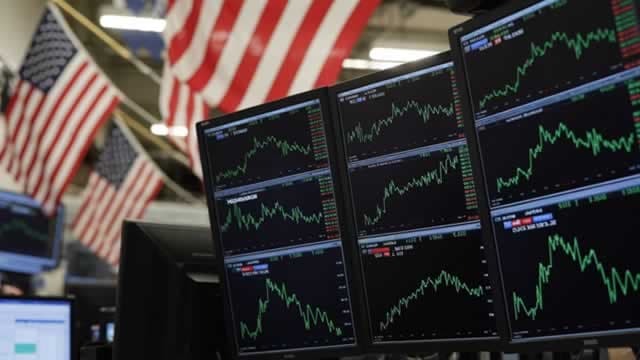
Consumer sentiment took a sharper than expected plunge as the U.S.-Iran War continues on. George Tsilis turns to this soft data and compares it with market trends while offering a "glass half full" perspective on Wall Street's "rolling correction.

The stock market was mixed for the week but the Nasdaq and S&P 500 hit new lows as oil prices stayed high and Treasury yields jumped. Arm Holdings shot higher.
The Israeli stock market, which initially rallied at the onset on the country's joint campaign with the U.S. against Iran, is now trading at pre-war levels.

Bob Michele, JPMorgan Asset Management Global Head of Fixed Income, joins Bloomberg Surveillance to discuss current macroeconomic conditions amid the backdrop of the Iran war, as Federal Reserve officials voice growing concern over potential fallout. "At these levels, there's no obvious solution," Michele says, adding that even amid oil hitting $100 a barrel, "We don't see recession, we see growth slowing down a lot from where we had it, inflation going up a little bit," putting the Fed back in wait-and-see mode.

The stock market closes for Good Friday next week ahead of the Easter holiday. Maundy Thursday has been historically positive for Wall Street.

The last thing investors are thinking about right now -- as Wall Street wrestles with surging oil prices -- is a short squeeze.

Consumers grew more pessimistic about the economy in the wake of the war with Iran as concerns with personal finances spiked due to higher gas prices and volatile financial markets. Middle-income and higher-income Americans had particularly large declines in sentiment.
March was the grimmest month of the year so far for consumers' economic sentiment as the Iran war raised gasoline prices and dented the stock market, the University of Michigan's latest monthly survey found.
Gulf markets have diverged sharply since the Iran war started, with Oman and Saudi Arabia outperforming as Dubai has faltered. Oil price volatility and geopolitical turmoil are shaping investor sentiment, as inflation remains a live risk for the region's dollar-pegged economies.

This week Dr. Ed Yardeni joins the Podcast to analyze how the Middle East conflict and 'the fog of war' are reshaping the global economic outlook. He discusses why he raised his recession odds to 35% and how current geopolitical volatility may force the Federal Reserve to pause interest rate cuts indefinitely.
A new policy initiative from the Federal Reserve, through one of its governors, Stephen Miran, is bringing bank loan ETFs back in focus. His proposal to shrink the balance sheet while potentially allowing lower rates creates a tricky backdrop for floating-rate strategies that have thrived in a high-rate environment.