
加载中...
共找到 39,764 条相关资讯
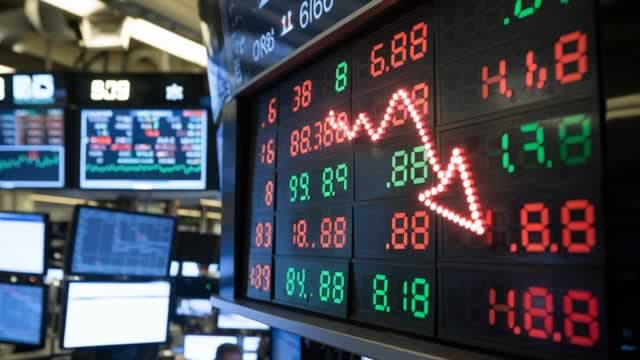
The International Energy Agency (IEA) is sounding the alarm on what it calls the most severe energy crisis in modern history, warning that the full impact of the Iran war is only beginning to hit markets.


Traders have piled into markets, turbocharging a two-day rally in the S&P 500.

Two assets that could jump with a resolution to the war in the Middle East are the euro and global sovereign debt.

The two investors share several investments in common across Berkshire Hathaway and the Dan Ives Wedbush AI Revolution ETF (NYSE: IVES).

As I write on Wednesday, stocks are continuing yesterday's rally, spurred on by positive geopolitical headlines. This morning, President Trump posted on Truth Social that Iran's president has requested a ceasefire – adding that the U.S. would only consider the proposal once the Strait of Hormuz was “open, free, and clear.

U.S. home builders and car manufacturers are taking a hit. Tariffs haven't slashed the federal debt as promised.

Nasdaq's new rules could fast track the entry of a newly public large company 15 days after its IPO.

The wealth effect may have a greater effect on consumer spending than high gas prices.

Comprehensive cross-platform coverage of the U.S. market close on Bloomberg Television, Bloomberg Radio, and YouTube with Bailey Lipschultz, Katie Greifeld, Carol Massar and Tim Stenovec. -------- More on Bloomberg Television and Markets Like this video?

Wall Street ended higher on Wednesday, extending a two-day rally as investors grew increasingly optimistic that the US-Iran conflict could be nearing an end. Gains were led by technology heavyweights, while oil prices declined sharply, reflecting easing concerns over supply disruptions.

'The Big Money Show' reacts to President Donald Trump touting a ceasefire deal with Iran, as markets rally and global attention turns to oil prices and the Strait of Hormuz. #foxbusiness #bigmoneyshow 0:00 Trump's Iran Stance & Market Shock 1:23 The Strait of Hormuz: A Global Problem 4:03 International Response & Economic Incentives 6:07 Geopolitical Shifts & U.S. Advantage 8:05 Oil Prices, Small Business, and Midterm Concerns 12:40 The Big Picture: Long-Term Vision vs.

Micron's (MU) eye-watering rally went from under $100 to $470 in less than a year, then saw a sharp sell-off in mid-March back toward $300. As shares experience a rebound rally Wednesday, Rick Ducat dives into the AI memory chip stock's volatile price action to weigh where shares will experience support and resistance.
Operator: Good morning, ladies and gentlemen, and welcome to the Mountain Province Diamonds Inc. Q4 2025 Webcast and Conference Call. [Operator Instructions] This call is being recorded on Wednesday, April 1, 2026. I would now like to turn the conference over to Jonathan Comerford. Please go ahead. Jonathan Christopher Comerford: Good day to everyone who has dialed in to listen to our Q4 and year-end 2025 results call. My name is Jonathan Comerford, and I am President and CEO of the company. Also present on this call is Steve Thomas, our CFO; and Reid Mackie, our Head of Diamond Sales and Marketing. At the conclusion of this presentation, we will be available for any questions you may have. . Firstly, I would like to draw your attention to our cautionary statement regarding forward-looking information. This presentation will be posted on our website for anyone who needs additional time to review the statement. Mountain Province Diamonds produces Canadian diamonds to the highest standards of corporate social responsibility, and this is something we continue to be proud of. We own 49% of the Gahcho Kué mine in the Northwest territories with De Beers Group, a division of Anglo American plc owning the remaining 51%. Today, I will speak to our Q4 and year-end 2025 results and provide some insight into our first quarter of 2026. Following that, Steve, our CFO, will discuss the Q4 and year-end 2025 financial performance of the company. Reid will comment on the overall diamond market. I'll then make some closing remarks to complete the presentation and answer any questions you may have. safety. Starting with safety, Gahcho Kué continues its strong performance in 2025 with total recoverable injury frequency rates of 2.2, which is the best ever achieved at the mine and below the 2.3 in 2024, which is a record at the time. Safety remains a top priority, and we will continue to focus on it across all operations. Q4 and year-end 2025 highlights. 2025 was always going to be a challenging year. In the first 3 quarters, we mainly processed low-grade ore from the Tuzo stockpiles while preparing the high-grade NEX ore body. This went largely as expected. In January to September 2025, we produced about 2.5 million carats at an average grade of less than 1 carat per tonne. In the last quarter, production picked up sharply, nearly 1.9 million carats at a grade of 2.25 carats per tonne. Daily production increased from 9,000 carats at the start of the year to 25,000 carats a day in November and December. The strong performance has continued into 2026. While grades in carats recovered were higher than expected, we saw a lower size distribution -- frequency distribution. In other words, the smaller stones, which are currently under pressure in the market made up a greater proportion of the overall carat production. In terms of mining, the operator moved 38.7 million tonnes of material in 2025. That's ahead of both the budget and guidance and more than 17% above 2024's figures. Access to the high-grade 5034 NEX ore body was achieved as planned. In summary for the operations. Overall, safety, processing and mining were performing well. I would like to thank all of the staff at the GK for what they've achieved in what is extremely challenging circumstances. Grade was a bit challenging early in 2025, but improved in Q4 and as we focused on the NEX ore body and has continued into 2025 -- or 2026. Diamond market. The diamond market remains very tough, particularly for small stones and positive signs have repeatedly been offset by external factors. U.S. tariffs have added uncertainty and the recent conflict in the Middle East has affected consumer confidence impacting key markets such as Israel and Dubai. Overall, the market remains highly uncertain. Liquidity, during 2025, our largest shareholder, Mr. Dermot Desmond, provided vital support during a period of low grade and challenging diamond prices. We are very grateful for this support. After year-end, the company was unable to meet its share of mining costs, which were particularly high in the first half of the year due to the winter road. This led our partner, De Beers to make in-kind elections as announced earlier this year. We are actively working with our partners to resolve these outstanding payments, and I hope to provide further updates in the coming weeks. Given the challenging market, the joint venture partners also decided to postpone the Tuzo Phase 3 earlier this year, allowing us to manage liquidity and preserve optionality. Before I close, I would like to take a moment to thank Jeff Swinoga for his outstanding contribution as a Director and as Chair of the Audit Committee. While we are sorry to see him move on to bigger and better things, we are very grateful for his commitment and staying on to see the audit through to completion. On behalf of the Board and the entire team, I would like to sincerely thank him for his service and wish him every success in the future. With that, I will now turn over the call to Steve, who will take us through the financial results. Steve? Steven Thomas: Thank you, Jonathan, and good morning, everyone. -- noting that all numbers discussed will be in Canadian dollars unless otherwise stated. As Jonathan has said, the company experienced tough market conditions throughout the year with prices falling notably in the second half of the year, which has impacted several aspects of the financial results beyond revenue. In Q4, we processed mined an NEX ore with average grade more than double that of the first 9 months. This explains the higher carats sold in Q4, approximately 50% higher than in each of the first 3 quarters. However, the average selling price in Q4 at USD 52 per carat was unchanged from Q3, reflecting continued market uncertainty, largely due to the 50% tariff on Indian rough diamond imports into the U.S. in place at that time. The average selling price for 2025 was USD 59 per carat, lower than any quarter since the mine opened, except for the prices in H2 2025 and in Q2 and Q3 of 2020 when the retail markets were closed due to COVID-19. This pricing environment has placed the company under significant financial pressure. The financial statements going concern note outlines measures taken to address liquidity, including debt raised to fund operations. It also details outstanding amounts owed to De Beers as operator for unfunded cash calls and how these balances have evolved since year-end. As in the first 3 quarters of 2025, Q4 pricing resulted in significant write-downs of diamond inventory and ore stockpiles, increasing production and depreciation costs. Although ore stockpile tonnes remained broadly unchanged since the midyear, they declined by 1.8 million tonnes in the first half of 2025. This led to the release of previously capitalized costs into production costs -- cash production costs unlike in 2024 when the stockpiles increased by 1.8 million tonnes and costs were capitalized. The resulting loss from mine operations in Q4 2025 was $50.2 million, contributing to a full year loss of $154 million, which compares to a $13 million loss in Q4 2024 and a full year profit of $18.4 million in the year 2024. In addition, Q4 2025 included a material impairment charge of $103 million, which equals a net $90 million after an offsetting deferred tax recovery. This complex calculation required additional audit work by KPMG, which delayed this week's earnings call to today. A weaker U.S. dollar in Q4 and for the full year resulted in an unrealized foreign exchange gain compared to a significant loss in 2024 when the U.S. dollar strengthened. Adjusted EBITDA, which accounts for that impact, saw 2025's result materially below 2024, although positive in Q4 2025 versus being negative in Q4 2024. Cash flow from operating activities was an inflow of $9.1 million in Q4 '25 and an outflow of $22.1 million for the full year, which compares to a $79.8 million inflow in 2024. The combination of low prices and the lowest annual sales volume since the mine opened reflects ongoing market instability and reliance on the lower-grade stockpile wall whilst we stripped the NEX ore body. Key factors for recovery include resolution of the tariff regime, improved geopolitical stability in the Middle East, both of which are critical to restoring diamond prices and enabling the company to meet its future financial obligations. Turning briefly to the balance sheet. Most notably, the year-end balance sheet reflects the reduction in property, plant and equipment by $103 million, being the noncash impairment charge, which effectively accelerates future depreciation charges. The injection of USD 40 million under the bridge credit facility and the equivalent of CAD 33 million through a working capital facility have been reported in the first 9 months of the year. During the year also, in agreement with De Beers, they have drawn funds from the decommissioning restricted cash account in our balance sheet to meet cash call requirements when due. Whereas the restricted cash balance was $14.4 million at the end of Q3. By the year-end 2025, it had been replenished fully to $34.9 million, but to note that since the year-end has been further utilized in a similar fashion to meet cash flows. For the combined value of the derivative assets at $343,000, this compares to an overall liability of $1.8 million at the 2024 year-end. The asset comprises $178,000 being the fair value of the early repayment feature within the second lien notes, which has increased by $780,000 over the quarter, but reduced by $5.9 million since 2024 year-end. The reduction in closing value compared to 2024 is due to a significant rise in the discount rate used to derive its fair value from 9% to now 15%. The other derivative asset of $165,000 represents the fair value of [ one ] USD 15 million currency hedge in place, which has since the year-end been settled. At the 2024 year-end, that was a liability of $7.9 million, given that there were USD 105 million of hedges outstanding that were out of the money. Considering the inventory of $151 million, they have decreased by $3.2 million over the quarter as there has been a $10 million reduction in supplies inventory and the ore stockpile has reduced by $1.9 million. And these reductions have been offset by an $8.8 million increase in the value of rough diamond inventory as the volume of carats on hand has increased by [ 280,000 ], albeit with each of those carats being $7 less in value in its carrying value. Closing inventory value for 2025 is $45.3 million lower than for 2024, primarily due to the $56.7 million reduction in the comparative value of the ore stockpile for which the tonnes held at 100% at 2.3 million tonnes have reduced by 1.8 million tonnes compared to the start of the year. That decrease is offset by supplies inventory being $8 million higher than in 2024, in large part due to consignment stock, which we now hold and early delivery of other stock items. There is also an increase in the value of rough diamond inventory by $3.4 million, reflecting the far higher volume of carats held, which increased by [ 324,000 ], albeit with a lower carrying value of $41 per carat compared to their opening carrying value of $72. This reduction reflects the impact of write-downs taken during the year to adjust the carrying value of cost to its lower net realizable value per carat. In respect of property, plant and equipment, or PPE, the year-end 2025 balance of $518.5 million is down $111.6 million over the quarter and $69 million over 2024 year-end balance. The increase reflects an increase in the decommissioning and restoration asset reported in PPE by $19 million as our share of the undiscounted decommissioning cash flows was reestimated upwards by $32 million in Q4 with the balance of that sum reporting mainly to inventory. Also, an additional $18 million was invested in sustaining capital during the year, plus an additional $45 million of capitalized waste activity in respect of NEX waste material, less about $45 million of depreciation, which is not associated with NEX capitalized waste. All of these additions were offset by the aforementioned $103 million impairment charge and a slight reduction of $3 million in assets under construction as that work was completed. For current liabilities, the $62 million increase in the accounts payable balance of $126 million at 2025 year-end compared to only $65 million at 2024 year-end reflects 2 major increase in respect of accounting for $24 million of accrued interest on the senior secured notes, which the lenders agreed to forego until payment in June 2026. This balance has grown as expected during 2025 and did not exist at 2024 year-end as it was previously being paid every 6 months. Secondly, unpaid cash calls due to the operator at the year-end of $30.6 million, which De Beers financed on occasions during the year by withdrawing funds from the company's portion of the decommissioning funding balance or by utilizing the overdraft facility, which is available to the operator. As addressed in the financial statements subsequent events note, since the year-end, De Beers has issued in-kind election notices or IKEs in respect of unpaid cash calls, which must be paid within 60 days in order to avoid an event of default under the GK joint venture agreement, where the first of these IKEs has become due, De Beers agreed to issue new IKEs in respect of any unpaid balance on the original IKE. And that is taking place whilst the companies are in discussion on how to resolve this issue and manage broader joint venture matters going forward. The current liabilities also reflect the following: the Dunebridge USD 40 million Bridge Credit Facility, which was fully drawn in July, and the balance reflects the principal, unamortized deferred transaction costs and the accrued interest, all translated at the period end closing FX rate. Secondly, the Dunebridge working capital facility of USD 23.6 million, which was fully drawn during Q2 2025 and is accounted for similar to the bridge credit facility. Thirdly, the fair value of the current component of the decommissioning and restoration liability, which has seen a little movement over the 3- and 12-month period ending December 2025 with the risk-free interest rate used in the calculation being comparable at both year-ends. The resulting change in the value of net current assets and current liabilities during Q4 2025 and across the full year results in the working capital position decreasing by $50 million during the quarter to minus $70 million and compares to a working capital balance of negative $120 million at the 2024 year-end. Turning to long-term liabilities. Of $479 million at 2025 year-end compared to $22 million at 2024 year-end, these comprise the translated value of the U.S.-denominated senior secured notes and junior credit facility, which, with the weakening of the U.S. dollar since the start of the year, tends to decrease the Canadian reported value, resulting in an unrealized foreign exchange gain of $4.4 million in the quarter and $15 million for the full year. The other material long-term liability is the discounted value of the decommissioning liability, which has increased from $83.5 million to $114.8 million, which reflects the increase in the estimate for the liability itself, offset by a slight increase in the discount rate used in its fair value calculation. Turning to earnings. Revenue for both Q4 and the full year 2025 declined significantly versus 2024, with average prices down 18% year-over-year and volumes down 31%, reflecting the market conditions and production sourced from the stockpile ore for the first 9 months of the year. Cost of sales at $310 million in 2025 exceed $249 million incurred in 2024. And when normalized for carats sold between the 2 periods and accounting for the higher write-downs of inventory to net realizable value, the underlying costs have increased about 20%, which reflects higher operating costs year-on-year, and increased depreciation charges associated with the higher levels of capitalized stripping undertaken. In respect of cash production costs at $76 per carat and $93 per tonne for the full year 2025, that compares to $60 per carat and $77 per tonne for the year-end 2024. And the costs rose year-over-year, driven by the aforementioned stockpile depletion in 2025 versus its growth in 2024. The gap in these costs that I've set out widen when you include deferred stripping given that $26 million of higher capitalized stripping costs were incurred in 2025 compared to 2024. Finance expenses in 2025 increased to $56 million for the year compared to $43 million in 2024, with the interest charge increase of $10 million, reflecting the new bridge loan and working capital debt facilities and the growing accrual on the senior loan notes and junior credit facility. Foreign exchange movements included both the unrealized gains on the debt translation and a realized loss of $4.4 million on hedge settlements made in the year, which were below the prevailing market spot rate. The deferred tax recovery totaling $30 million for 2025 compares to a charge of $1.6 million in 2024, with $13 million of that change driven by the impairment charge and the balance due to the operating losses incurred in 2025. The company reported a loss from operations of $50 million in Q4 and $154 million for the full year and that compares to a profit of $18 million in the year ended 2024 with the reduction of $173 million, reflecting reduced sales of $112 million and a $61 million increase in the cost of sales, as discussed earlier. In line with operating loss, operating cash flow was an outflow of $59 million for 2025 compared to $15.5 million in 2024. Debt funding of $89 million largely explains the difference to the operating loss versus the closing cash flow movement and provides the reason for us having a closing cash balance of $2.3 million. Adjusted EBITDA was $4.8 million for the year, equaling a 3% margin, and that compares to $91 million in 2024 with a 34% margin. As a result of the above, the net loss after tax was $151.6 million in Q4 and $279.5 million for the full year, which compares to an [ $80.8 million ] loss in 2024 with the difference largely due to the impairment charge, the significantly lower sales volume and price and the write-off charges against ore stockpile and rough diamond inventory flowing through the cost of sales and arising itself due to the low price environment. Loss per share was $1.32 for the full year compared to $0.38 in 2024. In conclusion, 2025 was a challenging year, marked by weak diamond prices and low sales volume whist mining through the NEX waste material. The company has relied on significant financial support from its major shareholder, Mr. Desmond of which -- for which we are very grateful, but we still faced a $30.6 million shortfall in cash calls made to the operator at the year-end. And as mentioned, the going concern note addresses the company's liquidity challenges and extends into the developments seen in Q1 of 2026. Despite these pressures, the mine achieved record operational performance and accessed the highest grade ore in its history. Ongoing discussions with De Beers and the lenders aim to stabilize our financial position. However, a recovery in market conditions is critical to meet obligations and for us to realize the benefits of increased production coming from the NEX ore body. Thank you. And I will now hand over to Reid. Reid Mackie: Thanks, Steve. Going into 2026 from 2025, overall market sentiment was cautious amid the ongoing uncertainty over U.S. tariffs and the pending sale of De Beers. The rough market was showing signs of improvement early in the year and the industry more optimistic for the year ahead. However, the outbreak of war in the Middle East and tariff uncertainty has shifted the market back into a more conservative wait-and-see mindset. Presently, this market reticence is based more on logistical disruptions rather than structural market shifts. At the beginning of the year, we saw signs of a rough diamond market recovery supported by positive holiday retail results and producer supply and price management. In the U.S., holiday retail sales were positive with sales exceeding $1 trillion for the first time year-on-year growth. and year-on-year growth was estimated between 3.5% to 4.2%, and jewelry, the jewelry component of this was up 1.6%. Looking ahead in 2026, the National Retail Foundation recently forecast that 2026 U.S. retail will grow 4.4% over 2025. Globally, luxury brands have continued to perform well, leveraging the rarity and exclusivity of naturals to drive diamond jewelry sales. Solid demand and growth were noted in the Americas, Japan and Hong Kong. And finally, we saw Chinese jewelry retailers reporting improved performance in Q4. The lab-grown diamond market continues to grow, albeit at a slowing rate and primarily in the U.S. at commercial retailers where the incentive to hold on to the short-term high percentage retail margins is still present, if not waning. This contrasts with the rest of the world where naturals hold overwhelmingly strong consumer preference, most importantly in the growth markets of India and China. The luxury brands, which have shown the strongest performance in the jewelry sector, continue to promote the exclusive use of natural diamonds in their collections. More recently, even at U.S. retailers such as Blue Nile, there are signs of differentiation back towards natural diamonds as elevated luxury. The widening price gap between natural diamonds and lab grown appear to have hit an inflection point where this price differentiation is being -- now being recognized at the consumer level. Meanwhile, updates in grading terminology and regulatory guidance serve to further underpin the deepening market segmentation of the 2 products. Global macroeconomic factors stemming from the recent war in Iran and continued tariff uncertainty warrant close monitoring of the rough diamond market. In 2025, we saw diamond jewelry production strategies in the midstream evolve quickly to minimize the impact of U.S. tariffs, highlighting the nimble adaptability of the diamond industry, especially in India. However, it remains to be seen how the most recent events will impact consumer spending preferences going forward. Despite headwinds, it's important to remember that we are still seeing the fundamental signs of a diamond market stabilization to support price recovery. With much reduced rough diamond supply upstream, solid consumer demand and growing differentiation away from lab growth with naturals being an elevated luxury product, we look forward to long-term price growth for our diamonds. And with that, I'll pass you back to Jonathan for his closing remarks. Jonathan Christopher Comerford: Thanks, Steve, and thanks, Reid. Just to summarize some of the highlights for 2025. In terms of safety, we had record total recordable injury frequency rate performance, reflecting the ongoing commitment to safety. In terms of production, Q4 2025 drove a strong finish with nearly 1.9 million carats recovered at 2.25 carats per tonne and daily production rising from 9,000 to 25,000 carats, and that has continued into 2026. In terms of mining, we mined out 38.7 million tonnes in 2025 ahead of the budget guidance with the high-grade 5034 NEX ore body access as planned. We still, however, face a very challenging diamond market with smaller stones remaining under pressure, in particular, due to global uncertainty, tariffs and geopolitical factors, which are keeping the market very unpredictable. And then finally, in terms of liquidity and strategic focus, the focus continues to be working with the beers and our stakeholders to manage costs and optionality while working with other stakeholders, including our workers, government, et cetera, to get through this very challenging time. I would like to thank you for your time. My team are now available for -- take any questions you may have. So over to the operator. Operator: [Operator Instructions] There appear to be no questions. I will turn the call back over to Jonathan Comerford for closing comments. Jonathan Christopher Comerford: And there's no questions from the received in, Steve, is there? Steven Thomas: No. Jonathan Christopher Comerford: Webcast... Steven Thomas: None online. Jonathan Christopher Comerford: Okay. Steven Thomas: Sorry, one has just come on the screen. Jonathan, I apologize. It's just popped up. Can you tell me the total value of diamonds sold on March 17 at the auction? That -- I don't think we can disclose that number. That's from Mr. Barry White from the Sunday Times Ireland Edition because we're here to deal with the year-end financial results. Jonathan Christopher Comerford: Not -- that will be released as part of the Q1 results. Steven Thomas: Correct. Jonathan Christopher Comerford: Which is in May. Steven Thomas: No other questions, Jonathan. Jonathan Christopher Comerford: Okay. So I would like to close off this call, and I'd like to thank everyone for listening in and for the perseverance with this company. It's been a very challenging year. And hopefully, we'll have some news to disclose to the market in the not-too-distant future. I would like to wish everyone a happy Easter, and thank you again. Operator: Ladies and gentlemen, this concludes your conference call for today. We thank you for participating, and we ask that you please disconnect your lines.

Operator: Good afternoon. I'd like to welcome you to the Skillz, Inc. Fourth Quarter and Full Year 2025 Results Call. I will now turn the conference over to your host, Joseph Jaffoni from JCIR to begin. Joseph Jaffoni: Thank you, operator, and good afternoon, everyone. Skillz has issued its 2025 fourth quarter and full year earnings release, which is available on the company's Investor Relations website. Let me read the safe harbor language, and then we'll get right into the call. All statements and comments made by management during this conference call other than statements of historical fact may be deemed forward-looking statements for purposes of the Private Securities Litigation Reform Act of 1995. Skillz cautions that these forward-looking statements are subject to risks and uncertainties that may cause actual results to differ materially from those reflected by the forward-looking statements made during this call. For additional details on these risks and uncertainties, please see Skillz annual report on Form 10-K for the year ended December 31, 2025, as filed with the Securities and Exchange Commission and Skillz subsequent public filings with the SEC. Skillz undertakes no obligation to update or revise any forward-looking statements, whether as a result of new information, future events or otherwise. Andrew Paradise: Thank you, Joe, and good afternoon. I'll begin today's call with an overview of our fourth quarter and full year 2025 financial performance. For the fourth quarter of 2025, GAAP revenue was $30 million, up 11% from $27 million in the third quarter and up 67% from $18 million in the prior year period. Adjusted EBITDA loss was $10 million compared to a loss of $12 million in the third quarter and a loss of $17 million in the prior year period. These results marked four consecutive quarters of sequential revenue growth and two consecutive quarters of year-over-year revenue growth. For the full year 2025, GAAP revenue was $105 million, up from $93 million in 2024, which represented 13% year-over-year growth. Adjusted EBITDA loss was $51 million compared to a loss of $61 million in 2024, which represents a 16% year-over-year improvement. A key driver of 2025 was our AI ad tech segment, RZR, which was rebranded from Aarki last month. RZR delivered 146% net revenue growth year-over-year. And for the first time since its 2021 acquisition, it generated positive adjusted EBITDA for the full year 2025. In addition to the headline growth, we're encouraged by RZR's performance and momentum supported by stronger systems, deeper advertiser relationships and disciplined channel growth. Moving on to our 4 business pillars. The first pillar, enhancing the platform for player and developer engagement. On the Skillz platform, we continue to invest in new content and strengthen the developer experience. Last month, at the Annual Game Developers Conference in San Francisco, we debuted our Pro SDK product. Our Pro SDK architecture expands our development framework and provides developers with full creative control of the entire gameplay experience. It also strengthens monetization capabilities through meta game systems while leveraging the competition infrastructure and secure layer that power the Skillz platform. Turning to RZR. Over the past two years, we focused on modernizing its technology stack and scaling its infrastructure. RZR is evolving into a scaled performance marketing platform with meaningful monetization capabilities across the broader digital ecosystem. RZR is improving its machine learning training capacity and improving auction level intelligence across the platform. Building on the data models introduced in Q2 of 2025, RZR is expanding its retargeting and user acquisition share and improving performance across channels. Moving to our second pillar, up-leveling our organization. Operational efficiency continues to improve across both Skillz and RZR platforms, allowing us to better leverage our people and resources. Both businesses operate globally and are poised to execute on scaling their teams to support growth. We recently strengthened our Board of Directors with the addition of Gary Vecchiarelli and Shannon Demus. Gary serves as President and Chief Financial Officer of CleanSpark and brings extensive public company finance, capital markets and strategic planning experience supporting high-growth companies. Shannon serves as CFO of the Americas of Light & Wonder and brings deep financial leadership experience across global gaming and digital entertainment businesses. In addition, Jeff Shouger joined the Skillz Board Advisory after serving as Chief Financial Officer of Niantic, where he helped scale the company through global expansion and strategic transactions, including its recent $3.5 billion sale of Scopely. Together, they add significant capital market expertise, gaming and platform operating experience and financial discipline as we continue to scale the business and execute on our strategies. As it relates to our third pillar, go-to-market strategy and monetization. At Skillz, our focus remains on acquiring and retaining high-quality paying players while driving efficient monetization. Paying monthly active users or PMAU, was 141,000, down 9% from 155,000 in the third quarter and up from 110,000 in the prior year period, which represented 28% year-over-year growth. For RZR, machine learning enhancements together with improved bidding efficiency and campaign optimization have contributed to margin expansion. RZR is meeting customer demand by advancing its product capabilities. Importantly, RZR's revenue growth is coming from both existing and new customers. For our fourth pillar, path to profitability. With RZR achieving positive full year adjusted EBITDA paired with continued improvements across the Skillz platform, we're making progress on our path to profitability. Let's now move to an update on our Fair Play initiative. As we've discussed and disclosed previously, protecting players and preserving fair competition remain core to our values as the pioneers of the skill-based gaming category. We continue to pursue litigation against Papaya Gaming and Voodoo Gaming for their alleged use of bots, a practice we believe undermines consumer trust and harms the entire industry. We remain committed to our position as both the Papaya and Voodoo matters continue through the litigation process. Regarding Papaya, our trial is now set for April 13, 2026, in the Southern District of New York, and we look very much forward to our day in court. As a reminder, in connection with our 2024 settlement with AviaGame, our annual $7.5 million payment was received in Q1 of 2026. To date, a total of $65 million has been received from AviaGame. The company expects to receive two additional payments of $7.5 million in each of March 2027 and March 2028. In closing, 2025 was a meaningful year of progress across the enterprise. We stabilized the business, strengthened our platform infrastructure, improved operating discipline and preserved our balance sheet to support ongoing growth. Additionally, we continue to deliver sequential and year-over-year revenue growth and expanded the technology foundation of both our Skillz and RZR platforms. By combining competitive skilled gaming with AI-driven performance marketing, we're building an ecosystem designed to scale engagement, data and monetization with discipline. We believe this integrated approach creates long-term optionality in gaming as well as in adjacent areas where content, identity, commerce and performance marketing converge. Our focus remains on executing against that opportunity while maintaining financial discipline and driving long-term shareholder value. With that, I'll turn over the call to Gaetano for a review of the financial results. Gaetano Franceschi: Thank you, Andrew. Our fourth quarter results highlight the benefits of disciplined execution and structural improvements across both the Skillz and RZR businesses, producing stronger fundamentals and a trajectory towards profitability. Q4 2025 GAAP revenue was $30 million, up from $27 million in Q3 2025 and up from $18 million in Q4 2024, representing 11% growth quarter-over-quarter and 67% growth year-over-year. Q4 2025 research and development expenses of $6 million increased 78% year-over-year, reflecting ongoing investment in our Skillz and RZR businesses. Q4 2025 sales and marketing expenses of $19 million increased 27% year-over-year, which reflected ongoing user acquisition and engagement marketing spend. Q4 2025 general and administrative expenses of [ $18 ] million decreased 13% year-over-year, reflecting continued focus on expenses. Q4 2025 net loss of $18 million improved 27% year-over-year. Q4 adjusted EBITDA loss was $10 million, up from a loss of $12 million in Q3 2025 and up from a loss of $70 million in Q4 2024, which represented a 17% improvement quarter-over-quarter and 41% improvement year-over-year. Our balance sheet remains healthy, and we continue to manage capital prudently as we progress towards sustained profitability. We ended Q4 2025 with $195 million in cash and cash equivalents and $130 million of debt outstanding that is now classified as current. As the debt approaches maturity later this year, we continue to evaluate a range of strategic alternatives to optimize our capital structure. We are driving the business forward with focus and discipline to deliver meaningful long-term value for our shareholders and look forward to updating you further on our progress in 2026. Operator, we're now ready to open the line for questions. Operator: [Operator Instructions] First question is from the line of Ed Alter with Jefferies. Edward Alter: Would love to just dig into the Skillz side of the results and the paying MAUs and GMV. It looks like kind of the direction of growth from paying users versus GMV has kind of flipped versus the last couple of quarters where paying users were up a little bit and then GMV per payer was down a bit, and that kind of flipped in the fourth quarter. I would love to hear just your thoughts on kind of what changed here? And is this kind of the trajectory going forward? Or how to think about that? Unknown Executive: Ed, thanks for the question. Yes. As you recall, in Q4, we had one of our larger gaming developers leave the platform. So we had a little bit of a dip in our paying MAU. But you can see that we continue to increase on our GMV per paying MAU. Going forward, as we restart -- as we continue to drive better efficiencies in our UA, we're going to rescale our UA spend and continue to grow also on our paying MAU. Edward Alter: Okay. Great. So -- and then, yes, I guess, on the partner that you guys kind of leaving the platform. I think you guys had disclosed that in your 10-K yesterday that they were 51% of revenue last year. How is the progress going in terms of kind of moving folks from those games into -- I think you talked about some Skillz branded versions of those -- of that content. Kind of I would love to hear the -- how that rollout has gone. Unknown Executive: Yes. We don't disclose like the transition for a variety of reasons. But basically, when the partner left the platform, there were some games that left immediately. And then the two larger games that are, call it, the majority, call it, 80-plus percent are there, and we're in the process of transitioning to our owned games. Andrew Paradise: Also, if I could just jump in, this is Andrew, and thank you for the question, Ed. The other thing that we saw in Q4 is we had a technical issue with some of our engagement and marketing technologies for our player base, and we've now addressed that. So it's kind of -- you're seeing both effects in the change in [ PMAU ] in Q4. Operator: There are no additional questions waiting at this time. So that will conclude the conference call. Thank you for your participation. You may now disconnect your lines.
Mark Allen: Good morning, everyone, and thank you for joining us. We're pleased to present our 2025 full year results today. Joining me this morning are Matt Osborne; Mel Chambers, COO for the East region; Samy Zekhout, COO for the West region; and Martyn Espley, Investor Relations Director. You all know Martyn and are getting to know Martyn, but I also think it's important that you get to meet more of the wider leadership team, and I'll ask Mel and Samy to say a few words about themselves when they present later. I should mention Hannah Surtees is also with us today. Hannah has handed over the Investor Relations button to Martyn. Going forward, she's going to head up our communications team and work closely with me on our strategy. I'd like to thank Hannah for the sterling job she's done in recent years and say how much I enjoy -- I'm enjoying working with her. Over the next 35 minutes, we'll take you through the key highlights of the year, including our financial performance and our refresh strategy. Then there'll be time for questions. Let's start with our 2025 full year. Overall, we delivered solid financial performance in what has been a challenging operating environment. Adjusted profit before tax was GBP 73.2 million, which is down around 3% year-on-year. This reduction reflects the impact of the disposal of Fairfax Meadow together with the challenges in our seafood businesses and Dalco. Importantly, performance in our core meat operations in this challenging environment was stable. This demonstrates the resilience of our core business. We made good commercial progress during the year. We secured contract extensions in both the Netherlands and Denmark. This reinforces the strength of our long-standing customer relationships and the value we continue to deliver to our retail partners. In terms of our growth investments, our projects in Canada and Saudi Arabia remain on track. These are important platforms for future expansion, and we continue to expect them to contribute from 2027 onwards. Alongside this, we are planning to invest up to GBP 30 million to expand capacity in Poland. This will enable us to benefit from attractive growth opportunities in fresh prepared foods. It will also strengthen our position in Central Europe. Looking ahead, our 2026 outlook remains unchanged since the January trading update. We expect adjusted profit before tax to be in the range of GBP 60 million to GBP 65 million. This year-on-year reduction largely reflects continued challenges in our seafood, vegetarian and vegan businesses. We remain cautious on the impact of red meat inflation. Finally, we've refreshed our strategy. Going forward, we will focus on growth plans and investment in our core meat and fresh prepared food activities. We will also implement plans in Seachill, Foppen and Dalco to improve performance and increase strategic optionality. As part of our strategic refresh, we've also updated our financial framework. We have a clear focus on delivering sustainable profit growth, disciplined investment and compelling returns for shareholders. So while 2025 has had its challenges, we have made important changes in several areas and continue to position the business for long-term growth and value creation. I'll now hand you over to Matt to take you through our full year 2025 performance. Matthew Osborne: Thanks, Mark, and good morning to those of you in the room and those of you listening in. I'll now walk you through our 2025 financial results, highlighting the main drivers of volume, revenue, profit, net debt and cash flow. I'll also touch upon the outlook for 2026 before handing back to Mark. As we saw in the first half of the year, our full year performance was underpinned by continued resilience within our core meat and fresh prepared food businesses, which now account for around 90% of our revenue. This is a testament to the strength of our core business model and the expertise and commitment of our teams. As we've previously highlighted, our seafood vegetarian and vegan businesses are facing challenges and our strategic review, which Mark will introduce shortly, seeks to address them. Before then, though, let's take a closer look at the numbers. First, the headlines. Volumes from our continuing operations, so excluding Fairfax Meadow, which we sold in September last year, were up 0.2% against a highly inflationary environment, which drove revenue up 11.9% on a constant currency basis. Constant currency operating profit fell by 4.4%, reflecting in particular the challenges in the U.K. seafood business, and I'll cover profit in a little more detail shortly. The resulting operating profit margin was 2.3%, down from 2.6% last year. In line with the guidance we provided last November, profit before tax was GBP 73.2 million, down 2.8% and from continuing operations, so again, excluding Fairfax Meadow, profit before tax was GBP 69 million, down 1%. Adjusted earnings per share of 56p was 7.4% lower, reflecting a slightly higher tax rate of 30% due to the impact of truing up some historic tax allowances. Our strong financial position and confidence in the medium-term outlook means we are maintaining our commitment to a progressive dividend policy with the final dividend flat, the full year dividend per share is up 1.4% to 35p. Net debt improved slightly year-on-year with significant cash inflows in the second half from divestment proceeds and a partial unwind of working capital. This was despite the planned increase in growth capital with 2025 being the main year of spend on our Canada project. Moving to revenue. With volumes and mix broadly stable, an 11.9% increase in constant currency revenue was almost entirely down to increases in raw material input costs. On mix, we continue to see a shift in the U.K., in particular, with lower-cost products forming a higher proportion of our overall volume. However, multi-buy and promotional activity were a positive for us in Australia. The relative strength of sterling versus the Australian dollar remained a headwind, albeit partially mitigated by a strengthening of the euro in the year. Now moving to show volume and revenue by region. I've shown a version of this chart before, but I've split out our seafood, vegetarian and vegan businesses to demonstrate the performance of our core meat businesses. These numbers also exclude Fairfax Meadow. In the U.K. and Ireland, core meat volumes remained resilient and were only down slightly despite significant inflation in beef of more than 30%. The impact of this inflation can be seen in revenue increases of 23.5%. European volumes were stable overall, including double-digit growth in fresh prepared foods in Central Europe and the benefit of new customer volumes in Denmark. Revenue growth was less material than in the U.K., reflecting a more diversified mix of meat products. And APAC again delivered volume growth despite the reemergence of raw material inflation. Seafood, vegetarian and vegan volumes were down 2.6% with price inflation weighing heavily on whitefish volumes in the U.K. Foppen volumes were relatively stable as we continue to meet customer demand despite the regulatory restrictions on our facility in Greece. And Dalco volumes were up, albeit from a low base. Revenue was down by more than volume despite the whitefish inflation with market salmon prices 17% lower in 2025 than in 2024, reducing Foppen revenues. Moving now to profit. Operating profit from our core meat and fresh prepared food businesses were slightly up year-on-year with the volume growth in APAC being the main driver, given the cents per kilo fee structure there. Seafood, vegetarian and vegan operating profit was materially down, however, with Seachill moving into a loss-making position, reflecting the pressure that lower volumes puts on gross profit. Foppen's underlying profit was stable, albeit there were material non-underlying costs that I'll cover shortly. We delivered an improved result of Dalco, although the business remains loss-making. Central costs were lower as were interest costs, reflecting lower market rates. Before the negative impact of FX due to the weaker Australian dollar, in particular, group PBT on a constant currency basis was down 2.8%. After excluding the contribution from Fairfax Meadow, which we sold in September, it was down 1%. Nonunderlying and exceptional items excluded from the underlying results represent a net profit of GBP 29.3 million in the period, albeit there were a number of moving parts. The biggest cost related to Foppen. We incurred cash costs totaling GBP 9.2 million relating to the relocation of production from Greece to the Netherlands to ensure continuity of supply to our customers in the U.S. while also using air rather than sea freight to ensure an appropriate level of inventory. We expect regulatory restrictions to be in place for at least the first half of 2026 and expect some further Foppen-related exceptional costs this year. In addition, we wrote off inventory that could not be delivered to the U.S. or resold elsewhere, resulting in an GBP 18.4 million charge. We incurred reorganization and restructuring costs of GBP 9.6 million compared to GBP 4.2 million in 2024, and this reflects the ramp-up of our transformation activity and group reorganization in order to support long-term efficiency and growth. We expect these costs to continue in the range GBP 5 million to GBP 10 million a year over the next few years, and this spend will help underpin our medium-term growth objective,s, and we'll provide some more detail on our transformation program in the strategic update section shortly. Last, but certainly not least, we recognized profits on disposal of GBP 66.5 million relating to the sales of Fairfax Meadow and Foods Connected. Both of these transactions are steps towards simplifying our portfolio whilst also realizing significant value for the group. Now moving to net debt and cash flow. Net bank debt improved slightly in the year despite a free cash outflow. This includes the impact of material cash inflows from the disposal of Fairfax Meadow and Foods Connected as we realize value through portfolio simplification. Exceptional cash flows relating to Foppen and wider group transformation and restructuring totaled GBP 18.9 million, and we returned GBP 31.5 million to shareholders in 2025, consistent with our progressive dividend policy. Net bank debt of GBP 126.7 million results in net debt-to-EBITDA of 0.9x, remaining at very comfortable levels. And in February of this year, we successfully refinanced our bank facility, which now provides an increased GBP 450 million of revolving credit facilities for at least the next 5 years, providing flexibility to deliver future growth opportunities. In addition, these bank facilities are enhanced by the ongoing benefits of our lease and customer supply chain financing with margins typically 0.5 to 1.5 percentage points lower than our bank facility. Let me touch on our free cash outflow. The group remains intrinsically cash generative and retains a strong balance sheet. This strength provides flexibility to allocate capital to benefit the group over the longer term. In 2025, this included the investment in inventory to ensure we'd be able to deliver excellent service levels to our customers during peak trading periods in the second half of 2025 and into 2026. It is important we continue with disciplined investment in our existing facilities, ensuring they run efficiently and continue to support growth. Core net capital expenditure of GBP 46.5 million was lower than last year and included spend on capacity increases at Hilton Food Ireland. It also included further investment in Sweden, where we've installed frozen burger production lines, a new category in our partnership with ECA. 2025 was also the main year of investment in our expansion into Canada. We've now spent GBP 55 million in total on the project, with the remaining project costs being incurred in 2026. The project remains on track for full launch in 2027. Before I hand back to Mark, let me cover the outlook. We've traded in line with our expectations in the year-to-date and continue to expect 2026 adjusted PBT in the range of GBP 60 million to GBP 65 million, unchanged from the time of our trading update in January. As we said at the time, the expected reduction in profit is predominantly due to continuing challenges in Seachill, Foppen and Dalco. Our core meat business continues to prove resilient and volumes over the first part of this year were solid. However, given the economic backdrop, it is right we remain cautious on the impacts there may be on meat demand due to inflation. We are also mindful of any potential direct or indirect impacts of the current situation in the Middle East. We would expect net debt to increase in 2026. Core CapEx will be GBP 50 million to GBP 55 million within our expected range. However, total CapEx will remain elevated as we complete our project in Canada and expect to commence spend on our planned capacity expansion in Poland. Both of these projects will create value for shareholders and are expected to contribute to earnings in 2027. One of the reasons we remain positive about the medium-term and long-term outlook for the group. I'll be back later to summarize our refreshed capital allocation framework and medium-term financial targets. But for now, let me hand back to Mark. Mark Allen: Thanks, Matt. Mel, Samy, Matt and I will now take you through a summary of our strategy. This is based on the review we've recently completed. We aim to be the international red meat partner of choice. Aligned with that, in certain appropriate geographies, we have a developing fresh prepared food business that we'll invest in where the returns are attractive. What gives us confidence in this ambition is the structural strength of our core meat businesses. We operate long-standing partnerships with leading retailers. We benefit from high barriers to entry in our markets. We have a proven operating model that is delivered consistently over time. However, this strategy is not only about defending what we already have. We also see significant further growth potential, which we will unlock through a combination of portfolio optimization, targeted investment and the evolution of our operating model. Simply put, this is a strategy that builds from a position of strength and our core capabilities. Importantly, we will be very deliberate about where we invest to drive future growth and attractive returns. Before we provide a bit more detail on our growth potential, let me put it in context against our recent track record. As you can see from the chart on the left, operating profit from the group's core activities excluding Fairfax Meadow, Seachill, Foppen and Dalco has grown by 4% on average since 2022. This demonstrates the strength and stability of our core meat and fresh prepared food operations. On the right, you'll see the building blocks that underpin future growth. The expected reduction in profit in 2026 compared to 2025 is largely down to the challenges faced by Seachill, Foppen and Dalco. We expect profit from our existing core business to be relatively stable and remain so moving forward. This will be supplemented from 2027 by our projects in Saudi Arabia and Canada. We expect to realize the full benefits from these in 2029. We also expect to deliver growth from our focus on our fresh prepared food product offering and multi-customer models in certain markets. We'll provide some color on this shortly. All this results in mid-single-digit average operating profit growth per year with potential for adding additional growth beyond from value-adding investments. Here are the 3 levers that will drive this growth over the medium term. The first is maximizing the core. Here, our focus is on reinforcing our leadership in retail meat by maintaining the structural advantages we built over many years. At the same time, we're driving continuous efficiency improvements to maintain margin resilience. This ensures that the core business continues to generate stable and predictable cash flows. The second lever is enhancing the mix. We are actively increasing our exposure to higher-margin segments where we have an opportunity to win. This is particularly the case in value-added meat and fresh prepared foods. These categories offer faster growth and attractive returns. They allow us to better serve evolving customer and consumer needs. Mel will talk about expansion plans in our Poland business shortly. The third lever is geographic expansion. We will continue to replicate our partnership model in underpenetrated and high-growth markets. We will work alongside anchor retail partners to leverage our expertise and scale. Taken together, these 3 levers create a balanced growth profile. They support stable cash flows, high margins and faster overall growth while reducing our reliance on volume alone. While the framework itself is simple, the value creation potential from executing it well is significant. A key part of enhancing our mix is optimizing our portfolio, particularly in seafood and meat alternatives, where performance has been volatile and unsatisfactory. These businesses have limited synergy with our core meat capabilities. We are taking a very focused and disciplined approach and will limit future investment across the 3 businesses, Seachill in the U.K., Foppen and Dalco. Across these businesses, the overarching objective for the group is consistent to reduce earnings volatility, improve returns and create greater flexibility and optionality for future value realization. In Seachill, our priorities are operational recovery, cost reduction and product focus. This should allow us to rebuild margins. In Foppen, we are operating in an increasingly consolidating smoke salon market. Our focus here is on driving volume through best-in-class quality, customer service, competitive pricing and continued innovation. We will also address the challenges that are continuing into 2026. We resumed sea freight shipments to the U.S. and are actively rebuilding the stock pipeline. We continue to engage with U.S. regulators to lift the restrictions on our Greek facility. Encouragingly, underlying retailer demand remains strong. In Dalco, the priorities are to improve operational performance and win new business. We're aiming to put the business in a stronger position operationally and financially, giving us greater flexibility in how we create value from it. I will now hand over to Mel, who will then hand over to Samy to help bring our growth strategy to life with specific examples from our East and West regions. Melanie Chambers: Thank you, Mark, and good morning, everyone. Having recently stepped into the role of Chief Operating Officer for the East, I'm extremely excited about the opportunities that lie ahead in my region and the refreshed group strategy. More broadly, I bring with me more than 25 years' experience from across the food industry with a strong focus on operating globally. When I joined Hilton Foods in 2022 as the CEO for the APAC region, I spent considerable time strengthening the customer relationship, building deeper alignment and developing a regional leadership team for future success. As we move on to competitive positioning, there are 3 key areas of focus that will underpin how we maximize our core meat capabilities. First is manufacturing excellence. We are driving continuous efficiency and improvement across all our operations, and this is supported by a clear automation road map. At the same time, we are maintaining a very disciplined approach to cost control, particularly within central functions, and this ensures that we avoid any unnecessary or duplicated overhead. Second, innovation and category leadership. We continue to enhance our capabilities in value-added products, working with our partners to develop new target product ranges that align closely with consumer demand. We are also expanding into adjacent categories such as slow cook products, where we see attractive growth opportunities. And third is our security of supply. We will continue to develop our global red meat sourcing center of excellence, which allows us to leverage our scale more effectively while also using our local sourcing capabilities to ensure resilience and availability in each of our markets. Together, these initiatives will ensure that we improve our competitive advantage, continue to support our retail partners effectively and position the core business for sustained market outperformance. This slide now provides a clear example of our strategy to enhance our mix through our planned investment in Poland. We see a compelling opportunity in fresh prepared foods in Central Europe, driven by strong underlying demand and forecast market growth of around 8% per year. At the same time, our retail partners are increasingly looking for value-added solution, which plays directly to our strengths. Our planned investment of up to GBP 30 million over 2026 and '27 will expand capacity, increase automation and enhance our processing capabilities. Importantly, this will allow us to differentiate our offering through improved shelf life and product innovation. And from a financial perspective, this is a highly attractive investment. It is expected to generate returns well above our cost of capital with return on capital employed above 20% over the life of the project. It will also be accretive to the group's margin mix. And this is a good example of how we can deploy capital in a disciplined way to drive both growth and returns while strengthening our competitive position. I'll now hand over to Samy. Unknown Executive: Thanks, Mel. After 30 years at Procter & Gamble, my most recent role was as CFO and Deputy CEO for 6 years at Nomad Foods. I'm really pleased to have the opportunity to step into this role from my nonexecutive position. After having been exposed to Hilton Food Products, facilities and people over the past several months, as a Board member, I felt that there was a huge opportunity to contribute if we got the strategy right and properly executed to reignite value growth for the years to come. Our investment in Canada comes under my remit and represent a step change growth opportunity for the group. As you probably know, we are developing a new facility to support a long-term 10-year partnership with Walmart with the sites scheduled to launch fully in early 2027. Progress on the project remains on schedule. Product development has been completed and tailored to customer requirements, and we will begin production testing of equipment and systems in the second half of the year. From a financial standpoint, this is an attractive opportunity. We expect return above our cost of capital with return on capital employed over the life of the contract, consistent with our refreshed capital allocation framework. The project will begin contributing to profit from 2027 with a full contribution from 2029 and beyond. Importantly, this is not just about the initial contract. We also see further opportunities in adjacent value-added categories within Canada. More broadly, we see broader potential through all our retail partners' international footprints. So Canada is both a significant stand-alone investment and is a good example of international expansion. To support the delivery of our strategy, the newly appointed executive team is behind our plans to evolve our operating model through what we call One Hilton. This is about embedding a consistent value creation mindset across the organization, ensuring that all parts of the business are aligned around delivering returns. It also involves building a more integrated and scalable global platform allowing us to leverage our international scale more effectively while continuing to execute strongly at the local level. At the same time, we are preserving and strengthening what differentiates us particularly our deep partnership with leading retailer and our unique collaborative business model. Overall, this transformation ensures that we can scale efficiently as we grow without losing the strength that underpin our success. Let me now hand over to Matt. Matthew Osborne: Thanks, Samy. Now let me spend a few minutes taking you through our refreshed capital allocation framework and medium-term targets. Everything is underpinned by our desire to maintain a strong balance sheet, ensuring we have appropriate headroom to withstand any market shocks and provide flexibility for future investment. I'm comfortable with net bank debt, excluding leases, in the range 1 to 2x EBITDA through the cycle. This is significantly below our bank facilities financial covenant of 3x. We will continue to invest in our facilities to maintain and enhance our operations, underpinning core organic growth through improved automation and productivity and the development of new product categories. This investment will be in the region of GBP 45 million to GBP 55 million per annum and will fluctuate depending on when and where investment makes economic sense. Our strong balance sheet and cash-generative model then provides flexibility for further incremental value-adding and strategically aligned investment. This could be in material new capacity expansion, such as the project we're planning in Poland or in geographical expansion, similar to our entry into Canada and Australia and New Zealand before that. Our benchmark for these investments is high. Returns need to be materially ahead of WACC and any investment must support our group ROCE target of greater than 20%. At the same time, we also recognize the importance of cash returns to shareholders. We are maintaining our progressive dividend policy with the intention to move back to around 2x earnings cover over time through adjusted earnings growth that our strategy is expected to deliver. Our dividend policy means we retain flexibility to seek further value-adding investment opportunities in line with our strategy. However, in the future, should no attractive opportunities exist, we would consider returning any surplus cash to our shareholders. In addition, we would continue with our progressive dividend policy. Let me now cover what the strategy means in terms of medium-term targets. First, as Mark has already said, we are targeting mid-single-digit operating profit growth on average each year, recognizing though that the nature of our investment means it won't be a linear progression. This growth will be underpinned by our ongoing investment to improve and automate our facilities and the contribution we expect from the new facilities in Saudi Arabia and Canada from 2027. It excludes any benefit from material incremental investment in new geographies or in large-scale capacity expansion. It also excludes any contribution from the improvement plans we have in place at Seachill, Foppen and Dalco. We expect these businesses, which we anticipate to be marginally loss-making as a whole in 2026, not to become a sustained drag on earnings. Second, through continued good working capital management and a focus on cash flow, we expect cash flow conversion, so free cash flow as a proportion of net income to be around 100% on average over the years. Third, we continue to target a group ROCE of at least 20%. This figure was 20.1% in 2025, and we expect it to drop below 20% in 2026, given the level of preproductive capital related to the Canada project. Any further material incremental projects may also have a shorter-term impact on reported returns. So over the medium term, we believe this is an appropriate target to benchmark the group against. Let me now hand back to Mark. Mark Allen: Thanks, Matt. To summarize, we believe we are well positioned for the future. We have a resilient and cash-generative core business. This is supported by structural advantages and a strong track record of execution. We have a clear strategy to drive growth. This is built around maximizing the core, enhancing the mix and expanding geographically. We will apply a disciplined approach to capital allocation, ensuring that we invest only in opportunities that generate attractive returns. Aligned to this, we have a highly engaged, skilled and talented workforce. Taken together, this positions us to deliver sustainable profit growth, strong cash generation and reduced volatility. We believe this will deliver compelling value for shareholders over the long term as we focus on being the international red meat partner of choice. That concludes the presentation. Thank you all for listening. I'll now chair the Q&A. Can you please ask questions by me and I'll allocate to the appropriate person. Can I also ask that when you ask a question, you introduce yourself and give us the institution that you work for. Thanks very much. Matthew Abraham: Matthew Abraham from Berenberg. First question just in reference to the FY '26 guidance. Just wondering if you can outline what your expectations are for that raw material price inflation that's trapped up in the second half of the year, please? Mark Allen: Mark, do you want to answer that? Matthew Osborne: Yes. Look, I think we recognize that there are inflationary pressures, but the basis for the guidance we issued in January hasn't really changed, and we're confident in that GBP 60 million to GBP 65 million PBT guidance. Matthew Abraham: Okay. So does that then infer that there's the expectation for a deterioration in elasticity as it has been from the first half of the year to the second half of the year because there will be that sustained high price backdrop? Is that the expectation given that this inflation backdrop is likely to persist? Matthew Osborne: So we recognize the resilience of the core product we produce. We recognize that there could well be some inflationary pressures, but I'll come back to the guidance we issued in January, took into account our views on inflation. Mark Allen: If you go back to the presentation, I think in one of my sections I talk about, we are mindful of the ongoing position on red meat is as an example. That mindfulness is built into our numbers and forecasts that we've put into the market for this year. So we feel comfortable where the guidance is, and we feel comfortable that we've taken into account what -- where we think the inflation -- inflationary nature of our products are going to go and the impact on consumers' purchasing habits. Matthew Abraham: Okay. That's helpful. And it was obviously impossible to account for it in January, but one thing that's obviously changed is the freight dynamic. Can you just talk about your exposure there and what you're doing to mitigate those pressures given that, that's a new factor post January? Mark Allen: I think that's a really difficult question to answer. And if I went around the room and asked everybody to answer that question, I think we probably get a lot of different answers. Suffice to say that in our business, we're in the very lucky place that a lot of our contracts are cost plus. So they go automatically to our customers. And where necessary, we're looking at holding the mirror up to ourselves, looking at our internal costs and taking costs out where we can. I don't think anybody can predict what's going to happen as a result of the Middle East. We're very -- as we said in the presentation, we're very mindful of the situation and we will react accordingly. I think the most important thing is outside of that, we are very comfortable with where our numbers are for this year. Charles Hall: Charles Hall from Peel Hunt. A couple of questions, if I may. Firstly, can you just talk a little bit about the red meat market, what your customers are doing to respond to the higher price points and what you're doing in terms of product positioning? Mark Allen: Okay. I think that depends on geography. And maybe in a second, I'll ask Mel to talk a little bit about what's happening in Australasia. I think that's important. In the U.K., which is a fairly substantial part of our business, actually no different than Australia. But what's typically happening is people are trading down and Matt talked about that. I think one of the benefits that we have, we're probably the lowest cost producer of the product in the U.K. that supports our customers' ability to be consumer aware. And if you look at the shelves in Tesco, they're doing a range of things to give real value to consumers. So what we've typically seen is people trading down, moving down the portfolio towards mints, et cetera. But there's still a top-tier purchasing habit that people are buying into premium cuts, maybe eating out less than they were and consuming it at home. We see that trend to -- continuing. We saw evidence of it last year. We expect it to continue for this year. Mel, do you want to quickly talk about Australia? Melanie Chambers: Yes, absolutely. I think you nailed it overall. But I mean, we've seen 3% growth in Australia. We haven't seen it slowing down, but they are definitely changing the mix. So lots of 3 for $25, 3 for $20 offerings, promotions in store, and we're working strongly with the customer on co-creation of that middle tier and how do we build the value in that middle tier. Charles Hall: Great. And Matt, last year, the inventory increased fairly significantly building up ahead of Christmas and Easter, I think. And partly, obviously, that's pricing, but also availability. How do you see that panning out this year? Matthew Osborne: Yes. So as we would have talked about before, we built inventory to ensure we had sufficient available to us to hit both Christmas and now Easter peak. So that's largely unwound. We'll have seen, as you rightly say, an increase in the stock value just because of inflation as well. So comfortable where that sits. And so see that unwind now. Now clearly, we will work with our customers to ensure that we can meet their demand and meet peak trading periods and how that looks really depends on availability of the market and some of the challenges we may face into, but comfortable with where we sit, comfortable with us delivering for our customers and the [indiscernible]. Mark Allen: Let me come in just to add something to that. There was a lot of noise around that -- those purchases last year because there were surprise. And 1 or 2 people since I've been involved has said could that happen again. What is absolutely clear is if -- particularly in the environment that we touched on at the moment where there's lots of uncertainty, if opportunities arise for us to buy meat ahead of any inflationary pressures, that's exactly what we'll do. We'll explain it to you guys. We'll explain it to shareholders. But if it's the right thing for the business, that's exactly what we'll do. Charles Hall: And lastly, Mark, the SPV, I think we'll now call it, is how much do you think you can improve the profits? And how long will it take to get change in those segments? Mark Allen: There's a -- so we didn't really discuss it in the presentation, but I've got a dedicated team working in that area. It's got its own effectively, it's leader. We're already seeing evidence in those -- of improving trends in those businesses. We've won new business in Dalco in recent days as an example. We've got a cost-out program in the Seachill that's starting to pay dividends. Foppen is actually a different set of problems. But as you heard in Matt's presentation, we're already using sea freight as opposed to air freight. That starts to normalize it. We are working very hard with the U.S. FDA to get our protocols reassessed. That's happening. We put it in 2 weeks ago. We're waiting for the results. But we're also challenging some of the -- some of the things that are perfectly acceptable in the U.S. for example, dipping fish in saltwater that on the face of it are not acceptable in Europe and the U.K., but we think we found an opportunity to make them acceptable in the U.K., and we're going to be working on that. So we've got a range of activities in each of the businesses that we're already on with that will start to deliver improvements now. Will they get to the stage where at the end of the year? I think in Matt's presentation, he said that they will be collectively loss-making still by the end of the year. Will we get to the stage where they're profitable by the end of the year, question mark, but we're working very hard to make sure that, that's where we get to. We want to give ourselves choices in these businesses, and that's what the -- all the work we're doing, it's about giving ourselves choices. Darren Shirley: Sorry, Darren Shirley from Shore Capital. Just a question on one of the areas where you talk about enhancing the mix within the business. You talk about scaling value-added meat. Can you just outline exactly what that means? Is that an opportunity you haven't been taken advantage of previously? Or is that a new opportunity... Mark Allen: I guess we -- a bit of both, Darren, to be fair. Just as an example, we use Sid in that area where we've been very successful with it, but there is greater opportunity to do it in more places around the world. some of the work that we're doing in Poland will enhance our capability to deliver against that as a product line. There's opportunities -- further opportunities in the U.K. And the interesting thing is you don't have to manufacture it everywhere. You can manufacture it in one place and export it to the neighboring countries. So as an example, and Mel can probably give you more detail than me on this, we will upgrade our facilities in Poland, but that gives us an opportunity to sell into neighboring countries from the Poland facility, which is a low-cost will be automated solution. Darren Shirley: Okay. And then Poland, GBP 30 million, what exactly are you expanding there? Is it the meat side? Is it just the fresh prepared side? Is it new capabilities. Just a bit of color what you're getting for GBP 30 million. Mark Allen: I feel a bit sorry for Samy because I'm passing all these questions to Mel, but I promise I'll give one to you in a second, Samy. Mel, do you want to just talk about what we're doing in Poland? Melanie Chambers: Absolutely. So it is an expansion of our fresh prepared foods business that we currently have there, which is next to the fresh meat factory. So it's expanding the footprint of that, which allows us to be able to have more capacity so that we can keep up with the customer demand. And as Mark touched on, it can act as a hub that can then serve other markets from there. And so what we're looking at doing is advancing the technology within that facility and also the automation at either end. Mark Allen: In terms of the products, Mel? Melanie Chambers: Yes. So the products, we're looking at sous-vide, we're looking at the ready meals. We do sandwiches, pizzas currently through there. So a lot of the fresh prepared foods. Darren Shirley: And then just one last one, if you don't mind, is, you talked about there being additional exceptional costs associated with Foppen this year. Could you give us sort of a ballpark number in terms of what we're thinking. Matthew Osborne: Yes. So current run rate is around EUR 800,000 to EUR 1 million a period. Now that will have included air freight costs as opposed to sea freight costs. And as Mark touched on, we're moving away from air freight at the moment. So we see that reducing over time. As you know, we are operating out of the facility in the Netherlands, which has increased operating costs as well. So that's where we see it. Clive Black: Clive Black also from Shore Capital. Darren's Younger brother. A few, if I may, Firstly, to follow on from Charles' question about working capital. Are you looking at a similar positive outflow this year? Or is it an improvement year-on-year? Maybe start with that 1. Mark Allen: Do you want to answer that one? Matthew Osborne: Yes. So based on where we sit today, we'd expect there to be a modest improvement over the year. Now as Mark said, though, we will reserve the right to make purchasing decisions if see it's the right thing to do to ensure we're avoiding inflation or ensuring supply for our customers. Clive Black: And then not to keep Samy out of it, I think you talked about long-term opportunities from international retailers. Just flesh that out what that actually means for investors? Mark Allen: John? Unknown Executive: Yes, sure. Absolutely. I think we -- we declared in our third pillar that there was effectively an opportunity to expand geographically. And I think you've seen that in the move that we are making now today in Saudi and Canada. And the idea there is to leverage what we are doing that as a benchmark, if you want for future opportunities either to selling into new geography or expanding effectively into new category within those geographies as well. Clive Black: Okay. So that could mean for the product categories and further plans in those markets? Is that whst you alluding to? Unknown Executive: Yes. I mean all options are being considered and we'll be effectively investigating the opportunity on the basis of, let's say, the best opportunity from a value creation standpoint, absolutely. Mark Allen: Just to be clear, that those opportunities will be in fresh meat, our core capabilities or fresh prepared foods, the list that Mel articulated. We're not going to go into sort of wide categories. We'll focus on the things that we know and understand, and that's where we'll invest. Just to maybe put a bit more flesh on that, 1 or 2 people have asked in recent times, will we spend more in Canada? The answer to that question is we might. And the reason we might is because we might win incremental business there. So that is not a definite, but there is a chance that we win incremental business there. That business, so if the cost -- the capital costs go up, they're going up because they'll deliver improved returns. Clive Black: But the probability will be with existing customers rather than new customers? Mark Allen: I think in the main with existing customers, but I think it's fair to say that we've got a team with suit cases traveling around looking for opportunities in appropriate geographies. These are long pipelines though. You don't have an idea today that gets delivered tomorrow. As you've heard in the case of Canada, that's probably been in the making for 3 years before we actually started the development. So we're working on long-term projects. Clive Black: And again, in your presentation, you talked about a global red meat sourcing capability. What does that actually mean for shareholders? Mark Allen: So the one thing that shareholders should draw from that is we actually have a very well-run, efficient sourcing team based in Huntington that source red meat from South America, from Australasia and around the world. I would say that we are at the top end of capabilities in that area. Look, as the supply of meat declines in the West, in particular, that, I think, will come more and more into ton. and it gives our shareholders and us as a business, a degree of comfort going forward. Clive Black: And does that sourcing capability need to be replicated in fish? Mark Allen: I think, kind of to a degree, it is already there in fish. I think the fish challenges are much more here and now operational, customer product so that we're looking at the business on a relatively short-term basis to solve some of the challenges that we have. Ongoing sourcing capabilities are a thing that we'll look at, but they're not in the immediate to-do list. Clive Black: Okay. And then just the last one. Again, you talk about your production platform around the world. How consistent is that to the extent -- we've been to Huntington and 1 or 2 others have been to other plants around the world. But across the globe, how consistent is your production capability? Mark Allen: I think if you traveled around the factories, you'd see similarities in all the factories. One of the things that I think Sally talked about one Hilton. One of the things that we're addressing full on at the moment is our ability to make sure we're getting synergies from the skills we have in the various locations. You might argue Hilton hasn't historically done that. Each of the businesses has done their own good work, but it hasn't been translated across the group. We're already seeing benefits of getting it group-wide rather than business-wide. And I think we'll continue to do that. I think the fundamental factories, if you walk into our factories, you'll see similarities everywhere, and you'll see the same focus to efficiency, yield, give away, all the things you would expect to see in any factory. And the fact -- the reality of it is if you take Walmart as an example, they didn't just sign a contract and say, we'll go and work with Hilton. They went and visited lots of these facilities, saw it themselves, saw something that is different than what our competitors offer and then sign on the bottom line. So that isn't me saying it. That's a very big highly competent retailer saying we want to put our eggs in the Hilton basket. Matthew Webb: Matthew Webb from Investec. Can I ask about the -- or any operational implications of the strategic review and the very clear distinction you've made between core and noncore. I mean, are these businesses already run very separately? If not, are they going to be separated out more clearly to give you that optionality of selling the noncore when the -- when profitability improves? And then related to that, I think you mentioned that the investment priority would now obviously be on the core side of the business. Clearly, when it comes to expansion, that's what we would expect. But if there was a, say, a big automation project that would improve the profitability of the noncore side, would you go ahead with that? Or would you be wary of doing that if the ultimate plan is to sell? Mark Allen: Well, I think the last -- start with the last point first. We haven't said that the plan is to sell. So let's be clear about that. What we have said is we need to work very hard on these 3 businesses to deliver optionality. They're already now. It was one of the first things I did when I put Mel and Samy into their roles, took out these 3 businesses and manage them separately. They have a management team looking after them that are focused entirely on improving those businesses during this year. So if you wanted a view on the capital question, if the capital pays back in less than a year, then the chances are we'll probably say yes. If it's a long-term capital investment, then the chances are unless we've done the short-term stuff, i.e., got the businesses to a sustainable position, we are not going to be investing long-term capital in these businesses. And that's -- I think the team would probably agree. I've been very clear with the team. We will invest, but sort the businesses out in the first place, and that's where we've got to get to. And I've said a few times, this is all about giving us optionality. Improving the current situation through a range of measures, and then that gives us choices going forward, choices to keep the business, but also to do other things as well. But be clear, there has been no decision to sell any of these businesses. Matthew Abraham: Just a follow-up for me, if I may. So you mentioned the desire to improve the businesses, and there's been improvement initiatives implemented in these businesses over a number of years. What's different in the approach that's being outlined today? But yes, I guess that is the first follow-up, please. Mark Allen: In some respects, I'm probably the wrong person to ask that. They're not here. But if you ask the team, I am sure they would say there's a very different approach in the rigor and challenge that goes on in their businesses to that, that has been historically done. So it's a rigor, it's a focus. It's a accountability, it's an empowerment that maybe didn't exist before as we look to improve them. Now there is -- as I've said already, there's a range of things that we're working on from cost out at one end to volume in at the other, and they're all different depending on the business that we're talking about. Matthew Abraham: Okay. And then maybe just one more follow-up, if I may. So there's a greater concentration of investment going into what appears to be a high-returning business in the core. But the ROCE target is unchanged. Like why would there not be a better ROCE profile if more investments going into a better returning component of the business? Mark Allen: Maybe I should pass that to Matt, but I'm not going to. I'm going to answer it because we believe that, that level is a satisfactory acceptable return for us that work in the business and for shareholders as well. Darren Shirley: It's Darren Shirley again. Two areas of the business, which haven't been mentioned, obviously, you crystallize value with Food Connected early this year. But within that sort of bucket of sort of other investments you've got Agito in there and Cell Ag. I mean, where do they sit in sort of the new Hilton? Mark Allen: Well, I think it's very clear from what we've said that they're not core in terms of investment. They are important, though, because not necessarily as a shareholding point of view, they're important to the running of the business. Agito is intrinsically linked to our developments around the world, and it forms a big part of what we're doing in Australia. Cell Ag is a start-up, and it's a business that's very interesting from a personal point of view, but it's not necessarily that interesting for the view of a public company. And what being absolutely blunt, we would like other partners to join us in the Cell Ag investment. Darren Shirley: And then just a point of clarification because you mentioned cold red meat on a number of occasions. In APAC and in Canada, fish, am I right in thinking seafood will continue to be part of the broader offering you bring it to Woolworths in Canada and Australia? Mark Allen: Seafood is going to be a continuing part of the offering in Australia. May not be in Canada. Darren Shirley: Does that represent sort of a downsizing of the thinking in Canada? Mark Allen: No. 'm not -- at this stage, I'm not going to say any more than that. You shouldn't worry about what I've just said from Canada. It is integral to the offering that we have in Australia. And in Australia, it works really well. I think the difference between Australia, it is a very simple, straightforward cost-plus model. What we operate in the U.K. is different to that. Darren Shirley: Because there were ambitions to expand the seafood after an APAC, would those ambitions still be there? Mark Allen: Do you want to talk about that, Mel? Melanie Chambers: Yes. So the seafood works well in New Zealand as a food park. So we have the red meat, the poultry and the seafood. And due to it being a smaller location, less stores, it serves being able to serve the whole country out of that one facility. In Australia, due to the diversity of travel time and transit time, the seafood model wouldn't work long term because it's fresh, it's not frozen. So when you're looking at trucking for 12 hours from there to there, your shelf life is obviously shrinking. So it works well in New Zealand, but it's not something that we're progressing currently in Australia. Mark Allen: Any more questions? We're going to be around for a little while if there's any individual questions you want to ask. I'm conscious 1 or 2 of you have got to get after another presentation. Good business that is as well, by the way. Thank you for your time. Thank you for your questions, and feel free to come back to us on any points over the next few days. Thank you.
Mark Allen: Good morning, everyone, and thank you for joining us. We're pleased to present our 2025 full year results today. Joining me this morning are Matt Osborne; Mel Chambers, COO for the East region; Samy Zekhout, COO for the West region; and Martyn Espley, Investor Relations Director. You all know Martyn and are getting to know Martyn, but I also think it's important that you get to meet more of the wider leadership team, and I'll ask Mel and Samy to say a few words about themselves when they present later. I should mention Hannah Surtees is also with us today. Hannah has handed over the Investor Relations button to Martyn. Going forward, she's going to head up our communications team and work closely with me on our strategy. I'd like to thank Hannah for the sterling job she's done in recent years and say how much I enjoy -- I'm enjoying working with her. Over the next 35 minutes, we'll take you through the key highlights of the year, including our financial performance and our refresh strategy. Then there'll be time for questions. Let's start with our 2025 full year. Overall, we delivered solid financial performance in what has been a challenging operating environment. Adjusted profit before tax was GBP 73.2 million, which is down around 3% year-on-year. This reduction reflects the impact of the disposal of Fairfax Meadow together with the challenges in our seafood businesses and Dalco. Importantly, performance in our core meat operations in this challenging environment was stable. This demonstrates the resilience of our core business. We made good commercial progress during the year. We secured contract extensions in both the Netherlands and Denmark. This reinforces the strength of our long-standing customer relationships and the value we continue to deliver to our retail partners. In terms of our growth investments, our projects in Canada and Saudi Arabia remain on track. These are important platforms for future expansion, and we continue to expect them to contribute from 2027 onwards. Alongside this, we are planning to invest up to GBP 30 million to expand capacity in Poland. This will enable us to benefit from attractive growth opportunities in fresh prepared foods. It will also strengthen our position in Central Europe. Looking ahead, our 2026 outlook remains unchanged since the January trading update. We expect adjusted profit before tax to be in the range of GBP 60 million to GBP 65 million. This year-on-year reduction largely reflects continued challenges in our seafood, vegetarian and vegan businesses. We remain cautious on the impact of red meat inflation. Finally, we've refreshed our strategy. Going forward, we will focus on growth plans and investment in our core meat and fresh prepared food activities. We will also implement plans in Seachill, Foppen and Dalco to improve performance and increase strategic optionality. As part of our strategic refresh, we've also updated our financial framework. We have a clear focus on delivering sustainable profit growth, disciplined investment and compelling returns for shareholders. So while 2025 has had its challenges, we have made important changes in several areas and continue to position the business for long-term growth and value creation. I'll now hand you over to Matt to take you through our full year 2025 performance. Matthew Osborne: Thanks, Mark, and good morning to those of you in the room and those of you listening in. I'll now walk you through our 2025 financial results, highlighting the main drivers of volume, revenue, profit, net debt and cash flow. I'll also touch upon the outlook for 2026 before handing back to Mark. As we saw in the first half of the year, our full year performance was underpinned by continued resilience within our core meat and fresh prepared food businesses, which now account for around 90% of our revenue. This is a testament to the strength of our core business model and the expertise and commitment of our teams. As we've previously highlighted, our seafood vegetarian and vegan businesses are facing challenges and our strategic review, which Mark will introduce shortly, seeks to address them. Before then, though, let's take a closer look at the numbers. First, the headlines. Volumes from our continuing operations, so excluding Fairfax Meadow, which we sold in September last year, were up 0.2% against a highly inflationary environment, which drove revenue up 11.9% on a constant currency basis. Constant currency operating profit fell by 4.4%, reflecting in particular the challenges in the U.K. seafood business, and I'll cover profit in a little more detail shortly. The resulting operating profit margin was 2.3%, down from 2.6% last year. In line with the guidance we provided last November, profit before tax was GBP 73.2 million, down 2.8% and from continuing operations, so again, excluding Fairfax Meadow, profit before tax was GBP 69 million, down 1%. Adjusted earnings per share of 56p was 7.4% lower, reflecting a slightly higher tax rate of 30% due to the impact of truing up some historic tax allowances. Our strong financial position and confidence in the medium-term outlook means we are maintaining our commitment to a progressive dividend policy with the final dividend flat, the full year dividend per share is up 1.4% to 35p. Net debt improved slightly year-on-year with significant cash inflows in the second half from divestment proceeds and a partial unwind of working capital. This was despite the planned increase in growth capital with 2025 being the main year of spend on our Canada project. Moving to revenue. With volumes and mix broadly stable, an 11.9% increase in constant currency revenue was almost entirely down to increases in raw material input costs. On mix, we continue to see a shift in the U.K., in particular, with lower-cost products forming a higher proportion of our overall volume. However, multi-buy and promotional activity were a positive for us in Australia. The relative strength of sterling versus the Australian dollar remained a headwind, albeit partially mitigated by a strengthening of the euro in the year. Now moving to show volume and revenue by region. I've shown a version of this chart before, but I've split out our seafood, vegetarian and vegan businesses to demonstrate the performance of our core meat businesses. These numbers also exclude Fairfax Meadow. In the U.K. and Ireland, core meat volumes remained resilient and were only down slightly despite significant inflation in beef of more than 30%. The impact of this inflation can be seen in revenue increases of 23.5%. European volumes were stable overall, including double-digit growth in fresh prepared foods in Central Europe and the benefit of new customer volumes in Denmark. Revenue growth was less material than in the U.K., reflecting a more diversified mix of meat products. And APAC again delivered volume growth despite the reemergence of raw material inflation. Seafood, vegetarian and vegan volumes were down 2.6% with price inflation weighing heavily on whitefish volumes in the U.K. Foppen volumes were relatively stable as we continue to meet customer demand despite the regulatory restrictions on our facility in Greece. And Dalco volumes were up, albeit from a low base. Revenue was down by more than volume despite the whitefish inflation with market salmon prices 17% lower in 2025 than in 2024, reducing Foppen revenues. Moving now to profit. Operating profit from our core meat and fresh prepared food businesses were slightly up year-on-year with the volume growth in APAC being the main driver, given the cents per kilo fee structure there. Seafood, vegetarian and vegan operating profit was materially down, however, with Seachill moving into a loss-making position, reflecting the pressure that lower volumes puts on gross profit. Foppen's underlying profit was stable, albeit there were material non-underlying costs that I'll cover shortly. We delivered an improved result of Dalco, although the business remains loss-making. Central costs were lower as were interest costs, reflecting lower market rates. Before the negative impact of FX due to the weaker Australian dollar, in particular, group PBT on a constant currency basis was down 2.8%. After excluding the contribution from Fairfax Meadow, which we sold in September, it was down 1%. Nonunderlying and exceptional items excluded from the underlying results represent a net profit of GBP 29.3 million in the period, albeit there were a number of moving parts. The biggest cost related to Foppen. We incurred cash costs totaling GBP 9.2 million relating to the relocation of production from Greece to the Netherlands to ensure continuity of supply to our customers in the U.S. while also using air rather than sea freight to ensure an appropriate level of inventory. We expect regulatory restrictions to be in place for at least the first half of 2026 and expect some further Foppen-related exceptional costs this year. In addition, we wrote off inventory that could not be delivered to the U.S. or resold elsewhere, resulting in an GBP 18.4 million charge. We incurred reorganization and restructuring costs of GBP 9.6 million compared to GBP 4.2 million in 2024, and this reflects the ramp-up of our transformation activity and group reorganization in order to support long-term efficiency and growth. We expect these costs to continue in the range GBP 5 million to GBP 10 million a year over the next few years, and this spend will help underpin our medium-term growth objective,s, and we'll provide some more detail on our transformation program in the strategic update section shortly. Last, but certainly not least, we recognized profits on disposal of GBP 66.5 million relating to the sales of Fairfax Meadow and Foods Connected. Both of these transactions are steps towards simplifying our portfolio whilst also realizing significant value for the group. Now moving to net debt and cash flow. Net bank debt improved slightly in the year despite a free cash outflow. This includes the impact of material cash inflows from the disposal of Fairfax Meadow and Foods Connected as we realize value through portfolio simplification. Exceptional cash flows relating to Foppen and wider group transformation and restructuring totaled GBP 18.9 million, and we returned GBP 31.5 million to shareholders in 2025, consistent with our progressive dividend policy. Net bank debt of GBP 126.7 million results in net debt-to-EBITDA of 0.9x, remaining at very comfortable levels. And in February of this year, we successfully refinanced our bank facility, which now provides an increased GBP 450 million of revolving credit facilities for at least the next 5 years, providing flexibility to deliver future growth opportunities. In addition, these bank facilities are enhanced by the ongoing benefits of our lease and customer supply chain financing with margins typically 0.5 to 1.5 percentage points lower than our bank facility. Let me touch on our free cash outflow. The group remains intrinsically cash generative and retains a strong balance sheet. This strength provides flexibility to allocate capital to benefit the group over the longer term. In 2025, this included the investment in inventory to ensure we'd be able to deliver excellent service levels to our customers during peak trading periods in the second half of 2025 and into 2026. It is important we continue with disciplined investment in our existing facilities, ensuring they run efficiently and continue to support growth. Core net capital expenditure of GBP 46.5 million was lower than last year and included spend on capacity increases at Hilton Food Ireland. It also included further investment in Sweden, where we've installed frozen burger production lines, a new category in our partnership with ECA. 2025 was also the main year of investment in our expansion into Canada. We've now spent GBP 55 million in total on the project, with the remaining project costs being incurred in 2026. The project remains on track for full launch in 2027. Before I hand back to Mark, let me cover the outlook. We've traded in line with our expectations in the year-to-date and continue to expect 2026 adjusted PBT in the range of GBP 60 million to GBP 65 million, unchanged from the time of our trading update in January. As we said at the time, the expected reduction in profit is predominantly due to continuing challenges in Seachill, Foppen and Dalco. Our core meat business continues to prove resilient and volumes over the first part of this year were solid. However, given the economic backdrop, it is right we remain cautious on the impacts there may be on meat demand due to inflation. We are also mindful of any potential direct or indirect impacts of the current situation in the Middle East. We would expect net debt to increase in 2026. Core CapEx will be GBP 50 million to GBP 55 million within our expected range. However, total CapEx will remain elevated as we complete our project in Canada and expect to commence spend on our planned capacity expansion in Poland. Both of these projects will create value for shareholders and are expected to contribute to earnings in 2027. One of the reasons we remain positive about the medium-term and long-term outlook for the group. I'll be back later to summarize our refreshed capital allocation framework and medium-term financial targets. But for now, let me hand back to Mark. Mark Allen: Thanks, Matt. Mel, Samy, Matt and I will now take you through a summary of our strategy. This is based on the review we've recently completed. We aim to be the international red meat partner of choice. Aligned with that, in certain appropriate geographies, we have a developing fresh prepared food business that we'll invest in where the returns are attractive. What gives us confidence in this ambition is the structural strength of our core meat businesses. We operate long-standing partnerships with leading retailers. We benefit from high barriers to entry in our markets. We have a proven operating model that is delivered consistently over time. However, this strategy is not only about defending what we already have. We also see significant further growth potential, which we will unlock through a combination of portfolio optimization, targeted investment and the evolution of our operating model. Simply put, this is a strategy that builds from a position of strength and our core capabilities. Importantly, we will be very deliberate about where we invest to drive future growth and attractive returns. Before we provide a bit more detail on our growth potential, let me put it in context against our recent track record. As you can see from the chart on the left, operating profit from the group's core activities excluding Fairfax Meadow, Seachill, Foppen and Dalco has grown by 4% on average since 2022. This demonstrates the strength and stability of our core meat and fresh prepared food operations. On the right, you'll see the building blocks that underpin future growth. The expected reduction in profit in 2026 compared to 2025 is largely down to the challenges faced by Seachill, Foppen and Dalco. We expect profit from our existing core business to be relatively stable and remain so moving forward. This will be supplemented from 2027 by our projects in Saudi Arabia and Canada. We expect to realize the full benefits from these in 2029. We also expect to deliver growth from our focus on our fresh prepared food product offering and multi-customer models in certain markets. We'll provide some color on this shortly. All this results in mid-single-digit average operating profit growth per year with potential for adding additional growth beyond from value-adding investments. Here are the 3 levers that will drive this growth over the medium term. The first is maximizing the core. Here, our focus is on reinforcing our leadership in retail meat by maintaining the structural advantages we built over many years. At the same time, we're driving continuous efficiency improvements to maintain margin resilience. This ensures that the core business continues to generate stable and predictable cash flows. The second lever is enhancing the mix. We are actively increasing our exposure to higher-margin segments where we have an opportunity to win. This is particularly the case in value-added meat and fresh prepared foods. These categories offer faster growth and attractive returns. They allow us to better serve evolving customer and consumer needs. Mel will talk about expansion plans in our Poland business shortly. The third lever is geographic expansion. We will continue to replicate our partnership model in underpenetrated and high-growth markets. We will work alongside anchor retail partners to leverage our expertise and scale. Taken together, these 3 levers create a balanced growth profile. They support stable cash flows, high margins and faster overall growth while reducing our reliance on volume alone. While the framework itself is simple, the value creation potential from executing it well is significant. A key part of enhancing our mix is optimizing our portfolio, particularly in seafood and meat alternatives, where performance has been volatile and unsatisfactory. These businesses have limited synergy with our core meat capabilities. We are taking a very focused and disciplined approach and will limit future investment across the 3 businesses, Seachill in the U.K., Foppen and Dalco. Across these businesses, the overarching objective for the group is consistent to reduce earnings volatility, improve returns and create greater flexibility and optionality for future value realization. In Seachill, our priorities are operational recovery, cost reduction and product focus. This should allow us to rebuild margins. In Foppen, we are operating in an increasingly consolidating smoke salon market. Our focus here is on driving volume through best-in-class quality, customer service, competitive pricing and continued innovation. We will also address the challenges that are continuing into 2026. We resumed sea freight shipments to the U.S. and are actively rebuilding the stock pipeline. We continue to engage with U.S. regulators to lift the restrictions on our Greek facility. Encouragingly, underlying retailer demand remains strong. In Dalco, the priorities are to improve operational performance and win new business. We're aiming to put the business in a stronger position operationally and financially, giving us greater flexibility in how we create value from it. I will now hand over to Mel, who will then hand over to Samy to help bring our growth strategy to life with specific examples from our East and West regions. Melanie Chambers: Thank you, Mark, and good morning, everyone. Having recently stepped into the role of Chief Operating Officer for the East, I'm extremely excited about the opportunities that lie ahead in my region and the refreshed group strategy. More broadly, I bring with me more than 25 years' experience from across the food industry with a strong focus on operating globally. When I joined Hilton Foods in 2022 as the CEO for the APAC region, I spent considerable time strengthening the customer relationship, building deeper alignment and developing a regional leadership team for future success. As we move on to competitive positioning, there are 3 key areas of focus that will underpin how we maximize our core meat capabilities. First is manufacturing excellence. We are driving continuous efficiency and improvement across all our operations, and this is supported by a clear automation road map. At the same time, we are maintaining a very disciplined approach to cost control, particularly within central functions, and this ensures that we avoid any unnecessary or duplicated overhead. Second, innovation and category leadership. We continue to enhance our capabilities in value-added products, working with our partners to develop new target product ranges that align closely with consumer demand. We are also expanding into adjacent categories such as slow cook products, where we see attractive growth opportunities. And third is our security of supply. We will continue to develop our global red meat sourcing center of excellence, which allows us to leverage our scale more effectively while also using our local sourcing capabilities to ensure resilience and availability in each of our markets. Together, these initiatives will ensure that we improve our competitive advantage, continue to support our retail partners effectively and position the core business for sustained market outperformance. This slide now provides a clear example of our strategy to enhance our mix through our planned investment in Poland. We see a compelling opportunity in fresh prepared foods in Central Europe, driven by strong underlying demand and forecast market growth of around 8% per year. At the same time, our retail partners are increasingly looking for value-added solution, which plays directly to our strengths. Our planned investment of up to GBP 30 million over 2026 and '27 will expand capacity, increase automation and enhance our processing capabilities. Importantly, this will allow us to differentiate our offering through improved shelf life and product innovation. And from a financial perspective, this is a highly attractive investment. It is expected to generate returns well above our cost of capital with return on capital employed above 20% over the life of the project. It will also be accretive to the group's margin mix. And this is a good example of how we can deploy capital in a disciplined way to drive both growth and returns while strengthening our competitive position. I'll now hand over to Samy. Unknown Executive: Thanks, Mel. After 30 years at Procter & Gamble, my most recent role was as CFO and Deputy CEO for 6 years at Nomad Foods. I'm really pleased to have the opportunity to step into this role from my nonexecutive position. After having been exposed to Hilton Food Products, facilities and people over the past several months, as a Board member, I felt that there was a huge opportunity to contribute if we got the strategy right and properly executed to reignite value growth for the years to come. Our investment in Canada comes under my remit and represent a step change growth opportunity for the group. As you probably know, we are developing a new facility to support a long-term 10-year partnership with Walmart with the sites scheduled to launch fully in early 2027. Progress on the project remains on schedule. Product development has been completed and tailored to customer requirements, and we will begin production testing of equipment and systems in the second half of the year. From a financial standpoint, this is an attractive opportunity. We expect return above our cost of capital with return on capital employed over the life of the contract, consistent with our refreshed capital allocation framework. The project will begin contributing to profit from 2027 with a full contribution from 2029 and beyond. Importantly, this is not just about the initial contract. We also see further opportunities in adjacent value-added categories within Canada. More broadly, we see broader potential through all our retail partners' international footprints. So Canada is both a significant stand-alone investment and is a good example of international expansion. To support the delivery of our strategy, the newly appointed executive team is behind our plans to evolve our operating model through what we call One Hilton. This is about embedding a consistent value creation mindset across the organization, ensuring that all parts of the business are aligned around delivering returns. It also involves building a more integrated and scalable global platform allowing us to leverage our international scale more effectively while continuing to execute strongly at the local level. At the same time, we are preserving and strengthening what differentiates us particularly our deep partnership with leading retailer and our unique collaborative business model. Overall, this transformation ensures that we can scale efficiently as we grow without losing the strength that underpin our success. Let me now hand over to Matt. Matthew Osborne: Thanks, Samy. Now let me spend a few minutes taking you through our refreshed capital allocation framework and medium-term targets. Everything is underpinned by our desire to maintain a strong balance sheet, ensuring we have appropriate headroom to withstand any market shocks and provide flexibility for future investment. I'm comfortable with net bank debt, excluding leases, in the range 1 to 2x EBITDA through the cycle. This is significantly below our bank facilities financial covenant of 3x. We will continue to invest in our facilities to maintain and enhance our operations, underpinning core organic growth through improved automation and productivity and the development of new product categories. This investment will be in the region of GBP 45 million to GBP 55 million per annum and will fluctuate depending on when and where investment makes economic sense. Our strong balance sheet and cash-generative model then provides flexibility for further incremental value-adding and strategically aligned investment. This could be in material new capacity expansion, such as the project we're planning in Poland or in geographical expansion, similar to our entry into Canada and Australia and New Zealand before that. Our benchmark for these investments is high. Returns need to be materially ahead of WACC and any investment must support our group ROCE target of greater than 20%. At the same time, we also recognize the importance of cash returns to shareholders. We are maintaining our progressive dividend policy with the intention to move back to around 2x earnings cover over time through adjusted earnings growth that our strategy is expected to deliver. Our dividend policy means we retain flexibility to seek further value-adding investment opportunities in line with our strategy. However, in the future, should no attractive opportunities exist, we would consider returning any surplus cash to our shareholders. In addition, we would continue with our progressive dividend policy. Let me now cover what the strategy means in terms of medium-term targets. First, as Mark has already said, we are targeting mid-single-digit operating profit growth on average each year, recognizing though that the nature of our investment means it won't be a linear progression. This growth will be underpinned by our ongoing investment to improve and automate our facilities and the contribution we expect from the new facilities in Saudi Arabia and Canada from 2027. It excludes any benefit from material incremental investment in new geographies or in large-scale capacity expansion. It also excludes any contribution from the improvement plans we have in place at Seachill, Foppen and Dalco. We expect these businesses, which we anticipate to be marginally loss-making as a whole in 2026, not to become a sustained drag on earnings. Second, through continued good working capital management and a focus on cash flow, we expect cash flow conversion, so free cash flow as a proportion of net income to be around 100% on average over the years. Third, we continue to target a group ROCE of at least 20%. This figure was 20.1% in 2025, and we expect it to drop below 20% in 2026, given the level of preproductive capital related to the Canada project. Any further material incremental projects may also have a shorter-term impact on reported returns. So over the medium term, we believe this is an appropriate target to benchmark the group against. Let me now hand back to Mark. Mark Allen: Thanks, Matt. To summarize, we believe we are well positioned for the future. We have a resilient and cash-generative core business. This is supported by structural advantages and a strong track record of execution. We have a clear strategy to drive growth. This is built around maximizing the core, enhancing the mix and expanding geographically. We will apply a disciplined approach to capital allocation, ensuring that we invest only in opportunities that generate attractive returns. Aligned to this, we have a highly engaged, skilled and talented workforce. Taken together, this positions us to deliver sustainable profit growth, strong cash generation and reduced volatility. We believe this will deliver compelling value for shareholders over the long term as we focus on being the international red meat partner of choice. That concludes the presentation. Thank you all for listening. I'll now chair the Q&A. Can you please ask questions by me and I'll allocate to the appropriate person. Can I also ask that when you ask a question, you introduce yourself and give us the institution that you work for. Thanks very much. Matthew Abraham: Matthew Abraham from Berenberg. First question just in reference to the FY '26 guidance. Just wondering if you can outline what your expectations are for that raw material price inflation that's trapped up in the second half of the year, please? Mark Allen: Mark, do you want to answer that? Matthew Osborne: Yes. Look, I think we recognize that there are inflationary pressures, but the basis for the guidance we issued in January hasn't really changed, and we're confident in that GBP 60 million to GBP 65 million PBT guidance. Matthew Abraham: Okay. So does that then infer that there's the expectation for a deterioration in elasticity as it has been from the first half of the year to the second half of the year because there will be that sustained high price backdrop? Is that the expectation given that this inflation backdrop is likely to persist? Matthew Osborne: So we recognize the resilience of the core product we produce. We recognize that there could well be some inflationary pressures, but I'll come back to the guidance we issued in January, took into account our views on inflation. Mark Allen: If you go back to the presentation, I think in one of my sections I talk about, we are mindful of the ongoing position on red meat is as an example. That mindfulness is built into our numbers and forecasts that we've put into the market for this year. So we feel comfortable where the guidance is, and we feel comfortable that we've taken into account what -- where we think the inflation -- inflationary nature of our products are going to go and the impact on consumers' purchasing habits. Matthew Abraham: Okay. That's helpful. And it was obviously impossible to account for it in January, but one thing that's obviously changed is the freight dynamic. Can you just talk about your exposure there and what you're doing to mitigate those pressures given that, that's a new factor post January? Mark Allen: I think that's a really difficult question to answer. And if I went around the room and asked everybody to answer that question, I think we probably get a lot of different answers. Suffice to say that in our business, we're in the very lucky place that a lot of our contracts are cost plus. So they go automatically to our customers. And where necessary, we're looking at holding the mirror up to ourselves, looking at our internal costs and taking costs out where we can. I don't think anybody can predict what's going to happen as a result of the Middle East. We're very -- as we said in the presentation, we're very mindful of the situation and we will react accordingly. I think the most important thing is outside of that, we are very comfortable with where our numbers are for this year. Charles Hall: Charles Hall from Peel Hunt. A couple of questions, if I may. Firstly, can you just talk a little bit about the red meat market, what your customers are doing to respond to the higher price points and what you're doing in terms of product positioning? Mark Allen: Okay. I think that depends on geography. And maybe in a second, I'll ask Mel to talk a little bit about what's happening in Australasia. I think that's important. In the U.K., which is a fairly substantial part of our business, actually no different than Australia. But what's typically happening is people are trading down and Matt talked about that. I think one of the benefits that we have, we're probably the lowest cost producer of the product in the U.K. that supports our customers' ability to be consumer aware. And if you look at the shelves in Tesco, they're doing a range of things to give real value to consumers. So what we've typically seen is people trading down, moving down the portfolio towards mints, et cetera. But there's still a top-tier purchasing habit that people are buying into premium cuts, maybe eating out less than they were and consuming it at home. We see that trend to -- continuing. We saw evidence of it last year. We expect it to continue for this year. Mel, do you want to quickly talk about Australia? Melanie Chambers: Yes, absolutely. I think you nailed it overall. But I mean, we've seen 3% growth in Australia. We haven't seen it slowing down, but they are definitely changing the mix. So lots of 3 for $25, 3 for $20 offerings, promotions in store, and we're working strongly with the customer on co-creation of that middle tier and how do we build the value in that middle tier. Charles Hall: Great. And Matt, last year, the inventory increased fairly significantly building up ahead of Christmas and Easter, I think. And partly, obviously, that's pricing, but also availability. How do you see that panning out this year? Matthew Osborne: Yes. So as we would have talked about before, we built inventory to ensure we had sufficient available to us to hit both Christmas and now Easter peak. So that's largely unwound. We'll have seen, as you rightly say, an increase in the stock value just because of inflation as well. So comfortable where that sits. And so see that unwind now. Now clearly, we will work with our customers to ensure that we can meet their demand and meet peak trading periods and how that looks really depends on availability of the market and some of the challenges we may face into, but comfortable with where we sit, comfortable with us delivering for our customers and the [indiscernible]. Mark Allen: Let me come in just to add something to that. There was a lot of noise around that -- those purchases last year because there were surprise. And 1 or 2 people since I've been involved has said could that happen again. What is absolutely clear is if -- particularly in the environment that we touched on at the moment where there's lots of uncertainty, if opportunities arise for us to buy meat ahead of any inflationary pressures, that's exactly what we'll do. We'll explain it to you guys. We'll explain it to shareholders. But if it's the right thing for the business, that's exactly what we'll do. Charles Hall: And lastly, Mark, the SPV, I think we'll now call it, is how much do you think you can improve the profits? And how long will it take to get change in those segments? Mark Allen: There's a -- so we didn't really discuss it in the presentation, but I've got a dedicated team working in that area. It's got its own effectively, it's leader. We're already seeing evidence in those -- of improving trends in those businesses. We've won new business in Dalco in recent days as an example. We've got a cost-out program in the Seachill that's starting to pay dividends. Foppen is actually a different set of problems. But as you heard in Matt's presentation, we're already using sea freight as opposed to air freight. That starts to normalize it. We are working very hard with the U.S. FDA to get our protocols reassessed. That's happening. We put it in 2 weeks ago. We're waiting for the results. But we're also challenging some of the -- some of the things that are perfectly acceptable in the U.S. for example, dipping fish in saltwater that on the face of it are not acceptable in Europe and the U.K., but we think we found an opportunity to make them acceptable in the U.K., and we're going to be working on that. So we've got a range of activities in each of the businesses that we're already on with that will start to deliver improvements now. Will they get to the stage where at the end of the year? I think in Matt's presentation, he said that they will be collectively loss-making still by the end of the year. Will we get to the stage where they're profitable by the end of the year, question mark, but we're working very hard to make sure that, that's where we get to. We want to give ourselves choices in these businesses, and that's what the -- all the work we're doing, it's about giving ourselves choices. Darren Shirley: Sorry, Darren Shirley from Shore Capital. Just a question on one of the areas where you talk about enhancing the mix within the business. You talk about scaling value-added meat. Can you just outline exactly what that means? Is that an opportunity you haven't been taken advantage of previously? Or is that a new opportunity... Mark Allen: I guess we -- a bit of both, Darren, to be fair. Just as an example, we use Sid in that area where we've been very successful with it, but there is greater opportunity to do it in more places around the world. some of the work that we're doing in Poland will enhance our capability to deliver against that as a product line. There's opportunities -- further opportunities in the U.K. And the interesting thing is you don't have to manufacture it everywhere. You can manufacture it in one place and export it to the neighboring countries. So as an example, and Mel can probably give you more detail than me on this, we will upgrade our facilities in Poland, but that gives us an opportunity to sell into neighboring countries from the Poland facility, which is a low-cost will be automated solution. Darren Shirley: Okay. And then Poland, GBP 30 million, what exactly are you expanding there? Is it the meat side? Is it just the fresh prepared side? Is it new capabilities. Just a bit of color what you're getting for GBP 30 million. Mark Allen: I feel a bit sorry for Samy because I'm passing all these questions to Mel, but I promise I'll give one to you in a second, Samy. Mel, do you want to just talk about what we're doing in Poland? Melanie Chambers: Absolutely. So it is an expansion of our fresh prepared foods business that we currently have there, which is next to the fresh meat factory. So it's expanding the footprint of that, which allows us to be able to have more capacity so that we can keep up with the customer demand. And as Mark touched on, it can act as a hub that can then serve other markets from there. And so what we're looking at doing is advancing the technology within that facility and also the automation at either end. Mark Allen: In terms of the products, Mel? Melanie Chambers: Yes. So the products, we're looking at sous-vide, we're looking at the ready meals. We do sandwiches, pizzas currently through there. So a lot of the fresh prepared foods. Darren Shirley: And then just one last one, if you don't mind, is, you talked about there being additional exceptional costs associated with Foppen this year. Could you give us sort of a ballpark number in terms of what we're thinking. Matthew Osborne: Yes. So current run rate is around EUR 800,000 to EUR 1 million a period. Now that will have included air freight costs as opposed to sea freight costs. And as Mark touched on, we're moving away from air freight at the moment. So we see that reducing over time. As you know, we are operating out of the facility in the Netherlands, which has increased operating costs as well. So that's where we see it. Clive Black: Clive Black also from Shore Capital. Darren's Younger brother. A few, if I may, Firstly, to follow on from Charles' question about working capital. Are you looking at a similar positive outflow this year? Or is it an improvement year-on-year? Maybe start with that 1. Mark Allen: Do you want to answer that one? Matthew Osborne: Yes. So based on where we sit today, we'd expect there to be a modest improvement over the year. Now as Mark said, though, we will reserve the right to make purchasing decisions if see it's the right thing to do to ensure we're avoiding inflation or ensuring supply for our customers. Clive Black: And then not to keep Samy out of it, I think you talked about long-term opportunities from international retailers. Just flesh that out what that actually means for investors? Mark Allen: John? Unknown Executive: Yes, sure. Absolutely. I think we -- we declared in our third pillar that there was effectively an opportunity to expand geographically. And I think you've seen that in the move that we are making now today in Saudi and Canada. And the idea there is to leverage what we are doing that as a benchmark, if you want for future opportunities either to selling into new geography or expanding effectively into new category within those geographies as well. Clive Black: Okay. So that could mean for the product categories and further plans in those markets? Is that whst you alluding to? Unknown Executive: Yes. I mean all options are being considered and we'll be effectively investigating the opportunity on the basis of, let's say, the best opportunity from a value creation standpoint, absolutely. Mark Allen: Just to be clear, that those opportunities will be in fresh meat, our core capabilities or fresh prepared foods, the list that Mel articulated. We're not going to go into sort of wide categories. We'll focus on the things that we know and understand, and that's where we'll invest. Just to maybe put a bit more flesh on that, 1 or 2 people have asked in recent times, will we spend more in Canada? The answer to that question is we might. And the reason we might is because we might win incremental business there. So that is not a definite, but there is a chance that we win incremental business there. That business, so if the cost -- the capital costs go up, they're going up because they'll deliver improved returns. Clive Black: But the probability will be with existing customers rather than new customers? Mark Allen: I think in the main with existing customers, but I think it's fair to say that we've got a team with suit cases traveling around looking for opportunities in appropriate geographies. These are long pipelines though. You don't have an idea today that gets delivered tomorrow. As you've heard in the case of Canada, that's probably been in the making for 3 years before we actually started the development. So we're working on long-term projects. Clive Black: And again, in your presentation, you talked about a global red meat sourcing capability. What does that actually mean for shareholders? Mark Allen: So the one thing that shareholders should draw from that is we actually have a very well-run, efficient sourcing team based in Huntington that source red meat from South America, from Australasia and around the world. I would say that we are at the top end of capabilities in that area. Look, as the supply of meat declines in the West, in particular, that, I think, will come more and more into ton. and it gives our shareholders and us as a business, a degree of comfort going forward. Clive Black: And does that sourcing capability need to be replicated in fish? Mark Allen: I think, kind of to a degree, it is already there in fish. I think the fish challenges are much more here and now operational, customer product so that we're looking at the business on a relatively short-term basis to solve some of the challenges that we have. Ongoing sourcing capabilities are a thing that we'll look at, but they're not in the immediate to-do list. Clive Black: Okay. And then just the last one. Again, you talk about your production platform around the world. How consistent is that to the extent -- we've been to Huntington and 1 or 2 others have been to other plants around the world. But across the globe, how consistent is your production capability? Mark Allen: I think if you traveled around the factories, you'd see similarities in all the factories. One of the things that I think Sally talked about one Hilton. One of the things that we're addressing full on at the moment is our ability to make sure we're getting synergies from the skills we have in the various locations. You might argue Hilton hasn't historically done that. Each of the businesses has done their own good work, but it hasn't been translated across the group. We're already seeing benefits of getting it group-wide rather than business-wide. And I think we'll continue to do that. I think the fundamental factories, if you walk into our factories, you'll see similarities everywhere, and you'll see the same focus to efficiency, yield, give away, all the things you would expect to see in any factory. And the fact -- the reality of it is if you take Walmart as an example, they didn't just sign a contract and say, we'll go and work with Hilton. They went and visited lots of these facilities, saw it themselves, saw something that is different than what our competitors offer and then sign on the bottom line. So that isn't me saying it. That's a very big highly competent retailer saying we want to put our eggs in the Hilton basket. Matthew Webb: Matthew Webb from Investec. Can I ask about the -- or any operational implications of the strategic review and the very clear distinction you've made between core and noncore. I mean, are these businesses already run very separately? If not, are they going to be separated out more clearly to give you that optionality of selling the noncore when the -- when profitability improves? And then related to that, I think you mentioned that the investment priority would now obviously be on the core side of the business. Clearly, when it comes to expansion, that's what we would expect. But if there was a, say, a big automation project that would improve the profitability of the noncore side, would you go ahead with that? Or would you be wary of doing that if the ultimate plan is to sell? Mark Allen: Well, I think the last -- start with the last point first. We haven't said that the plan is to sell. So let's be clear about that. What we have said is we need to work very hard on these 3 businesses to deliver optionality. They're already now. It was one of the first things I did when I put Mel and Samy into their roles, took out these 3 businesses and manage them separately. They have a management team looking after them that are focused entirely on improving those businesses during this year. So if you wanted a view on the capital question, if the capital pays back in less than a year, then the chances are we'll probably say yes. If it's a long-term capital investment, then the chances are unless we've done the short-term stuff, i.e., got the businesses to a sustainable position, we are not going to be investing long-term capital in these businesses. And that's -- I think the team would probably agree. I've been very clear with the team. We will invest, but sort the businesses out in the first place, and that's where we've got to get to. And I've said a few times, this is all about giving us optionality. Improving the current situation through a range of measures, and then that gives us choices going forward, choices to keep the business, but also to do other things as well. But be clear, there has been no decision to sell any of these businesses. Matthew Abraham: Just a follow-up for me, if I may. So you mentioned the desire to improve the businesses, and there's been improvement initiatives implemented in these businesses over a number of years. What's different in the approach that's being outlined today? But yes, I guess that is the first follow-up, please. Mark Allen: In some respects, I'm probably the wrong person to ask that. They're not here. But if you ask the team, I am sure they would say there's a very different approach in the rigor and challenge that goes on in their businesses to that, that has been historically done. So it's a rigor, it's a focus. It's a accountability, it's an empowerment that maybe didn't exist before as we look to improve them. Now there is -- as I've said already, there's a range of things that we're working on from cost out at one end to volume in at the other, and they're all different depending on the business that we're talking about. Matthew Abraham: Okay. And then maybe just one more follow-up, if I may. So there's a greater concentration of investment going into what appears to be a high-returning business in the core. But the ROCE target is unchanged. Like why would there not be a better ROCE profile if more investments going into a better returning component of the business? Mark Allen: Maybe I should pass that to Matt, but I'm not going to. I'm going to answer it because we believe that, that level is a satisfactory acceptable return for us that work in the business and for shareholders as well. Darren Shirley: It's Darren Shirley again. Two areas of the business, which haven't been mentioned, obviously, you crystallize value with Food Connected early this year. But within that sort of bucket of sort of other investments you've got Agito in there and Cell Ag. I mean, where do they sit in sort of the new Hilton? Mark Allen: Well, I think it's very clear from what we've said that they're not core in terms of investment. They are important, though, because not necessarily as a shareholding point of view, they're important to the running of the business. Agito is intrinsically linked to our developments around the world, and it forms a big part of what we're doing in Australia. Cell Ag is a start-up, and it's a business that's very interesting from a personal point of view, but it's not necessarily that interesting for the view of a public company. And what being absolutely blunt, we would like other partners to join us in the Cell Ag investment. Darren Shirley: And then just a point of clarification because you mentioned cold red meat on a number of occasions. In APAC and in Canada, fish, am I right in thinking seafood will continue to be part of the broader offering you bring it to Woolworths in Canada and Australia? Mark Allen: Seafood is going to be a continuing part of the offering in Australia. May not be in Canada. Darren Shirley: Does that represent sort of a downsizing of the thinking in Canada? Mark Allen: No. 'm not -- at this stage, I'm not going to say any more than that. You shouldn't worry about what I've just said from Canada. It is integral to the offering that we have in Australia. And in Australia, it works really well. I think the difference between Australia, it is a very simple, straightforward cost-plus model. What we operate in the U.K. is different to that. Darren Shirley: Because there were ambitions to expand the seafood after an APAC, would those ambitions still be there? Mark Allen: Do you want to talk about that, Mel? Melanie Chambers: Yes. So the seafood works well in New Zealand as a food park. So we have the red meat, the poultry and the seafood. And due to it being a smaller location, less stores, it serves being able to serve the whole country out of that one facility. In Australia, due to the diversity of travel time and transit time, the seafood model wouldn't work long term because it's fresh, it's not frozen. So when you're looking at trucking for 12 hours from there to there, your shelf life is obviously shrinking. So it works well in New Zealand, but it's not something that we're progressing currently in Australia. Mark Allen: Any more questions? We're going to be around for a little while if there's any individual questions you want to ask. I'm conscious 1 or 2 of you have got to get after another presentation. Good business that is as well, by the way. Thank you for your time. Thank you for your questions, and feel free to come back to us on any points over the next few days. Thank you.
Stuart Smith: Welcome, everyone, to the KULR Technology Group Fourth Quarter and Full Year 2025 Earnings Call. I'm your host today, Stuart Smith. In just a moment, I'm going to be joined by the Chief Executive Officer for the company, Michael Mo, as well as the Chief Financial Officer for the company, Shawn Canter. Both of those officers will be giving their opening remarks, and that will be followed by a question-and-answer section with management. And again, we want to thank you for those questions. Now before I begin, I would like you to listen to the following safe harbor statement. This call contains certain forward-looking statements based on KULR Technology Group's current expectations, intentions and assumptions that involve risks and uncertainties. Forward-looking statements made on this call are based on the information available to the company as of the date hereof. The company's actual results may differ materially from those stated or implied in such forward-looking statements due to risks and uncertainties associated with their business, which include the risk factors disclosed in KULR Technology Group's Form 10-K filed with the Securities and Exchange Commission on March 31, 2026, as may be amended or supplemented by other reports the company files with the Securities and Exchange Commission from time to time. Forward-looking statements include statements regarding the company's expectations, beliefs, intentions or strategies regarding the future and can be identified by forward-looking words such as anticipate, believe, could, estimate, expect, intend, may, should and would or similar words. All such forward-looking statements that are provided by management on this call are based on the information available at this time, and management expects that internal expectations may change over time. These statements are not guarantees of future performance and are subject to known and unknown risks, uncertainties and other factors that could cause actual results to differ materially from those expressed or implied by such forward-looking statements. Except as otherwise required by applicable law, the company assumes no obligation to update the information included on this call, whether as a result of new information, future events or otherwise. Now with that, I'm going to turn the call over to Michael Mo, Chief Executive Officer of KULR Technology Group. Michael, the call is yours. Michael Mo: Thank you, Stuart. Good afternoon, everyone. Thank you for joining. 2025 was a difficult year for our shareholders and for our company. Share price declined significantly, and we recorded a net loss of approximately $62 million. The majority of this loss was driven by onetime and noncash items, but it was still a loss. Our investors, shareholders, internal team members and I all felt the effects of this loss. We recognize the impact this has had, not just on our investors and shareholders, but also on our employees and partners who are deeply invested in our success. I feel that way alongside all of you. I want to acknowledge this directly. Equally as important, I want to separate what affected performance in 2025 from what matters most to the business going forward. In 2025, KULR continued to grow and invest in its core business, the KULR ONE battery platform for energy storage systems. Adversity brings clarity. It sharpens our focus, reinforce our discipline and remind us exactly what must be done. We're taking these lessons forward with urgency and intent. Our foundation is strong, our direction is clear, and we committed to executing with precision and accountability in 2026. What I want to do today is go through what we built in 2025, what we believe is the right foundation and what realistic 2026 growth execution looks like. KULR designs and builds advanced battery systems for autonomous platforms, digital infrastructure, electric transportation and space exploration. KULR ONE is our battery platform. Our progress in 2026 will be judged by core battery revenue growth and improvements in gross margin as volume and automation increase. The mission for 2026 is clear: eliminate distractions and execute with discipline. Our singular focus is to build and sell more KULR ONE batteries. That's the work, and we will do it relentlessly. I would now like to walk you through some of the 2025 financial reportings and the situation surrounding them. Shawn Canter will provide a full financial summary during his portion of the call. Under GAAP accounting, KULR recognized an unrealized mark-to-market adjustment of $13.8 million on its Bitcoin holdings for 2025. The adjustment reflects the change in Bitcoin price at the end of 2025. While this is an expense, it's not a cash expense. We have maintained our Bitcoin treasury of approximately 1,082 Bitcoins without selling any coins. We invested in and formed a distribution relationship with a private exoskeleton company. In late 2025, that company filed for insolvency. We took the full write-off of approximately $6.9 million. Clearly, this investment did not work out. The investment and the distribution relationship with this entity have been ended and the full account is in the 10-K. The lesson is clear. We must be disciplined in how we allocate capital and resources, prioritizing the growth of our core battery platform and focusing on opportunities where we have greater operational control, strong commercial visibility and direct alignment with our strategic priorities. Battery platform revenue, which is product sales plus contract services was $7.3 million in 2025. That's the commercial baseline we're scaling from in 2026. Revenue was $16.1 million, up 51%. Most of that growth came from Bitcoin mining and battery research grant dollars. The number that matters most to us in 2026 is the battery platform revenue. That's the business we're building KULR ONE around, and that's where we need to demonstrate growth. $7.6 million is where we start. I would also like to address the product sales gross margin of 1% in 2025. KULR ONE gross margin at current production volume reflects the economics of an early-stage manufacturing ramp. Three factors are driving the current cost structure. First, material pricing at current volume is high. Second, the fixed facility costs are spread across a production base that has not yet reached high throughput. Third, each new customer program carries engineering and design costs that are concentrated in early production runs before volume scales. As programs mature and volume increases, those program level costs will be absorbed across a larger number of units. All 3 of these factors compressed margin at the start of a production ramp. They will improve as volume grows. To address these, 3 actions are already in motion. First, programs that began as early prototypes are transitioning to production. Many KULR ONE Air drone battery programs are moving along that curve. Each program that crosses from prototype to volume production shifts from a cost center to a margin contributor. Second, we're installing an automated production line in second half of 2026. Automation reduced per unit labor cost and improves yield consistency at scale, both of which will directly impact gross margin. Third, the KULR ONE platform itself is maturing. As more programs are built on the same modular architecture, engineering and design work required to onboard new customers decrease. That ratio continues to improve as platform accumulates application experiences across defense, aviation, telecom and data center use cases. In summary, we do not view 2025 margin profile as the end state of the business. We view it as the current economics of low-volume production before programs mature, automations in place and production volume grows. What we built in 2025 is the foundation for our growth in 2026. Our headquarters facility is a vertically integrated battery production center from design, prototyping, cell screening, qualification test to volume production. We're working with domestic battery cell suppliers to strengthen our NDAA compliant supply chain and our customer base has grown across 6 diverse industries. We have an experienced and dedicated team, solid financial resources and a broad customer base to grow our business. We have learned the difficult and valuable lessons. We're now focused on execution, ship more batteries. You may ask the question, why now? Why 2026 is the year for change? High-growth markets that KULR serves, autonomous platforms, direct energy systems, digital infrastructure, they all share a common technical constraint, power density. The demand for high-power battery pack has emerged, and that's the biggest growth driver for us. The requirement is not simply to store more energy, but to deliver at high C-rates than the standard battery. Oftentimes, this must be done in challenging environments that include extreme temperatures, high G-force, vacuum conditions and underwater pressure without thermal failure. That's not a commercially available battery problem. That's a specialized battery problem. It requires a battery architecture specifically designed for high-power and thermal stress operation. Simply put, these customers often cannot rely on off-the-shelf battery packs. They need high performance, safety and reliability, all in one package that can deliver fast at commercial prices. KULR ONE is built to that specification. It starts with building the right architecture and then select the right battery cell partners. KULR ONE is a modular and customizable architecture to meet customer needs across multiple end markets. We currently have over 30 active customer development programs in KULR ONE Air, KULR ONE Space, Guardian and Triton, which is our new maritime platform. Those programs are at different stages from evaluation to development through more advanced commercialization work. They represent a broad pipeline of revenue growth for KULR ONE as we move these customers from design into production revenue in 2026 and beyond. KULR's cell partnership reflect the same focus. We have worked with both Amprius and Molicel for a long time. They focus on high-power and high-energy density batteries. Those partnerships are a deliberate long-term strategy to maintain access to the most capable battery cell technology available as power density requirements with KULR's markets continue to advance. The combination of KULA ONE system architecture and advanced power cells from our partners give our platform a development road map that extends well beyond the current production configurations. Next, I'll give you an update on our KULR ONE Air. KULR ONE Air, which was launched last year to support the drone industry is now expanded beyond just air-based autonomous systems. Just in the KULR ONE Air category, we have over 20 active engagements to develop specialized battery systems for many high-profile unmanned systems companies that operate in the air, ground and maritime markets. The intensive work accomplished in 2025 to ramp our engagement with these demanding customers will start to become apparent in 2026 as their programs and system evolve from development to deployment. Let me share with you why KULR ONE Air is the right platform for this market. Autonomous systems like drones and robots operate by executing rapid and high-intensity physical action. Their motors accelerate a takeoff. Gimbals stabilize under heavy load. Sensors are firing at the same time and their control systems respond in milliseconds. Each of these actions demand a large amount of current and power delivered instantaneously. Energy batteries, the kind of optimize for energy density and releasing it gradually over a long period of time cannot respond fast enough and sustain the discharge rate, these actions require without overheating or collapsing the voltage. A power battery is designed around the opposite priority. It's built to deliver power at 5 to 20x faster than energy batteries. It also needs to sustain that output through repeated high demand cycles, and it needs to manage the heat generated by the power without failure. For autonomous system where the motor, the sensors and the computers are all cranking at peak current at the same time, only a power optimized architecture can keep up. The engineering challenge of a power battery is not simply to build a bigger or stronger version of an energy battery where heat and thermal stress is manageable. For power batteries, heat dissipation becomes the primary engineering constraint. The design needs to be lightweight enough for the platform to fly and high component and manufacturing quality to sustain the performance. For example, a single defect in welding and soldering joints will result in such a high-energy battery creating a resistance point that at high discharge rate generates enough localized heat to drive the entire pack into thermal runway. KULR ONE address each one of these constraints through a combination of engineering expertise, proprietary technology, thermal control, component integrity and build precision. That's what separates KULR ONE battery that perform in the field from one fails under operational load. Our current engagements span agriculture, survey, law enforcement, defense drone programs and surface and subsea maritime vehicles. The breadth of the applications reflect the platform's configurability. It's the same KULR ONE architecture adopted to the specific power, weight and certification requirements for each platform. KULR has shipped thousands of these drone battery packs to date. We're engaged with 2 of the leading unmanned aerial system companies in the United States with a combined production volume target to approach 10,000 packs per month in second half of 2026. These are active engineering partnerships with production time lines, pack configuration and qualification schedules already in place. Another point -- another important point I'd like to make is about supply chain resilience, namely NDAA compliance that stands for National Defense Authorization Act. The NDAA compliance is a procurement requirement for government and defense adjacent customers. KULR entered a joint development collaboration with Hylio to design, prototype, qualify and manufacture NDAA-compliant battery systems in Texas. Hylio is a Texas-based designer and manufacturer of drones for agriculture and public sector programs where NDAA compliance becomes important. Both the batteries and the drones are made in the United States. Next, I'll give an update on our other KULR ONE programs. KULR ONE Space and KULR ONE Guardian are the 2 programs that set the performance standards for the entire KULR ONE portfolio, both operating environments where battery failure is not recoverable, human space flight, deep space missions and active military operations. The engineering standards that we develop for these programs are what the rest of the KULR ONE platform is built on. Every performance requirement met in the spacecraft or combat system, propagation resistant, thermal stability under extreme conditions, certification under scrutiny raised the engineering baseline that KULR ONE Air, Max and Triton inherit. Customers in defense drones, electric aviation, AI data center programs are buying into this architecture that has already been qualified in the most demanding operating environment. KULR continue to see adoptions across the space sector. The XLT and the Reach series batteries are in active use across multiple satellites in both LEO and GEO applications. The Reach series currently is in multiple unit deployment on 4 partner satellites. Next, I'll talk about what are the competitive advantages of the KULR ONE platform. The #1 competitive advantage for the KULR ONE platform is the performance, safety and quality standards the platform was built to. KULR ONE's core IP originated by the work we've done with NASA Johnson Space Center. The architecture was designed for human-rated spaceflight applications, environments where battery failure is not a recoverable event. Zero propagation failure has a propagation containment. That heritage is the engineering foundation that makes KULR ONE the correct choice for applications where performance and safety are both nonnegotiable. A perfect example of that advantage is our partnership with Robinson Helicopters. Robinson Helicopter Company has manufactured more civil helicopters than any other company in the world in its 50-year history. They have manufactured more than 14,000 helicopters. The procurement standards for safety critical systems are established and rigorous. They valued KULR ONE and selected to be their next electric aviation platform. That decision is important because it further validates the engineering standards KULR ONE was built to. Under this co-development agreement, KULR will design and integrate a lightweight, high-performance battery architecture for the eR66 battery-electric helicopter demonstrator. We're building a dual life architecture, which means that each pack is engineered from day 1 for 2 years. First for primary flight cycle and a certified second life energy storage application. This model creates 2 revenue streams for KULR. The primary use case are rapid organ and tissue transport, emergency response and short-haul operations where zero emission performance and low acoustic signature are operational requirements. Second life energy storage is for industrial and digital infrastructure applications. Execution speed is another KULR ONE advantage. Not speed is a marketing claim, but speed as a demonstrated and repeatable engineering capability. In November 2025, we received a purchase order for a 400-volt battery system to power a Counter-UAV (sic) Counter-UAS direct energy platform. Five weeks later, we developed -- we delivered a complete design package to work in prototype. Achieving that time line was made only possible because of the deliberate engineering foundation we built in 2025, including model-based electrical and thermal simulation, proprietary cell selection, design for safety architecture and in-house integration running electrical, mechanical and firmware developed, all in parallel. This system is scheduled to enter production in 2026. Next, I'll provide an update on KULR ONE platform for digital infrastructure and AI data center applications. Our digital infrastructure strategy addresses 2 distinct but related segments, telecom network backup and AI data center power. Both require battery systems that must perform reliably, but in different operating environments. Telecom sites face grid instability across diverse geography, while AI racks increasingly require battery integration closer to the compute equipment itself rather than rely on centralized UPS systems. Telecom operators depend on the battery backup as a primary protection against grid interruptions. 5G infrastructure laws are raising the performance and uptime requirements for those systems beyond what legacy lead acid installation can meet. In January 2026, KULR was awarded a 5-year preferred battery supply agreement from Caban Energy, a Miami-based company that deliver energy as a service to telecommunication operators across 12 countries. As part of that transaction, KULR has taken full control of the battery manufacturing equipment and process, and we've commenced production. Production battery packs were delivered to Caban in Q1 of 2026. We plan to consolidate full operation into our Texas facility in Q2 to improve efficiency, reduce overhead and centralize operation as we grow. We now have the supply chain set up for the 48-volt 100-amp hour battery production and the focus is to deliver batteries to meet growing Caban demands. Beyond that agreement, we're in active engagements with telecom operators and service providers directly with our KULR ONE battery as a Service offering. These are separate from the Caban channel and represent KULR's effort to build direct recurring revenue relationships in the telecom segment. Data centers have traditionally handled battery backup the same way with large power systems installed in a dedicated room, separate from the computing equipment they protect. That model is changing. As AI workloads grow and hardware running them becomes more power intensive, the industry is moving towards battery backup installed directly inside the computing rack. The battery is no longer just a facility utility. It's become part of the compute infrastructure itself. That shifts create a different set of requirements. A battery that operates inside the rack next to the processor, it protects needs to meet much higher safety standards and need to handle higher voltages and respond much faster than conventional backup systems. At the end of last year, KULR joined the Open Compute Project as a Platinum member. OCP is an industry body whose specifications define how hyperscalers and large cloud operators build their infrastructure. Platinum membership places KULR in the working groups writing the next generation of power standards and position us inside the relevant technical working groups and help us to build a product in line with where the market is going. In the same month, KULR created a joint development collaboration with a leading global battery cell manufacturer to develop the KULR ONE MAX BBU for AI scale data centers. KULR leads the system design, safety engineering and certification, while the cell partner supplies the battery cell platform for the life of the commercial program upon certification. The opportunity is significant, and it depends on certification, qualification and customer adoption time lines. The same trend that are driving record level battery demand in large data centers is also driving demand at the edge. AI inference, the process of running AI models to generate response is moving out of the central data centers into network itself closer to the end user. That means that the computer hardware and the battery backup protecting it must operate in telecom facilities, cell towers and distributed network nodes. The environmental and reliability requirements at these locations are more demanding. This is where the AI data center opportunity and the telecom opportunities converge. The battery requirements are related, the customer base overlap and KULR ONE is the same architecture to save both. Next, Shawn Canter will discuss financial highlights. Shawn? Shawn Canter: Thanks, Mike. 2025 was an important year for KULR. As Mike mentioned, it marked a transition to a scalable product-focused model. Let me touch on a few points from 2025 before we get to the Q&A. KULR generated over $16 million in revenue in 2025. This is a 51% increase over the prior year. As we have previously discussed around our focus on product, our product revenue increased and our service revenue declined. Product revenue was up 39%, while service was down 50%. Again, while we expect to have some service business, we anticipate continued growth to come from the product side of the business as we scale into the large end markets Mike discussed earlier. Product revenue came from 47 customers in 2025. Revenue per customer was approximately $108,000 or 56% higher than 2024. Services revenue came from 34 customers, the same as 2024. Services revenue per customer in 2025 was approximately $65,000 or 50% lower than 2024. Mike touched on gross margins earlier. We have set out in detail information about gross margin, R&D and SG&A in the Form 10-K filed today. KULR recorded an approximately $62 million net loss for the year. There is an aggregate of approximately $33 million of noncash expenses on the income statement that contribute to the net loss. These represent almost 55% of it. As Mike mentioned, the largest of these is an approximately $14 million mark-to-market expense due to the decline in the price of Bitcoin. As a reminder, in the second and third quarter, Bitcoin's ascending price contributed a noncash gain to those quarter's results. Now let's get to the Q&A. Back to you, Stuart. Stuart Smith: All right. Thank you very much for that, Shawn. And as mentioned, that now takes us into the question-and-answer portion for our call today. And here's the first question. Can management speak to which markets are seeing the most momentum today and where early customer interest is starting to turn into repeat business and meaningful revenue? Michael Mo: Yes, Stuart, I'll take that one. I would say the KULR ONE Air for the autonomous platforms are the clearest near-term production momentum. It has expanded beyond the airborne drones to surface and subsea maritime applications as well as land applications. We now have over 20 active customer development agreements or programs across our KULR ONE Air platform. Thousands of battery packs have already been shipped and 2 of the leading drone companies in the U.S. have active production time line with us, pack configurations, qualification schedules in place, and we're looking at over 10,000 battery packs per month later 2026. I would say that's the market has the highest momentum these days. Stuart Smith: Thank you for that, Michael. Here's the next question. Could you give an update on where KULR is positioned in the AI data center backup power market? And what investors should be watching for to know whether this can become a meaningful source of growth? Michael Mo: Yes. We start developing our AI data center BBU product in 2025. And at the end of 2025, we joined the OCP platform membership and which positions us inside the working group that writes the next generation of the power standard for these hyperscaler infrastructures. So now we're building products to meet where the market is heading for the next cycle of growth. 2026 is the year that we really need to work with our BBU cell providers on the UL 9540 certification and work with the hyperscaler customers on integration work. And I would say that 2027 is the year that we can see revenue opportunities. Stuart Smith: Next question. Where do things stand in telecom and energy infrastructure? And what still needs to happen before those opportunities can start contributing in a bigger way? The Caban announcement was a great start. Michael Mo: Yes. We've taken control of the battery manufacturing equipment and process from Caban, and we've commenced production. Production battery types have been delivered to the customer, and we plan to consolidate that into our Webster facility in Q2 and improve efficiency to reduce costs and also centralize operation as we grow. We now have supply chain set up for the 48-volt 100-amp hour battery production, and the focus is now to deliver batteries to meet the customers' needs. In addition, we are in active engagements with telecom operators and service providers directly to provide KULR ONE batteries as a battery as a service offering that's separate from the combined channels. So we're starting to test the water to offer that as the battery as a subscription service. And the goal is to lower the total cost of ownership for operators to replace the lead acid batteries into lithium-ion batteries. Stuart Smith: Michael, since KULR is involved in several areas like aerospace, defense, telecom, e-mobility and data centers, where is management most focused right now? And where will most of the company's attention and resources go over the next year? Michael Mo: Yes. The focus for 2026 is simple, build and sell more KULR ONE batteries. The management is most focused right now on the KULR ONE Air platform. That's the one that shows the highest growth with our customers. I think I repeated it now that we have over 20 active customer engagements for the autonomous systems for air, land and maritime, and we shipped thousands of the battery packs for the customers. And this is the one that we see the highest growth in 2026. Stuart Smith: Looking at the rest of 2026, what are the biggest goals and milestones investors should be on the lookout for? And what would management consider a successful year? Michael Mo: Well, I think that the -- across our portfolio, the KULR ONE Space and Guardian products will continue to gain customer traction. As you know, the private space exploration and the DLW the market is also very growing very quickly. The telecom batteries, we're shipping volume to our customers to meet their demands. We have some new telecom operators that hopefully will get contracts in 2026 for Battery as a Service. Keep in mind that these operating engagements can take some time, but I think it could be a very good recurring revenue business for us. The first is the -- but the most important is the KULR ONE Air product that's going to ramp and scale with our customers. And I think the baseline is 10,000 packs per month as we get our automated production line going. So I think these are the big ideas for our goals. Stuart Smith: Okay. Excellent. Next question then, how stable and repeatable is the KULR ONE platform revenue base becoming? Michael Mo: Yes. Like I said in the prepared remarks, what has fundamentally changed for KULR in 2026 compared to previous years is that the need for power battery pack has emerged for these very fast-growing new markets, autonomous platforms, digital infrastructure and direct energy. KULR ONE is engineered from the ground up to serve this paradigm shift. And our customer engagements are now broader industry coverage. The customers are very diversified in different markets. And we also have a lot more customers and they all have their programs that's running, and we're customizing our solutions specifically for their programs. And these customers have their own road map to ramp in volume in 2026. And that gives us more confidence and build our production capability to serve these customers on schedule. We're certainly moving to a more stable and repeatable product sales business model in 2026. Stuart Smith: All right. Michael, next question is, as space-based AI data centers become more of a long-term discussion point, does KULR see a potential role there given its background in space applications, thermal management and battery safety? Michael Mo: Well, first of all, I think this is a long-term conversation, and it is not something KULR can focus on in 2026. But the space-based AI data center is probably one of the biggest and the hardest idea right now. Elon Musk talked about it. He believes that the best way to solve the difficulties of building AI data center on earth is to move them into space. And at GTC 2026, NVIDIA launched the Space-1 Vera Rubin module along with their Thor and Jetson platform. And these are engineered to deliver AI performance for the open data centers. And on top of that, how to cool chips in space is still an unsolved problem. These data centers will definitely need to use space-proven batteries. And some of these private space companies that NVIDIA is working with for space AI data centers are already KULR customers. So I think there might be opportunities, but not particularly a focus for us in 2026. Stuart Smith: Understood. Here's the next question. You have recently announced drone partnerships with Hylio, a backup power partnership with Caban Energy and a standards body looking to modularize AI data center building blocks. These 3 initiatives represent a large market opportunity, but how much, if any, will you see in 2026? Michael Mo: Yes. Hylio and Caban are both 2026 revenue contributors, Caban in production by now and grow for the remainder of 2026. Hylio is an active engineering collaboration right now and revenue will follow qualification and production milestones as program move from prototype to volumes. And we do expect that the Hylio revenue in second half of 2026. The AI data center BBU business, as I talked about, it will be more like a 2027 business for us. Stuart Smith: Michael, here's the final question for today's call. In regards to your ability to power drones. Given the recent developments globally, are you aligning yourself with companies that plan to rapidly increase output as a result? Michael Mo: Yes. KULR ONE Air for drone, autonomous platform is the focus for KULR 2026. We have many active engagements for air, land, maritime applications. And many of them will go to production in 2026. And we're setting up an automated production line for those platforms, for those batteries in -- to be in operation in second half 2026. Also related to the drone is the counter drone direct energy systems, and we develop a 400-volt battery for a customer in 5 weeks' time from when we receive the PO. And that's actually a record time for a system like that. And these systems will go into production in 2026. Another one that's really important is NDAA compliant. So that's for domestic production. A lot of times, that's a structural requirement for government drone programs. And this is why we partnered with Hylio to build made in U.S.A. batteries and drones together. So we are very well positioned to serve many of these customers that's growing very fast for both defense and commercial applications in 2026. Stuart Smith: Well, as mentioned, that's our final question for today's call. I do want to point out, as we do in all of these calls that all you need to do is pull up the press release that came out for this call, which came out March 26, and continue to send your questions in throughout the quarter leading up to our next call. We appreciate all of those who did submit calls for questions for today's call. And I would like to thank Michael Mo, CEO for KULR Technology as well as Shawn Canter, the CFO for KULR Technology Group for joining us here today. That concludes our call, and I will now turn the call over to our operator. Operator: Thank you. This does conclude today's webcast and conference call. You may disconnect at this time, and have a wonderful day. Thank you once again for your participation.
Operator: Good day, and thank you for standing by. Welcome to the nCino Fourth Quarter and Fiscal Year 2026 Financial Results Conference Call. [Operator Instructions] Please be advised that today's conference is being recorded. [Operator Instructions] I would now like to hand the conference over to your speaker today, Harrison Masters, Vice President, Investor Relations. Harrison Masters: Good afternoon, and welcome to nCino's Fourth Quarter and Fiscal Year 2026 Earnings Call. With me on today's call are Sean Desmond, nCino's Chief Executive Officer and Greg Orenstein, nCino's Chief Financial Officer. During the course of this conference call, we will make forward-looking statements regarding trends, strategies and the anticipated performance of our business. These forward-looking statements are based on management's current views and expectations, entail certain assumptions made as of today's date and are subject to various risks and uncertainties described in our SEC filings and other publicly available documents, the financial services industry and global economic conditions. nCino disclaims any obligation to update or revise any forward-looking statements. Further, on today's call, we will also discuss certain non-GAAP metrics that we believe aid in the understanding of our financial results. A reconciliation to comparable GAAP metrics can be found in today's earnings release, which is available on our website and as an exhibit to the Form 8-K furnished with the SEC just before this call as well as the earnings presentation on our Investor Relations website at investor.ncino.com. With that, I will turn the call over to Sean. Sean Desmond: Thank you, Harrison, and thank you all for joining us today. I want to start by saying how proud I am of the entire nCino team for the results we achieved in fiscal '26 and especially in the fourth quarter. We exceeded our financial guidance across every key metric and delivered an exceptional ACV result, up 17% year-over-year, which we believe was largely driven by customers embracing our AI strategy and product innovation. The team executed incredibly well, and we're seeing the momentum in the market as more prospects are engaging with and choosing nCino and existing customers are expanding and deepening their commitments with us, in large part because of how we are embedding AI throughout the nCino platform. I'll get into the details shortly, but with over 170 customers of all sizes, including global, enterprise, regional and community banks and credit unions having already purchased AI intelligence units as of the end of fiscal '26, we believe nCino is rapidly becoming the de facto AI platform for financial institutions across the globe. For those of you just getting familiar with our story, nCino plays a mission-critical role for our customers and the global financial services market. Financial institutions will continue to struggle with legacy fragmented systems that limit growth, hinder financial performance, restrict their ability to leverage data as a competitive advantage and create poor user experiences. nCino solves these problems with AI-powered intelligent automation on a unified, scalable platform. We are the only platform for managing lending, onboarding, account opening and portfolio management across all major lines of business for financial institutions across the globe. This is why the nCino platform serves as a system of record for the most critical operations of banks, credit unions and IMBs of all sizes in now over 25 countries. Throughout fiscal '26, I talked about the confidence I had in our team, our technology and strategy and our market-leading position. I also said the foundation was in place and that our fiscal '26 performance would come down to execution, including against our AI strategy. This past year's results only strengthen my conviction about what's ahead for nCino as we walk hand-in-hand with our customers into a new era of AI where data, context, guardrails, security, trust and a deep understanding of how financial institutions operate matter more than ever. As banks further embrace automation and think about using AI as an accelerant to do this, they're choosing nCino because nCino is their process. We connect their data, operate as their system of record and enable them to comply with numerous rules and regulations. nCino is an essential Tier 1 mission-critical platform that amplifies their ability to more profitably generate revenues in a regulatory compliant manner. At the start of fiscal '26, I laid out a few strategic initiatives where I believed we had an opportunity to excel with focused execution. I'm very proud of what the team delivered in these areas, and the fourth quarter put an exclamation point on what was a tremendous year for the company. First, in the U.S. enterprise market, we delivered our best sales quarter in over 4 years, which included a mortgage expansion with a top 40 bank and cross-selling commercial to our largest consumer lending customer. Second, in EMEA, we leaned in with new leadership, a new go-to-market strategy and a clear execution plan. We delivered our largest deal of the year with a marquee net new customer win in Austria, and I'm thrilled with the momentum the EMEA team is seeing. I'm also thrilled with the momentum we continue to see in Japan, as highlighted by the fourth quarter signing of one of the largest banks in the world for a commercial lending transformation. I want to congratulate the Japanese team for tripling their total ACV in fiscal '26 from fiscal '25. Third, it's gratifying to see our existing customers continue to validate our AI strategy as they move to our new platform pricing framework to access our growing AI capabilities. We saw expanded commitments from some of our largest accounts, and our ACV net retention rate improved to 112% or 109% organically and in constant currency, up from 106% in fiscal '25. Consistent with what we saw throughout fiscal '26, we closed a number of early renewals in the fourth quarter, including a fresh 5-year commitment from our largest customer by ACV. And those customer commitments go beyond dollars. Critically, they come with trust. More and more customers are choosing to share data with us because they want the insights and benchmarking that only nCino can deliver. Today, almost 500 financial institution customers representing over $11 trillion in assets have granted nCino the right to process their data into a proprietary and anonymized data set, one that powers the development of our products, fuels best-in-class industry insights and sharpens the accuracy of our intelligent services. This proprietary data set that nCino has carefully aggregated and curated for the better part of a decade gives nCino a unique unmatched global perspective on how to more profitably and efficiently operate a financial institution, how work moves seamlessly through the bank, where bottlenecks form, where exceptions happen and what great looks like at scale. We have already put this data set to work through our product called nCino Operations Analytics, which helps customers pinpoint inefficiencies, track cycle times and win rates and benchmark performance against anonymized peers. That benchmarking provides valuable and actionable insights as customers get a true baseline, a clear path to ongoing operational and process improvements and real-time demonstrable ROI as they adopt our AI capabilities. It also informs how we build AI and deploy agents that are practical, relevant, reliable and trustworthy in real bank environments. And it goes a step further. Because of our API foundation and integration gateway, we can seamlessly connect data across a bank's technology stack as well as the key third parties. That broad 360-degree view of a financial institution's customers has been nCino's calling card in the market since we started the company. Before I turn things over to Greg to talk through our financials in more detail, I want to spend a few minutes addressing the elephant in the room as we have all heard the narrative that AI will replace SaaS. For some categories of software, that may very well be true. But the highly regulated business of banking is different and nCino's position and value proposition in banking is different from what you're seeing across the broader SaaS landscape. Bottom line is we believe AI will be a tremendous tailwind for nCino as it becomes central to how financial institutions operate and compete and how we're scaling and operating the company. Here's how we see the world evolving and how nCino fits in. AI is moving quickly from help me write and help me search to help me complete meaningful productive tasks so I can focus on other work to grow my business more efficiently and profitably. And in a financial institution, the work is not generic. It's onboarding, it's underwriting, it's credit reviews. It's monitoring, assessing and managing risk. It's opening accounts. It's work where the data is sensitive, strictly adhering to the rules is essential. Regulatory compliance is nonnegotiable and the cost of being wrong can be extremely high, not only financially but reputationally. To make all this work, AI needs a foundation to run on. In banking, that foundation is the data and regulatory infrastructure nCino provides. That's why we feel extremely confident about our position. We are the system of record and user experience for many of the most important processes in a financial institution. And every capability has been built with regulatory compliance in mind. As AI becomes more capable, that makes our platform even more relevant because AI needs a place where it can safely understand context and then take action in an efficient, controlled, secure, trusted and regulatory compliant way. You'll hear a lot of discussion in the market about AI commoditizing the application layer. We understand why people raise that point because it's undeniable that AI-driven software makes writing code easier and cheaper. But in the highly regulated mission-critical world of banking, deploying that code in a safe and compliant way is harder. Because of this, we believe AI agents actually increase the value of our underlying platform and system of record. An agent can't operate in a vacuum. It needs trusted data, industry context and guardrails, and it needs to be traceable and auditable. And the platform that connects the user to the data and records the actions taken becomes the natural home for these AI-driven experiences. nCino is that platform. All this leads to how we're approaching AI agents. Our role-based agents, what we call digital partners, were designed to work alongside banking professionals inside the nCino platform, guided by what we've learned from almost a 1.5 decades of usage patterns across our lending customer base and what those patterns mean for speed, consistency and results. Now let me connect that strategy to what we're seeing in the business today. First, adoption is real and usage is growing. While much of the SaaS industry continues to debate how best to respond to the agent economy, community, regional enterprise and global banks, credit unions and IMBs are already using nCino's AI capabilities in production today, not just as a pilot or beta, but as part of how they do lending and banking work. Customers are not just buying AI access, they're using it, and we can see that directly in the increasing consumption of intelligence units on our platform, with banking adviser usage up over 25x in March compared to usage in October. For years, we have said that nCino is not only in the software business, we are in the change management business and moving every customer from contract signing to implementation to pilot to using nCino's AI and production as an integral part of the day job is the sole focus of our forward deployed engineering team. We also continue to see the halo effect we talked about before. nCino's AI innovation and product strategy is showing up as a clear differentiator in competitive conversations. I have mentioned over the past couple of quarters that it's helping drive earlier renewals, and it's becoming another reason new customers are engaging with and choosing nCino and current customers are expanding their relationship with nCino. Second, when we talk about AI, we try to keep it simple. We care about outcomes. The question isn't how many features or how many agents exist. The question is, how much time and money did the financial institution save? How much risk was serviced earlier and mitigated and how much did consistency, efficiency and profitability improve, all while helping to ensure the financial institution operates in accordance with various rules and regulations and provides an enjoyable and compelling user experience for its customers. That's why when we look at banking adviser and our digital partners, we focus on practical wins. In the past, a single relationship review meant painstakingly pulling documentation from systems, manually identifying the relevant data points, followed by hours and hours of analysis. With agentic credit reviews, released as part of the analyst digital partner family last quarter, nCino summarizes in seconds what changed, highlights the drivers, cites the underlying data and helps draft the follow-ups. And the work stays inside nCino with the right permissions, the right documentation and the right audit trail. The bank gets faster answers, more consistent reviews and more capacity for higher-value work, like being in front of customers and growing relationships. This focus on outcomes is exactly why we transitioned our pricing model, and I'm pleased to report that as of the end of fiscal '26, we have already moved approximately 38% of our ACV away from seat-based pricing to platform pricing. Third, our data is not just a competitive moat. It is the foundation for a new category of proprietary intelligence capabilities, benchmarking, predictive risk, operations analytics and other capabilities and products you will hear about as the year progresses that we believe will create entirely new value for our customers and new revenue streams for nCino. We strongly believe that proprietary domain-specific real-world data is the most valuable asset in an AI economy and no other company has the data nCino has. And that data moat compounds with every customer we add in every line of business we expand into. Finally, I want to emphasize something that is especially important in banking. Trust. In a regulated environment, close enough isn't good enough. AI has to be deployed in a way that respects policies and data privacy, aligns with the bank's risk tolerance, which varies from institution to institution and produces results both the institution and regulators can confidently rely on. One of our stockholders recently conveyed, they were reminded how embedded nCino is within a bank's internal and external controls, risk management and governance processes when a top 5 U.S. bank explained to them that they have over 500 exemption workflows configured in nCino that guide every deterministic step of the lending process and that they rely on that process to manage risk, regulatory compliance and audit trials. That's why we're building AI into the nCino platform, where our customers already have the industry context, the controls and the ability to measure outcomes over time. As the Agentic operating system for financial institutions, nCino will be the backbone delivering AI with the same compliance guardrails, the same regulatory audit trails, the same institutional policy logic and the same lending decision framework they have grown to trust and rely on. And that's also why we believe our approach will uniquely scale, not by asking banks to bolt generic AI onto complex processes, but by delivering banking-specific AI that reflects how banks actually operate on a platform that has demonstrated time after time the ability to scale to support some of the largest financial institutions in the world. So stepping back, we feel really good about where we are. While still early, we're seeing strong excitement and increasing momentum in AI adoption and growth in usage as measured by intelligence unit consumption. Our sales pipeline looks great, and we believe our AI agents make nCino even more valuable and sticky to our customers because we connect the user, the process and the data in a trusted, controlled, regulatory compliant environment. In summary, we believe the agent economy expands our addressable market. The outperformance against our financial guidance, the acceleration of ACV bookings, the reacceleration of subscription revenue growth and the improvement and strength of our retention KPIs are all reflections of the impact AI is already having on the business, and we're just getting started. As I wrap up my prepared remarks, I want to welcome a new member to the nCino leadership team. I cannot be prouder of how our sales and marketing teams performed in fiscal '26. And to build on that momentum, we are further investing in our go-to-market organization. Today, we are excited to announce that nCino has hired Keith Kettell as our new Chief Revenue Officer. Keith is a seasoned operator who brings deep financial services, enterprise sales, large global company and scaling expertise to the company. We believe Keith's experience and vision are a great addition to the company to help us further accelerate our subscription revenues growth and take nCino to the next level. With that, I'll hand the call over to Greg to walk through our financial results. Gregory D. Orenstein: Thank you, Sean, and thanks, everyone, for joining us this afternoon to review our fourth quarter and fiscal year 2026 financial results. Please note that all numbers referenced in my remarks are on a non-GAAP basis, unless otherwise stated. A reconciliation to comparable GAAP metrics can be found in today's earnings release, which is available on our website and as an exhibit to the Form 8-K furnished with the SEC just before this call. Turning to our fourth quarter results. Total revenues were $149.7 million an increase of 6% year-over-year and $594.8 million for fiscal '26, an increase of 10% over fiscal '25. Subscription revenues were $133.4 million in the fourth quarter, an increase of 7% year-over-year and $523.1 million for the full year an increase of 12% over fiscal '25. Organic subscription revenues were $132.2 million in the fourth quarter, up 6% year-over-year and $505.9 million for fiscal '26, an increase of 8% year-over-year. As a reminder, our fourth quarter organic subscription revenues comparison is negatively impacted by an approximately 3% headwind resulting from onetime subscription revenues that occurred in our international business in the fourth quarter of fiscal '25 as the result of a contract buyout. Please see Slide 14 of our fourth quarter earnings presentation for additional details on the components of our subscription revenues over performance. International total revenues were $32.9 million in the fourth quarter, down 1% year-over-year or down 6% in constant currency. International total revenues were $131.5 million in fiscal '26, up 13% year-over-year or 11% in constant currency. International subscription revenues were $28.4 million in the fourth quarter, up 1% year-over-year or down 4% in constant currency in light of the difficult comparison from the onetime contract buyout last year previously noted. International subscription revenues were $109.5 million in fiscal '26, up 19% year-over-year or 16% in constant currency and 5% organically. We had our largest international gross bookings year in company history and with ACV as a leading indicator of future subscription revenues growth, we look forward to our international subscription revenues growth rate once again being accretive. Professional services revenues were $16.3 million in the fourth quarter, a decrease of 1% year-over-year. Full year professional services revenues were $71.6 million, flat year-over-year. As we have previously highlighted, we are emphasizing professional services gross profit growth over professional services revenues growth and expect to see this reflected within our financial results by the second half of fiscal '27 due in large part to our ongoing initiatives, leveraging AI to accelerate our implementations. Non-GAAP operating income for the fourth quarter of fiscal '26 was $34.7 million or 23% of total revenues compared with $24.4 million or 17% of total revenues in the fourth quarter of fiscal '25. Please see Slide 14 of our fourth quarter earnings presentation for additional details on the components of our non-GAAP operating income over performance. Non-GAAP operating income for the full year was $129.4 million or 22% of total revenues compared with $96.2 million or 18% of total revenues in fiscal '25. Non-GAAP net income attributable to nCino for the fourth quarter of fiscal '26 was $42.8 million or $0.37 per diluted share compared to $22 million or $0.19 per diluted share in the fourth quarter of fiscal '25. Non-GAAP net income attributable to nCino for fiscal '26 was $122.7 million or $1.07 per diluted share compared to $84.5 million or $0.72 per diluted share in fiscal '25. As expected, churn year-over-year continue to trend down towards historic norms and settled to a 3-year low in fiscal '26 of $18.2 million or 4% of prior year subscription revenues. We ended the quarter with cash and cash equivalents of $88.7 million, including restricted cash. Free cash flow was $12.5 million in the fourth quarter of fiscal '26, up from negative $10.4 million in the fourth quarter of fiscal '25. Free cash flow for fiscal '26 was $82.6 million up 55% compared to $53.4 million in fiscal '25. We repurchased approximately 1 million shares of our common stock in the fourth quarter at an average price of $25.84 per share for total consideration of $25 million under the $100 million repurchase authorization announced on December 8, 2025. When added to the stock repurchases made through the third quarter last year, we repurchased a total of approximately 5 million shares of our common stock in fiscal '26 at an average price of $25.18 per share for total consideration of $125 million. In addition to the $75 million that remains available under the December 2025 share repurchase authorization, today we announced a $100 million accelerated share repurchase program. We expect to fund this repurchase program with available free cash flow and with a portion of the $200 million term loan expansion of our existing credit facility, which we also announced today and which was funded by some of our largest customers. A portion of the proceeds from this term loan will also be used to reduce the outstanding balance under our revolving credit facility. We ended the year with 620 customers that contributed greater than $100,000 to fiscal '26 subscription revenues, an increase of 13% from fiscal '25. Of these, 114 contributed more than $1 million to fiscal '26, an increase of 9% from fiscal '25 and 14 contributed more than $5 million to fiscal '26 subscription revenues flat with fiscal '25. ACV as of January 31, 2026, was $602.4 million, an increase of 17% year-over-year. On an organic constant currency basis, ACV grew 13% year-over-year in fiscal '26. ACV net retention rate in fiscal '26 increased to 112% or 109% on an organic constant currency basis, up from an ACV net retention rate of 106% in fiscal '25 and reflecting growing demand for our AI-powered platform and solutions among our customer base and success implementing our new asset-based pricing framework. Subscription revenue retention rate in fiscal '26 was 110% or 106% on an organic constant currency basis compared with a subscription revenue retention rate of 110% in fiscal 2025. Note that the subscription revenue retention rate was negatively impacted by the difficult compares in the third and fourth quarters this past year. Additionally, a significant amount of the existing customer expansion that drove the ACV net retention rate improvement occurred in the fourth quarter, so the subscription revenues from those deals are not yet reflected in the subscription revenue retention rate. Turning to guidance. For the first quarter of fiscal '27, we expect total revenues of $154.5 million to $156.5 million, with subscription revenues of $137 million to $139 million, an increase of 8% and 10%, respectively, at the midpoint of the ranges. Non-GAAP operating income in the first quarter is expected to be approximately $38 million to $40 million. Please note that effective for fiscal '27, we will be providing annual guidance for free cash flow in lieu of quarterly and annual guidance for non-GAAP net income attributable to nCino per share as we believe annual free cash flow is a more meaningful measure of our financial performance. For fiscal year '27, we expect free cash flow of $132 million to $137 million, up 63% year-over-year at the midpoint of the range, which reflects our guidance range for non-GAAP operating income less certain assumptions, including approximately $15 million of interest expense, $6 million in cash taxes and $1.5 million of fixed asset purchases. Please recall that our cash collections from customers is highest in the first quarter, which does introduce seasonality to free cash flow. Turning to ACV. For fiscal year '27, we expect net additions of $60 million to $65 million on a constant currency and organic basis, which would bring our fiscal '27 ending ACV to $662.5 million to $667.5 million, representing 10% ACV growth at the midpoint of the range. After a few difficult years for the banking industry, large deals have again become a healthy part of our business, and our sales performance during the fourth quarter included several multi 7-figure net new and upsell wins. While we are confident in our go-to-market organization and the repeatability of the sales activity that drove these multi 7-figure wins in fiscal '26, these large deals can be inherently difficult to predict in both their timing and eventual sizing. In order to continue to prudently manage expectations on the booking side of the equation, our ACV guidance framework reflects win percentages that are higher than the approach we took for ACV guidance in fiscal '26, but lower than the win percentages we actually achieved last year. Also, recognizing that the fourth quarter has historically been, and we expect it to continue to be the largest gross bookings quarter for us each year, similar to this past year, you should not anticipate quantitative revisions to our ACV guidance throughout the year. For fiscal '27, we expect total revenues of $639 million to $643 million, with subscription revenues of $569 million to $573 million, representing growth of 8% and 9%, respectively, at the midpoint of the ranges. Excluding U.S. mortgage, our guidance assumes 10% to 11% year-over-year subscription revenues growth. Please reference Slide 15 in our earnings presentation for assumptions around our subscription revenues guidance. As you will note, consistent with the guidance philosophy we instituted last year, our guidance assumes approximately 1% growth in U.S. mortgage subscription revenues. While we recognize mortgage industry volume forecasts are currently indexed higher than what this growth rate reflects, for guidance and internal business planning purposes, our intention is to continue to be prudent around expectations for U.S. mortgage. To help you reconcile our subscription revenues guidance with our fiscal '26 ACV result, please consider the following: one, a portion of the ACV booked in fiscal '26 contributed to subscription revenues last year. Two, recall that we define ACV as the highest annualized subscription fee under a customer contract and when subscription fees increase during a contract term, the revenue recognition rules require that they are straight line, which leads to subscription revenues being less than ACV for such contracts. Three, churn experienced in fiscal '26 would have generally been from legacy contracts under our old seat-based activation model, where ACV more closely approximated subscription revenues. And four, subscription revenues from mortgage overages are not included in ACV. We expect non-GAAP operating income for fiscal '27 to be $165 million to $170 million. Finally, I'll leave you with a few additional comments to assist with your modeling that should be construed as supplemental to our formal guidance. First, international subscription revenues are expected to be accretive to overall subscription revenues growth in fiscal '27, beginning with the first quarter. Second, we expect to reduce stock-based compensation expense in fiscal '27 as a percentage of total revenues by approximately 100 basis points year-over-year from the 12% reported in fiscal '26. As a reminder, during our initial Investor Day in September 2023, we referenced a long-term stock-based compensation expense target of 6% to 8% of revenues. Third, effective January 2026, nCino is self-insuring for medical benefits, which may introduce some volatility to health care expenses in fiscal '27 as we make our way through the first year of the program. But ultimately, we expect this approach to be a more cost-effective alternative to traditional third-party insurance. And finally, our subscription revenues outlook includes revenues from both contracted and planned ACV bookings that we attribute to our AI products. Our customers are validating our AI strategy, reinforcing that it is innovative and compelling and the month-over-month increase in the consumption of intelligence units is trending quite well. At the same time, our experience has taught us that overall, financial institutions are going to adopt AI at a very deliberate pace. Accordingly, and consistent with our guidance philosophy, while we expect to sell incremental bundles of intelligence units this year, our fiscal '27 subscription revenues guidance does not yet contemplate this. In closing, I want to thank my nCino colleagues for all of their hard work and efforts successfully executing on our fiscal '26 operating plan. We entered fiscal 2027 with a ton of sales momentum and our sales pipeline, which Sean noted looks great, is up meaningfully from this time last year even after achieving the best gross bookings fourth quarter in company history. The intelligence unit usage trends we are seeing are very exciting and reinforce that our AI capabilities and AI strategy are resonating incredibly well with the market. We have the data, the products, capabilities and global reach, a unique and unmatched AI strategy, a reputation for innovation and for taking care of our customers and a phenomenal customer base that trusts nCino to successfully guide them on this AI journey. It is an incredibly exciting time to be part of nCino, the company leading the financial services industry into the world of AI-powered banking, just as we led the financial services industry into the world of cloud banking. As evidenced by our financial guidance, we feel really good about our headcount and expense plan and our ability to continue generating increasing non-GAAP operating income and free cash flow. Our financial guidance also reflects reaccelerating subscription revenues growth, and we believe the pieces are in place for that upward subscription revenues growth trend to continue. We remain confident that we are on track to achieving Rule of 40 around the fourth quarter of this fiscal year. And while the high end of our financial guidance for fiscal 2027 suggests a Rule of 40 mix of around 10% subscription revenues growth and 30% non-GAAP operating income margin in the fourth quarter, we are keenly focused on driving that mix more towards subscription revenues growth. With that, I will open the line for questions. Operator: [Operator Instructions] Our first question comes from Alex Sklar with Raymond James. Alexander Sklar: Sean or Greg, on the positive sales pipeline commentary and the ACV outlook, can you just frame what you saw in terms of the change in close rates or win rates in the back half of the year versus prior years? You referenced coming in above? And then how you approach the ACV outlook from a pipeline coverage perspective versus last year? Sean Desmond: Yes. Thanks, Alex. First of all, we did highlight early in the year our renewed focus on the execution discipline of pipeline growth and our emphasis and prioritization around demand generation in the marketing machine, right? So I think some of that played out in the back half of the year as our pipeline increased, conversion rates were healthy, but we just had a larger pipeline, and we're seeing that continue into this year over last year as well, and that's why we're so excited about the outlook. Overall, by solution, by geography, it's pretty balanced. And obviously, we're seeing nice momentum in our international business that we highlighted on the call. But I think a lot of it is around the discipline of just pipeline management overall. And when you have a larger pipeline, conversion rates can stay pretty steady and you'll have a larger ACV outcome. Alexander Sklar: Okay. Great. And then, Sean, you gave a lot of great color on the Banking Advisor adoption, 170 customers now on the platform. I think you have over 100 skills now versus 2 a year ago. Can you just frame where you're actually seeing the greatest usage across that portfolio of capabilities and skills? And then in terms of the magnitude of a 25x growth in credit usage versus October, maybe help frame how many of those customers are approaching kind of the upper end of their purchase credit allotment? Sean Desmond: Yes. Listen, first and foremost, our executive leadership team as well as the entire company is maniacally focused on adoption of Banking Advisor and our Agentic solutions. And I think we've been very thoughtful about selling our customers large enough blocks of intelligence units upfront to give them the runway that will enable them to navigate the adoption curve and see the benefits and kind of settle into the new experience, which is really important as you're managing the change. The last thing a customer wants is to feel nickel and dimed when they're adopting something new, right? So we didn't want to put them in a position where we sell blocks in small portions where immediately they have to re-up. And I think we can draw some parallels and analogies to the personal experiences that we have, right, with whatever chat interface you might use. The last thing you want is in the first month to be asked for an increase in your monthly subscription, right? So what we're focused on, first and foremost, is that adoption. And we're pivoting a lot of the energy of the field towards sitting side-by-side with customers and getting them comfortable with that. And then I would expect over time, as this settles in, we'll look into the next block of intelligence units. But in particular, your question around what are we seeing traction in, listen, our agenda credit reviews are really exciting, which falls under our analyst digital partner umbrella. Locate and file has been a mainstay since day 1 that we launched banking advisor, and we're seeing a lot of traction with credit monitoring as well as auto spreading. Operator: Our next question comes from Joe Vruwink with Baird. Joseph Vruwink: Great. Just to stay on some of the AI debates. Lending is a very complicated process. And part of that complexity, I'm sure we can appreciate ties to all the different systems and data and decisions that go into it. I guess the risk is that AI models can be good at orchestration. Are you seeing that type of capability and it starts to eat into nCino's differentiation? Or does it cause you to think about how the platform is currently architected and maybe doing some things differently to match up against what AI makes possible? Sean Desmond: Yes. Thanks, Joe. I appreciate the question and certainly understand a lot of the narrative that's going on in the market today. And some of the realities have changed with the AI capabilities, no doubt. For instance, we all know the coding has never been easier, right? And what we need to focus on is the reality that there's a difference between standing up an overnight user experience and deploying that code and maintaining that code in a highly regulated industry. That's still hard if you weren't built from day 1 in a compliant way for the regulators, if you don't own the workflow, if you don't own the data and you don't have the trust relationship, then these AI tools aren't going to stand you up overnight. All that being said, we've acknowledged that workflow is relative old news. And what we're focused on is an Agentic operating system future where we can instrument the platform with agents that tap into our own embedded intelligent workflows and mine that data and provide a differentiated experience. And we believe that is very unique. And the right question right now is not necessarily who's best positioned to deliver overnight because I've yet to see somebody to take a customer live even in the past year that was threatening that posture this time last year. What I think the right question is who's best and most uniquely positioned to capitalize on AI and banking, and we think that's nCino. Joseph Vruwink: That's helpful. On the Intelligent credits, do you have any metrics you can share maybe around efficiency gains or P&L impact that customers using the credits have seen so far? Or maybe is there a spectrum of outcomes you're seeing between heavy and light users? Can you kind of present to your customer base that here are examples where greater consumption is actually translating into greater benefits and you start to build referenceability in kind of that way. Sean Desmond: Yes. And thanks for highlighting the focus on outcomes that we have here at nCino. Listen, I don't really wake up in the morning excited about people adopting AI. I get excited about them getting real outcomes. And when I talk to bank CEOs, around the world, they care about what impact we can have on their top line and what impact we can have on their bottom line, right? It's all about revenue efficiency and cost savings. And so I think we're seeing really good gains and traction, specifically around credit monitoring, which is why I highlighted that credit analyst. And in some cases, we're seeing months to days and days to minutes in terms of getting [indiscernible]. We plan on highlighting at site some direct outcomes sharing their experiences on leveraging those units. But safe to say that as I wake up every morning with the CEO agent stack of my own that highlights intelligent units consumption, there's a direct correlation between the outcomes our customers are getting and the intelligence units they're drawing down on across the spectrum of banking advisers. Operator: Our next question comes from Michael Infante with Morgan Stanley. Michael Infante: On pricing, obviously, it sounded like a really strong result with 38% of revenue now on the new pricing model. Any incremental commentary you can share just in terms of price realization for the fiscal 4Q renewal cohort versus your plan? And in the instances where customers did push back. Can you sort of speak to some of the instances or initiatives you have in place to retain those customers, either in terms of ancillary product of attach of things like banking adviser and/or lower price realization? Sean Desmond: Yes. On the pricing front, first and foremost, I want to highlight that we started on the pricing journey nearly 3 years ago. And I really point that out because we're not reacting to anything here. We had a vision for how outcomes would be the end game for software companies like nCino. And so we prepared for this. The pricing has now been out there for a little over a year. And what I would tell you is that we are exceeding our internal plans and targets, and that momentum even picked up in Q4 versus the prior quarters. And while nobody likes a price increase and nobody likes change, I think that we're very prepared for that. And by and large, those customers are going very well. I'm proud of our account teams in the field. Those aren't necessarily easy conversations. But what I would say is they're more focused on education and enablement and drawing direct lines to the outcomes that our customers are going to get over time versus the old per user per seat model. So the value exchange is becoming apparent to our customers. And because of that, we're seeing early renewals. We're exceeding our targets, and we're leaning in heavily. It's been really accretive to our business. Michael Infante: Helpful, Sean. And then maybe just a quick follow-up on gross margins. I know it's fairly early in terms of thinking about banking advisory monetization. But do you expect the consumption of those incremental credits to be gross margin accretive? Should we be focusing on incremental gross profit dollars? How are you sort of thinking about the inference cost and customer usage intensity when usage exceeds expectations? Sean Desmond: Yes. Listen, I would absolutely expect these to contribute toward gross margins and really both, right? I mean what we're doing in terms of instrumenting our customers with the ability to come to decisions faster over time. we expect the value exchange to play out, right? And I think they're going to be in a position where they can exchange some of the labor cost and add their labor force to more high-value activities and put their employees in front of the customer, right? And that's where they want to be. And we're going to automate the things that happen in the middle and back office, and that's going to drive margin efficiency for our customers. Ultimately, that will flow through to nCino as well. Gregory D. Orenstein: And Michael, just to add, I mean, one of the benefits of seeing the usage tick up quite well is that it gives us the opportunity to stress test our gross margin model as we ramp up, and so we've been able to see that over the last few months is again 25x from October to March. And again, so far, we feel good about it. Operator: Our next question comes from Chris Kennedy with William Blair. Cristopher Kennedy: Can you provide an update on the credit union initiative? Sean Desmond: Yes, something we're very excited about. We mobilized the team, as you know, early last year that wakes up and sleeps, eats and breathes as well, just that credit union market. I'm proud of the way they've run toward the opportunity, have established relationships and credibility in that space and understands the problems we're solving for those customers. I think that's a matter of really being able to tell the same nCino value proposition story in a way that resonates more deeply with the credit union space, and that's given us the opportunity to even envision how we can think about road map in a different way and how we kind of augment the platform and the experiences that we deliver and think beyond some of the traditional experiences we serve up. So we've got good momentum there. The team is fully activated. The pipeline is growing as we head into this year, and we plan on selling the entire platform to our Credit Union customer base. Cristopher Kennedy: Great. And then just as a follow-up, historically, you've given ACV by category. Can get an update between mortgage, commercial and consumer? Gregory D. Orenstein: Yes, Chris, we don't have that for this call, maybe at another public forum, we'll be able to provide that breakdown for you. Operator: Next question comes from Ryan Tomasello with KBW. Ryan Tomasello: I guess starting with the organic subs guide. You're talking about 10% to 11% growth ex mortgage for the year. I appreciate the commentary on international being accretive this year, but I was hoping you can just put a finer point on the drivers there. Ex mortgage, particularly with respect to the U.S. business ex mortgage in terms of subs growth outlook. Gregory D. Orenstein: Yes. Thanks, Ryan. I mean, overall, I think business perspective, whether it's by product or geo, I think we feel really good about the sales momentum that we're seeing in the market. Our customer base generally is quite healthy. Balance sheets are healthy, lending activity has been up. And I think that is driving, again, demand for nCino -- for our products. And I would also go back to AI is a big driver for that as well. You can't leverage AI. You can't leverage this revolutionary technology unless your house is in order. And that's the business that we're in. We're in coming in and transforming your bank so that you can operate on a platform and to be able to leverage not just your data, but the data that nCino has across our whole customer base that's given us the rights to leverage that data as part of our product offering. I would point you to the appendix in the back of the earnings call presentation that we put up, you'll see a nice walk in terms of our year. And the other thing I'd highlight again is the continued downward trend in churn, which, as we know over the last couple of years, has been unusual for us, right, heightened churn, but that coming back more towards historic norms has been a big positive to getting our growth trajectory back towards an upward motion and one that we can build on. Ryan Tomasello: I appreciate that, Greg. And then just following up, just kind of on the subs cadence for the year. The 1Q guide round numbers looks like 9% to 11% organic subs growth versus 9% to 10% for the full year. Just trying to reconcile that with your comments earlier, Greg, about being confident in being able to continue to drive this acceleration in subs growth and just how we should think about this cadence throughout the year with respect to that Rule of 40 target. Gregory D. Orenstein: Yes. Thanks, Ryan. I think you should assume that mortgage comps in the second and third quarter are a little bit tougher. And so that from a trajectory standpoint is something that you should take into account in your modeling. Operator: Our next question comes from Aaron Kimson with Citizens. Aaron Kimson: Sean, can you talk about why now is the right time to bring Keith in to run sales? And what is type 2 priorities will be in fiscal '27? It seems like the sales team is executing well. Sean Desmond: Sales team is executing phenomenally well. And we are -- we have been marching towards a point in time where we were going to appoint a Global Chief Revenue Officer. That's going to help us scale to $1 billion and beyond in terms of where we're going on the revenue growth side. And that has been in the works for some time. What I would share with you is that we had a model in place where Paul Clarkson, who ran our North America sales operation is stepping aside for personal reasons, and Keith is coming in to consolidate the global org and we'll have a tight partnership not only in North America, but in EMEA and Asia PAC and with our partner organization, and Keith has a lot of experience in these areas. He's been somebody we've known for a long time in our network, not only his days at Salesforce, but also at Alloy. And we're super excited about his leadership. He's not only a great experienced leader who's operated in this vertical and has deep relationships with our customer base, but also is a great culture fit for nCino. So yes, the sales organization is operating fantastically well in large part due to Paul Clarkson's leadership. And Paul is stepping aside for personal reasons and Keith is the perfect guy to step in at this point in time and take us to the next level. Aaron Kimson: Understood. And then as a follow-up, it's good to see the mortgage win with a top 40 bank where they also use your commercial lending, small business lending and treasury products. Are you getting to a point in mortgage sales cycles now where you have a better idea of how the move up market with nCino mortgage is going now that you're 3 quarters in there from when you really rolled it out after the Investor Day last year at nSight and at the larger FIs, you finding that existing relationships and other parts of the bank are helping you get a foot in the door on the mortgage side of the house or that the buyers are just generally separate in those big organizations? Sean Desmond: The answer is yes. We are learning from experiences there. As you know, we made the jump from our mortgage solution in the IMB space full on towards some of the largest banks in the world. And we're excited that we have a top 30 bank in the U.S. on the platform, and that naturally gets the attention of the peer group and the cohorts to the point where we start getting some inbound calls for nCino to participate in forums at that level. We're also getting traction in the community and regional bank space as well as the credit union space with the mortgage solution. And I think our teams now have some of the experience and quite frankly, some of the attitude and confidence that it takes to go aggressively sell that across lines of business. It's not uncommon that I would be meeting with our customer base, whether it's a CEO or Chief Lending Officer, or somebody in the C-suite that would proactively bring up on their side and recommend that we talk to the mortgage leader in their business. So that is happening and it's happening pretty organically. Operator: Our next question comes from Saket Kalia with Barclays. Saket Kalia: A nice finish to the year. Greg, maybe for you. I think we said we've got about 38% of ACV on platform pricing now, which is great to hear. I'm curious, have any of your top 20 banks made that transition yet. And were there any learnings from those customers in particular that you feel you could build upon? Gregory D. Orenstein: Yes. Thanks, Saket. The answer is yes. I mean, I think with every deal, you learn something new. We certainly try to. But to Sean's point, this is something that we started in terms of this pricing transition going back about 3 years. First off, internally and testing with our customers. Again, one of the great things about the wonderful customer base we have as we work very closely with them to get their thoughts and input. And so the rollout has frankly exceeded my expectations, not just from the uplift that we've talked about, but as well just in terms of the execution and you would have heard Sean's prepared remarks, our largest customer by ACV renewed for a 5-year deal, and that would have been on the new platform pricing model. So we do have some of our larger customers already on it. And again, I think it's gone quite well, quite pleased -- we're quite pleased with the execution there. Saket Kalia: That's great to hear. Maybe for my follow-up. It was great to hear you reconfirm the Rule of 40 expectation. Is it may be fair to say that, that rule of 40 is achievable based on the ACV that you've already booked here in fiscal '26? Or is it dependent on some of the new bookings that you anticipate this year as well? Gregory D. Orenstein: It would include some new bookings. Again, the slide I referenced earlier, Saket, in the appendix, I think it's Slide 15, you'll see a nice walk that we tried to lay out, so you could see the contribution from bookings last year and what we came into the year with, which is quite a bit of visibility. But we do have -- we do have some work to do this year. And again, I think as we look at our pipelines, as we look at the activity in the market, and frankly, as we look at the excitement that we see in here and feel around AI, we come into this year feeling good about the plan that we have. And it's actually Slide 16, if you look in that deck. Operator: Our next question comes from Charles Nabhan with Stephens. Charles Nabhan: Just 1 quick one for me. Looking back over the past couple of years, you've done several acquisitions. Wondering if you could provide us an update on the progress you've made on Sandbox and DocFox, any positives or negatives? And just an update on the traction you're getting on those solutions in the market. Sean Desmond: Of course, taking those each on its own from a Sandbox standpoint, that has actually become the foundation and the backbone of our integration gateway and the MCP layer that we expect to control how agents access data in the nCino moat, right? So that's very strategic. We're not necessarily selling -- looking to that as a stand-alone revenue engine, but as a strategic foundational platform that sets us up to be the agentic operating system of the future for banks. So we're really excited about that. And from a DocFox standpoint, we remain very compelled by the opportunity with complex commercial onboarding that continues to come up in nearly every conversation as an adjacent problem our customers are solving to the one that we solve so well around commercial loan origination. And so those opportunities in the pipeline are growing. We have acknowledged in past calls that it was going to take us the better part of the prior fiscal year to complete the technology integration work. And now we're looking to convert some of that pipeline here in the first half of this fiscal year. So we're really excited about onboarding coming into full focus as it's kind of been mainly in the background and the R&D room. Now it's coming into the sales machine. Operator: Our next question comes from Adam Hotchkiss with Goldman Sachs. Adam Hotchkiss: Sean, where are bank CIOs leaning in most to AI from your perspective, whether that's nCino or otherwise? And how does that differ across financial institution side? I'm just curious if smaller to midsized banks or maybe more likely to lean into packaged AI use cases. And are you seeing any appetite for some of the larger banks, in particular, to try to do anything? And how is the -- I'm just trying to understand ultimately what banks are out there trying versus not trying from an experimentation perspective and then how nCino fits into that? Sean Desmond: Sure. And in our landscape and as you've acknowledged, I appreciate the tee up there and market segmentation. Undoubtedly, the further down market you go, the bigger the appetite those customers have for prepackaged solutions that we would serve up the agents, right? And we would actually build and deploy the agents. And what's so powerful about our platform as we render those in the existing workflow, right? At nCino, AI lives in the workflow, so the context is already there. The user doesn't have to change their behavior and the trust and compliance are inherited and the data moat is leveraged. So those banks absolutely get that. As you go upmarket, the same value proposition applies but you absolutely have, what I would say, more curious in experimental groups within the organization who are being chartered with, hey, if we build our own agents, what would that experience look like, right? And those customers, just the same need context, they want trust and compliance and they want to tap into nCino data. So we have thoughtfully architected a platform as we evolve in our journey that would enable customers to do both. And we're seeing enterprise banks that are asking us to actually sit side-by-side and co-develop some of these agents and look at those experiences. So it's all exciting. I do think that what comes up most for me when I'm talking to customers about the outcomes they want to go back to that credit monitoring experience is very powerful. The ability to reduce the time spent analyzing the scores and reams of documentation and data to get to a proactive monitoring position over time, and that's not only upfront to do a deal, but that's maintenance. That's pretty common. And then, of course, you know that we have banking adviser skills embedded across the experiences. So that's one that stands out. They are looking for low-hanging fruit. They are looking for quick wins, and we can serve those up, and that's exactly how we've architected our digital partners. Adam Hotchkiss: Okay. That's really helpful, Sean. And then Greg, just on the Slide 16 that fiscal '27 growth algorithm, I really appreciate the detail there. Any way to think about how that contribution mix between contracted in the prior year and forward bookings compares to ultimately what you did in fiscal '26 just from a mix perspective would be helpful to understand. Gregory D. Orenstein: Yes, Adam, I think you can assume it's comparable. Operator: Next question comes from Terry Tillman with Truist Securities. Terrell Tillman: I'll keep it to 1 question, but as typical, there's probably multi parts to it. On the early renewals, it seems like that's a good sign of the interest in the new innovation. But could you all quantify how much early renewals impacted or benefited the strong 4Q ACV? Or the in-year ACV target? And the kind of the second part of this is with the early renewals, I think you did say that one did a contractual renewal at 5 years. But what is the duration looking like on early renewals versus the original contract? And then just do they tend to consume or sign up for more banking adviser or skills versus the non early renewals? Just double-clicking more on early renewal activity would be great. Gregory D. Orenstein: Yes. So in terms of the renewal trajectory and momentum, I'd point you to the ACV you mentioned that we disclosed going from -- it was 102%, I think back in fiscal '24 up to 106% and then up to 112% or 119% at constant currency organic basis, Terry. So again, really like that trend. And I think that's reflective of, again, the customer relationships that we have and also, again, just the breadth of our product that we can go back to our customers and sell them more. And again, a lot of those discussions actually AI, whether it ends up being an AI discussion or not, being able to go talk about AI provides an opportunity for us to explore where else we may be able to add value to our customer base. And so all that's exciting, and I think all that's helping to drive the momentum that we saw last year and that we came into this year with. Operator: Our next question comes from Koji Ikeda with Bank of America. Unknown Analyst: This is [ George McGrehan ] on for Koji Ikeda. And I know that you guys already talked about the relationship between sub revs and ACV. But I kind of wanted to ask this simplistic question, and apologies if it's a bit redundant, but if you could humor me. So fiscal year '26 sub revenue came in higher than ending fiscal year '25 ACV. But the initial guidance for fiscal year '27 sub revenue doesn't quite get us to ending fiscal year '26 ACV. What's kind of the relationship there? And how would you kind of describe the level of conservatism in this fiscal year '27 sub revenue guide? Gregory D. Orenstein: Yes. Thanks for the question. Just going back to some of the earlier comments, there's a few things to keep in mind when you're trying to reconcile the ACV performance in our sub-rev guide. One is, again, a portion of the ACV that we got actually contributed to subs revs last year. So you need to take that into account. Again, the way that we've always defined ACV is the high point of a contract. And when there's increased pricing during a contract, right, the rev rec rules require you to straight line that. And so your actual revenue is going to be short or fall short of what your ACV is and what that exit contracted amount is would be another thing to take into account. The third thing is churn that we experienced last year would generally have been from our older seat-based pricing model. And the ACV and subscription revenue would have been more aligned under that historic model that we had. And then finally, again, as you think about subs revs, keep in mind that our mortgage overages don't fall into ACV. And so those are some of the deltas to take into account when you're trying to reconcile the ACV performance we had in fiscal '26 and the initial guide that we've given for sub revs for fiscal '27. Operator: Our next question comes from Eleanor Smith with JPMorgan. Eleanor Smith: I think I'll keep it to 1 as well. I know many products can be implemented in a matter of weeks or months. But when you land a large new customer as you did in Japan this quarter, how long does it take to implement a large customer like that? And when do you begin recognizing revenue? Sean Desmond: Sure. And listen, I think on average, it's a reality with the efforts we've put into rotating a lot of our energy in our field, PSO organizations toward our forward deploy engineer as well as applied intelligence groups to reducing overall implementation times. And that's showing up and they're compressing nicely, and we're getting customers live in time frames that are actually exceeding my expectations. Specific to the large Japanese deal, that's a multinational deployment that is probably unique in its own regard with respect to some of the coordination that needs to happen upfront before we even start thinking about deploying nCino. So there's some of that that's happening right now. once we get hands on keyboards with nCino, I expect that we'll hammer through that project in months. But there's a lot of upfront prep work when you're bringing a global organization together across 26 countries that needs to happen, that will probably elongate the time that we can announce something very exciting with respect to a go-live on that particular bank. Gregory D. Orenstein: Yes. Ella, with respect to the rev rec, just recall with platform pricing, it's going to be straight lined over the term. And it would generally start a month or two after contract signing, when we would start billing just based on the terms of the contract. Operator: Our next question comes from Nick Altmann with BTIG. Nicholas Altmann: Just on the renewal base. I know you guys mentioned 38% of the ACV base is renewed to the new pricing. But can you just talk about where you expect that mix to trend as it relates to the 2027 ACV guide and whether that contemplates some continuation in the early renewal activity that you guys have been seeing? Gregory D. Orenstein: Yes. Thanks, Nick. Yes. As it relates to fiscal '27. I mean, we would expect a similar performance as we had in fiscal '26 in terms of the renewal cohort that comes up. Recall historically, the average contract length of our bank operating customers is upwards of 4 years. And so break that down generally a quarter over that 4-year period. We are seeing accelerated renewals. And so I think we're ahead of plan for that. So again, we would expect a similar performance. Keep in mind in terms of the comp because it's a similar performance, you won't see that onetime kind of step-up that we had this past year, which was the first year really of the step-up. And so just keep that in mind from a compare standpoint as move into fiscal '27. Operator: Our next question comes from Ken Suchoski with Autonomous Research. Kenneth Suchoski: I'll keep it to 1 as well. I wanted to dig into the long-term moat of the business a little bit because it seems like people are -- investors are questioning the terminal value of these -- of software companies more broadly. You mentioned how banking is a highly regulated business and how that's different. Could you just talk a little bit about how nCino works -- if and how nCino works with regulators and how that might impact the ability to remain entrenched and prevent new companies from coming into the space? And then secondly, it sounds like data is going to be one of the key sort of aspects to the moat longer term. So are we at the point where the network effects of the data are strong enough to keep nCino in the lead? Or is there this sense of urgency across the business to try to build up that aspect of the moat? Sean Desmond: Thank you. And yes, we do believe that the future long-lasting durable software companies that are going to be the generational companies that can survive inflection points like these are going to be able to deliver AI embedded within existing business processes and in particular, in this banking vertical to lend context and within the guardrails of regulation. And beyond regulation, you have to consider things like security, there's trust and there's that data moat that you talked about. And we believe that what's unique about nCino is we started accumulating this data 14 years ago, right? So we are absolutely not sitting here reacting and aggressively trying to build up our data moat overnight because that was the original vision of nCino. When I joined this company in 2013, I had a conversation with our founding CEO on the power of sitting at the intersection of the things that we do and where we do them. And if we could serve that data up with meaningful insights that would be very compelling. And we just happen to now be in the era of AI. So while other companies are scrambling to deliver user experiences overnight with no foundation of data, we're actually continue to build on 14 years of buildup. And we just -- we're not arrogant about it, but we believe our data moat is unparalleled and unique, and nobody else has the type of contextual view on how capital flows through workflows in financial institutions. So we're excited about that, and we believe that's going to propel us we'd lean into it. As far as the regulation, I would first point you to the fact that we have hundreds of bankers that work at nCino, they come from that world, right? In many cases, sitting in those chairs side-by-side with the chairs of the regulators for careers before software. And that's very unique in terms of how you think about product management. And now in the world of prompt engineering and imagining experiences very quickly, doing that without that human riding shotgun with you is where I'd be nervous, right? That's where you start getting into hallucinating on public cloud data that you think regulation lives in the public cloud. It does not and the bankers understand that. And that's why we're excited about that, and we maintain the relationships with these types of people in the space. Operator: Thank you. I would now like to turn the call back over to Sean Desmond for any closing remarks. Sean Desmond: Thank you all for joining us today. We do look forward to seeing many of you at nSight, which is our annual user conference in May, where we will be showcasing many of these agentic experiences we're talking about with customers on stage delivering outcomes. Hope to see you there. Operator: Thank you. This concludes the conference. Thank you for your participation. You may now disconnect.
Operator: Hello, everyone. Thank you for joining us, and welcome to the BioHarvest Sciences Fourth Quarter and Year-End 2025 Earnings Call. [Operator Instructions] I will now hand the call over to Justin Meiklem, Head of Investor Relations. Please go ahead. Justin Meiklem: Greetings. With us on the call are Dr. Zaki Rakib, Chairman; Ilan Sobel, Chief Executive Officer; and Bar Dichter, Chief Financial Officer. Before we begin, I'd like to remind you that management will be making projections and forward-looking statements on the call today regarding future events. Any statements that are not historical facts are forward-looking statements. These statements are made pursuant to and within the meaning of the safe harbor provision of the Private Securities Litigation Reform Act of 1995. We encourage you to review BioHarvest Sciences' SEC filings, including the company's most recent Form 40-F, which identify risks and uncertainties that may cause future actual results or events to differ materially. These filings can be found on the company website, as well as the SEC's website at www.sec.gov. Please note that the forward-looking statements made during today's call speak only to the date they are made, and BioHarvest Sciences undertakes no obligation to update them. And with that, I would like to now turn the call over to Ilan Sobel, Chief Executive Officer. Ilan? Ilan Sobel: Thank you. I want to thank you all for joining us on today's call. For those of you who are new to our story, BioHarvest's North Star is to discover, develop, manufacture and democratize life-changing compounds from plants that will positively impact the health and wellness of hundreds of millions of consumers and preserve the planet for generations to come. We are a leader in Botanical Synthesis, a process that utilizes our patented non-GMO platform to produce plant-derived compounds with greater potency than the plant without having to grow the plant itself. Importantly, we required the plant just once to be able to identify the cells in the plants that produce these critical phyto nutrients. Utilizing these cells, we conduct hundreds of experiments with our technology, optimizing the environmental conditions and food that we feed the cells to be able to get the cells to mirror and magnify the levels of the phyto nutrients they produce versus the plant. We then scale the production and elicitation of these cells in industrial scale bioreactors to produce highly soluble, bioavailable and efficacious final material in a short period of time. Our technology allows us to improve nature with the power of our science and create innovative, unique and active molecules and compounds that we can produce with unique consistency, economic viability and commercial protection. We can use these compounds in our own proprietary products or to partner with key customers, which serve high-value markets in the pharmaceutical, nutraceutical, cosmetic and fragrance and nutrition sectors. BioHarvest today operates through 2 distinct but highly complementary business units, our direct-to-consumer products division, led by our flagship VINIA nutraceutical platform, and our CDMO services division, where we partner with third parties to develop novel plant-based compounds using our proprietary Botanical Synthesis technology. These 2 businesses represent the company's dual growth engines and provide BioHarvest with multiple pathways to revenue growth and long-term shareholder value creation. Given their different operating models, capital requirements and stages of financial maturity, we are managing the business through a 2 lens framework designed to optimize performance, capital allocation and strategic execution across both divisions. This structure reflects the way we have operated the company since late fourth quarter 2025. And beginning in 2026, our manufacturing center of excellence will be incorporated into the CDMO organization. This will further align our manufacturing capabilities under a single platform serving both our direct-to-consumer products, business and our external CDMO partners. Importantly, while both divisions are positioned as growth engines, there are at different points in their development. We expect the D2C business to achieve profitability in 2026 while continuing to invest behind growth and customer acquisition. In parallel, we believe the CDMO business has the potential to accelerate meaningfully in 2026 and beyond, supported by continued investment in technology capabilities and commercial infrastructure to unlock its full value potential. Now turning to the fourth quarter. We are pleased to report that our fourth quarter revenues were $9.1 million, falling within our guidance range, up 25% year-over-year. This impressive result was due to a record number of sales orders that came in from our core consumer products business that generated over $3 million in sales just for the month of December 2025, a record month. Revenues were $34.5 million for the year, up 37% from the previous year. Our gross margins were 58% for the fourth quarter, up 100 basis points compared to the same period last year, and 59% for the year, up 400 basis points compared to last year. While the ongoing conflict in the Middle East has understandably raised concern, BioHarvest's research and manufacturing operations are operating continuously without any interruptions. Recent airspace closures have affected commercial traffic, but cargo flights have gradually resumed, and we are meeting supply chain obligations and remain fully committed to meeting our product supply obligations to our partners. However, as the situation is constantly fluctuating, we, of course, continue to monitor developments closely. Before I go deeper into defining our achievements and focus areas for 2026, I'm going to hand over to Bar to share more details on the financial performance. Over to you, Bar. Bar Dichter: Thank you, Ilan. Good afternoon, everyone. I will provide you with a sustained view of our financial results. A full breakdown is available in our SEC filings and in the press release that crossed the wire before market closed today. Please note that all figures are in U.S. dollars unless stated otherwise. Revenues for the fourth quarter of 2025 increased 25% to $9.1 million, within management's guidance. The increase was largely due to the growth in the VINIA franchise, which exceeded 85,000 active users as of March 2026. Gross profit increased 27% to $5.2 million or 58% of total revenues in the fourth quarter of 2025 as compared to $4.1 million or 57% of total revenue in the same year ago quarter. The increase in gross margin was primarily driven by the benefit of revenue mix, in case manufacturing scale and improved manufacturing yields. Total operating expenses for the fourth quarter totaled $6.3 million as compared to $5.8 million in the same year ago quarter. The increase in operating expenses was primarily due to an increased marketing spend and higher expenses from the CDMO service division. Total operating expenses shrunk on a percentage of revenue to 70% as compared to 80% of revenue in the same year ago quarter. Net losses for the fourth quarter of 2025 totaled $2.2 million or $0.10 per basic and diluted share as compared to a net loss of $3 million or $0.17 per basic and diluted share for the same period last year. Adjusted EBITDA and non-IFRS measure totaled $0.5 million as compared to an adjusted EBITDA loss of $1.8 million for the same year ago quarter. Cash and cash equivalents as of December 31, 2025, totaled $23 million as compared to $2.4 million as of December 31, 2024. I would like now to pass the call back to Ilan. Ilan Sobel: Thank you, Bar. Let's now turn to talk about the performance of our VINIA business. We continue to see strong growth in our core business, with our website, vinia.com, continuing to do the heavy lifting and delivering approximately 80% of our revenues, with over 90% of these revenues being highly valuable subscription revenue. Amazon sales, which comprised approximately 20% of our sales revenue, continued to also be a strong contributor for growth in our business. I'm also extremely proud to announce that given the full year revenues of $30.6 million for our D2C business in the U.S.A., we have achieved the total position of being the #1 Resveratrol polyphenol brand in the United States of America based on estimated market sizing utilizing Nielsen IQ 2025 market projections for total U.S.A. for Resveratrol nutritional supplements and beverages and Amazon sales data for Resveratrol nutritional supplements. This is a major achievement for us as a company, given the fact that we have achieved this major achievement in less than 5 years from entering the U.S. market. And today, collectively with Israel, we have more than 85,000 active users of the VINIA brand. VINIA's leadership position is driven by its clinically demonstrated ability to increase arterial dilation, improving blood flow and enabling enhanced delivery of oxygen and nutrients throughout the body. This mechanism of action addresses what many medical experts increasingly recognize as one of the most foundational elements of human health and performance, efficient blood flow and oxygen delivery. Given the recognized importance today by medical experts on arterial health and blood flow and the inimitable characteristics of our VINIA compound, we believe that we have developed a best-in-class blood flow transportation system in the body to make other synergistic nutrients work harder. This, we are seeing as a major asset, which we will utilize in 2026 to accelerate the growth of our direct-to-consumer business. I want to turn our attention now to talk about one of our major focus areas for 2026, our VINIA BloodFlow Hydration launch, which we officially launched on December 3 to the U.S. market with a very differentiated promise of providing American consumers with electrolyte powering cells through better blood flow delivery. Let me explain for a moment how important that is. There are a myriad of electrolyte drinks that currently exist in the market today for hydration. But it's important to understand that water and electrolyte alone are not enough. Without blood flow, the water and electrolytes have nowhere to go. VINIA significantly increases arterial dilation, enhancing blood flow and improving the delivery of fluids, electrolyzed oxygen to our body organs, tissues and trillions of cells. VINIA acts as an amazing blood flow transportation system across our 60,000 miles of arteries, veins and capillaries for any nutritional ingredients, in this case, electrolytes, to better reach the body's trillions of cells due to the ability to increase blood flow and oxygen via increased arterial dilation. We have been very encouraged by the first 16 weeks of our BloodFlow Hydration launch. So now I'd like to share some specific facts that highlight why we believe we have a category disruptor in our hands, given its category differentiation anchored in our core strategy of delivering superior science, superior efficacy and superior taste. Since launch, our VINIA BloodFlow Hydration has achieved the following key results, which give us the confidence that we have a high-performing category disruptor in our hands, which requires further investment to realize its key potential. One, VINIA BloodFlow Hydration is now the #2 contributor to incremental new customer sales with 15% of new customer revenue year-to-date on vinia.com, ahead of all other categories except capsules. Two, VINIA BloodFlow Hydration has achieved a verified rating of 4.8 out of 5 via vinia.com after more than 90 reviews. And three, VINIA BloodFlow Hydration has achieved a rating on Amazon of 4.9 out of 5 after approximately 50 Amazon reviews across all flavors and variety packs. This is currently one of the highest rating of any top 100 electrolyzed products on Amazon. Given these very positive early signals over the past 16 weeks and the approximate 50% premium we have been able to command versus key market leaders, we will accelerate direct marketing dollars behind VINIA BloodFlow Hydration to capture our fair share of this $17 billion category in North America. VINIA BloodFlow Hydration plays an important role for us to be able to broaden the age demographic of our core customer base. Today, our customer base is skewed towards our super senior consumers. These are consumers who are above the age of 65. We have identified that VINIA BloodFlow Hydration is able to appeal to this consumer base, but also, importantly, has significant traction with our [ super seeker ] customer, age 35 to 65, who is looking for better longevity options to support their aging process. And more specifically, our super active consumer, who is aged 20 to 35, who are looking for a hydration solution that is more performance-based. Accordingly, we have spent a large part of Q1 adjusting our marketing mix away from traditional TV aimed at our super senior consumer, which has been the lion's share of our marketing spend dollars in the past, and moved this to digital channels such as Facebook, Instagram, YouTube and now, we have recently opened our TikTok shop so as to more effectively recruit our important younger super seeker and super active consumer segments. This shift to digital media channels also provides us with an opportunity to improve our cost of customer acquisition versus our previous heavy reliance on TV. We are currently utilizing Q1 to best optimize our marketing mix to deliver the step change in growth we expect in Q2, driven by scaling VINIA BloodFlow Hydration and its ability to appeal to a much broader consumer audience with the expectation to drive aggressively, new customer acquisition in Q2 at a lower cost of acquisition. I want to talk now about our second major focus area, which I termed as a big bet during our previous quarterly update in November last year and is also becoming a strategic asset for the company: our health professionals, our Health Pros channel. This initiative, where we are acquiring critical health-driven opinion leaders with large social media followings to advocate and sell VINIA to their social media followers, is really starting to scale. The initiative has gained significant traction over the past 90 days, and we are starting to see the positive effects of scaling these opinion leaders. Right now, we have partnered with 250 Health Pros, and we will be adding approximately 25 to 50 Health Pros per month. This channel, for example, in the month of March, has delivered more than 10% of incremental new customer revenue, and we expect it to be an important contributor to future new customer revenue as this marketing channel continues to scale. Further, this month, we kicked off a consumer challenge for our BloodFlow Hydration product on March 17, together with all our Health Pros. And as of today, more than 1,300 consumers have signed up to our 30-day BloodFlow Hydration challenge, and we are seeing amazing results across social media with consumers posting their results every day, highlighting their increase in physical activity when partnering with VINIA BloodFlow Hydration. In 2026, we will continue to leverage this powerful fact that VINIA is a best-in-class nutrient delivery system for ourselves, given its ability to significantly increase arterial dilation, improving blood flow and the delivery of targeted synergistic active ingredients to our body's organ tissues and cells. Accordingly, our goals for this year are to leverage this insight to drive aggressive premiumization of our business by targeting relevant multibillion-dollar synergistic revenue pools in the nutraceutical industry, where we believe our blood flow delivery advantage, combined with high-performing synergistic active ingredients, will be category disruptors and will enable us to increase key financial metrics such as revenue per month and gross profit margin delivery. These opportunities, we are terming VINIA Plus opportunities, where we are considering entering multibillion-dollar categories combining VINIA with a synergistic nutraceutical ingredient and leveraging our consistent strategy of superior science, superior efficacy and superior taste to bring meaningful differentiated premium products to the market to win consumers' choice in these categories. VINIA Plus our past marketing categories that we are considering entering include the multibillion-dollar greens category focused on gut microbiome health, the cellular health category and the Omega 3 [ CoQ10 ] heart health category, as well as a number of other categories. The company will share more information about its plan to launch VINIA Plus premiumized product over the course of the next few months. Let me now excitingly turn to our CDMO business. As a reminder, our contract development and manufacturing organization, or CDMO business, was formally created in Q2 of 2024. Along with the consumer products side of the business, they form our 2 growth engine strategy that we believe warrants a 2 lens approach. The distinction between our products direct-to-consumer business from our B2B CDMO business reflects the operational reality of how we manage the company today and has already resulted in a meaningful acceleration in the CDMO performance, as will be highlighted to you all shortly. Under this model, the CDMO operates as a fully integrated business unit, including R&D, manufacturing and business development. This organization alignment has significantly improved execution speed, focus and accountability. Investments in this unit can now be tracked more effectively in terms of ROI. Since its creation, CDMO has evolved beyond the traditional model of service to what can be best described as forming strategic partnerships with each of its customers versus just more transactional R&D-based relationships. This shift reflects the collaborative nature of our engagement, where we often participate in long-term value creation, including royalties, and in certain cases, ownership in developed compositions which we may in the future commercialize and bring to market using our direct-to-consumer e-commerce platform. It also reflects the additional set of skills added to the unit capabilities that include AI-driven molecule discovery. From a financial perspective, the CDMO side of the business generated approximately $2 million in third-party revenue in 2025. If we also include internal manufacturing of VINIA powder supply to our products business, total activity would have been approximately $9 million in revenue, demonstrating the scale of manufacturing infrastructure already in place. As a reminder, our development program under the Botanical Synthesis process for new molecules or compounds ranges from $2 million to $3 million and spans 18 to 27 months. It is divided into 3 stages, where the first stage, Stage 1, is the creation of the cell bank that is needed for the subsequent stages, Stage 2 and Stage 3. In Stage 2 and 3, cells are propagated in small- to large-scale liquid medium bioreactors. Stage 3 completion signifies the readiness for the industrial or commercial manufacturing. Right now, we are working on multiple high-value projects on the CDMO side of our business. Specifically, we are advancing quickly all active development programs for third parties, each focused on a unique plant-based composition targeting multibillion-dollar end markets. These are: 1 program in nutraceuticals with *Saffron Tech, a pioneering revolutionizing advanced cultivation methods for *saffron, one of the world's most valuable and health-promoting mechanicals to develop saffron-derived botanical compound; 2 programs in nutrition, including the previously announced collaboration with Tate & Lyle, a leader in natural sweeteners; 1 program in the multibillion-dollar fragrance and scents market with a prominent UAE investment group to develop a plant-based fragrance compound derived from a plant that is under significant threat due to overharvesting and habitat losses. Whilst we have made strong progress across all 4 projects, I want to spend a little time highlighting the biological breakthroughs we have recently achieved in our fragrance program, which was announced earlier today. Our CDMO division has successfully completed Stage 1 of a multistage development program for a rare scent producing plant used in the global fragrance and scents industry. The program is being conducted under contracts signed approximately 1 year ago with a prominent UAE-based investment group and represents what BioHarvest believes to be the first ever successful creation of a stable cell culture for this rare and endangered fragrance-related plants. This milestone positions BioHarvest to enter the growing particular premium scent and fragrance segment, estimated to represent a $12 billion market opportunity, at least. This particular scent is widely regarded as one of the most valuable fragrance raw materials in the world, with premium grades commanding prices exceeding tens of thousands of dollars per kilogram, and demand is growing across the Middle East, Asia and luxury Western perfume market. The development was achieved using BioHarvest's proprietary Botanical Synthesis platform technology, which enables the production of rare plant-derived fragrance compounds without the need to cultivate or harvest the original plant, which, in fact, is classified as an endangered species and typically grows only in highly specific regions of Southeast Asia. The rare molecules responsible for the scent and aroma of this particular plant, including sesquiterpenes and chromones, was successfully identified in the Stage 1 cell culture, with molecular profiles closely matching those found in the original plant. This achievement demonstrates the ability of BioHarvest's platform to replicate highly complex plant-based fragrance compositions that include, but not limited to, the terpenes family of molecules previously considered extremely difficult or impossible to reproduce sustainably. I want to reiterate that under the terms of the agreement, BioHarvest retains 20% ownership of the compositions developed through this multistage program, creating a long-term royalty driven economic model as development advances towards commercialization. This structure aligns with BioHarvest's evolution from a traditional CDMO to a partner development and manufacturing organization, or what we like to call a PDMO, where the company participates directly in downstream value creation. With the successful completion of Stage 1, we are ready to move to Stage 2, where cells stored in a proprietary cell bank will be propagated in liquid medium to generate significant biomass. This biomass is expected to be available for pre-commercial testing within 6 to 9 months, with full development and industrial scale manufacturing anticipated within 12 to 18 months. For the pharmaceutical program, which commenced in 2024 in which the company announced Stage 1 completion in 2025, the company has completed the first step of the 3 steps within Stage 2. Given the long cycles in the development of pharmaceutical programs, further research is being conducted to determine the optimal next steps within Stage 2 in order to best meet the customers' FDA-driven requirements. With our 2 lens focused approach and the success that we are seeing in progressing our projects, we are heavily investing in improvements of further CDMO capabilities, including AI-driven development tools to optimize development time lines, improve success rates and build a library of synthesizable plant-based molecules. To further accelerate pipeline conversion, we added a new Vice President of Business Development in early March, strengthening our commercial capabilities and customer outreach, and we are proactively investing in the development of additional biological assets to expand our portfolio of opportunities for current and future partners. Independent of specific contracts, BioHarvest is advancing a pipeline of highly sought-after plant-based molecules through early and mid-stages of its proprietary Botanical Synthesis process, thereby derisking and accelerating potential customer programs. This growing portfolio already includes assets that have progressed beyond Stage 1 such as basket derived. PGG derived from pomegranate and selected polyphenols from blueberry as well as emerging capabilities in plant-based extracellular vesicles, otherwise called exosomes. By building this library of partially developed biological assets BioHarvest is positioning CDMO to offer faster development times, lower risk profiles and differentiated value propositions to partners across the nutraceutical, pharmaceutical and cosmetic and fragrance markets. Ladies and gentlemen, 2025 was a defining year for BioHarvest. We delivered strong execution across both of our growth engines, scaling our core consumer business, reinforcing VINIA's category leadership and building meaningful momentum in our CDMO platform through strategic partnerships and important development milestones. At the same time, we strengthened our balance sheet, expanded our customer base and entered 2026 with the capital and capabilities and structure to support our next phase of growth. Looking ahead, we believe BioHarvest is exceptionally well positioned. The early performance of VINIA BloodFlow Hydration, our expansion into more efficient and diversified customer acquisition channels and the growing strategic value of our CDMO platform give us increasing confidence in our ability to accelerate growth and create meaningful long-term value when using our 2 lens model to optimize strategic decisions across our direct-to-consumer and CDMO business units. We are entering this next chapter with momentum, with focus and a clear path to building a larger and stronger company. With our platform, our products, our partnerships and capital in place, we believe BioHarvest is entering 2026 in its strongest position yet. Thank you very much for your time. We will now open the call to questions. Operator: [Operator Instructions] Our first question comes from the line of Anthony Vendetti with Maxim Group. Anthony Vendetti: So it seems like the CDMO business is really starting to develop. And with this new contract on the fragrance business, it seems like it's just adding to what you did in '25 on the pharmaceutical side and on the Tate & Lyle side. So maybe, Ilan, if you could just give us a little more detail. You did mention a little bit about the pharma company. Can you give us a little more detail around how the Tate & Lyle contract is going and expectations for that particular contract in '26? Ilan Sobel: Sure, Anthony. I'm going to firstly just kind of take it up a level of abstraction to emphasize how happy Zaki and I are in the significant progress that we've made over the last 4 to 6 months in the CDMO. And a big part of that has been anchored in structuring the organization so that we're allocating resources in a way that those resources are fully dedicated to the respective business units. So now our R&D organization is 100% focused on working on the CDMO. And boy, it's amazing to see what focus can do. And secondly, as we look at the 2 lens model and really start to make conscious decisions by -- given the fact now that we're really running as 2 separate businesses and we're able to really understand the cost structure and the financial performance of these businesses, we're able to, therefore, ensure that we're allocating resources in the right way and making the right investment decisions. And we've started that investment process towards the end of the fourth quarter, continued in the first quarter. And we're seeing major, major dividends with the team really knocking the ball out of the park with some of these milestones, where really, we're breaking biological barriers and unlocking the ability to be able to capture value in multiple billion-dollar categories. I'm going to ask Zaki to go into a little bit more detail across some of the projects so you understand the momentum that we have across this part of the business and why we're so eager to continue to lean in and invest more in this business in building critical capabilities and specifically as well, with the manufacturing organization now coming underneath the CDMO. It makes perfect sense. If you think about it, the manufacturing business should be inextricably linked into the CDMO given that just the name, contract development and manufacturing organization. And as a result of that synergy as well, we are seeing significant progress and are making the required investments in manufacturing, in AI, in ensuring a computer vision, in developing an elicitation center of excellence. And these investments, we're starting to see pay off. And they will continue to pay off in 2026 and be able to drive really nonlinear growth as we move into 2027. Zaki,over to you to give a little bit more texture around the specific projects. Zaki Rakib: Sure. Thanks, Ilan. You've covered a lot of the ground already. So I thank you for that. So just wanted a little bit of background to -- for you to be able to scope, I guess, your question is, how do you analyze the success we've had in the various projects where -- that are undergone within the CDMO organization. So we -- plant molecules can cover multiple industries, the 4 industries we cover, the nutrition industry where we have 2 molecules currently in development. We have the fragrance, which is part of the overall cosmetics and beauty. And then we have the pharma, the projects you mentioned earlier. And we have a nutraceutical project with the saffron. So those are the major projects that are going inside the CDMO organization besides the assets we continue to build. So we advance our own molecules so that when we go talk to a customer, we can offer them a more advanced stages. Ilan mentioned earlier during the call, the 3 stages of development. Each stage within itself is divided into various steps, and each stage carries a certain revenue target. So as you try to model the overall project between 18 and 27 months, $2 million to $3 million is the -- was the NRE, the revenue that we can see. The beauty of the diversification across multiple industries is that some -- is the profile of risk/reward. Some of the projects like in pharma may take more time, but ultimately, because of the high margins that they carry, would provide a lot of reward on the back end of the project, meaning the manufacturing stage where we expect to start even in the latter part of 2027, the second half of 2027, we are expecting to start manufacturing some of the molecules or compounds that we are currently -- that are currently in development. So every time 1 crosses 1 stage and moves to the next one, you need to keep in mind is that it advances us and gets us closer to the commercialization. Or from our end, it would be the manufacturing phase. So if -- I want to give you a quick update on all the various projects. While we have already announced on the pharma side that we've crossed Stage 1 and we have actually recognized revenue associated with some elements of Stage 2, typical to pharma, there's this time where it's more research that is done on both ends, be it the customer as to try to make sure that the adjustments are made to comply with all the FDA regulations and whatnot is required. This is very typical. We're not surprised. We expect to go through that, will take some time. That has been factored in as we look at the revenue projections, both for 2025 and obviously, for 2026 and beyond, as you will be seeing it later. I think it's included in our news release on what we're guiding for 2026. So when we look at the fragrance projects, what's really nice about it is that we completed Phase 1 at a record time from the time we got the source material. Although we signed the agreement earlier, usually, the time starts from when we receive the source material from which we developed the cell culture. We expect it to be running much faster, and we expect it to reach within the next 6 months, so the second stage, which carries a higher revenue than Stage 1, subsequently Stage 2 and then -- 3, sorry, and getting into production. Ilan mentioned the unique breakthrough, first time ever anyone develops a stable culture [ 8 ] molecule like the sesquiterpenes and chromones and whatnot. This is really -- we feel very, very happy about it. On the saffron, we've also made a lot of progress. We're inching closer to the completion of Stage 1. And that also would be something that would move faster, and we expect to see some early production of it in the latter part of 2027. On the nutrition side, we've also made a lot of progress getting really closer to the completion of Stage 1. So we really are -- Stage 1 is also the riskier part because the ability to develop and store a cell bank of stable cell culture is representing the highest risk in the process. Not the shortest time, but the highest risk in the process. And basically, what we're having is a 100% success in any molecules that we have really touched so far. That also brings lot of internal confidence. And also as we display that confidence to our customers, we expect that more of what we look at in the pipeline to converge faster. So I hope that gave you a bit of an overview of where we stand with the various projects and what we expect in the next -- especially 2026, the progress that would be further made. Operator: Your next call comes from Matt Hewitt with Craig-Hallum Capital Group. Matthew Hewitt: Congratulations on the progress last year. Maybe first up, obviously, a lot of updates on the CDMO side with your various partners there. What does the pipeline look like on that side? Is that something that you expect to continue to build? Or do you feel like now is a good time to maybe pause a little bit, focus on kind of helping and shepherd some of those programs to the commercial stage or through the manufacturing stage before you start to build on that more? Ilan Sobel: Zaki, why don't you go ahead, and I'll come in and lean in if I want add anything. Zaki Rakib: Sure. I mean, you get the answer once you analyze the financials and the guidance to understand that we are actually doing both. We continue to invest in the infrastructure. We need an infrastructure to be able to address multiple projects simultaneously. And even with the existing projects, what we found is that by improving the infrastructure we have, we can advance those projects faster which is very important in our business, improving margins, improving the execution time, getting the customer more engaged, more excited. Ultimately, customers want to see new ideas coming to fruition and getting commercialized much faster or faster cycles. And what we -- what will take place in 2026 is infrastructure, continuing to build it. Which, like I said, serves in both ability to absorb more projects, which means part of the work we expect to do in 2026 is work on the pipeline. Part of it is converging some of the projects that we have been in discussion with some of the candidates on the pipeline, and some of which is actually seeking new partners by the end of the year. So between the various activities on the existing pipeline or expanding it, that's why we guided -- in the year 2026, we provided guidance of $4 million to $6 million in revenue coming out from external customers. That would be doubling -- or actually between doubling and tripling the revenue. So that gives you an idea. And when we came up with this number, it's a mix of projects that exist today that advance mostly to Stage 2, and then new projects coming in into Stage 1, all of which are going to be taking advantage of an improved infrastructure that we started focusing on late last year, as the R&D team that was in place was mostly busy completing all tasks relative to the product side and moving, transferring its knowledge to the manufacturing organization so that they have the independence of working on the process for the manufacturing. So that's how -- what's taking place right now. Ilan Sobel: And just to add to that, Matt, that we've made a really conscious decision, a conscious decision in doubling down, leaning in, as I call it, and investing heavily in the CDMO. Because we've seen really strong results in multiple areas which unlock significant opportunities in multi -- multiple billion-dollar categories. And like now is the time to invest. And that investment, we believe that we're going to be making in 2026 and you see it based on the adjusted EBITDA guidance that we've given, is going to pay big time dividends as we move into '27 and '28 because we've got to scale the infrastructure. And there are specific areas of competitive advantage that we believe are inimitable areas of competitive advantage that we layer on to our core Botanical Synthesis technology that we are super enthusiastic and excited about and want to really build these centers of excellence so that we can increase the traffic, increase the success rate and really start to scale the CDMO. If you go back to the North Star of the company, we've always said that the direct-to-consumer business is really the validation of the power of the technology. But as we look to build this business into a multibillion dollar revenue business, it's the CDMO and the manufacturing scaling and the industrialization of plant cell biology which is going to build us to be that global leader in plant cell biology that we want to be, touching the lives of tens of millions or hundreds of millions of people ultimately. And this is the time to be courageous. And this is the time to lean in. And we're doing this, and we have full support of our Board. And Zaki -- and kudos to Zaki and his team and the R&D team that have really given us the confidence to be able to double down and know that we're going to get a really strong ROI on that investment. Matthew Hewitt: Understood. And then maybe shifting gears with my second question. You noted in your prepared remarks that you've made a shift in your marketing for VINIA, specifically looking to expand into some of the younger cohorts. And I'm just curious, that started here this quarter. How long will it take for you to determine if some of those new changes are having the effect or the desired effect that you had hoped for? Ilan Sobel: Thanks. It's a great question. It's actually interesting. When you look at BloodFlow Hydration, this is kind of like the ace in our hand. Because as you saw in the chart that I shared during my prepared remarks, you see the BloodFlow Hydration has an ability to appeal to all 3 of our consumer segments or cohorts. And so we really started to see, when we look at who our consumer is, that younger consumer come in, which is being driven by BloodFlow Hydration. But also, BloodFlow Hydration is very well accepted in that older cohort. So we've got this ace that allows us to kind of bridge and an amazing product that has unique differentiation. And it's very -- well, we're finding as well, it's very simple to understand the power of BloodFlow Hydration. Because when you say to consumers very clearly without BloodFlow Hydration, there's nowhere to go. And ultimately, what we're providing are electrolytes powering cells through better blood flow delivery. And people get it. They go, oh, okay, we realize like, electrolytes is not enough. Fluid is not enough. It's how you transport those fluids and electrolytes to the entire body to be able to really go deep into yourselves. So this has given us the ability now to shift the mix out of TV. And it's not like we're stopping TV. We're just -- we're starting this migration. Hydration is our ace, our catalyst to be able to do this. We'll have more catalysts coming over the course of the next 3 to 6 months as part of our premiumization strategy. But this is a product now that -- Hydration is a product that we started to see great progress on TikTok. We just started TikTok scaling, I would say, in the last couple of weeks, and we're seeing amazing videos being actually produced by TikTok influencers because they get it. People get it. They're understanding the proposition. They understand that it's unique, and they understand it's relevant to a TikTok audience, which is a younger audience. Similarly for Facebook and Instagram, as we go after those super seekers. So my expectation is the migration is going to take us, as we start to sharpen the messaging, optimize. And as my VP of Sales, Jared says, we're tuning. We're tuning YouTube. We're tuning Facebook. We're tuning Instagram and optimizing the mix so that we're getting to the best cost of acquisition. We started to do it very significantly in the month of March. We'll continue in April. And I think by the end of the second quarter, we would have really started to be able to optimize that marketing mix powered by BloodFlow Hydration. And you'll start to see a number of other products that are going to piggyback on top of that. They're going to help us scale their business towards that younger consumer base. And importantly, at a much higher revenue per month per customer, which is what we're going after. Operator: Your next call comes from Sean McGowan with ROTH Capital Partners. Sean McGowan: A couple of questions here. So what can you tell us about your expectations for the phasing of revenue this year, like per quarter, especially now on the last day of the first quarter? What can you tell us how we should expect that to play out? Ilan Sobel: Yes. So I actually -- I knew you were going to ask that question, Sean. I know you pretty well by now. Okay. Look, I mean, basically, we see revenue growth in 2026 being nonlinear to -- in order to achieve the guidance. And for us, Q1 is a critical quarter to make the required changes in the mix in line with our 2 lens model. And therefore, we see Q1 having more moderate growth versus previous year. And then we start to really accelerate the growth as we unlock the benefits of the incremental investments and capabilities that we're building, both on the direct-to-consumer business and on the CDMO business. And so Q2 and beyond, we're really -- you'll start to see a bit of a multiplier effect as a result of the actions that we took in Q1. And so you can kind of start to see how that build goes from Q1 to Q2 to Q3 and Q4. And again, it's not going to be totally linear. You'll start to get a bit of a multiplier effect as you go into the second half of the year. Also, when you layer on the additional activity -- I talked about the premiumization strategy that we're bringing to market, and we're going to start to share more of that over the next, let's call it, 90 days. And once you start to understand the premiumization strategy, you'll start to see how the second half has significant activity in it. And that activity also is going to help to drive that multiplier effect as we move into Q3 and Q4 with a really, really strong end of the year. Sean McGowan: That's very helpful. A couple of other questions on guidance. What can you tell us about your expectations for the gross margins in each of the segments compared to last year? Ilan Sobel: Yes. Look, I think what we're going to see -- I'll talk about the direct-to-consumer side of the business. From the direct-to-consumer side of the business, we're also investing heavily on the manufacturing side. We're investing heavily in manufacturing efficiencies. Always, Q4 and Q1 is a little bit more challenging because you've got seasonality challenges there, higher transportation costs. But my expectation is -- similar to what I shared on revenue, you'll start to see basically, gross profit margins continue to get better through the year with the benefits of scale, with the benefit of process optimization that we're driving. This will be a little bit more linear as opposed to the revenue. But we -- you're anchoring now, 59%, 60%, and we'll start to see that move up let's call it, 0.5 point each -- 0.5 point to 1 point each quarter as we try and move up to the 64%, 65% mark as an aspiration. But obviously, we're modeling and trying to be a little bit more conservative as we look to under promise and overdeliver. And then obviously, on the CDMO, you have a little bit more lumpiness just given the nature of deals and getting deals signed at the end of quarters, beginning of quarters. I think the CDMO is a little bit more challenging to predict. But definitely, as Zaki said, we see a lot of deals moving from Q1 into -- sorry, from Stage 1 into Stage 2. And that's going to be ultimately happening in second quarter and third quarter. So you'll start to see the benefits of that, plus new deals dropping basically in the second and third quarters. And the pipeline is looking really good. And each time we make announcements like we made today on breakthrough capabilities, I mean, I just -- it's very hard for, I guess, the investor community to understand the magnitude of the breakthrough of the R&D team with what they've been able to do with these unique molecules, the sesquiterpenes plus the chromones. It's a major, major breakthrough. And what this does is it starts to now unlock many other opportunities which can really derive significant demand from the marketplace. So bottom line is you'll start to see on the CDMO, those benefits coming through, but it will continue to build in Q2, Q3 and Q4. Sean McGowan: Okay. And then to dovetail on that comment about investments in CDMO, I would assume that you would like us to infer that these investments being made that result in the EBITDA losses are a sign of optimism for the future and not a problem, right? Ilan Sobel: 100%. And as I said before, it's a conscious decision that we're making. And you'll see it just when you look at -- and we'll talk about it more when we do our one-on-ones, and look at the modeling from an R&D expense. I mean, these are expenses that are going in to build capability in critical areas that we have seen already, the ability to win in, and we want to double down, build centers of excellence. And we know that these different centers of excellence, whether it's in AI, whether it's in process engineering on the manufacturing side, whether it's in computer vision that we'll be talking more about, which we think is a real breakthrough for us. Or a center of excellence that we're building in elicitation methods, which is such a critical part of our business. These are anchor, anchor capabilities that really help build a moat, a further moat, I should say, around Botanical Synthesis technology. And ultimately, we feel like now is the time we -- the team has done enough in the last 6 months to show us the potential of what we can do and the optionality that we can build for this business and for our investors. And now is that time to double down and to seize the opportunity. The investor community will see the benefits from this over the next 90 days, 180 days and beyond because there's a lot going on. Operator: Your next question comes from the line of Susan Anderson with Canaccord Genuity. Susan Anderson: I was curious, I guess, as you continue to roll out new products, how should we think about your marketing expenses as a person to sell, particularly as you move on TikTok and other social media platforms. I guess, should we expect it to grow? Or should we expect it to continue to be similar to what we saw this year? Ilan Sobel: So when you look at specifically on the direct-to-consumer business, Susan, we've been looking at like basically total sales and marketing, around about 46%, 47%. We should see similar levels. It should -- there should be some efficiency coming quarter-on-quarter. Importantly, those efficiencies are going to come from basically mix. And for example, the Health Pros that we talked about a little bit earlier on the call really helps drive that mix because it's a very, very efficient way to be able to acquire customers. And we've seen that now. We've spent 12 months building the infrastructure, the capabilities, the end-to-end computerized -- the whole digitized system from onboarding a Health Pro, all the way to paying them their commissions each month, educating them. And we see it in this month of March, literally 10% of our incremental customer base came from Health Pros. And those Health Pros are going to scale as we bring in more and more mega Health Pros in their communities. And so as we navigate and we drive a better mix through the different channels like Health Pros, that starts to drive greater marketing efficiencies and will plow the majority of those efficiencies back into investing in marketing to continue to grow the business. Because that's what our 2 lens model is telling us to do, keep on growing the business, get to scale, increase the adjusted EBITDA. This year is a start, getting into positive adjusted EBITDA territory and then to continue to grow that. But there will be efficiency benefits. It's not going to be drastic, but they will be sharpening of the pencil, efficiency benefits that we can use to drive more leverage to the bottom line. Susan Anderson: Okay. Great. And then I guess on a fragrance front, it sounds like the timing of a potential product is like 12 to 8 months out, per the release, I guess. So should we think about that as like late '27, early '28? And I guess the same thing with Saffron. And then, I guess, in between that, think about continued VINIA rollout, such as the hydration and other products and then also new CDMO products? Ilan Sobel: Correct. So when you think about catalysts, firstly, on the manufacturing perspective, with the specific fragrance that we've talked about, plus Saffron, and just as Zaki articulated, the amount of progress the team have made in a short period of time. Basically, second half of '27 is realistic to actually start manufacturing and starting to move the revenue, getting into really the scaling and the major revenue component. As we start to look at VINIA, the [ premiumization ] strategy, we will start to share more detail. And yes, there are a number of big bets that we're making, going after major multibillion-dollar categories with uniquely differentiated propositions, anchoring in the fact that we have the best nutrient delivery system in the world because of our ability to increase arterial dilation and basically, that being the blood flow carrier of each of those nutrients to be able to actually perform better in the body. And so as we selectively and surgically go after these categories in a way that drives premiumization for our business, you'll start to see a very clear growth strategy that can really take us from a business today that's looking, as we've discussed, 38 -- basically moving from $38 million to $42 million on the D2C business, but really driving exponential growth as we go into 2027 because of the breadth of product line that we bring into the market across multiple categories. Operator: There are no further questions at this time. I will now turn the call back to Ilan Sobel, CEO of BioHarvest Sciences, for closing remarks. Ilan Sobel: Thank you, Kara, and thank you, everybody, for joining us today and for your continued support. I hope you feel after the discussion that we've had and the significant progress that we've demonstrated that we're entering 2026 with great momentum with focus and a very well articulated strategy that we know how to execute and operationalize in order to drive growth across both of our business units. And we look forward to continuing to create value for our shareholders in the quarters ahead. And I'd like to wish everybody a happy Passover and a happy Easter over the next couple of weeks, and safe travels. Operator: That concludes today's call. Thank you for attending, and you may now disconnect.
William Li: All right. Let's get going. My name is William Santana Li, Chairman and CEO of Knightscope. I'm here with our Trustee and CFO, Apoorv Dwivedi. We're going to do a little bit of a different format today. First, an announcement regarding this Thursday, then Apoorv will go through the 2025 financial results that we filed on Form 10-K. And then we aggregated a bunch of questions that have come in, including from the 3 equity research analysts, and we'll try to put that in a much more efficient approach to answering questions. So with that, I'll start it off with -- we're going to have our first annual Autonomous Security Force Day and also celebrate our 13th year anniversary in business. I often like to say we're here in Silicon Valley. There are 22,000 start-ups here. 95% of them failed despite having unbelievable ambition, financing and the like. And for us to be able to start the company, get it funded, grow it, take it public, buy 2 companies and still be at it 13 years later is certainly a testament to the relentless nature of the Knightscope team. And I couldn't be more excited about our future as we build out the nation's first autonomous security force. So this Thursday, we're going to have several VIP private sessions for previews as to what we're building during 2026 and intentionally to get some market feedback, and then we're going to have an open house in the evening here in Sunnyvale at our new headquarters. And there's rumors flying around, there's going to be an ice cream truck and a bunch of other stuff. So hopefully, if you have an RSVP, please be sure to check our social media channels or newsletters, and you can grab a spot there. So that will be at 6:00 p.m. this Thursday. All right. With that, I'll turn it over to Apoorv, who will walk you through history, meaning 2025, and kind of what happened then. Then we'll talk a little bit about the acquisition and the questions and why all the excitement for 2026 and beyond. So with that, Apoorv? Apoorv Dwivedi: Thanks, Bill. Good afternoon, everyone, and thank you for joining. I will begin with a review of our financial performance, first for the Q4, and then the full year 2025, followed by commentary on liquidity and capital strategy. With that, let's jump right in. Q1 -- sorry, Q4 revenues declined approximately 9.8% year-over-year [indiscernible] product shipments, primarily driven by supply chain constraints which we've talked about in the past that resulted in delays of ECD product deliveries. The services business remained materially unchanged. Gross loss of $1.6 million reflects ongoing margin pressure driven by elevated material and other input costs for production and by under-absorption of fixed manufacturing overhead. These factors were consistent with full year trends and underscore the need for improved scale and supply chain normalization to drive margin recovery for the company. Our operating expenses of $9.7 million in the quarter increased approximately $3.8 million year-over-year, driven by higher investment in both R&D and SG&A functions. R&D spending reflects the company's deep commitment to continued advancement of our next-generation platforms such as the K7, the K1 Capsule and the Signals software. SG&A increased primarily due to targeted investment in talent and organizational capabilities, which are critical to positioning the company for future scale and growth. Overall, the cost structure reflects a deliberate investment phase to support long-term expansion. Q4 2025 net loss of $11 million widened versus prior year due to a combination of lower revenue, continued gross margin pressure and sustained operating investment. The quarter reflects a near-term financial impact of scaling the platform, while revenue growth remains uneven. With that, moving on to full year. 2025 full year revenue grew approximately 4.9% to $11.3 million, driven primarily by the services revenue expansion in both the Machine-as-a-Service ASR offerings and our full service maintenance plans on the ECD installed base. However, growth in the product revenue was modest due to the already discussed supply chain-related constraints and shipment timing issues discussed earlier. [Audio Gap] increased by approximately $1.1 million versus prior year, reflecting higher bill of material cost [indiscernible] and production variability. The lack of scale continues to pressure unit economics, reinforcing the importance of driving higher volume and utilization as we continue to grow. Full year operating expenses increased approximately 12.1% year-over-year, driven primarily by a $5.4 million increase in R&D investment compared to 2024. This reflects continued focus on platform development and next-generation products to support future scalability. The increase was partially offset by cost savings in SG&A expenses of approximately $1.8 million as well as the absence of $0.5 million in restructuring charges incurred in the prior year. This demonstrates progress in optimizing the company's cost structure while investing in growth. Full year loss increased to approximately $33.8 million. This reflects a combination of modest revenue growth, continued gross margin pressure and elevated investment levels, consistent with the company transitioning to growth. Weighted average loss per share of $4 decreased by approximately 63.5% year-over-year. Finally, from a balance sheet and cash flow perspective, we used approximately $30.3 million in operating activities during 2025, reflecting a continued investment [indiscernible] organizational scale. Importantly, we raised $42.2 million through financing activities, allowing us to strengthen our balance sheet and support ongoing operations. We ended [indiscernible] a significant increase from the $11.1 million [indiscernible] 83% year-over-year improvement in cash position. Looking ahead, our focus remains actively on managing liquidity through a combination of capital markets, access, operational discipline and strategic initiatives designed to improve cash generation over time. In summary, 2025 was a year of foundational investment. We strengthened the liquidity position, continued to grow revenue modestly and made critical progress in evolving our business model towards a more integrated and scalable platform. While near-term financial performance reflects that investment phase, we believe the combination of our technology, software and now human-enabled delivery capabilities position Knightscope to pursue larger opportunities and improve financial performance over time. With that, I'll turn the call over to Bill as we go through the questions provided by our analysts. William Li: Yes. Apoorv, I think there's some connectivity issues. So if you want to kill the PowerPoint and turn your video back on would be great. So while he does that, let me put things in context a little bit. We've been at this problem and tackling this issue of trying to see if we can make the U.S. the safest country in the world, utilizing technology, AI, robotics, electric vehicle technology, telecommunications, the whole gamut. And after working on the problem for over a decade, it's become obvious to me that the nations addicted to CCTV cameras, security guards and video management systems running on Windows and -- are unwilling to change or willing to change at a snail's pace. And so we wanted to try to be helpful to our clients to build a managed service provider that can take a lot of the technological burden, complexity regarding the technology itself, installation, IT, cybersecurity, keeping things up to date, making sure it's all operating off of a Chief Security Officer's hands and come with -- go to market with a complete full solution instead of having this disparate set of widgets all over the place that don't talk to each other and the like. And an accelerant and catalyst to do that was the acquisition of Event Risk that we recently announced. And that's a transformative and strategic acquisition so that we can go to market as a managed service provider to actually fix the client's problems instead of doing the mix and match. And that's one of the reasons we're extremely excited about our future. We've been at this for a very long time. I've never been this excited and kid around with the team here. It's like I couldn't sleep before because all kinds of problems and stuff. Now I can't sleep because I'm too excited. So the future looks genuinely bright. We have a lot of contracts signed, and just focused very much on execution, both operationally and technologically. We've got a lot of new technologies that we're developing, and we're going to showcase some of that this Thursday. And the coming years are going to create literally a new kind of entity that has never existed before, a managed service provider that can be that -- a nation's first autonomous security force. William Li: So with that, we got a bunch of questions in from a variety of folks, including our research analysts. So Apoorv, if you want to read off the first easy question, we can get on it. Apoorv Dwivedi: Absolutely. All these questions are easy. William Li: Excellent. Apoorv Dwivedi: The first one was basically, can you provide visibility on timing of supply chain issues clearing up? And basically, are any supply chain disruptions anticipated due to all the global conflicts happening across the Middle East and Europe? William Li: I think there's volatility prior in the system, still in the system, and I would forecast going forward, we'll continue that volatility. So we need to better manage the volatility. Some of it has to do with tariffs, geopolitical instability, et cetera. Some of it has to do with an end-of-life component. And some of it has nothing to do with, hey, can you get the NVIDIA chip? It's the one specific resistor or button or what have you that ties up the whole thing, and it's not one strategic component. So this continues to be a whack-a-mole kind of problem that we're working through. We now have a supply chain manager and a team that's proactively working the issue. So we're starting to plan better, buy in advance, replace components, outright replace suppliers if needed. But to be on a cautionary note, we've had our struggles. I think we can try to minimize the damage, but a lot of it is not necessarily directly in our control. So we're working through the problem. I don't know if Apoorv, you had a different take on that? Apoorv Dwivedi: No, I agree, Bill. I think the volatility is driven primarily by macro events. And I think we're doing a lot of things internally to mitigate as much as possible, right? The broader electronics market, in particular, continues to be volatile. There's longer lead times, tighter availability in items like compute modules, networking hardware, memory, et cetera. So I think those are some things that are just outside of control, or controlled directly, but we are putting in place mitigation steps. So things like making sure we're not relying on single source, expanding our relationships to multiple vendors, making sure that we identify items that have the highest risk and making sure that we have enough of those in stock, which is an investment in inventory. So there's a lot we're doing, and we've been able to learn over the last few months that we're working through. I would say keeping supply chain and production in sync is important for us, and we'll continue to adjust as things progress. We do expect that versus prior year, this year, we'll have slightly better, if not much better outcomes as we continue to invest in supply chain and our relationships. William Li: All right. Next. Apoorv Dwivedi: Next question was on the move. Is the move to the Sunnyvale facility complete and up to operational efficiency? William Li: Mostly. Mostly done. We have a little bit of a challenging landlord situation with less flexibility than we want, but we're working through it. One of the reasons we're having this Autonomous Security Force Day here is to showcase the progress that we've made since we've moved into the building. Still a lot more that we want to complete, but things are looking pretty good. I will confess that some of us are nervous that we're going to run out of space a lot sooner than we were planning, but that's a good problem to have in the coming quarters. Apoorv Dwivedi: Next one is on the recent acquisition. Following the Event Risk acquisition, can you give us an estimate of how much your potential market has expanded? Do you have an estimate around the new TAM? William Li: I've been wanting to do an acquisition like this for 5 years. So the TAM that we actually put in the investor presentation, if you haven't seen the latest one, it's at knightscope.com/america. That $230 billion there is the TAM that we're going after and remains unchanged because this was kind of the overall plan. I think this is an unlock or a catalyst for us to be able to go to market much more efficiently and much more aggressively. So I think one of the enticing things that's going to happen in the coming quarters is just to see genuine accelerated growth versus the less than optimal growth that we've seen to date. And the idea is to be able to -- maybe 2 different steps here. One, we have existing clients between the acquisition and our legacy clients. And there's a significant amount of opportunity to cross-sell technology or security agents back and forth. So there's that kind of literal synergy. And then there's the -- once that's done, let's go to market together in specific verticals for us to be able to, again, bring a total solution. So the TAM doesn't change the amount that we can go grab after the TAM and do it in an accelerated fashion is, I think, dramatically increased. We're -- if you haven't heard, we're -- the team is well over 400 employees now, and we're in a pretty serious pace of growth. Apoorv Dwivedi: Yes, I agree, Bill. I think the way to think about it is not whether the TAM has increased, but more our ability to penetrate that and grab a larger piece of that market share faster is definitely accelerated. We've talked about this in the past where we've said, generally, when the RFPs and RFQs are out for security guards only, we were, for example, excluded from those because we don't have guarding services. We don't have humans. We're only technology. And then when we would try to go after technology, only RFPs and RFQs, again, we didn't have a full-on solution. So it kind of limited us a little bit. Now with the acquisition and being able to go to market in a way that allows us to provide that fully managed services or fully managed security services, it just allows us to go to market faster. William Li: Yes. And a little bit more context for those newer to that conversation. There are, I think, rough numbers, more than 6,000 guarding companies in the U.S. that maybe have more than 100 employees, plus or minus. Our friends over at Lake Street helped us vet the first 100, and we came across Event Risk and Eric Rose. And a lot of special things about why we got so animated and excited. Having a combination of a serious operator who's been more than around the block, has been able to work in large established guarding companies, help train the Navy SEALS, Marine, law enforcement and been able to grow and bootstrap an entire company unto himself with the team was an accomplishment in and of itself. If you add the growth, the continued double-digit growth that he's been able to enjoy over the past few years is another important bullet point. But another one is very interesting. The industry is 100% to 400% employee turnover rates. The Knightscope Security Force is at 6%, very laser-focused on recruiting, on recruiting the right people, providing them health benefits, providing them the appropriate training. And in our case, we're going to be adding a few more things. We -- the Board of Directors kindly approved stock options for the entire team so we can also attract more people and keep the people employed and engaged and have them be part of the winning solution here. And we're working on some new technologies to add to those security agents. So in the future, you'll be hearing us talk about ASAs or augmented security agents that really don't exist today. And that allows all of that, combined with the stationary technology, the autonomous robotic technology, the augmented security agents, all having that data fed into our upcoming new Signals software platform. And our remote monitoring team is going to give us an unprecedented capability to properly secure a facility. And our security analyst that's remotely operating then now has machines to do things autonomously. They can escalate things to a different risk level to have some humans involved. And then there is a response element, both armed and unarmed. And that's unprecedented in the industry. And one of the reasons why we're in good spirits and more than rather excited about the future. Apoorv Dwivedi: Question on the sales forces and how we mash them together. Two questions, and I'll combine them here. What is the overall sales pipeline expected for the ASR, the ECD and the Event Risk, or now known as the Knightscope Security Force business? And then what is the timing around being able to sell legacy Knightscope with the Knightscope Security Force services together? William Li: I'm going to want Wall Street, media and our own team internally to really stop focusing on selling widgets. How many of these units did you sell? How many of this standard stationary device did you sell? What we really need to focus on is aggregate total revenue growth of providing an actual solution to our clients. And that is the overall strategy for us to deliver a managed service provider and try to focus on fixing the client's problem, improving outcomes, improving quality, improving service levels. And hopefully, there's some cost reductions in there for a client depending on the location. But overall, manage this much, much better that's being done today and not focused on did you sell an agent or 10 agents or 100 or 300 agents with that contract? Or did you sell -- the important part is, are we fixing the client's problems. And that is a bit different and why the change in strategy is to force that change in adoption that's needed across the country. Most humans and most large organizations don't want to change. I told the Pentagon, DHS and Congress the same thing. This whole country does not want to change. Even when I'm sitting here, Silicon Valley is a bunch of engineers. Like you hand them electricity, fire and the Internet. In terms of AI, it's like, no, no, no, I'm good. I know what I'm doing. Like, I don't know. I think we need to find a different path to make those changes and give some relief to the chief security officers. If you really put yourself in their shoes in this day and age, it was different 30 years ago. But when -- if you're ex law enforcement, ex military, you're here to secure a property, that's kind of your go-to skill mix. In this day and age, hey, can you please talk to me about 4G and 5G versus private LTE versus industrial Wi-Fi? And then I don't know about the drone. And then is this cybersecurity compliant, but did the DoD accept the Impact Level 5? Or is it a FedRAMP thing? And you want the robot to work with the guard, and it's just -- it's too much. You're asking a CSO to be the chief technology officer, the chief information officer, the chief information security officer, the head of facilities, purchasing and everything else. And then we're wondering why it's not working and it costs too much money. So I really want the whole team, external and internal, to be focused on top line revenue and bottom line profitability as we get there. Apoorv Dwivedi: From a modeling perspective, will you be breaking Event Risk into its own reporting line item? Or will it be included within the services revenue? I can answer that one, Bill. Really, TBD. We're assessing the right way to reflect the Knightscope Security Force revenues and line items in the business. Most likely, though, we do consider it to be a service, and we would want to include that in the services line. However, there are some GAAP rules that we're evaluating along with our auditors to make sure that we not only provide the right level of disclosures, but the right level of visibility as we go forth and draft up our 10-Qs and 10-Ks. William Li: And I don't -- I think we missed part of the answer to the other question. The pipeline without [indiscernible] is rather healthy, let's put it that way. And we're intentionally focused on execution as primary drivers. So changing the recruiting profile of the team, setting the standards of the team differently, changing processes, figuring out appropriate uses of AI implementation for specific areas, building new technologies, everything is very much focused around execution because the pipeline is rather healthy. Apoorv Dwivedi: Absolutely. Next question is, what -- will you be announcing the contracts of the Knightscope Security Force when they are won? William Li: I think that's also a TBD. As we mentioned during the sit down with Eric, if you haven't seen the interview, go on our YouTube channel. We want to take a thoughtful balance-of-the-year process to think through the branding, through IT, through HR, through finance, accounting, audit, technologies, et cetera, instead of rushing decisions. So that also applies to press releases, public relations, external affairs, government relations and investor relations. So something we'll ponder and think through as the company continues to mature as a premium managed service provider. Apoorv Dwivedi: Next question kind of dovetails right into that, Bill. Can you provide a time line for integration? How is the process so far? And are there any notable items to call out? William Li: So this is probably my -- I've lost track, 24th, 25th or 26th acquisition. And as I often say, doing the deal is the easy part for those that have been around the block. It may not seem that way for people that participate, but it is actually the easy part. The hard part is day 1 after you close the transaction. I will say it has gone a lot more smoothly than all of us expected. We have willing folks who want to work together, who want to make changes, who need additional support and changes. But as I just stated, the integration plan is try to get everything sorted in a reasonable time frame over the balance of the year. In terms of priorities, let's call it, finance, accounting, audit-related stuff first, probably dovetail HR and IT kind of the same time. And then the last is the go-to-market, branding, marketing and that sort of thing. We are planning to be at GSX in Atlanta in September, so that you'll start getting a good -- more than a sneak peek then as to how the integration is going. Apoorv Dwivedi: Yes, Bill, I think being super deliberate in how we merge 2 organizations, primarily around culture, around go-to-market strategy and obviously, the back-end support needed to support the growth of the combined organization are things that we're looking at. From a time line perspective, I think it will take a couple of quarters, if not more, for us to kind of get our hands around how we want to move forward as a combined company. We are looking at internally, some of the things you talked about. For example, finance first, just integrating the finance functions, then looking at HR, IT. And then finally, as we move into the client-focused or public-focused phase of the combined company. Any outlook for any more M&A over the next year? William Li: So we continue to look for accretive opportunities, typically probably around 2 or 3 subjects. One is on the technology side. Again, living here in Silicon Valley, there's always some interesting items that might be easier to buy than to build. So we continue to look on the call -- just call technology front. Those often may not be top line revenue focused. It's more the nugget of talent or technology that we want. Another would be on the remote monitoring side of things. So we want to continue to build up the RTX capabilities as we build out the security force. So we're actively looking there. I think the growth on the security force itself is, as I said, healthy. So I'm not sure we want to do a bolt-on just yet, but we have a lot of activity going on. So M&A, open for business, but I always want to make sure it's going to be helpful for our shareholders and the overall growth of the company and be mindful and careful and make sure we get a good deal. Apoorv Dwivedi: Last question, Bill. What are some key milestones should investors watch out for in 2026? William Li: I can start. Maybe you want to finish, but I think the 10-Q that we filed in the second quarter that will reflect part of the activity from the security force side of things would be, one, the following 10-Q and then the following 10-Q. So I think keeping an eye on the regulatory filings starting mid-May would be important. Maybe there are folks in the audience that don't realize this. But usually, when you make an acquisition, there's like this 71-day rule, I'm sure I'm going to screw this up. But within 71 days, you need to file the kind of overall impact. So we're working on that. And so that will occur in the coming weeks, probably in the May time frame. So that, to us, is going to be really important because that will show is the strategy working or not and is the company growing and heading towards profitability. Second, technology. This all gets very exciting if you can have a pretty serious competitive advantage in a very large marketplace with capabilities that no one else can do. So we probably want to keep an eye on did the beta prototype testing actually occur in the second half of the year for the K7, which we're spending a lot of time on. And -- when the Board is excited, the management team is excited, the team is excited, our suppliers and vendors are excited. And all the recruits that we're hiring -- oh, by the way, go to knightscope.com/careers, we've got a lot of openings -- are all excited and dying to work on the K7. Like, hey, maybe we're on to something. So keeping an eye on the K7 progress, important. On the stationary side, we're unveiling the K1 Capsule and Super Tower here this Thursday. So progress there is important. And then also on the Signals platform. I think those are 3 that we can publicly talk about are things to keep an eye on. So basically, 2 answers to the question, like is Knightscope doing well or not? Is the revenue going up? Yes or no, and not based on press releases or anything else. I want to see the regulatory filing. Are the numbers going up, yes or no? And then are you making serious progress on technology development that will give us a sustainable competitive advantage. I think those probably should be the 2 key items to keep an eye on, unless Apoorv, you've got another one? Apoorv Dwivedi: No, Bill, I think at the end of the day, it comes out to improvements in execution and how does that reflect in the company's financials and the way we are perceived in the market by our investors and customers and clients and vendors. It's really our ability to go out and grow revenue. And with the combined company, we have a theory that this will actually accelerate this. So what -- look out for the second half to see some of that proof. Obviously, product launches and commercialization of our new product development that the team is working really hard on, that's going to be important. And overall, just watching -- hopefully, as we do these things the right way over the next few quarters, especially going into the latter half of 2026 and 2027, we should see improvements across all of our P&L line items, both on the revenue side as well as the cost mitigation side. And that's going to be the sum of all things we do from an execution perspective. If we do that right, it will show up in the financials. William Li: And then I've gotten a lot of questions asynchronously here on, hey, what does Bill and Apoorv and Mercedes know about running a guarding business? Well, keep in mind that the idea and how we approach this is very similar to how a private equity firm would look at it, which is basically, we want to go buy a solid business that's run by stellar management. And then we give them the tools and support and technology for them to grow and give them the autonomy, frankly, to be able to do that. And we found that in Event Risk. The management team is very strong. They've been growing very quickly. The client retention rates are astronomically good. The employee retention rates are astronomically good. And we've got real hitters that we're betting on to continue to grow the business. And then what we're going to come with is technology then that will ensure that it's not a commodity staffing business of headcount the way it's kind of -- the industry has been run today. So we're reimagining and re-architecting how physical security gets delivered to a client. And our initial interactions with folks that are in the know or prospective clients or in the pipeline, we know we're on the right path. Our focus right now is just heads down on execution. So the balance of the year, to kind of wrap this up, is focus on technology development, focus on growth, finish up the integration so that 2027, '28, '29 are hopefully some epic years for us. And again, we're in great spirits. The market, I think, is trying to understand what we just did, both on Wall Street and in the security industry, but the proof is going to be in the pudding. And I'm betting on this team, and we're highly confident that the future is bright. So Apoorv, do you have any last remaining thoughts? Apoorv Dwivedi: No. Same, Bill. I echo both your sentiment and the team's sentiment in that we have a lot to do. We have a lot going on, and we just have to keep our heads down and focus. William Li: Yes. Lastly, I want to publicly thank our Board of Directors and the management team for the support in doing this strategic acquisition. Again, I've been wanting to do this for half a decade and finally got the brave pill to do it. And now I'm just kicking myself that we didn't do it 5 years earlier, but this is going to be a lot of fun. So hopefully, for those of you that can join, we'll see you Thursday night for our first annual Autonomous Security Force Day. Please be safe. Thanks, everybody.