
加载中...
共找到 39,614 条相关资讯
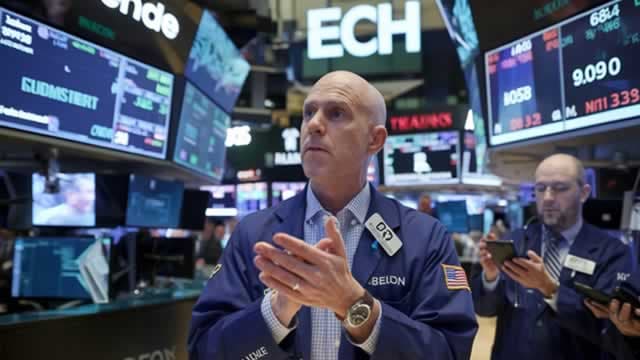
European stocks are expected to open sharply higher on Wednesday following news of the U.S. and Iran's ceasefire deal.


India's central bank on Wednesday held its key policy rates. A Reuters poll of economists had forecasted the policy rate to remain unchanged at 5.25%.

US futures surge as Iran ceasefire lifts sentiment, with S&P500 targeting a 50-day MA breakout while oil plunges on hopes of Hormuz reopening.

As I write this, we are only 3 hours away from Trump's ultimatum to Iran: open the strait or face annihilation. There is little in the way of market pricing that suggests investors are very concerned about the consequences of today's upcoming events.

U.S. stock futures were surging and oil prices falling after President Donald Trump said he was suspending Iran attacks for two weeks, subject to agreements from Tehran. Trump says the U.S. has received a 10-point proposal from Iran, and believes it is a workable basis on which to negotiate.

President Trump's cease-fire agreement with Iran buoyed stocks in Asia and sent oil lower on hopes that an end to the conflict is in sight.
Treasury Department officials plan to meet with states about market risk.
JGBs rise in price terms in the morning Tokyo session on easing inflation concerns spurred by President Trump's agreement to a two-week cease-fire with Iran.

Markets spent the day hyper-focused on President Donald Trump's 8 p.m. ET deadline for Iran to reopen the Strait of Hormuz, only to have him issue another last-minute extension this evening.

Precious metals rose in early trade, boosted by dollar weakness which makes USD-denominated gold and silver cheaper for holders of non-USD currencies.

John Sfakianakis from Gulf Research Center says the markets are “completely wrong” in pricing out the Iran war, as military buildup and failed negotiations point towards further escalation. He also says the oil markets are currently in a "new paradigm" where the risk premium associated with the Strait of Hormuz has to be taken into account.

President Donald Trump agreed to a two-week ceasefire deal with Iran at the 11th hour. Trump originally gave the Iranian leadership till 8 p.m. E.T. on Tuesday to open the Strait of Hormuz.

President Donald Trump on Tuesday said he agreed to suspend planned attacks on Iranian infrastructure for two weeks.

President Donald Trump's proposed $1.5 trillion fiscal 2027 U.S. defense budget will likely have major implications for the aerospace and defense complex, with UBS flagging three clear potential winners — and one notable loser.

CNBC's Jim Cramer said that the session showed "a heck of a lot of bad news," citing a "weak consumer, coupled with inflation." The S&P 500 was down for most of Tuesday as Trump's deadline for a deal with Iran approached with little signs of progress.

Federal Reserve governor Philip Jefferson pointed to shifts in employment data that suggest the job market may no longer be weakening as it was in 2025.

U.S. stocks have been stuck in a steady grind lower since the start of the Iran conflict in late February. But many on Wall Street are surprised that markets haven't fallen even further.

The stock market recoups sharp losses Tuesday on hopes the Iran conflict will be resolved soon. Investment bank Oppenheimer breaks out.

Dan Niles, Niles Investment Management, joins 'Closing Bell Overtime' to talk the state of the AI trade, the lull in semiconductor stocks, the state of the Big Tech trade, and more.

Inflation is back to taking center stage for the Federal Reserve as officials navigate the latest energy price shocks to the economy. All this brings the odds of further interest rate cuts lower, with some experts speculating that the central bank could even raise rates in 2026.