
加载中...
共找到 39,492 条相关资讯

Tom Lee, Fundstrat, joins 'Closing Bell' to discuss what's next for equity markets, if the Iran war changed market predictions and much more.


Bloomberg's Caroline Hyde and Ed Ludlow discuss the rally in tech stocks and fall in energy prices as markets react to a two-week ceasefire deal between the US and Iran. Plus, Anthropic is giving tech firms early access to its new Mythos model to get ahead of possible cyberattacks that could wreak havoc.
Sam Vadas and Alex Coffey offer a closer look into headlines that slipped under the main development on the U.S.-Iran ceasefire. Among Sam and Alex's picks: a South Korean-led tech rally and Wall Street gearing up for the true start to a new earnings season.
Today's Executive Summary — April 8, 2026: Market and Industry Outlook Geopolitics and Oil Volatility The US-Iran ceasefire is considered "fragile," as kinetic action continues in the Gulf, keeping the crucial Strait of Hormuz closed. Overnight, oil prices (Brent and WTI) dropped 16%, suggesting potential short-term relief at the gas pump for consumers.
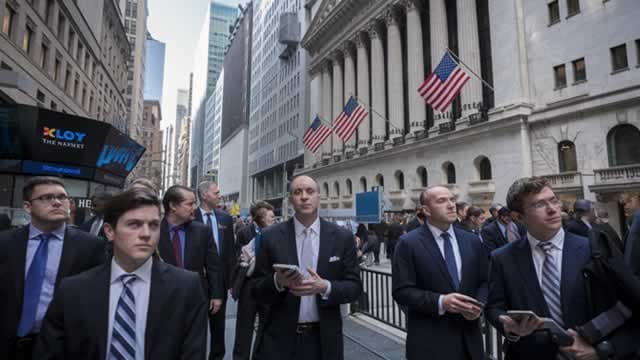
A last-minute ceasefire pulls us back from the brink

Treasury bond trading surged to record daily volumes in March, averaging $1.4 trillion amid heightened geopolitical risks and shifting rate expectations. Primary Dealers now hold a record $510 billion in Treasuries, expanding positions as new SLR standards enable greater balance sheet flexibility.

US stocks surged on Wednesday, capping a powerful global rally after a last-minute ceasefire agreement between the United States and Iran eased geopolitical tensions and triggered a sharp drop in oil prices. The two-week truce, announced by US President Donald Trump just hours before a self-imposed deadline for escalation, helped restore investor confidence after weeks of volatility driven by conflict in the Middle East.

Stocks are surging on a 2-week Iran ceasefire, but is this the all-clear or just a relief rally? What's safe to buy right now?

Comprehensive cross-platform coverage of the U.S. market close on Bloomberg Television, Bloomberg Radio, and YouTube with Romaine Bostick, Katie Greifeld, Carol Massar and Tim Stenovec.
Operator: Good afternoon, ladies and gentlemen, and thank you for standing by. Welcome to the Kura Sushi USA, Inc. Fiscal Second Quarter 2026 Earnings Conference Call. [Operator Instructions]. Please note that this call is being recorded. On the call today, we have Hajime Jimmy Uba, President and Chief Executive Officer; Jeff Uttz, Chief Financial Officer; and Benjamin Porten, Senior Vice President, Investor Relations and System Development. And now I would like to turn the call over to Mr. Porten. Please go ahead. Benjamin Porten: Thank you, operator. Good afternoon, everyone, and thank you all for joining. By now, everyone should have access to our fiscal second quarter 2026 earnings release. It can be found at www.kurasushi.com in the Investor Relations section. A copy of the earnings release has also been included in the 8-K we submitted to the SEC. Before we begin our formal remarks, I need to remind everyone that part of our discussion today will include forward-looking statements as defined under the Private Securities Litigation Reform Act of 1995. These forward-looking statements are not guarantees of future performance, and therefore, you should not put undue reliance on them. These statements are also subject to numerous risks and uncertainties that could cause actual results to differ materially from what we expect. We refer all of you to our SEC filings for a more detailed discussion of the risks that could impact our future operating results and financial condition. Also during today's call, we will discuss certain non-GAAP financial measures, which we believe can be useful in evaluating our performance. The presentation of this additional information should not be considered in isolation nor as a substitute for results prepared in accordance with GAAP, and the reconciliations to comparable GAAP measures are available in our earnings release. With that out of the way, I'd like to turn the call over to Jimmy. Hajime Uba: Thanks, Ben, and thank you to everyone for joining us on our call today. Entering this fiscal year, we knew that the second fiscal quarter will be critical regarding our ability to accomplish our stated goals, expectations and full year guidance. As some of you may have seen in this afternoon's release, our fiscal second quarter was quite strong. We have a lot of good news to share today, including better-than-expected comparable sales and record-breaking labor leverage. So let's jump right in. Total sales for the fiscal second quarter were $80 million, representing comparable sales growth of 8.6% with 4.3% positive traffic and 4.3% of price on the mix. To provide an update on our goal of flat to slightly positive full year comparable sales. Our year-to-date comparable sales growth as of the end of the first half of fiscal 2026 is now 3%. While Q2 is the most favorable quarter in the fiscal year from a comparative perspective, considering our performance to date, we now expect modestly positive full year comps. Cost of goods as a percentage of sales were 30.4% as compared to the prior year quarter 28.7%. The tariff situation remains largely unchanged for us and the [ minorities ] due to the changes in tariff types have been offset by commodity inflation. We continue to expect full-year COGS to be approximately 30%, ever as a percent of sales improved by a remarkable 410 basis points from last year's 34.8% to 30.7%, driven by operational initiatives and better sales leverage. Opportunity from labor initiatives scale alongside seasonal leverage, and it's unusual to see this level of impact in the first half of the fiscal year. Given our progress to date, our initial goal of improving labor as a percentage of sales by 100 basis points has proven to be conservative. Moving on to unit development. In the second quarter, we opened one new restaurant in [indiscernible]. Subsequent to quarter end, we opened four more restaurants, Orange and Union City, California, Goodyear, Arizona and Wellington, Florida. The openings from fiscal '26 are shaping up to be just as strong as fiscal 2025, which was the strongest vintage in recent memory. We currently have 8 units under construction. As some of these have very recently broken ground, our expectation for new openings in fiscal '26 remains at 16 units. On marketing, it's clear that our strategy of reemphasizing our IP collaborations is working. Our [ Kirbi ] collaboration was just as successful as we had hoped and Nintendo is an excellent partner. [indiscernible] evergreen popularity was one of the reasons for our strong performance in February. Our current [ IV ] collaboration [indiscernible] coinciding with the release of the third season. Our next collaboration is with Tamagotchi as part of its 30th anniversary celebration followed by [indiscernible]. They are making meaning introduction of [indiscernible] in our reward program. This is the most meaningful evolution in the reward program since its introduction, and we have to work to create something that will delight both new guests and long time [indiscernible]. Turning to the reservation system. I'm pleased to report that -- it was members using the reservation system, a much higher visitation rate than [indiscernible]. Our two running [indiscernible] under the accuracy of our wait times estimates. And we feel the reservation system has succeeded in addressing the biggest pain point for our guests. We believe that there is further opportunity by raising awareness of the ability to place reservations and [indiscernible] completely. To this end, after opening up reservation to non-reward members, we were able to grow the number of reservations paced by over 30%. On these robots, we continue to expect to retrofit the majority of the 50 restaurants that have the space to accommodate them by the end of the fiscal year. If they have mentioned that our expectation to improve labor by 100 basis points for fiscal '26 does not contemplate the impact of the [indiscernible] robots. We expect the robot to deliver an incremental 50 basis points benefit in fiscal '27 over wherever we land at the end of this fiscal year. It's my pleasure to be able to report such a strong quarter, and I would like to thank our team members at our restaurants and support center for making this possible. Before I turn the call over to Jeff, I want to take a moment to address our announcement today and recognize and thank him personally. It has been an invaluable partner to me and to Kura Sushi over the past 4 years. His strategic insight and financial leadership have been instrumental in our growth journey as a public company. While we will miss his expertise on the partnership, we are grateful for everything he has contributed to our success. This, on behalf of everyone at Kura, we would like to wish you the best of luck and success in your future endeavors. Jeff Uttz: Thank you, Jimmy, for those kind words. It's been an honor and a privilege to serve as CFO of Kura Sushi over the past 4 years. I'm incredibly proud of what we've accomplished together as a team, and I'd like to thank Jimmy, the Board and every member of the Kura family for their partnership and their trust. Now let me walk you through our fiscal second quarter financial results. For the second quarter, total sales were $80 million as compared to $64.9 million in the prior year period. Comparable restaurant sales growth compared to the prior year period was 8.6%, with 4.3% from traffic and 4.3% from price and mix. Comparable sales growth in our West Coast market was 7.2% and 9.7% in our Southwest market. Effective pricing for the quarter was 4.5%. As a reminder, beginning in the first quarter of fiscal 2027, we will no longer provide regional breakdowns for comparable sales as regional comps are largely determined by the timing of infills, and we do not believe they are indicative of overall company trends. Turning now to costs. Food and beverage costs as a percentage of sales were 30.4% compared to 28.7% in the prior year quarter due to tariffs on imported ingredients. Labor and related costs as a percentage of sales were 30.7% as compared to 34.8% in the prior year quarter due to operational efficiencies, pricing and better sales leverage, partially offset by low single-digit wage inflation. Occupancy and related expenses as a percentage of sales were 8.1% compared to the prior year quarter's 7.9%. Depreciation and amortization expense as a percentage of sales were 5.2% as compared to the prior year quarter's 5.1%. Other costs as a percentage of sales were 14.5% as compared to the prior year quarter's 13.5% due to higher promotional and utility costs. General and administrative expenses as a percentage of sales were 13.7% as compared to 16.9% in the prior year quarter. Fiscal second quarter 2026 includes $1.2 million of litigation expenses as compared to $2.1 million of litigation expenses in the prior year. Operating loss was $2.2 million compared to an operating loss of $4.6 million in the prior year quarter. Income tax expense was $51,000 as compared to $38,000 in the prior year quarter and net loss was $1.7 million or negative $0.14 per share compared to a net loss of $3.8 million or negative $0.31 per share in the prior year quarter. Adjusted net loss, which excludes the litigation expense, was $502,000 or negative $0.04 a share as compared to adjusted net loss of $1.7 million or negative $0.14 per share in the prior year quarter. Restaurant level operating profit as a percentage of sales was 18.2% compared to 17.3% in the prior year quarter. Adjusted EBITDA was $5.5 million as compared to $2.7 million in the prior year quarter. And at the end of the fiscal second quarter, we had $69.7 million in cash, cash equivalents and investments and no debt. And lastly, I'd like to update and reiterate the following guidance for fiscal year 2026. We now expect total sales to be between $333 million and $335 million. We expect to open 16 new units, maintaining an annual unit growth rate above 20% with average net capital expenditures per unit continuing to approximately $2.5 million. And we now expect G&A expenses as a percentage of sales to be approximately 12%, excluding litigation expense. And we now expect full year restaurant-level operating profit margins to be between 18% and 18.5%. And with that, I'd like to turn it back over to Jim. Hajime Uba: Thank you, Jeff. This concludes our prepared remarks. We are now happy to answer any questions you have. Operator, please open the line for questions. As a reminder, during the Q&A session, I may answer in Japanese before my response is translated into English. Operator: [Operator Instructions]. And the first question comes from the line of Andrew Charles with TD Cowen. Andrew Charles: I was a bit surprised following the big 2Q same-store sales beat that revenue guidance was inched up. You're looking at consensus forecast, it looks like you're blessing the back half at the midpoint. So does that reflect conservatism in the back half of the year? Or perhaps you can comment on what you're seeing with the new store productivity as well? Hajime Uba: Thank you, Andy, for your first question. But please allow me speaking Japanese. [Foreign Language]. Benjamin Porten: [Interpreted] Charles or Andrew Charles, my grandfather's name is Charles. Andrew, this is Ben. In terms of the guidance that we provided, it really -- it incorporates the better-than-expected performance of Q2. But just given there's a war going on and we don't know how it's going to play out. We felt it was prudent in terms of our guidance just to add the upside from Q2, but not to extrapolate further from that. It doesn't reflect conservatism or pessimism. It's just prudence. Andrew Charles: Okay. Fair enough. And then curious, what drove the improvement in mix to roughly flat? What are you seeing there in terms of attachments or beverages, et cetera, that helped improve that performance? Hajime Uba: [Foreign Language]. Benjamin Porten: [Interpreted]. The biggest factor would be our guests are eating more plates per person. Our interpretation is that this is a reflection of the success of the IPs. When we have compelling IPs, people are that much more incentivized to go for that 15th plate or to hit the spending threshold for our giveaways. Andrew Charles: And Jeff, all the best in your new role. Operator: The next question comes from the line of Todd Brooks with Benchmark StoneX. Todd Brooks: Congrats on a really great quarter. And Jeff, best of luck in your next stop here. So 2 questions, if I may. One, you talked about the margin leverage in this business and kind of the ability to claw your way back towards a 20% restaurant level operating margin without any sort of tariff relief. I think at a recent conference, Jimmy, you talked about some successful negotiations with some suppliers. We saw outsized labor leverage here. I guess, where are we in that journey? And when would you kind of think Kura has the ability to get back to that 20% level? Hajime Uba: [Foreign Language]. Benjamin Porten: [Interpreted]. Todd, this is Ben. So we're very pleased with how the negotiations between [ Jinny ] and our suppliers went. Unfortunately, we've seen higher-than-expected inflation in some of our seafood inputs separately from tariffs. And so the upside to Jimmy's negotiations have largely have been offset. We're thinking of it in terms of thanks to the negotiations, we're able to continue to maintain our expectation of, give or take, 30% COGS for the full year. And so we don't expect that to be accretive to a margin opportunity. The biggest would be, as we look to next year, as Jimmy mentioned in his prepared remarks, the [ DISH ] robots, we expect an incremental 50 basis points in terms of leverage -- or I'm sorry, in terms of labor improvement. And next year, we have a -- previously, we've been saying a 50-50 split between new and existing markets that's actually shifted even more in our favor to 55-45. These -- the new markets have no impact to cannibalization. And so that will be a tailwind for fiscal '27. And all things equal, new markets outperform. And so between those things, we feel very confident in our ability to get back to that 20% without tariff relief. Todd Brooks: In the near future. Benjamin Porten: In the near future, correct. Todd Brooks: Perfect. And then my follow-up question, I'll jump back in queue. If -- and I think, Jimmy, when you were kind of rolling through it, you talked about some future IP partnerships. Can we just review those again so that we pick up the detail behind the upcoming partnerships? And as we're starting to think about, I think at the end of April, this window of IP versus no IP in the prior year and so as we're looking forward into Q3 here, can you remind us what we're comparing against? I just want to -- and just give us a qualitative sense of the strength of the partnerships that you see coming up in the future versus what Kura ran last year. Benjamin Porten: Got it. Todd, this is Ben. So the ones that we have lined up after Jujutsu Kaisen or [ Tamagachi ], which is coinciding with its 30th anniversary. And then we have a partnership with a video game called Honkai Star Rail. In terms of your question, yes, at the end of April, we'll be ending the lapping of the lack of IPs. Starting from the last week of April through May, we had peanuts. And then actually through June, we had peanuts as well. Those months were pretty strong. And then we had hololive, which was a strong performer as well. So that sort of goes back to Jimmy's earlier comment about Q2 being the easiest point of comparison. Please do not model 8% comps on a go-forward basis. Operator: The next question comes from the line of Jeremy Hamblin with Craig-Hallum. Jeremy Hamblin: Congrats on the strong results. I want to revisit just the tariff ruling and in terms of thinking about, obviously, some volatility on sourcing potential for freight costs to be passed through as well given the war. But just in terms of understanding the tariff aspect of your food cost that's embedded here, what's the timing where you would expect, given your kind of forward contracts to potentially have some benefit, all else being equal, are we looking at kind of the June time frame, just given the change in the global tariff rate? Hajime Uba: So I'm happy to answer this question. [Foreign Language]. Benjamin Porten: [Interpreted] Jeremy, this is Ben. So to your point earlier, we do make forward contracts for some of our proteins. Because our basket is so wide, we have the contracts don't expire on the same date, so to speak. They're all sort of overlapping. And so there wouldn't be a moment where we would expect a really meaningful shift. The other thing that [ bears ] mentioning is with the tariffs, while the [ IFA ] tariffs were taken down, they were replaced by other tariffs. And so the relief was really quite minor for us, and this has been offset by fuel costs and just protein inflationary basket. Jeremy Hamblin: Got it. So with that, I wanted to talk about kind of technology investments that you guys have been making, which have had nice success, the reservation system, robotic dishwashing. In terms of other labor initiatives because it looks like you guys have made some really nice progress, tremendous progress on the labor front. Can you talk about with so many tools now available and you guys have really been an industry leader in making technology investments to help make your business operations more efficient. Can you just talk about some of these tools that are available, whether they're kind of AI generative tools to help with labor scheduling or otherwise that provide some opportunity on a go-forward basis, whether it's in FY '26, but more likely in the future, just to potentially really refine the business model. Hajime Uba: [Foreign Language]. Benjamin Porten: [Interpreted] Jeremy, so to give you an update on the robotic dishwashers, we expect to finish the installation of our first 10 or tranche of the first 10 by the end of this month. And so we're very happy with the progress. Very happy to announce that we've actually gotten an approval for American use for technology that we've mentioned in past calls, the Sushi slider. And so this will be limited to new store openings, and we don't expect a straight headcount reduction in the way that we'd expect with the robotic dishwashers, but this will be a margin opportunity, especially for higher volume restaurants on weekends. In terms of the tech things that we're looking at, we're focused a lot on using technology to improve food quality and food consistency. And we're also starting to explore more guest-facing technologies as well that are as focused on efficiency as much as they are focused on fun, which we see as a meaningful opportunity in terms of driving traffic as well going forward. In terms of AI, we're using a couple -- we're using the social media listening tool right now. But I've been assigned AI broadly. I'm the Chair of our new AI committee and this is large -- this is eating most of my time. And so I hope to have exciting updates for you guys in the future. Hajime Uba: [Foreign Language]. Benjamin Porten: [Interpreted]. Yes. Really, it's kind of shocking how meaningful the strides have been and in terms of like the ease of making specialized tools for your business. And so we see a lot of really, really exciting things we can do. One obvious application would be to try to hone in on the batting average of our IP collaborations. That would be something that we'd be really excited about. Jeremy Hamblin: Great. And best wishes to the team and Jeff on his next endeavor. Operator: The next question comes from the line of Jeff Bernstein with Barclays. Anisha Datt: This is Anisha on for Jeff Bernstein. Before my question, I wanted to thank Jeff for 4 years of collaboration and wish him all the best going forward. As you think about bringing a new CFO, what key capabilities or prior experience are most important given Kura's next phase of growth, particularly around unit development, capital allocation or systems as the business continues to scale. Hajime Uba: [Foreign Language] Benjamin Porten: Yes. Anisha, this is Ben. Guest has been such a great partner to us. We really -- we set high expectations for the role, and we're looking for somebody who can satisfy that. And so that's something that our Nominating Committee is working on right now. All those qualifications that you've mentioned. Personally, I would love somebody as charming and charismatic as Mr. Uttz. It's been a lot of fun working with him. And so we're not in a rush to fill the spot for the sake of filling the spot. We know it's a very, very important role, and we're going to give it the appropriate attention. Unknown Analyst: Great. And as a follow-up, you've guided to around 20% unit growth for fiscal '26. So looking beyond that, what gives you confidence that a similar growth rate is sustainable into fiscal '27? And what key guardrails are most important to preserve as the system scales? Hajime Uba: [Foreign Language] Benjamin Porten: [Interpreted] So as it relates to fiscal '27, we already have our pipeline built. And so we feel very confident about our ability to hit that 20% unit growth for fiscal '27. In terms of the gating factors, the way that we've always thought about it would be if our new units are not meeting our expectations, if they're coming in below the average -- the system average for unit economics, that would seriously -- that would cause us to seriously reconsider how quickly we're growing. But as Jimmy mentioned earlier, fiscal '25 is one of the strongest years we've opened in recent memory and fiscal '26 is shaping up very strong as well. And so we're really pleased with that. And we'd like to sustain that 20% unit growth for as long as possible. At the same time, we don't want that 20% to become the tail that wags the dog. And so if it ever -- we would -- we're always looking at it critically. It's not a blind chase of a number. And should circumstances change, we'd like to maintain our flexibility. But for where we have visibility as it stands today, we feel good about that 20%. Operator: The next question comes from the line of Sharon Zackfia with William Blair. Sharon Zackfia: I guess I have 2. The first is kind of going back to one of the initial questions on -- I guess, Jimmy, you said slightly positive comps for the year, and you can kind of get there with no comps for the rest of the year. And I get that there's geopolitical uncertainty and all of that. But are you seeing anything in the business that would suggest that you can't maintain positive comps for the rest of the year? Hajime Uba: [Foreign Language]. Benjamin Porten: [Interpreted] So Sharon, I'm sure you recall the traumatic and unfortunate experience a couple of years ago where we raised guidance. And then in a number of weeks, we had to lower guidance below the initial guidance. And that sort of informed a level of conservatism in the way that we provide guidance ever since. But having had that lesson and knowing today that the President has like a deadline and we don't know what's going to happen, it just seems irresponsible to get ahead of our skis. And so the guidance reflects what we're seeing to date and what we're confident that we can hit. Hajime Uba: [Foreign Language]. Benjamin Porten: [Interpreted] And we're pleased with how the quarter is going so far. Hajime Uba: [Foreign Language]. Benjamin Porten: [Interpreted] Just looking at how the environment is, we're pleased with how things are proceeding. Sharon Zackfia: Okay. Second question is it may have been causal or may have been coincidental, but it certainly felt like the company got a lot more disciplined around G&A when Jeff joined the company. And I guess I'm curious, like do you think now that's part of the muscle memory of the company and ingrained that you will seek G&A leverage on an ongoing basis even as Jeff departs. And again, sorry, I see you go, Jeff. Jeff Uttz: Thanks, Sharon. I mean I'll let Jimmy and Ben address going forward. But we made a lot of strides. I'm proud of the team. I was fortunate to be in the driver's seat for the G&A reduction and kind of lead the charge, but the team really stepped up and over 400 basis points in just over 3 years is quite a bit when you kind of multiply that by the trading multiples and all that is quite a bit to our valuation that I'm quite proud of. Going forward, as Jimmy said earlier, as they search for a new CFO, they're not going to rush it. And it humbles me and makes me feel proud that the company thinks of me the way that they do. And I wish them the best, and I'll be on the sideline continuing to watch what they do. And I hope that the new CFO continues to lead this to a single-digit G&A at some point, as I have promised in the past. Hajime Uba: [Foreign Language]. Benjamin Porten: [Interpreted]. Jeff has carved such a clear and sustainable path forward for us that we absolutely expect to continue to leverage G&A, and that's going to be one of the primary mandates for whoever becomes the next CFO as much as I would love to double my salary, we know that there are more prudent ways to spend our money. It's just -- it's one of the things that our investors have come to expect. It's part of our guidance. And so it's just -- it's part of our report card at this point. And so Jeff meeting doesn't change that. Operator: The next question comes from the line of Mark Smith with Lake Street Capital Markets. Mark Smith: I wanted to dig into the comp just a little bit. I'm sorry if I missed any update on this. But can you guys speak at all to March? And maybe as we saw gas prices rise, any changes in consumer behavior and potentially in the past, if gas prices have had a significant impact on your consumer, whether it be the plates that they eat or traffic trends? Hajime Uba: [Foreign Language]. Benjamin Porten: [Interpreted] So as Jimmy mentioned earlier, we're happy with how the quarter-to-date is going. As it relates to gas prices, [indiscernible] And I were in California, gas prices were $6. Whether we're talking about Kura or any other company, it would be bullish to think that this would not have an impact on the consumer. That being said, we are pleased with performance. And yes, that's where we are. Mark Smith: Okay. Last question for me is just around cadence of openings as we look at the back half of the year, the remaining restaurants to open, will these be more heavily? I know you've got 4 open, but should we look for the rest of those kind of in Q4? Or can you squeeze more in here in Q3 or even early in Q4? Hajime Uba: [Foreign Language]. Benjamin Porten: [Interpreted] There are a number of stores that we're hoping to open up in Q3, but it's -- for modeling purposes, it's -- we think it's safe to assume back half weighting relative -- Q3 relative to Q4. Operator: The next question comes from the line of Jim Sanderson with Northcoast Research. James Sanderson: Jeff, best of luck in your new opportunity. I wanted to go back to seafood inflation and more broadly food costs. Is there any concern that we're going to start seeing or hearing about fuel surcharges or incremental invoice impacts from aviation fuel increases or diesel fuel in the next couple of quarters? Jeff Uttz: Jim, it's Jeff. I've been really deep into this as I finish up here really watching this. That is a possibility. Fuel surcharges are something that the delivery companies like to impose. I did ask our supply chain team. We haven't seen a lot of it lately, just a handful, but that is a possibility. It does happen, obviously, when fuel goes up. We push back on those. And I see I've had these before at other companies, and I don't just accept them. I push back and say, look, that's the cost of doing business. If you want to adjust your prices, go ahead, but they typically don't. And they will usually allow you to cross out those line items on the invoice. And I've been pretty successful with that in the past. That being said, as Jimmy mentioned earlier, there's just a lot of puts and takes in food cost right now with what's going on in the world. And that's why we've kept our guidance at the 30%-ish number for the year. And we think with all the negotiations, minus anything that's going on with fuel and delivery costs and all that, we remain pretty confident in that 30% number as to where we sit right now for the year. Hajime Uba: [Foreign Language]. Benjamin Porten: [Interpreted] So just to add on to Jeff's comment, we're very, very proud that we've been able to keep our cost of goods sold at 30%, all things considering. When you look at our Q2 comps, half of that being driven by traffic. We see this as vindication of our strategies. The 4.5% effective pricing that we're running as of November translates to roughly $1 per person. And we know that our direct competitors, the individually owned sushi restaurants, there's just no way that they're able to keep the doors open by charging just one extra dollar per person. And that value delta has become clearer and clearer to our guests. And so this dynamic isn't fun, but it works in our favor. And as incremental pressures arise, again, it won't be fun, but it will work in our favor. Hajime Uba: [Foreign Language]. Benjamin Porten: [Interpreted] And we're really happy that we -- as we see the year now, we feel that we have no need to take further prices. James Sanderson: Okay. And that assumes about 4%, 4.5% for the fiscal year for price? Hajime Uba: [Foreign Language]. Benjamin Porten: [Interpreted] It will be a little bit below 4% on a full year basis. James Sanderson: Last question for me. I think last year, you reported about a 500 basis point negative impact because of wildfires and other issues. If we peel that off the 8.5% the comp you reported, is that a good run rate for where you think you are trending March, April to date? Hajime Uba: [Foreign Language]. Benjamin Porten: [Interpreted] Ben, unfortunately, we had weather as well this year. And so the comps are so good that it doesn't seem obvious, but we did have pretty significant winter weather that impacted our sales. And so the 400 to 500 basis points, while that was -- that's not a 400 to 500 basis point tailwind this year, it's more like a 200 basis point tailwind. James Sanderson: Okay. Okay. So again, maybe I can ask it one last. How should we think about the performance in the back half relative to the guidance, low single digits, just kind of bridging that gap? Hajime Uba: [Foreign Language]. Benjamin Porten: [Interpreted] We don't like to make it a practice of giving quarterly guidance. And just given all the moving parts, we feel it's especially not a good time to try to give quarterly guidance. But we did provide a guidance update at the beginning of this call and all that incorporates everything that we've seen to date. Hajime Uba: [Foreign Language] Benjamin Porten: [Interpreted] And to reiterate, we're happy with how Q3 has performed so far. Operator: The next question comes from the line of George Kelly with ROTH Capital Partners. George Kelly: First, Ben, in response to one of the earlier questions, you mentioned there being opportunity for tech enhancements around food quality and consistency. I don't know how much you're going to want to say on today's call, but can you provide a little more detail just on where you think there could be opportunity there? Hajime Uba: [Foreign Language] Benjamin Porten: [Interpreted] So the 2 that are on the docket right now, one is managing our broth. And so we make all of our broth, all of our stock from scratch every morning. During my trading period, I was responsible for doing this. So this is near and dear to my heart. But you make the broth in the morning. And if you're keeping it warm, it evaporates. And so it gets progressively more concentrated and bitter. And so we have this technology that we use in Japan that allows it to stay fresh all day long. And so we're really excited to bring that over and make sure that we have very consistent quality on what we see as one of the most important things about our restaurants being our broth. The other that we're working on is -- so we have a sear station for like the seared mayo salmon, for instance. We do that by hand right now, but we're working on automating that. And so that will give us much greater consistency, probably a little bit in labor savings, but that's mostly a food quality effort. George Kelly: Okay. Okay. Helpful. And then 2 other quick ones. litigation expense, what are your expectations for that in the coming quarters? Should it stay kind of consistent with what you just did? I think it was $1.2 million in the quarter? And then second question on labor. I may have missed it, but did you provide more specific like an updated guide for the year on labor? And that's all I had. Hajime Uba: [Foreign Language] Jeff Uttz: Sorry. I'll address the litigation one, George, and then Jimmy can jump into the labor side. On the litigation, I mean, unfortunately, this is just a negative byproduct of doing business in California. And any of the restaurant companies that you follow or anybody else follows, you get sued in California for just wage and hour stuff regardless of how buttoned up your system is. So what are my expectations? My expectations are to never be sued because I think we're very buttoned up. But it just happens in California, and it's an unfortunate thing. So I would like to tell you that they're done, but we just don't know. But I will assure you that our employment -- the practices that we employ in terms of employment and wage and hour law are some of the best that I've ever seen, but you just can't get away from it in California. So that's where I'd leave it. I'm hopeful that we won't see any more, but you just never know. Hajime Uba: [Foreign Language] Benjamin Porten: [Interpreted] George, as it relates to labor, we're not expecting 400 basis points in leverage in the coming quarters. There were a lot of idiosyncrasies to Q2 that led to that 400 basis points. But we do think that for Q3 and Q4, we can improve labor year-over-year by about 150 basis points. And so we're looking forward to giving you guys updates on that. Operator: The next question comes from the line of Matt Curtis with D.A. Davidson. Matthew Curtis: I just had another one on the reservation system. Jimmy, in your comments, I think you mentioned that it was driving a much higher visitation rate. So just wondering if you've seen any sales lift from increased usage of the reservation system. I mean I think you guys previously said you've not been explicitly baking in any sales upside from this. I just wanted to see if this is still the case or not. Jeff Uttz: Yes. Our internal estimate is that the reservation system has contributed about 1%. And so we're very pleased, especially given the headcount reduction's already delivered. Matthew Curtis: Okay. Great. And one last one for me. I think you had a gap in your IP collaborations in -- for the first 2 weeks of March due to some inspection issues, I believe it was. Could you maybe just provide a little more detail around this and whether you think it's more of a one-off or something that could potentially reoccur? Jeff Uttz: This has actually never happened before in our history of being in the United States. And so we really had no reason to expect it. We don't expect it to happen again. We're not sure why it happened this time, but we think it's one-off. Hajime Uba: [Foreign Language] Benjamin Porten: [Interpreted] So while we weren't happy that this happened, we don't really see it as a meaningful headwind just given that the overwhelming upside and response opportunity for the IP collaborations tends to be the first 2 weeks. And so it's not like we lost those first 2 weeks. We just pushed them back by 2 weeks. And so if we lost anything, it would been the last 2 weeks of the campaign, which tailwind comparison to the first 2 weeks. And so it's unfortunate, but it's not as much of a headwind as it might sound like. And to reiterate, we're happy with Q3. Operator: The next question comes from the line of Jon Tower with Citi. Jon Tower: Just curious, I noticed that you guys during the quarter did a sushi lunch combo. I think it was $13.99. And it wasn't something that's seen before, but I think it's something you've done in the past, just not in recent memory. So I'm curious, one, how consumers responded to it? Two, did it end up impacting your mix at all or traffic during that lunch period? And is this also a sign of something that you feel comfortable with using again in the future? Hajime Uba: [Foreign Language] Benjamin Porten: [Interpreted] So this is something that we've done every winter. We usually do some sort of combo with our soups and our noodle dishes. We think they're really good, and we just -- we want to give people opportunities to -- for reasons to try them. And so that's something that we've done every year. It has an impact, but it's not really a big needle mover. We'll probably do something similar in the summer as well, not for soups, but we don't expect it to be a big needle mover. Hajime Uba: [Foreign Language] Benjamin Porten: [Interpreted] [indiscernible] And Jon, it's really -- it's great to see how successful the IPs have been working. But we don't want to be entirely reliant on IPs. And so to that end, we've been working on a lot of LTOs even going above and beyond the core reserve. For instance, in March, we had a campaign called Wagyu of the Seas. It's very high-quality Toro. And yes, we just -- we've got a pretty good calendar in terms of reasons to come in. Jon Tower: Got it. I appreciate that. And I got to the stores more frequently to make sure I can understand what's new and what's not. But I guess you had mentioned earlier, obviously, that this year, you've been pretty disciplined on pricing and that the competitive set is likely going to have to pass along a lot more pricing than what you guys are planning to do for the year. One, have you seen that happen anecdotally based on your own work that you've done? And then two, have you seen any signals that because of the price increases or potential price increases from the competitive set that consumers are pushing back and/or like there's risk that these other chain -- these other stores might have to close their doors because traffic is just not showing up the way that it should? Jeff Uttz: It's possible. I mean this is a dynamic that's played out twice before, at least with my time at the company, once during the pandemic and once during the post-pandemic supply chain issues. It's always been a traffic boon to us. The reason that we are interpreting -- the reason for this interpretation would really be -- we took 3.5% price on November, but our traffic accelerated. And so we don't think there'd be a reason for that if it weren't clear that the value is amazing. And anecdotally, yes, we are seeing it. You'll be able to confirm the same thing just by looking at Yelp menus and going back historically and seeing their current menus. And I think you might be surprised. Jon Tower: Got it. And are you guys highlighting that in any of the social or digital marketing that like how can you communicate that to guests without... Jeff Uttz: That's a tricky message. Everybody is raising price but us. It's not a good slogan. Hajime Uba: [Foreign Language] Benjamin Porten: [Interpreted] One thing that we do is target marketing, especially if we're able to see that the competitive set in that local market has taken price pretty aggressively. We can spend incremental advertising dollars there just to get eyeballs, and that's always -- that's worked pretty well. Another tool, we just talked about the Wagyu of the Seas, but that makes it easier for guests to make a direct comparison with higher-end sushi as well. And if they're not impressed by the salmon, getting the Bluefin Toro for $4 is impressive. And so it serves the dual purposes, these LTOs. Operator: Thank you. This concludes today's question-and-answer session, and this will also conclude the conference as well. You may all now disconnect your lines at this time, and we thank you for your participation. Have a great day, everyone. [Portions of this transcript that are marked [Interpreted] were spoken by an interpreter present on the live call.]

Operator: Ladies and gentlemen, welcome to the Fourth Quarter and Full Year 2025 Financial Results. My name is Joseph, the Chorus Call operator. [Operator Instructions] This conference is being recorded. [Operator Instructions] The conference must not be recorded for publication or for broadcast. At this time, it's my pleasure to hand over to Sarah Fakih, Head of Global Communications and Investor Relations. Please go ahead. Sarah Fakih: Thank you, Joseph. Good morning, good afternoon, and welcome to today's webcast and conference call. My name is Sarah Fakih, and I'm the Head of Global Communications and Investor Relations at Evotec. Please allow me to introduce today's speakers. Joining me on the call are Christian Wojczewski, Chief Executive Officer of Evotec; Paul Hitchin, our Chief Financial Officer; and our Chief Scientific Officer, Cord Dohrmann, will be available for the Q&A session. Please note that this call is being webcast live and will be archived in the events calendar on our website. Before we begin, a few forward-looking statements. The discussion and responses to your questions on this call reflect management's views as of today, Wednesday, April 8, 2026. During this call, we will make statements and provide responses that state our intentions, beliefs, expectations or projections regarding the future. These statements constitute forward-looking statements within the meaning of applicable securities laws. They are subject to risks and uncertainties, and actual results may differ materially from those expressed or implied. Evotec disclaims any intention or obligation to update or revise any forward-looking statements to reflect subsequent events or circumstances. For further information regarding these risks and uncertainties, please refer to our public filings and disclosures. With this, let me hand over the call to Christian. Christian Wojczewski: Thank you, Sarah. Good morning, and good afternoon to everyone. Thank you for joining today's call. Let me start with the headline results for 2025 and the first months of 2026. '25 was a year of significant progress for Evotec as we laid critical groundwork for the company's next chapter of sustainable and profitable growth. Throughout a persistently challenging market environment, we remained anchored in the strength of our science and the dedication of our teams, which continue to be the foundation of our performance. Building on these fundamentals, we introduced a new company strategy in 2025 that defined our priorities and now guide the transformation work underway in 2026 and beyond. Our four levers of midterm value creation, scientific leadership, operational excellence, better monetization of Just-Evotec Biologics and capturing pipeline value have already translated strategy into targeted action. As a result of this work in 2025, we have delivered more than EUR 60 million in annualized cost savings, streamlined our asset pipeline and reduced our capital expenditure by around 60%, important steps that have strengthened our balance sheet and our financial resilience. Against the challenging market backdrop of 2025, financial results were at the high end of our guidance range and Paul will go into more detail on that later in this presentation. Both segments of Evotec business have contributed to our progress in the past year. Discovery and Preclinical Development continued clinical advancement across partner programs, delivered milestones and underscored the productivity of our platforms despite continued softness in early-stage biotech funding. Just-Evotec Biologics delivered a breakthrough year supported by the landmark agreement with Sandoz and continued progress across global health programs. And last month, we kicked off our Horizon initiative, a comprehensive transformation of our operating model. We are already making substantial progress across the three Horizon pillars of operations, science and commercial execution. The last of which recently saw the appointment of a new Chief Commercial Officer, reinforcing our commitment to building a more agile, customer-focused organization. As Horizon implementation continues, we expect to see the first structural and financial benefits in the second half of 2026. Turning to the progress in our Discovery and Preclinical Development segment on Slide 5. We saw robust clinical and scientific advancement over the past 12 to 18 months, across key therapeutic areas, including oncology, neurodegeneration and kidney disease, as well as exciting developments in emerging modalities such as condensate modulation. During this period, and as already reported during our Q3 results in November 2025, two partnered assets moved into Phase II clinical studies. Since then, a partnered preclinical asset advanced to a first in human Phase I study, bringing our partnered clinical portfolio to a total of 2 programs in Phase II and 5 programs in Phase I. Let me briefly highlight the progress within some of our key alliances. In our cancer protein degradation collaboration with Bristol Myers Squibb, we are jointly developing a broad pipeline of next-generation molecular glue degraders, a revolutionary modality with a potential to target previously undruggable disease-causing proteins and an area in which BMS is the clear industry leader. The first candidate progressed from IND acceptance in November 2025 into a Phase I clinical study in March 2026 in advanced clear cell renal cell carcinoma, the most common form of kidney cancer. These advancements, which validate the strength of our screening and AI-supported analytical platforms resulted in milestone payments of $5 million and $10 million, respectively. In our neuroscience partnership with BMS, we achieved continued progress across a jointly developed preclinical pipeline focused on therapies for neurodegenerative disorders, triggering a $25 million milestone payment in October 2025. Lastly, in our kidney disease partnership with Bayer, a Phase II clinical study in Alport syndrome, a rare genetic kidney disease was initiated in December 2025, underscoring our discovery and translational capabilities in renal conditions. The momentum across these collaborations highlights our ability to translate our outstanding science into a successful clinical [indiscernible]. It validates our platforms and carries through on our fourth strategic lever, capturing pipeline value as assets advance to generate meaningful financial upside. Looking ahead, we expect the total number of assets in Phase II to have grown from 2 to 4 during 2026. Turning from our small molecule business to biologics, let me give you an overview of our Just-Evotec Biologics segment on Slide 6. 2025 was a breakthrough year for JEB defined by a strategic pivot away from a capacity-constrained manufacturing model toward an asset-lighter technology-focused partner enablement model. This evolution centered on our highly differentiated continuous manufacturing platform is reflected in the news flow throughout the year, featuring technology-enabled partnerships and significant progress in global health programs. However, the defining milestone for JEB was the completion of our strategic agreement with Sandoz, which closed in December 2025. The agreement is valued at $650 million with additional royalty potential for 10 biosimilars, the sixth most advanced of which have an originated value of about $92 billion. Further recent developments include a multi-year BioMaP-Consortium award of up to $10 million from the U.S. government, Biomedical Advanced Research and Development Authority. The program aims to optimize the biomanufacturing of monoclonal antibodies against Ebola and Sudan viruses, strengthening preparedness for hemorrhagic fever outbreaks. In January 2026, we also expanded our long-standing collaboration with the Gates Foundation, receiving a new grant supporting 10 new molecule design projects over the next 3 years. These projects apply our AI and computation-driven J.MD platform to improve antibody developability and advanced access to affordable biologics. Taken together, these advances show how JEB is evolving into a high-margin, technology-driven business with durable long-term value creation potential firmly validating JEB as a core pillar of future growth ambitions. Let me now hand over the call to Paul to walk you through our financial results. Paul Hitchin: Thank you, Christian, and a warm welcome from my side as well. On Slide 7, you can see our condensed income statement is in line with the preliminary unaudited financial results we provided as part of the Horizon Communication on March 10, 2026. For the fourth quarter of 2025, group revenues increased by EUR 32.1 million or 14.5% to EUR 253.3 million. And for the full year 2025 decreased by EUR 8.6 million or 1.1% to EUR 788.4 million compared to the same period in 2024. On a constant currency basis, Q4 revenues grew by 21% and full year revenues grew by 1.7% compared to 2024. While the broader CRO market showed early signs of recovery in 2025, the environment for early-stage drug discovery remained challenging. As a result, the full year revenue decline was primarily driven by lower revenues in our D&PD segment, where revenues declined by EUR 27.3 million or 16.6% to EUR 137.1 million for the fourth quarter and by EUR 82.5 million or 13.5% to EUR 528.9 million for the full year compared to the prior period. Unfavorable foreign exchange movements represented an additional headwind to full year revenues of 2.8%, driven by the U.S. dollar and British pound. However, those effects were largely offset by strong performance in Just-Evotec Biologics segment, including the positive contribution from the Sandoz transaction in the fourth quarter of 2025. Revenues within Just-Evotec increased by EUR 59.4 million or 104.2% in quarter 4 and by EUR 73.8 million or 39.8% and to EUR 259.4 million for the full year 2025 compared to 2024. This growth was driven by the continued progress in the Sandoz partnership, including an incremental contribution from a license payment of approximately EUR 65 million in the fourth quarter. While revenues from the U.S. Department of War-related activities declined in the second half of 2025, following announced budget cuts, revenues of our non-Sandoz and non-DoW customers continue to grow by more than 60% in the full year. Fourth quarter costs in Just-Evotec were temporarily elevated versus the underlying run rate driven by additional expenses associated with the Sandoz transaction and temporarily higher material costs, both of which are expected to normalize early 2026. In line with our guidance, R&D spending decreased further and amounted to EUR 37.5 million or 4.8% of total revenue for the full year 2025 compared to EUR 50.9 million or 6.4% of total revenue in 2024. Investing in our technologies and platforms remains a core part of the strategy and we will continue to allocate capital to scientific capabilities and technology leadership while maintaining a balanced investment approach in a challenging macroeconomic environment. Adjusted group EBITDA increased by EUR 29.5 million or 103.6% to EUR 58 million in the fourth quarter and by EUR 18.5 million or 81.9% to EUR 41.1 million for the full year of 2025 compared to the same period in '24. Adjusted EBITDA in the D&PD segment decreased by EUR 12.6 million to EUR 6.8 million in the fourth quarter and by EUR 24.7 million to minus EUR 12 million in 2025 primarily driven by the aforementioned lower revenues, which contracted faster than the cost base, creating internal overcapacity and weighing on segment profitability, underscoring the need for the operational transformation program recently announced as part of Horizon. Adjusted EBITDA in the Just-Evotec segment increased significantly by EUR 42.1 million or 463% in the fourth quarter and by EUR 43.3 million or 443% to EUR 53.2 million in 2025 compared to the prior periods. This strong result reflects continued progress in the validation of our continuous manufacturing technology as well as favorable shift in revenue mix towards higher margins and an asset-lighter technology enablement model. Turning to liquidity and the balance sheet on Slide 8. We closed 2025 in a solid position. At year-end, cash liquidity stood at EUR 476 million, representing a strong balance sheet with a net cash position. The improvement in our cash liquidity reflects disciplined financial execution, including the monetization of technology leadership through Just-Evotec Biologics, the realization from maturing equity stakes including the upfront payment from the sale of our minority stake in Dark Blue Therapeutics and our continued shift toward a capital-efficient operating model with CapEx spend reducing 38% year-on-year. Importantly, we entered 2026 with no active financial covenants, providing us with a high degree of financial flexibility. Now let me hand back to Christian, who will provide an update on some of our key revenue impacts. Christian Wojczewski: Thank you, Paul. To further contextualize our 2025 results and frame the trajectory into 2026 and beyond, let me briefly address one of our key strategic levers, our long-standing partnership with Bristol Myers Squibb. From 2016 to the end of 2026, our two BMS collaborations in urology and oncology are expected to have generated close to EUR 800 million in cumulative revenues. At their peak, they accounted for more than 20% of group revenues making BMS one of the most significant and successful strategic relationships in Evotec's history. With this partnership, the oncology collaboration today represents a larger contributor to BMS-related revenues. As illustrated on Slide 9, it has evolved through distinct phases from platform built out to expansion and now into portfolio maturation. These phases are characterized by alternating periods of investment and harvest, which are naturally reflected in corresponding changes in revenue contribution. Since the peak in 2023, revenues from the oncology collaboration have declined by more than 1/3 over the 2023 to 2025 period. This reflects a shift into a renewed investment phase focused on molecular glues and areas of exceptionally high scientific and commercial potential. While this transition has temporarily increased cost intensity and weight on D&PD profitability, it does not signal a weakening of the collaboration. Rather, it reflects the cyclical nature of a large multi-program discovery alliance. Looking ahead, it's important to recognize that the collaboration is already creating value in its current phase with a focus on building scientific depth and portfolio quality. While this phase continues to require investment, the scientific value being created today is expected to translate into renewed revenue growth and improved margins. Importantly, this fluctuating profile is expected to evolve as programs progress through the clinic. With the first joint asset having recently entered Phase I, clinical stage programs are expected to progressively complement the base business from 2027 onwards. This clinical progression will have smooth revenue fluctuations, add new growth drivers and support the margin expansion underpinning our midterm framework, which Paul will discuss in more detail later in the presentation. Continuing on Slide 10, I would like to address the second factor that significantly impacted our '23 to '25 revenue profile, alongside our BMS collaboration, the evolution of our EVOequity strategy. Between 2016 and 2022, we invested approximately EUR 200 million to build up an investment portfolio of approximately 40 early-stage biotech companies. The objective was to gain early access to innovation while generating revenues to our role as an operational and scientific partner. At its peak, this portfolio generated close to EUR 100 million in annual revenues. As these companies advance into clinical development, their strategic relevance for Evotec naturally declined. This was accompanied by a reduction in our operational involvement and consequently lower revenue contribution. We've, therefore, moved decisively into the monetization phase of this strategy. Following the divestment of recursion, generating proceeds of nearly $70 million at the end of 2024 and additional access throughout 2025, we have significantly reduced our equity exposure. As of year-end 2025, 29 investments remain with our strategic focus shifting from revenue contribution to value realization. These divestments represent pure upside for Evotec. Recent transactions include the sale of our stake in Dark Blue Therapeutics following its acquisition by Amgen in a deal valued at approximately $840 million, generating an initial cash consideration for Evotec of around $13 million. In addition, the recently announced sale of Toulouse in a transaction valued at approximately $5 billion is expected to deliver cash proceeds of around $100 million to Evotec at closing. In both cases, the upfront amounts are complemented by meaningful contingent milestone payments of more than $150 million, providing additional future upside. EVOequity is transitioning from a cash out to a cash realization model. As operating involvement declines by design, the associate [indiscernible] will fade away in 2026 and beyond as we wind down the portfolio. On Slide 11, let me briefly remind you of Horizon, our major operating model transformation and a core element of Evotec's value-creating strategy. We introduced the Horizon transformation earlier this year to implement a new and focused operating model built across the three pillars of operational excellence, scientific leadership and commercial execution with the goal of creating a more agile, more focused and more competitive Evotec. Under the operational excellence pillar, we are streamlining our footprint from 14 to 10 sites in '26 and '27 with planned closures of sites in Abingdon, Munich, Lyon and Framingham. This continues our shift from a dispersed multisite structure to a focused network. The footprint optimization also anticipates a reduction of approximately 800 positions across affected locations and enabling functions, a necessary step to align capacity with demand and reinforce execution discipline. Under the scientific leadership pillar, Horizon will consolidate key capabilities into dedicated centers of excellence, each with clear mandate and end-to-end accountability, strengthening our ability to deliver integrated high-quality signs. And finally, under the commercial execution pillar, we're expanding our commercial organization and upgrading how we engage with customers under new leadership. Following the appointment of our new EVP and Chief Commercial Officer, we will accelerate growth, drive a more integrated go-to-market model and increase strategic partner engagement to improve our win rates across high-value mandates. We're now progressing at pace through the required legal and regulatory processes to deliver a structural run rate savings of approximately EUR 75 million by the end of 2027. These savings primarily reflect a structurally lower cost base resulting from targeted workforce reductions and reduced footprint related to overheads as we consolidate our global operations. We expect between 20% and 30% of the total savings to materialize in 2026, with the remaining majority becoming visible in 2027. Horizon is a defined time-bound realignment with a clear end state. We plan to execute swiftly and only once. Importantly, we do not expect material disruption to ongoing customer and partner programs. In the context of expanding our commercial organization under new leadership on Slide 12, we are very pleased to welcome Dr. Ashiq Khan as our new Chief Commercial Officer. Ashiq joined Evotec at the beginning of April, bringing more than 15 years of international leadership experience across biotech, COO and AI-driven discovery platform companies. He has closed multibillion-dollar agreements and led business expansion in markets around the world, including several years at Schrodinger where he helped advance AI-enabled drug discovery partnerships and closed major strategic pharma agreements. With a strong track record of driving growth and closing high-value deals worldwide, Ashiq will lead the build-out of a globally integrated fit-for-purpose commercial organization at Evotec. Let me now show you on Slide 13 how our leading commercial indicators are beginning to move in the right direction. It's a new commercial organization we're putting in place is gaining traction. The selected indicators shown here are ordered along the commercial funnel from early customer engagement through to net sales progression and provide us with an early view of business momentum ahead of reported revenues. Over the course of 2025, and into early 2026, we have seen a strong decrease in negative change orders. At the same time, the number of proposals submitted to customers in our Discovery segment has steadily increased reaching levels around 50% higher than at the start of 2025. While this reflects improved commercial outreach and a more systemic engagement with customers, activity in preclinical development has not yet achieved the same momentum, reflecting a low number of fully integrated discovery to development customer engagements. In parallel, the aggregated value of the proposals in the Discovery segment has increased. Streamlining our sales and delivery processes has further led to improvements in execution metrics. Proposal turnaround times have been significantly shortened. And these improvements are translating into better order dynamics and reinforce our assessment that the new commercial organization is operating more effectively. These leading commercial indicators are now feeding through to sales performance. D&PD sales orders declined in 2024 and reached a trough mid of 2025. They recovered towards the end of the second half of 2025 and have since stabilized above early 2025 levels. Today, we are seeing our deal pipeline growing with increasing interest from potential partners. Looking forward, our differentiated technology platforms are expected to enable a higher number of strategic technology-driven deals starting in the second half of 2026. While it is still early, we see initial indicators of recovery and the commercial transformation in D&PD being on track. Let me hand back to Paul to provide an overview of our path to sustainable growth in 2026 and beyond. Paul Hitchin: Thank you, Christian. On the next few slides, I'd like to take you through the building blocks of our 2026 outlook and how the measures we've discussed today translate into our medium-term framework. Let me begin with our full year 2026 outlook on Slide 14. As outlined in our Horizon communication on March 10, we view 2026 as a transition year with Horizon measures phasing in over the course of the year. For the full year, we guide toward the group revenues of approximately EUR 700 million to EUR 780 million and incurred foreign exchange rates and EUR 730 million to EUR 810 million at constant exchange rates. Adjusted group EBITDA is expected to fall within the range of approximately EUR 0 million to EUR 40 million of incurred foreign exchange rates and EUR 10 million to EUR 50 million at constant exchange rates. Turning to the phasing of the year. The first half of 2026 will reflect transformation actions already initiated under Horizon. While we see an improvement in our commercial indicators, we still expect a weaker first half driven by the continuation of early drug discovery market softness seen in 2025 and the nonrecurrence of the $25 million Sandoz license that contributed to the first quarter of 2025. In the second half of the year, we expect a strengthening profile, driven by an increasing number of strategic partnerships and a market recovery. Looking at the segments, Just-Evotec Biologics is expected to maintain a strong underlying growth, recognizing the nonrepeat of the EUR 65 million Sandoz license payment in the fourth quarter of 2025. Non-Sandoz and non-DoW activities are expected to grow by about 40% for the full year of 2026. This more than offset the expected continued decline in the DoW-related revenues following the announced budget cuts and foreign exchange headwinds. In D&PD, we expect soft stand-alone revenues in the first half of the year, with a recovery to low single-digit growth in the second half. In addition, we expect our strategic technology-driven partnerships, to contribute more visibly in the second half, creating incremental commercial opportunities supported by our differentiated platforms. Taken together, these effects are expected to bring full year D&PD revenues into the low to mid-single-digit growth range. For the full year 2026, foreign exchange is expected to represent approximately 3.5% headwind to group revenues. Beyond revenues, operational improvements resulting from the Horizon transformation are expected to become increasingly visible in the second half of 2026, with roughly 20% to 30% of the EUR 75 million in structural run rate savings expected to materialize in the second half of 2026. In addition, removal of the cost drag from the sale of the [ Just-Toulouse Site ] will benefit our Just-Evotec Biologics business contributing an estimated EUR 20 million year-on-year improvement in segment earnings. Having discussed our full year 2026 guidance, let me now broaden the time horizon. And on Slide 15, briefly remind you of our new midrange framework through to 2030, which we announced in March 2026. This framework reflects the phased trajectory from 2026 to 2030 and is designed to align the timing of Horizon transformation measures with the expected evolution of the revenue mix across our two business segments. Within our multi-stage horizon transformation journey, focusing on commercial excellence, operational simplification and technology leadership, we expect group revenues to grow to more than EUR 1 billion for 2030, with an adjusted EBITDA margin expected to reach 20% by 2028 and exceed that level by 2030. The midterm margin progression is supported by a combination of external recovery and internal structural improvements. Externally, we expect the early-stage discovery market to continue normalizing as industry innovations rebound. Internally, the trajectory is driven by the recurring structural savings from Horizon, a continued shift towards higher margin and more capital-efficient revenue streams and increasing operating leverage as growth and productivity resume. The key drivers and building blocks that underpin the anticipated midterm margin expansion are illustrated on Slide 16. We see the D&PD segment growing at high single digits from 2026. This reflects both the stabilization of early-stage drug discovery market and the transition into the realization phase of our BMS collaboration, which will contribute approximately 50% of the expected D&PD earnings growth between 2026 and 2028 as jointly developed assets progress into and through the clinic. The Horizon cost reductions across our operating capacity, footprint and SG&A are expected to contribute 9 percentage points of margin expansion. As previously noted, we expect to reach the full run rate effect of these savings by the end of 2027. In the Just business, the continued expansion of our customer base, together with new revenue streams from the proprietary platform components such as our cell line, cell culture media as well as license opportunities support ongoing margin expansion. These building blocks take us to the expected 20% adjusted EBITDA margin by 2028. Further margin expansion is then projected to come from improved levels of automation and productivity, notably in our D&PD operations, post 2028 margin expansion in the Just-Evotec business is additionally reflecting royalties for the commercialization of the 10 biosimilars under the recent Sandoz transaction. With this, let me hand the call back to Christian. Christian Wojczewski: Before we sum up today's presentation, I would like to share an important governance update. Evotec's Supervisory Board has proposed Dieter Weinand for election as new Chairman at our new Annual General Meeting on June 11, 2026. Dieter is a highly respected industry veteran with more than 3 decades of global pharmaceutical experience. He has held senior executive roles at companies including Bayer, Pfizer, Bristol Myers Squibb and Sanofi and most recently served as President, CEO and Chairman of Bayer Pharmaceuticals. He brings deep commercial expertise, a strong track record of driving performance and disciplined execution as well as extensive board and governance experience. This makes him very well positioned to support Evotec in its new phase, particularly as we sharpen our focus on [indiscernible] and profitability. At the same time, I would very much like to express our sincere gratitude to Professor Dr. Iris Low-Friedrich for outstanding leadership and long-standing commitment as Chairwoman of the Supervisory Board, and for the important role she has played in shaping Evotec's strategic development. Before we turn to your questions on Slide 18, let me briefly summarize the key takeaways from today's presentation. 2025 demonstrated that Evotec can deliver with discipline closing the year at the high end of guidance through strong execution, cost control and CapEx discipline even in a challenging environment. At the same time, Horizon provides a clear and actionable path towards sustainable profitable growth through 2030 with structural optimization and a more focused operating model. As part of this transformation, we have strengthened our commercial organization and will accelerate execution under new leadership. While the D&PD environment has remained challenging, the headwinds are actively managed and expected to fade. With improving market conditions, we see the basis for a recovery building into the second half of 2026. Taken together, we are actively transforming our business model towards higher quality, more capital-efficient growth with Just-Evotec Biologics playing an increasingly important role. These developments position Evotec to deliver profitable growth and sustainable value creation. With this, I would like to open the call for your questions. Thank you. Operator: [Operator Instructions] Our first question comes from Christian Ehmann, Berenberg. Christian Ehmann: I'll start with 3 and would like to get back into the queue. So first of all, I very much appreciate the 40% year-over-year growth figure for non-Sandoz, non-DoW business in the JEB segment. Could you give us a little bit more detail on the starting point in 2025? So how much of your revenues in the segment were from non-Sandoz, non-DoW sources? The second one would be in regards to the future nature of the BMS. So I think in the past, it was mainly FTE rates and also revenues for working packages that had to be finished. Can we assume going forward that this will now shift to more of a royalty milestone-based remuneration plan? And the third question for this time would be, can you remind us about the current clinical plans BMS has for the other asset in Phase I? I think it was called back in the day, Evotec or EVT8683. Christian Wojczewski: All right. Shall we start with the first one, the Sandoz topic, Paul? Paul Hitchin: So yes, you're correct, non-DoW, non-Sandoz revenue growing 40%. We would expect to see that by the end of '26 that the non-Sandoz, non-DoW revenue is about 50% of the overall Just business at this point in time. And that is a significant growth since 2024 when we were approximately 25%. And I believe in 2025, we're approximately 30%, to give you a little bit of a frame. Christian Wojczewski: And I will hand over the third question to Cord, although Christian manage a bit the expectations typically, it should not be us talking about the intentions of the clinical assets of BMS, but maybe Cord can shed some light on that. On the second topic, the whole program was always constructed in a way that at some point in time, there will be an increasing amount of milestones and ultimately also royalty payments through this collaboration. So yes, by design, you're right. Cord, is there anything you can add on the clinical plans? Cord Dohrmann: Not really, but maybe just to try and give a little color on this. I mean, we remain excited on the program. We cannot comment on exact plans from the BMS side to move this asset, EVT8683 forward. But as you can imagine, I mean, entering Phase II clinical trials in Alzheimer's, that's a very significant step. And so I think a more thorough Phase I is usually warranted in this regard. And I think that's currently what's going on. But we have every reason to believe that this will be moving forward. Operator: Our next question comes from Charles Weston, RBC. Charles Weston: Mine are all a little bit more near-term focused specifically on 2026. First of all, you've indicated for the second half that you're expecting a market recovery. And I was just wondering if you could help give us some color in terms of your assumptions or your confidence around market recovery versus your own sort of self-help from your new commercial efforts. Secondly, I wonder if I could ask for a bit of guidance on BMS for 2026. You've indicated that 2026 will be a trough and I think the number was EUR 139 million in 2025. So how much of a headwind ballpark could we expect in 2026 from BMS? And I guess the same question for [ brand of defense ]. And then just last one, please. For 2026 milestone payments, I think in March, you've got a $10 million payment from BMS. In your Horizon presentation, it looked like up to EUR 150 million could theoretically be payable this year. And you've said that you're expecting two more assets to move into Phase II this year. So how much milestone should we be thinking about in total for 2026? Christian Wojczewski: All right. Charles, thanks for the questions. Near term 2026. Yes, obviously, two elements. One is our own doing. You're right. The other is the funding situation in biotech. Now in our view, the funding situation has mildly improved. Also when you look at the executed deals, this money will have to flow back into biotech. It's very difficult to split the increase in proposal and deal activities into what's market and what is our doing, Charles, as probably you will appreciate. We've seen the activities going up steeply. We don't believe it's just our doing. We also believe that it's -- part of that is the market. When it comes to the second question, 2026 trough and impact BMS. Cord Dohrmann: Yes. Charles, directionally on BMS, as you rightly say, we expect the trough to be in 2026. Relative to what you see in 2025, we would expect a high single-digit decline relative to 2025, solely for the BMS segment. I think your third question was assumptions around milestones related to BMS. And you're right, a couple of things here. Firstly, the $10 million that was noted in the recent press release will be recognized in the first quarter as income. And as we think about future milestones, income-related milestones, we would expect somewhere around the same in the second half. The EUR 100 million that you referred to, I think, also reflects the cash payment associated with deals rather than the income-related element associated with those deals as that cash is -- or the income is recognized over a period of time. Charles Weston: Okay. Sorry, can I just clarify, when you say high single digit, do you mean as a percentage or as a euro number? Cord Dohrmann: Sorry. Yes. It's as a percentage. Operator: Our next question comes from Swayampakula Ramakanth from H.C. Wainwright. Swayampakula Ramakanth: A couple of quick questions. One is on the Horizon implementation, with an expectation of 800 positions being cut and consolidation to 10 sites. Just trying to understand what could be the risk of customer disruption, especially from the talent loss? How are you managing some of the project continuity, especially with key partnerships like BMS. And the second question is, post the Toulouse site sale, can you help us quantify the expected development revenues, milestones and the timing of the royalty stream from the 10 biosimilar molecules? And when could we expect the first biosimilar to reach the market? Christian Wojczewski: Okay. All right. First topic, Horizon, you probably appreciate this was top of our minds and one of our most important criteria when we made decisions not to disrupt the business and particularly ensure that the customer relationships amongst the new partnerships will not be implemented -- will not be impacted. As I mentioned in my speech, we don't think that there is any material risk. We've been around that time and since then in constant dialogue with our customers. And I can tell you at this point in time, there was also no negative feedback from the customer side. So it's all well appreciated. By the way, one of the feedbacks that most people were actually telling us, look, the whole market has gone through a similar exercise. So we're not the only player in the market who is resetting. So we handled it with a lot of care. We spent a lot of time in preparing this move. We know exactly what we're doing. We think this is a contained risk. Paul, on the Toulouse site? Paul Hitchin: Yes, I think the question was around timing of the royalty streams post the sale and post the transaction with Sandoz. To give a little bit more context and color on that one, so we would see a ramp-up of both new products and licenses and new products, I mean, cell culture media, cell lines and indeed licenses between now and 2028. So by 2028, that's in the range of around 10% of the Just revenue and growing. And then beyond 2028 is when royalties kick in, and these are linked to the LOE dates of the drugs coming off patent that have been disclosed in our 9-month update, and I think on Sandoz' own update as well. Operator: The next question comes from Brendan Smith TD Cowen. Brendan Smith: Maybe just a bit higher level question for me, if I could. I appreciate all the color on kind of the near-term growth drivers for this year. We started to hear from some of your peers about pharma and biotech kind of deploying AI internally, actually driving some stronger order patterns for some tools companies as a lot of pharma and biotech are looking to validate their models and outsource new protein manufacturing and analysis. I just wanted to ask, if you started to see anything similar from your customers and partners and whether that might be an opportunity for the JEB business in any capacity moving forward? Just trying to kind of understand what some of the pushes and pulls there could be. Christian Wojczewski: Thanks, Brendan. AI and recognize maybe we have not been so vocal about that in the past, but it's an integral part of our drug discovery platforms. Cord in the Q3 call also explained that, for example, our BMS collaboration has extensively utilized those AI platforms. Moreover, it's not just pharma and biotech, Brendan, it's also the AI companies who make use of the services of Evotec. So we definitely see AI as an important tool in future when you look at toxicology, DMPK, ADME-Tox prediction, there's probably a view for the next 5, 6, 7, 8, maybe 10 years, there is a coexistence, which could even drive volume up. So we see that. We also hear that we not only see this from biopharma, but we also see it from AI companies coming to us. I hope that helps. Operator: Our next question comes from Alexa Chan, Bank of America. Michael Ryskin: This is Mike Ryskin today. I want to follow up on a couple of earlier questions -- earlier comments you made in terms of D&PD in 2026. You talked about second half low single-digit growth and sort of what's supporting that in the market. I just want to clarify, is that -- are you seeing orders already? The orders you're seeing, is that already sufficient to justify that? Or are you assuming further order improvement? The comments you have made about orders in the second half of '25 being a little bit firmer. Is that -- do you expect that to continue? Sort of if you could expand a little bit on what's underpinning that, if that's more biotech or pharma and sort of where that's coming from? And then a separate question is going to be on the pacing of Horizon going forward, looking at what you presented in Slide 11 in terms of that time line, site closures, workforce reductions taking off in 3Q, 4Q this year, whether there's any opportunity to move that up a little bit or accelerate that? Just sort of what are some of the constraints on that? You alluded to limitations of local law and things like that. Is that more tied to that or just the decisions haven't been made yet? Christian Wojczewski: Thank you for the question. Maybe I'll start with the second one. When you think about the usual processes around site closures in Europe, there's obviously legal and regulatory requirements. We expect the workers council negotiations which have actually started in the first quarter to continue through Q2 and Q3 with site closures then basically starting in the fourth quarter, workforce reductions starting in the third quarter, all of that subject to agreements with local workers councils. And yes, there is a [ phasing ] and wherever we can be faster, we are and we will be. One of the sites, obviously, is in the U.S. where there are different requirements. And that's also why it's on a different time horizon. But you're right, the limiting factor here is the consultation process. All the other work, the preparation work has been done. So we're not awaiting anything else. With regard to the D&PD business, second half, low single digit when you think about components of that, that's obviously the stand-alone business, the integrated business and strategic deals. We haven't seen a lot of traction on larger integrated deals that we expect, given that our funnel on strategic deals have significantly improved in the last couple of months that there will be an uptick also or a contribution -- a stronger contribution from new strategic deals. The prospects that increased in 2025 have led to better sales order trajectory compared to mid of last year. But I think it's fair to say that it's going to be a mix between this plus the strategic deals that we see coming. Paul, anything you would like to add? Paul Hitchin: No. I think Christian articulated it well. And again, I just refer to the slide where we see that strategic D&PD partnerships coming in, in the second half and cautious on this low single-digit growth in the second half, but we'd see first half remaining challenging for the stand-alone business. Operator: [Operator Instructions] Our next question is a follow-up question from Charles Weston, RBC. Charles Weston: The Tubulis upfront is obviously very considerable for Evotec. And I just wondered if you could comment whether you see other meaningful stakes in your portfolio of companies with clinical stage assets which we should keep an eye on that could lead to some upside in the future in particular. Christian Wojczewski: Charles, we've got about 29, 30 companies left as of December 2025. We definitely believe that there are a couple of really interesting assets. As always, when you have a portfolio, some are more progressed, some are less advanced that we clearly see some of them on a very good path. Now as you can imagine, those are digital events, right? Either you have a buyer, you don't have a buyer like what happened this week. It was fantastic. We do expect that there will be further opportunities in the future. But as I said, for us, this is upside. For us, this is a cash-generating upside going forward. So yes, our portfolio remains interesting. Yes, we believe that there is upside going forward. Quantifying it and timing it, don't ask me, please. Operator: Ladies and gentlemen, that was the last question. I would now like to turn the conference back over to Sarah Fakih for closing remarks. Sarah Fakih: Thank you. With this, we would like to conclude today's conference call. Thank you for your participation. And please feel free to reach out to the Investor Relations team should you have any further questions. Thank you, and goodbye. Operator: Ladies and gentlemen, the conference is now over. Thank you for choosing Chorus Call, and thank you for participating in the conference. You may now disconnect your lines. Goodbye.
Andaru Adi: Good morning, ladies and gentlemen. Thank you for those who joined us offline and online as well. Welcome to PT Vale Indonesia 2025 earnings call for today. My name is Andaru Adi, and I will be the moderator of today's call. So with me now, we have, I think, most of the C level or from our company, while some of them also joining online. So the meeting today will be started with a brief presentation by our Board and then follow up with the Q&A session. So during this session, with all, we will share some key highlights about our company from 2025 and then also providing some 2026 outlook. And that includes any operational milestones, financials and updates on our growth projects. Next one. Okay. So today's agenda will be divided into 5 agendas. So number one, part 1 is 2025 challenges and our path forward will be presented by Pak Anto, our CEO; and then followed by a presentation from Pak [ Abu Ashar ], a bit on the sustainability. And then part 2 and 3, the operational and growth project updates will be presented by Pak Asril. And then part 4 will be presented by our CFO, Pak Rizsky, terms of results. And then part 5 will be presented again by our CEO, Pak Anto. Next one. So just a reminder that this presentation and discussion comprise assumptions and forward-looking statements that involve risks and uncertainties. So in addition, all opinions and assumptions constitute our judgment and are subject to change without prior notice. So please refer to all the cautionary note and disclaimer. Again, just a reminder, I encourage all of you to -- should you have any questions, just put it on the Q&A window, and then we can address those questions after the presentation. So without further ado, I will now hand the session to Pak Bernardus Irmanto to begin today's presentation. Bernardus Irmanto: Yes. So thank you, Andaru. Hi, everyone. Good morning. So let me begin with a quick recap of 2025, a year where Vale demonstrated resilience, discipline and also execution despite the dynamic market environment. First of all, I think we successfully strengthened our operational foundation, delivering stable nickel matte production. So we actually exceeded the target of nickel matte production last year, while maintaining one of the lowest unit cash costs in the past 4 years. If you remember, we started 2025 quite slowly. We had a gap in our production that we catch up in the remaining months in 2025. So this reflects not only operational excellence, but also our ability to manage cost and condition. At the same time, we diversified our revenue stream by introducing saprolite ore sales in Bahodopi, this is an important milestone that enhance margin flexibility and reduce reliance on single product line. So on top of Sorowako now, we have Bahodopi and Pomalaa as well. So from the growth perspective, we made significant progress on our strategic progress, particularly in Pomalaa and Bahodopi, while also securing LTAB approval, ensuring continuity of mining operation. And importantly, we navigated operational challenges, including infrastructure disruption, as you know. So last year, we experienced major challenges from oil pipeline leakage. So we're able to navigate through the challenges without compromising safety or business continuity. So this highlights the strength of our system and leadership on the ground. So beyond financial and operational performance, we continue to advance our ESG leadership as well, receiving multiple international and national recognition and also progressing towards IRMA certification, so reinforcing our commitment to responsible mining. So in short, 2025 was not just about performance. I think it was about building a stronger and more diversified and also future-ready platform for growth. So I'll hand over to the next presenter. Thank you. Abu Ashar: Yes. Thank you, Pak Anto, to start the description for today's meeting. So please allow me to continue, everyone. So if we see from the sustainability aspect that PT Vale is still solid performance from the Sustainalytics achievement that put us as one of the lowest risk in our business, right? So 23.7%, this is the lowest numbers that we achieved. And then also that if you see the key parameters, the key objective for the sustainability, right, for example, for the green GHG intensity as well as the SO2, which is keep premium below the target. However, that if we see that SO2 sulfate dioxide that if we see now the dynamic of the sulfuric acid situation due to the crisis in the Middle East, this is our opportunities also that within this year that we keep remaining to put more operation in our efficient mode. So PT Vale is recognized also through several awards, especially through the Subroto Award, which is -- this is overall, including good mining practices in mine and mineral resources activity as well as for the social and then for the others like for the other work related to the sustainability that put PT Vale in the strong position on this. And the next, as you see that IRMA 50 one of our journey as well that demonstrate the company's long-term commitment for the sustainability, how to be the right nickel producers. So 2026, we're continuing to follow up what become the recommendations from the auditors of the IRMA even though that we're still coordinating with them to get the complete report assessment from last year. If you see the milestone that why IRMA is very important. This is one of the window for us how to strengthen our positions in this industry. That's, I think, the highlight from my side, and then I hand it over to the next presentation. Muhammad Asril: Thank you. Good morning. Can you hear me? Good morning, everyone. Let me speak first from the safety performance. Nothing is more important than life. That's the main value of all activities that we do in project and also in operations. The company continues to place operational safety and health its top priority throughout 2025, the company management, along with contractor and partners actively conduct field visits through the leadership in the field recall as well as the critical control verifications, more than 200 critical risks that daily that we visited and also having control over that. This effort, strengthening operational disciplines, increased accountabilities and emphasize safety as a top priority of the company include operational as well as in the project activities. This discipline enabled the company to close 2025 without single fatalities. These achievements reflect in the collective commitment of all company activities throughout safety management system. Next slide to the productions. Okay. PT Vale delivered solid operational performance in 2025 with full year nickel matte production rising to 72.027 metric tons. This marked encouraging increase from 71.3 in 2024. In a quarterly basis, that you can see also the production was only 17,000 metric tons, about 12% below Q3 2025. This is mainly due to plans of the furnace rebuild that began in November 2025 and target to be completed by May 2026, which is months ahead. Compared with quarter 4 2024, when the production was 18.5 metric ton, output of the Q4 2025 is moderately lower, but yet in overall year, Full year production remained higher year-on-year that you can see in the results on the chart. So in addition to our core nickel production, as mentioned by Pak Anto earlier, Vale continued to make steady progress in broadening the portfolio this year, which is through the sale of nickel saprolite from both Bahodopi and Pomalaa block. So ore sales reaching 2.3 million tons, which is about 60% actually above of the budgets. That is mostly coming from the Bahodopi block and part of it, which is about 300,000 tons coming from Pomalaa block. Next slide, moving to the growth project. 2025 also marks an important milestone of PT Vale entering the new phase of business diversification through the sale of saprolite sales and also limonite sales that are going to be starting soon. So looking ahead, the company is sharpening the strategy focused through the development of mining project and downstream processing facilities collaboration with our JV partners in 3 areas. I just recall back in our growth project, there are 3 areas, which is in Morowali, which is in Bahodopi block , Pomalaa and Sorowako limonite, while Tanamalia still in development phases that you can see in the pictures. We have started Phase 1 Pomalaa mining operations since July 2025, which is about 3 months ahead of the plan, resulting higher ore sales in year 2025 that mentioned earlier. We now move into the Phase 2 of mining development in Bahodopi block, which is preparing of the limonite ore sale supply to each power plant in Sambalagi. The each power plant in Sambalagi also made a significant progress with a plan to have the first mechanical completions by Q4 2026. Specifically in Pomalaa, our mining project has started now in mining operation in development of the infrastructure reaching 60%. But again, starting last year, October, we are starting mining through our partners. And today that we are starting also selling our limonite to our APP for each power plant supply, which is we are planning to have first mechanical completion by Q3 2026. Sorowako limonite also having significant progresses in mining. Now we are actually building our stockpile. We are stockpiling about 3 million ton limonite being secured in stockpile while JV site, the partners now is starting to construct FPP and slurry pipeline, while they are actually securing land acquisition in each area down in Malili. So in addition to the discipline of the execution, we're also ensuring projects are executed efficiently. For mining project, the cost forecast approximately about 30% lower than the approved budget. Again, all of the strategic initiatives continue to be executed with prudent financial disciplines, strong governance and unwavering commitment to long-term sustainability. The next slide is just showing some pictures. If you go to the next slide, which is 3 areas, as I mentioned earlier, there are about 10,000 workforce now working in the ground. As of today, we are about reaching 40 million work hours without significant injury, which is, again, reflecting our discipline in execution and also our commitment to manage the project and operations safely. Thank you. Back to Pak Kiki to deliver the finance thing. Thank you. Rizky Putra: Okay. Thank you, Pak Asril. So I think I'll try to be brief since I think most of you already seen the financial results. Yes, I think as Pak Anto mentioned in the earlier section that 2025 was not an easy year as well, many challenges coming from not only operational, I think, in the beginning of the year, but also from a cost structure point of view, B40 being one of the aspects that was implemented last year. I think in terms of pricing, you can see here that from an LME standpoint, from nickel pricing standpoint, it was even further challenging when compared to 2024. And the numbers that we presented here, so you see that despite those challenges, right, it is actually showing a stable and improvement when we compare to 2024. And this is actually showing the resilience that was mentioned earlier. So production, we can see that from a year-on-year basis and especially when it comes to production, let us not forget that 2025, there was a period of 2 to 3 months of furnace rebuild. We thankfully and safely managed to achieve an improvement when it is compared to 2024. And also it resulted in a higher revenue because of the higher production and shipment. But also aside from that, payability plays a factor, which I think most of you have already noticed that starting in July of 2025, we started with a new payability of [indiscernible] and with a good cost discipline, we managed to book a UCC of sales of 9,339, which is a modest improvement when we compare to 2024. But see it from the perspective of this improvement is actually on top of the additional cost such as B40, such as the increase in royalty. And of course, I think in terms of how we mitigate our safety and also operation in terms of OLE compensation -- OLE incident, we still manage to improve the cost base of the operating company. With that, we end up with a good EBITDA figure of 228 million, which is a 1% improvement against the previous year, which then trickled down to the net profit of the level of 76 million for 2025. With this number, I think it's a relatively good performance. It reflects as well that from a cost avoidance point of view, it bears fruit that net profit can be higher as well, right? And from a cash and cash equivalent, we managed to keep a good amount of cash to start the year of 2026. Next slide. So yes, I think this is showing that we are ready for growth, right? So we ended the year with still a good amount of cash. But I think one important point is that progress on the ground is looking good, which will come with a significant amount of CapEx and commitment going forward. So this is a bit of a guidance of how much CapEx that the company will be committing for the next 3 years. And I think we were happy to announce that actually, as of today, we already have a standby facility to support this commitment going forward, which is a sustainability-linked loan with USD 500 million facility with a green shoe option of USD 250 million. I think you can see that from previous communication up until today, we've been executing the commitment. And even previously, when we compare to the prior decisions, it has been actually quite faster. And like, for instance, the Bahodopi mine actually entered into commercial operation quickly compared to the previous investment decision. And then I think Pomalaa also starting this year, we already showed the operation is actually on track. So hopefully, this commitment going forward will also show a good pipeline when it comes to execution. I think that is all from my end. I will give it back to Pak Anto for 2026. Bernardus Irmanto: Yes. So moving into 2026, our strategy is quite clear and focused as well. So one, definitely, we need to deliver the growth agenda. And as Pak Asril mentioned, Pomalaa, Bahodopi, Sorowako projects are all on track in terms of schedule as well as the cost and quality. And second is maintaining discipline. And I think the third and the most important thing to me is really to unlock the profitability of the company. So first, we remain committed to financial discipline while we are entering the investment intensive pace, Pak Kiki has mentioned about that one. So we are carefully balancing growth with resilience. I think Sorowako as the backbone of the company, we still need to pay attention to it, supported by approximately and Pak Kiki has mentioned, right, so the sustainability linked loan that I just explained, which strengthened our funding visibility while aligning as well with the ESG target. It's something that we are quite proud of. I think like probably of all the mining project in Indonesia, I think we are the first time to get the sustainability linked loan, which reflect also the trust from the lenders. Second, we are focused on scaling the production and diversifying revenue. I think with dual operation coming online in Pomalaa and Bahodopi alongside our core Sorowako asset, we are building a multi-sources production base. I think it's going to be very good because we're not -- we are no longer depending on one sources. We will have different sources as well. At the same time, our sales will continue to be meaningful contributors. Hopefully, and I confident -- I'm confident that we can get the very efficient for Pomalaa and Bahodopi. So it's going to be -- again, I think it's going to be meaningful contribution for the company in 2026. Third, we are accelerating downstream expansion. I think Pak Ashar mentioned about the Pomalaa. The mechanical completion for Pomalaa is going to be in quarter 3, sometime in August. It's going to be another milestone for the company. And in parallel, we are developing additional processing capability. So we -- I think it's not new. We discussed about this one. We are assessing the possibility of actually capitalizing as well the ore that we have. You heard about OSBF, for example. So if we can actually do the trial, which we expect to be happening very soon and it works, that's probably the option for us as well. But we need to be mindful of the market situation as well. So finally, and most importantly, for investors, for analysts, we are sharpening our focus on profitability. So unlocking the values and profitability of the company is our focus. Think through disciplined cost management and again, sourcing optimization, energy efficiency initiative, we have a crisis now, right? The Middle East crisis is actually having impact on us. And I could confidently that probably among the other nickel producer because we have hydro plant, we are the most ready in anticipating the crisis. And we are targeting a clear improvement in earnings starting from 2026 and forward. So all of these initiatives are anchored in one objective to position PT Vale for sustainable earnings growth and long-term value creation. So we are not just growing, but we are growing strategically and also responsibly. So that's close my presentation. Thank you. Andaru Adi: Thank you Anto. Thank you [indiscernible], for the presentation. So just to recap a bit, so year 2025 was solid, not only reflecting our company resiliency, but also at the same time, putting like a good foundation for future growth in the future. So I think next one, we'll have the Q&A session. I will encourage all of you to ask. I'm going to give like the first opportunity to -- for those gentlemen and ladies who are attending offline. [Operator Instructions]. Unknown Analyst: Maybe my first question is on the cash cost. Is there any guidance for this year? How much do you think the cost could increase from the current situations? And maybe on that cost part, have you started to see maybe some kind of [ negotiable ] power towards your mining contractor? I think the last time I talked with one of the mining contractor business, they said they're starting to see some kind of price war within the mining contractors because they are trying to secure as much as volume related to the government's plan to cut the production volume for both nickel and coal. Andaru Adi: Okay. So I think the first one... Rizky Putra: Yes. So I think in terms of cash costs, so when we compare to last year, probably it's going to be a bit higher because, again, I think [indiscernible] being one of the main factors, right? We expect, hopefully, anytime soon before May, we can complete that. But meaning that some portion of the matte production will be lower compared to last year, which will result in a bit of a higher cash cost. But we see that probably within 10,000 is still going to be manageable, hopefully. And I think this is also related with how we can actually mitigate the situation of the current energy prices and also coal, which is showing a similar trend at this point in time, right? But I think one important point that I would like to convey is that we're quite ready. I think [indiscernible] mentioned we're if not one of the most ready in terms of facing that situation, especially given that the hydro power plant that we have as a mix. But on top of that, I think inventory management is also one of our strength. Like for instance, when it comes to sulfur, we have quite a good amount of inventory balance. We have up until, I think, the end of third quarter or maybe the early of fourth quarter to start the year. So I would say that in that sense, security of supply in that sense as well in terms of inventory pricing should be reducing the pressure for the company to continuously produce nickel matte. And on top of that, I think in terms of oil, in terms of coal as well, we also have a good amount and a week's of inventory balance. And also, since last year, we've been increasing the procurement category to actually support the competitiveness of our sources. But for mining contractor, I think later on, maybe Ashar can further add. So I think there is actually quite a good amount of confidence level that -- we have a long-term contract, right? It's a long-term contract, a big amount of tonnage that would be operated for the next 10 years. So what we see is that, of course, we have a room for negotiation. What we see also, I think the coordination has been quite smooth for us with the mining contractors, both in Bahodopi and Pomalaa. And I truly agree that one of the most ready to capture volume should be on the contractor side as well. So we will continuously have the discussion. And I think Ashar can later on mention that the cadence is also showing a good discussion with the management of the contractors as well. Maybe Ashar, anything to add. Abu Ashar: Okay. Just to add on that, thank you, Kiki, that we have very close collaborations and also coordination with -- among contractors with us, [indiscernible]. In terms of the contract, that we have rise and fall mechanisms in the contract sales that are quite fair for both actually PT Vale and also the contractors toward the cost of mining today. But for sure, despite that we have a rise and fall mechanism, we are actually discussing the impact of what's going on today, for both sides to have really close coordinations, how to tackle the situations, again, in terms of how to be more efficient in mining operation. For example, that probably and something that we are following up is basically in the mining side mechanisms saying that, okay, let's do the mining, increase the volume, but reduce the distance, for example, and some improvement that has been made in mining operation as well as in the hauling and also in the planning as well. In terms of the volume, probably just a little bit on that actually because of today that we are having our caveat for sure for both Pomalaa and Bahodopi. We're aiming to submit the revision one. But for sure, increasing volume with the current prices is one of our targets, again, to be more efficient in mining operation. Today, it's still in the level of the good cost comparing with the margin that we are having today in mining. But for sure, it's really close coordination and cost control over the mining cost and operation. Bernardus Irmanto: Probably just a bit -- provide a bit flavor about the situation, right, that we are facing about the cost pressures. We don't know how long this is going to be happening, right? So for PT Vale, I think the situation, yes, it is a risk. But I think we need to see the risk from the positive angle in the sense that, well, we have to refine everything about our operation as well. So just to share some of the discussion and ongoing initiatives that we have. So one is about supply resilience, right? So okay, the concern is about, okay, like we all talk about how high the price of oil and sulfur and coal going to be. But the more fundamental question is like, are they going to be available, right? So affordability and price is real risk, right? So the more we can be less dependent on those commodity only better for us, right? So we have actually started this. I mean, lucky enough that we have started some of the initiatives even before this happened. For example, in our Sorowako operation, like we use sulfur as well for the nickel matte production in Sorowako. So we have done trial to replace sulfur with [ iron ], right? So -- and that trial seems to be working quite well, right? So that's actually diversify the fleet -- the supply, the bulk that we need. And then we are now coordinating with our buyer to ensure that the nickel matte produced using [indiscernible] is actually is also acceptable. But if it's actually working well, then it's actually oh, don't worry about sulfur, right? So we have alternative. And the other point as well, like, okay, we also try to, again, reduce energy consumption, reduce the fuel consumption. And you know that we have started the trial of electric truck. The other day, we have set a quite aggressive target, accelerating the adoption of EV as well. The trial is happening, looks good, but it needs more time really to conclude. But I think 30% of the whole EV truck population by 2030, that's going to be our ambitious target, right, if not more. Basically, it's actually limited as well by availability of the hydropower available for the truck, right? And then we try to replicate whether we can actually remove dryer whether we can actually go directly from the mining to kiln. So a lot of initiatives that we are doing now. It's not going to be happening this year, but like some of the initiatives like the ore dewatering, we hope that ore dewatering is that which is, how to naturally drying the ore from the mining. And if it actually works and we have done some trial if it works, it can actually reduce the moisture and reduce the oil consumption. So we want to actually reduce as much as possible to technically, practically possible our dependency into fuel, into coal, into sulfur. And I think it is progressing well, and we made some commitment and it's going to be our legacy. This Board of Directors legacy, we can actually transform the Sorowako operation into less dependent into those 3 commodities. And that's actually also increasing our resiliency to geopolitical risk. Andaru Adi: Thank you Anto. Next person. Unknown Analyst: I have 3 questions. First of all, [ ACSP ] for your [indiscernible] is it already contracted or not? And also for the unit cash cost in -- is about $18 per wet metric ton. Can we use this unit cash cost of sales for Pomalaa also in 2026? And the third one is the construction for Pomalaa is still about 53% and your target is in Q3 2026. Is it achievable or not? Bernardus Irmanto: Sorry, can you repeat the third question? Unknown Analyst: Whether it's possible... Bernardus Irmanto: Okay. I'll try to answer the first, later pass the third. So yes, I think the average selling price for Bahodopi and Pomalaa and whether it's already contracted or not. That's the first question, right? Yes. So -- first of all, I would like to say, it's still a premium market. So it's still a premium market that we're working. And especially when it comes to first quarter and then moving on to second quarter, it's showing a higher premium environment when compared to last year, right? Unfortunately, I cannot mention specifically the pricing today because we haven't released the first quarter number. But I can safely say that there's quite a good amount of increase from the previous number that we showed for the average for 2025. So yes, I think that's in terms of pricing of the ore. And whether it's contracted or not? So I think -- so the total quota that we have as of today outside Sorowako is around 8.1 million. And we have some portion of maybe around 2 million for limonite. So it's basically talking about the remaining 5 million to 6 million, right, of saprolite. We can safely say that majority from that portion have been contracted. What we see is that it's actually a good timing from a risk mitigation point of view, also it's a good timing for us to lock the good pricing environment. I think there's -- of course, there's an opportunity, but there's also a risk that we need to see, right, when it comes to pricing. So a big portion, I would say, out of the saprolite that we have been contracted up until the second half of the year. And for the second question, $18 cash cost, right, including royalties for Bahodopi, whether we can use that for Pomalaa or not, conservatively, yes, you can use that. But when it comes to Pomalaa, actually, it's a larger scale. So scale and efficiency, meaning that there is actually an upside towards the lower scale of business, right? What I'm saying is there is an opportunity for it to become lower than $18 for Pomalaa. But yes, I think conservatively, you can use that as a base for Pomalaa. Ashar, I think for the third question. Abu Ashar: Yes. If you understood correctly about the Pomalaa project for both mining and JV, even though that the progress of mining is reaching only 60%, but we have actually 2 milestones. The first milestone that's mentioned here is 60% of the overall project. The second milestone is about our delivery or operation delivery. As I mentioned in the project presentation, we started the mining operation in Pomalaa since last year, October. And today, we are starting delivery the ore, [indiscernible] limonite. And also -- we're just starting also last week ago of delivering also the saprolite. Now we're preparing to deliver saprolite to the port. We are aiming to start in April. So having said that, in mining, I can say that we are ready to supply of our each power plant in Pomalaa. In each saprolite, again, this is 50% or 60% is reflecting the overall progress. Just also to recall back again, our partners starting the construction in Pomalaa is just effectively last year, February 2025. So within this year, within February to February, 1 year, is reaching 60% is quite significant progress quite fast. So when we see things in the ground today, we strongly believe that [ P3 ] is really achievable. And now today, they are starting to testing some of facilities include the each power plant, [ HPPs ] pipeline already being installed and also LNG plant that's already starting to be commissioning today called commissioning. So those are physical construction in the ground make us believe that the plan that we are putting there, actually 3 months ahead of the plan is achievable. Bernardus Irmanto: Yes. Maybe just to add, right? So I think the remaining work to be done is actually installing the autoclave, right? And the autoclave actually arrived already on site. So by quarter 3, the first autoclave is going to be installed done, right? So first mechanical conversion is one, autoclave. Subsequently, the other autoclave will be installed. So by quarter 1 next [indiscernible] installed already. So the first mechanical conversion is one autoclave and subsequent months, like the other autoclave is going to be installed. So hopefully, quarter 1, 2027, the whole pipeline is going to be in place. Unknown Analyst: How big is the energy cost for the total cost and how long the -- I mean, how long the inventory [indiscernible] like 2 months or how many months? Bernardus Irmanto: Yes. So I think for energy, energy mix, it's still the same, right, with the previous year. And you're referring to the nickel matte. Yes. So it's 30% to 40% for energy mix. But again, when we talk about 30% to 40%, there's a portion of hydro to that as well, right? But in terms of inventory, so I think this is one of the good legacy, I would say, that [ Malili ] have been providing us when it comes to BCP, business continuity, right? So we've been comparing our inventory balance, and we have around 2 months, which is quite good when compared to the average industry. And you can see the sulfur, sulfur 33 weeks -- 35 or 33 weeks of inventory balance 5 weeks... Unknown Executive: Until September. Bernardus Irmanto: So we can say that up until the end of September or the month of October, we can still use the inventory that we've been carrying out from last year, right? I think one of it -- but I think, yes, one of the stress point is actually what [ Pak Ashar ] mentioned before, to reduce consumption for the drying and the kiln so that going forward, we can actually reduce the dependency for suppliers. Rizky Putra: If for example, the [indiscernible] works well for sulfur and the sulfur consumption is actually going down and it's probably safe until the end of the year, right? So it's the balance. And even that we established the ad hoc committee who are looking -- closely monitor the current situation, right, even though that we have good inventory, but our team continues to close monitor the situation then bring us day-to-day, daily or weekly [indiscernible] details. Andaru Adi: Okay. Probably before going to, I think we need to look at the online questions. So we have the first question coming from [indiscernible]. So can the management give some color regarding the forum for Bahodopi and Pomalaa for this year, considering the [ BRKB ] this year? Any strategy to... Bernardus Irmanto: Yes. I think I just mentioned, right? So what has been approved for Pomalaa that is about 8 million, right? And one of the strategies definitely is to optimize the 8 million, right, showing that we actually are able to actually to produce as what approved. I think the problem for last year, I think the government also learned that there are so much being approved, but the actual production is not that much, right? So well, that means that some of the miner didn't produce as what has been approved, right? So one of the strategy is really to show the government that, yes, we can actually do what we propose. That's one, right? So we want to optimize that up to June, July, right? And secondly, remember that we have a commitment to our partners, to our JV, right, to supply the limonite [indiscernible], right? So we will -- and we are now engaging the government, the [ SJM ] basically to show them that the progress of the project is there, right? It's almost there. And the ore needs to be stocked out already, right? So it's not only about we are actually trying to monetize the ore, but we are actually fulfilling our commitment to our partners. And by the way, the commitment is actually mandated by the government as well, right, under IEPK, right? So we want to continue -- and we actually -- as we speak now, we're preparing all of the revision already. So we prepare all the data. We actually informally also consult to [ SJM ] whether the data is enough or not. So hoping that by the time the window open, we are ready because all of the data are ready and they already understand the data. So hopefully, that it can be done quickly. So there are several possibilities. And I think the government -- SJM, is also preparing some regulation related to that, whether it's going to be reviewed quarterly. For example, we heard about that one. If we refer to the regular -- like the normal regulation, the window for the RKAB revision is going to be in July, right? But that's the normal one. But facing the situation today, uncertainty, I think they are preparing and reviewing the total RKAB quota realization quarterly. For example, some miner would not produce as much, then they will reallocate to the others. Probably that's the idea. And then also looking at the market dynamics, and probably the possibilities to increase the quota and so on and so forth. So we are closely engaging the government. But at the same time, we're also showing them that we are able to deliver what we propose. We have a commitment to fulfill and then we are ready, best way to execute. So that's more or less the strategy or the approach. Andaru Adi: Sorry, I have to move to another, sorry for all that I need to move with the stakeholders that they came from [indiscernible]. This is -- So next question, we also have like coming from participant. So the question is related to HPAL utilization rate for this year. So could probably management provide some guidance regarding the HPAL utilization rate for this year, considering the -- for HPAL will start in operation in quarter 3. Probably that's something that... Bernardus Irmanto: I think I can answer. But basically, I think I have mentioned, right? So it's going to be -- in terms of mechanical completion, it's going to be gradual from first mechanical completion for one autoclave under quick mechanical completion. I think as per now, there's no plan to reduce the -- okay, to reduce the ramping up, right. So we will still actually doing the ramping up as we planned before. I think specifically for sulfur, I think the HPAL, what HPAL mean for leaching is sulfuric acid. It's not sulfur per se, right. But sulfuric acid can be produced. I think Vinicius is here. Vinicius just educated me about the sulfur market. He went to Bali for the conference specifically for sulfur. So Vinicius, you can add, right? So the sulfuric acid can be produced from sulfur, and that's what a lot of the asphalt producers actually doing. They buy sulfur, they burn sulfur, they produce sulfuric acid. But sulfuric acid can be produced from other sources as well. So sulfuric acid is not as bad as sulfur per se, right? Because there are many different sources of sulfuric acid. And you know China, right? So when it happened, they have already things beyond what we possibly think. So they are actually looking for alternative sources. Vinicius tell me about, they're actually building now from phosphogypsum, right? So it's actually the solid waste from phosphate right, from the fertilizer production. And they actually produce sulfuric acid from them. So they're so creative, so innovative in actually capturing any values from that. But again, I think Vinicius, you can add, but we are not actually revising the ramping up plan. So once actually done, it's all, then we will be ramping up as per plan. But Vinicius, please, if you can add. Vinicius Ferreira: Yes. So we say that sulfur now it's like sulfur price is the new normal because we saw a lot of refineries in the Middle East that was bombed. So the supply was deeply affected. So -- but as Anto said, the Chinese are coming with R&D because most of the sulfur come from oil, gas. So they are now bringing optionalities to bring sulfur from other like gypsum, like pyrites and like tailings as well. So we will see in the midterm, I would say, 6 months to 1 year, Chinese bringing -- when I say Chinese, our partners bringing options like pyrite -- pyrite, you can produce sulfur, but gypsum is something new. And in this seminar, I saw there companies already building sulfuric acid production from gypsum. Gypsum is commonly found in Indonesian, everywhere. So -- and that's the trend. So we have sulfate or sulfur and a lot of other elements rather than the oil, and we will see this coming as an option. So in average, what the Chinese producers are trying to do is to circulate more, recycle more the sulfur to buy less sulfur from Middle East and less -- and have less dependency on this market. So they so far are confident that for our 2 JVs that will ramp up this year, we still have time to build our, let's say, optionalities to the sulfur from Middle East, like I said, pyrite, like gypsum tailings. So that we're going to see, which is good. It's like COVID -- when COVID come, online meetings suddenly come. So we will see production of sulfuric acid from other source rather than oil, which was a good push from this war. Abu Ashar: Yes. And I think you told me as well, longer term, they might replace sulfuric acid with other acid for the leaching, right? So it's hydrochloric. That's another option for the leaching, but it's probably more mid to longer term. They need to study that. They have to do some research on that. And I tell is much more easier to produce compared to sulfuric acid. Hydrocarbon can be produced from seawater. Bernardus Irmanto: So the new -- let's say, the new generation of HPAL, let's say, 2 years ahead, we will see is less dependent on the asset from sulfuric and more from other kind of assets because what you need is to change the pH coming from hydrochloride, which is one option, which is from the sea. So yes, good that R&D is moving fast. And we can see that this is putting us some optionalities, not competing with fertilizer, food, which will be really tough if we put this side. Andaru Adi: Okay. Ashar, you want to add something or... Abu Ashar: Just to add on the HPAL, actually, again, what Anto said, basically, the plan is to have first [indiscernible] completion by September. So one by one. So we have 5 autoclaves, September, October, November, December and January. So by January or Q1 2027, we are aiming to have full production each in Pomalaa. Andaru Adi: Thank you, Pak Ashar. Okay. So I think next [ Cynthia ]. Unknown Analyst: I just have one follow-up question when we're talking about the revision window for RKAB. So I understand that the quarterly review period is probably something that we can expect for like next year or the next 2 years. But for this year, have you been hearing the window for the revision to be accelerated to maybe like April or sometime earlier than June or July? That's my first question. And my second question is, how flexible is your mix of -- between saprolite and limonite for this year out of the 8 million tons that you have gotten the RKAB before. Say, the government suddenly releases like a new [ HPM or HPAL ] and then they consider like cobalt contents whatsoever. Will you be flexible enough to say like move some of your production to limonite since you have interest to stockpile for your HPAL and you have a higher ASP for limonite by then? Or how flexible is it the mix between those 2? Bernardus Irmanto: I think as I mentioned, right, there's a possibility for the revision window to be earlier than June and July. That's what we are discussing, and we try to approach -- try to also consult with the government to be able to do that because otherwise, if everyone is actually submitting their revision, and I do believe there will be a lot of companies submitting their revision on June and July, it's going to be complicated because the approval is going to be closer to the end of the year, right? So that's the issue. And I can see that possibility is there. But okay, what happened? Is there any flexibility? The mining plan, basically for Pomalaa and Bahodopi, right, the way we define the mining plan is really to supply the HPAL, right? So that's the main focus. Unfortunately, the saprolite is kind of seen or considered as a byproduct of limonite, right? Because again, I think the main purpose is really to supply the limonite into HPAL. And then that's what we are focusing. But again, I think things might change, but it's not as easy as just flip, okay, let's now increasing this and reaching this because it requires a lot of recalculation, a lot of consideration as well on the ground. But probably Pak Ashar, you can add to that. Abu Ashar: Yes. Just to add on that Anto, that again, RKAB is -- the basis of RKAB is feasibility studies that we have to submit it and approved by MMR as well. So in terms of the flexibility, again, we are actually looking for the -- again, the demand of our partner for sure that basically, as I mentioned, that in Pomalaa is much more advanced comparing with Bahodopi, for example. So we are actually focusing on developing mining specific in limonite in Pomalaa today. But we should not forget also Bahodopi because we have also partnered that, again, as I said earlier, that they plan to have mechanical completion by Q4 2026. So we have to balance on that too. And also, again, because the higher price for sure today is in the saprolite side. So again, when we're mining saprolite, we're mining limonite. So balancing in operations, okay? The planning in mining, again, as I said also that we need to see and control the cost in mining for both and comparing the demand. We are actually playing on that for sure. And at the end of the day, it's subject to RKAB. The windows, as Pak Anto said, there are some opportunities probably earlier that we are now having some -- the flexibility actually in the planning. But again, considering all of those factors that I mentioned earlier. For example, give an example that -- let's say, we are delaying a little bit in Sambalagi. So we are probably shifting a little bit more in saprolite and stockpiling more in limonite, okay? So those are -- we are playing on that. But again, our reference always be at maximum level in the feasibility studies as reference of RKAB submission. Unknown Analyst: But is it true that -- I understand your first half will be majority saprolite, but if we are targeting for mechanical completion of the HPAL by third Q, 4Q this year, is there any like comfortable level of inventory you need to have at your HPAL to start the -- running the HPAL? I mean, say you don't have any revision for the second half, you cannot mine like limonite for your HPAL. What will happen then? Andaru Adi: Asril, probably... Muhammad Asril: Yes, I can answer that. I can say that when we see -- for sure today, when we see the target trend that's given to us from our partner, for example, Pomalaa, the demand for this year is about 8 million to 11 million tons of limonite, okay? So -- and therefore, that in mining and also in HPAL plant that also we are also building a big huge stockpile, okay? So this is for preparation for us to be more flexible in the mining operation also to supply to our partners. okay? So let's say that we are fulfilling their commitment to build and the mechanical completion and they have to go that way. For sure, we have to mine more, okay, according to the plan. In our FS today, in our feasibility studies today in Pomalaa, we are actually 30% higher than the demand of limonite, okay? So we have flexibility to go on budget or we go beyond, again, depending on the stockpile, as I mentioned, okay? So on that sense, again, we're much more flexible today as we speak. But again, this is subject to RKAB approval later on. Hopefully, this answers your question. Andaru Adi: Thank you Asril. Anyone else from... Unknown Analyst: Regarding the Pomalaa in the last -- because you have the option to own 30% in [indiscernible], when will be [indiscernible] it will start to operate? Are you waiting for it to be EBITDA positive? Or what is the consideration for them? And also maybe on the royalty side, we heard that there is another royalty hike because of government -- some [indiscernible]. Rizky Putra: Yes. Okay. So the first question is about when we will start the call option, right? So ideally, again, before entering into the call option, definitely, there will be a due diligence process, right? And when it comes to due diligence, it's not only covering the financial result, which is, as you said, positive numbers, the EBITDA profit, but also it's about specification and also reliability, right? So most definitely, it would be post the mechanical completion of all the autoclaves, right? So the third quarter, sometime in August, September, it's probably going to be the first autoclave and then gradually up until the end of the year, we'll complete all of the 5, right? So it will be a 2027 execution. I think it was actually also reflected in the previous CapEx guidance as part of the 2027 equity injection. I think that -- hopefully, that answers the first question. For the second question on the royalty hike. From what we understand, I think there are 2 significant review at least from the government that is still ongoing. The first one is the [indiscernible] of the ore. And the second one is an increase in royalty. Hopefully, this is true, but what we understand is that one of it is actually coming out to the market, and the other one is actually not going to be as an addition. So what we've been hearing the debate is actually of which part that is going to be -- which initiative and/or regulation is going to be out to the market. We haven't heard any formal announcement yet, but I think looking at the news, same as you guys, you can see that I think the pricing is currently being more aggressively announced, probably testing the market as well. So hopefully, that is actually going to be the case with the new regulation. Unknown Analyst: Just a few questions from my end. I think the first one is with regards to the oil leakage. Any kind of numbers that we should be expecting at least for this year? Or has everything has been completed by 4Q '25 last year? Second, I think with regards to the mining cash cost, I think $18 has been mentioned quite extensively this time. But given the recent fuel price hike itself, what kind of reasonable numbers that I should be expecting to be going on this? And lastly, I think just a few updates on Tanamalia. Bernardus Irmanto: Okay. I think later on, Ashar can help the third question for Tanamalia. So maybe the third question first before you take off. Andaru Adi: Status of Tanamalia project... Unknown Executive: Sorry, just to understand better, it's about Tanamalia project, right, the progress? Bernardus Irmanto: Yes. Unknown Executive: Yes. As I mentioned also that we are still in the developing stages in Tanamalia. Today, our team is working in the field 2, while we are actually working with external team with [indiscernible] team for our plan to get into the area to start drilling for 2 as well, okay? While I think from a partner point of view, we are in progressing also to select the partners. Probably later Rizky can explain the latest status. But I think we are very close to that partner selections. Rizky Putra: So I'll continue with the first question, which is oil link, right? So I think if you noticed in the financial report, the audited financial report that we disclosed, there was a rehabilitation cost section in that, and it showed quite a good increase [indiscernible] 2024. That number, that increase is actually not an actual number, but also a provisional number, right? So I think what we can safely say is that, first of all, a majority of the portion, be it from a compensation point of view, be it from infrastructure upgrade or enhancement point of view, the costs have been majority deployed in 2025 with some provisional numbers that have been provisioned in 2025 as well. Of course, there is possibility, some additional number, but it wouldn't be as significant as what was in 2025. And I think on top of that, what we would like to mention is that we have an insurance claim that is ongoing as well. So as of 2025, it was only a minority portion that was actually claimed. So I think there will be actually a contracting to the cost that have been incurring in 2025 in relation to [ O&E ] compensation. For the second question, I think it was the fuel price impact to cost, which is especially for the mining contractor side. So it's going to be hard, of course, to provide sensitivity and how it will be directly impacted the rise and fall. And there will be a negotiation process to that as well, right? But I think there is a counter effect when it comes to the existing cost base. When we see the $18 that we have today, it's only a small portion that we would and then comes scale, right, because there's a fixed portion and a variable portion. So there is room for $18 to actually improve. What I'm trying to emphasize is that probably using a base case of $18 would still be relevant and hoping that we can absorb any possibility of rise and fall in the contractor costs. Andaru Adi: Thank you Pak Kiki. I think last question from the online participant [indiscernible] commercial. So do you have the scope to renegotiate nickel matte ability given the higher current market levels versus your contract? Bernardus Irmanto: It depends, right? So of course, when it comes to significant market change, then there is an avenue for that, right? And I think not only on price, but also on volume, right? It's also talking about availability of supply of commodities, right? So yes, if there is a significant change in market situation, we actually have that avenue. So -- but I think the main hope is actually for this not to be prolonged, right? I think that it's a reasonable contract that we have with the buyer. So if such situation actually get worsen, then definitely, there is an avenue for that. But hopefully, anytime soon, the situation can be resolved. Andaru Adi: Okay. Final one for the offline participant. Unknown Analyst: I just want to try to understand how the mining practice is on the ground. You mentioned earlier that today's -- sorry, this year's production target is 8.1 million. Is it possible for you, say, to take more ores and put it as kind of like inventory so that by the time you get the approval for [indiscernible] revisions on the second half, you can actually start to accelerate all the process because considering that it is the government 3 months to approve this time around? Bernardus Irmanto: Good question. I think [indiscernible] still on? Unknown Executive: Sorry, can you repeat the last part of the question because I lost... Unknown Analyst: Yes, I just want to try to understand how the mining practice is coming from. Is it possible for you, say, to take more ores beyond the 8.1 million target during the first half? Unknown Executive: Yes. Actually -- thank you so much. Actually, we have our own strategy. The aim for us is to improve -- to increase our inventory. The inventory can be 2, right? The inventory can be above ground or below ground. What I'm saying below ground is in the mining, which is we are actually preparing the stripping -- more stripping opening area. So whenever we ready get more, we get more, for example, then we can go immediately to mine. Today, in Pomalaa and Bahodopi, our mining fleet is still in the full production target, not in the approved RKAB. So basically, we are ready. We are not necessary to mobilize more equipment [ leaders. ] The same saying, they are actually, today, job is to open more phase ready to go when we get more, what we call it, get more RKAB. At the same time, as I said, above the ground, also preparing huge -- especially in Pomalaa, huge stockpile available. So we put there actually. We -- actually, today, we consider, to be honest, in Sorowako, limonite is basically waste. So we are actually putting into the stockpile and ready to go also when we get more quota RKAB. And the third one, I don't know if this is mentioned earlier. Our mining in Pomalaa and Bahodopi in our mining plan and life of mine is -- the grade is about 1.7, 1.8, 1.6. Actually, market today is -- demand is about 1.5%, for example. So meaning we can get more volume actually if we're blending in more. So then we can mine the transition zone between limonite and saprolite, right? So we can get more volume actually there when we're mining both saprolite and limonite. So those are the strategies, as I said, resources is enough to do the work. We open more phase ready to go. Again, with the aim, we play together that to get more quota according to the budget that we are going to submit in the near future, okay? Thank you. Hopefully, this answers your question. Bernardus Irmanto: Okay. I think that will be our last questions. Thank you very much, everyone, for attending the conference call. Hope to see you in the near future for our first quarter earnings call. Thank you very much.
Andaru Adi: Good morning, ladies and gentlemen. Thank you for those who joined us offline and online as well. Welcome to PT Vale Indonesia 2025 earnings call for today. My name is Andaru Adi, and I will be the moderator of today's call. So with me now, we have, I think, most of the C level or from our company, while some of them also joining online. So the meeting today will be started with a brief presentation by our Board and then follow up with the Q&A session. So during this session, with all, we will share some key highlights about our company from 2025 and then also providing some 2026 outlook. And that includes any operational milestones, financials and updates on our growth projects. Next one. Okay. So today's agenda will be divided into 5 agendas. So number one, part 1 is 2025 challenges and our path forward will be presented by Pak Anto, our CEO; and then followed by a presentation from Pak [ Abu Ashar ], a bit on the sustainability. And then part 2 and 3, the operational and growth project updates will be presented by Pak Asril. And then part 4 will be presented by our CFO, Pak Rizsky, terms of results. And then part 5 will be presented again by our CEO, Pak Anto. Next one. So just a reminder that this presentation and discussion comprise assumptions and forward-looking statements that involve risks and uncertainties. So in addition, all opinions and assumptions constitute our judgment and are subject to change without prior notice. So please refer to all the cautionary note and disclaimer. Again, just a reminder, I encourage all of you to -- should you have any questions, just put it on the Q&A window, and then we can address those questions after the presentation. So without further ado, I will now hand the session to Pak Bernardus Irmanto to begin today's presentation. Bernardus Irmanto: Yes. So thank you, Andaru. Hi, everyone. Good morning. So let me begin with a quick recap of 2025, a year where Vale demonstrated resilience, discipline and also execution despite the dynamic market environment. First of all, I think we successfully strengthened our operational foundation, delivering stable nickel matte production. So we actually exceeded the target of nickel matte production last year, while maintaining one of the lowest unit cash costs in the past 4 years. If you remember, we started 2025 quite slowly. We had a gap in our production that we catch up in the remaining months in 2025. So this reflects not only operational excellence, but also our ability to manage cost and condition. At the same time, we diversified our revenue stream by introducing saprolite ore sales in Bahodopi, this is an important milestone that enhance margin flexibility and reduce reliance on single product line. So on top of Sorowako now, we have Bahodopi and Pomalaa as well. So from the growth perspective, we made significant progress on our strategic progress, particularly in Pomalaa and Bahodopi, while also securing LTAB approval, ensuring continuity of mining operation. And importantly, we navigated operational challenges, including infrastructure disruption, as you know. So last year, we experienced major challenges from oil pipeline leakage. So we're able to navigate through the challenges without compromising safety or business continuity. So this highlights the strength of our system and leadership on the ground. So beyond financial and operational performance, we continue to advance our ESG leadership as well, receiving multiple international and national recognition and also progressing towards IRMA certification, so reinforcing our commitment to responsible mining. So in short, 2025 was not just about performance. I think it was about building a stronger and more diversified and also future-ready platform for growth. So I'll hand over to the next presenter. Thank you. Abu Ashar: Yes. Thank you, Pak Anto, to start the description for today's meeting. So please allow me to continue, everyone. So if we see from the sustainability aspect that PT Vale is still solid performance from the Sustainalytics achievement that put us as one of the lowest risk in our business, right? So 23.7%, this is the lowest numbers that we achieved. And then also that if you see the key parameters, the key objective for the sustainability, right, for example, for the green GHG intensity as well as the SO2, which is keep premium below the target. However, that if we see that SO2 sulfate dioxide that if we see now the dynamic of the sulfuric acid situation due to the crisis in the Middle East, this is our opportunities also that within this year that we keep remaining to put more operation in our efficient mode. So PT Vale is recognized also through several awards, especially through the Subroto Award, which is -- this is overall, including good mining practices in mine and mineral resources activity as well as for the social and then for the others like for the other work related to the sustainability that put PT Vale in the strong position on this. And the next, as you see that IRMA 50 one of our journey as well that demonstrate the company's long-term commitment for the sustainability, how to be the right nickel producers. So 2026, we're continuing to follow up what become the recommendations from the auditors of the IRMA even though that we're still coordinating with them to get the complete report assessment from last year. If you see the milestone that why IRMA is very important. This is one of the window for us how to strengthen our positions in this industry. That's, I think, the highlight from my side, and then I hand it over to the next presentation. Muhammad Asril: Thank you. Good morning. Can you hear me? Good morning, everyone. Let me speak first from the safety performance. Nothing is more important than life. That's the main value of all activities that we do in project and also in operations. The company continues to place operational safety and health its top priority throughout 2025, the company management, along with contractor and partners actively conduct field visits through the leadership in the field recall as well as the critical control verifications, more than 200 critical risks that daily that we visited and also having control over that. This effort, strengthening operational disciplines, increased accountabilities and emphasize safety as a top priority of the company include operational as well as in the project activities. This discipline enabled the company to close 2025 without single fatalities. These achievements reflect in the collective commitment of all company activities throughout safety management system. Next slide to the productions. Okay. PT Vale delivered solid operational performance in 2025 with full year nickel matte production rising to 72.027 metric tons. This marked encouraging increase from 71.3 in 2024. In a quarterly basis, that you can see also the production was only 17,000 metric tons, about 12% below Q3 2025. This is mainly due to plans of the furnace rebuild that began in November 2025 and target to be completed by May 2026, which is months ahead. Compared with quarter 4 2024, when the production was 18.5 metric ton, output of the Q4 2025 is moderately lower, but yet in overall year, Full year production remained higher year-on-year that you can see in the results on the chart. So in addition to our core nickel production, as mentioned by Pak Anto earlier, Vale continued to make steady progress in broadening the portfolio this year, which is through the sale of nickel saprolite from both Bahodopi and Pomalaa block. So ore sales reaching 2.3 million tons, which is about 60% actually above of the budgets. That is mostly coming from the Bahodopi block and part of it, which is about 300,000 tons coming from Pomalaa block. Next slide, moving to the growth project. 2025 also marks an important milestone of PT Vale entering the new phase of business diversification through the sale of saprolite sales and also limonite sales that are going to be starting soon. So looking ahead, the company is sharpening the strategy focused through the development of mining project and downstream processing facilities collaboration with our JV partners in 3 areas. I just recall back in our growth project, there are 3 areas, which is in Morowali, which is in Bahodopi block , Pomalaa and Sorowako limonite, while Tanamalia still in development phases that you can see in the pictures. We have started Phase 1 Pomalaa mining operations since July 2025, which is about 3 months ahead of the plan, resulting higher ore sales in year 2025 that mentioned earlier. We now move into the Phase 2 of mining development in Bahodopi block, which is preparing of the limonite ore sale supply to each power plant in Sambalagi. The each power plant in Sambalagi also made a significant progress with a plan to have the first mechanical completions by Q4 2026. Specifically in Pomalaa, our mining project has started now in mining operation in development of the infrastructure reaching 60%. But again, starting last year, October, we are starting mining through our partners. And today that we are starting also selling our limonite to our APP for each power plant supply, which is we are planning to have first mechanical completion by Q3 2026. Sorowako limonite also having significant progresses in mining. Now we are actually building our stockpile. We are stockpiling about 3 million ton limonite being secured in stockpile while JV site, the partners now is starting to construct FPP and slurry pipeline, while they are actually securing land acquisition in each area down in Malili. So in addition to the discipline of the execution, we're also ensuring projects are executed efficiently. For mining project, the cost forecast approximately about 30% lower than the approved budget. Again, all of the strategic initiatives continue to be executed with prudent financial disciplines, strong governance and unwavering commitment to long-term sustainability. The next slide is just showing some pictures. If you go to the next slide, which is 3 areas, as I mentioned earlier, there are about 10,000 workforce now working in the ground. As of today, we are about reaching 40 million work hours without significant injury, which is, again, reflecting our discipline in execution and also our commitment to manage the project and operations safely. Thank you. Back to Pak Kiki to deliver the finance thing. Thank you. Rizky Putra: Okay. Thank you, Pak Asril. So I think I'll try to be brief since I think most of you already seen the financial results. Yes, I think as Pak Anto mentioned in the earlier section that 2025 was not an easy year as well, many challenges coming from not only operational, I think, in the beginning of the year, but also from a cost structure point of view, B40 being one of the aspects that was implemented last year. I think in terms of pricing, you can see here that from an LME standpoint, from nickel pricing standpoint, it was even further challenging when compared to 2024. And the numbers that we presented here, so you see that despite those challenges, right, it is actually showing a stable and improvement when we compare to 2024. And this is actually showing the resilience that was mentioned earlier. So production, we can see that from a year-on-year basis and especially when it comes to production, let us not forget that 2025, there was a period of 2 to 3 months of furnace rebuild. We thankfully and safely managed to achieve an improvement when it is compared to 2024. And also it resulted in a higher revenue because of the higher production and shipment. But also aside from that, payability plays a factor, which I think most of you have already noticed that starting in July of 2025, we started with a new payability of [indiscernible] and with a good cost discipline, we managed to book a UCC of sales of 9,339, which is a modest improvement when we compare to 2024. But see it from the perspective of this improvement is actually on top of the additional cost such as B40, such as the increase in royalty. And of course, I think in terms of how we mitigate our safety and also operation in terms of OLE compensation -- OLE incident, we still manage to improve the cost base of the operating company. With that, we end up with a good EBITDA figure of 228 million, which is a 1% improvement against the previous year, which then trickled down to the net profit of the level of 76 million for 2025. With this number, I think it's a relatively good performance. It reflects as well that from a cost avoidance point of view, it bears fruit that net profit can be higher as well, right? And from a cash and cash equivalent, we managed to keep a good amount of cash to start the year of 2026. Next slide. So yes, I think this is showing that we are ready for growth, right? So we ended the year with still a good amount of cash. But I think one important point is that progress on the ground is looking good, which will come with a significant amount of CapEx and commitment going forward. So this is a bit of a guidance of how much CapEx that the company will be committing for the next 3 years. And I think we were happy to announce that actually, as of today, we already have a standby facility to support this commitment going forward, which is a sustainability-linked loan with USD 500 million facility with a green shoe option of USD 250 million. I think you can see that from previous communication up until today, we've been executing the commitment. And even previously, when we compare to the prior decisions, it has been actually quite faster. And like, for instance, the Bahodopi mine actually entered into commercial operation quickly compared to the previous investment decision. And then I think Pomalaa also starting this year, we already showed the operation is actually on track. So hopefully, this commitment going forward will also show a good pipeline when it comes to execution. I think that is all from my end. I will give it back to Pak Anto for 2026. Bernardus Irmanto: Yes. So moving into 2026, our strategy is quite clear and focused as well. So one, definitely, we need to deliver the growth agenda. And as Pak Asril mentioned, Pomalaa, Bahodopi, Sorowako projects are all on track in terms of schedule as well as the cost and quality. And second is maintaining discipline. And I think the third and the most important thing to me is really to unlock the profitability of the company. So first, we remain committed to financial discipline while we are entering the investment intensive pace, Pak Kiki has mentioned about that one. So we are carefully balancing growth with resilience. I think Sorowako as the backbone of the company, we still need to pay attention to it, supported by approximately and Pak Kiki has mentioned, right, so the sustainability linked loan that I just explained, which strengthened our funding visibility while aligning as well with the ESG target. It's something that we are quite proud of. I think like probably of all the mining project in Indonesia, I think we are the first time to get the sustainability linked loan, which reflect also the trust from the lenders. Second, we are focused on scaling the production and diversifying revenue. I think with dual operation coming online in Pomalaa and Bahodopi alongside our core Sorowako asset, we are building a multi-sources production base. I think it's going to be very good because we're not -- we are no longer depending on one sources. We will have different sources as well. At the same time, our sales will continue to be meaningful contributors. Hopefully, and I confident -- I'm confident that we can get the very efficient for Pomalaa and Bahodopi. So it's going to be -- again, I think it's going to be meaningful contribution for the company in 2026. Third, we are accelerating downstream expansion. I think Pak Ashar mentioned about the Pomalaa. The mechanical completion for Pomalaa is going to be in quarter 3, sometime in August. It's going to be another milestone for the company. And in parallel, we are developing additional processing capability. So we -- I think it's not new. We discussed about this one. We are assessing the possibility of actually capitalizing as well the ore that we have. You heard about OSBF, for example. So if we can actually do the trial, which we expect to be happening very soon and it works, that's probably the option for us as well. But we need to be mindful of the market situation as well. So finally, and most importantly, for investors, for analysts, we are sharpening our focus on profitability. So unlocking the values and profitability of the company is our focus. Think through disciplined cost management and again, sourcing optimization, energy efficiency initiative, we have a crisis now, right? The Middle East crisis is actually having impact on us. And I could confidently that probably among the other nickel producer because we have hydro plant, we are the most ready in anticipating the crisis. And we are targeting a clear improvement in earnings starting from 2026 and forward. So all of these initiatives are anchored in one objective to position PT Vale for sustainable earnings growth and long-term value creation. So we are not just growing, but we are growing strategically and also responsibly. So that's close my presentation. Thank you. Andaru Adi: Thank you Anto. Thank you [indiscernible], for the presentation. So just to recap a bit, so year 2025 was solid, not only reflecting our company resiliency, but also at the same time, putting like a good foundation for future growth in the future. So I think next one, we'll have the Q&A session. I will encourage all of you to ask. I'm going to give like the first opportunity to -- for those gentlemen and ladies who are attending offline. [Operator Instructions]. Unknown Analyst: Maybe my first question is on the cash cost. Is there any guidance for this year? How much do you think the cost could increase from the current situations? And maybe on that cost part, have you started to see maybe some kind of [ negotiable ] power towards your mining contractor? I think the last time I talked with one of the mining contractor business, they said they're starting to see some kind of price war within the mining contractors because they are trying to secure as much as volume related to the government's plan to cut the production volume for both nickel and coal. Andaru Adi: Okay. So I think the first one... Rizky Putra: Yes. So I think in terms of cash costs, so when we compare to last year, probably it's going to be a bit higher because, again, I think [indiscernible] being one of the main factors, right? We expect, hopefully, anytime soon before May, we can complete that. But meaning that some portion of the matte production will be lower compared to last year, which will result in a bit of a higher cash cost. But we see that probably within 10,000 is still going to be manageable, hopefully. And I think this is also related with how we can actually mitigate the situation of the current energy prices and also coal, which is showing a similar trend at this point in time, right? But I think one important point that I would like to convey is that we're quite ready. I think [indiscernible] mentioned we're if not one of the most ready in terms of facing that situation, especially given that the hydro power plant that we have as a mix. But on top of that, I think inventory management is also one of our strength. Like for instance, when it comes to sulfur, we have quite a good amount of inventory balance. We have up until, I think, the end of third quarter or maybe the early of fourth quarter to start the year. So I would say that in that sense, security of supply in that sense as well in terms of inventory pricing should be reducing the pressure for the company to continuously produce nickel matte. And on top of that, I think in terms of oil, in terms of coal as well, we also have a good amount and a week's of inventory balance. And also, since last year, we've been increasing the procurement category to actually support the competitiveness of our sources. But for mining contractor, I think later on, maybe Ashar can further add. So I think there is actually quite a good amount of confidence level that -- we have a long-term contract, right? It's a long-term contract, a big amount of tonnage that would be operated for the next 10 years. So what we see is that, of course, we have a room for negotiation. What we see also, I think the coordination has been quite smooth for us with the mining contractors, both in Bahodopi and Pomalaa. And I truly agree that one of the most ready to capture volume should be on the contractor side as well. So we will continuously have the discussion. And I think Ashar can later on mention that the cadence is also showing a good discussion with the management of the contractors as well. Maybe Ashar, anything to add. Abu Ashar: Okay. Just to add on that, thank you, Kiki, that we have very close collaborations and also coordination with -- among contractors with us, [indiscernible]. In terms of the contract, that we have rise and fall mechanisms in the contract sales that are quite fair for both actually PT Vale and also the contractors toward the cost of mining today. But for sure, despite that we have a rise and fall mechanism, we are actually discussing the impact of what's going on today, for both sides to have really close coordinations, how to tackle the situations, again, in terms of how to be more efficient in mining operation. For example, that probably and something that we are following up is basically in the mining side mechanisms saying that, okay, let's do the mining, increase the volume, but reduce the distance, for example, and some improvement that has been made in mining operation as well as in the hauling and also in the planning as well. In terms of the volume, probably just a little bit on that actually because of today that we are having our caveat for sure for both Pomalaa and Bahodopi. We're aiming to submit the revision one. But for sure, increasing volume with the current prices is one of our targets, again, to be more efficient in mining operation. Today, it's still in the level of the good cost comparing with the margin that we are having today in mining. But for sure, it's really close coordination and cost control over the mining cost and operation. Bernardus Irmanto: Probably just a bit -- provide a bit flavor about the situation, right, that we are facing about the cost pressures. We don't know how long this is going to be happening, right? So for PT Vale, I think the situation, yes, it is a risk. But I think we need to see the risk from the positive angle in the sense that, well, we have to refine everything about our operation as well. So just to share some of the discussion and ongoing initiatives that we have. So one is about supply resilience, right? So okay, the concern is about, okay, like we all talk about how high the price of oil and sulfur and coal going to be. But the more fundamental question is like, are they going to be available, right? So affordability and price is real risk, right? So the more we can be less dependent on those commodity only better for us, right? So we have actually started this. I mean, lucky enough that we have started some of the initiatives even before this happened. For example, in our Sorowako operation, like we use sulfur as well for the nickel matte production in Sorowako. So we have done trial to replace sulfur with [ iron ], right? So -- and that trial seems to be working quite well, right? So that's actually diversify the fleet -- the supply, the bulk that we need. And then we are now coordinating with our buyer to ensure that the nickel matte produced using [indiscernible] is actually is also acceptable. But if it's actually working well, then it's actually oh, don't worry about sulfur, right? So we have alternative. And the other point as well, like, okay, we also try to, again, reduce energy consumption, reduce the fuel consumption. And you know that we have started the trial of electric truck. The other day, we have set a quite aggressive target, accelerating the adoption of EV as well. The trial is happening, looks good, but it needs more time really to conclude. But I think 30% of the whole EV truck population by 2030, that's going to be our ambitious target, right, if not more. Basically, it's actually limited as well by availability of the hydropower available for the truck, right? And then we try to replicate whether we can actually remove dryer whether we can actually go directly from the mining to kiln. So a lot of initiatives that we are doing now. It's not going to be happening this year, but like some of the initiatives like the ore dewatering, we hope that ore dewatering is that which is, how to naturally drying the ore from the mining. And if it actually works and we have done some trial if it works, it can actually reduce the moisture and reduce the oil consumption. So we want to actually reduce as much as possible to technically, practically possible our dependency into fuel, into coal, into sulfur. And I think it is progressing well, and we made some commitment and it's going to be our legacy. This Board of Directors legacy, we can actually transform the Sorowako operation into less dependent into those 3 commodities. And that's actually also increasing our resiliency to geopolitical risk. Andaru Adi: Thank you Anto. Next person. Unknown Analyst: I have 3 questions. First of all, [ ACSP ] for your [indiscernible] is it already contracted or not? And also for the unit cash cost in -- is about $18 per wet metric ton. Can we use this unit cash cost of sales for Pomalaa also in 2026? And the third one is the construction for Pomalaa is still about 53% and your target is in Q3 2026. Is it achievable or not? Bernardus Irmanto: Sorry, can you repeat the third question? Unknown Analyst: Whether it's possible... Bernardus Irmanto: Okay. I'll try to answer the first, later pass the third. So yes, I think the average selling price for Bahodopi and Pomalaa and whether it's already contracted or not. That's the first question, right? Yes. So -- first of all, I would like to say, it's still a premium market. So it's still a premium market that we're working. And especially when it comes to first quarter and then moving on to second quarter, it's showing a higher premium environment when compared to last year, right? Unfortunately, I cannot mention specifically the pricing today because we haven't released the first quarter number. But I can safely say that there's quite a good amount of increase from the previous number that we showed for the average for 2025. So yes, I think that's in terms of pricing of the ore. And whether it's contracted or not? So I think -- so the total quota that we have as of today outside Sorowako is around 8.1 million. And we have some portion of maybe around 2 million for limonite. So it's basically talking about the remaining 5 million to 6 million, right, of saprolite. We can safely say that majority from that portion have been contracted. What we see is that it's actually a good timing from a risk mitigation point of view, also it's a good timing for us to lock the good pricing environment. I think there's -- of course, there's an opportunity, but there's also a risk that we need to see, right, when it comes to pricing. So a big portion, I would say, out of the saprolite that we have been contracted up until the second half of the year. And for the second question, $18 cash cost, right, including royalties for Bahodopi, whether we can use that for Pomalaa or not, conservatively, yes, you can use that. But when it comes to Pomalaa, actually, it's a larger scale. So scale and efficiency, meaning that there is actually an upside towards the lower scale of business, right? What I'm saying is there is an opportunity for it to become lower than $18 for Pomalaa. But yes, I think conservatively, you can use that as a base for Pomalaa. Ashar, I think for the third question. Abu Ashar: Yes. If you understood correctly about the Pomalaa project for both mining and JV, even though that the progress of mining is reaching only 60%, but we have actually 2 milestones. The first milestone that's mentioned here is 60% of the overall project. The second milestone is about our delivery or operation delivery. As I mentioned in the project presentation, we started the mining operation in Pomalaa since last year, October. And today, we are starting delivery the ore, [indiscernible] limonite. And also -- we're just starting also last week ago of delivering also the saprolite. Now we're preparing to deliver saprolite to the port. We are aiming to start in April. So having said that, in mining, I can say that we are ready to supply of our each power plant in Pomalaa. In each saprolite, again, this is 50% or 60% is reflecting the overall progress. Just also to recall back again, our partners starting the construction in Pomalaa is just effectively last year, February 2025. So within this year, within February to February, 1 year, is reaching 60% is quite significant progress quite fast. So when we see things in the ground today, we strongly believe that [ P3 ] is really achievable. And now today, they are starting to testing some of facilities include the each power plant, [ HPPs ] pipeline already being installed and also LNG plant that's already starting to be commissioning today called commissioning. So those are physical construction in the ground make us believe that the plan that we are putting there, actually 3 months ahead of the plan is achievable. Bernardus Irmanto: Yes. Maybe just to add, right? So I think the remaining work to be done is actually installing the autoclave, right? And the autoclave actually arrived already on site. So by quarter 3, the first autoclave is going to be installed done, right? So first mechanical conversion is one, autoclave. Subsequently, the other autoclave will be installed. So by quarter 1 next [indiscernible] installed already. So the first mechanical conversion is one autoclave and subsequent months, like the other autoclave is going to be installed. So hopefully, quarter 1, 2027, the whole pipeline is going to be in place. Unknown Analyst: How big is the energy cost for the total cost and how long the -- I mean, how long the inventory [indiscernible] like 2 months or how many months? Bernardus Irmanto: Yes. So I think for energy, energy mix, it's still the same, right, with the previous year. And you're referring to the nickel matte. Yes. So it's 30% to 40% for energy mix. But again, when we talk about 30% to 40%, there's a portion of hydro to that as well, right? But in terms of inventory, so I think this is one of the good legacy, I would say, that [ Malili ] have been providing us when it comes to BCP, business continuity, right? So we've been comparing our inventory balance, and we have around 2 months, which is quite good when compared to the average industry. And you can see the sulfur, sulfur 33 weeks -- 35 or 33 weeks of inventory balance 5 weeks... Unknown Executive: Until September. Bernardus Irmanto: So we can say that up until the end of September or the month of October, we can still use the inventory that we've been carrying out from last year, right? I think one of it -- but I think, yes, one of the stress point is actually what [ Pak Ashar ] mentioned before, to reduce consumption for the drying and the kiln so that going forward, we can actually reduce the dependency for suppliers. Rizky Putra: If for example, the [indiscernible] works well for sulfur and the sulfur consumption is actually going down and it's probably safe until the end of the year, right? So it's the balance. And even that we established the ad hoc committee who are looking -- closely monitor the current situation, right, even though that we have good inventory, but our team continues to close monitor the situation then bring us day-to-day, daily or weekly [indiscernible] details. Andaru Adi: Okay. Probably before going to, I think we need to look at the online questions. So we have the first question coming from [indiscernible]. So can the management give some color regarding the forum for Bahodopi and Pomalaa for this year, considering the [ BRKB ] this year? Any strategy to... Bernardus Irmanto: Yes. I think I just mentioned, right? So what has been approved for Pomalaa that is about 8 million, right? And one of the strategies definitely is to optimize the 8 million, right, showing that we actually are able to actually to produce as what approved. I think the problem for last year, I think the government also learned that there are so much being approved, but the actual production is not that much, right? So well, that means that some of the miner didn't produce as what has been approved, right? So one of the strategy is really to show the government that, yes, we can actually do what we propose. That's one, right? So we want to optimize that up to June, July, right? And secondly, remember that we have a commitment to our partners, to our JV, right, to supply the limonite [indiscernible], right? So we will -- and we are now engaging the government, the [ SJM ] basically to show them that the progress of the project is there, right? It's almost there. And the ore needs to be stocked out already, right? So it's not only about we are actually trying to monetize the ore, but we are actually fulfilling our commitment to our partners. And by the way, the commitment is actually mandated by the government as well, right, under IEPK, right? So we want to continue -- and we actually -- as we speak now, we're preparing all of the revision already. So we prepare all the data. We actually informally also consult to [ SJM ] whether the data is enough or not. So hoping that by the time the window open, we are ready because all of the data are ready and they already understand the data. So hopefully, that it can be done quickly. So there are several possibilities. And I think the government -- SJM, is also preparing some regulation related to that, whether it's going to be reviewed quarterly. For example, we heard about that one. If we refer to the regular -- like the normal regulation, the window for the RKAB revision is going to be in July, right? But that's the normal one. But facing the situation today, uncertainty, I think they are preparing and reviewing the total RKAB quota realization quarterly. For example, some miner would not produce as much, then they will reallocate to the others. Probably that's the idea. And then also looking at the market dynamics, and probably the possibilities to increase the quota and so on and so forth. So we are closely engaging the government. But at the same time, we're also showing them that we are able to deliver what we propose. We have a commitment to fulfill and then we are ready, best way to execute. So that's more or less the strategy or the approach. Andaru Adi: Sorry, I have to move to another, sorry for all that I need to move with the stakeholders that they came from [indiscernible]. This is -- So next question, we also have like coming from participant. So the question is related to HPAL utilization rate for this year. So could probably management provide some guidance regarding the HPAL utilization rate for this year, considering the -- for HPAL will start in operation in quarter 3. Probably that's something that... Bernardus Irmanto: I think I can answer. But basically, I think I have mentioned, right? So it's going to be -- in terms of mechanical completion, it's going to be gradual from first mechanical completion for one autoclave under quick mechanical completion. I think as per now, there's no plan to reduce the -- okay, to reduce the ramping up, right. So we will still actually doing the ramping up as we planned before. I think specifically for sulfur, I think the HPAL, what HPAL mean for leaching is sulfuric acid. It's not sulfur per se, right. But sulfuric acid can be produced. I think Vinicius is here. Vinicius just educated me about the sulfur market. He went to Bali for the conference specifically for sulfur. So Vinicius, you can add, right? So the sulfuric acid can be produced from sulfur, and that's what a lot of the asphalt producers actually doing. They buy sulfur, they burn sulfur, they produce sulfuric acid. But sulfuric acid can be produced from other sources as well. So sulfuric acid is not as bad as sulfur per se, right? Because there are many different sources of sulfuric acid. And you know China, right? So when it happened, they have already things beyond what we possibly think. So they are actually looking for alternative sources. Vinicius tell me about, they're actually building now from phosphogypsum, right? So it's actually the solid waste from phosphate right, from the fertilizer production. And they actually produce sulfuric acid from them. So they're so creative, so innovative in actually capturing any values from that. But again, I think Vinicius, you can add, but we are not actually revising the ramping up plan. So once actually done, it's all, then we will be ramping up as per plan. But Vinicius, please, if you can add. Vinicius Ferreira: Yes. So we say that sulfur now it's like sulfur price is the new normal because we saw a lot of refineries in the Middle East that was bombed. So the supply was deeply affected. So -- but as Anto said, the Chinese are coming with R&D because most of the sulfur come from oil, gas. So they are now bringing optionalities to bring sulfur from other like gypsum, like pyrites and like tailings as well. So we will see in the midterm, I would say, 6 months to 1 year, Chinese bringing -- when I say Chinese, our partners bringing options like pyrite -- pyrite, you can produce sulfur, but gypsum is something new. And in this seminar, I saw there companies already building sulfuric acid production from gypsum. Gypsum is commonly found in Indonesian, everywhere. So -- and that's the trend. So we have sulfate or sulfur and a lot of other elements rather than the oil, and we will see this coming as an option. So in average, what the Chinese producers are trying to do is to circulate more, recycle more the sulfur to buy less sulfur from Middle East and less -- and have less dependency on this market. So they so far are confident that for our 2 JVs that will ramp up this year, we still have time to build our, let's say, optionalities to the sulfur from Middle East, like I said, pyrite, like gypsum tailings. So that we're going to see, which is good. It's like COVID -- when COVID come, online meetings suddenly come. So we will see production of sulfuric acid from other source rather than oil, which was a good push from this war. Abu Ashar: Yes. And I think you told me as well, longer term, they might replace sulfuric acid with other acid for the leaching, right? So it's hydrochloric. That's another option for the leaching, but it's probably more mid to longer term. They need to study that. They have to do some research on that. And I tell is much more easier to produce compared to sulfuric acid. Hydrocarbon can be produced from seawater. Bernardus Irmanto: So the new -- let's say, the new generation of HPAL, let's say, 2 years ahead, we will see is less dependent on the asset from sulfuric and more from other kind of assets because what you need is to change the pH coming from hydrochloride, which is one option, which is from the sea. So yes, good that R&D is moving fast. And we can see that this is putting us some optionalities, not competing with fertilizer, food, which will be really tough if we put this side. Andaru Adi: Okay. Ashar, you want to add something or... Abu Ashar: Just to add on the HPAL, actually, again, what Anto said, basically, the plan is to have first [indiscernible] completion by September. So one by one. So we have 5 autoclaves, September, October, November, December and January. So by January or Q1 2027, we are aiming to have full production each in Pomalaa. Andaru Adi: Thank you, Pak Ashar. Okay. So I think next [ Cynthia ]. Unknown Analyst: I just have one follow-up question when we're talking about the revision window for RKAB. So I understand that the quarterly review period is probably something that we can expect for like next year or the next 2 years. But for this year, have you been hearing the window for the revision to be accelerated to maybe like April or sometime earlier than June or July? That's my first question. And my second question is, how flexible is your mix of -- between saprolite and limonite for this year out of the 8 million tons that you have gotten the RKAB before. Say, the government suddenly releases like a new [ HPM or HPAL ] and then they consider like cobalt contents whatsoever. Will you be flexible enough to say like move some of your production to limonite since you have interest to stockpile for your HPAL and you have a higher ASP for limonite by then? Or how flexible is it the mix between those 2? Bernardus Irmanto: I think as I mentioned, right, there's a possibility for the revision window to be earlier than June and July. That's what we are discussing, and we try to approach -- try to also consult with the government to be able to do that because otherwise, if everyone is actually submitting their revision, and I do believe there will be a lot of companies submitting their revision on June and July, it's going to be complicated because the approval is going to be closer to the end of the year, right? So that's the issue. And I can see that possibility is there. But okay, what happened? Is there any flexibility? The mining plan, basically for Pomalaa and Bahodopi, right, the way we define the mining plan is really to supply the HPAL, right? So that's the main focus. Unfortunately, the saprolite is kind of seen or considered as a byproduct of limonite, right? Because again, I think the main purpose is really to supply the limonite into HPAL. And then that's what we are focusing. But again, I think things might change, but it's not as easy as just flip, okay, let's now increasing this and reaching this because it requires a lot of recalculation, a lot of consideration as well on the ground. But probably Pak Ashar, you can add to that. Abu Ashar: Yes. Just to add on that Anto, that again, RKAB is -- the basis of RKAB is feasibility studies that we have to submit it and approved by MMR as well. So in terms of the flexibility, again, we are actually looking for the -- again, the demand of our partner for sure that basically, as I mentioned, that in Pomalaa is much more advanced comparing with Bahodopi, for example. So we are actually focusing on developing mining specific in limonite in Pomalaa today. But we should not forget also Bahodopi because we have also partnered that, again, as I said earlier, that they plan to have mechanical completion by Q4 2026. So we have to balance on that too. And also, again, because the higher price for sure today is in the saprolite side. So again, when we're mining saprolite, we're mining limonite. So balancing in operations, okay? The planning in mining, again, as I said also that we need to see and control the cost in mining for both and comparing the demand. We are actually playing on that for sure. And at the end of the day, it's subject to RKAB. The windows, as Pak Anto said, there are some opportunities probably earlier that we are now having some -- the flexibility actually in the planning. But again, considering all of those factors that I mentioned earlier. For example, give an example that -- let's say, we are delaying a little bit in Sambalagi. So we are probably shifting a little bit more in saprolite and stockpiling more in limonite, okay? So those are -- we are playing on that. But again, our reference always be at maximum level in the feasibility studies as reference of RKAB submission. Unknown Analyst: But is it true that -- I understand your first half will be majority saprolite, but if we are targeting for mechanical completion of the HPAL by third Q, 4Q this year, is there any like comfortable level of inventory you need to have at your HPAL to start the -- running the HPAL? I mean, say you don't have any revision for the second half, you cannot mine like limonite for your HPAL. What will happen then? Andaru Adi: Asril, probably... Muhammad Asril: Yes, I can answer that. I can say that when we see -- for sure today, when we see the target trend that's given to us from our partner, for example, Pomalaa, the demand for this year is about 8 million to 11 million tons of limonite, okay? So -- and therefore, that in mining and also in HPAL plant that also we are also building a big huge stockpile, okay? So this is for preparation for us to be more flexible in the mining operation also to supply to our partners. okay? So let's say that we are fulfilling their commitment to build and the mechanical completion and they have to go that way. For sure, we have to mine more, okay, according to the plan. In our FS today, in our feasibility studies today in Pomalaa, we are actually 30% higher than the demand of limonite, okay? So we have flexibility to go on budget or we go beyond, again, depending on the stockpile, as I mentioned, okay? So on that sense, again, we're much more flexible today as we speak. But again, this is subject to RKAB approval later on. Hopefully, this answers your question. Andaru Adi: Thank you Asril. Anyone else from... Unknown Analyst: Regarding the Pomalaa in the last -- because you have the option to own 30% in [indiscernible], when will be [indiscernible] it will start to operate? Are you waiting for it to be EBITDA positive? Or what is the consideration for them? And also maybe on the royalty side, we heard that there is another royalty hike because of government -- some [indiscernible]. Rizky Putra: Yes. Okay. So the first question is about when we will start the call option, right? So ideally, again, before entering into the call option, definitely, there will be a due diligence process, right? And when it comes to due diligence, it's not only covering the financial result, which is, as you said, positive numbers, the EBITDA profit, but also it's about specification and also reliability, right? So most definitely, it would be post the mechanical completion of all the autoclaves, right? So the third quarter, sometime in August, September, it's probably going to be the first autoclave and then gradually up until the end of the year, we'll complete all of the 5, right? So it will be a 2027 execution. I think it was actually also reflected in the previous CapEx guidance as part of the 2027 equity injection. I think that -- hopefully, that answers the first question. For the second question on the royalty hike. From what we understand, I think there are 2 significant review at least from the government that is still ongoing. The first one is the [indiscernible] of the ore. And the second one is an increase in royalty. Hopefully, this is true, but what we understand is that one of it is actually coming out to the market, and the other one is actually not going to be as an addition. So what we've been hearing the debate is actually of which part that is going to be -- which initiative and/or regulation is going to be out to the market. We haven't heard any formal announcement yet, but I think looking at the news, same as you guys, you can see that I think the pricing is currently being more aggressively announced, probably testing the market as well. So hopefully, that is actually going to be the case with the new regulation. Unknown Analyst: Just a few questions from my end. I think the first one is with regards to the oil leakage. Any kind of numbers that we should be expecting at least for this year? Or has everything has been completed by 4Q '25 last year? Second, I think with regards to the mining cash cost, I think $18 has been mentioned quite extensively this time. But given the recent fuel price hike itself, what kind of reasonable numbers that I should be expecting to be going on this? And lastly, I think just a few updates on Tanamalia. Bernardus Irmanto: Okay. I think later on, Ashar can help the third question for Tanamalia. So maybe the third question first before you take off. Andaru Adi: Status of Tanamalia project... Unknown Executive: Sorry, just to understand better, it's about Tanamalia project, right, the progress? Bernardus Irmanto: Yes. Unknown Executive: Yes. As I mentioned also that we are still in the developing stages in Tanamalia. Today, our team is working in the field 2, while we are actually working with external team with [indiscernible] team for our plan to get into the area to start drilling for 2 as well, okay? While I think from a partner point of view, we are in progressing also to select the partners. Probably later Rizky can explain the latest status. But I think we are very close to that partner selections. Rizky Putra: So I'll continue with the first question, which is oil link, right? So I think if you noticed in the financial report, the audited financial report that we disclosed, there was a rehabilitation cost section in that, and it showed quite a good increase [indiscernible] 2024. That number, that increase is actually not an actual number, but also a provisional number, right? So I think what we can safely say is that, first of all, a majority of the portion, be it from a compensation point of view, be it from infrastructure upgrade or enhancement point of view, the costs have been majority deployed in 2025 with some provisional numbers that have been provisioned in 2025 as well. Of course, there is possibility, some additional number, but it wouldn't be as significant as what was in 2025. And I think on top of that, what we would like to mention is that we have an insurance claim that is ongoing as well. So as of 2025, it was only a minority portion that was actually claimed. So I think there will be actually a contracting to the cost that have been incurring in 2025 in relation to [ O&E ] compensation. For the second question, I think it was the fuel price impact to cost, which is especially for the mining contractor side. So it's going to be hard, of course, to provide sensitivity and how it will be directly impacted the rise and fall. And there will be a negotiation process to that as well, right? But I think there is a counter effect when it comes to the existing cost base. When we see the $18 that we have today, it's only a small portion that we would and then comes scale, right, because there's a fixed portion and a variable portion. So there is room for $18 to actually improve. What I'm trying to emphasize is that probably using a base case of $18 would still be relevant and hoping that we can absorb any possibility of rise and fall in the contractor costs. Andaru Adi: Thank you Pak Kiki. I think last question from the online participant [indiscernible] commercial. So do you have the scope to renegotiate nickel matte ability given the higher current market levels versus your contract? Bernardus Irmanto: It depends, right? So of course, when it comes to significant market change, then there is an avenue for that, right? And I think not only on price, but also on volume, right? It's also talking about availability of supply of commodities, right? So yes, if there is a significant change in market situation, we actually have that avenue. So -- but I think the main hope is actually for this not to be prolonged, right? I think that it's a reasonable contract that we have with the buyer. So if such situation actually get worsen, then definitely, there is an avenue for that. But hopefully, anytime soon, the situation can be resolved. Andaru Adi: Okay. Final one for the offline participant. Unknown Analyst: I just want to try to understand how the mining practice is on the ground. You mentioned earlier that today's -- sorry, this year's production target is 8.1 million. Is it possible for you, say, to take more ores and put it as kind of like inventory so that by the time you get the approval for [indiscernible] revisions on the second half, you can actually start to accelerate all the process because considering that it is the government 3 months to approve this time around? Bernardus Irmanto: Good question. I think [indiscernible] still on? Unknown Executive: Sorry, can you repeat the last part of the question because I lost... Unknown Analyst: Yes, I just want to try to understand how the mining practice is coming from. Is it possible for you, say, to take more ores beyond the 8.1 million target during the first half? Unknown Executive: Yes. Actually -- thank you so much. Actually, we have our own strategy. The aim for us is to improve -- to increase our inventory. The inventory can be 2, right? The inventory can be above ground or below ground. What I'm saying below ground is in the mining, which is we are actually preparing the stripping -- more stripping opening area. So whenever we ready get more, we get more, for example, then we can go immediately to mine. Today, in Pomalaa and Bahodopi, our mining fleet is still in the full production target, not in the approved RKAB. So basically, we are ready. We are not necessary to mobilize more equipment [ leaders. ] The same saying, they are actually, today, job is to open more phase ready to go when we get more, what we call it, get more RKAB. At the same time, as I said, above the ground, also preparing huge -- especially in Pomalaa, huge stockpile available. So we put there actually. We -- actually, today, we consider, to be honest, in Sorowako, limonite is basically waste. So we are actually putting into the stockpile and ready to go also when we get more quota RKAB. And the third one, I don't know if this is mentioned earlier. Our mining in Pomalaa and Bahodopi in our mining plan and life of mine is -- the grade is about 1.7, 1.8, 1.6. Actually, market today is -- demand is about 1.5%, for example. So meaning we can get more volume actually if we're blending in more. So then we can mine the transition zone between limonite and saprolite, right? So we can get more volume actually there when we're mining both saprolite and limonite. So those are the strategies, as I said, resources is enough to do the work. We open more phase ready to go. Again, with the aim, we play together that to get more quota according to the budget that we are going to submit in the near future, okay? Thank you. Hopefully, this answers your question. Bernardus Irmanto: Okay. I think that will be our last questions. Thank you very much, everyone, for attending the conference call. Hope to see you in the near future for our first quarter earnings call. Thank you very much.
Operator: Ladies and gentlemen, welcome to the Fourth Quarter and Full Year 2025 Financial Results. My name is Joseph, the Chorus Call operator. [Operator Instructions] This conference is being recorded. [Operator Instructions] The conference must not be recorded for publication or for broadcast. At this time, it's my pleasure to hand over to Sarah Fakih, Head of Global Communications and Investor Relations. Please go ahead. Sarah Fakih: Thank you, Joseph. Good morning, good afternoon, and welcome to today's webcast and conference call. My name is Sarah Fakih, and I'm the Head of Global Communications and Investor Relations at Evotec. Please allow me to introduce today's speakers. Joining me on the call are Christian Wojczewski, Chief Executive Officer of Evotec; Paul Hitchin, our Chief Financial Officer; and our Chief Scientific Officer, Cord Dohrmann, will be available for the Q&A session. Please note that this call is being webcast live and will be archived in the events calendar on our website. Before we begin, a few forward-looking statements. The discussion and responses to your questions on this call reflect management's views as of today, Wednesday, April 8, 2026. During this call, we will make statements and provide responses that state our intentions, beliefs, expectations or projections regarding the future. These statements constitute forward-looking statements within the meaning of applicable securities laws. They are subject to risks and uncertainties, and actual results may differ materially from those expressed or implied. Evotec disclaims any intention or obligation to update or revise any forward-looking statements to reflect subsequent events or circumstances. For further information regarding these risks and uncertainties, please refer to our public filings and disclosures. With this, let me hand over the call to Christian. Christian Wojczewski: Thank you, Sarah. Good morning, and good afternoon to everyone. Thank you for joining today's call. Let me start with the headline results for 2025 and the first months of 2026. '25 was a year of significant progress for Evotec as we laid critical groundwork for the company's next chapter of sustainable and profitable growth. Throughout a persistently challenging market environment, we remained anchored in the strength of our science and the dedication of our teams, which continue to be the foundation of our performance. Building on these fundamentals, we introduced a new company strategy in 2025 that defined our priorities and now guide the transformation work underway in 2026 and beyond. Our four levers of midterm value creation, scientific leadership, operational excellence, better monetization of Just-Evotec Biologics and capturing pipeline value have already translated strategy into targeted action. As a result of this work in 2025, we have delivered more than EUR 60 million in annualized cost savings, streamlined our asset pipeline and reduced our capital expenditure by around 60%, important steps that have strengthened our balance sheet and our financial resilience. Against the challenging market backdrop of 2025, financial results were at the high end of our guidance range and Paul will go into more detail on that later in this presentation. Both segments of Evotec business have contributed to our progress in the past year. Discovery and Preclinical Development continued clinical advancement across partner programs, delivered milestones and underscored the productivity of our platforms despite continued softness in early-stage biotech funding. Just-Evotec Biologics delivered a breakthrough year supported by the landmark agreement with Sandoz and continued progress across global health programs. And last month, we kicked off our Horizon initiative, a comprehensive transformation of our operating model. We are already making substantial progress across the three Horizon pillars of operations, science and commercial execution. The last of which recently saw the appointment of a new Chief Commercial Officer, reinforcing our commitment to building a more agile, customer-focused organization. As Horizon implementation continues, we expect to see the first structural and financial benefits in the second half of 2026. Turning to the progress in our Discovery and Preclinical Development segment on Slide 5. We saw robust clinical and scientific advancement over the past 12 to 18 months, across key therapeutic areas, including oncology, neurodegeneration and kidney disease, as well as exciting developments in emerging modalities such as condensate modulation. During this period, and as already reported during our Q3 results in November 2025, two partnered assets moved into Phase II clinical studies. Since then, a partnered preclinical asset advanced to a first in human Phase I study, bringing our partnered clinical portfolio to a total of 2 programs in Phase II and 5 programs in Phase I. Let me briefly highlight the progress within some of our key alliances. In our cancer protein degradation collaboration with Bristol Myers Squibb, we are jointly developing a broad pipeline of next-generation molecular glue degraders, a revolutionary modality with a potential to target previously undruggable disease-causing proteins and an area in which BMS is the clear industry leader. The first candidate progressed from IND acceptance in November 2025 into a Phase I clinical study in March 2026 in advanced clear cell renal cell carcinoma, the most common form of kidney cancer. These advancements, which validate the strength of our screening and AI-supported analytical platforms resulted in milestone payments of $5 million and $10 million, respectively. In our neuroscience partnership with BMS, we achieved continued progress across a jointly developed preclinical pipeline focused on therapies for neurodegenerative disorders, triggering a $25 million milestone payment in October 2025. Lastly, in our kidney disease partnership with Bayer, a Phase II clinical study in Alport syndrome, a rare genetic kidney disease was initiated in December 2025, underscoring our discovery and translational capabilities in renal conditions. The momentum across these collaborations highlights our ability to translate our outstanding science into a successful clinical [indiscernible]. It validates our platforms and carries through on our fourth strategic lever, capturing pipeline value as assets advance to generate meaningful financial upside. Looking ahead, we expect the total number of assets in Phase II to have grown from 2 to 4 during 2026. Turning from our small molecule business to biologics, let me give you an overview of our Just-Evotec Biologics segment on Slide 6. 2025 was a breakthrough year for JEB defined by a strategic pivot away from a capacity-constrained manufacturing model toward an asset-lighter technology-focused partner enablement model. This evolution centered on our highly differentiated continuous manufacturing platform is reflected in the news flow throughout the year, featuring technology-enabled partnerships and significant progress in global health programs. However, the defining milestone for JEB was the completion of our strategic agreement with Sandoz, which closed in December 2025. The agreement is valued at $650 million with additional royalty potential for 10 biosimilars, the sixth most advanced of which have an originated value of about $92 billion. Further recent developments include a multi-year BioMaP-Consortium award of up to $10 million from the U.S. government, Biomedical Advanced Research and Development Authority. The program aims to optimize the biomanufacturing of monoclonal antibodies against Ebola and Sudan viruses, strengthening preparedness for hemorrhagic fever outbreaks. In January 2026, we also expanded our long-standing collaboration with the Gates Foundation, receiving a new grant supporting 10 new molecule design projects over the next 3 years. These projects apply our AI and computation-driven J.MD platform to improve antibody developability and advanced access to affordable biologics. Taken together, these advances show how JEB is evolving into a high-margin, technology-driven business with durable long-term value creation potential firmly validating JEB as a core pillar of future growth ambitions. Let me now hand over the call to Paul to walk you through our financial results. Paul Hitchin: Thank you, Christian, and a warm welcome from my side as well. On Slide 7, you can see our condensed income statement is in line with the preliminary unaudited financial results we provided as part of the Horizon Communication on March 10, 2026. For the fourth quarter of 2025, group revenues increased by EUR 32.1 million or 14.5% to EUR 253.3 million. And for the full year 2025 decreased by EUR 8.6 million or 1.1% to EUR 788.4 million compared to the same period in 2024. On a constant currency basis, Q4 revenues grew by 21% and full year revenues grew by 1.7% compared to 2024. While the broader CRO market showed early signs of recovery in 2025, the environment for early-stage drug discovery remained challenging. As a result, the full year revenue decline was primarily driven by lower revenues in our D&PD segment, where revenues declined by EUR 27.3 million or 16.6% to EUR 137.1 million for the fourth quarter and by EUR 82.5 million or 13.5% to EUR 528.9 million for the full year compared to the prior period. Unfavorable foreign exchange movements represented an additional headwind to full year revenues of 2.8%, driven by the U.S. dollar and British pound. However, those effects were largely offset by strong performance in Just-Evotec Biologics segment, including the positive contribution from the Sandoz transaction in the fourth quarter of 2025. Revenues within Just-Evotec increased by EUR 59.4 million or 104.2% in quarter 4 and by EUR 73.8 million or 39.8% and to EUR 259.4 million for the full year 2025 compared to 2024. This growth was driven by the continued progress in the Sandoz partnership, including an incremental contribution from a license payment of approximately EUR 65 million in the fourth quarter. While revenues from the U.S. Department of War-related activities declined in the second half of 2025, following announced budget cuts, revenues of our non-Sandoz and non-DoW customers continue to grow by more than 60% in the full year. Fourth quarter costs in Just-Evotec were temporarily elevated versus the underlying run rate driven by additional expenses associated with the Sandoz transaction and temporarily higher material costs, both of which are expected to normalize early 2026. In line with our guidance, R&D spending decreased further and amounted to EUR 37.5 million or 4.8% of total revenue for the full year 2025 compared to EUR 50.9 million or 6.4% of total revenue in 2024. Investing in our technologies and platforms remains a core part of the strategy and we will continue to allocate capital to scientific capabilities and technology leadership while maintaining a balanced investment approach in a challenging macroeconomic environment. Adjusted group EBITDA increased by EUR 29.5 million or 103.6% to EUR 58 million in the fourth quarter and by EUR 18.5 million or 81.9% to EUR 41.1 million for the full year of 2025 compared to the same period in '24. Adjusted EBITDA in the D&PD segment decreased by EUR 12.6 million to EUR 6.8 million in the fourth quarter and by EUR 24.7 million to minus EUR 12 million in 2025 primarily driven by the aforementioned lower revenues, which contracted faster than the cost base, creating internal overcapacity and weighing on segment profitability, underscoring the need for the operational transformation program recently announced as part of Horizon. Adjusted EBITDA in the Just-Evotec segment increased significantly by EUR 42.1 million or 463% in the fourth quarter and by EUR 43.3 million or 443% to EUR 53.2 million in 2025 compared to the prior periods. This strong result reflects continued progress in the validation of our continuous manufacturing technology as well as favorable shift in revenue mix towards higher margins and an asset-lighter technology enablement model. Turning to liquidity and the balance sheet on Slide 8. We closed 2025 in a solid position. At year-end, cash liquidity stood at EUR 476 million, representing a strong balance sheet with a net cash position. The improvement in our cash liquidity reflects disciplined financial execution, including the monetization of technology leadership through Just-Evotec Biologics, the realization from maturing equity stakes including the upfront payment from the sale of our minority stake in Dark Blue Therapeutics and our continued shift toward a capital-efficient operating model with CapEx spend reducing 38% year-on-year. Importantly, we entered 2026 with no active financial covenants, providing us with a high degree of financial flexibility. Now let me hand back to Christian, who will provide an update on some of our key revenue impacts. Christian Wojczewski: Thank you, Paul. To further contextualize our 2025 results and frame the trajectory into 2026 and beyond, let me briefly address one of our key strategic levers, our long-standing partnership with Bristol Myers Squibb. From 2016 to the end of 2026, our two BMS collaborations in urology and oncology are expected to have generated close to EUR 800 million in cumulative revenues. At their peak, they accounted for more than 20% of group revenues making BMS one of the most significant and successful strategic relationships in Evotec's history. With this partnership, the oncology collaboration today represents a larger contributor to BMS-related revenues. As illustrated on Slide 9, it has evolved through distinct phases from platform built out to expansion and now into portfolio maturation. These phases are characterized by alternating periods of investment and harvest, which are naturally reflected in corresponding changes in revenue contribution. Since the peak in 2023, revenues from the oncology collaboration have declined by more than 1/3 over the 2023 to 2025 period. This reflects a shift into a renewed investment phase focused on molecular glues and areas of exceptionally high scientific and commercial potential. While this transition has temporarily increased cost intensity and weight on D&PD profitability, it does not signal a weakening of the collaboration. Rather, it reflects the cyclical nature of a large multi-program discovery alliance. Looking ahead, it's important to recognize that the collaboration is already creating value in its current phase with a focus on building scientific depth and portfolio quality. While this phase continues to require investment, the scientific value being created today is expected to translate into renewed revenue growth and improved margins. Importantly, this fluctuating profile is expected to evolve as programs progress through the clinic. With the first joint asset having recently entered Phase I, clinical stage programs are expected to progressively complement the base business from 2027 onwards. This clinical progression will have smooth revenue fluctuations, add new growth drivers and support the margin expansion underpinning our midterm framework, which Paul will discuss in more detail later in the presentation. Continuing on Slide 10, I would like to address the second factor that significantly impacted our '23 to '25 revenue profile, alongside our BMS collaboration, the evolution of our EVOequity strategy. Between 2016 and 2022, we invested approximately EUR 200 million to build up an investment portfolio of approximately 40 early-stage biotech companies. The objective was to gain early access to innovation while generating revenues to our role as an operational and scientific partner. At its peak, this portfolio generated close to EUR 100 million in annual revenues. As these companies advance into clinical development, their strategic relevance for Evotec naturally declined. This was accompanied by a reduction in our operational involvement and consequently lower revenue contribution. We've, therefore, moved decisively into the monetization phase of this strategy. Following the divestment of recursion, generating proceeds of nearly $70 million at the end of 2024 and additional access throughout 2025, we have significantly reduced our equity exposure. As of year-end 2025, 29 investments remain with our strategic focus shifting from revenue contribution to value realization. These divestments represent pure upside for Evotec. Recent transactions include the sale of our stake in Dark Blue Therapeutics following its acquisition by Amgen in a deal valued at approximately $840 million, generating an initial cash consideration for Evotec of around $13 million. In addition, the recently announced sale of Toulouse in a transaction valued at approximately $5 billion is expected to deliver cash proceeds of around $100 million to Evotec at closing. In both cases, the upfront amounts are complemented by meaningful contingent milestone payments of more than $150 million, providing additional future upside. EVOequity is transitioning from a cash out to a cash realization model. As operating involvement declines by design, the associate [indiscernible] will fade away in 2026 and beyond as we wind down the portfolio. On Slide 11, let me briefly remind you of Horizon, our major operating model transformation and a core element of Evotec's value-creating strategy. We introduced the Horizon transformation earlier this year to implement a new and focused operating model built across the three pillars of operational excellence, scientific leadership and commercial execution with the goal of creating a more agile, more focused and more competitive Evotec. Under the operational excellence pillar, we are streamlining our footprint from 14 to 10 sites in '26 and '27 with planned closures of sites in Abingdon, Munich, Lyon and Framingham. This continues our shift from a dispersed multisite structure to a focused network. The footprint optimization also anticipates a reduction of approximately 800 positions across affected locations and enabling functions, a necessary step to align capacity with demand and reinforce execution discipline. Under the scientific leadership pillar, Horizon will consolidate key capabilities into dedicated centers of excellence, each with clear mandate and end-to-end accountability, strengthening our ability to deliver integrated high-quality signs. And finally, under the commercial execution pillar, we're expanding our commercial organization and upgrading how we engage with customers under new leadership. Following the appointment of our new EVP and Chief Commercial Officer, we will accelerate growth, drive a more integrated go-to-market model and increase strategic partner engagement to improve our win rates across high-value mandates. We're now progressing at pace through the required legal and regulatory processes to deliver a structural run rate savings of approximately EUR 75 million by the end of 2027. These savings primarily reflect a structurally lower cost base resulting from targeted workforce reductions and reduced footprint related to overheads as we consolidate our global operations. We expect between 20% and 30% of the total savings to materialize in 2026, with the remaining majority becoming visible in 2027. Horizon is a defined time-bound realignment with a clear end state. We plan to execute swiftly and only once. Importantly, we do not expect material disruption to ongoing customer and partner programs. In the context of expanding our commercial organization under new leadership on Slide 12, we are very pleased to welcome Dr. Ashiq Khan as our new Chief Commercial Officer. Ashiq joined Evotec at the beginning of April, bringing more than 15 years of international leadership experience across biotech, COO and AI-driven discovery platform companies. He has closed multibillion-dollar agreements and led business expansion in markets around the world, including several years at Schrodinger where he helped advance AI-enabled drug discovery partnerships and closed major strategic pharma agreements. With a strong track record of driving growth and closing high-value deals worldwide, Ashiq will lead the build-out of a globally integrated fit-for-purpose commercial organization at Evotec. Let me now show you on Slide 13 how our leading commercial indicators are beginning to move in the right direction. It's a new commercial organization we're putting in place is gaining traction. The selected indicators shown here are ordered along the commercial funnel from early customer engagement through to net sales progression and provide us with an early view of business momentum ahead of reported revenues. Over the course of 2025, and into early 2026, we have seen a strong decrease in negative change orders. At the same time, the number of proposals submitted to customers in our Discovery segment has steadily increased reaching levels around 50% higher than at the start of 2025. While this reflects improved commercial outreach and a more systemic engagement with customers, activity in preclinical development has not yet achieved the same momentum, reflecting a low number of fully integrated discovery to development customer engagements. In parallel, the aggregated value of the proposals in the Discovery segment has increased. Streamlining our sales and delivery processes has further led to improvements in execution metrics. Proposal turnaround times have been significantly shortened. And these improvements are translating into better order dynamics and reinforce our assessment that the new commercial organization is operating more effectively. These leading commercial indicators are now feeding through to sales performance. D&PD sales orders declined in 2024 and reached a trough mid of 2025. They recovered towards the end of the second half of 2025 and have since stabilized above early 2025 levels. Today, we are seeing our deal pipeline growing with increasing interest from potential partners. Looking forward, our differentiated technology platforms are expected to enable a higher number of strategic technology-driven deals starting in the second half of 2026. While it is still early, we see initial indicators of recovery and the commercial transformation in D&PD being on track. Let me hand back to Paul to provide an overview of our path to sustainable growth in 2026 and beyond. Paul Hitchin: Thank you, Christian. On the next few slides, I'd like to take you through the building blocks of our 2026 outlook and how the measures we've discussed today translate into our medium-term framework. Let me begin with our full year 2026 outlook on Slide 14. As outlined in our Horizon communication on March 10, we view 2026 as a transition year with Horizon measures phasing in over the course of the year. For the full year, we guide toward the group revenues of approximately EUR 700 million to EUR 780 million and incurred foreign exchange rates and EUR 730 million to EUR 810 million at constant exchange rates. Adjusted group EBITDA is expected to fall within the range of approximately EUR 0 million to EUR 40 million of incurred foreign exchange rates and EUR 10 million to EUR 50 million at constant exchange rates. Turning to the phasing of the year. The first half of 2026 will reflect transformation actions already initiated under Horizon. While we see an improvement in our commercial indicators, we still expect a weaker first half driven by the continuation of early drug discovery market softness seen in 2025 and the nonrecurrence of the $25 million Sandoz license that contributed to the first quarter of 2025. In the second half of the year, we expect a strengthening profile, driven by an increasing number of strategic partnerships and a market recovery. Looking at the segments, Just-Evotec Biologics is expected to maintain a strong underlying growth, recognizing the nonrepeat of the EUR 65 million Sandoz license payment in the fourth quarter of 2025. Non-Sandoz and non-DoW activities are expected to grow by about 40% for the full year of 2026. This more than offset the expected continued decline in the DoW-related revenues following the announced budget cuts and foreign exchange headwinds. In D&PD, we expect soft stand-alone revenues in the first half of the year, with a recovery to low single-digit growth in the second half. In addition, we expect our strategic technology-driven partnerships, to contribute more visibly in the second half, creating incremental commercial opportunities supported by our differentiated platforms. Taken together, these effects are expected to bring full year D&PD revenues into the low to mid-single-digit growth range. For the full year 2026, foreign exchange is expected to represent approximately 3.5% headwind to group revenues. Beyond revenues, operational improvements resulting from the Horizon transformation are expected to become increasingly visible in the second half of 2026, with roughly 20% to 30% of the EUR 75 million in structural run rate savings expected to materialize in the second half of 2026. In addition, removal of the cost drag from the sale of the [ Just-Toulouse Site ] will benefit our Just-Evotec Biologics business contributing an estimated EUR 20 million year-on-year improvement in segment earnings. Having discussed our full year 2026 guidance, let me now broaden the time horizon. And on Slide 15, briefly remind you of our new midrange framework through to 2030, which we announced in March 2026. This framework reflects the phased trajectory from 2026 to 2030 and is designed to align the timing of Horizon transformation measures with the expected evolution of the revenue mix across our two business segments. Within our multi-stage horizon transformation journey, focusing on commercial excellence, operational simplification and technology leadership, we expect group revenues to grow to more than EUR 1 billion for 2030, with an adjusted EBITDA margin expected to reach 20% by 2028 and exceed that level by 2030. The midterm margin progression is supported by a combination of external recovery and internal structural improvements. Externally, we expect the early-stage discovery market to continue normalizing as industry innovations rebound. Internally, the trajectory is driven by the recurring structural savings from Horizon, a continued shift towards higher margin and more capital-efficient revenue streams and increasing operating leverage as growth and productivity resume. The key drivers and building blocks that underpin the anticipated midterm margin expansion are illustrated on Slide 16. We see the D&PD segment growing at high single digits from 2026. This reflects both the stabilization of early-stage drug discovery market and the transition into the realization phase of our BMS collaboration, which will contribute approximately 50% of the expected D&PD earnings growth between 2026 and 2028 as jointly developed assets progress into and through the clinic. The Horizon cost reductions across our operating capacity, footprint and SG&A are expected to contribute 9 percentage points of margin expansion. As previously noted, we expect to reach the full run rate effect of these savings by the end of 2027. In the Just business, the continued expansion of our customer base, together with new revenue streams from the proprietary platform components such as our cell line, cell culture media as well as license opportunities support ongoing margin expansion. These building blocks take us to the expected 20% adjusted EBITDA margin by 2028. Further margin expansion is then projected to come from improved levels of automation and productivity, notably in our D&PD operations, post 2028 margin expansion in the Just-Evotec business is additionally reflecting royalties for the commercialization of the 10 biosimilars under the recent Sandoz transaction. With this, let me hand the call back to Christian. Christian Wojczewski: Before we sum up today's presentation, I would like to share an important governance update. Evotec's Supervisory Board has proposed Dieter Weinand for election as new Chairman at our new Annual General Meeting on June 11, 2026. Dieter is a highly respected industry veteran with more than 3 decades of global pharmaceutical experience. He has held senior executive roles at companies including Bayer, Pfizer, Bristol Myers Squibb and Sanofi and most recently served as President, CEO and Chairman of Bayer Pharmaceuticals. He brings deep commercial expertise, a strong track record of driving performance and disciplined execution as well as extensive board and governance experience. This makes him very well positioned to support Evotec in its new phase, particularly as we sharpen our focus on [indiscernible] and profitability. At the same time, I would very much like to express our sincere gratitude to Professor Dr. Iris Low-Friedrich for outstanding leadership and long-standing commitment as Chairwoman of the Supervisory Board, and for the important role she has played in shaping Evotec's strategic development. Before we turn to your questions on Slide 18, let me briefly summarize the key takeaways from today's presentation. 2025 demonstrated that Evotec can deliver with discipline closing the year at the high end of guidance through strong execution, cost control and CapEx discipline even in a challenging environment. At the same time, Horizon provides a clear and actionable path towards sustainable profitable growth through 2030 with structural optimization and a more focused operating model. As part of this transformation, we have strengthened our commercial organization and will accelerate execution under new leadership. While the D&PD environment has remained challenging, the headwinds are actively managed and expected to fade. With improving market conditions, we see the basis for a recovery building into the second half of 2026. Taken together, we are actively transforming our business model towards higher quality, more capital-efficient growth with Just-Evotec Biologics playing an increasingly important role. These developments position Evotec to deliver profitable growth and sustainable value creation. With this, I would like to open the call for your questions. Thank you. Operator: [Operator Instructions] Our first question comes from Christian Ehmann, Berenberg. Christian Ehmann: I'll start with 3 and would like to get back into the queue. So first of all, I very much appreciate the 40% year-over-year growth figure for non-Sandoz, non-DoW business in the JEB segment. Could you give us a little bit more detail on the starting point in 2025? So how much of your revenues in the segment were from non-Sandoz, non-DoW sources? The second one would be in regards to the future nature of the BMS. So I think in the past, it was mainly FTE rates and also revenues for working packages that had to be finished. Can we assume going forward that this will now shift to more of a royalty milestone-based remuneration plan? And the third question for this time would be, can you remind us about the current clinical plans BMS has for the other asset in Phase I? I think it was called back in the day, Evotec or EVT8683. Christian Wojczewski: All right. Shall we start with the first one, the Sandoz topic, Paul? Paul Hitchin: So yes, you're correct, non-DoW, non-Sandoz revenue growing 40%. We would expect to see that by the end of '26 that the non-Sandoz, non-DoW revenue is about 50% of the overall Just business at this point in time. And that is a significant growth since 2024 when we were approximately 25%. And I believe in 2025, we're approximately 30%, to give you a little bit of a frame. Christian Wojczewski: And I will hand over the third question to Cord, although Christian manage a bit the expectations typically, it should not be us talking about the intentions of the clinical assets of BMS, but maybe Cord can shed some light on that. On the second topic, the whole program was always constructed in a way that at some point in time, there will be an increasing amount of milestones and ultimately also royalty payments through this collaboration. So yes, by design, you're right. Cord, is there anything you can add on the clinical plans? Cord Dohrmann: Not really, but maybe just to try and give a little color on this. I mean, we remain excited on the program. We cannot comment on exact plans from the BMS side to move this asset, EVT8683 forward. But as you can imagine, I mean, entering Phase II clinical trials in Alzheimer's, that's a very significant step. And so I think a more thorough Phase I is usually warranted in this regard. And I think that's currently what's going on. But we have every reason to believe that this will be moving forward. Operator: Our next question comes from Charles Weston, RBC. Charles Weston: Mine are all a little bit more near-term focused specifically on 2026. First of all, you've indicated for the second half that you're expecting a market recovery. And I was just wondering if you could help give us some color in terms of your assumptions or your confidence around market recovery versus your own sort of self-help from your new commercial efforts. Secondly, I wonder if I could ask for a bit of guidance on BMS for 2026. You've indicated that 2026 will be a trough and I think the number was EUR 139 million in 2025. So how much of a headwind ballpark could we expect in 2026 from BMS? And I guess the same question for [ brand of defense ]. And then just last one, please. For 2026 milestone payments, I think in March, you've got a $10 million payment from BMS. In your Horizon presentation, it looked like up to EUR 150 million could theoretically be payable this year. And you've said that you're expecting two more assets to move into Phase II this year. So how much milestone should we be thinking about in total for 2026? Christian Wojczewski: All right. Charles, thanks for the questions. Near term 2026. Yes, obviously, two elements. One is our own doing. You're right. The other is the funding situation in biotech. Now in our view, the funding situation has mildly improved. Also when you look at the executed deals, this money will have to flow back into biotech. It's very difficult to split the increase in proposal and deal activities into what's market and what is our doing, Charles, as probably you will appreciate. We've seen the activities going up steeply. We don't believe it's just our doing. We also believe that it's -- part of that is the market. When it comes to the second question, 2026 trough and impact BMS. Cord Dohrmann: Yes. Charles, directionally on BMS, as you rightly say, we expect the trough to be in 2026. Relative to what you see in 2025, we would expect a high single-digit decline relative to 2025, solely for the BMS segment. I think your third question was assumptions around milestones related to BMS. And you're right, a couple of things here. Firstly, the $10 million that was noted in the recent press release will be recognized in the first quarter as income. And as we think about future milestones, income-related milestones, we would expect somewhere around the same in the second half. The EUR 100 million that you referred to, I think, also reflects the cash payment associated with deals rather than the income-related element associated with those deals as that cash is -- or the income is recognized over a period of time. Charles Weston: Okay. Sorry, can I just clarify, when you say high single digit, do you mean as a percentage or as a euro number? Cord Dohrmann: Sorry. Yes. It's as a percentage. Operator: Our next question comes from Swayampakula Ramakanth from H.C. Wainwright. Swayampakula Ramakanth: A couple of quick questions. One is on the Horizon implementation, with an expectation of 800 positions being cut and consolidation to 10 sites. Just trying to understand what could be the risk of customer disruption, especially from the talent loss? How are you managing some of the project continuity, especially with key partnerships like BMS. And the second question is, post the Toulouse site sale, can you help us quantify the expected development revenues, milestones and the timing of the royalty stream from the 10 biosimilar molecules? And when could we expect the first biosimilar to reach the market? Christian Wojczewski: Okay. All right. First topic, Horizon, you probably appreciate this was top of our minds and one of our most important criteria when we made decisions not to disrupt the business and particularly ensure that the customer relationships amongst the new partnerships will not be implemented -- will not be impacted. As I mentioned in my speech, we don't think that there is any material risk. We've been around that time and since then in constant dialogue with our customers. And I can tell you at this point in time, there was also no negative feedback from the customer side. So it's all well appreciated. By the way, one of the feedbacks that most people were actually telling us, look, the whole market has gone through a similar exercise. So we're not the only player in the market who is resetting. So we handled it with a lot of care. We spent a lot of time in preparing this move. We know exactly what we're doing. We think this is a contained risk. Paul, on the Toulouse site? Paul Hitchin: Yes, I think the question was around timing of the royalty streams post the sale and post the transaction with Sandoz. To give a little bit more context and color on that one, so we would see a ramp-up of both new products and licenses and new products, I mean, cell culture media, cell lines and indeed licenses between now and 2028. So by 2028, that's in the range of around 10% of the Just revenue and growing. And then beyond 2028 is when royalties kick in, and these are linked to the LOE dates of the drugs coming off patent that have been disclosed in our 9-month update, and I think on Sandoz' own update as well. Operator: The next question comes from Brendan Smith TD Cowen. Brendan Smith: Maybe just a bit higher level question for me, if I could. I appreciate all the color on kind of the near-term growth drivers for this year. We started to hear from some of your peers about pharma and biotech kind of deploying AI internally, actually driving some stronger order patterns for some tools companies as a lot of pharma and biotech are looking to validate their models and outsource new protein manufacturing and analysis. I just wanted to ask, if you started to see anything similar from your customers and partners and whether that might be an opportunity for the JEB business in any capacity moving forward? Just trying to kind of understand what some of the pushes and pulls there could be. Christian Wojczewski: Thanks, Brendan. AI and recognize maybe we have not been so vocal about that in the past, but it's an integral part of our drug discovery platforms. Cord in the Q3 call also explained that, for example, our BMS collaboration has extensively utilized those AI platforms. Moreover, it's not just pharma and biotech, Brendan, it's also the AI companies who make use of the services of Evotec. So we definitely see AI as an important tool in future when you look at toxicology, DMPK, ADME-Tox prediction, there's probably a view for the next 5, 6, 7, 8, maybe 10 years, there is a coexistence, which could even drive volume up. So we see that. We also hear that we not only see this from biopharma, but we also see it from AI companies coming to us. I hope that helps. Operator: Our next question comes from Alexa Chan, Bank of America. Michael Ryskin: This is Mike Ryskin today. I want to follow up on a couple of earlier questions -- earlier comments you made in terms of D&PD in 2026. You talked about second half low single-digit growth and sort of what's supporting that in the market. I just want to clarify, is that -- are you seeing orders already? The orders you're seeing, is that already sufficient to justify that? Or are you assuming further order improvement? The comments you have made about orders in the second half of '25 being a little bit firmer. Is that -- do you expect that to continue? Sort of if you could expand a little bit on what's underpinning that, if that's more biotech or pharma and sort of where that's coming from? And then a separate question is going to be on the pacing of Horizon going forward, looking at what you presented in Slide 11 in terms of that time line, site closures, workforce reductions taking off in 3Q, 4Q this year, whether there's any opportunity to move that up a little bit or accelerate that? Just sort of what are some of the constraints on that? You alluded to limitations of local law and things like that. Is that more tied to that or just the decisions haven't been made yet? Christian Wojczewski: Thank you for the question. Maybe I'll start with the second one. When you think about the usual processes around site closures in Europe, there's obviously legal and regulatory requirements. We expect the workers council negotiations which have actually started in the first quarter to continue through Q2 and Q3 with site closures then basically starting in the fourth quarter, workforce reductions starting in the third quarter, all of that subject to agreements with local workers councils. And yes, there is a [ phasing ] and wherever we can be faster, we are and we will be. One of the sites, obviously, is in the U.S. where there are different requirements. And that's also why it's on a different time horizon. But you're right, the limiting factor here is the consultation process. All the other work, the preparation work has been done. So we're not awaiting anything else. With regard to the D&PD business, second half, low single digit when you think about components of that, that's obviously the stand-alone business, the integrated business and strategic deals. We haven't seen a lot of traction on larger integrated deals that we expect, given that our funnel on strategic deals have significantly improved in the last couple of months that there will be an uptick also or a contribution -- a stronger contribution from new strategic deals. The prospects that increased in 2025 have led to better sales order trajectory compared to mid of last year. But I think it's fair to say that it's going to be a mix between this plus the strategic deals that we see coming. Paul, anything you would like to add? Paul Hitchin: No. I think Christian articulated it well. And again, I just refer to the slide where we see that strategic D&PD partnerships coming in, in the second half and cautious on this low single-digit growth in the second half, but we'd see first half remaining challenging for the stand-alone business. Operator: [Operator Instructions] Our next question is a follow-up question from Charles Weston, RBC. Charles Weston: The Tubulis upfront is obviously very considerable for Evotec. And I just wondered if you could comment whether you see other meaningful stakes in your portfolio of companies with clinical stage assets which we should keep an eye on that could lead to some upside in the future in particular. Christian Wojczewski: Charles, we've got about 29, 30 companies left as of December 2025. We definitely believe that there are a couple of really interesting assets. As always, when you have a portfolio, some are more progressed, some are less advanced that we clearly see some of them on a very good path. Now as you can imagine, those are digital events, right? Either you have a buyer, you don't have a buyer like what happened this week. It was fantastic. We do expect that there will be further opportunities in the future. But as I said, for us, this is upside. For us, this is a cash-generating upside going forward. So yes, our portfolio remains interesting. Yes, we believe that there is upside going forward. Quantifying it and timing it, don't ask me, please. Operator: Ladies and gentlemen, that was the last question. I would now like to turn the conference back over to Sarah Fakih for closing remarks. Sarah Fakih: Thank you. With this, we would like to conclude today's conference call. Thank you for your participation. And please feel free to reach out to the Investor Relations team should you have any further questions. Thank you, and goodbye. Operator: Ladies and gentlemen, the conference is now over. Thank you for choosing Chorus Call, and thank you for participating in the conference. You may now disconnect your lines. Goodbye.
Operator: Good morning, everyone, and welcome to the Delta Air Lines March Quarter 2026 Financial Results Conference Call. My name is Matthew, and I will be your coordinator. [Operator Instructions] As a reminder, today's call is being recorded. [Operator Instructions] I would now like to turn the conference over to Julie Stewart, Vice President of Investor Relations and Corporate Development. Please go ahead. Julie Stewart: Thank you, Matthew. Good morning, everyone, and thanks for joining us for our March quarter 2026 earnings call. Joining us from Atlanta today are our CEO, Ed Bastian; our Chief Commercial Officer, Joe Esposito; and our CFO for the March quarter and recently named Chief Operating Officer, Dan Janki. We're also joined by our recently named CFO, Erik Snell; and President, Peter Carter. Ed will open the call with an overview of Delta's performance and strategy. Joe will provide an update on the revenue environment. And Dan will discuss costs and our balance sheet. After the prepared remarks, we'll take analyst questions. [Operator Instructions] And after the analyst Q&A, we'll move to our media questions. As a reminder, today's discussion contains forward-looking statements that represent our beliefs or expectations about future events. All forward-looking statements involve risks and uncertainties that could cause actual results to differ materially from the forward-looking statements. Some of the factors that may cause such differences are described in Delta's SEC filings. And we'll also discuss non-GAAP financial measures. All results exclude special items, unless otherwise noted. You can find a reconciliation of our non-GAAP measures on the Investor Relations page at ir.delta.com. And with that, I'll turn the call over to Ed. Ed Bastian: Thank you, Julie, and good morning, everyone. Thank you for joining us. Before we begin, I want to acknowledge the ongoing conflict in the Middle East. Our thoughts are with all those affected and we remain hopeful for a peaceful resolution. Turning to our performance for the March quarter. Our results underscore the power of Delta's brand and the durability of our financial foundation. We delivered earnings that were 40% higher than last year and consistent with our January guidance even with the significant step-up in fuel and several external headwinds. Our strong results were driven by record revenue, which grew nearly 10%, increasing more than $1 billion over last year. Demand was broad-based across corporate and leisure, with continued momentum in high-margin, diverse revenue streams. As a result, we delivered a pretax profit of $530 million and earnings of $0.64 per share, with $1.2 billion of free cash flow and a 12% return on invested capital. Our results are powered by the Delta people who will always be our greatest competitive advantage, and I want to thank all 100,000 members of the Delta team for their commitment to delivering for our customers each and every day. For the seventh year, Delta's people-first culture has earned a place on the Fortune 100 Best Companies to Work For list, moving into the top 10 for the first time. When Delta succeeds, so do our people. In February, we celebrated $1.3 billion in profit-sharing payouts. Similar to last year, this was more than the rest of the industry combined. Looking at the current environment, demand remains strong. The acceleration we saw in March is carrying forward into the June quarter. Over the last month, cash sales, which are the clearest indicator of demand, are up double digits, with strength across the booking curve, geographies and products. Our consumers are continuing to prioritize experiences, with travel among the top spending categories. We are seeing this in continued double-digit spend growth on the Delta American Express Card portfolio, building on last year's double-digit growth. Combined with strong corporate trends, our customer base is showing greater resilience to macro and geopolitical uncertainty. The war in the Middle East has driven an unprecedented spike in jet fuel with prices roughly double what they were earlier in the year. In this environment, our focus is on what we can control, running a reliable operation, taking care of our people and customers, and protecting our margins and cash flow. As part of that, we are meaningfully reducing capacity in the current quarter with a downward bias until we see the fuel situation improve. At the same time, we're moving quickly to recapture higher fuel prices. With much of the industry still struggling to earn its cost of capital, there's a high sense of urgency to address higher fuel and reduce unprofitable flying. Over my career, I've seen many periods of disruption in this industry. And time and again, high fuel prices have been the most powerful catalyst for change, separating the winners and forcing weaker players to rationalize, consolidate or be eliminated. Delta is navigating from an advantaged position. We have the best-in-class brand with a loyal, resilient and financially healthy customer base. Our financial foundation transcends the industry, built on double-digit returns, durable cash flow and an investment-grade balance sheet. And we own a refinery that provides a partial offset to elevated refining margins. Based on current demand trends, we expect low-teens revenue growth in the June quarter, recapturing 40% to 50% of the more than $2 billion of fuel headwind in the quarter. With that, we expect to deliver 6% to 8% operating margin with a pretax profit of $1 billion. Dan will talk more about the components of our outlook. And while it's still early to update the full year outlook, our structural advantages and execution keep us on track to achieve our long-term financial targets. So while higher fuel is a current impact to earnings, I'm confident this environment ultimately reinforces Delta's leadership and accelerates our long-term earnings power. '26 will be another opportunity to demonstrate how much we have structurally improved our business and reduced earnings volatility relative to prior cycles and to the industry. That also shows up in how we operate and serve our customers. We've long been recognized as the industry leader in reliability. In this quarter, Cirium named Delta The Most On-Time Airline in North America, for the fifth consecutive year. That reflects the strength of our operation and the pride that our teams take in delivering for customers. At the same time, over the past several months, particularly following severe weather, our reliability and recovery haven't met consistently enough our high standards. We understand the drivers, and this has our full attention. Teams are taking targeted actions to improve resilience and recovery as well as addressing challenges that have resulted from contractual changes to our pilot working agreement that came into effect over the past year. While this will take a little bit of time to work through, we're partnering with our pilots and union leadership to ensure we deliver the reliability that Delta is known for. Reliability and experience go hand in hand, and we're continuing to invest for our customers. During the quarter, we placed firm orders for 95 additional aircraft, accelerating our fleet renewal and supporting international growth in the years ahead. We also expanded our industry-leading lounge network, opening a new Sky Club in Denver and completing 3 newly renovated clubs here in Atlanta. And as we invest in the physical experience on the ground and in the air, we're also continuing to set the standard for the digital travel experience. Fast free WiFi is already available to members on our 1,200 aircraft, enabling more personalized seatback and in-flight entertainment than any carrier in the sky. Last week, we took another strong step forward by announcing a game-changing partnership with Amazon Leo, to bring the next generation of satellite connectivity to our aircraft. Enhanced capabilities and our growing partnerships create meaningful opportunities as we continue to build Delta Sync into a powerful platform for onboard digital engagement. This year, we expect to cross 110 million customer log-ins, reflecting strong adoption and growing engagement. With partners like the New York Times joining YouTube Premium, Paramount+, American Express and T-Mobile, Delta Sync is delivering differentiated experiences that deepen customer engagement and strengthen our brand, and much more to come. So in closing, the March quarter reinforces the strength and durability of the Delta model and our investment thesis: strong demand, disciplined execution and the benefits of the strategic choices that we've made to build a more resilient business. Most importantly, we have the best people in the industry, and that advantage cannot be replicated. With that, I'll turn it over to Joe to walk through revenue. Joe Esposito: Thank you, Ed. I want to start by thanking the Delta people. In a quarter with strong demand and a dynamic backdrop, our people delivered for our customers. As I step into the Chief Commercial Officer role, our focus is accelerating the integrated strategy that has consistently delivered a sustained unit revenue premium. Commercially, we're building on our strength, leveraging a leading global network, scaling best-in-class domestic hubs and growing our international reach. For customers, we are continuing to invest across the travel journey and expanding choice, enabled by better retailing and technology that improves how we sell and serve. Customers are responding by flying us more often and spending more within our loyalty ecosystem, deepening their engagement with Delta. And through continued fleet renewal, we are driving incremental margin improvement with more premium seating, lower unit costs and improved fuel efficiency. March quarter results demonstrate the power of this model. Total revenue of $14.2 billion was a first quarter record and 9.4% higher than last year, several points above our initial outlook. Total unit revenue grew by 8.2%, with a nearly 2-point contribution from MRO. [ Passenger ] unit revenue growth was healthy across the board with sequential improvement from the fourth quarter in all regions. Domestic and international unit revenue grew mid-single digits and improved through the quarter, with strong performance in both premium and main cabin. Importantly, we saw an inflection in main cabin with the first full quarter of positive unit revenue growth since the end of 2024. Diverse revenue streams represented 62% of total revenue in the quarter, with premium and loyalty growing mid-teens. Remuneration from American Express grew 10% to over $2 billion, led by 12% spend growth on strong acquisitions. Corporate sales grew double digits and set a quarterly record. Performance improved throughout the quarter with positive growth across all sectors. Turning to our June quarter outlook, we are reducing capacity and taking steps to recapture higher fuel. Our strong brand preference, premium product focus and actions on capacity position us well to do so. While historically, fuel recapture has lagged 60 to 90 days, we are seeing a quicker response with real-time traction in the industry given the pace and magnitude of the move up in fuel. Corporate and consumer demand continues to be strong even as we pass through higher fuel. Cash sales grew mid-teens in March, with momentum extending into April across the booking curve and in both premium and main cabin. With these dynamics, we expect second quarter total revenue growth of low-teens on flat capacity growth, reflecting double-digit passenger unit revenue growth. This is a meaningful acceleration from mid-single-digit unit revenue growth in the March quarter. As with any environment, we will remain nimble, prioritizing margins and return over both the near and long term. In closing, the March quarter demonstrates our commercial advantages, and we are focused on investing to extend our leadership over time. With that, I'll turn it over to Dan to go through the financials. Daniel Janki: Thank you, Joe, and good morning to everyone. I also want to recognize and thank our people. This quarter demanded a lot from our teams across the operations. They responded with commitment, teamwork and an unwavering focus on our customers. In the first quarter, we delivered record March quarter revenue with an operating margin of 4.6% and earnings per share of $0.64, within our initial guidance range. Fuel prices averaged $2.62 per gallon, including a $0.06 benefit from our refinery. This was nearly $0.40 higher than we expected at the start of the quarter, driven by the sharp run-up in March. Nonfuel unit costs grew 6% over prior year, reflecting lower capacity growth than planned and higher recovery costs. On cash, we generated $2.4 billion of operating cash flow, after $1.3 billion profit-sharing payment for our people. After reinvestment of $1.2 billion, we delivered $1.2 billion of free cash flow for the quarter. Strong cash generation enables further balance sheet progress. We ended the quarter with adjusted net debt of $13.5 billion, down 20% from last year, and gross leverage of 2.4x. Now turning to the June quarter outlook. Our outlook is based on a fuel assumption using the forward curve as of April 2, resulting in an average price of approximately $4.30 per gallon, approximately double the price we were paying last year. This includes an estimated $300 million benefit from our refinery. Relative to the start of the year, this fuel price adds more than $2 billion of additional fuel expense in the quarter. With these fuel assumptions, the actions we are taking and continued strength in demand and we expect total revenue to grow in the low teens on flat capacity to prior year. With this, nonfuel unit costs are expected to grow similar to the rate in first quarter, reflecting the impact of our capacity reductions and the continuation of higher crew-related costs. As Ed discussed, improving operational resilience is a top focus, and we are confident in delivering improvement in both operational and cost performance in the second half of the year. Based on those components, we expect a second quarter operating margin of 6% to 8%, with earnings per share of $1 to $1.50. With structural advantages and the actions we are taking, we are best positioned to navigate this evolving environment. The strength of the brand, the resilience of our customers and a more diversified revenue base provide greater financial durability. Our balance sheet is the best in our history. We are investment grade at all 3 credit rating agencies, have reduced our adjusted net debt below 2019 levels, and we have a well-laddered maturity profile supported by a substantial base of unencumbered assets and secured borrowing capacity. Our vertically integrated fuel strategy is a unique differentiator. The refinery directly supplies a portion of our jet fuel needs and its economics partially offset higher [ cracks ], reducing the all-in price we pay for jet fuel. Before we move to Q&A, I want to highlight the performance of our third-party maintenance, repair and overhaul business. As we discussed in January, with increased financial disclosure in MRO, breaking out both revenue and costs in the P&L. The MRO revenue in the first quarter more than doubled over the prior year to $380 million on execution by the Delta Tech Ops team. For the remaining quarters of the year, we expect a healthy but more normalized rate of MRO growth, supporting a full year revenue output -- outlook of $1.2 billion, representing nearly a 50% improvement over last year, with expanding margins. In closing, Delta's financial strength transcends the industry and positions us to extend our leadership through times of volatility, reinforcing our advantages and improving the long-term earnings power of the business. Now with that, I hand it back to Julie for Q&A. Julie Stewart: Thank you, Dan. Matthew, can you please remind the analysts how to enter the question queue? Operator: [Operator Instructions] Your first question is coming from Savi Syth from Raymond James. Savanthi Syth: Maybe the industry, as you pointed out, has been quick here to raise fares and bag fees. I was curious if the mid-teens revenue outlook reflects what you're seeing on the books today or if you have an assumption that some of those fares and fees will drive acceleration in the back half of the quarter? Ed Bastian: Well, Savi, are you on speakerphone? We barely could hear what you were saying. It came across mumbled. Savanthi Syth: Yes. Let me try this, Ed. Sorry about that. Yes. So related to kind of the -- kind of this quick action on fees and bag fees here, I was curious if the mid-teens revenue outlook reflects what you're seeing in the book today or if that includes an assumption that some of those fare increases and fees will drive kind of acceleration in the back half of the quarter. Ed Bastian: While we are -- what we are seeing over the current term, clearly, we assumed in that analysis that oil prices were going to stay very high through the quarter, consistent with our fuel assumption, and so there would be more growth anticipated in terms of improved RASM going forward throughout the quarter. Savanthi Syth: Makes sense. And maybe just a follow-up on that. You showed kind of really strong RASM across the 4 entities in 1Q. I was curious what the general expectations are in 2Q, and if there was any differences in demand strength or ability to pass through higher costs across those entities? Joe Esposito: Savi, this is Joe. No, we see actually really good demand right now across all entities, going into peak summer for Transatlantic, and that looks very good right now, Transatlantic was a bright spot for the first quarter. So now, across all the booking curves and across all the booking periods, we're seeing strong demand. Operator: Your next question is coming from Conor Cunningham from Melius Research. Conor Cunningham: Just again, I totally appreciate you're not speaking to the 2026 earnings at this point. But only like maybe play back last year, it was a much different circumstance when you did full guidance. So I was hoping you could just level-set a little bit to how you view the year. Clearly, demand is where you think it is. Is it just like where jet fuel settles to see where you can start to potentially get back to growing earnings again this year? Ed Bastian: Conor, yes, exactly. We woke up this morning with a very different set of fuel assumptions than we had before we went to bed. And in this environment with this level of volatility, which we don't expect the volatility to stay at this pace day by day as this conflict progresses one way or the other, and so until we have a better sense for where structurally we see oil landing, which we do believe will be higher for longer, not to say at the levels we modeled, we'll be in a better opportunity to guide, which I think is a little different than the situation where we were a year ago where that was more revenue based, and that was a much more difficult wildcard. Conor Cunningham: Fair. Okay. Just on the long-term EPS, your confidence there, I mean, I tend to agree with you. I think that obviously, there's a clear foundation for strong earnings quality going forward. In the past, you've seen oil spike, fares follow, and then oil kind of normalize and then fares kind of follow that. But it seems like it's a bit different as we start to look towards '27. So if you could just walk through the puts and takes of how you see the industry kind of playing out. What do you see for Delta to continue to take share and drive margins and durability in cash flows? Ed Bastian: Well, I think I mentioned it in my prepared remarks, you have a considerable portion of the industry that has not returned its cost of capital, has not made a profit in years. And going back over the last decade, when we saw consolidation happen, we forget what drove consolidation. What drove consolidation was higher fuel prices back in 2009, '10, '11, and we were the leaders in that with the acquisition of Northwest in 2008. So I anticipate higher fuel prices will cause much more significant structural reform than we've seen over this period. COVID, I think, was a different animal where every -- no one was strong enough to engage in the type of rationalization that was necessary. And as we look forward to building a healthier business for the future, there's a number of business models that their owners are going to start questioning whether they continue to commit capital to. And however that plays out, it's going to be a benefit to Delta. Operator: Your next question is coming from Tom Fitzgerald from TD Cowen. Thomas Fitzgerald: Really encouraging set of results. Just kind of curious if there's any kind of places where you've seen other geographies or customer segments or parts of the cabin where you've seen more demand elasticity, or so far, so good and pretty much just [ broad band and ] no pushback against higher fares? Joe Esposito: Tom, this is Joe. Across our network, we've got a very strong bookings right now for the second quarter and summer. So in a broad view, we've seen very strong demand and especially still in the premium and corporate space. A couple of places that we've talked about before is point-of-sale Europe has been a little bit weaker. We've seen a little bit of weakness in Mexico leisure. Just with the incidents that occurred in point of origin, we've taken capacity actions there. So a couple of hotspots around our network, but overall, very broad and -- broad strength in what we're seeing. Thomas Fitzgerald: Okay. That's really helpful. And then just maybe sticking with international over the long term here, how you're thinking about international margins and then just maybe the mix shift within international in terms of premium versus main? Daniel Janki: Yes. As we -- on our journey, as we expand our international footprint, we're really pleased with the results and what it does for our total network to ensure we're in the right economies around the world. Our premium demand comes from how we're redoing the interiors of our airplanes with seating, with our D1 seats, our DPS. If you look at the aircraft we're taking, closer to 50% of that cabin now is premium seating. And what we're retiring is aircraft that are 30% premium. And we're actually able to carry a lot more cargo. If you look at our cargo numbers, this quarter, we were up 8%. And that continues to grow and a lot from Asia as we've invested in the product. So as we invest in the product, fuel-efficient airplanes, the strength of our domestic network, that feeds international. And more importantly, the hubs that we use around the world with our partners really gives us that insulation and our strength. Operator: Your next question is coming from Mike Linenberg from Deutsche Bank. Michael Linenberg: Good results, nice to see in a difficult environment. Joe, your predecessor had floated the idea of segmentation in the premium cabin. It looks like one of your competitors is going down that path. Where are you with respect to that? What are some of the gating issues in launching that? Joe Esposito: Mike, we're -- as we talked about this over the past couple of years, of further segmentation, we're well on our journey, and we're on target for where we want to be by the end of the year with the premium segmentation. So for us, we're full speed ahead on that, and we like what we see so far in the segmentation. So you can expect more for us in the next couple of quarters. Michael Linenberg: Great. And then second question, just maybe to Dan, this probably falls under your role, notwithstanding the Strait of Hormuz maybe now open, we had been hearing about jet fuel shortages in parts of the world, Asia Pacific, maybe Australia, down to 25, 30 days. Do you have any issues with sourcing jet fuel? Any issues on the horizon, anything that you're hearing? Daniel Janki: Yes, Mike, thank you. No, we have no issues today, and we don't see any over the next 30 days or so. Operator: Your next question is coming from John Godyn from Citigroup. John Godyn: I was hoping to just maybe explore the conversation around capacity reduction a bit more. Is there anything you guys can just help us with kind of putting some bookends or some dimensions around back-half capacity growth, what the pivot points are? Are you guys managing to EPS neutrality or other metrics? Just help us think through that and what the puts and takes might be. Ed Bastian: John, this is Ed. As you can appreciate, it's a pretty dynamic environment. I'd say with fuel moving around, that's the biggest driver of some of our decision-making. We have good line of sight, and Joe can add color as to what we see happening in the second quarter where the capacity is falling out to take out the growth. But as you -- as we watch the events over the course of the next month or so, and when we set our summer schedule or finalize the summer schedule, there will be opportunities. And I think it will be heavily dependent on what's happening in the economy, what's happening with respect to demand elasticity as people have been asking, as well as where fuel prices are. Joe Esposito: Yes. And I think, John, when you see $4 to $5, we're targeting capacity in off-peak times. Off-peak for us, if you think about our unit revenue basis, is 15% to 20% less valuable than peak time flying. So when you think about edge-of-day, red-eye flying, those are all, when you think $4 to $5 of fuel, those markets will be under the most amount of pressure. So what you'll see from us is utilization flying, edge-of-day flying. We've done this over and over again when you have situations like this. So it's a very easy amount of capacity to come in and out, and it's one where you want to be more conservative in an environment like this. As Ed said, we'll see where the rest of the year goes, but I think we'll probably take a downward bias and continue to look at the summer for opportunities. Ed Bastian: And to state the obvious, the best type of fuel recapture is not to purchase the fuel in the first place if it's not going to be profitable. So that's my bias here. Daniel Janki: Yes. I would just add, from working closely with the commercial teams over time, they just always have this eye to profitability, margins and returns. And they know where to draw the line and they adjust accordingly. John Godyn: That makes a lot of sense. I appreciate that color. It's certainly the right tactical playbook. I'm curious if there's a point where it becomes more of a strategic question about the fleet plan, accelerating retirement, getting out of an aircraft type, something like that. Should we be brainstorming the possibility of moves like that? Or are we just far away from that? Ed Bastian: We are doing that, and you're right, John, on the margin. We lean more heavily into making some of those decisions maybe a little sooner. But I'd say it's probably a bit early for us to announce a new strategic direction. But that's on the table. Operator: Your next question is coming from Duane Pfennigwerth from Evercore ISI. Duane Pfennigwerth: I wonder if you could frame a yield improvement you may be seeing in Pacific ex China as long-haul flows avoid connecting through the Middle East for a period of time. Are you seeing a surge or maybe still seeing a surge in close-in premium? Joe Esposito: Duane, this is Joe. Asia has been a very, I'd say, very durable for the past several quarters. Japan has been an outlier. China has been strong, in chime with our partner, has been very strong. We have seen demand avoiding the Middle East for connections. I'd say our partners probably see more of that as they go through Europe -- as they connect more through Europe or connect through Asia. But we can see it as well, and the close-in yields and bookings have been very strong on the business and corporate side. Duane Pfennigwerth: And for my follow-up, just on MRO, hoping you can shed some light on the drivers of the pickup in revenue growth there. Can you just remind us how much of your own engine work your own MRO does? And is the revenue growth acceleration a function of increased capacity investments that you've made over the last couple of years? Daniel Janki: Yes. A few items I'll talk about. First quarter was our lowest quarter last year. So we only used the 1 quarter, I guess, it was a low watermark, it was $140 million. So low benchmark. It relates to a strong backlog that the team had built throughout 2025 for not only '26 but '26 and beyond. And it's a balance of what the customers' needs are versus our shop capacity. And those things aligned and allowed the team to execute. The work scopes that we worked on were heavier work scopes and had more content associated with them, and it drove the revenue growth. That's why you'll see it sometimes be a little bit lumpy. It's not like just clocking in at 20% a quarter type thing. You'll see it move around. So that's why the annual growth rate in working towards a $1.2 billion and about just over 20%, you'll see for the remaining set of the quarters. Operator: Your next question is coming from Jamie Baker from JPMorgan. Jamie Baker: One for Joe. So we all know that the traditional discount airline model is impaired, and there are a lot of drivers for that. But one of them is clearly the absence -- I'm sorry, the advent of basic economy. On CNBC this morning, Ed declared corporate is back. So that's the basis of my question. As corporate volumes increase, do you have the capacity to manage that without decreasing basic economy inventory? Or should we assume that corporate recovery for Delta may actually advertently rejuvenate some of those smaller competitors that can't earn their cost of capital? I mean, obviously, it's great news for Delta, I'm just trying to take a bigger picture for the industry. Joe Esposito: Jim, yes, when I look at our corporate customers and where they book, I think we have plenty of seats for where in the booking curve those customers want to book in all cabins. So I don't think main cabin -- and basic is flexible depending on the market that we're in, right? Basic is not the same in every market and where we compete. So our inventory teams can change those strategies based on what we see for where the customers are on that yield curve. So I think those are flexible, but we generally always have seats for our closer-in, higher demand consumers. Jamie Baker: And as a follow-up on that, any geographies where you think your corporate share maybe, I don't know, a deficit to where it otherwise should be at this point? I mean any meaningful difference between the coasts and the interior, that sort of thing? Joe Esposito: I wouldn't say -- I would think on a year-over-year basis, we look at where our RASM grew for the first quarter, our coastals were stronger than our core because that's where corporate last year on the revenue side was more impaired. So we've seen the coastals actually very strong for the first quarter, which we were really pleased to see. Those are the biggest corporate markets. Some of our biggest clients are in the New York, Los Angeles, Boston, Seattle type market. So that's been really good to see on the -- on where that demand came from in the first quarter, kind of showing the resurgence and the durability of corporate. Ed Bastian: And to be clear, Jamie, we have gained share over this past year as well -- this past quarter corporately. So we're not -- to echo Joe's point, we're not seeing any signs of weakness at all. If anything, that's been double digit just about every sector we follow. Operator: Your next question is coming from Atul Maheswari from UBS. Atul Maheswari: Are you able to provide more color on the second quarter revenue expectations or RASM expectations by yield and load factors? And then related to that, any second quarter expectations for various geographies would be helpful. Joe Esposito: Yes. I think the yield and load factor as we go to our flat capacity plan for the quarter, you're going to see -- you'll see some load factor improvement, and probably in all cabins. But mostly, it will come from yield. We've got a recovery from last year at this time where we were the hardest hit on revenue from the tariffs and other various events, and still recapture. So those are the biggest pieces of where we see yield versus load factor for the second quarter. And around the world, we're still seeing strength, I would say, equally around our system. You've seen the -- anything that's really been dragging is Mexico leisure, as we talked about. But we've moved that capacity out very quickly after the events, and that capacity is down for the foreseeable future. And those customers have actually just moved to different entities of leisure destinations, whether it's Caribbean or Florida. So we'll recapture them somewhere else. But no, but I've seen -- I think we'll see the strength across the board. Atul Maheswari: That's helpful. And as my follow-up, if oil were to move, if the ceasefire goes permanent, oil moves sustainably lower from here and maybe price increases are not fully rolled back, in that scenario, do you think Delta can drive enough back half upside such that it enables you to achieve your previous full year outlook? Or do you think enough damage has already been done with the $2 billion incremental fuel cost this quarter that basically makes achieving the previous full year outlook outside any reasonable realm of possibility? Ed Bastian: Atul, this is Ed. We're not in a position given how dramatic the fuel swings have been to really answer that. We do expect, hopefully, that fuel settles down. Now it will settle down, I think, at a higher level than where we have in the plan. So fuel recapture is going to be important no matter what we do. And the degree in which we can retain any of the pricing strength that we talked about from industry rationalization, that will certainly help us boost our margins this year and clearly into next year as well. Operator: Your next question is coming from Andrew Didora from Bank of America. Andrew Didora: So the 40% to 50% fuel recapture in 2Q was pretty similar to how we were thinking about it. But I guess what we've debated here is how this trends into back half of the year if we're in a higher for longer fuel environment. We would think this pass-through should continue to accelerate in that scenario. Is that a fair way to think about it? Or can you help us understand how you would think about the fuel recapture as we move into the back half of the year? Ed Bastian: Yes, our goal is to recapture all the fuel. Given the level at which we snapped it, it's going to take more than the current quarter. But we would expect if that fuel level stays intact, that we're going to continue to see a much higher percent as we move into summer. Andrew Didora: Okay. And then just, I guess, on the -- to touch up on the cost side, I think you've been highlighting some of these pilot recovery issues certainly lingering here into 2Q. I guess how do you fix that? And is there any kind of concern on those costs maybe being higher as we head into peak summer when the operation is a little more tightly wound? Daniel Janki: Yes. As we talked about, we don't have the resilience that we're known for related to that. We know what the drivers of that are. As Ed mentioned, it definitely has the full team's attention and focus. We're working on those things. It's a broad set of changes that we've got to go put in place. It will take us a little bit of time here as we work through it through the summer. And there's no doubt when you're flying more intensive operation, and as you see with weather, some of that will be highlighted more. But we expect to make progress on it as we progress through the summer and through the back half of the year. Operator: Your next question is coming from Catherine O'Brien from Goldman Sachs. Catherine O'Brien: I guess just on demand, despite quite a bit of geopolitical and macro uncertainty, demand is just holding in remarkably well even in the face of higher fares to help offset fuel. This just feels really different than what we saw happened last year on macro and geopolitical uncertainty. What do you think is driving that difference? Ed Bastian: Catie, this is Ed. I said this publicly over the last number of months, I think the higher-end consumer, the premium consumer is candidly immune or becoming more immune to the headlines and not delaying their investment in the experience economy, waiting to see what the next headline is going to be, on the margin. I think a year ago at this time, I think people, and not just people, individual, importantly, corporates, were stalled, were a bit frozen by the dramatic nature of the tariff uncertainty. And we hear about tariffs now every day. And sometimes they go up, sometimes they go down. But it's not affecting individuals' lives in a meaningful way. And I think you -- as difficult as it is to see what's going on with the conflict in the Middle East, I'm not sure that our premium customers are feeling affected by that. Catherine O'Brien: Okay. So maybe volatilities are a new normal. Got you. Maybe I realize that it's really tough to call what's going to happen in the back half of the year and totally understand that. But maybe just taking the $1.2 billion of free cash flow you produced in the first quarter, and I'm not sure what the free cash flow outlook is underlying your 2Q, but I'm sure you've got something penciled in there, how is first half free cash flow tracking versus your original $3 billion to $4 billion full year target? Daniel Janki: It's on track through the first quarter. The second quarter will be impacted from where we expect the quarter is versus our current guide. But that -- you would expect that with the loss in earnings. Operator: Your next questions come from Michael Goldie from BMO Capital. Michael Goldie: Your release noted that you're seeing particular strength in corporate demand for premium products. Is this a general market trend? Or are there specific Delta initiatives such as merchandising and working with your corporate clients to improve that premium uptake? Joe Esposito: Mike, this is Joe. Well as you know, overall, the economy is strong. And so corporate customers were moving and it's been -- first quarter had been a step-up from what we saw exiting last year. And so customers are back on the road. Remember, last year at this time, we really had a very slow corporate growth as we got into the March and April time period. So it's a great, year-over-year, it's a good confidence in the business, and everything that we hear from our clients is that they're going to continue to travel and travel even more than they did last year. So I think those are good. Most of those do -- are in premium type cabins and merchandising. They're not in the basic products that we have, but -- so they're more in our full fare or for premium products. And that's been like, as I said, all of our -- all of the areas of corporate are up double -- or almost all up double digits. Michael Goldie: And then as my follow-up, the strength that you're seeing in demand, can you help us understand as we look forward, like how much of that is coming from customers accepting higher fares versus actual momentum on the number of bookings? Joe Esposito: Well, I think you've got it on both, right? You've got great momentum in -- we had great momentum in the first quarter that's carrying in. And when you look at the cash sales, that we said were up 10% and actually up 15% for March, that went out both in short-term periods of booking as well as long term that people were working on their travel for summer and Transatlantic and areas like that. So you've seen it across all areas. And what was really good to see is the close-in build, which is very strong. So the revenue that's on the books is -- also takes into consideration what we've seen in increases just recently. Operator: Your next question is coming from Sheila Kahyaoglu from Jefferies. Sheila Kahyaoglu: Maybe similar to, I think, Jamie asked on the coastal hubs, but post-COVID, you took share. How do you think about higher fuel and how it changes the competitive landscape, but specifically focusing on international, how do you think about market share opportunities where you're investing the most? And maybe my follow-up would be on how we think about price increases internationally and domestic. Were they different? And what are you seeing thus far? Joe Esposito: Yes. So on the share side, I think we've -- we look at the past year, we've done very well on not just maintaining but increasing our share across all entities as we continue to expand into the international regions. I think the fare changes on fuel are different for domestic and international, but both have to meet their returns, is what we're really guiding towards. So whether you're in domestic or international, it's different for both of those entities, but the same intent, is to recapture the cost of fuel. Julie Stewart: Matthew, we'll now go to our final analyst question. Operator: Certainly. Our final question comes from Chris Stathoulopoulos from Susquehanna. Christopher Stathoulopoulos: I want to go back, Ed, to the differentiated and durable theme. I think it was a quarter or 2 ago, you spoke about emphasizing or growing your loyalty presence or ecosystem in your focus cities. And maybe, I guess, if you could talk about how you're thinking about your brand-loyal market share as it relates to your core in coastal hubs. I'm not asking about profitability, I realize the competitor or competitors of yours spend a lot of time debating that. But given where fuel prices are and then contextualizing what you said a quarter or 2 ago about growing the loyalty piece within the focus, how you're thinking about this concept of brand-loyal share as it relates to your core and coastal hubs in this environment? Joe Esposito: Chris, this is Joe. I'll take that. We've been very purposeful in how we put our -- where we put our capacity and how we build that brand loyalty in a city. And I think we're very fortunate that we have a very loyal following, and the Delta brand is loved in actually the hubs and the cities that we choose to compete. So a lot is how much more we can offer our customers and how much more they pay us. And I think that's been, on the loyalty side as well as you think about segmentation, the ground products we've put in, not only the air products, we've been upgrading the fleet in our coastal and our focus cities as well as our core hubs, but the investment we've made in all of our cities is a testament to the -- what we get back in that brand loyalty from our customers. So we're going to continue on that path. I think that's, in my opening comments, that was one that we're really focused on is how to deliver more of that brand strength in a city, which also gets more loyalty and also allows customers to be able to spend more on Delta. Julie Stewart: That will wrap up the analyst portion of our Q&A. And I'll now turn it over to Tim Mapes to open the media portion of the call. Tim Mapes: Thank you, Julie. Matthew, if you would, please, as we transition to the members of the media, if we have any, would you please remind people how to access the call queue, please? Operator: [Operator Instructions] Your first question is coming from Leslie Josephs from CNBC. Leslie Josephs: Wondering if the capacity plans that you have now, or flat capacity rather, is affecting your hiring at all for 2026 and maybe into 2027? And then also United has made -- the executives have made some comments about trying to catch up to Delta in terms of profit and including getting some more customers and more up-for-grab markets like L.A. And just wondering if you could talk about some of the initiatives Delta has in the hopper over the next few months and years that you think will keep your competitive advantage going? Ed Bastian: Leslie, you squeezed in like 8 questions in 1 sentence, I'm impressed, No, we have not adjusted our hiring plans. Again, as I said, the situation is fairly fluid. We've largely completed hiring on the frontline side for the summer season anyway. So no changes there. We love competition. And I think it's good, as I mentioned to you yesterday, that we have other carriers that are replicating our model, and we will continue to do well. We know the Delta brand is the strongest brand in our industry. We know our market share in places where we compete heavily, including, most importantly, the coast, continues to take an outsized share. And we'll continue to keep our investments going strong to keep those customers happy, particularly our premium customers. Operator: [Operator Instructions] Thank you. There are no further media questions. Tim Mapes: Great, Matthew. Thank you very much. That will conclude today's call then. Julie Stewart: Thanks, everyone, for joining. Operator: Thank you. That concludes today's conference. Thank you, everyone, for your participation today.
Operator: Good day, and welcome to the RPM International Fiscal Third Quarter Earnings Conference Call. [Operator Instructions] Please note today's event is being recorded. I would now like to turn the conference over to Matt Schlarb, Vice President, Investor Relations and Sustainability. Please go ahead. Matthew Schlarb: Thank you, Rocco, and welcome to RPM International's conference call for the fiscal 2026 Third Quarter. Today's call is being recorded. Joining on today's call are Frank Sullivan, RPM's Chair and CEO; Rusty Gordon, Vice President and Chief Financial Officer; and Michael Laroche, Vice President, Controller and Chief Accounting Officer. This call is also being webcast and can be accessed live or replayed on the RPM website at www.rpminc.com. Comments made on this call may include forward-looking statements based on current expectations, that involve risks and uncertainties, which could cause actual results to be materially different. For more information on these risks and uncertainties, please review RPM's reports filed with the SEC. During this conference call, references may be made to non-GAAP financial measures. To assist you in understanding these non-GAAP terms, RPM has posted reconciliations to the most directly comparable GAAP financial measures on the RPM website. Also, please note that our comments will be on an as-adjusted basis and all comparisons after the third quarter of fiscal 2025 unless otherwise indicated. We have provided a supplemental slide presentation to support our comments on this call. It can be accessed in the Presentations and Webcasts section of the RPM website at www.rpminc.com. As a reminder, certain businesses that were previously part of the Specialty Products Group have been reallocated to other segments effective June 1, 2025. As a result, all references today reflect the updated structure and prior year figures have been recast accordingly. This change has no impact on consolidated. Now I will turn the call over to Frank. Frank Sullivan: Thank you, Matt. Thank you all for joining our investor call this morning. I'll begin with an overview of our third quarter results, provide an update on how current events in the Middle East are impacting our business followed by Michael Laroche, who will cover our financials in more detail. Matt Schlarb will then provide an update on cash flow, the balance sheet and how our focus on maintenance restoration and energy efficiencies has helped us during these volatile economic times. . And then finally, Rusty Gordon will conclude our prepared remarks with our outlook, after which we'll be happy to answer your questions. Beginning on Slide 3. We generated record results in the third quarter with top line growth, including higher unit volumes translating into strong earnings growth and improved margins in all segments. The RPM associates are executing at a high level on the things that we can control. The economic backdrop remains volatile during the third quarter with some of our geographies experiencing severe winter weather. We successfully navigated these challenges by focusing on our competitive strengths, including turnkey and system solutions for high-performance buildings, a focus on maintenance, restoration and repair and a nimble sales approach to targeted expanding end markets. Aided by the operational improvement initiatives we put in place, we were able to leverage this growth to achieve a nearly 50% increase in adjusted EBIT. With this quarter, we have delivered record adjusted EBIT results in 15 of the last 17 quarters. Turning to Slide 4. We provide -- we previously talked about the power of RPM, combining RPM's ability to outgrow our markets and improve operational efficiency. This was on full display in our third quarter. We saw positive results from the targeted growth investments we've previously shared and the profitability of this growth was amplified by the operational improvements we have and continue to put in place. These include actions like our Green Belt program, which is now trained over 600 RPM associates and has expanded to administrative functions. Green Belts have generated more than $50 million in savings with $30 million in our current pipeline. We have also started realizing benefits from the SG&A-focused optimization actions we announced last quarter. These actions generated approximately $5 million in savings during the third quarter. The optimization actions underway Go Beyond expense reduction. They're designed to make our organization more agile better positioned to serve customers and to achieve accelerated growth. All segments have begun this transformation with some of the most meaningful changes occurring in our consumer segment. As announced in our press release this morning, we promoted [ Don Harmeier ] to President of the Consumer Group. Under his leadership, the consumer group is reallocating assets towards its highest growth opportunities while maintaining strong financial discipline. Our center-led procurement team continues to do excellent work leveraging our company-wide buying power to achieve savings. They have played a critical role in navigating new supply chain challenges caused by current geopolitical activities. Turning to Slide 5. I'd like to address the conflict in the Middle East, its impact on our business and how we are responding. Recent geopolitical events have created supply chain disruptions and increased raw material costs, which, as a reminder, represent approximately 60% of RPM's cost of goods sold. While the conflict is having a global impact on costs, the effects are being felt most acutely in the Middle East, Africa and the Asia Pacific regions, which together account for approximately 4% of RPM's year-to-date revenues. In Europe and South America, which represents about 20% of sales, inflation has picked up meaningfully. North America at 70% of RPM sales has also experienced inflation but to a lesser extent, and remains the region most insulated from the direct effects of the current conflict. Having navigated significant supply chain disruption and inflation in recent years, our teams are prepared for the current environment. We have contracts in place covering the vast majority of our raw material volume requirements. These contracts help ensure continuity of supply during periods of disruption and reduced volatility from underlying commodity price movements. In addition, our use of FIFO accounting delays the P&L impact of cost changes, providing us additional time to respond. Previous actions such as qualifying multiple suppliers for key raw materials and developing strategic long-term supplier relationships have further positioned RPM to manage through the current challenges. As a result of these efforts and the execution of our center-led procurement team, supply conditions generally remain good for us globally, with only limited disruptions, primarily in the Middle East. We currently expect raw material inflation of approximately 1% to 2% in the fourth quarter of fiscal '26, increasing to an estimated mid- to high single-digit range in the first quarter of fiscal '27. While the situation remains dynamic, we are taking appropriate actions to mitigate cost pressures and consistent with prior inflationary cycles and begun implementing price increases offset inflation that we are unable to mitigate. These price increases vary by business and by region with those experiencing the most inflation also having the largest price increases. Finally, I want to commend our procurement team for their strong execution, both in the current environment and through the vital tariff conditions we've experienced over the past year. I also want to thank our teams around the world who continue to focus on serving our customers during these challenging times and particularly our associates in the Middle East, where safety is our top priority. They have continued to operate despite the many challenges facing that region today. I'll now turn the call over to Michael Laroche to cover our financials for the quarter in more detail. Michael Laroche: Thank you, Frank. On Slide 6, consolidated sales increased nearly 9% to a record driven by engineered solutions for high-performance buildings, M&A and FX, partially offset by continued DIY softness. Adjusted EBIT increased to a record as sales growth, including higher volumes resulted in improved fixed cost utilization. SG&A-focused optimization actions also contributed to the profitability growth and were partially offset by higher health care costs. Adjusted EPS was a record driven by higher adjusted EBIT. Adjusted EBIT and adjusted EPS exclude MAP-related costs including $22.1 million in pretax charges associated with SG&A-focused optimization actions implemented during the quarter. Geographic results are on Slide 7. All regions grew sales in most markets outside the U.S. benefited from favorable FX rates. Europe grew over 20%, driven by M&A and FX. North America grew 6.3%, driven by an increase in high-performance building solutions and was also aided by M&A. In emerging markets, growth was led by Africa and Middle East as they continue to have success serving high-performance building and infrastructure projects. Moving to our segments on Slide 8. Construction Products Group sales grew to a record with broad-based strength in North American businesses, including roofing solutions, wall systems and concrete admixtures, currency translation and a rebound from the government shutdown also contributed to the sales growth. Improved sales mix, SG&A-focused optimization actions and fixed cost leverage drove adjusted EBIT growth. which more than offset temporary inefficiencies from plant consolidations. Next, on Slide 9, Performance Coatings Group achieved record sales with broad-based growth across its businesses. Protective Coatings and passive fire protection performed particularly well, as did infrastructure and high-performance building solutions in emerging markets. Adjusted EBIT was a record driven by higher sales, SG&A-focused optimization actions and improved fixed cost leverage. Moving to Consumer Group, whose results are on Slide 10, and M&A and pricing to recover inflation generated record sales, partially offset by continued soft DIY demand and product rationalization. Adjusted EBIT grew as a operational improvements, including SG&A-focused optimization more than offset reduced fixed cost leverage from lower volumes and temporary inefficiencies from facility closures and transitions. M&A integration also added to adjusted EBIT growth. Now I'll turn the call over to [ Matt ] to cover the balance sheet, cash flow and our focus on restoration. Matthew Schlarb: Moving to Slide 11. Cash flow from operations, which has been a focus of MAP, remained solid during the third quarter. Year-to-date, we have generated $656.7 million, the second highest amount in the company's history. This has allowed us to continue returning cash to shareholders through dividend and share repurchases, which totaled $255.3 million through the first 9 months of the year, an increase of 5.2% from the prior year. . Liquidity remained strong at $1.02 billion, which provides financial flexibility to take advantage of M&A opportunities where the pipeline remains good. On that topic, we closed on the previously announced agreement to purchase Kalzip on March 31. This acquisition will expand CPG system offerings to include high-performance metal roofing and facade options that meet demanding specifications. [indiscernible] generated calendar 2024 sales of approximately EUR 75 million. And once fully integrated, we expect this company to be accretive to margins. Proactively, we acted early and extended the maturity of our revolving credit facility to February 2031 and maintains its size at $1.35 billion. This will help maintain our financial flexibility. Turning to Slide 12. We wanted to provide additional details on our maintenance repair and restoration focus, which generates approximately 2/3 of our sales. Whether it's a consumer preparing their grill for another season, a municipality restoring its critical infrastructure or a building owner improving the performance and aesthetics of their asset. Our value proposition is the same. Our products and services allow end users to extend the life of their assets and improve their performance, often at a fraction of the cost of replacement with far fewer disruptions. Additionally, this focus is a core component of our Building a Better World sustainability program by reducing waste, improving efficiency and extending the life of assets. During times of economic volatility, our ability to provide maintenance and restoration solutions to address our end users challenges has distinguished us and proven to be a key component of our ability to outgrow our underlying markets. Additionally, we offer solutions that make both new and existing structures more energy efficient and increasingly important and valuable capability in a period of rising utility costs. The images on Slide 13, highlighted school constructed using both our Nudura insulated concrete forms along with the Dryvit exterior insulation and finished system. These offerings enhance thermal and insulation and improve the building's resistance to extreme weather events. The result is an attractive high-performance facility that lowers operating costs for the owner while delivering meaningful environmental benefits. Now I'd like to turn the call over to Rusty to cover the outlook. Russell Gordon: Our outlook for the fourth quarter can be found on Slide 14. And Economic conditions are expected to remain volatile, driven by events in the Middle East. Additionally, prior year comparisons will be more challenging. Despite these headwinds, we are reaffirming our sales guidance and expect to generate mid-single-digit revenue growth aided by M&A. . Organic growth is expected to be strongest at our construction businesses as they focus on maintenance and restoration solutions for high-performance buildings. In consumer, M&A growth is expected to be partially offset by soft DIY markets. As Frank mentioned, we currently anticipate fourth quarter raw material inflation will be in the 1% to 2% range, with mid- to high single-digit inflation expected in the first quarter of 2027. We expect to offset raw material inflation with pricing. In the fourth quarter, we will also see more benefit from the SG&A-focused optimization actions we announced in January. We anticipate that these actions will have a favorable P&L impact of around $20 million in the fourth quarter, partially offset by inflation in areas we've discussed for the past several quarters like wage inflation and more recently, freight inflation. Taking all of this into account, we are reaffirming our adjusted EBIT guidance of low to high single-digit percentage growth over record prior year results. The wider-than-normal adjusted EBIT range reflects the heightened uncertainty in our markets. This concludes our prepared remarks, and we are now happy to answer your questions. Operator: [Operator Instructions] Today's first question comes from John Roberts at Mizuho. Okay. I believe we'll move on to our next partner here. Our next party comes from Matthew DeYoe from Bank of America. Matthew DeYoe: So the raw material inflation numbers, I think not surprising, I guess. I wanted to ask, just given the backdrop and how fluid it is. What kind of takes you to the low end versus the high end for fickle 1Q? How do the how do you get to the high end? What do you think you need to see market-wise to take you there? What are the assumptions that bring you there? Frank Sullivan: So I'll answer that question, which is obviously key for our whole industry kind of at a high-level perspective first. And then give you a little specifics. But from a high-level perspective, we seem to have a whole of government that doesn't like stability, whether it's tariffs or government shutdowns and now war. And so that volatility I think, frustrating a lot of folks were facing as is the whole industry, a meaningful raw material price increase potential. We're seeing significant increases across a lot of base chemicals as we speak. Their impact should be modest in Q4, but we'd anticipate them, as Rusty commented to be material in the first quarter. Back to the volatility, the markets are reacting well today to geopolitical events. If there is some period of stability, I think we're highly confident in the RPM ability to deliver strong results based on growth. You can see that in our third quarter, both at the operating gross profit margin line and the SG&A expense reduction program, which is continuing, are optimized to leverage our volume growth to the bottom line pretty well. So specific to Q1, I think, as Rusty commented, it's going to be hugely variable. There's a scenario in which we would have modest mid-single-digit raw material word. There is a scenario in which we will have high single-digit inflation. And so TBD, depending on volatility in the Middle East, the one thing that we're very confident in as we look out over the next 6 months is stability and supply. We've got really good relationships with key raw material suppliers, except for the Middle East, which we are seeing some disruptions in supply, we don't see supply challenges at this point. If the situation in the Middle East spins out of control, obviously, all bets are off, both in terms of understanding where raw material costs are going and what raw material availability might look like in the fall. Matthew DeYoe: All right. I appreciate that. And then on the SG&A front, a lot of puts and takes on the quarter itself. And I know you have some deals coming in, you have some costs coming out. If we were to strip out some of the noise, what would you consider like an applicable go-forward SG&A number here? How many -- how much net savings were harvested in this quarter, noting I think you said $20 million next quarter? Frank Sullivan: In the third quarter, it was about $5 million. When you strip out the impact of FX and acquisitions, our SG&A was relatively flat year-over-year in dollar terms. . So there's really good action going on there. We would expect the positive impact to be about $20 million, as Rusty indicated, that might net out to something less in the mid- to upper teens, depending on the impact of inflation in nonraw material categories like freight and then $75 million is lined up for fiscal '27 spread relatively evenly across our quarters. Operator: And our next question today comes from John McNulty of BMO Capital Markets. John McNulty: Yes. with regard to your ability to put through price, I guess, around some of the raw material inflation I guess can you give us an update as to whether that process has really started at this point? And how long you think it takes to catch up to where the raw materials are going? Do you think given the FIFO benefit or cushion that you have that we don't see any lag in the price versus cost? I guess how would you articulate it? Matthew Schlarb: Sure, John. This is Matt. I'll take that one. So it's ongoing now. Some -- and it really varies by business. It varies by geography because the levels of inflation are different in all these areas. -- and it has begun. And maybe it's probably helpful to look at how this is progressing in our view on it. So in the third quarter, pricing was up a little over 1%. And price/cost was favorable because we were catching up with some prior inflation. In the fourth quarter, because we're implementing some price increases now pricing will be higher again, and we still expect price/cost to be favorable. And then as we look at the first quarter when we're starting to see that inflation, we are implementing those price increases. But as you can imagine, it's pretty dynamic. Things are changing on a week-to-week, if not day-to-day basis in some of these areas. So those incremental price increases are going on now. And so we should have better visibility on what that ultimately is in the next few months. But we are confident that pricing in the first quarter will be higher than the fourth quarter. John McNulty: Got it. Okay. No, that's helpful. And then when you think about the construction and the performance segments, both did really solidly from a volume and top line perspective. I guess there was a lot of noise. You had some of the government shutdown issues from the prior quarter, and you were seeing some benefit of that early on. But it also sounds like you've had a lot in the backlog, and it looks like it's starting to make its way through. I guess, what were the bigger drivers of the 3Q volume growth? And I guess, how do you expect that to kind of play out as we're going forward in both 4Q and at least at the start of 2027. Matthew Schlarb: Sure. So in our Performance Coatings Group, we have solid backlogs and they seem to be being maintained. We are seeing a shift from larger projects to more small, medium-sized projects. That's good for margins, but create some volatility in our Construction Products Group, our backlogs continue to grow, both in roofing in the waterproofing and building envelope areas. As we've indicated in the last couple of quarters, the work in Pure Air for the HVAC restoration business is also growing very nicely and really gaining some traction now. We're excited about the Caleb acquisition. They are a leader and a German-based leader in the U.S. and in some cases globally for aluminum and metal roofing applications. Some are your core traditional industrial and commercial roofing, some are real high-profile architectural projects. Most of their work is European based, and so we will be working in the next 6 to 9 months to bring the [ Calcite ] products into the U.S., which is a real bang for us once we get it done effectively. So we're not only building good backlog in our core business, but particularly in our Construction Products Group, a lot of these product lines are very leverageable to drive future organic growth. The flip side is in consumer, still really punky in terms of takeaway we've adjusted accordingly in terms of our expense base and really allocated growth investments to the areas that are both highest margin, and I think you have the best potential for growth as the DIY markets start to stabilize, which before all of the Middle East activity, we were starting to see after what's been more than 2 years of really punky consumer DIY takeaway. Operator: Our next question today comes from Mike Harrison at Seaport Research Partners. Michael Harrison: Congrats on the nice quarter. I was hoping that you could talk a little bit about the temporary inefficiencies that you've seen related to the plant consolidations. How much of a headwind, if you can quantify it, did you see in the third quarter? And have those inefficiencies largely run their course? Or are there still some more to come? And I guess, which segments should we expect to still see some impact in Q4 and into next year? Russell Gordon: Yes, Mike, it's Rusty here. In terms of the third quarter, so a little more than $6 million that cost us in some of these facility consolidations, about 2/3 is in consumer. They have a lot going on in Europe between opening a new shared RPM distribution facility and also consolidating 2 plants into 1 and rationalizing some lower-margin products there. . Probably the remaining 1/3 mostly at our construction products group, they are consolidating their plant network in North America. And they're also repurposing a facility in Europe to sell Nudura, which is exciting. So I would expect that both of those will be completed by this fall. And so you will not see that negative impact at the end of the second quarter and fiscal '27 or beyond. Michael Harrison: All right. And then just investors are starting to turn their attention to next fiscal year. I know there's a lot of moving pieces right now, but maybe could you walk through some of the puts and takes as we start to think about what earnings growth could look like next year? I'm just curious if you have any current expectations for volume growth, what price versus cost could look like in terms of being a headwind or a tailwind? And then I believe you mentioned the MAP savings contribution something on the order of $75 million. But any initial thoughts on next year's earnings growth? Frank Sullivan: Sure. I'll start at a high level. Our 3 development is pretty far along. We would expect to have that completed this summer and presented to our board in July and then be in a position sometime this fall to provide some of the details of what we are currently calling [indiscernible] publicly. It will be a new long-term strategic plan out to 2030. I think you're seeing the beginnings of what that might look like our operating improvement initiatives are continuing, and you'll see some more detail on that in the fall. The SG&A actions that we took in January are a down payment on that and so while we've committed to $75 million for fiscal '27. We'll provide more detail on what SG&A allocation looks like, both in '27 and beyond. And I think there'll be significant margin improvement opportunities there as well. Lastly, we still have opportunities of a couple more percentage points we feel in improving working capital and therefore, enhancing our cash flow. With that backdrop, we're going to use fiscal '26, the May 31 year-end is kind of the base year out to forecast. And it really goes back to whether or not the hostilities in the Middle East and the are ran is drawn to a close here in the coming weeks or months. or whether we are in a more protracted global problem. And I say that, I think there is reason to believe that this inflation spike could be temporary, and that would be very helpful. And then you'll see a continuation of what we just generated in the third quarter in terms of positive volume growth and good leverage to the bottom line. If it is not, then I think the world could be facing another bid and administration like spike inflation that's sustained as it spreads across energy, freight, and materials on a higher-level basis, that's certainly not what anybody hopes for. And I think we'll be in a far better position to understand where the world is heading when we release fourth quarter results in July versus all the volatility from day to day and week to week that we're facing today. Operator: And our next question today comes from Ghansham Panjabi with Baird. Ghansham Panjabi: Good morning, everybody Frank, Frank, just on following up on the previous questions. How do you think this inflation cycle will be different from the previous ones? I mean, each of them seems to have different dynamics that are unique to them. And I'm just asking because this one is very supply shock related versus being demand-led. And so do you think that the reversal will be just as pronounced if, in fact, oil has peaked and has started to come down. And then related to that, do you expect inflation to sort of sequentially flatten out after what you see in fiscal year 1Q? Or do you anticipate sequential increases beyond that due to lags just based on what we've seen so far. Frank Sullivan: Sure. So again, the third quarter and our expectations before this massive disruption in the Middle East after rounding 2 very difficult years in the consumer DIY market, and generally, consumer products in general, as you've seen from a lot of CP companies and folks in the DIY and building materials space. We were anticipating stability and some modest growth there. I'm not sure we're going to see that now with some of these disruptions and the impact on price increases, which consumers have been sensitive to across consumer products. So we're very aware that -- this is not, as you commented on, Gansham, this is not demand related. I think our Performance Coatings and Construction Products groups are outperforming their broader markets and so we're picking up share new products and new categories for maintenance to repair are starting to grow for us. But broadly speaking, commercial construction is still not recovering outside of data centers, you're seeing some moderation in industrial capital spending so I think that if the hospitalities in the Middle East are drawn to a close in a more stable basis, you could see a reversion to oil prices and the related impact on raw materials pretty quickly. As we noted in the third quarter, inflation is almost nonexistent. Price cost inflation for us on a material basis in the quarter was slightly less than 1%. And our price across all of our PM businesses was slightly more than 1%. We did not anticipate much in the way of further price increases, raw material cost increases in Q4 until obviously the last couple of weeks. So I think we could get back there very quickly. I also think lastly, the cessation and this is Frank Sullivan on geopolitics, so take it for what it's worth. But I think a stabilization in the Middle East that people believe is lasting could actually be a catalyst for a pickup in economic demand, which would be great for everybody, and obviously, great for RPM given the structural improvements we're making. Ghansham Panjabi: Okay. Perfect. And then just for my second question, as it relates to the leadership changes in the consumer segment, can you just give us some high-level thoughts on what we should expect in terms of changes as it relates to the commercial side for that segment? Frank Sullivan: Sure. So again, I'll start with a very high-level perspective. We've had a frustrating couple of years, not unique to us. I think in some aspects, we've outperformed the broader paint category, which has been under pressure because of interest rates and housing turnover and other factors. But we operate here with a few simple principles, 1 of which is if you want a different outcome, you got to do something differently. And we had not been approaching that market differently over the last couple of years. And like everybody, we're experiencing some frustrating results so we made a change at the leadership level. We made a significant readjustment of both our expense levels and where we allocate our SG&A dollars towards growth. Of the $100 million in total SG&A program that we communicated in January actually about $15 million of that is in cost of goods sold, about $80 million to $85 million is in SG&A. Just about half of that, including a lot of the cost of goods sold elements are in our consumer group. Operator: And our next question today comes from Patrick Cunningham at Citi. Michael Laroche: Could you maybe help unpack the relative strength within the Performance Coatings Group. It seems like pretty positive on protective and fire protection. But curious how other markets are performing, particularly the recently added Industrial Coatings group. Frank Sullivan: We're taking share. We're picking up some pieces and parts of some larger OEM accounts that we've traditionally not targeted in the Industrial Coatings group. So that's positive. We are reorganizing some of their activities in Europe, while modest, they've not been as profitable as our U.S. business. So that's improving the bottom line for the Industrial Coatings piece. . And I think there's a nice fit there long term as our Carboline business is certainly a broad project and daily maintenance repair between the Powder Coatings activities and product production of the Industrial Coatings group and the capabilities to leverage that across the Carboline distribution and sales force. So there's some synergies there as well. We're seeing strength for us in maintenance coatings, industrial coatings and in particular, fireproofing, which is a broad area globally of strength for our Carboline business. And our Stonhard business continues to generate really good results, both for Stonhard and our Tremco Roofing business, we feel that our supply and apply model, which is pretty unique in both categories is giving us an advantage in what's been a challenging labor construction labor market environment. Our fiber grade business, they're based in Texas, doing quite well in terms of both component of construction, but in data centers and energy and other areas where they're FRP grading and FRP structures and actually ability to design different platforms and structures for industrial markets is actually growing quite nicely. Michael Laroche: Great. And I think emerging markets, while it's relatively small, has been a pretty substantial portion of growth the past couple of years. I guess, first, have you seen anything in terms of order cancellation, project pauses or general demand disruption in the Middle East or perhaps Asia? And how should we think about potential risk to top line if the conflict persists? Frank Sullivan: Yes. I appreciate the question. We took a different approach to the developing world a couple of years ago, what we call the RPM platform approach. We have a great leadership team in our South African-based and they have oversight of Middle East, Africa, India, Southeast Asia. And you can see that in the last year or so in most recent quarters, including the third quarter, solid organic growth improving profitability, really a well-run group, and it gives us confidence as RPM that we now have a more strategic approach to developing and the developing world to growing in the developing world. So we're very excited about that, and you can see it in our results. To your specific question, we've seen an immediate impact in the Middle East. Our March was quite good in the Middle East, but we don't feel that, that's going to continue in Q4 because we've led through a lot of inventory. And so it's the one area where raw material supply is impacted and we will feel that certainly Q4 and beyond. You're starting to see a little bit of an impact both in higher inflation and concerns about availability in parts of Asia. And all of those regions, particularly Asia, Middle East, our platform approach is more impacted by the shutdown of the straits and raw material production in the Middle East, which has been impacted. Beyond that, other than inflationary pressures, we don't anticipate any raw material supply issues. Operator: And our next question today comes from Kevin McCarthy with Vertical Research Partners. Kevin McCarthy: Frank. A broad question for you. How would you compare and contrast your efforts to optimize the price cost relationship in today's inflationary environment relative to what you experienced 4 years ago in the wake of Russia, Ukraine. Maybe you can remind us what worked well back then that you're continuing and maybe any learnings and things you're doing differently moving forward? Frank Sullivan: Sure. We, like most companies are far better positioned today to manage through a crisis because of all that. In part because of a very successful centralized procurement activity that started in 2018 because of our ability to really engage our teams be strategic with major suppliers in ways that we weren't 7 or 8 years ago. So we've developed some longer-term relationships, more contract driven. And so I think we're in a much better position today than we were at the beginning of the bid administration inflation period. We're more sophisticated. We get weekly reports on the impact of tariffs on a by region, by country, by category reports. We have, as Matt indicated, pretty sophisticated understanding of how inflation is hitting us by country, by region and by category. And so we're a lot more data driven on a real-time basis than we were -- the last thing I'll say is we're also more sensitive to consumer price elasticity. You're seeing that again in various consumer product areas. And so we're sensitive to that relative to our consumer DIY products. All of that will result in a mix of price increases where appropriate and where necessary by product line or by region perhaps some adjustments in supply or manufacturing, greater efficiencies, some product engineering in terms of taking costs out and all of that are ways and/or expertise at RPM that didn't exist 7 years ago. Kevin McCarthy: Very helpful. And then secondly for Rusty perhaps, could you provide your updated thoughts on maybe 2 cash flow items, working capital outlook given what we've talked about inflation wise? And then any early thoughts on capital expenditure trajectory in 2027? Russell Gordon: Yes. In terms of capital expenditures, we've had a lot of plant consolidations and ERP go live. In terms of CapEx, this year, we're probably trending Kevin, towards million, $235 million in that range. So not quite as high as you've seen in past years. In terms of working capital year-to-date, we've made a little progress. Our cash conversion cycle is down by a day, and that's in spite of a lot of challenges with inventory between managing with tariffs and recent other turmoil managing inventory has been a challenge. We have backslid just a little bit, but we've more than offset that with continued progress and managing our terms with our suppliers, with our strength and procurement team. Operator: Our next question today comes from Arun Viswanathan with RBC. Unknown Analyst: This is Brian Don on for Arun. Can you talk a little bit more about the rising health care expenses. Specifically, could you quantify what was the Q3 impact and you expect it to continue on to Q4 and fiscal year 2027. Frank Sullivan: So in Q3, health care costs were up another $4 million. As we've commented before, the rising health care costs are not unique to us. It's been a huge cry across the United States. Relative to what's happening in health care costs and insurance costs. We did make a decision more than a year ago to add some of these weight loss drugs to our health care program. That's been part of the significant rise this year that will annualize this summer. We believe long term and will actually have a positive effect on our health care costs. But over the last year, it's certainly been part of the increase. So we would anticipate that our health care costs stabilize somewhat in fiscal '27. But I don't see anything reversing. Operator: And our next question today comes from David Begleiter with Deutsche Bank. David Begleiter: Construction Products exceeded Street expectations. Anything you can point to that drove that large beat there in that segment? Frank Sullivan: Sure. We have a really good team that's executing at a really high level. And they are very focused on providing solutions, turnkey solutions. And so we have very -- made a very deliberate shift from 10 years ago selling components for distribution, particularly in the CS&W the Trunk Sealant business, which is indicated in past calls. 10 years ago, we were about 60% distribution and 40% direct on major projects that has reversed about 60% direct. When we get a building envelope sale, we're getting perhaps in one project to Nudura walls, the Dryvit finished systems and all of the Tremco gaskets and sealants and waterproofing coatings that go with that. And so we're able to sell complete systems. We're able to warrant complete systems and we're doing a better job of understanding what segments of the market value that and focusing our time and effort there. And then we're adding new categories. So we've done a lot of small acquisitions and from time to time, analysts scratched their head and asked us whether these small acquisitions are worth their time given our size. I can tell you on our Construction Products Group, the answer is definitive yes. We've added some high-performing kind of unique expansion joint products from metal expansion joints to different polymer expansion joints to add to what we have. Most recently, we bought 2 relatively small expansion joint businesses in Europe. We're transferring their technology and distribution to the U.S. And then most recently is the Kalzip acquisition, again, $75 million, mostly Europe-based with some real high-profile projects like to sphere like some of the big airports but not really present in the United States. And we're already selling purchased for resale of $40 million worth of metal roofing in the U.S. And so we're excited about what that can do. So a combination of being in the right place, system selling and then having a real strategic approach to acquisitions or product lines that we can expand across our distribution is what's building a really solid momentum in our construction products group, and we see that continuing. Unknown Analyst: Very helpful. And Frank, given that large be led by construction products, why can you at least raise the low end of the Q4 guidance range for EBIT . Frank Sullivan: It's really about geopolitical circumstances. I can sit here and say confidently that we're not going to see any supply disruptions. Given what we know today and what we believe going forward, I in the world are hoping and praying for good outcomes. There's a possibility that, that doesn't happen. And if things get worse in the Middle East, that could clearly impact our results in the next couple of months. Secondly, we're already seeing the impacts of that. We're anticipating the impacts of that in April and May, almost like in the fall, we had a really strong Q3. We had a very solid March but there are a lot of cautionary flags as a result to what could happen in April and May. So I think we're being appropriately cautionary in a wider than normal guidance. Operator: And our next question today comes from Mike Sison with Wells Fargo. Michael Sison: Frank, just curious when you think about 26, if you were able to hit the range for the fourth quarter, your adjusted EBIT will be up low to mid-single digits, similar to fiscal '25. So given you've done a great job with cost savings and the MAP program and rolling out another. Do you think your EBIT growth should get better? I mean I understand that DIY has been tough and everything. But do you think -- should RPM be doing stronger EBIT growth for the rest of the decade? And how do you think you sort of get to that higher ramp going forward? . Frank Sullivan: Sure. If we could find a period of stability where tariffs, government shutdowns and kinetic actions in Europe and the Middle East don't get in the way, and that's not unique to us. I think the things that we are doing at RPM, the decisions we're making and the execution of our associates is such that in the coming years, you'll see improvement in the gross margin line, you'll see a shrinking of SG&A as a percent of sales. . And that will have a positive impact on a steady, stable improvement in our margin profile. It's in the cards in terms of what we are doing, and you can see it in Q3, and it's going to get better. All that, notwithstanding, we will be disrupted like everyone else by major raw material inflation or availability if things get worse instead of better both in the Middle East and for that matter and with the Russian war in Ukraine. Both have a disportionately negative impact on Europe versus North America, Europe being our second largest region. Michael Sison: Got it. And then one quick follow-up on Consumer Group. Acquisitions have been a positive this year. I expect DIY is going to remain sluggish for another year. So when you think about developing growth algorithm for consumer group, do you have to shift a little bit more to acquisitions given the DIY is probably going to stay weak? Or maybe you have any thoughts on DIY for next year? Frank Sullivan: Sure. We were starting to see some stability, as I indicated, and then concerns about interest rates and raw material costs and pricing, I think, will not help improve the DIY market. You're seeing that from not only us but our peers. We need to focus on 2 things. We need to focus on categories that are growing, and there are a number of those, including cleaners, which we're pulling together a pretty good cleaner portfolio. And we need to do a better job of driving consumers to our products, whether it's in stores or online. And so as we become more consumer-centric in our data and our marketing. With all of our retail partners, we need to be driving consumer purchase much more than focused on the retail takeaway. We got to be better at it. We're doing things. We've reallocated our spending in ways that should drive more consumer activity versus focusing on customer traffic and things like that. We've got to get better at that, and we're spending money towards that. And just to finish that to your point, I think we've come to the conclusion we need to do some things differently because I don't think waiting for a big recovery in that market. It's a good strategy. I think we and others have communicated that this spring of '24 and then this spring of '25, and then this spring of '26 is when the consumer is going to come back strong. And everybody that's waited for this spring to get better has been incorrect. So we're not waiting anymore. Operator: And our next question today comes from Vincent Andrews at Morgan Stanley. Vincent Andrews: If I could just ask, Frank, I think you said on the $100 million program. I think you indicated half of that would go to consumer. Is it fair to allocate the balance to the other segments equally? Or would it be a different mix? Frank Sullivan: I would think it would be fair to allocate the balance roughly along revenue lines. So it will be a little bit heavier at the Construction Products Group and Performance Coatings in part just because they're a larger organization. Vincent Andrews: Okay. And then just a follow-up on your comments a couple of questions ago in consumer, I believe, about some concerns about demand as a function of raw material costs going up. And I just wanted to better understand whether you were indicating that maybe the large retailers are sort of saying, well, I don't know what things cost right now because every day the price is going up or the price is going down. So the being even more cautious about their inventory levels as we head into the big selling season or if that was also meant to imply that you actually think this will be an incremental headwind to consumer takeaway or maybe you meant both. So any clarity there would be helpful. Frank Sullivan: Part of it is related to the big macro there that will help everybody is a pickup in housing turnover, which we've talked about as have others, it's been at 30- or 40-year lows from last year or so. And the anticipation of improving housing turnover and improving new home construction, obviously, a fascination of the Trump administration as well in terms of some of the things they're trying to do anticipated interest rates declining. And I think with the current inflationary environment expectations to the extent that people think interest rates are not only not declining, but not go on that doesn't help that big macro. I think the other thing, quite candidly, is we and other consumer product companies have learned some lessons about consumer price elasticity. And so the ability to raise prices when necessary, we have -- we had one super premium spray paint that got over $10 a share and people started trading -- I'm sorry, $10 a can and people started trading down. And so that's just candid. So whether it's value engineering, whether it is understanding the price points that will move products off the shelf that have nothing to do with raw material costs and/or getting price increases through customers and everything we do with understanding consumer price elasticity. Those are the reasons that we're cautionary about the current geopolitical activities and their impact on our consumer group. Operator: And our next question comes from Joshua Spector with UBS. Lucas Beaumont: This is Lucas Beaumont on for Josh. So I just wanted to go back to raw materials. So I mean, with oil and [ petchems ] up kind of 30% to 40%, I mean, that would seem to sort of imply that we're added towards more of like a 20% kind of annualized increase in raws over the next kind of 12 to 18 months. So I just sort of wanted to clarify your comments there around moving towards high single digits in the first quarter. I mean that sort of would be on the pathway to those higher rates, but I just wanted to sort of clarify whether you're thinking you guys are going to see it peak kind of in the first quarter now and expecting things to come back down or if you see that more on a pathway to higher costs, which for PM in particular, is sort of all going to hit your fiscal 2017 year lining up that way. So you just kind of walk through your assumptions there that would be great. Frank Sullivan: Sure. So the simple answer is we don't know. We have some insight and I think some foresight into where raw material costs are going. And so I think we're pretty confident in a couple of percent impact in Q4. And I also think we're pretty a range, but pretty confident in the mid- to high single-digit impact in Q1. Beyond that, we don't know. And your estimation, I think, is not incorrect. If oil prices stay at these high levels and raw material costs stay at these high levels on a sustained basis for all of our fiscal '27 and into '27. Again, as my comments earlier. I think there's a possibility that this is temporary. And certainly, the whole world hopes for that for a lot of reasons. If not, there's a possibility that we, at least in the manufacturing sector, broadly are facing another by demonstration like inflation spike that's going to last for more than a couple of quarters, and we'll have to adjust accordingly. Unknown Executive: And Lucas, I'll just add too, if you look at our raw material basket, a little over half of our raw materials are derived from oil or natural gas. So we actually have several things that aren't derived from those which aren't subject to some of the volatility in the oil prices. And the other thing is our procurement team has done a really nice job, like Frank talked about with our strategic partnerships and having contracts -- so we aren't a subject to the volatility related to the spot market and maybe as some others are. Frank Sullivan: But I would add to that, again, I think we are pretty confident in what we see between now and the end of our first quarter. and our confidence level of where things are going after that diminishes very quickly. We don't know. . Lucas Beaumont: Okay. I mean that's helpful. So I guess kind of where I was going with this sort of is the flow on is I mean if we're all kind of up 20, then you guys are going to kind of need high single digits or 10% kind of pricing to recover that over the next 2 years. Because I mean, if see [indiscernible] you don't need it nearly as much. So that's probably going to drive you guys are thinking about your pricing outlook for next year? And I guess how proactive you're sort of being on that front. So I guess linking it back to pricing, I mean you've talked about sort of going to get more as needed. So I'm just trying to sort of understand, I guess, how, I guess, proactive or aggressive you kind of feel like you need to be there on the pricing front to kind of get that in place. next year and kind of keep that lag on the price cost kind of impact, I guess, to a minimum. Frank Sullivan: Sure. Well, we are in the middle of discovering that as we speak. Certainly, we're aware of, for instance, pain competitors have already come out with price increase announcements in the 5% to 7% range and could be doing more. So there are a lot of dynamics there. But again, we feel pretty good about our outlook for the next 3 or 4 months, 5 months. And beyond that, as I mentioned earlier, we're better positioned to adjust appropriately and more quickly than we've ever been. It just feel volatile right now. I don't know where oil prices are today, $10, $15 below where they were yesterday, who knows where they're going to be tomorrow. Operator: Thank you. And our next question comes from Eric Boyes at Evercore. Eric Boyes: Another one on consumer. I think organic sales have contracted now for 4 consecutive quarters. Curious on kind of the volume versus price split for fiscal 3Q if you're able to share that? And then shouldn't we be lapping easier comps in consumer, in particular, starting in fiscal 4Q? And have you seen any kind of organic green shoots in any particular product lines? Russell Gordon: Sure. Yes. In consumer, as we discussed, we had negative organic growth in the consumer group. We did have some pricing that came into effect from increases last fall. So that gave us some tailwind. But yes, you're right, the last 4 quarters, we have seen negative volume growth in consumer . Frank Sullivan: Yes. And as I indicated earlier, it felt like consumer takeaway in the DIY markets were stabilizing. And I will tell you, we're not annualizing easier comps. We're annualizing 18 or 24 months of easier comps and so the whole industry has been anticipating some stability. It was coming. And now I think the current events are putting into question whether or not a seemingly stabilizing or improving consumer DIY takeaway is going to continue to be challenged. So that's everybody's expectations for the balance of fiscal '26 and so it's also why we took the actions we took, particularly to the extent that we're focused on our consumer group because we've been waiting for easier comps for 18 months, and they're not coming. Lucas Beaumont: Okay. I appreciate that. And then maybe for the second, can you speak to the structure of the pricing actions? Are those that are being done in response to this Iran situation? Are they being couched customers potentially is like temporary in nature? I guess I'm trying to understand if all of it will be structural, if or when I ran the escalates. Frank Sullivan: Sure. First of all, I think when anybody -- any of our competitors, peers come out with a broad comment about price increase, they're typically talking on average, particularly through our RPM we have 3 groups. We have 20 dependent on operating businesses. They operate in different geographies. And then, of course, we have a broad mix of product lines. And so, while we can tell you, for instance, that price was up in the quarter about 1%, doesn't tell you really anything about where price is up on a particular product line. It could be down competitively in some industrial coatings businesses. It could be up in the high single digits or more in some of our specialty products areas. And so we are doing that as we speak. For the most part, what we will affect between now and the first quarter, I would guess it will be about 70% price and probably about 30% of temporary adjustments. Those particularly an area that we're particularly looking at surcharges as adjustments that would be temporary on freight. Mostly, we've talked on this call about raw material costs but the impact on what's happening in the Middle East is impacting freight broadly, whether it's ocean freight, whether it's a truck cost, gas cost for car fleets, you name it. And so that's likely to be dealt with in the near term through surcharges. And then if we are in a sustained inflation in environment, we'll have to figure out if and how and when to make that permanent. Operator: [Operator Instructions] Our next question today comes from Jeff Zekauskas with JPMorgan. Jeff? Jeffrey Zekauskas: On Slide 7, you said that Europe grew 20%, but driven by M&A and [indiscernible] do Europe contract exclusive of M&A and FX in the quarter? Frank Sullivan: Yes, it did. Jeffrey Zekauskas: By how much? . Frank Sullivan: I don't know that we disclosed that by region, but it wasn't down meaningfully. We are improving our bottom line. This is consistent with our comments on the last call, we are consolidating production. We're consolidating some distribution. We're focused on a margin improvement. So the bottom line is performing better than the top line. But the [indiscernible] on Ukraine has not helped economic activity in Europe. The war in the Middle East and Iran is not helping energy costs in our economic activity in Europe. And so that continues to be a challenge. As you noted, most of the growth has come from acquisitions. The [indiscernible] stuff, a couple of other product line acquisitions that I referenced earlier in our Construction Products Group. So broadly speaking, we're flat down in consumer. We are on an organic basis without acquisitions. We're down slightly in construction products, which really touched on the strength of our Construction Products Group everywhere else, and we're up in our Performance Coatings Group modestly. Jeffrey Zekauskas: Okay. And in answer to one of the previous questions, you talked about experiencing a robust March. And you said April is different. Can you give some kind of quantification to what March was like and what April is like for your overall business? Frank Sullivan: I don't want to provide much in the way of guidance for Q4, a, because we're in the middle of it other than to say that March was a solid month. And I think a continuation of what we just published on Q3. But given all the activity in the Middle East, we are seeing some projects delayed. We're anticipating some slowdowns that may happen or may not happen. We just went through this in the fall related to the government shutdown. And so the full impact of raw material costs and the full impact of any disruptions. For instance, we had a really solid Middle East performance in March. But we burned through inventory on what's been really good a really good team there that's taking share and been growing organically in the double-digit range. That's going to come to a halt in April and May because that's the one area where supply is challenged in terms of getting raw materials back into our plants. It's a modest portion of RPM's business, but it's just one reason why we're hesitant on how we'll finish the quarter because as we experienced in the fall, we had a good first quarter. We had a bank up in September and then the world fell apart for us in November and December. We came roaring back. And the dynamics of RPM have changed. And if the disruptions of a lot of these geopolitical events we get out of the way. And again, that's almost a silly statement because it applies to everybody. The work that our people have been doing is really improving our business, and you can see it . Operator: And that concludes our question-and-answer session. I would like to turn the conference back over to Frank Sullivan, Chairman and CEO, for any closing remarks. Frank Sullivan: Good. Thank you to everybody for your participation in our call today. We greatly appreciate your questions and your investment in RPM. While the economic conditions and the geopolitical conditions remain volatile, we are executing very well on the things that we can control. I particularly want to thank the RPM associates globally and those in the Middle East. We wish for your safety and appreciate everybody's dedicated execution and commitment. Hopefully, we'll be seeing a return to great weather, which will help RPM's performance and we look forward to communicating the results of Q4 and our 2016 fiscal year in July. Thank you, and have a great day. Operator: Thank you, sir. That concludes today's conference call. We thank you all for attending today's presentation. You may now disconnect your lines, and have a wonderful day.
Ilana Goldstein: Good morning, and welcome to Beasley Broadcast Group Full Year 2025 Earnings Call. Before proceeding, I would like to emphasize that today's conference call and webcast will contain forward-looking statements about our future performance and results of operations that involve risks and uncertainties described in the Risk Factors section of our most recent annual report on Form 10-K as supplemented by our quarterly report on Form 10-Q. Today's webcast will also contain a discussion of certain non-GAAP financial measures within the meaning of Item 10 of Regulation S-K. A reconciliation of these non-GAAP measures with their most directly comparable financial measures calculated and presented in accordance with GAAP can be found in this morning's news announcement and on the company's website. I would also remind listeners that following its completion, a replay of today's call can be accessed for 5 days on the company's website, www.bbgi.com. You can also find a copy of today's press release on the Investors or Press Room sections of the site. At this time, I would like to turn the conference over to your host, Beasley Broadcast Group's CEO, Caroline Beasley. Caroline Beasley: Thank you, Ilana, and good morning, everyone. Thank you for joining us. We've certainly been busy over the last several months, as you may have read. Let's start with 2025, which was a year of significant challenge for the company. But more importantly, it was a year of decisive action and meaningful transformation across every part of our business. We operated in an environment where traditional Audio revenue continued to decline at an accelerated pace, particularly within Agency-driven channels where we have historically had greater exposure. And as a result, full year net revenue declined to approximately $206 million from $240 million in 2024. This decline reflects the negative impact of Political of $13.6 million. So ex the impact of Political on a same-station basis, revenue was down 7% on a year-to-date basis. Adjusted EBITDA declined to approximately $10.5 million in 2025 from $25.8 million in 2024 for the year. These results are not where we expect this business to perform, and we are approaching them with a clear-eye and accountable mindset. In addition, the company recorded a $224.8 million noncash impairment loss, reflecting the write-down of our SEC license, and we received a growing concern from our auditors that should be eliminated once our debt restructure is closed. What defines '25 is not simply the outcome. It's the work we did to fundamentally reposition the company. Over the past 18 months, we executed approximately $30 million in annualized cost reductions, implementing structural permanent changes that have reset our operating model and aligned our cost basis with today's revenue environment. This was not incremental optimization. This was a comprehensive restructuring of how we operate. We streamlined our organizational structure, reduced layers across the company, centralized key functions and implemented more disciplined cost controls at both the corporate and station level. We made difficult decisions around headcount and resource allocation, and we built a leaner, more agile organization that is better positioned to operate in a lower growth Audio environment while still investing in areas that drive long-term value. At the same time, we've been equally focused on improving the quality of our revenue. Our Digital business continues to scale and evolve with full year Digital revenue of approximately $49.5 million, increasing by $2.7 million or 5.9%. On a same-station basis, Digital revenue increased $7.7 million or 21% and Digital now represents roughly 24% of our total revenue. More importantly, Digital segment margins reached approximately 24% for the full year with even stronger performance on a same-station basis, reflecting the continued shift toward owned and operated products. Digital segment earnings were $12.8 million for the full year, indicating a full year operating margin of 28.8% on a same-station basis, up from 22.7% on a same-station basis in 2024. And while we are very proud of our Digital growth, it was not enough to offset the traditional Audio declines. We're shifting more to O&O Digital and moving away from lower-margin third-party pass-through revenue and toward products that we own, control and can scale. And that transition is already improving both margin and visibility into future growth. We also took deliberate steps to optimize our portfolio. The sale of WPBB in Tampa and the sale of our Fort Myers market, which closed earlier this year together generated approximately $26 million in proceeds and reflects our continued focus on concentrating capital behind our strongest assets. These were not isolated transactions. They're part of a broader strategy to continuously evaluate our portfolio and ensure our capital is deployed where it can generate the highest return. Taken together, these actions represent a full reset of the business operationally, strategically and financially. And that leads to what we believe is the most important development for Beasley as we enter 2026, the transformation of our balance sheet. But before I come back to that, I want to take a moment to introduce you all to Kevin LeGrett. Many of you already know him. He joined our company on February 1 and is already playing a key role in helping us move from restructuring into execution. He brings more than 2 decades of experience across media, digital strategy and revenue transformation with a strong track record of driving growth, building high-performing teams and modernizing go-to-market models. He's operated at the intersection of content, distribution and monetization and has a deep understanding of both the traditional broadcast business and the evolving digital ecosystem. We brought Kevin in, very intentionally to help accelerate the next phase of this company, which is about execution, growth and operational discipline, and he has not let any grass grow under his feet. I'll turn it over to him to share with you what he's been focused on since joining Beasley. Kevin? Kevin LeGrett: Great. Thanks, Caroline, and good morning, everyone. As Caroline mentioned, 2026 is a reset year for the company. From an operating standpoint, that reset started with a very clear understanding, where the pressures were coming from. And just as importantly, what needed to change to reposition the business for growth. The most significant challenge we faced was a continued decline in Agency business, both locally, regionally and nationally. That pressure was structural, not cyclical, and it requires us to rethink how we operate, from how we sell to how we manage accounts to how we prioritize our inventory. At the same time, when we look at the underlying health of the business, particularly from a ratings and audience standpoint, our brands remain very strong. We continue to hold top positions in the majority of the markets that we work in and reach nearly 18 million listeners on a weekly basis. The issue was not relevance. It was execution, monetization and alignment with where demand is moving. We had the years. Now we need to put money against those years. So the focus in 2026 is very simple: rebuild the revenue engine with discipline, accountability and a digital-first mindset. We've been executing against what I would frame as three core pillars: First is accountability and sales execution. We fundamentally changed how the sales organization operates. The move to a 5-day in-office structure has significantly improved CRM engagement and pipeline visibility. We are no longer managing the business based on estimates or emotions. We are managing it based on real-time data with active pipeline management and clear accountability at the market and individual level. We've also introduced what we call a war room operating cadence, particularly at quarter end, where all leadership is directly engaged in pacing, deal flow and closing activity. That has already led to a measurable impact. This is a very different operating rhythm than what existed previously. It's more hands-on, more data-driven and significantly more accountable. The second pillar is accelerating the Digital transition. Digital is just not a growth area. It is the foundation of how we improve both revenue quality and margin profile over time. We've seen strong momentum here. Same-station Digital revenue increased over 33% in fourth quarter of 2025, and the Digital operating margins have increased meaningfully from 17.4% in Q4 of 2024 to over 29% in Q4 2025, putting us close to what we view as a Digital inflection point, where incremental revenue drops through at a much higher margin. We are also more intentional about what types of Digital revenue we prioritize. We're shifting towards owned and operated projects and integrated campaigns, all of which carry better margins and greater scalability than third-party or pass-through revenue. This is not just about growth. It's about building a higher-quality revenue base. The third pillar is rebuilding our local revenue engine. One of the most important shifts we've made is moving away from reliance on National and Agency-driven revenue and refocusing the business on local-direct relationships. This includes three key components. One, is actively managing churn through targeted retention efforts at the market level. Two, is increasing our share of wallet through asset bundling, combining Audio, Digital, Events and Content into integrated solutions for our clients and prospects. And lastly, driving new business through a more disciplined pipeline-driven approach and using AI to prospect in key vertical areas. We've spent a significant amount of time in the field. I personally visited the markets in my first 8-weeks, resetting expectations, coaching teams and in some cases, making leadership changes, where needed. What we're seeing is a clear separation between markets that are executing well and those that require intervention. Markets like Tampa, Boston and Augusta are pacing above prior year levels and are becoming the models for the rest of the organization, while others are receiving more targeted, surgical support to improve performance. As we move into the second quarter of 2026, we're starting to see early signs that these changes are taking hold. Local revenue is stabilizing and in some markets beginning to grow. Digital continues to accelerate within owned and operated channels, and the organization is operating with a much higher level of urgency and discipline than we've seen historically. At the same time, we remain realistic about the environment we're in. National and Agency channels are likely to remain under pressure, and we are not building our plan around a recovery in those areas. Instead, we're focusing on what we can control, improving sales execution, increasing our local share of wallet, scaling Digital, hunting for Political dollars in all of our markets and continuing to drive accountability across the organization. To put it simply, the foundation is being rebuilt in real-time. We are leaner, more disciplined, more focused on the right parts of our business. The local engines are starting to accelerate. Digital is approaching that inflection point, and the organization is aligned around execution. We still have a lot of work to do, but we believe the changes we've made position us to move from decline to stabilization and even growth, as we progress through 2026. And with that, I'll turn it over to Ilana. Ilana Goldstein: Thanks, Kevin. I'll walk through the financial performance for the year in more detail, including revenue trends, expense structure, profitability and our cash flow and balance sheet position. Starting with revenue. Full year net revenue was approximately $205.9 million, down from $240 million in 2024. This decline was primarily driven by continued weakness in Agency revenue, both Local and National as well as the absence of $13.6 million in Political Advertising in 2025, which had been a meaningful contributor in the prior year. From a category perspective, Audio revenue declined meaningfully year-over-year, reflecting these pressures. Digital revenue, on the other hand, increased to approximately $49.5 million, representing roughly 24% of our total revenue and grew 21% on a same-station basis for the full year, reflecting continued demand for our Digital offerings. As a result, the overall revenue mix continues to shift in a positive direction. Local revenue, inclusive of Digital now represents roughly 76% of total revenue, which provides greater stability and visibility compared to National and Agency-driven revenue streams. New business represented approximately 13% of net revenue for the full year and 12% in the fourth quarter, reflecting our continued focus on expanding our advertiser base and driving incremental demand across our markets. While New business declined 14% for the full year and 18% in the fourth quarter on a year-over-year basis, this performance must be viewed in the context of the broader revenue environment. Importantly, we are seeing improved pipeline activity and engagement as we enter 2026, supported by increased CRM accountability, more disciplined sales execution and a renewed focus on local-direct relationships, which Kevin previously discussed on this call. We believe these changes position us to reaccelerate New business growth as the year progresses, particularly towards the second half of the year. Turning to National. Revenues continued to decline in 2025, consistent with industry-wide trends that have persisted since the COVID period as national advertisers continue to shift spend away from traditional audio. National revenue was down approximately 34% for the full year and 50% in the fourth quarter. However, these comparisons were significantly impacted by Political Advertising in the prior year, including $8.2 million in the fourth quarter and $13.6 million for the full year 2024. Excluding Political, National revenue declined approximately 10% in the fourth quarter and 13% for the full year, which we believe reflects a more normalized run rate and early signs of stabilization. While we remain cautious on the outlook for National, this trend is consistent with what we outlined in our restructuring materials and reinforces our strategic shift toward local-direct and Digital revenue streams as the primary drivers of growth going forward. Turning to expenses. Total operating expenses declined year-over-year, reflecting the impact of the cost reduction initiatives that Caroline referenced earlier. Station operating expenses were reduced through a combination of headcount optimization, vendor rationalization and tighter cost controls, while corporate expenses also declined as we streamlined our organizational structure. Station operating income was $16.2 million for the full year 2025, down from $38.5 million in 2024. The decline in SOI was largely driven by our declines in revenue, although partially offset by the aforementioned expense cuts that occurred throughout the back half of '24 and the full year of '25. Adjusted for $2.3 million of severance and $34,000 in stock-based compensation, SOI would have been $18.5 million for the full year. Adjusted EBITDA for the year was approximately $10.5 million compared to $25.8 million in 2024. The decline was primarily driven by lower revenue, particularly in higher-margin spot advertising, partially offset by the structural cost reductions implemented over the past 18 months. Below the EBITDA line, cash interest expense for the year was approximately $20.7 million, relatively flat versus the prior year. From a cash flow perspective, net cash used in operating activities was approximately $8.5 million reflecting delivered EBITDA performance, while investing activities provided approximately $5.6 million, primarily related to asset sales. Total capital expenditures for the year were $4.8 million. Capital expenditures remain disciplined as we continue to prioritize investments that support digital growth and operational efficiency while maintaining overall capital discipline. We saw an uptick compared to last year, primarily due to costs associated with our Charlotte build-out, which we discussed in detail last call. Turning to our balance sheet. We ended the year with approximately $235 million of total debt and approximately $10 million of cash. As we've discussed, addressing our capital structure has been a central focus for the company. Given the significance of the transaction that we have underway, I'll now turn it back to Caroline to walk through it in more detail. Caroline Beasley: Thank you, Ilana. As we announced, we are currently executing a comprehensive debt exchange with our second lien bondholders that represents a meaningful inflection point for Beasley. Upon completion, we expect to reduce our second lien debt by approximately 50% and repay roughly $15 million of first lien debt, resulting in a reduction of total outstanding debt from approximately $220 million today to approximately $110 million. The process is actively underway with bondholders having until April 20 to participate, and we expect the transaction to close by the end of April. In addition, we are in discussions with an ABL lender to provide liquidity on a go-forward basis. This transaction is the result of a significant amount of work behind the scenes, working with Guggenheim as our adviser, engaging with our lenders, aligning stakeholders and structuring a solution that meaningfully improves our balance sheet while positioning the company for long-term success. Importantly, this is not just about reducing debt, it's about resetting the financial foundation of the company. A stronger balance sheet gives us greater flexibility, reduces risk and allows us to focus more fully on execution and growth. Looking ahead, our priorities are clear. We're focused on stabilizing and growing EBITDA, continuing to scale our Digital business and further optimizing our portfolio. Over time, we expect to continue de-leveraging through a combination of operational improvement and disciplined capital allocation. To step back, while 2025 was a difficult year from an operating standpoint, it was also a year where we did the hard work required to reset the business. We reduced costs, improved the quality of our revenue, streamlined our portfolio and are now in the process of fundamentally improving our balance sheet. 2026 is a year of reset for the company, and we are at an inflection point. We're rebuilding the foundation in real time. The strategy is clear and the organization is aligned around execution. This is the year where the work begins to translate into performance, further supported by the midterm election cycle as Political Advertising returns across our key markets. As such, we are looking at same-station Q1 revenue to be down in the mid-single digits. And I am pleased to report that we saw gradual improvement through the quarter with January ending down 8%, February down 6% and March increasing 3%, and on an actual basis, including Fort Myers and Digital Direct, revenue was down double digits for the quarter. We remain focused on what we can control, having the best leadership, our cost structure, our digital road map, our direct-local relationships and the strength of our brands. And we believe the actions we've taken position Beasley to unlock the full earnings potential and value of the company. Thank you very much. Thank you for joining us, and we look forward to speaking again for first quarter earnings. Operator: Ladies and gentlemen, this concludes today's call. Thank you all for joining. You may now disconnect.
Operator: Good day, everyone, and welcome to the QuoteMedia Year-end Results Conference call. [Operator Instructions] Please note, today's call is being recorded, and I'll be standing by should you need assistance. Now I'll turn the call over to your host, Dave Shworan. Please go ahead, Dave. David Shworan: Thank you, and welcome, everyone. We appreciate you joining us today. Before we begin, I have a brief safe harbor statement. Except for historical information contained herein, the statements made in this call include forward-looking statements made pursuant to the safe harbor provisions of the Private Securities Litigation Reform Act of 1995. These statements involve known and unknown risks and uncertainties that could cause actual results to differ materially from those projected. And now we're happy to go through our 2025 year-end results. 2025 was a very strong year for QuoteMedia. At the beginning of the year, we were focused on rebuilding from the client losses we experienced in 2024. Today, I'm pleased to say that we have not only recovered, but we have moved beyond that period and established a stronger, more diversified foundation for the business. For the full year, we achieved 8% revenue growth over 2024. This is a meaningful result, particularly given the headwinds we were working through at the start of the year. As the year progressed, we saw growth accelerate quarter-by-quarter, supported by new client wins and expansion within our existing client base. This acceleration is reflected in our fourth quarter results where we delivered a 14% increase compared to Q4 of 2024. Importantly, this growth is high quality and increasingly predictable. We are signing larger contracts, expanding relationships with existing clients and continuing to build a stronger base of recurring revenue. Our sales pipeline remains very strong. Arguably the strongest we've seen in several years. And we are entering 2026 with a high level of confidence. Based on our current visibility, we expect to double -- deliver double-digit growth through each quarter of 2026. From a profitability standpoint, we continue to see steady improvement, our gross margin finished the year at 47%, and we expect that to improve further through 2026. The same is true for EBITDA and overall profitability, which we expect to strengthen in the coming quarters as the impact of previously capitalized development cost continues to diminish. We're now seeing the benefits of the investments we made over the past several years. And as revenue continues to grow, we expect that to translate into improved profitability. This reflects in the operating leverage in our business. As revenue grows, our cost structure does not increase at the same rate, allowing us to expand margins over time. In addition, our deferred revenue finished the year at $1.9 million. which reflects strong contracted business that will be recognized in future periods and provides greater visibility into our revenue going forward. From a competitive standpoint, we're very encouraged by what we're seeing in the market. We're constantly winning. We are consistently winning contracts against much larger, well-established competitors. Importantly, these wins are not based on price. They are based on the strength of our product, the depth and quality of our proprietary data and the level of service we provide to our clients. We are winning because we are better not because we are cheaper. That is the clear validation of our strategy and our long-term investments in both technology and data. We are also continuing to expand our product offerings. Our AI initiatives, which we began developing internally several years ago, are now becoming increasingly integrated across our platforms. We believe this will enhance the value we deliver to clients and create additional opportunities for growth over time. We see AI as a meaningful driver of future product value and client engagement. We are entering 2026 with more visibility than we've had in years. Our pipeline today gives us real confidence, not just optimism about the year ahead. Our products are resonating in the market and we are increasingly seeing companies reach out to us to upgrade their services from incumbent vendors. With the momentum we've built this year, we believe we are at the beginning of a multiyear growth phase. Our business is becoming more predictable, more scalable and more resilient, and we are entering 2026 from a position of strength. We are very excited about the opportunities ahead of us. With that, I'll now pass over to Keith Randall to walk us through the financial details for the year. And after that, we'll be happy to take your questions. Go ahead, Keith. Keith Randall: Thank you, Dave, and welcome, everyone. I'll begin with the income statement. Unless otherwise noted, all comparisons are on a year-over-year basis. Total revenue increased 8% compared to fiscal 2024 and with Q4 revenue up 14% versus Q4 of 2024. Corporate Quotestream revenue grew 14%, while Interactive Content revenue increased 5%. Growth was driven primarily by higher average revenue per customer, reflecting our continued success in attracting larger clients and expanding relationships through cross-selling. Individual Quotestream revenue was relatively unchanged from 2024. Cost of revenue includes stock exchange fees, data costs and amortization of capitalized development. Cost of revenue increased by 9%, driven by higher variable exchange fees associated with revenue growth as well as increased in fixed stock exchange fees. Gross margin remained stable at 47%. Looking ahead, we expect gross margin to improve as revenue grows and amortization expense declines with lower capitalization levels. Total operating expenses increased 14% for the year, primarily reflecting lower capitalization of development costs and therefore, higher immediate expense recognition. Sales and marketing expenses were relatively flat, increasing 1%. G&A expenses decreased 12%, driven by lower bad debt expense and reduced office costs. We downsized our Vancouver office after our lease ended in July 2025, as most of our development team now works remotely. Software development expenses increased 58% and reflecting a shift in the capitalization of development costs with 7% of development costs capitalized this year compared to 25% in 2024. This increase was partially offset by lower payroll costs, reflecting a reduction in development staff in December 2024. Net loss for the year was $2.3 million compared to $1.3 million in 2024. Adjusted EBITDA was $1 million, down from $1.8 million. Lower capitalization resulted in more development costs being expensed immediately, while amortization remains elevated due to prior period investments. But while our capitalized development cost accounting impacted earnings and EBITDA, it did not impact cash flow. These dynamics are temporary and will normalize over time. As a result, we expect improvements in gross margin, EBITDA and overall profitability as revenue continues to grow and amortization expense declines. Please refer to the reconciliation in our press release for details on adjusted EBITDA. Turning to the balance sheet and cash flow. We ended the year with $320,000 in cash compared to $585,000 at the end of 2024. Deferred revenue totaled $1.9 million. The associated future costs related to deferred revenue are minimal as this revenue largely relates to setup and development work already completed and will be recognized over the remaining contract terms. Net cash flow from operations was $1.1 million, while investing activities used $1.4 million, primarily for infrastructure and product development. Q4 revenue growth was 14%, and we expect similar growth in 2026. We also expect improvement in profitability as revenue grows and the impact of prior period amortization diminishes. Thank you, and I'll now pass it back to Dave. David Shworan: Thank you, Keith. We'll now open up the call for questions. So please let us know if you have any questions. And as always, if you have any follow-up questions, please feel free to reach out to us at investors@quotemedia.com. So open to questions. Operator: [Operator Instructions] First question today comes from Michael Kupinski of NOBLE Capital Markets. Michael Kupinski: First of all, congratulations on a nice quarter, great print. Just a couple of quick questions here. How much of your expected 2026 revenue is already under contract? And then how does that compare to prior years? If you can just kind of give us some flavor there. Keith Randall: Yes. I think based on -- I did this math, just based on our -- if we just extrapolated our January revenue, we would have about $2 million in revenue growth yearly. So that would give you an indication of how much is already under contract. If you annualize it, it will be around -- it would be about $22 million, I believe, annualized. Michael Kupinski: Okay. Perfect. Thanks Keith. And then how should we think about software development costs going forward? I know it was $2 million in the Q4. Is that a good run rate as we go into 2026? Or was there some -- if you could just give us some thoughts about that. Keith Randall: You're referring to the amount we're capitalizing? Or is that? Michael Kupinski: Yes. Yes. Keith Randall: Yes. I would expect it to go down a little bit further, but not that much further. So... Michael Kupinski: On a quarter... Keith Randall: Partly is being more conservative of what we capitalize as well because we were also running into problems -- not problems, but the more we capitalize, the harder it is to -- for our auditors to audit as well. So that was becoming a problem. We're spending too much time tracking it versus actually developing. So that was a factor as well. Michael Kupinski: Got you. And then -- and Dave, you mentioned a little bit about the competitive dynamics in the marketplace today. I was just wondering if you could just talk a little bit about the current market environment, particularly as you compete against those larger market data providers, what is the big draw for the company? I know that you said it's not on the basis of the price, of course, but what is the feature set that really is attracting the growth right now? David Shworan: Well, I think over time, obviously, we've established our name and our brand in the market. We've got some very big clients. We're were being called to the table every time there's an RFP or a request of some sort, we're invited to quote on it. And we're noticing that we're not having to go in bottom, sometimes we're actually even higher priced. But what we found is our products are better. Our data is our own. It's all proprietary. So we're not dependent on any of these third parties, any other providers out there, usually smaller guys, usually are using third parties for their data. We're not using any third parties where we own everything ourselves. So the power that we have is to be able to price things the way we need to. But at the same time, our service and our product levels, we are hearing that they're better. So our technical charting is much better than competition. We're actually -- you're going to see our technical chart hitting many sites and high-end firms they are all going with our technical chart as an example. So just things like that, we're very focused on higher level product. It's all more modern. It's -- we're just more nimble to work with and also our service levels. We just hear that our service levels are great. People get white glove treatment, we're there for them. If they need other data, if they need other services or other methods of delivery or anything like that, we're there. And they don't have to deal with lots of legal and back and forth. It's much more straightforward with QuoteMedia. So anyways, I guess the main thing is that the bigger contracts are coming our way, which is great. Michael Kupinski: Got you. And just final question. How are you thinking about investment versus profitability trade-off at this stage of growth, particularly as you indicated that you're anticipating double-digit revenue growth going forward here and hopeful for multiyear as you indicated. Can you just kind of give us some thoughts about what your thoughts are in terms of investments and needed to kind of sustain that type of strong revenue growth? And then just your thoughts on the profitability trade-offs? David Shworan: Sure. Yes. I mean it's not like we need to spend a lot more. So I don't really have a target of where I'm going to be spending. We do have very, very good teams. It's -- I think it's just head down, keep going with what we've got. We don't really need more people. If we bring in a whole bunch of big clients all at the same time, then we might need some more implementation or front-end people just to keep up with it. But that's about it. I mean everything else is ticking along. We've got a pretty substantial sized company of people. Every team has redundancy, failover everything that we need. The only thing is I might look at some international expansion. I have been focusing on that knowing that we are going to have some profitability and some extra cash as we go forward. So it's kind of looking at some of the other countries that I want to take us into. But I'm not jumping at that yet. And then the other thing is maybe looking at some share buyback if we have extra profitability. Michael Kupinski: And then, Dave, you mentioned in the past one, sorry, one more. You mentioned in the past the prospect for strategic partnerships and things like that would your international expansion be more interesting to you to bring in a strategic partner? Or are you looking at M&A? Or any thoughts there? David Shworan: Yes, looking at both. So I've actually spent the last few months doing that exactly. So partnership discussions as well as M&A discussions. But it's a little premature. So I'm just kind of feeling it out, I'm talking to people in the industries in those countries to find out what's needed, where the incumbents are, where people are not happy and what we would focus on. The nice thing about QuoteMedia is we already have all the product. We already have all the delivery. We already have the best terminals in the market. You take a look at our Quotestream web product, which is way above everything that's out there. All we have to do is turn on data, really. And just -- but there's obviously some fees and exchange fees and things like that. But we're ready to run. So that's what's kind of great about what we're doing. Operator: Next, you'll hear from [ Eric Nickerson ] of Third Century Partners. Unknown Analyst: Just a question about your taxes. The software development expenditures that used to be amortized over 3 years but are now amortized in 1 year. Do the tax laws match that? Do you get to write them off on your taxes in 1 year as well as so you had to write them off over 3 years previously. Are you able to write them off in 1 year now. Keith Randall: Yes, I can answer that. Unfortunately, that it's different for foreign development. So that is 15 years, which is problematic for us, right? So that's another reason why we want to reduce the capitalized development. So yes, that's -- so to answer your question, unfortunately, the -- any foreign development is treated differently for tax. And our team in Canada obviously. Unknown Analyst: Okay. Well, I was more thinking about the mainstream domestic development. Do you get the same tax treatment about... Keith Randall: You are right about domestic, but I'm just saying that we have -- we also have foreign development. So -- which is the tax treatment is different for foreign development. Operator: Next, we have investor in [ Ankur Shagar ]. Unknown Shareholder: Congratulations on a great Q4 and back to growth in '25. I joined late, so I apologize if you've already talked about this, but I have two questions. One is regarding the growth trajectory, I mean, how do you feel about it? I mean Q4, 14% growth overall in a 25% and 8% growth. Based on the pipeline, do you think these sort of numbers of 14% growth can continue? David Shworan: Yes. Yes. Exactly. That's what we're kind of looking at. And we look at our projections, we look at going forward, and it looks -- that looks like what we're looking at, but there's also so many big things in the works that anything can happen. So we're very confident with the double-digit growth every quarter. And it's more about what's going to kick in that really changes that number even more. But yes, there's your answer. Unknown Shareholder: Okay. And then one on the valuation question, Dave. I mean the company is back to growth, I mean, 14% growth, and you expect that trend to continue the valuation of the company does not really reflect that. And there is a couple of fundamental ways to fix that. I mean, one, I think you just talked about doing a share buyback. And the second is to consider other strategic alternatives like a sale of a company which I know a private market valuation for this company would be higher. So any thoughts on how -- what sort of tools you're thinking about to really fix this valuation gap? David Shworan: Yes. I mean I think that was asked last quarter as well, if I'm going to start focusing on IR. I mean, obviously, my primary focus has been revenue meeting with clients traveling for that and not really doing a lot of IR. But it's also because I found that IR was not helpful if you didn't have a story, right? If you had a bad year if you were not doing great, whatever happened, it's the wrong time. And you just waste money, you waste money and time and you go and you talk to people and nothing really happens. And people are always show me, don't tell me kind of thing. So now we've done it. We've pulled out of that. I'm seeing really good growth. The clients that we're proposing to now are way bigger. Everything is going really, really well. So it's time to put some focus on IR, get some meetings going that way, go to some of those conferences. And then tell our story again. And I think that's going to help. And yes, I just -- I guess we're so were quiet. There's reasons why we're quiet in the industry. We can't press release a lot of things, and there's many reasons and there's many clients that will not allow it. It's a very strange industry that way. But we're -- I just -- it's getting the word out there. We just have to get more eyeballs on the company. But I think the growth and the recurring growth -- double-digit growth numbers, I think, are going to start to spark some interest in the company. I'm hoping, for sure. Unknown Shareholder: Okay. And how is the company using AI sort of like are you using tools to really increase the profitability or sort of like create more products or anything like that? David Shworan: No, yes. It's -- well, AI is a phenomenal thing. So I'm the biggest advocate of AI, forcing it -- almost forcing it down everybody's throat because I've used AI for many years. And the company now is completely wrapped around AI. So every single department has high-level AI access. We are using it for coding. We are using it for data cleansing. We are using it for analytics. We are using it to analyze support tickets to see what the trends are. We are doing so much internally as well as all of our external products have AI. So we're doing a lot of AI there. We're releasing -- we're meeting with a lot of these big firms about AI because they've got a focus on AI and they are obviously linked to us. So we have to do all the development. So we're showing them all of our products that we're building and what we're doing. It's about perfecting and it's about making sure that AI doesn't make mistakes or all those things that people are scared of. So all of our big clients want to move with the AI. The thing is that we you're probably going to see a bit of a delay as far as our open chat product. We've already written it. It's -- our bot is called Q. And it's an amazing bot. It basically -- it only uses media data. So it does not go to the web. It goes through. It uses all of our data calls, all of our database, and it answers all your questions, it analyzes your portfolio. It tells you how a stock is doing. It tells you history, it compares stocks. It does whatever -- it's like ChatGPT. And we are using all of these third-party AI agents. So they do take credit. They do cost money. I mean, obviously, it's going to be flow-through to clients, but that's where you get the high level, and we're not exposing our information into the general AI world. So it's not going into ChatGPT for the world. It's only in our own use, that type of thing, right? Anyway, AI has been huge for us. Absolutely massive. Unknown Shareholder: And the chat but product, I mean, are you creating that internally? Or is that for a client where you plan to white label it? David Shworan: Yes. It's for white labeling. It's for use in our terminals, all of that. Yes, it's available for clients. And we've demoed it to clients. We've demoed it. it's a phenomenal product. And it's always a work in progress, right? It's training, it's teaching, it's making sure that it's not going sideways or doing something wrong. And that's where clients are -- want to make sure like you're not going to have a big bank turn on a chat bot and all of a sudden, it tells somebody something it shouldn't. So I think that's where our other AI products, which is analytics, trading ideas, showing you trends, showing you what -- using all these different strategies if you're a strategy style investor, these are all the things that AI is finding and you don't have to find it. And I think that's where our focus is, analyzing your portfolio, showing if your portfolio is incorrectly weighted or if it's changed since yesterday because a mutual fund or an ETF has bought into different stocks. And now you're heavy in a certain sector and you shouldn't be. Different things like that, right? So it's pretty involved, but the amount that AI can do is it's crazy. It's absolutely insane, and we're jumping all over it, and we have for years. Unknown Shareholder: Got it. Just one last one on the -- I think last quarter, you mentioned some large sort of like deals. Have any of those closed recently? And in general, how does the pipeline look? David Shworan: Pipeline looks great. Yes. So we have had closure. We have had some good deals closing, as you can see by our growth numbers. And -- but some of the bigger ones are actually still going. So there -- I was thinking something would close by now on one of those big ones that we're talking to, but it looks like it might be in the next quarter. So it's -- but we're -- yes, we're doing well. I mean the pipeline is very big. RFPs are coming in like crazy. There's -- we're starting to build that real brand, that real name and the more we can get our products on to external sites, I think, is -- that's the other thing, is we haven't we kind of do everything behind login, so you don't see it all. So now we're doing some focus on those portals and external sites. So you can see QuoteMedia's brand and name and a little bit more in the limelight. Unknown Shareholder: Yes. Got it. Just one more. As we just look at the market, I mean, there has been a scare in the market that with this AI trend software and SaaS is dead, where companies should be able to create their own software. I mean, from what you are telling you see AI as a tailwind, but how are the -- what do you see inside the customer base that you work with? I mean, are they sort of like looking at using AI to replace vendors? Or what is that conversation with the customer base and your thoughts on it? David Shworan: Actually, the opposite. So I haven't seen that at all. It's not like you can just create with AI, and it's all the data and the analytics behind the scenes. So what they're doing is, all of these companies are starting an AI department we've had an AI department for a while. And it's essentially focusing on what do we do with AI and where do we go with the AI. And every single team member can talk to the AI department to say, "I need to do this or I have an idea for improving this or that, how do we use AI". So it's making sure AI is being used across the board for everything. These companies are creating AI departments, but it's more to figure out what AI they're going to use and how they're going to improve their product line, and then they reach out to us to say. How do you -- what are you doing and how do we use you? Like that's -- they don't want to build it. They don't want to chat bot. They don't want to build analytics and portfolio things, all that stuff. They want us to do it. So they're more about the strategy of their firm and then coming to us. And so we're filling out constant questionnaires from all these companies of what kind of AI are you using? What can you provide us? What kind of safety nets do you have all these kind of questions that are coming in to us because they want us to provide. That's what we're seeing. Operator: [Operator Instructions] Dave, we have no further questions at this time. Back over to you for any additional or closing comments. David Shworan: Okay. Well, thank you, everybody. Thanks for joining us today, and we appreciate your continued support, obviously, and interest in QuoteMedia, tell your friends. And as always, if you have any follow-up questions, please feel free to reach out to us at investors.quotemedia.com. We really appreciate it. Thanks again, and we wish you a great rest of your day. Bye-bye. Operator: That concludes our meeting today. You may now disconnect.
Operator: Ladies and gentlemen, welcome to the emeis conference call regarding its full year 2025 results. It will be structured in 2 parts. First, a presentation by emeis management team represented by Mr. Laurent Guillot, Group CEO; and Mr. Jean-Marc Boursier, Group CFO. Afterwards, there will be a Q&A session during which you can ask oral or written questions. I will now hand over to the management team. Gentlemen, please go ahead. Laurent Guillot: Well, thank you, and good morning to everyone, and thank you once again for attending this webcast for our full year earning '25. Before answering to your question with our Deputy CEO and CFO, Jean-Marc Boursier, we will share with you a few thoughts regarding this year 2025 and 2026. I will begin my presentation by reviewing some of the group's key characteristics, which many of you already are familiar with. First, I would like to highlight the geographic diversification of our operation, which includes France, Northern Europe, Germany and Netherlands, Central Europe, Austria, Switzerland and Southern Europe, Spain and Italy. Next, our business diversification with 2/3 of our revenues generated by nursing homes and the remainder by post-acute care clinics and psychiatric clinics. And finally, our shareholder structure, which is built for the long term around solid and reputable [ anchor ] shareholders. It is also important to note that our group also distinguishes itself through its significant real estate portfolio, which is worth EUR 5.6 billion by the end of '25. 44% of the beds we operate are owned by the group, a figure that, to my knowledge, is unmatched among groups of comparable size. And our portfolio is also geographically of real estate is well distributed in Europe. As we previously reported in mid-February, 2025 was a particularly strong year. In '25, the company delivered strong performance with revenue growth by over 6% on a like-for-like basis and occupancy improving by nearly 2 points. Profitability also increased significantly with EBITDA margin up by 19.2%, reflecting sustainable positive momentum. Cash flow generation improved sharply with net operating cash flow rising from EUR 15 million in '24 to EUR 190 million, highlighting a strong operational recovery. Free cash flow reached EUR 347 million, driven in part by substantial asset disposals. Since '22 -- mid-'22, total disposals have reached now EUR 2.35 million (sic) [ EUR 2.35 billion ], exceeding by far initial targets. However, the one that are following us the most closely, this figure is slightly lower than previously reported due to the decision not to proceed with the sale of Swiss nursing homes operations following an internal strategic reassessment. The company also strengthened its financial position by refinancing its entire bank debt by EUR 3.15 billion in new financing, improving visibility and stability. Consequently, the leverage ratio dropped significantly to below 10x compared to 19.5x the previous year. Looking ahead, the company is confident about its growth prospect starting in '26, expecting average annual growth of at least 15% between '24 and '26, including over 10% growth in '26. Medium-term guidance for '24, '28 is reaffirmed. Our operational performance is driven by improvement in our CSR KPI. In '25, we continue to enhance all our quality and satisfaction metrics, reaching levels that now place us among the industry leaders. Regarding human resources metrics, please note that employee turnover while still high, has once again declined significantly this year. We warmly welcome this since this is a key support for quality in our facility and thus occupancy. Also, a new indicator has been launched this year, the engagement rate of our employees starting at a relatively high level of 62%, well over global market average. On the climate front, energy consumption has also fallen by nearly 9% year-over-year, which is also a positive for our energy bill. In '25, indicators relating to the satisfaction of our patients, residents and their relatives have improved significantly once again. The resident satisfaction measured in '25 in the French facilities now stands at 93.4%, up 50 basis points compared to '24 and more than 3 points above the comparable level in '22. Same message when considering the Net Promoter Score, which also measures the satisfaction and loyalty of residents, patients and their beloved ones. It has also risen sharply now reaching the score of 41 in '25, up 4 points from '24 and 23 points from '22. This significant improvement illustrates the successful measures taken in recent years to restore the confidence in the group. As you already know, in France, our facilities are rated by Haute Autorité de Santé, the French National Authority for Health in the same way as all other facilities in the sector. These ratings are divided into 4 groups based on quality assessments. 99% of emeis facilities are on the top 2 categories. It is significantly higher than the sector average and even higher than the private sector as a whole. It is a mark of distinction and illustrates emeis leadership in this area. We are also pleased to see that the improvement in all these metrics is reflected positively through extra financial ratings. Emeis is now ranked above the industry average on nearly all metrics and is even among the best-in-class according to S&P and Sustainalytics rating, but there is still more to come. In our view, the steady process -- progress you see in this chart is not over and should continue in the years ahead. The steady improvement in our extra financial performance in terms of quality of care, patient satisfaction, resident satisfaction and human resources continue to translate into an annual increase of our occupancy rate. In '25, this rate rose by nearly 2 points across our nursing homes. And since '21, we have seen an improvement of nearly 7.6 points and it's not over. Mechanically, this growth translates into the revenues that is largely translated into operating margins. Thanks to the work done on quality and capturing a favorable price effect on accommodation and on segmenting our offering, we have been able to boost our revenue growth. By controlling operating expenses, adapting methods and tools and focusing management efforts on turning around underperforming facilities, we continue to optimize our operating performance. Our revenue growth in '26 was 6.1% like-for-like or nearly 15% over 2 years. And at the same time, our EBITDA margin increased far quicker by 58% like-for-like in 1 year and even 90% in 2 years. And you can trust our midterm target, it's not over yet. There is much more to come ahead, as I already said. As we already told you mid-February, we have exceeded our initial guidance for '25 with like-for-like EBITDA growth of 19%. We are EUR 10 million to EUR 30 million above our initial target. And as already said, it's not over. We are happy to share with you the fact that these encouraging achievements lead our figures to grow comfortably in line with our ambition, confirming that we are now in the right path. It's now fair to say that this set of figures is a good milestone on the road to an embedded recovery that confirms our confidence for the years ahead. We can be confident this positive momentum will continue in 2026 with an EBITDA expected to grow at least by a minimum of 10% at constant perimeter. This means that from the end of '24 to the end of '26, we do expect an average growth rate -- CAGR of more than 15% per year at constant perimeter. Although the global environment seems relatively unpredictable these days, especially regarding inflation pressure that could arise from energy price today, we are relatively confident energy expenses are limited in our P&L and very largely hedged. So this -- the performance we do expect for '26 bang in line with the high side of our midterm outlook by '28. The momentum is set to continue ahead. I will conclude my introduction before handing over to Jean-Marc with this list of the major issue and challenges we had to address and we addressed in the last years. It is clear that we have now made significant and positive progress and that the main achievements are now complete or on the way to be completed. The disposal plan has been largely exceeded now reaching EUR 2.35 billion. The structure of our balance sheet has been considerably strengthened this year in '25 and very beginning of '26. Our debt ratio has already improved dramatically, but there is still more to come ahead. Occupancy rates have risen sharply already, but they should continue to grow significantly in the coming years and especially in '26. And we are halfway there in terms of operating margin, which have grown over the last 18 months and will continue to do so ahead. On top of that, our company is also supported by favorable trends in real estate market valuation. This year is, therefore, a stepping stone and the road again is full of promise and harnessing further value is yet to come ahead. Our focus will now be on continuing this operational improvement trends further ahead, relying on attractiveness, quality and financial results improvements. Jean-Marc Boursier, our Deputy CEO and CFO of the group, will now outline in detail the main elements of our performance for '25. Jean-Marc Boursier: Thank you, Laurent. Good morning to all. We are pleased to present our 2025 financial results to you today, the key highlight of which we already shared with you on February 17. I will be brief on certain topics we have already discussed earlier this year. In my introduction, I will briefly touch on 6 points. First, our revenue, which continues to be a positive trajectory driven by both occupancy rates and favorable price effects. At group level, performance is particularly strong in the nursing home segment. Second, operating margin is rising sharply. EBITDA is up 19% on a like-for-like basis and EBITDAR is up 58%. This is the result of our very effective control on operating expenses and external rent, and this is not fading out in H2. Third, net present group share remained negative at minus EUR 298 million. However, it increased by EUR 114 million despite higher nonrecurring expenses related to exceptional transaction that we carried out in 2025, such as the refinancing of the group and the setup of Isemia real estate vehicle. Fourth, all cash flow indicators are showing a very strong growth. Net operating cash flow improved significantly from EUR 15 million last year to EUR 190 million this year and free cash flow increased even more, now reaching EUR 347 million versus minus EUR 298 million a year ago, which represents an improvement by more than EUR 600 million. Fifth point, net debt is decreasing in 2025 and even considerably so when taking into account the Isemia transaction, which has been finalized on 14th of Jan. The reduction then reaches EUR 1 billion in 1 year. And sixth and final, as a result, the leverage ratio improved significantly, as said by Laurent, now standing at 9.9x, where it was nearly 20x a year ago, and this improvement will continue in the coming semester. I will be relatively quick on that slide regarding revenue as we already commented this element earlier this year. Sales posted substantial organic growth at plus 6.1%, very similar to the one published in H1, driven by a combination of 3 factors: first, a positive price effect of plus 3.3 points; second, occupancy rate effect, plus 1.8%; and finally, the effect of the ramp-up of facilities that we've opened in 2024 and 2025, which brings a further 1% growth. This favorable growth trend can mostly be observed on nursing homes, for which the annual growth is plus 8.1%, whilst clinics have been more muted, only up 2.5%, but I will show you in a minute that we have very encouraging signs in that segment also. We can see on the next slide that revenue is growing internationally very strongly, particularly in Northern and Southern Europe, less so in France. In Northern Europe, momentum is particularly strong in Germany with both a favorable price effect and occupancy rate that continue to grow significantly. In Spain and in the Netherlands, recent openings, which are gaining momentum are accentuating an already favorable revenue trend. The momentum has been supported by the group improvement in occupancy rate. On average, it rose by 1.8 points to 87.6% versus 85.8% at the end of 2024, continuing the gradual recovery in this aggregate that you can see on this slide for the last 3 years. As you can see, the recovery was mainly driven by nursing homes, where the average occupancy rate rose by 2 points to 87.2% and even plus 5 points when considering the comparison between 2023 and 2025. Although solid everywhere, the increase in occupancy rate has been particularly important in Northern Europe and in Central Europe. Although we remain still below our medium-term ambition, we are happy to see that this supportive momentum continues. And I can confirm to you today that the year 2026 has started on the same encouraging path. As you can see on the next slide, the performance on revenue is flowing nicely to operating margin. Staff costs have been reduced. Staff cost and sales have been reduced, reflecting the measures that we progressively implemented during the last 12 months to optimize the allocation of our human resources. At the same time, we also benefited from the initial effect of our cost rationalization measures launched in H1, which has led to a reduction in the intensity of other costs, mainly procurement as well. I'm very confident that those 2 cost components, staff and OpEx can be further improved in the years to come. And as a result, these measures are enabling us to maximize the conversion of revenue growth into operating profitability. In H2 only, EBITDA margin reached 15.8% and EBITDA margin 7.4%. When we break down the EBITDAR growth, we can see that the main contributor of the growth are France and Northern Europe that is mostly driven by Germany and the Netherlands. Not only do those 2 regions account for the largest contribution to EBITDAR in million of euro, but they also have the highest growth rate on a like-for-like basis. And as you can see on this slide, EBITDA growth in Northern Europe was nearly 30% versus 2024 and in France, nearly 15% year-on-year. If we look at H2 versus H1, what can we see over the 6 months period, we can see that this momentum shows no sign of slowing down at all with a 6 months increase in EBITDAR of 19%, again comparing H2 versus H1. It is worth noting that this momentum even appears to be gaining strength in France, particularly thanks to nursing homes, whose performance has been significantly improved since mid of 2024. The positive dynamic in revenue, therefore, largely flew into margin. In euro terms, the positive upside in sales of EUR 259 million versus last year was largely transferred into EBITDAR plus EUR 132 million and then into EBITDA plus EUR 135 million given efficient rental management, another evidence that the operating leverage to the upside is strong and should continue to be supportive again ahead. If I go into a little bit more detail for the rest of the P&L, I would like to highlight a few points. First, to remind you that the growth in EBITDAR is partly attributable in 2025 to capital gain from the sale of PropCo assets for nearly EUR 64 million in 2025 compared to EUR 28 million in 2024. This is due to the particularly high volume of PropCo disposals that we have finalized this year. However, you can see also that organic EBITDAR growth even after deducting those capital gains remained at 15%, which also aligns with the pure operational momentum we expect to see in 2026 and beyond. Thanks to the effective control of rental expenses, EBITDA before IFRS 16 is up EUR 135 million or 58.3% on a like-for-like basis. EBIT is growing strongly by EUR 171 million, now reaching EUR 173 million versus only EUR 2 million last year. This is mainly due to the decline in amortization. But please note also that we have recorded some depreciation, especially in France. This depreciation amounted to EUR 42 million and resulted from a balance sheet cleanup. When breaking down the financial statement to net income, it should be noted that nonrecurring expenses rose significantly this year by plus EUR 86 million. This is a direct consequence of certain exceptional transaction that we finalized in 2025, notably related to the refinancing that we announced on December 18 and the creation of the Isemia real estate company finalized in January. New depreciation and nonrecurring expenses have limited the improvement in net income group share, which nevertheless rose by a considerable EUR 114 million to minus EUR 298 million. The net loss per share have therefore been reduced to EUR 1.9. Regarding now the cash flow statements, I would like to highlight a few points that contribute to a very strong improvement of all our cash flow aggregates. First, an effective management of maintenance CapEx and IT investment. Please note, however, that these components are expected to grow moderately over the next few years to modernize our IT system and to optimize our operational efficiency. Second, an exceptional financial expense of approximately EUR 23 million corresponding to upfront fees related to the refinancing. And if we exclude these upfront fees, please note that the recurring free cash flow is now turning positive in the second half of the year for EUR 20 million, and this is a very significant milestone symbolizing the normalization of the group. Third element, development CapEx continued to decline in line with the pipeline progress and given the higher return requirements now needed for new operation launched. And let me be clear, we will continue to be extremely selective in the coming years. Fourth element, the significant contribution from disposal amounting to EUR 602 million in transaction for both OpCo and PropCo that we closed in 2025. And as a result, as I said earlier, our free cash flow is now positive and stands at EUR 347 million, representing an improvement of EUR 645 million in 1 year. And if we include the Isemia transaction that was finalized on January 14, which brought an additional EUR 703 million of new liquidity, it means that emeis group was able to reduce its net debt by almost EUR 1 billion in 1 year. The next slide illustrates the 3 key drivers behind the improvement in free cash flow. First, the improvement in operating margin, which has already been commented. Second, the sharp acceleration in disposal in 2025 on an unprecedented scale compared to previous years. And please note that EUR 216 million of signed transaction remain to be cashed in today. And finally, [indiscernible] in capital expenditures, particularly for development CapEx, which are now limited to the most promising project and the shortest payback. Across all cash flow indicators, trend continue to be very favorable. The next slide illustrates perfectly the continuous improvement in all of our aggregates, which we expect to see continuing in the coming years. All cash flow, as you can see, have now turned positive and the momentum does not seem to be fading out. As a result of everything we said today with Laurent, emeis financial structure has continued to strengthen significantly this year. Net debt, excluding IFRS 5 and 16 has decreased by almost EUR 300 million in 1 year at EUR 4.5 billion. And if we consider again the Isemia transaction closed on January 14, it brings pro forma net debt down by EUR 1 billion since December. Net debt pro forma is down to EUR 3.8 billion, a massive decrease booked thanks to the important volume of disposal achieved, but also thanks to operational margin improvement. And as a result of both information that we shared with you today, operational improvement on one hand and the net debt reduction on the other hand, you can see that the group leverage ratio has significantly been reduced from 23x in H1 '24 to 19.5x at the end of '24. It now reaches 11.8x and even 9.9x pro forma Isemia. This leverage ratio is already well below the covenant that we have agreed with banks and debt investors for 2026 that is at 12x. An illustration of this embedded improvement is that we forecast with confidence, we anticipate this ratio to fall below 6.5x before the end of 2029. This target being the debt covenant that we have agreed through the refinancing of the group that we've achieved in December. One word about the refinancing. We have refinanced the whole bank debt of [ emeis SA ]and this has enabled the group to raise EUR 3.15 billion of new debt under favorable condition. I remind you the condition, which is Euribor 3 months plus 247 basis points cash or plus 363 basis points, including PIK. The new debt, including a new EUR 400 million bond has fully refinanced the former A, B, C, D financing and have largely enhanced the debt maturity profile of the group, as you can see on this slide. And as a consequence, emeis early exited the accelerated safeguard plan on February 20. We are now comfortable today saying that emeis is now back in a situation that can match our ambition for the future with our priority now being clearly on pursuing the improvement of our operational performance ahead. Thank you for your attention, and I will now hand over to Laurent once again to conclude this presentation. Laurent Guillot: Thank you, Jean-Marc, for these very clear explanations. And before answering the questions you may have, I would like to conclude this presentation with the key elements I would like to summarize in 6 points. First point, the positive trend on top line continues with a strong organic growth of 6.1% and even 8.1% on nursing homes, improvement on quality and satisfaction metrics largely contributed to this performance. Second, the strong momentum on operating margins, up 19% for the EBITDAR and 58% for the EBITDA is mostly driven by the outperformance locations of France and Northern Europe. This momentum didn't fade out in H2 and is set to continue ahead in '26. All cash flow components are largely improved and more is still to come. Third, our EUR 1.5 billion disposal target before end of '25 is now largely exceeded with EUR 2.35 billion now achieved or secured. Now that the disposal plan has been largely exceeded and that the group financial structure has been substantially strengthened and now emeis operating performance continued to show a positive trend quarter after quarter, the group intends from now to be particularly selective regarding any further disposal in the coming years. Four, disposals, improvement of operating performance have strengthened our financial structure with a pro forma net debt of around EUR 3.8 billion, decreasing EUR 1 billion and a leverage ratio nearing now 9.9x versus 15.5x end of '24, as Jean-Marc said, while our debt maturing schedule is now largely reinforced. Fifth, real estate valuation may have bottomed out after several years of adjustments, around minus 25% approximately, raising confidence that the valuation cycle should now be more supportive ahead along with improvement on operations. And sixth and finally, we do confirm our guidance for '26 -- expectations for '26 to grow at least by 10% at constant rate, which corresponds to an average growth rate of 15% for the period '24, '26. Thank you for your attention, and we are now available with Jean-Marc Boursier to answer the questions you may have. Operator: [Operator Instructions] Laurent Guillot: Okay. If there is no question verbally, let's go to the first question, written question. First one, [Foreign language] an update, may we have an update on occupancy rate at the beginning of '26. The answer is no, we will have the communication in a few weeks from now. I can just give you an overall trend. The trend continues to be the same, pretty bang in line with what we've experienced in '25. So continue to be a very good momentum for operation, especially in France and in our nursing homes in France. We have not suffered and we have taken all the measures in our nursing home. We have not suffered from the flu that happened at the end of '25 or the beginning of '26. So we are pretty much in line with our targets and rate with very similar to the trend we experienced in '25. Can you describe the assets that will be sold at the beginning of -- in '26 with impact on the balance sheet and on the cash compared to the situation described at the end of '25? Jean-Marc, do you want to comment on this one? Jean-Marc Boursier: Yes. We still have a little bit more than EUR 200 million that will be cashed in, in 2026 and this mainly relates to PropCo disposal in Switzerland, in Ireland, in France value segment. No transaction in my suggestion is very significant but all it amounted to a little bit more than EUR 200 million and most of that will be cashed in, in the next... Laurent Guillot: [Foreign Language] Can we have the number of headcount at the end of '25? We will take note of that question. It's around 80,000 people. But the exact number we will answer to you directly. Can you list in detail the nonrecurring items of '25 and share the elements of the nonrecurring elements of '26? Well, for sure -- Jean-Marc will answer in detail to that question. For sure, in '25, we had some restructuring. We had some costs that were linked to the refinancing that were quite significant also and all that will disappear in '26. So we will come back to a more normal level and a more normal level is probably between around EUR 40 million, EUR 50 million for '26. So Jean-Marc, for '25, if you can give more detail? Jean-Marc Boursier: The nonrecurring components in 2025 amount to EUR 126 million, abnormally high and nothing compared to last year from '24 and nothing compared to the current year where you will see these nonrecurring elements to be normalized. It's relatively easy to understand this EUR 126 million is almost 50% related to specific project that we have undertaken in 2025, the 2 largest that you know about the refinancing on the group on one hand and the setup of the real estate vehicle Isemia that we have created. And 50% of that amount is some depreciation of asset that we have recorded related to some facility that we have decided to close notably in France, Belgium and Germany. Net of the profit and disposal that our sales averaging [indiscernible]. So 50% project cost, 50% depreciation, but this amount this year will be much different, much lower in 2026 and going forward. Laurent Guillot: Another question, can you give a little bit more details on the growth in Northern Europe? Well, we experienced in -- as a matter of fact, we experienced growth in all the geographies we are in Northern Europe. The biggest country in Northern Europe is Germany, and we have a very nice recovery both in terms of nursing homes with a strong improvement of occupancy rate, but also in clinics. In the Netherlands, most of the activities are in nursing homes. And we benefited a lot in '25 of, I would say, a very strong recovery of one of our 2 business models, but the dynamic in this market continue to be quite strong on the occupancy rate point of view, and we were suffering a little bit in '24. We have a strong recovery in '25, and we continue to enjoy that in '26. And the last market in Belgium, where, as you know, we had to restructure a little bit these activities on the top line. We had a top line that was suffering a little bit in the last 2 to 3 years. But on the opposite, with a good recovery on the bottom line, which is not at the level it should be. Thank you for the call. What is the reason -- another question, sorry, what is the reason why you do not sell the OpCo in Switzerland. We are talking there in terms of nursing homes in Switzerland. What is clear is that the situation now is following. We have launched in '24 a lot of potential disposals, both in terms of real estate and in terms of OpCo. And to be sure to be able to reach our target of EUR 1.5 billion disposal, we've sold and we've launched several processes at the same time. Now we are in a very different situation where we have structurally and we say definitely reinforced our financial structure and we can be more selective in the disposals that we are making. So we reassessed the strategic rationale of these disposals. And you know what, I think that being diversified in terms of countries in a world where we have uncertainty in terms of regulation and budgets and state budgets, I think is a good thing. So we've decided not to sell the nursing homes in Switzerland. Another question, do you expect to hedge a larger share of your debt, Jean-Marc? Jean-Marc Boursier: Yes. Our strategy is clearly to hedge a significant proportion of our debt. Our debt was launched fully at variable interest rates. For your information, we have already hedged EUR 1 billion out of this EUR 3.15 billion that we launched late in 2025. So we are in this process of hedging the debt, and we expect to have a higher proportion of the debt that will be hedged going forward respectively. Laurent Guillot: Two questions. What is the target EBITDA margins pre-IFRS of 2029, 2030? We have not given any guidance in the past in that respect. At the same time, we have given a guidance in terms of EBITDAR growth over the next years on the '24, '28 period with a growth rate of 12% to 16% in average over this period, which then give you the opportunity knowing the rents that we have, give you the opportunity to make your own estimate on EBITDA and EBITDAR margin. What is the target returns for the development CapEx, Jean-Marc, do you want to share with me the question? Jean-Marc Boursier: Yes. For development CapEx, we are targeting new facilities with [indiscernible] which is lower or at least 5 years after construction. So this is our objective. And that enables us to be very selective going forward. So we expect to invest in development CapEx between EUR 100 million and EUR 130 million per annum going forward. That's the order of magnitude. And that would mean probably opening something like 1,000 to 1,500 new beds per annum. So we expect going forward, the increase in revenue to come by something like 1% from new bed openings. But our objective in terms of payback is at maximum 5 years as per construction. Laurent Guillot: Okay. Whether other countries EBITDA has been weak in H2 versus H1. Why? Well, we suffered a lot from the situation we have in Ireland, where given the request in terms of further staffing from the authorities have led us to a significant reduction of the EBITDA performance. We are definitely working on this topic with the management to turn around this country. What has to happen for dividends or buyback to begin? We first have to be positive in terms of net profit for sure. This is definitely something that we are contemplating for the next years, but we are not yet in the situation for the time being. By the way, we need to be also given the documentation, the financial documentation that we have, we need also at the same time to be below 7.5x EBITDA in terms of net debt-to-EBITDA ratio to be allowed to pay dividends. Another question on the board page. How did the Board choose Olivier Dussopt? Well, first, we have to say that Guillaume Pepy that was -- that is our President today has decided not to continue and do something else for the future. So the Board had to find someone. It's also at the same time, a new phase for the company. Olivier's experience in local government and knowledge in nursing homes or health care system are both at the local level and his experience also in the government will be a big help for us. It's important negotiation with the different governments is always important in our activity. So Olivier has been chosen by the Board at the unanimity and is proposed to be our President at the next -- after the next general assembly. Could you comment on the EUR 42 million impairment you did in full year '25, Jean-Marc? Jean-Marc Boursier: Yes. We have decided to be particularly cautious as far as balance sheet management [indiscernible]. So we have not recorded impairment. We have recorded depreciation for various assets, and we will continue to work on balance sheet improvement and I expect part of this depreciation be released in the quarters to come, but we wanted to be particularly cautious as far as the balance sheet cleanup is concerned. Laurent Guillot: To which extent are you impacted by the recent increase in financing conditions regarding your financing and the value of property assets? Two things. First, it's way too early. We have not had any significant impact at this time. Concerning the financing, as Jean-Marc said, 1/3 of our interest is covered so it's fixed. And the rest, well, the reality is that the short-term Euribor 3 months have increased, but not dramatically. So this has no material impact for the time being. We need to see how the things will evolve. And for sure, as soon as we can, we will continue to hedge this financing cost. Concerning the real estate, it's way too early to have a comment on the valuation. You remember that compared to the situation we had in 2022, the situation of the valuation is probably at a low point. And looking forward, we expect the real estate market more to be at a trough and at the same time with our profitability improving to have a progressive revaluation of our assets. Has there been -- you want to add something to this? Has there been any increase in lease cost, lease cash payments in H2 '25, Jean-Marc? Jean-Marc Boursier: Maybe it is worth to reminding you a few things. First of all, we are leasing 56% of our facility and we are owning 44% of our facility and as Laurent explained in his speech presenting that this placed a unique in the nursing homes and clinic industry. And as far as this payment his concerned, we have done, I believe a good management with external rents because as you have seen our presentation, external rents have been brought down from EUR 495 million in 2024 to EUR 492 million in 2025. So most of those things are CPI based but we have been able to start renegotiating some of them. So this payment has been kept in extremely good control in 2025. Laurent Guillot: So recovery in French clinics, what can you say? Well, clearly, we continue to work hard on improving the profitability on the clinics. A lot of the measures are self-help. We do not expect and do not rely on any in the French market. We do not rely on any incoming from the government and from the authorities. But at the same time, I think we can operationally improve significantly how the -- our clinics are currently working. And on that front, there is still a way to go in '26 and '27. So good opportunity for us also there. On the market, as you know, it's a very regulated market with a vast majority of our turnover coming from the social security. And we continue to expect low tailwind coming from the financing in France, but we are working around that with our own self-help measures. Another question, is there a specific ownership rate target for the medium term, please? No, no, no, there is -- I think we are happy today and in the current environment to be the owner of our assets of 44% of our beds. I think it's a strong asset that the company has. We had in the past a target, but this target was also linked to the fact that we needed to deleverage the company, reduce the issues concerning the balance sheet and make disposals. We have done the vast majority of the program and more than what we announced. So now I think we will be very, very opportunistic, continue to grow and invest and at the same time, divest a little bit, but very, very selective, and we have no specific ownership target. We consider our high ownership target as an asset. A few seconds ago -- sorry, another question [Foreign Language]. So what are emeis ambitions concerning care at home? We have already care at home activity, not significantly in France and almost nothing in France. But we are already present in other countries, for example, in Ireland or in the Netherlands. This is a very interesting activity and we are contemplating the possibility to grow further in care at home activity. Well at the same time, for sure, the priority operationally for the time being, the first priority is to improve dramatically because this is low-hanging fruit, I would say, to improve our current operations and develop what we are doing in a way to improve dramatically our profitability. So both ways, I would say this is definitely an opportunity for us but we are developing already in some countries. In France, in particular, as the question is asked in France, we are not very present and the priority is to focus on turning around our clinics and our nursing homes. Any other question? No, apparently, there is no more question. So just to summarize back what we have said already during this call, strong recovery and a strong year in '25, both in terms of operations and at the same time in terms of strengthening of our balance sheet. Moving forward, we continue to have good trends ahead, both in terms of market with a strong demand, but also in terms of conditions in which we operate. We are very confident concerning our guidance concerning '26. I think it went out from what we've said today and the opportunities moving forward in terms of improvement of the profitability and the operation of emeis is very strong. So the future is all us, and there is more to come in terms of improvement, EBITDA improvement and solidity of the company. Thank you for listening to us, and have a good day. Operator: This now concludes the conference call. You may disconnect.
Operator: Ladies and gentlemen, welcome to the emeis conference call regarding its full year 2025 results. It will be structured in 2 parts. First, a presentation by emeis management team represented by Mr. Laurent Guillot, Group CEO; and Mr. Jean-Marc Boursier, Group CFO. Afterwards, there will be a Q&A session during which you can ask oral or written questions. I will now hand over to the management team. Gentlemen, please go ahead. Laurent Guillot: Well, thank you, and good morning to everyone, and thank you once again for attending this webcast for our full year earning '25. Before answering to your question with our Deputy CEO and CFO, Jean-Marc Boursier, we will share with you a few thoughts regarding this year 2025 and 2026. I will begin my presentation by reviewing some of the group's key characteristics, which many of you already are familiar with. First, I would like to highlight the geographic diversification of our operation, which includes France, Northern Europe, Germany and Netherlands, Central Europe, Austria, Switzerland and Southern Europe, Spain and Italy. Next, our business diversification with 2/3 of our revenues generated by nursing homes and the remainder by post-acute care clinics and psychiatric clinics. And finally, our shareholder structure, which is built for the long term around solid and reputable [ anchor ] shareholders. It is also important to note that our group also distinguishes itself through its significant real estate portfolio, which is worth EUR 5.6 billion by the end of '25. 44% of the beds we operate are owned by the group, a figure that, to my knowledge, is unmatched among groups of comparable size. And our portfolio is also geographically of real estate is well distributed in Europe. As we previously reported in mid-February, 2025 was a particularly strong year. In '25, the company delivered strong performance with revenue growth by over 6% on a like-for-like basis and occupancy improving by nearly 2 points. Profitability also increased significantly with EBITDA margin up by 19.2%, reflecting sustainable positive momentum. Cash flow generation improved sharply with net operating cash flow rising from EUR 15 million in '24 to EUR 190 million, highlighting a strong operational recovery. Free cash flow reached EUR 347 million, driven in part by substantial asset disposals. Since '22 -- mid-'22, total disposals have reached now EUR 2.35 million (sic) [ EUR 2.35 billion ], exceeding by far initial targets. However, the one that are following us the most closely, this figure is slightly lower than previously reported due to the decision not to proceed with the sale of Swiss nursing homes operations following an internal strategic reassessment. The company also strengthened its financial position by refinancing its entire bank debt by EUR 3.15 billion in new financing, improving visibility and stability. Consequently, the leverage ratio dropped significantly to below 10x compared to 19.5x the previous year. Looking ahead, the company is confident about its growth prospect starting in '26, expecting average annual growth of at least 15% between '24 and '26, including over 10% growth in '26. Medium-term guidance for '24, '28 is reaffirmed. Our operational performance is driven by improvement in our CSR KPI. In '25, we continue to enhance all our quality and satisfaction metrics, reaching levels that now place us among the industry leaders. Regarding human resources metrics, please note that employee turnover while still high, has once again declined significantly this year. We warmly welcome this since this is a key support for quality in our facility and thus occupancy. Also, a new indicator has been launched this year, the engagement rate of our employees starting at a relatively high level of 62%, well over global market average. On the climate front, energy consumption has also fallen by nearly 9% year-over-year, which is also a positive for our energy bill. In '25, indicators relating to the satisfaction of our patients, residents and their relatives have improved significantly once again. The resident satisfaction measured in '25 in the French facilities now stands at 93.4%, up 50 basis points compared to '24 and more than 3 points above the comparable level in '22. Same message when considering the Net Promoter Score, which also measures the satisfaction and loyalty of residents, patients and their beloved ones. It has also risen sharply now reaching the score of 41 in '25, up 4 points from '24 and 23 points from '22. This significant improvement illustrates the successful measures taken in recent years to restore the confidence in the group. As you already know, in France, our facilities are rated by Haute Autorité de Santé, the French National Authority for Health in the same way as all other facilities in the sector. These ratings are divided into 4 groups based on quality assessments. 99% of emeis facilities are on the top 2 categories. It is significantly higher than the sector average and even higher than the private sector as a whole. It is a mark of distinction and illustrates emeis leadership in this area. We are also pleased to see that the improvement in all these metrics is reflected positively through extra financial ratings. Emeis is now ranked above the industry average on nearly all metrics and is even among the best-in-class according to S&P and Sustainalytics rating, but there is still more to come. In our view, the steady process -- progress you see in this chart is not over and should continue in the years ahead. The steady improvement in our extra financial performance in terms of quality of care, patient satisfaction, resident satisfaction and human resources continue to translate into an annual increase of our occupancy rate. In '25, this rate rose by nearly 2 points across our nursing homes. And since '21, we have seen an improvement of nearly 7.6 points and it's not over. Mechanically, this growth translates into the revenues that is largely translated into operating margins. Thanks to the work done on quality and capturing a favorable price effect on accommodation and on segmenting our offering, we have been able to boost our revenue growth. By controlling operating expenses, adapting methods and tools and focusing management efforts on turning around underperforming facilities, we continue to optimize our operating performance. Our revenue growth in '26 was 6.1% like-for-like or nearly 15% over 2 years. And at the same time, our EBITDA margin increased far quicker by 58% like-for-like in 1 year and even 90% in 2 years. And you can trust our midterm target, it's not over yet. There is much more to come ahead, as I already said. As we already told you mid-February, we have exceeded our initial guidance for '25 with like-for-like EBITDA growth of 19%. We are EUR 10 million to EUR 30 million above our initial target. And as already said, it's not over. We are happy to share with you the fact that these encouraging achievements lead our figures to grow comfortably in line with our ambition, confirming that we are now in the right path. It's now fair to say that this set of figures is a good milestone on the road to an embedded recovery that confirms our confidence for the years ahead. We can be confident this positive momentum will continue in 2026 with an EBITDA expected to grow at least by a minimum of 10% at constant perimeter. This means that from the end of '24 to the end of '26, we do expect an average growth rate -- CAGR of more than 15% per year at constant perimeter. Although the global environment seems relatively unpredictable these days, especially regarding inflation pressure that could arise from energy price today, we are relatively confident energy expenses are limited in our P&L and very largely hedged. So this -- the performance we do expect for '26 bang in line with the high side of our midterm outlook by '28. The momentum is set to continue ahead. I will conclude my introduction before handing over to Jean-Marc with this list of the major issue and challenges we had to address and we addressed in the last years. It is clear that we have now made significant and positive progress and that the main achievements are now complete or on the way to be completed. The disposal plan has been largely exceeded now reaching EUR 2.35 billion. The structure of our balance sheet has been considerably strengthened this year in '25 and very beginning of '26. Our debt ratio has already improved dramatically, but there is still more to come ahead. Occupancy rates have risen sharply already, but they should continue to grow significantly in the coming years and especially in '26. And we are halfway there in terms of operating margin, which have grown over the last 18 months and will continue to do so ahead. On top of that, our company is also supported by favorable trends in real estate market valuation. This year is, therefore, a stepping stone and the road again is full of promise and harnessing further value is yet to come ahead. Our focus will now be on continuing this operational improvement trends further ahead, relying on attractiveness, quality and financial results improvements. Jean-Marc Boursier, our Deputy CEO and CFO of the group, will now outline in detail the main elements of our performance for '25. Jean-Marc Boursier: Thank you, Laurent. Good morning to all. We are pleased to present our 2025 financial results to you today, the key highlight of which we already shared with you on February 17. I will be brief on certain topics we have already discussed earlier this year. In my introduction, I will briefly touch on 6 points. First, our revenue, which continues to be a positive trajectory driven by both occupancy rates and favorable price effects. At group level, performance is particularly strong in the nursing home segment. Second, operating margin is rising sharply. EBITDA is up 19% on a like-for-like basis and EBITDAR is up 58%. This is the result of our very effective control on operating expenses and external rent, and this is not fading out in H2. Third, net present group share remained negative at minus EUR 298 million. However, it increased by EUR 114 million despite higher nonrecurring expenses related to exceptional transaction that we carried out in 2025, such as the refinancing of the group and the setup of Isemia real estate vehicle. Fourth, all cash flow indicators are showing a very strong growth. Net operating cash flow improved significantly from EUR 15 million last year to EUR 190 million this year and free cash flow increased even more, now reaching EUR 347 million versus minus EUR 298 million a year ago, which represents an improvement by more than EUR 600 million. Fifth point, net debt is decreasing in 2025 and even considerably so when taking into account the Isemia transaction, which has been finalized on 14th of Jan. The reduction then reaches EUR 1 billion in 1 year. And sixth and final, as a result, the leverage ratio improved significantly, as said by Laurent, now standing at 9.9x, where it was nearly 20x a year ago, and this improvement will continue in the coming semester. I will be relatively quick on that slide regarding revenue as we already commented this element earlier this year. Sales posted substantial organic growth at plus 6.1%, very similar to the one published in H1, driven by a combination of 3 factors: first, a positive price effect of plus 3.3 points; second, occupancy rate effect, plus 1.8%; and finally, the effect of the ramp-up of facilities that we've opened in 2024 and 2025, which brings a further 1% growth. This favorable growth trend can mostly be observed on nursing homes, for which the annual growth is plus 8.1%, whilst clinics have been more muted, only up 2.5%, but I will show you in a minute that we have very encouraging signs in that segment also. We can see on the next slide that revenue is growing internationally very strongly, particularly in Northern and Southern Europe, less so in France. In Northern Europe, momentum is particularly strong in Germany with both a favorable price effect and occupancy rate that continue to grow significantly. In Spain and in the Netherlands, recent openings, which are gaining momentum are accentuating an already favorable revenue trend. The momentum has been supported by the group improvement in occupancy rate. On average, it rose by 1.8 points to 87.6% versus 85.8% at the end of 2024, continuing the gradual recovery in this aggregate that you can see on this slide for the last 3 years. As you can see, the recovery was mainly driven by nursing homes, where the average occupancy rate rose by 2 points to 87.2% and even plus 5 points when considering the comparison between 2023 and 2025. Although solid everywhere, the increase in occupancy rate has been particularly important in Northern Europe and in Central Europe. Although we remain still below our medium-term ambition, we are happy to see that this supportive momentum continues. And I can confirm to you today that the year 2026 has started on the same encouraging path. As you can see on the next slide, the performance on revenue is flowing nicely to operating margin. Staff costs have been reduced. Staff cost and sales have been reduced, reflecting the measures that we progressively implemented during the last 12 months to optimize the allocation of our human resources. At the same time, we also benefited from the initial effect of our cost rationalization measures launched in H1, which has led to a reduction in the intensity of other costs, mainly procurement as well. I'm very confident that those 2 cost components, staff and OpEx can be further improved in the years to come. And as a result, these measures are enabling us to maximize the conversion of revenue growth into operating profitability. In H2 only, EBITDA margin reached 15.8% and EBITDA margin 7.4%. When we break down the EBITDAR growth, we can see that the main contributor of the growth are France and Northern Europe that is mostly driven by Germany and the Netherlands. Not only do those 2 regions account for the largest contribution to EBITDAR in million of euro, but they also have the highest growth rate on a like-for-like basis. And as you can see on this slide, EBITDA growth in Northern Europe was nearly 30% versus 2024 and in France, nearly 15% year-on-year. If we look at H2 versus H1, what can we see over the 6 months period, we can see that this momentum shows no sign of slowing down at all with a 6 months increase in EBITDAR of 19%, again comparing H2 versus H1. It is worth noting that this momentum even appears to be gaining strength in France, particularly thanks to nursing homes, whose performance has been significantly improved since mid of 2024. The positive dynamic in revenue, therefore, largely flew into margin. In euro terms, the positive upside in sales of EUR 259 million versus last year was largely transferred into EBITDAR plus EUR 132 million and then into EBITDA plus EUR 135 million given efficient rental management, another evidence that the operating leverage to the upside is strong and should continue to be supportive again ahead. If I go into a little bit more detail for the rest of the P&L, I would like to highlight a few points. First, to remind you that the growth in EBITDAR is partly attributable in 2025 to capital gain from the sale of PropCo assets for nearly EUR 64 million in 2025 compared to EUR 28 million in 2024. This is due to the particularly high volume of PropCo disposals that we have finalized this year. However, you can see also that organic EBITDAR growth even after deducting those capital gains remained at 15%, which also aligns with the pure operational momentum we expect to see in 2026 and beyond. Thanks to the effective control of rental expenses, EBITDA before IFRS 16 is up EUR 135 million or 58.3% on a like-for-like basis. EBIT is growing strongly by EUR 171 million, now reaching EUR 173 million versus only EUR 2 million last year. This is mainly due to the decline in amortization. But please note also that we have recorded some depreciation, especially in France. This depreciation amounted to EUR 42 million and resulted from a balance sheet cleanup. When breaking down the financial statement to net income, it should be noted that nonrecurring expenses rose significantly this year by plus EUR 86 million. This is a direct consequence of certain exceptional transaction that we finalized in 2025, notably related to the refinancing that we announced on December 18 and the creation of the Isemia real estate company finalized in January. New depreciation and nonrecurring expenses have limited the improvement in net income group share, which nevertheless rose by a considerable EUR 114 million to minus EUR 298 million. The net loss per share have therefore been reduced to EUR 1.9. Regarding now the cash flow statements, I would like to highlight a few points that contribute to a very strong improvement of all our cash flow aggregates. First, an effective management of maintenance CapEx and IT investment. Please note, however, that these components are expected to grow moderately over the next few years to modernize our IT system and to optimize our operational efficiency. Second, an exceptional financial expense of approximately EUR 23 million corresponding to upfront fees related to the refinancing. And if we exclude these upfront fees, please note that the recurring free cash flow is now turning positive in the second half of the year for EUR 20 million, and this is a very significant milestone symbolizing the normalization of the group. Third element, development CapEx continued to decline in line with the pipeline progress and given the higher return requirements now needed for new operation launched. And let me be clear, we will continue to be extremely selective in the coming years. Fourth element, the significant contribution from disposal amounting to EUR 602 million in transaction for both OpCo and PropCo that we closed in 2025. And as a result, as I said earlier, our free cash flow is now positive and stands at EUR 347 million, representing an improvement of EUR 645 million in 1 year. And if we include the Isemia transaction that was finalized on January 14, which brought an additional EUR 703 million of new liquidity, it means that emeis group was able to reduce its net debt by almost EUR 1 billion in 1 year. The next slide illustrates the 3 key drivers behind the improvement in free cash flow. First, the improvement in operating margin, which has already been commented. Second, the sharp acceleration in disposal in 2025 on an unprecedented scale compared to previous years. And please note that EUR 216 million of signed transaction remain to be cashed in today. And finally, [indiscernible] in capital expenditures, particularly for development CapEx, which are now limited to the most promising project and the shortest payback. Across all cash flow indicators, trend continue to be very favorable. The next slide illustrates perfectly the continuous improvement in all of our aggregates, which we expect to see continuing in the coming years. All cash flow, as you can see, have now turned positive and the momentum does not seem to be fading out. As a result of everything we said today with Laurent, emeis financial structure has continued to strengthen significantly this year. Net debt, excluding IFRS 5 and 16 has decreased by almost EUR 300 million in 1 year at EUR 4.5 billion. And if we consider again the Isemia transaction closed on January 14, it brings pro forma net debt down by EUR 1 billion since December. Net debt pro forma is down to EUR 3.8 billion, a massive decrease booked thanks to the important volume of disposal achieved, but also thanks to operational margin improvement. And as a result of both information that we shared with you today, operational improvement on one hand and the net debt reduction on the other hand, you can see that the group leverage ratio has significantly been reduced from 23x in H1 '24 to 19.5x at the end of '24. It now reaches 11.8x and even 9.9x pro forma Isemia. This leverage ratio is already well below the covenant that we have agreed with banks and debt investors for 2026 that is at 12x. An illustration of this embedded improvement is that we forecast with confidence, we anticipate this ratio to fall below 6.5x before the end of 2029. This target being the debt covenant that we have agreed through the refinancing of the group that we've achieved in December. One word about the refinancing. We have refinanced the whole bank debt of [ emeis SA ]and this has enabled the group to raise EUR 3.15 billion of new debt under favorable condition. I remind you the condition, which is Euribor 3 months plus 247 basis points cash or plus 363 basis points, including PIK. The new debt, including a new EUR 400 million bond has fully refinanced the former A, B, C, D financing and have largely enhanced the debt maturity profile of the group, as you can see on this slide. And as a consequence, emeis early exited the accelerated safeguard plan on February 20. We are now comfortable today saying that emeis is now back in a situation that can match our ambition for the future with our priority now being clearly on pursuing the improvement of our operational performance ahead. Thank you for your attention, and I will now hand over to Laurent once again to conclude this presentation. Laurent Guillot: Thank you, Jean-Marc, for these very clear explanations. And before answering the questions you may have, I would like to conclude this presentation with the key elements I would like to summarize in 6 points. First point, the positive trend on top line continues with a strong organic growth of 6.1% and even 8.1% on nursing homes, improvement on quality and satisfaction metrics largely contributed to this performance. Second, the strong momentum on operating margins, up 19% for the EBITDAR and 58% for the EBITDA is mostly driven by the outperformance locations of France and Northern Europe. This momentum didn't fade out in H2 and is set to continue ahead in '26. All cash flow components are largely improved and more is still to come. Third, our EUR 1.5 billion disposal target before end of '25 is now largely exceeded with EUR 2.35 billion now achieved or secured. Now that the disposal plan has been largely exceeded and that the group financial structure has been substantially strengthened and now emeis operating performance continued to show a positive trend quarter after quarter, the group intends from now to be particularly selective regarding any further disposal in the coming years. Four, disposals, improvement of operating performance have strengthened our financial structure with a pro forma net debt of around EUR 3.8 billion, decreasing EUR 1 billion and a leverage ratio nearing now 9.9x versus 15.5x end of '24, as Jean-Marc said, while our debt maturing schedule is now largely reinforced. Fifth, real estate valuation may have bottomed out after several years of adjustments, around minus 25% approximately, raising confidence that the valuation cycle should now be more supportive ahead along with improvement on operations. And sixth and finally, we do confirm our guidance for '26 -- expectations for '26 to grow at least by 10% at constant rate, which corresponds to an average growth rate of 15% for the period '24, '26. Thank you for your attention, and we are now available with Jean-Marc Boursier to answer the questions you may have. Operator: [Operator Instructions] Laurent Guillot: Okay. If there is no question verbally, let's go to the first question, written question. First one, [Foreign language] an update, may we have an update on occupancy rate at the beginning of '26. The answer is no, we will have the communication in a few weeks from now. I can just give you an overall trend. The trend continues to be the same, pretty bang in line with what we've experienced in '25. So continue to be a very good momentum for operation, especially in France and in our nursing homes in France. We have not suffered and we have taken all the measures in our nursing home. We have not suffered from the flu that happened at the end of '25 or the beginning of '26. So we are pretty much in line with our targets and rate with very similar to the trend we experienced in '25. Can you describe the assets that will be sold at the beginning of -- in '26 with impact on the balance sheet and on the cash compared to the situation described at the end of '25? Jean-Marc, do you want to comment on this one? Jean-Marc Boursier: Yes. We still have a little bit more than EUR 200 million that will be cashed in, in 2026 and this mainly relates to PropCo disposal in Switzerland, in Ireland, in France value segment. No transaction in my suggestion is very significant but all it amounted to a little bit more than EUR 200 million and most of that will be cashed in, in the next... Laurent Guillot: [Foreign Language] Can we have the number of headcount at the end of '25? We will take note of that question. It's around 80,000 people. But the exact number we will answer to you directly. Can you list in detail the nonrecurring items of '25 and share the elements of the nonrecurring elements of '26? Well, for sure -- Jean-Marc will answer in detail to that question. For sure, in '25, we had some restructuring. We had some costs that were linked to the refinancing that were quite significant also and all that will disappear in '26. So we will come back to a more normal level and a more normal level is probably between around EUR 40 million, EUR 50 million for '26. So Jean-Marc, for '25, if you can give more detail? Jean-Marc Boursier: The nonrecurring components in 2025 amount to EUR 126 million, abnormally high and nothing compared to last year from '24 and nothing compared to the current year where you will see these nonrecurring elements to be normalized. It's relatively easy to understand this EUR 126 million is almost 50% related to specific project that we have undertaken in 2025, the 2 largest that you know about the refinancing on the group on one hand and the setup of the real estate vehicle Isemia that we have created. And 50% of that amount is some depreciation of asset that we have recorded related to some facility that we have decided to close notably in France, Belgium and Germany. Net of the profit and disposal that our sales averaging [indiscernible]. So 50% project cost, 50% depreciation, but this amount this year will be much different, much lower in 2026 and going forward. Laurent Guillot: Another question, can you give a little bit more details on the growth in Northern Europe? Well, we experienced in -- as a matter of fact, we experienced growth in all the geographies we are in Northern Europe. The biggest country in Northern Europe is Germany, and we have a very nice recovery both in terms of nursing homes with a strong improvement of occupancy rate, but also in clinics. In the Netherlands, most of the activities are in nursing homes. And we benefited a lot in '25 of, I would say, a very strong recovery of one of our 2 business models, but the dynamic in this market continue to be quite strong on the occupancy rate point of view, and we were suffering a little bit in '24. We have a strong recovery in '25, and we continue to enjoy that in '26. And the last market in Belgium, where, as you know, we had to restructure a little bit these activities on the top line. We had a top line that was suffering a little bit in the last 2 to 3 years. But on the opposite, with a good recovery on the bottom line, which is not at the level it should be. Thank you for the call. What is the reason -- another question, sorry, what is the reason why you do not sell the OpCo in Switzerland. We are talking there in terms of nursing homes in Switzerland. What is clear is that the situation now is following. We have launched in '24 a lot of potential disposals, both in terms of real estate and in terms of OpCo. And to be sure to be able to reach our target of EUR 1.5 billion disposal, we've sold and we've launched several processes at the same time. Now we are in a very different situation where we have structurally and we say definitely reinforced our financial structure and we can be more selective in the disposals that we are making. So we reassessed the strategic rationale of these disposals. And you know what, I think that being diversified in terms of countries in a world where we have uncertainty in terms of regulation and budgets and state budgets, I think is a good thing. So we've decided not to sell the nursing homes in Switzerland. Another question, do you expect to hedge a larger share of your debt, Jean-Marc? Jean-Marc Boursier: Yes. Our strategy is clearly to hedge a significant proportion of our debt. Our debt was launched fully at variable interest rates. For your information, we have already hedged EUR 1 billion out of this EUR 3.15 billion that we launched late in 2025. So we are in this process of hedging the debt, and we expect to have a higher proportion of the debt that will be hedged going forward respectively. Laurent Guillot: Two questions. What is the target EBITDA margins pre-IFRS of 2029, 2030? We have not given any guidance in the past in that respect. At the same time, we have given a guidance in terms of EBITDAR growth over the next years on the '24, '28 period with a growth rate of 12% to 16% in average over this period, which then give you the opportunity knowing the rents that we have, give you the opportunity to make your own estimate on EBITDA and EBITDAR margin. What is the target returns for the development CapEx, Jean-Marc, do you want to share with me the question? Jean-Marc Boursier: Yes. For development CapEx, we are targeting new facilities with [indiscernible] which is lower or at least 5 years after construction. So this is our objective. And that enables us to be very selective going forward. So we expect to invest in development CapEx between EUR 100 million and EUR 130 million per annum going forward. That's the order of magnitude. And that would mean probably opening something like 1,000 to 1,500 new beds per annum. So we expect going forward, the increase in revenue to come by something like 1% from new bed openings. But our objective in terms of payback is at maximum 5 years as per construction. Laurent Guillot: Okay. Whether other countries EBITDA has been weak in H2 versus H1. Why? Well, we suffered a lot from the situation we have in Ireland, where given the request in terms of further staffing from the authorities have led us to a significant reduction of the EBITDA performance. We are definitely working on this topic with the management to turn around this country. What has to happen for dividends or buyback to begin? We first have to be positive in terms of net profit for sure. This is definitely something that we are contemplating for the next years, but we are not yet in the situation for the time being. By the way, we need to be also given the documentation, the financial documentation that we have, we need also at the same time to be below 7.5x EBITDA in terms of net debt-to-EBITDA ratio to be allowed to pay dividends. Another question on the board page. How did the Board choose Olivier Dussopt? Well, first, we have to say that Guillaume Pepy that was -- that is our President today has decided not to continue and do something else for the future. So the Board had to find someone. It's also at the same time, a new phase for the company. Olivier's experience in local government and knowledge in nursing homes or health care system are both at the local level and his experience also in the government will be a big help for us. It's important negotiation with the different governments is always important in our activity. So Olivier has been chosen by the Board at the unanimity and is proposed to be our President at the next -- after the next general assembly. Could you comment on the EUR 42 million impairment you did in full year '25, Jean-Marc? Jean-Marc Boursier: Yes. We have decided to be particularly cautious as far as balance sheet management [indiscernible]. So we have not recorded impairment. We have recorded depreciation for various assets, and we will continue to work on balance sheet improvement and I expect part of this depreciation be released in the quarters to come, but we wanted to be particularly cautious as far as the balance sheet cleanup is concerned. Laurent Guillot: To which extent are you impacted by the recent increase in financing conditions regarding your financing and the value of property assets? Two things. First, it's way too early. We have not had any significant impact at this time. Concerning the financing, as Jean-Marc said, 1/3 of our interest is covered so it's fixed. And the rest, well, the reality is that the short-term Euribor 3 months have increased, but not dramatically. So this has no material impact for the time being. We need to see how the things will evolve. And for sure, as soon as we can, we will continue to hedge this financing cost. Concerning the real estate, it's way too early to have a comment on the valuation. You remember that compared to the situation we had in 2022, the situation of the valuation is probably at a low point. And looking forward, we expect the real estate market more to be at a trough and at the same time with our profitability improving to have a progressive revaluation of our assets. Has there been -- you want to add something to this? Has there been any increase in lease cost, lease cash payments in H2 '25, Jean-Marc? Jean-Marc Boursier: Maybe it is worth to reminding you a few things. First of all, we are leasing 56% of our facility and we are owning 44% of our facility and as Laurent explained in his speech presenting that this placed a unique in the nursing homes and clinic industry. And as far as this payment his concerned, we have done, I believe a good management with external rents because as you have seen our presentation, external rents have been brought down from EUR 495 million in 2024 to EUR 492 million in 2025. So most of those things are CPI based but we have been able to start renegotiating some of them. So this payment has been kept in extremely good control in 2025. Laurent Guillot: So recovery in French clinics, what can you say? Well, clearly, we continue to work hard on improving the profitability on the clinics. A lot of the measures are self-help. We do not expect and do not rely on any in the French market. We do not rely on any incoming from the government and from the authorities. But at the same time, I think we can operationally improve significantly how the -- our clinics are currently working. And on that front, there is still a way to go in '26 and '27. So good opportunity for us also there. On the market, as you know, it's a very regulated market with a vast majority of our turnover coming from the social security. And we continue to expect low tailwind coming from the financing in France, but we are working around that with our own self-help measures. Another question, is there a specific ownership rate target for the medium term, please? No, no, no, there is -- I think we are happy today and in the current environment to be the owner of our assets of 44% of our beds. I think it's a strong asset that the company has. We had in the past a target, but this target was also linked to the fact that we needed to deleverage the company, reduce the issues concerning the balance sheet and make disposals. We have done the vast majority of the program and more than what we announced. So now I think we will be very, very opportunistic, continue to grow and invest and at the same time, divest a little bit, but very, very selective, and we have no specific ownership target. We consider our high ownership target as an asset. A few seconds ago -- sorry, another question [Foreign Language]. So what are emeis ambitions concerning care at home? We have already care at home activity, not significantly in France and almost nothing in France. But we are already present in other countries, for example, in Ireland or in the Netherlands. This is a very interesting activity and we are contemplating the possibility to grow further in care at home activity. Well at the same time, for sure, the priority operationally for the time being, the first priority is to improve dramatically because this is low-hanging fruit, I would say, to improve our current operations and develop what we are doing in a way to improve dramatically our profitability. So both ways, I would say this is definitely an opportunity for us but we are developing already in some countries. In France, in particular, as the question is asked in France, we are not very present and the priority is to focus on turning around our clinics and our nursing homes. Any other question? No, apparently, there is no more question. So just to summarize back what we have said already during this call, strong recovery and a strong year in '25, both in terms of operations and at the same time in terms of strengthening of our balance sheet. Moving forward, we continue to have good trends ahead, both in terms of market with a strong demand, but also in terms of conditions in which we operate. We are very confident concerning our guidance concerning '26. I think it went out from what we've said today and the opportunities moving forward in terms of improvement of the profitability and the operation of emeis is very strong. So the future is all us, and there is more to come in terms of improvement, EBITDA improvement and solidity of the company. Thank you for listening to us, and have a good day. Operator: This now concludes the conference call. You may disconnect.