
加载中...
共找到 39,338 条相关资讯

A slew of companies across sectors, from biotech to real estate investment trust, launched IPO roadshows on Monday, as issuers prepare to go ahead with their listing plans amid the Middle East conflict.


SaaS stocks were trying to stage a modest rebound on Monday after a rough stretch, with some high‑profile names finally participating in what Jim Cramer called the "software empire" attempts to strike back.

In about five hours, Trump will impose a blockade on all maritime traffic entering and exiting Iranian ports, but the market doesn't seem to care.At first glance, Iran's perceived strategy to fight Trump by wreaking havoc on the global economy and making this war politically inconvenient is working. A dozen countries, including big U.S. allies, are already in emergency mode.

CNBC's Eunice Yoon joins 'Money Movers' to discuss President Trump's threat to add high Chinese tariffs, the Iran war and the failed ceasefire deal.

"We expect the Fed to remain on hold for several meetings," says Collin Martin (@CharlesSchwab). He points to inflation risks over the energy trade and rising possibility of stagflation as key headwinds that keep the FOMC locked on interest rates.

Wall Street brokerages J.P. Morgan and Morgan Stanley say the recent bout of market weakness driven by Middle East tensions may present an opportunity for long-term investors, pointing to resilient corporate earnings and improving valuations as key buffers against further downside.

A senior macro strategist has warned that fixed income markets are the most vulnerable asset class in the current economic cycle amid uncertainty triggered by geopolitical tensions in the Middle East.

Wall Street brokerages J.P.Morgan and Morgan Stanley said recent market weakness has created opportunities for long-term investors, arguing that resilient corporate earnings growth could cushion the fallout from the Middle East conflict.

Breaking news from a report that Iran can come back to the negotiating table offered a market lift, reversing an initial down open for stocks. Kevin Green talks about what the headlines mean for equities and crude oil prices as a U.S. blockade around the Strait of Hormuz begins.
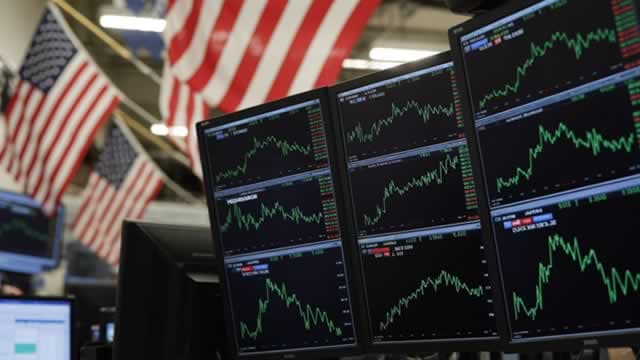
US stocks fell Monday morning as oil surged past $100 a barrel after President Trump announced a new blockade of the Strait of Hormuz – squashing hopes for de-escalation in the Middle East.

The CBOE Volatility Index (VIX) is reversing sharply this Monday morning, spiking more than 7% after weekend negotiations between the U.S.

Markets aren't pricing in a long blockade.

The American military on Monday was implementing a blockade on all ships entering and exiting Iranian ports, with the escalation pushing oil prices higher and weighing on U.S. stocks.

Investors reacted positively to the after-the-market-close news of a ceasefire between the Iran war combatants on 7 April 2026. The S&P 500 bounced up 2.5% on the news the following day before proceeding to increase its gains in the remainder of the trading week.
US stocks fell sharply on Monday, having a weak start to the week as investors reacted to the collapse of weekend negotiations between the United States and Iran, alongside a surge in oil prices following new military developments in the Strait of Hormuz. The Dow Jones Industrial Average dropped 368 points, while the S&P 500 fell around 0.32%, and the Nasdaq 100 declined roughly 0.28%.

It is my view that the U.S. blockade of Iran-bound commercial ships is mainly about regaining leverage for dismantling Iran's nuclear program and reopening the Strait of Hormuz. The Islamabad talks failed over Iran's nuclear program and control of the Strait, with both sides acting as if they entered negotiations from a position of strength.

A U.S. judge dismissed on Monday Donald Trump's defamation lawsuit against the Wall Street Journal over an article asserting the U.S. president's name was on a 2003 birthday greeting for the late financier and sex offender Jeffrey Epstein, but said Trump could re-file the case.

The United States, with its resilient economy and energy security, is positioned to weather a potential Strait of Hormuz blockade better than most countries. American oil and gas companies could benefit from higher global prices and increased exports if negotiations with Iran fully break down.

President Donald Trump joins FOX Business' Maria Bartiromo in an exclusive interview to discuss the latest on Iran, U.S. oil exports, NATO and China's role in the Middle East. #foxbusiness #morningswithmaria 00:00 Intro: Iran Talks, NATO & China 00:27 Renaming the Gulf of Mexico 01:53 US Energy Dominance & Oil Exports 02:51 Stopping Iran's Nuclear Weapon 03:00 NATO & Allies Not Helping US 03:41 Ending Wars with Tariffs 04:32 Stock Market & Economy in First Term 06:12 Military Rescue Capability 07:07 Maximum Pressure Campaign on Iran 08:41 China Tariffs & Relationship with Xi 10:01 Threat of Tariffs if China Aids Iran 11:06 NATO is "Shameful" & Disappointing 13:06 Rebuilding the US Military

The U.S. Navy will immediately begin blockading all ships entering or leaving the Strait of Hormuz. At least that's the headline.