
加载中...
共找到 39,051 条相关资讯

Bending Spoons, a European tech firm whose business model is based on reviving companies, has picked banks to organise a potential $20 billion U.S. initial public offering this year, two people close to the matter said.


Greg Calnon, Global Head of Public Investing at Goldman Sachs Asset Management, discusses his outlook for markets and investment strategy. He speaks with Haidi Stroud-Watts and Paul Allen on Bloomberg: The Asia Trade.

Japan's Finance Minister Satsuki Katayama tells Bloomberg's Shery Ahn that Tokyo is in constant contact with US officials as it stays on high alert over speculative moves weakening the yen. Past interventions have worked, and authorities are ready to act again, she said: bloom.bg/4vNuMiA

Applications for US unemployment benefits increased by 6,000 to 214,000 last week but remain at a level consistent with low layoffs. Michael McKee reports on Bloomberg Television.
The building of AI data centers is going from a technology story to a full-scale infrastructure play. Hyperscaler spending on AI-related builds is expected to hit $700 billion this year alone.
Scientists at Sony AI have developed a table tennis robot with enough speed and precision to beat even some expert ping pong players in the latest matchup between biological and artificial intelligence. -------- More on Bloomberg Television and Markets Like this video?
Goldman's warning comes as the stock market has enjoyed a strong rally off the lows hit on March 30.
I see early signs of decoupling between the S&P500 and oil prices, signaling market resilience despite negative Middle East conflict headlines. I believe the market is looking at the earnings growth story, since EPS estimates for both 2026 and 2027 have been revised higher since the war began.
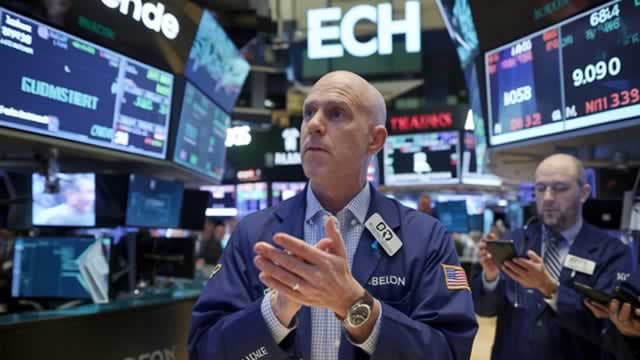
Producer prices in Canada climbed again last month, driven by a record jump for energy products and big rises for chemicals with the escalation in the Iran war.
Wall Street opened weaker on Thursday, as investors paused after a recent rally, weighed down by persistent geopolitical tensions and a mixed batch of corporate earnings. The Dow Jones Industrial Average fell about 253 points, or 0.51%.

The Iran conflict has triggered the biggest energy security threat in history, according to Fatih Birol. Yet, the impact will not be felt uniformly, a disparity that likely plays a role in the varied responses in global stock markets to date.

The monthly core PCE inflation has been at 0.4% over the last three months, while surveys are confirming an inflationary spike in progress. In addition to the biggest energy supply shock ever, tariffs are mostly in place, and the labor market is strengthening due to fiscal stimulus - the macro environment is inflationary.
Despite S&P 500 and Nasdaq record highs, geopolitical tensions and rising oil prices pose underappreciated risks to market stability. Nearly 80% of S&P 500 companies have beaten earnings estimates, fueling a buy-the-dip mentality and risk appetite.
The number of people who filed for unemployment benefits was 214,000 in the week through April 18, higher than the 208,000 reported a week earlier, the Labor Department said.

Financial conditions are easy and the AI boom is driving the economy forward, despite war, tariffs and other headwinds, says this strategist

The upcoming FOMC meeting is expected to maintain rates at 350-375 bps, with macro events overshadowing monetary policy's impact on valuations. Elevated inflation and energy prices, especially from the Strait of Hormuz conflict, justify a rate pause, with the Fed emphasizing limited control over geopolitical risks.
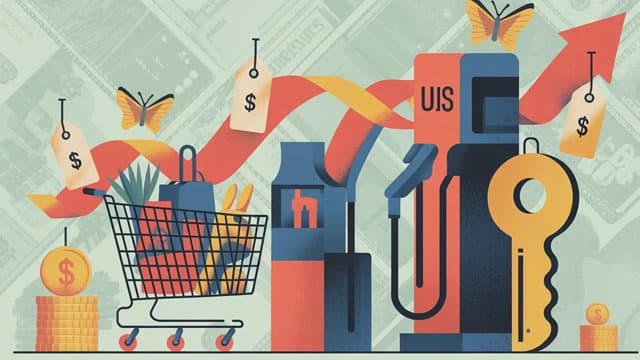
Americans are feeling the pinch of higher gas prices, according to the CNBC All-America Economic Survey. They are spending less on entertainment, travel and even essential items like groceries and medical care.
Dave Mazza, CEO of Roundhill Investments, Sylvia Jablonski, Co Founder and CIO of Defiance ETFs, and Steve Grasso, CEO of Grasso Global, say strong earnings and AI demand support markets despite risks

Can't keep an investor down.
Investors are so detached from reality that they're living in their own universe, Erik Gordon says. The stock market "shrugs off" war, oil shocks, and job losses, the entrepreneurship professor said.