
加载中...
共找到 37,966 条相关资讯
Patti McGlasson: Good morning, everyone, and thank you for joining us today. After we review the company's business highlights and financial results for both the fourth quarter of fiscal 2025, as well as our full year earnings, we will open the call for questions. Before we begin, I'd like to provide the cautionary statement. For forward-looking statements that may be made during today's discussion, please note that all information presented on this call is subject to the safe harbor provisions of the Private Securities Litigation Reform Act of 1995. Our remarks may include forward-looking statements that reflect management's current expectations regarding future events and operating performance. These statements are subject to the risks and uncertainties, and actual results may differ materially from those projected. We encourage you to review the cautionary statements and risk factors contained in a press release issued earlier today, as well as in our filings with the Securities and Exchange Commission, including our most recent form 10-K and quarterly reports on form 10-Q. I'd also like to note that today's discussion will include certain non-GAAP financial measures. A reconciliation of these measures to their most directly comparable GAAP figures can be found in the press release issued earlier today. Lastly, please remember that this call is being recorded and will be available for replay on our website at NetSol Technologies, Inc. as well as through a link included in today's press release. I'd like to reiterate that this time, all participants are in a listen-only mode. Following the prepared remarks, we will open the call for a Q&A session. I will now hand the call over to our founder and Chief Executive Officer, Najeeb Ghauri. Najeeb Ghauri: Thank you much, Patty. Good morning, everyone, and thank you for joining NetSol Technologies, Inc. earnings call to review our results for the fourth quarter and the full fiscal year ended June 30th, 2025. We appreciate your continued interest and support in NetSol as we remain focused on delivering long-term value, strengthening our core offerings through our unified AI-powered Transcend platform, and expanding our presence in key global markets. Today, I'll provide a brief overview of important developments that have taken place over the fiscal year, which reflect our strategic progress and operational highlights. And then I'll hand it over to our CFO, Roger Almond, who will walk us through our financial performance for both the fourth quarter and the full fiscal year in greater detail. After that, we will open the call for your questions. Fiscal 2025 was a pivotal year for NetSol. We made strong progress across our subscription and services segments, areas that form the foundation of our long-term growth strategy. Our strategy of migrating our existing customer base and new customers from a licensed revenue model to a recurring revenue model continues to accelerate. This reflects the trust that our people and products have garnered within our core industries. We also advanced modernization efforts around our platform. Made targeted investments in AI and automation capabilities. We remain committed to optimizing our operational efficiency and maintaining a disciplined cost structure, all while keeping innovation, customer satisfaction, and shareholder value creation at the core of our mission. Over the course of the year, we secured significant contract wins across various regions, further solidifying our reputation as a trusted technology partner in the global asset finance and leasing industry. Alongside the digital, automotive retail space, in addition, we successfully delivered multiple high-impact go-lives, showcasing our capability to implement complex solutions with efficiency and precision. Further, we also enhanced our leadership bench with key senior-level appointments, adding further depth to our organization. These developments, coupled with broader progress and continued innovation, have positioned us well for sustained growth in the year ahead. I'll start by discussing our product ecosystem enhancements. Over the past year, we have made substantial progress in strengthening and expanding our product and service portfolio. The centerpiece of this evolution was the official launch of our United Transcend platform, which is an AI-powered digital retail and asset finance solution designed for automotive and equipment OEMs. Auto captives, commercial lenders, dealers, brokers, banks, and other financial institutions. Today, NetSol Transcend platform revolutionizes how assets are sold, financed, and leased. In line with this vision, we launched Transcend AI Labs, our dedicated innovation hub focused on AI-first enhancements, automation, and strategic consulting. This initiative underscores our focus to leading the market through advanced technology and continuous R&D investment to drive this forward. We have brought in new dealership for our Artificial Intelligence division, bringing deep expertise to our AI initiatives. Our Transcend marketplace continues to gain traction with modular API-first products such as Flex, Torque, and Link, delivering real-world impact in the United Kingdom and beyond. These developments reinforce our position as a progressive technology leader in the asset, retail, finance, and leasing space. Our go-to-market strategy is gaining momentum globally, with several high-value wins and deployments that validate the strength of our technology solutions and commercial strategies. We secured a $16 million, five-year contract with a major US automaker to transform its dealership operations with our Transcend retail platform, representing a major milestone for NetSol in North America. We also continue to deepen relationships with long-standing partners, a major Chinese automotive finance company upgraded to Transcend Finance as part of a multi-million dollar deal involving the migration of over 3 million contracts. One of the largest volumes we have handled to date. In Australia, a leading Japanese equipment finance company went live with Transcend Finance following a multi-million dollar contract. We also made strategic progress in Europe with our first-ever deployment in the Netherlands as our Transcend Finance platform went live for Hiltermann. Further, we also signed a deal with Sinbad Management, SPC in Oman, making our official entry into the Middle East. We are seeing clear signals that the market is continuing to respond positively to our proven state-of-the-art technology. With our modular products and AI investments, we remain focused on driving sustainable growth through operational efficiency and financial discipline. Our continued investment in AI, particularly through Transcend AI Labs, is already helping us unlock greater productivity and scalability without the need to significantly expand headcount. We are seeing meaningful improvements in recurring SaaS revenue and our revenue per employee continues to trend upwards, reflecting better utilization of internal resources and scalability of our offerings. We also strengthened our leadership team this year with strategic hires and appointments that will help guide our long-term vision. Notably, Richard Howard, a seasoned executive with decades of experience at Daimler and Mercedes-Benz in both the OEM and financial services side of the business, joined as an advisory board member and is actively contributing to a North American growth strategy. We also appointed Ian Smith to our Board of Directors. Ian brings with him over three decades of global leadership experience in financial services with a proven track record in automotive finance, digital transformation, and strategic growth. Most notably, he served as a CEO for BMW Group Financial Services USA and Americas. All of these developments from our AI-driven product evolution to strong commercial execution and discipline, operational focus, are positioning us all for long-term profitable growth. We are confident in our roadmap and look forward to continuing to lead in digital transformation across the global asset finance and leasing industry and the digital, automotive retail space. With that, I'll now turn the call over to our CFO, Roger Almond, who will walk us through our Q4 and full year fiscal 2025 financials. Roger, thanks. Roger Almond: Thanks, Najeeb. And good morning, everyone. Let me begin with our fiscal fourth quarter results, followed by a summary of our full year financial performance. Total net revenues for the fourth quarter increased 11.9% to $18.4 million, compared with $16.4 million in the prior year period. This growth was driven primarily by increases in subscription and support revenues, and by our services revenues. License fees for the quarter were $0.5 million, compared with $0.6 million in Q4 of fiscal 2024. Subscription and support revenues grew 9.9% to $8.2 million, compared with $7.5 million in the same period last year, continuing to increase our recurring revenue base. Services revenues were $9.7 million, up from $8.4 million in the prior year period, reflecting strong project delivery and ongoing implementations. Our gross profit for the quarter was $10.3 million, representing a 56% gross margin, up from 52% in the prior year quarter. Operating expenses were $7.2 million, or 39% of sales, compared to $7.7 million, or 47%, in Q4 of fiscal 2024, for a decrease of $521,000. Income from operations increased to $3.2 million, compared with $0.8 million in the prior year period. Non-GAAP EBITDA came in at $4.7 million, or $0.40 per diluted share, nearly quadrupling the prior year's Q4 figure of $1.2 million, or $0.11 per diluted share. Non-GAAP adjusted EBITDA for Q4 was $3.5 million, or $0.30 per diluted share, compared with $0.7 million, or $0.06 per diluted share, in the prior year. Turning to our full year results, total net revenues for fiscal 2025 were $66.1 million, an increase from $61.4 million in fiscal 2024. Looking at the revenue breakdown, license fees for the year were $0.6 million, compared to $5.4 million in the prior year. This year-over-year decline reflects our ongoing transition away from large one-time license deals towards a subscription-first model. Subscription and support revenues were $32.9 million, compared to $28 million in the previous year. This increase was driven by increased SaaS adoptions across multiple markets. Services revenues rose to $32.6 million, up from $28 million in fiscal 2024, a 16.3% increase, reflecting solid project activity throughout the year. Further gross profit for fiscal 2025 was $32.6 million, compared with $29.3 million in the prior year. This improvement is due to the increase in revenues year over year, offset by an increase in our cost of revenues. Operating expenses totaled $29.1 million, compared to $25.8 million last year, as we continued investing in key growth areas, talent acquisition, and global delivery capabilities. Income from operations for the year was $3.5 million, consistent with $3.5 million in the previous year. At fiscal year-end, our cash and cash equivalents stood at $17.4 million, reflecting our continued discipline in managing working capital and operational costs. Our balance sheet remains strong, and we believe we are well-positioned to support both organic growth and future strategic opportunities. I'd like to now hand the call back over to Najeeb. Najeeb Ghauri: Thank you, Roger. To summarize, we closed fiscal 2025 with solid momentum, particularly in our recurring revenue segments, and continued to make progress in executing our long-term strategic vision. Looking ahead, we remain focused on expanding our SaaS offering globally, deepening customer relationships through value-added services and innovation, and improving overall operating leverage as we scale. As always, I want to thank our global workforce of over 1,750 people across our regional offices worldwide for their dedication and hard work. Our customers, for their trust and our shareholders for their continued support. We believe the fundamentals of our business remain strong and we are optimistic about the opportunities ahead of fiscal 2026 and beyond. With that, we now like to open the call for questions. Operator. Operator: Thank you. We would now like to conduct a question and answer session. If you would like to ask a question, please press star one on your telephone keypad. A confirmation tone will indicate your line is in the question queue. You may press star two if you would like to remove your question from the queue. For participants using speaker equipment, it may be necessary to pick up your handset before pressing the star keys. One moment while we pull for questions. Our first question is from Todd Felte with Stonex Wealth Management. Please proceed. Todd Felte: Hey, congratulations guys on an outstanding quarter. Really nice to see the growth and the improvement in margins. I'm trying to figure out if this quarter is an abnormality or the start of a kind of a new upward trend. Do most of your subscription revenues are they paid to you on a quarterly basis or a yearly basis? Najeeb Ghauri: Thank you for your comment, Todd. First of all, I think we have a momentum as we close, very strong fiscal year. I think there is enough going on in the company across all three regions. That gives me a lot of confidence in our continued momentum of growth. Same way. Also, the subscription model, I think. Roger, you want to handle that because I think it's a quarterly pretty much. But it is a. It's a good trajectory that we are into growth side of the SaaS model. And eventually, as you see from the report, that we have done very well. From the last year, almost $32 million, something on the revenue which shows pretty strong, I think. Direction for the company, because that is exactly what we want to see. A subscription revenue grow faster than even license revenue, because pretty much into more subscription than the license model. So we are pretty optimistic about this. Continued journey. Roger Almond: Yeah. So, Todd, to answer your question, we see some annual, some quarterly, and some monthly. And so it's across the board, depending on the contract we have and the customer. So you know, cash will come in like I say on some contracts will be annually. Some are set up to where they pay quarterly. And then we have some subscription revenue that's coming in monthly. Todd Felte: Okay. That's helpful. And finally, I was hoping you could enlighten us a little bit on your sales cycle. I know we've seen some very large contracts recently with some Chinese companies, and an Australian company. From the time you announced these contracts, how long is it until you know you're Transcend? I becomes operational and you start receiving a revenue from those contracts. And is there any upfront fees that they pay you? Najeeb Ghauri: Well, I think good question. First of all, the sales cycle is lengthen is always but on the transient finance, pretty much ready. In our development engine in Lahore, Pakistan. So whenever we sign a contract, for example, the one we just recently announced in Australia. The team working behind the scenes, a lot of work done gets done before we even signed the contract ahead of time so that the team is in place. The timeline is in place, and whatever it takes to make sure that we meet the agreed contract time with the customer and go live, and then continue to not only generate revenue, but also see the momentum of getting excitement within the company to getting new contracts, particularly if the more SaaS driven. So I think it's a pretty good approach in the company. Todd Felte: Okay. And last question, are you guys willing to give any guidance going forward for the next year. Thank you. Najeeb Ghauri: I think we like to always update the guidance in the second quarter so we have better clarity. Although we have. Larger revenue in mind. I believe we will continue the growth momentum that we have seen in this fiscal year. And companies we we know exactly what we want to achieve. And the whole fiscal 2026. But it's better that we share the specific guidance, if not in the first of the second quarter. Todd Felte: Thank you very much. Najeeb Ghauri: Thank you, Todd. Operator: As a reminder to Star One on your telephone keypad, if you would like to ask a question, we will pose for a brief moment to pull for final questions. With no further questions, I would like to turn the conference back over to Najeeb for closing remarks. Najeeb Ghauri: Thank you again for joining today's call and for your continued interest in NetSol. We look forward to updating you on our progress in the quarters ahead. Stay safe and take care. Have a good day. Operator: Thank you. This will conclude today's conference. You may disconnect at this time. And thank you for your participation. Thank you. For your assistance. Have a good day.

Operator: To all sites on hold, we do appreciate your patience and ask that you continue to stand by. Good morning, and welcome to Paychex First Quarter Fiscal 2026 Earnings Call. Participating on the call today are John Gibson and Bob Schrader. Following the speakers' prepared remarks, there will be a question and answer period. If you would like to ask a question during this time, simply press star, then the one on your telephone keypad. If you would like to withdraw your question, please press star 2 on your telephone keypad. As a reminder, this conference is being recorded, and your purchase implies consent to our recording of this call. I would now like to turn the call over to Mr. Bob Schrader, Paychex Chief Financial Officer. Please go ahead, sir. Bob Schrader: Thank you for joining us to discuss Paychex's fiscal first quarter fiscal 2026 results. This morning, we released our financial results for the quarter ended August 31, 2025. You can access our earnings release and presentation on our Investor Relations website. We plan to file our Form 10-Q with the SEC within the next couple of days. This conference call is being webcast live and will be available for replay on our Investor portal. Today's call includes forward-looking statements that refer to future events and involve some risks. We encourage you to review our filing with the SEC for additional information on factors that could cause actual results to differ from our current expectations. We will also reference non-GAAP financial measures. A description of these items, along with the reconciliation of non-GAAP measures, can be found in our earnings release. I would now like to turn the call over to John Gibson, Paychex's President and CEO. John Gibson: Thanks, Bob. I will start by sharing our first quarter business highlights and then Bob will come back and discuss our financial results and outlook. Then, of course, we'll open it up for your questions. We are off to a strong start in fiscal year 2026, delivering robust 17% revenue growth and solid adjusted diluted earnings per share growth of 5% in the first quarter. This performance reflects continued progress integrating Paycor and sustained demand for our HCM solutions amid a resilient small business environment. We remain pleased with the progress of the Paycor integration. We are on track to achieve targeted Paycor revenue synergies and exceed our initial cost synergy expectations. Our fiscal year 2026 cost synergy target remains approximately $90 million. We are pursuing additional synergies beyond this target while retaining our flexibility to reinvest those gains for additional growth and innovation investments. Bringing the two companies together provides us a broader set of technology solutions and service models to both win and retain business. We have already enabled several notable client retention wins in the quarter across our purpose-built platforms. Additionally, we are encouraged by the speed at which we have completed the back-end technology integrations to enable the full breadth of revenue and cost synergy opportunities for fiscal year 2026. We remain optimistic about the revenue synergies, particularly cross-selling Paychex Retirement ASO, and PEO solutions to Paycor's approximately 50,000 clients. More than half of Paycor's clients fall right in our sweet spot for ASO and PEO, while retirement solutions have broad relevance across the entire client base. We recently developed a propensity model to target which Paycor clients are more likely to purchase Paychex's broad range of solutions, and we are building a strong pipeline. Among this quarter's cross-sell successes was an ASO sell to a Paycor client with several thousand employees, among the largest in Paychex's history. This initial progress is promising, and early wins reinforce our confidence in the path forward. Beyond Paycor, we continue to see a long runway to further monetize our entire client base where we believe penetration rates still remain low. Building on the momentum from Paycor, another cornerstone of our growth strategy is our long-standing relationships with channel partners. Brokers, CPAs, and banks are important referral sources for new business for us and have been for decades. The Partner Plus program for brokers continues to be received well, with broker enrollment nearly doubling since our last earnings call in June. We believe this momentum provides a strong foundation to retain and expand this vital referral channel. The program centers on helping brokers maximize client impact, grow their book of business, and deliver exceptional service and advisory support. We remain confident our partner program is the best in the industry, and we recently launched new marketing campaigns to further expand awareness and growth. Building on our long-standing partnership with the CPA community, we launched our new CPA Partner Pro portal in the quarter. We recently introduced another powerful Paychex Flex solution supporting small and mid-sized businesses and their CPAs. Bill Pay, powered by Bill, is our new financial management solution designed to simplify payments for SMBs. Bill Pay integrates payroll, HR, and accounts payable into a seamless experience providing small business owners real-time financial clarity to make smarter and faster decisions. Additionally, Bill Pay will enhance CPA's ability to support their clients by integrating critical payment and HR functions to deliver even more valuable insights. We plan to expand Bill Pay to include accounts receivable and roll that out in our additional platforms in the future. Continuing our track record of innovation, Paychex leads the digital and AI-driven transformation of human capital management. We deliver pragmatic AI solutions that drive measurable value for our clients and our business. I'm excited to share several recent advancements that demonstrate how we are harnessing AI internally and externally to enhance client experiences, boost operational efficiency, and we believe position Paychex for sustained growth. Recently expanded AI Insights, our generative AI assistant for workforce questions, to serve our PEO clients in addition to our HCM clients. This AI-powered tool provides instant natural language insights on pay, equity, turnover, hiring trends, and labor costs. Through an intuitive chat interface, users can query complex HR metrics, drill down into detailed analytics, and follow-up questions to uncover deep insights and predictive trends. In June, we launched our generative AI-powered HR guidance tool, developed using HR insights drawn from our nearly 40 million client interactions each year. This internal AI-enabled tool empowers our HR experts to deliver efficient, effective responses to client queries and provide enhanced client support. In addition, we have deployed AI tools across our organization, empowering our teams to focus on higher value work while enhancing quality, efficiency, and innovation. For example, AI is augmenting our software engineering group by automating tasks, improving code quality, and allowing us to accelerate our development. We are also piloting Agenic AI solutions this quarter to transform some of our higher volume inbound client tasks across multiple channels. These AI agents autonomously manage routine client interaction, enhancing operational efficiency, and elevating the client experience, all while freeing up our service providers to focus on high-value advisory and support to our customers. Our PEO business continues to also perform well, with another strong quarter of strong demand and retention performance, leading to mid-single-digit worksite employee growth. We remain bullish on PEO due to our scale, capabilities, and the growth opportunities we see. The PEO model empowers small businesses to offer benefits comparable to Fortune 500 companies, addressing one of the top challenges of attracting and retaining talent. Turning to the macro environment, small businesses remain resilient. Our small business employment watch shows stable employment and moderating wage inflation and has over the past year, with no signs of recession. Since our last call, we've seen greater clarity on key issues such as tariffs, taxes, and inflation. With the tax bill in place, and Fed rate cuts done, we believe this will support renewed business confidence. This clarity should encourage business owners, particularly those previously adopting a wait-and-see approach, to make more informed strategic decisions potentially boosting investment and hiring. Lastly, I'm proud of the hard work demonstrated by our employees. Despite an ever-evolving external environment and the integration of our largest acquisition in the company's history, the team has remained focused on our clients and our purpose. Their dedication and efforts have been recognized once again, this time by Newsweek, which named Paychex one of America's greatest companies and most admired workplaces. Our people and our culture remain a key differentiator, underscoring the vital role our employees play in driving our sustained success. I will now turn it over to Bob to provide an update on our financial results and outlook. Bob? Bob Schrader: Thank you, John. I'll start with a summary of our first quarter financial results and then share an update on our outlook for fiscal 2026. Let me begin by sharing our first quarter results. Total revenue increased 17% over the prior year to $1.5 billion. Management Solutions revenue increased 21% to $1.2 billion, primarily due to the addition of Paycor as well as higher revenue per client driven by price realization and increased product penetration. Paycor contributed approximately 17% to Management Solutions revenue growth year over year. PEO and Insurance Solutions revenue increased 3% to $329 million, primarily driven by solid growth in the number of average PEO worksite employees. Outside of the at-risk plan headwinds, PEO continues to perform well. Interest on funds held for clients increased 27% to $48 million due to the inclusion of the Paycor balances. Total expenses increased 29% to $998 million, primarily driven by the Paycor acquisition. Operating income margins for the quarter were 35.2%, and adjusted operating income margins were 40.7%. Diluted earnings per share decreased 10% to $1.6 per share, and our adjusted diluted earnings per share for the quarter increased 5% to $1.22. Our financial position remains strong with cash, restricted cash, and total corporate investments of $1.7 billion and total borrowings of approximately $5 billion as of August 31, 2025. Cash flow from operations was $718 million for the first quarter, primarily driven by net income. We returned $549 million to shareholders during the quarter in the form of cash dividends and share repurchases. Our twelve-month rolling return on equity remains robust at 40%. Let me now turn to our updated guidance for the year, which assumes the current macro environment. We are reaffirming our fiscal 2026 outlook with the exception of our earnings expectation, which we are raising. Total revenue is still expected to grow between 16.5% and 18.5%, and as we previously noted, we would expect revenue synergies to contribute 30 to 50 basis points of growth in fiscal 2026. Management Solutions is expected to grow in the range of 20% to 22%. PEO and Insurance Solutions is expected to grow in the range of 6% to 8%, and as previously noted, we expect revenue to accelerate in the back half of the year as we anniversary the at-risk revenue growth headwinds we experienced last fiscal year. Interest on funds held for clients is still expected to be in the range of $190 million to $200 million. Adjusted operating income margin is expected to be approximately 43%. Our effective income tax rate is expected to be in the range of 24% to 25%, and as I mentioned, we are now raising our earnings expectations with adjusted diluted earnings per share now expected to grow between 9% and 11%, up from 8.5% to 10.5% that we shared with you last quarter. Now I'll provide you a little bit of color for the second quarter. We would anticipate total revenue growth to be approximately 18% in Q2 with an adjusted operating margin of approximately 41%. And of course, this is based on our current assumptions, which are subject to change. With that, I'll now turn the call back over to John. John Gibson: Thank you, Bob. And with that, we will now open up the call for your questions. Operator: Thank you very much, Mr. Gibson. Ladies and gentlemen, at this time, if you do have any questions, please press 1. If you find your question has been addressed, you may remove yourself from the queue by pressing 2. Additionally, we ask that you please limit yourself to one question and one follow-up question. We'll go first this morning to Bryan Bergin of TD Cowen. Jared Levine: Hi. This is actually Jared Levine on for Bryan Bergin today. I guess to start here, can you give us an update in terms of the demand environment? Any notable differences when you think about employer size segments or across core offerings here? John Gibson: Jared, this is John. No real change. I mean, I look, demand remains consistent with what we've been seeing historically. Matter of fact, activity is up. I think there's a lot of shoppers in the market right now. RPO booking continued to be very solid, up double digits, this past quarter. So you're really across the board seeing a lot of activity and good traction in the micro segment as well, which had been a little lighter in the fourth quarter. But like I said, right now, the demand environment seems stable to me. Jared Levine: Great. And then we've been getting a lot of questions in terms of the Paycor SLO growth there. So just wanna confirm in 1Q, did it still grow low double digits in terms of XSLO growth? And is that still what you're assuming for the year as well? Bob Schrader: Yeah. Drew, this is Bob. It's certainly on a full-year basis, we expect, you know, the recurring revenue to be on Paycor to be a double-digit grower. I don't want to get into the quarterly splits. Obviously, you know, they were invested short on the client funds, so with rate decreases that occurred last year and where we are now, that would have been a little bit of a headwind. But the recurring revenue growth for Paycor in Q1 was in line with our expectations, and we would expect the business to grow double digits on a full-year basis. Jared Levine: Great. Thank you. Operator: Thank you. We go next now to Mark Marcon of Baird. Mark Marcon: Good morning, and thanks for taking my questions. So one, just on the PEO side, I know we're gonna lap, you know, some tough or some easier comps in the second half on the PEO side when we get to the second half. But aside from that, how would you characterize the PEO environment? Because it has been slowing down. And when we take a look at the sequential pattern, you know, Q1 relative to Q4, a little bit worse than what we've typically seen. And so I'm just wondering, is the environment solid for the PEO, or what are the primary headwinds right now? John Gibson: Well, Mark, I'll start. And then, you know, Bob can add maybe a little more color for you. Look, our PEO continues to perform well. And if you look at the numbers, mid-single-digit worksite employee growth, I think you're gonna find we're leading the market there. Our bookings were double-digit in the quarter. We had record retention in the first quarter. Remember last year, we had record retention. We're continuing on that pace. So I continue to see strong demand there. I look at some states, take California, our medical enrollment's up 10% there. Our medical enrollment overall across the country is up. We can talk about a bit later where we are in Florida, which is where we have our MPP. That's where we have a little more challenge. Again, you know that market, pretty competitive in that market, and we don't take a lot of risk. So we're not gonna go after business that's gonna be a bad risk. So overall, I feel very good about where we are from a PEO perspective. Really, really like what I'm hearing in the early engagements with clients in our broker partners as we approach some of the Paycor clients as well. So we've been building a pipeline there. Yes, you know that sales cycle is a little longer. But I'm very pleased with the activity and what we have going on there. Bob Schrader: Yeah. Just to add a little color, Mark. I mean, certainly, the PEO was probably a bit better than our expectations in the quarter, as John mentioned, and we've talked about this in the past with the PEO. It's all about worksite employees, and that was strong in the quarter. I think John highlighted in the prepared remarks mid-single digits. I think when you pull the PEO apart from the agency, the growth of the PEO was in line with that worksite employee growth despite the at-risk headwinds that we have, which we will anniversary here as we turn into the new calendar year. The growth rate overall, I'd say if there's one aspect of our business that was maybe a little bit softer than we expect in the quarter, it was the agency on that. That was a drag on the growth rate of the category. We continue to see some rate pressures from a workers' comp standpoint. Certainly, it was good from an agency standpoint, but, you know, overall, we feel really good about where the PEO is. And as you mentioned, we will anniversary those MPP headwinds and we'll start seeing some stronger growth with the easier compare as we move into the back half of the year. Mark Marcon: Great. And then for my follow-up, direct expenses as a percentage of revenue, you ended up seeing some pretty nice leverage there. And so I'm wondering, you know, that was really strong. How would you characterize direct expenses on a go-forward basis? And then compare and contrast that to SG&A when we strip out the one-time charges and the goodwill just in terms of the ongoing operating expenses? Because it seemed like there's a little bit of a contrast between the two. In other words, direct expenses stripping out everything else looked better. SG&A expense, I imagine just because you've got more overlap and a number of items, maybe a little bit heavier than what we were looking for. How would you expect those to go as the year unfolds? And it seems really encouraging. I mean, I think... Bob Schrader: Yeah. Thanks, Mark. We think so as well. Obviously, we've been focused on the synergies. And as you know, we're the best operator in the business. And so we're always focused on trying to be efficient and productive. I think the expense growth in the quarter obviously is a big number driven by the Paycor acquisition. If you were to strip it out, it's probably closer to about 3% expense growth overall. And the one thing we didn't highlight in the script, which was probably a miss, I mean, if you look at the adjusted operating income growth in the quarter, it was 15%. Right? So, obviously, that's coming from, you know, the strong top-line growth of 17%, but certainly trying to find ways to be more productive and more efficient and really strong adjusted operating income growth for the quarter. And on a full-year basis, expense growth, I would probably think what we saw this quarter organically would probably be consistent with what we would see going forward. Mark Marcon: Perfect. Thank you. Operator: Yep. Thank you. We go next now to Samad Samana at Jefferies. Samad Samana: Hi. Good morning, and thanks for taking my questions. This might be a little bit pointed, but I wanna get back to the Paycor just the recurring revenue component excluding what revenue, which is uncontrollable. Right? What rates will do, what rates will do. If we think about the contribution in the quarter, it implies, essentially, let's call it, you know, around 7-8% growth for Paycor recurring revenue. Which is a pretty material slowdown than what Paycor is doing on a stand-alone basis. So is there some sort of integration-related disruption? I know we're not trying to do quarterly businesses, but that's a pretty material difference versus what the growth rate what Paycor had as a stand-alone business. So we're just trying to understand in the first full quarter, integrated what the implications of that are and how we should think about that accelerating or improving and if that improvement or that double-digit that you're calling out includes the revenue synergies. Then I have one follow-up. Bob Schrader: Yeah. Let me start, and then maybe John can add some color there. I would, again, don't want to get into a math reconciliation, I think our numbers would suggest that the recurring revenue growth is closer to double digits than what you had in Q1. As I mentioned, Q1 was in line with our expectations for Paycor. Obviously, there's some performance at bills during the year. We know that last year, particularly in Q4, we were going through an integration and getting our go-to-market aligned and our new segments aligned, and we called that out last quarter or last Q4, getting that behind us. Obviously, there's probably some level of disruption there coming into the year, but, you know, Q1 was strong for Paycor. It was, you know, in line with our expectations, you know, John can probably add a little bit of color to that. John Gibson: Yeah. Samad, look. As Bob said, Paycor was fine with our expectations that we put together. Client retention was in line and they're at their historical levels. I think the one thing that's gonna be a challenge for all of us here to talk about, I think we talked about this on the last call, we purposely determined to segment our business and we commingle all of the Paychex assets over 100 employees with Paycor. And then Paycor had a business that was under 100, and we moved that business into our mid-market and small market at Paychex. So we have a lot of moving parts. You didn't take the ancillary components over it. So, as I said, this can be extremely difficult for Bob and the team, and it's not the way I'm looking at the business or operating the business. We now have operating segments. They're performing well. Very happy with our sales performance, actually exceeding our expectations across the board, and very happy with the progress that we're making with the Paycor acquisition. I mean, we're making strong progress. A good example is we have HR outsourcing. So I sell a multi-thousand, one of the largest ASO deals in the company's history, in the ASO portion of that revenue. Where do I allocate that? Is that Paycor or is that historical Paychex? Where do I put that? $150,000 incremental a year. And depending on where I wanna stick it, I guess we have the number whatever we want the number to be. But I think what we're looking at is segments. And we believe that the Paycor acquisition is going to help us in the upmarket, and we believe by combining the two assets together, we're going to be better together, and we're seeing progress there. Very pleased with the progress we're making in the quarter. Samad Samana: Understood. And then maybe just, again, if I think about and this will probably be equally difficult just based on the commentary about disaggregating where things should be placed. But I exclude the Paycor contribution, it's kinda getting us to an Bob, I appreciate there's rounding given how you guys give us the contribution, but it gets you to somewhere close to about 4% organic growth for the Management Solutions revenue in the quarter. Which, you know, again, it's a slightly easier comp. You know, again, and based on what we're expecting for FY, I guess, how should we think about that acceleration for the through the year? Do you still expect that? It seems to be maybe a little bit out of the gate slower than anything from FY 15% on a full-year basis. We're at 4% in Q1. We knew that that's how the plan was built. There's a couple of drivers of it, but the big driver of it is the PEO MPP headwind that we have in the front half of the year that we anniversary, and you got an easier compare as we move forward. So, you know, we feel good about where we are through Q1. As John said, we made a ton of progress on the integration. We're really starting to see a lot of momentum on going after the revenue synergies and kind of building a strong pipeline. We haven't talked about that, but we feel good about where we are. And the organic growth, there is some improvements as we move through the year as revenue synergies build on, particularly to the Management Solutions side. Hopefully, that provides you some additional color. Samad Samana: Oh, well, appreciate you taking the questions as always. Thanks, guys. Operator: Thank you. We go next now to Tien-Tsin Huang of JPMorgan. Tien-Tsin Huang: Thanks so much. Just a clarification on the question. Just on the clarification, what's driving the EPS increase of, I think, 50 bps on either end? And then just with retention, any callouts there? It sounds like PEO was a record, Paycor in line. Any other callouts? I remember there were higher bankruptcies and mergers at the low end last quarter. Anything new beyond that? Thank you. Bob Schrader: Yeah. Maybe I'll hit the EPS, and then John can touch on the retention. I mean, obviously, Q1 came in a little bit stronger tension. Obviously, we have a quarter behind us of owning the asset. There's a higher degree of confidence in certainly both the cost and revenue synergies. And so you see some of that playing through. As you know, there's always an element of conservatism as you come into the year, particularly when you have a new asset like that. And so just increased confidence. We feel good about, you know, we achieved what we thought we were gonna achieve in Q1, and we see a lot of momentum both from the cost synergy and revenue synergy. So just letting that play through to the bottom line, and John can touch on the retention. John Gibson: Yeah. I'll add on to that. Just remind everybody, we made a strategic decision. We talked about it last quarter to get a lot of stuff out of the way quickly. A lot of disruption in the sales organization, pulling them out of the field, resetting territories, relaunching the broker program. And really got aggressive, you know, on the synergy front out of the gate. We wanted to get it behind us so we could focus on execution and moving forward into the selling season. We're not gonna drag that out for a long time. So I think we feel confident that we've got the cost synergies that we committed to, which were higher than our original commitments at the time. Remind everybody of that. And we have a good list of other items that we can work on. I will say that we also see additional opportunities for investment both in terms of expanding marketing and sales investment and innovation investment. So we'll manage that appropriately. But we felt based upon where we were the degree of confidence we have in the certainty of the synergies that we've already executed. That we felt comfortable in raising the earnings guidance. Relative to retention, I'd say payroll client and revenue retention continue to be strong at pre-pandemic levels, which I'll remind you were near record levels for the company. We did continue to see concentrated losses in the small business area, predominantly out of business. I think you see bankruptcies that we kind of saw in the fourth quarter kind of continue into the first part of the first quarter. But I'll remind everybody, if you go back and look at the bankruptcy data, while it's a little bit elevated, it's still at that kind of pre-pandemic type of level. It's not out of the ordinary. And then as we mentioned, the PEO worksite employee retention is maintaining a record level performance from last year. So I feel very good about where we are from a retention perspective. I think our value proposition is resonating. Good job with all the disruption. When you think about all the disruption, what we're seeing in the Paycor client base, what we're seeing in our client base, given all the uncertainty in the market and all the talk about challenges in the economy. We certainly are not seeing that in our retention numbers, and we're not seeing it in any of our other indicators as well. Tien-Tsin Huang: Great. Thank you both. Operator: Thank you. We'll go next now to Andrew Nicholas of William Blair. Andrew Nicholas: Hi. Good morning. Thanks for taking my questions. You touched on it briefly in your response to one of the earlier questions, but I just wanted to kind of dig into the second half ramp for PEO. Can you speak a little bit more to kind of the attach rate dynamics in Florida specifically? Have they stabilized and is it mostly just a comp dynamic, or have you seen some improvement there in Florida with that plan? John Gibson: Yeah. I'll take it first, Andrew. What I would say is, look, we're very early. You know our enrollment cycles. We're very early in the process. We have enrollments in October, we have another one in January. Now only about 25% of the employees will end up electing in the October time frame. So we're in very, very early days. What I would say is we've done a lot of work to make sure we have different plan lineups. Those have been put in place. We have several initiatives going on there. We've done some improvements in the underwriting side. We're providing hands-on client and employee enrollment support. We launched an AI partnership that we just recently announced as well that will actually provide a tool to help employees select a plan that they can afford and then combine some things together with savings accounts, which I think is gonna help us as well. So, you know, look. I think we're early in there. We continue to see across insurance, both the agency and in the PEO, employees being very particular in terms of cost and value in the plan. So we've done everything we can and we think that we need to do to be able to make sure that we get the participation. When I step back at it, what I know, all the stuff we're doing is working because we're expanding our overall enrollment in our health plans in the PEO. The issue really is in that Florida plan as we've talked about. We continue to monitor. What I'm not going to do is I'm not going to adjust in an environment, a competitive environment in Florida. I'm not going to adjust my underwriting to take on undue risk. That doesn't get you in a lot of places, and it ends up in a place. And I, you know, again, when I look at it, I look at California, we're increasing our participation 10%, and that's because we've been rational there the whole time and we're taking opportunities as they present themselves. So it's a very delicate balance, particularly in the case where we have this program in Florida. In balancing risk along with the growth of the plan. Remind everybody, it doesn't have anything to do with our profitability, and I don't think it has anything to do with the value of our proposition overall. Bob Schrader: Yeah. And just the only thing I would add to that, Andrew, on your compare question is, you know, the enrollment headwind, the lower enrollment that we had in Florida occurred as we went through the annual enrollment cycles last year. So when you look at the front half of the year, we have a tougher compare because we had higher enrollment last year. Once you get through that January enrollment, then you kind of anniversary that. That headwind goes away, and you have a much easier compare. And then, you know, all the things that John talked about that we're focused on driving enrollment as well as worksite employee growth, and that's why you get the acceleration in the PEO in the back half of the year. Andrew Nicholas: Perfect. Thank you. Makes sense. And maybe just sticking with the PEO market, just broadly, I hear all the momentum there, mid-single-digit worksite employee growth, double-digit bookings, record retention. How would you describe the competitiveness of the environment maybe outside of the health care and the insurance piece? Like, are your competitors there being aggressive with price on the admin fee? Or how aggressive are you willing to be on the administration fee relative to maybe some desperate competitors in that market that aren't seeing the same level of growth as you have this quarter? John Gibson: Yes. Andrew, I don't view it. I've been in that business a long time, as you know. So I don't view it any different than any other cycle we've seen. You know, it ebbs and flows of who's being more aggressive or less aggressive. I'd say the overall environment is very consistent. There's always gonna be one or two irrational players out there. My view is of that value proposition. It's a holistic value proposition. You mentioned admin fee. Well, what the client wants to know is what are you providing from a technology and HR advisory support for the fee that I'm paying. I believe with all the investments we've made, with the data assets we have, we introduced our AI-based HR assistance tool to support our HR experts in helping clients get the retention insight. So while we're going and telling them, are you getting for your admin fee? It is a comprehensive HCM technology platform supported by the best-supported HR experts in the industry. And so, you know, I think had to add with a smaller provider that doesn't offer that type of capability, someone that's looking for HR outsourcing and looking for someone to help them build the HR strategies, I think they're gonna pay the additional admin fee. So we're not being we believe we provide a great value proposition comprehensively from our benefits offering, from our technology platforms, from our HR advisory support. And so I feel very good about where we're positioned right now in terms of the competition. Andrew Nicholas: Perfect. Thank you. Operator: Thank you. We'll go next now to James Faucette of Morgan Stanley. Michael Infante: Hi, guys. It's Michael Infante on for James. Thanks for taking our question. I just wanted to ask about the Bill partnership. Can you maybe just paint the picture for us in terms of the customer profile who would be most likely to initially adopt some of these capabilities? How you think about some of the go-to-market dynamics between the two organizations. And maybe how we should be thinking about ARPU uplift potential for your average payroll customer that begins to use some of those AP capabilities? Thanks. John Gibson: Yeah, Michael. Well, thanks. We're really excited about the partnership. You know, we've kind of been in the payments business to allow our clients to make ancillary payments in the millions, believe it or not, through our system. It's not been our core business. And, certainly, we viewed it as another value add. So I'm not looking at a big ARPU increase. We're trying to add value to the platform. And with this full digital integration that we're going to have with Bill.com, it really blossomed out of, you know, our relationship with the CPAs, and we've had a long-standing one with the Association of CPAs, so does Bill.com. And that's what kind of started this. So this really allows us to very quickly integrate. It's gonna be integrated in our Flex application. Again, it's focused towards small businesses. They have a 7 million payer and vendor network already built into their system, so it's a big advantage for easy payments. We're also gonna augment that. So our clients are going to have the most broad set of payment options embedded in the application. We're gonna start with AP, and then we'll look to add accounts receivable in 2026. So we're gonna bundle this offering really to bring more value to our overall HCM bundle. And I'm not gonna get into a lot of details of how we're going to do that because we're getting ready to go into selling season. But I think it's simple to say that we continue to look for opportunities to partner and fully integrate to add the most value in the HCM industry. Michael Infante: That's helpful. Appreciate that. Bob, just a quick housekeeping one on the agency dynamic within the PEO. I know you called out the agency piece, but was there anything incremental either in terms of PEO versus ASO mix shift and or employees opting for lower-cost health plans and maybe how that trended sequentially? Thanks. Bob Schrader: Yes. No difference there at all, Michael, than what we've seen in the past. I'd say good balance between ASO and PEO. So we didn't see the pendulum swinging in one direction or the other. And as I mentioned, the PEO was actually slightly above what we expected in the quarter. And, you know, I wanted to highlight the agency because the overall growth of that category is being impacted by, you know, what we continue to see is some workers' comp rate headwinds on the agency side. But overall, the PEO business performed solidly and slightly above our expectations in the quarter. Michael Infante: Thanks, Bob. Thanks. Operator: Thank you. We go next now to Daniel Jester of BMO Capital. Daniel Jester: Great. Thanks for taking my questions. To go back to the comment in the prepared remarks about piloting some agentic AI inside your own organization. I guess, I know it's early days, but any sense about how much you would expect productivity to improve? Or how are you measuring the success of these pilot programs? John Gibson: Yeah. So Daniel, let me kind of maybe lay out to you. It's a pretty impressive track record of what we've done from an AI perspective, dating back to the first AI-based product before ChatGPT when we won the award for our retention insights dating back in early 2022. And we've continued to add a series of capabilities into our product set that really are providing more value for our clients. One of the things we strongly believe is we have one of the largest datasets of small, medium-sized businesses when it comes to HR. We're having 40 million interactions with our clients on an annual basis that we're now capturing and analyzing. We believe that we are now applying that technology to really be able to provide them better insights. We think that's going to differentiate our products and our technology in the industry. So number one, the biggest thing we're looking at is how does it continue to help us drive more value, get price in the marketplace, how does it help us win? So that's one key way. We're using it a lot in the back office in terms of determining how we do discounting, how we do pricing. We're using it to help our service providers be more productive, as you mentioned. And we continue to look at ways in which we can leverage it to help our sales forces target their messaging and the clients in which they're talking to. So it's really across the board. We're doing a lot of different things there. We have also just recently launched an actual agentic AI tool that will actually begin to handle some of these high-volume transactions through multiple channels. And so it's early innings in this, but we're really optimistic about what the impacts can be to really allow us to provide more value for the clients, and then for us to free up the transactional time that our frontline service providers are doing today for the client so that they can look at the analytics and go and provide more advisory support. We think that's gonna differentiate us from anyone else, particularly the smaller in the industry that don't have access to the massive dataset that we have. Daniel Jester: That's great color. Thank you. And then on the revenue synergies, you know, holding them consistent with what you shared last quarter, I guess, you be able to provide any color on sort of the learnings that you've had? You highlighted that big win in the prepared remarks. But as you're approaching the cross-sell revenue synergy opportunity, anything that you may be modifying now that you've been out in a couple of months trying to do this? Thank you so much. John Gibson: Yeah. Look. I think the integration has been going really well. I mean, all the things that can happen during a large integration, I've been very happy with the progress we're making on getting the cost synergies as we've already talked about. I think we actually believe there's additional opportunities over the long term to go after those. There's also additional investment opportunities that we see that we think could drive growth and drive further innovation. On the revenue side, we met our revenue synergy expectations for the first quarter, and every month that we were engaging with Paycor's clients, we continued to see the pipeline grow, and we continued to see the receptivity grow. When we looked at areas where we thought that we may have concerns with channels, we've seen that continue to improve through the course of the quarter. So all the things that we kind of knew going into it, the knowns, if you will, I've been very pleased with how we've worked through those. The culture and the people side is always the thing you get concerned about. You get concerned about client disruption. So I go and I look at attrition. Employee attrition actually is better than what Paycor had seen historically. You take the synergies we took out aside. You look at what we've done from integrating them into the executive leadership team that are making huge contributions both in terms of just general management expertise, product expertise, marketing expertise, legal expertise. Across the board, the people at Paychex and Paycor have come together and we're making more powerful decisions, I think, as an organization. And so then I look at it and I go, what's my biggest surprise? You know, we have a very specific model at Paychex that we went after, particularly in upsell. And we have these target segments that we know exactly what the sweet spot is for an ASO client. Someone's gonna use our HR outsourcing. What surprised me is how further upmarket that value proposition could potentially go. I mean, when I'm getting multi-thousand ASO HR outsourcing deals, two of them early stages, that was surprising to me. And we're actually now trying to rethink, okay, what does that look like? Upmarket in much bigger scale than what we're used to? We've done it before at Paychex. But, again, you know, in the first six to eight weeks, we're landing some large clients that we really would not have thought or certainly was not in our model because we were targeting more of our sweet spot. So that's the thing that I'm most excited about is I think value, same thing in 401(k)s. I think the value proposition that we've historically had at Paychex I think is also resonating more upmarket, and I think that's gonna give us some upside opportunity. Daniel Jester: Great. Thank you very much. Operator: Thank you. And just a quick reminder, ladies and gentlemen, any further questions this morning, please press 1. We'll go next now to Ashish Sabadra of RBC Capital Markets. David Paige: Hi. Good morning. This is David on for Ashish. Thanks for all the color provided on the call so far. Just taking a step back in terms of the regulatory environment, government shutdowns, maybe changes to H-1B, how are you thinking about that, and how is the business, I guess, positioned to weather those changes? Whether it be good or bad. Thank you. John Gibson: Yeah. Look, I mean, we've been through a lot of cycles. And what I would say is that our small business clients tend to be resilient. In terms of Paychex specifically, we don't have a heavy concentration with the federal government, and so I, you know, don't expect any impact directly to our business. I'm sure we'll have some clients in the DC area that, you know, may have some issues, and then we don't have a lot of H-1B issues internally as a company. So, I don't view those things as a big issue. What I would tell you is the small, medium-sized business market continues to be resilient. We've seen stability in terms of employment since the start of the year. You know, it's not taking off, but it's not going down in a recessionary mode. We continue to see wage inflation below 3% very steady. That's been very steady for almost eighteen quarters now. So we see a very stable small business environment. I think some of the things with the tax bill being behind us, and there's a degree at least some degree of certainty there, which is probably important for people to make some investment decisions, particularly the R&D credit issue. And then also, I think with now you getting the Fed, but the first rate cut is underway. We'll see where that's going. I'd say that we're still in kind of a restrictive environment. But I think if you continue to see that, you continue to see investment capital, I feel pretty good about where small businesses are set up. I think they're more optimistic now than they were at the start of the year. And like I said, just think we'd continue to work through additional surprises. David Paige: Okay. Operator: Thank you. We'll go next now to Scott Wurtzel of Wolfe Research. Scott Wurtzel: Hey. Good morning, guys. Thank you for taking my questions. Appreciate the incremental color on the cost synergy side and sort of your view on the targets there. Wondering if you could just talk about just give us a kind of update or, you know, reinforce us of the milestones that you've hit so far, what's left to come, and where maybe some of these, you know, incremental potential cost synergies will be coming from down the line? Thanks. Bob Schrader: Yeah. Maybe I'll start, and John can add. I would say most of the actions that require to realize the cost synergies are behind us, Scott. So a lot of that happened, you know, early on after we closed the transaction. Obviously, we had some transition resources that we carried through a period of time to help us there. And so I would say most of the cost synergies, obviously, a lot of that is overlap in functions. You have two public companies coming together, and you know, there's other areas that we're going after. We think there's certainly some opportunities from a procurement standpoint in leveraging, you know, the combined spend to get better rates and things like that. So those are the additional opportunities that we're going to go after. And as we've said, we're going to balance how much of that we drop to the bottom line versus, you know, looking for additional investment opportunities as we move forward. Scott Wurtzel: Got it. Thank you. And then just a quick follow-up. Just on the retirement side, wondering if you can maybe quantify how contributory that was to growth this quarter, just given where kind of equity markets landed at the end of the quarter relative to when you guys reported earnings, if there was any incremental tailwind on the retirement side during the quarter? Thanks. Bob Schrader: Yes. I mean, that's been a strong growth business for us for some time, and in the quarter, that continued. I would say it was near double-digit growth in Q1. Operator: Thank you. And gentlemen, it appears we have no further questions this morning. Mr. Gibson, I'd like to turn the conference back to you for any closing comments. John Gibson: Okay. Well, thank you, Bo. Appreciate it. Well, listen. In summary, as we stated, we're off to a good start in fiscal year 2026, delivering robust revenue growth and solid earnings per share. The integration continues to exceed our expectations. We're hitting the cost synergies, revenue synergy opportunity continues to just reinforce to me the strategic value of the acquisition. And we truly believe that the innovation that we have in front of us with AI-driven solutions are going to drive better value and really across the entire business for our clients and for our shareholders. I think as you look at the company today, having gotten the major lifting and the integration behind us, we are now stronger as one Paychex. And that's really what we are going forward. And I really believe that we have the most comprehensive set of platforms and capabilities in the industry to meet the need of any client of any size. And that's only been reinforced in the last quarter. Understanding the power of our HR outsourcing and its ability to move upmarket. And I think that we're better positioned than we've ever been to fulfill our purpose to help businesses succeed. So I want to thank you for your interest in Paychex. And I hope you have a great day. Operator: Thank you, Mr. Gibson, and thank you, Mr. Schrader. Again, ladies and gentlemen, that will conclude Paychex first quarter fiscal 2026 earnings call. Again, thank you so much for joining us this morning. And, again, we wish you all a great day. Goodbye.
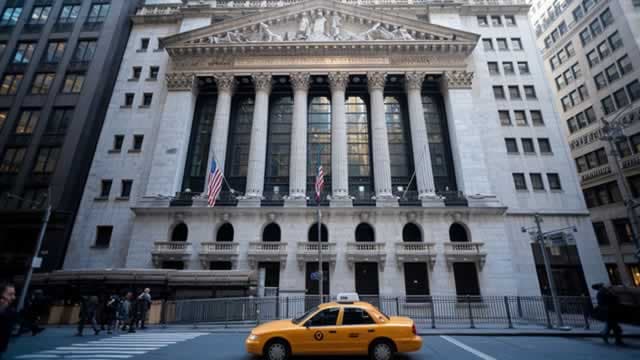
Stocks, led by tech and small caps, extended gains in September, with the S&P 500 and Nasdaq 100 outperforming. Gold surged 10% to a record monthly close, while oil lagged and global equities, including emerging markets, posted solid returns.

Operator: Please standby. We are about to begin. Ladies and gentlemen, good day, and welcome to the Lamb Weston First Quarter 2026 Earnings Call. Today's conference is being recorded. At this time, I'd like to turn the conference over to Debbie Hancock, Vice President of Investor Relations. Please go ahead. Debbie Hancock: Good morning, and thank you for joining us for Lamb Weston's First Quarter Fiscal 2026 Earnings Call. I'm Debbie Hancock, Lamb Weston's Vice President of Investor Relations. Earlier today, we issued our press release and posted slides that we will use for our discussion today. You can find both on our website, lambweston.com. Please note that during our remarks, we will make forward-looking statements about the company's expected performance that are based on our current expectations. Actual results may differ materially due to risks and uncertainties. Please refer to the cautionary statements and risk factors contained in our SEC filings for more details on our forward-looking statements. Some of today's remarks include non-GAAP financial measures. These non-GAAP financial measures should not be considered a replacement for and should be rather read together with our GAAP results. You can find the GAAP to non-GAAP reconciliations in our earnings release in the appendix to our presentation. Joining me today are Mike Smith, our President and CEO, and Bernadette Madarieta, our Chief Financial Officer. Let me now turn the call over to Mike. Mike Smith: Thank you, Debbie. Good morning, and thank you for joining us today. The Lamb Weston team delivered first quarter results that exceeded our expectations and show commercial momentum in our business. While we are early in our Focus to Win execution, we are energized and excited by the emerging evidence of results coming from the foundation that we began to lay earlier this calendar year. Our goal remains to drive profitable growth and win with customers by focusing on the principles that made Lamb Weston the industry gold standard: category-leading innovation, exceptional products, and customer-centric actions. We are early in the journey, but our North Star is clear. I want to thank our hard-working team globally for their excellent work. Let me provide a few key messages I would like to leave with you today. First, we delivered another quarter of strong volume growth. This is a result of excellent work across our organization, from innovation quality, consistency, and our focus on the customer. We are seeing positive customer momentum as we invest behind strategic differentiators. Second, we are acting with urgency to implement our new strategic plan, Focus to Win, including working to deliver our cost savings program, which is in its early innings but tracking to our plan of achieving at least $250 million of annual run rate savings by fiscal year-end 2028. Third, we have new innovative products coming this fall, and we are winning new business and growing with existing customers as our teams go to market with a more customer-centric Lamb Weston organization. Fourth, in response to sustained volume growth in North America, we are restarting a curtailed line. Lastly, we are acting with urgency to position Lamb Weston for long-term success and shareholder value creation, including by prioritizing the specific markets and products where we believe we have a sustainable competitive advantage. Now let's discuss the quarter in more detail. Our first quarter results were led by volume growth in both segments, price mix within our expectations, the benefits of our cost savings initiatives, and significant progress in improving working capital, reducing our capital investments, and driving strong free cash flow generation. As we roll out our Focus to Win strategy and drive operational and strategic changes across our business, we are doing so from a leadership position within a category of opportunity. Whether at home or away from home, let's take a minute to remind ourselves why fries. Traditional french fries are one of the most profitable items on restaurant menus. Fries are the most ordered item at US restaurants. They appeal to a broad range of consumers and are America's favorite order across every generation. The fry attachment rate, or how often someone orders fries with their meal, remains approximately two percentage points higher than before the pandemic. What that means is that when people go out to eat, they are ordering fries more often than in 2019. And we see positive trends around the globe. For example, global demand is growing with an estimated 44% of global menus offering fries. And as multinational and local market QSRs expand, they continue to see developing markets with fries, which is trending positive. Finally, global fry volume growth has outpaced total food growth versus 2019. In July, we launched Focus to Win, our new strategic plan to unlock near and long-term value. While it is early in our efforts, we are making progress. I see it in the focus our teams have and the decisions we are making. We have clearly identified savings plans, and our teams are executing. All this is happening as we work to be our customer's number one partner, a world-class potato company, and an industry-leading innovator. Looking at each of the pillars of our strategy, a few early examples include within strengthening customer partnerships, we have realigned our sales teams around our priority markets. In North America, we are augmenting our successful direct sales force with a broker model to expand our reach into underpenetrated channels of the business. The Lamb Weston organization is embracing a customer-centric mentality. We have secured several new wins around the world, including expanding our share in business and key away-from-home categories such as C-stores and cash and carry. And outside the US, we've increased our business with QSR customers. In terms of executional excellence, the supply chain organization is elevating Lamb Weston's operations. We have undertaken programs across manufacturing, logistics, and procurement that are not just driving cost savings but meaningfully improving our run rates, our quality, and our customer satisfaction metrics. In response to sustained volume growth in North America, as previously mentioned, we are restarting a curtailed line in the latter part of the second quarter to ensure we maintain strong customer fill rates. Our global footprint and the untapped capacity in our manufacturing network allow us to take on new business and provide additional support for our customers. Additionally, we began shipping from our new manufacturing facility in Marda Plata, Argentina. Approximately 80% of production will be destined for export, primarily for Latin America, including Brazil. Finally, setting the pace for innovation. We take great pride in our position as an innovation leader, and we are working to directly improve the customer and consumer experience, drive breakthrough innovations, and innovate how we operate. As I mentioned in July, we've established global innovation hubs to orchestrate disruptive innovation platforms. One in North America and one in The Netherlands for our international markets. This fall, we are launching exciting new products into retail that are aligned with customer trends. This includes flavor-forward offerings from Alexia, such as garlic and Parmesan crinkle-cut fries and dill pickle seasoned fries, as well as expanding our licensed brands with Paw Patrol waffle fries and Shaped Tops. And internationally, we continue the rollout of our really crunchy artisanal fries, which are performing exceptionally well. Before Bernadette provides a more in-depth review of the quarter, let's discuss the upcoming potato crop. We're harvesting and processing crops in our growing regions in both North America and Europe. Currently, we believe the crops in the Columbia Basin, Idaho, and Alberta are above historical average, and in the Midwest are near average as growing conditions in all regions have remained generally favorable. In Europe, growing conditions in the industry's main growing regions of The Netherlands, Belgium, Northern France, and Germany have also been favorable, leading to an above-average yield forecast for the region. We continue to expect our potato costs in Europe to be flat to slightly lower than the previous year's fixed price contracts. As a reminder, in North America, we've agreed to a mid-single-digit percent decrease in the aggregate in contract prices for the 2025 potato crop. We expect to realize the benefit of these lower potato prices beginning late in our fiscal second quarter. We'll provide our final assessment of the potato crops in North America and Europe when we report our second quarter results. I will now turn the call over to Bernadette to review the quarter and our outlook. Bernadette Madarieta: Thank you, Mike, and good morning, everyone. Our teams continue to perform at a high level as we began executing our new strategic plan and driving changes across the organization. In the quarter, we grew volumes, improved our manufacturing cost per pound, and delivered strong cash flow. Starting on Slide 11, first quarter net sales were essentially flat, increasing $5 million, including a $24 million favorable impact from foreign currency translation. On a constant currency basis, net sales declined 1% compared with the prior year. Volume increased 6%, driven by customer wins and retention, led primarily by gains in North America and Asia. In North America, the rate of new customer volumes scaled earlier than we planned. The total volume increase also included lapping an approximately $15 million charge taken in the '5 related to a voluntary product withdrawal. Turning to the industry, restaurant traffic at several customer channels was flat in the quarter, including overall QSR traffic. While some are growing, including QSR chicken, QSR hamburger, however, was down low single digits and declined another percent in August. Restaurant traffic outside the US has been mixed. Traffic in certain markets, including the UK, our largest international market, declined 4%. Our customers continue to lean into value and menu innovation, including limited-time offerings to drive traffic and meet consumer needs. Price mix at constant currency rates was in line with our expectations, declining 7% compared with the prior year. As a reminder, this includes the carryover impact of fiscal 2025 price and trade investments that went into effect in the second quarter of last year, as well as ongoing support of our customers. It also includes unfavorable channel product mix within our segments. Looking at our segments, North America net sales declined 2% compared with the prior year, primarily due to lower net selling prices. Price mix declined 7%, and volume increased 5%, supported by recent customer contract wins and growth across channels. In our International segment, net sales increased 4%, including a favorable $24 million impact from foreign currency translation. At constant currency rates, net sales were flat. Volume grew 6% in the quarter, and price mix at constant currency rates declined 6%. This was primarily related to pricing actions in key international markets to support our customers. Our international segment remains well-positioned for the long term, supported by new modern manufacturing facilities, a broad and innovative portfolio, and an expanding global footprint. In the first quarter, Asia, including China, led our volume growth, reflecting solid market performance. Growth was supported primarily by contributions from multinational chains. In Europe, we expect that a strong crop, soft restaurant market demand, and increased competitive actions will continue to pressure price mix for the balance of the year. And in Latin America, we began shipping from our new facility in Argentina in early second quarter. While we are actively onboarding customers, we expect it will take time before the facility reaches target utilization level. We've seen competitive activity increase in Latin America, most notably in Brazil. Moving on from sales, as expected, on Slide 12, you can see that adjusted gross profit declined. This was primarily due to unfavorable price mix. This was partially offset by higher sales volume and a decrease in manufacturing cost per pound due primarily to benefits from our cost savings initiatives and the benefit of lapping an approximately $39 million charge in the prior year related to a voluntary product withdrawal. We're pleased with the progress we're making against our cost savings initiatives, and we remain on track to deliver fiscal 2026 savings targets. Our broader goal with our manufacturing initiatives, however, is to embed sustainable process improvements that will continue to enhance our manufacturing performance beyond the immediate efficiencies we are seeing. Partially offsetting these benefits was about $15 million of increased fixed factory burden absorption and about $4 million of incremental costs related to the start-up of the new production facility in Argentina. While we anticipated a decline in gross profit this quarter, the decline was less than expected, due primarily to stronger than anticipated sales volumes and incremental benefits realized from our cost savings initiatives. Adjusted SG&A declined $24 million versus the prior year quarter. The decline reflects benefits from cost savings initiatives. It also includes $7 million of miscellaneous income, primarily related to an insurance recovery and property tax refunds that will not repeat in future quarters. Equity method investments were a loss of $600,000 in the quarter, down from earnings of $11 million in the prior year quarter. This reflects the current lower rate of sales volume from our equity affiliate at lower prices but also an unfavorable mix of sales. As a result, adjusted EBITDA was essentially flat with last year at $302 million. The favorable impact on net sales from currency translation was almost entirely offset by higher local currency expenses, particularly cost of sales in our global markets. Turning to segment EBITDA performance on Slide 13, adjusted EBITDA in our North America segment declined 6%, or $18 million versus the prior year quarter to $260 million, primarily related to price and trade investments in support of our customers, which was only partially offset by higher sales volumes, lower manufacturing cost per pound, and lower adjusted SG&A. Lower manufacturing cost per pound and adjusted SG&A both benefited from our cost savings initiatives. We also lapped an approximately $21 million charge for the voluntary product withdrawal in the prior year. In our International segment, adjusted EBITDA increased $6 million to $57 million. This year-over-year improvement primarily reflects the absence of last year's $18 million charge related to the voluntary product withdrawal, lower potato prices, cost savings from our cost savings initiatives, and a $4 million favorable impact from foreign currency translation. These benefits were mostly offset by supporting our customers with price investments, increased competitive actions in certain markets, and approximately $4 million of start-up costs associated with our new manufacturing facility in Argentina. Moving to liquidity and cash flows on Slide 14, our liquidity and cash position remain healthy. We ended the quarter with approximately $1.4 billion of liquidity, comprised of approximately $1.3 billion available under our revolving credit facility and $99 million of cash and cash equivalents. Our net debt was $3.9 billion, and our adjusted EBITDA to net debt leverage ratio was 3.1 times on a trailing twelve-month basis. In 2026, we generated $352 million of cash from operations, up $22 million versus the prior year quarter. Lower inventories were the primary driver of the increase. Free cash flow was strong at $273 million. As a reminder, our Focus to Win plan includes approximately $60 million of incremental cash flow from working capital, mainly from reducing inventory in both fiscal 2026 and '27, or $120 million in total. We believe we're on track to deliver the fiscal 2026 target. Capital expenditures for the quarter declined $256 million to $79 million as we completed our production facility expansion project. For fiscal 2026, our capital spending is expected to be approximately $500 million, with approximately $400 million in maintenance and modernization and $100 million for environmental projects, which are mostly for wastewater treatment. Turning to Slide 15, we remain committed to returning cash to shareholders. In the first quarter, we returned $62 million to shareholders. This included $52 million in cash dividends, and we repurchased $10 million of stock, leaving us with $348 million authorized under the plan. This brings the total cash we've returned to shareholders since the spin in 2016 to over $2 billion. Our capital allocation priorities continue to be anchored in investing in the business, its capabilities, and areas where we are working to competitively differentiate Lamb Weston to execute our business strategy while maintaining a strong balance sheet and opportunistically returning capital to shareholders with dividends and share repurchases. Let's turn to our outlook on Slide 16. We are reaffirming our outlook for fiscal 2026. As a reminder, this outlook includes the contribution of a fifty-third week, with an additional week falling in the fourth quarter. We continue to expect revenue at constant currency rates in the range of $6.35 billion to $6.55 billion, which is a 2% decline to a 2% increase. We expect year-over-year volume growth behind customer momentum in both segments. In our North America segment, we expect volume to grow in both the first and second half of the year. Note that while volumes in the first quarter came in above expectations, this reflects the acceleration of new customer activity that we planned for in later periods. In our international segment, we expect volume in the back half of the year to be essentially flat as we lap the new customer acquisitions from the prior year and we continue operating in a competitive environment. We also continue to anticipate price mix will be unfavorable at constant currency. As of the end of the quarter, we have secured approximately 75% of our global open contract volume at pricing levels generally consistent with expectations. As anticipated, unfavorable price mix will be more pronounced in the first half, reflecting the carryover pricing actions from fiscal 2025. The effect is expected to moderate in the second half of the year, supported by new contracts signed this year. Our adjusted EBITDA guidance range remains at $1 billion to $1.2 billion. As a reminder, adjusted EBITDA now excludes noncash share-based compensation expense. It is available in the reconciliation of non-GAAP financial measures that accompanies the earnings release we filed this morning. Despite the outperformance in the first quarter, with only one quarter behind us, we believe it's prudent to maintain our guidance range. While we previously excluded any impact from tariffs, the range now incorporates tariffs in the balance of the year, based on our latest view of enacted tariffs by the US and other governments. Additionally, given the outperformance of the first quarter's gross profit from higher than planned volume, we expect gross profit margins in the second quarter to be relatively flat with the first quarter. Due primarily to as expected first quarter input cost inflation being flat to slightly down compared with a year ago due to the steep increase in open market potato prices in Europe in the prior year, going forward, beginning in the second quarter, we expect low single-digit inflation, including the benefit of this year's lower raw potato prices. We also expect higher factory burdens from longer than expected planned maintenance downtime at one of our plants and additional start-up expenses and factory burden related to the start-up of Argentina plant to adversely affect our margin performance in our International segment in the second quarter. Turning to adjusted SG&A, our first quarter SG&A as a percentage of revenue was lower than our expectation for the full year. As I previously mentioned, the quarter included $7 million of miscellaneous income that will not repeat in future quarters. In addition, at year-end, we shared our plan to invest approximately $10 million of SG&A in innovation, advertising, and promotion expenses to support our long-term strategic plan. These investments are slated for the remainder of the year. While not in our guidance, the net sales and adjusted EBITDA we are updating our tax rate guidance from approximately 26% to a range of 26% to 27%. We now expect the tax rate in the first half to be in the low thirties, and the second half expectation remains in the low 20s. We do not expect that the recently enacted US federal tax legislation will have a material impact on our fiscal 2026 tax rate. And finally, our outlook reflects the progress we are making with our customers, the cost savings we are on track to deliver, and the early but positive results of the work by our teams to execute Focus to Win within a competitive market. I'll now turn the call back over to Mike. Mike Smith: Thank you, Bernadette. In closing, we are acting with urgency to execute our Focus to Win strategy, including delivering our cost savings program. We have continued to drive strong volume growth and are pleased with the momentum we are seeing with our customers. Our team is focused on improving capital efficiency and increasing cash flows as our growth investments are complete and reducing working capital. We have trend-forward products coming to the market, and the capacity and innovation to partner with our customers. And we are managing our business strategically, deploying resources, and focusing our efforts in the areas of the market where we have the most differentiation, which we are confident will best position us for sustained success. Finally, we've reaffirmed our outlook for fiscal 2026. We'll now be happy to answer your questions. Operator: Thank you. If you would like to ask a question, signal by pressing star 1 on your telephone keypad. Please make sure your mute function is turned off to allow your signal to reach our equipment. Again, press star 1 to ask a question. We'll go first to Andrew Lazar with Barclays. Andrew Lazar: Great. Thanks so much. Good morning, Mike and Bernadette. Mike Smith: Morning, Andrew. Andrew Lazar: Maybe to start, you noted that Lamb Weston has restarted a previously curtailed production line in the US. And I guess more broadly, I'm just curious how this squares with sort of the current supply-demand imbalance for the industry overall that you've talked about the last couple of quarters. And have you heard of any further industry capacity delays or outright cancellations beyond what you shared in the international sphere last quarter? Mike Smith: Yeah. I appreciate it, Andrew. You know, we need to restart this line really to keep up the demand signals that we're seeing on the business, the volume, and the customers that we're bringing on board. Really to maintain the customer fill rates. So, you know, all good signals. You've heard me say, historically, this industry has been pretty rational, and our market intelligence would suggest that not all the new announcements are gonna move forward at their original timing. You heard me talk about in July that, you know, we believe that some of those announced capacities aren't gonna move forward. It's either been delayed, postponed, or even canceled. The pace of new announcements has definitely slowed. I can't think of a new announcement that's been made since we reported earnings back in July. So I think, you know, we are seeing signs that this industry is being rational when it comes to capacity. Andrew Lazar: That's really helpful. Thanks. And then I know, Bernadette, last quarter, I think you talked about a low to mid-single-digit year-over-year decline in price mix for the first fiscal half of the year. I'm curious if that still holds. And if so, I guess it would mean a not inconsequential sequential improvement in price mix in fiscal 2Q, if I have that right. Bernadette Madarieta: Yes. No, thanks, Andrew. Foreign currency is having a little bit larger impact on our results. And in the first half, on a constant currency basis, we're expecting a mid-high single-digit decrease in price and then moderating to low to mid in the back half of the year. Andrew Lazar: Thanks so much. Mike Smith: Thanks, Andrew. Operator: Thanks, Andrew. We'll go next to Tom Palmer with JPMorgan. Tom Palmer: Good morning, and thanks for the question. First, I just wanted to kind of clarify some of the gross margin commentary about more flat quarter over quarter. The items you noted seem to be more related to the international segment, like the rising potato costs and the plant start-up costs? Maybe just in North America, an update there. Are we seeing more of kind of the normal seasonal increase to think about? As we shift from 1Q to 2Q? Or are there kind of items there to think about as well? Bernadette Madarieta: Thanks, Tom. As it relates to North America, it is a more seasonal increase. One thing, though, that we do need to consider as it relates to North America is the input cost of inflation. We are gonna see a little bit more in February, but we'll also start seeing some of the benefit related to the lower potato prices come in. But you're absolutely right that much of the change is related to the international segment. Tom Palmer: Okay. Thank you. And then I just wanted to clarify on the tariff commentary that it's now included in guidance but was not previously. What is your tariff exposure? And I think previously, you'd kind of discussed it as not being meaningful. Is there any update there? Bernadette Madarieta: Yeah. So most of our tariff exposure relates to any import of palm oil or other ingredients. And right now, on an annualized basis, we would expect it to be about $25 million. We primarily bring that in from Indonesia and Malaysia. There is going to be a vote in March, is my understanding, that it could be enacted that the Indonesia tariff rate would go away. But that's yet to be known. So we've gone ahead and we've included the full amount for that palm and other ingredients in our guidance for the remainder of the year. Tom Palmer: Great. Thank you. Operator: And once again, ladies and gentlemen, if you'd like to ask a question, signal by pressing star 1. Our next question comes from Peter Galbo with Bank of America. Peter Galbo: Hey, guys. Good morning. Thanks for the question. Mike Smith: Good morning, Peter. Peter Galbo: Bernadette, understanding kind of some of the nuance on the second quarter gross margin. But I guess if I just look at the first quarter performance, it wouldn't be all that different from history. I think it was a roughly flat gross margin Q on Q versus 4Q, which is kind of what the old Lamb Weston would have been even pre-COVID. So I think that the seasonality maybe follows. So I guess the question is, 2Q aside, should we be thinking about the historical seasonality on the gross margin line returning in the second half? At least as it relates to 3Q and 4Q. That would just be helpful as we kind of model out the rest of the year. Bernadette Madarieta: Yeah. That's exactly right, Peter. Based on the strength that we saw in Q1, we do expect gross margin to be flat about flat with Q2. And then similar to historical periods, we expect a seasonal step up in Q3 and then a seasonal decline in Q4. Peter Galbo: Okay. Great. And, Mike, I just wanted to touch on something you brought up in the slides. Noting on, I think, expanding the usage of brokers in North America. You know, historically, the strength of Lamb Weston was truly the direct sales force. I think it was a competitive advantage maybe you had that some of your competitors didn't. So I just want to understand the change in philosophy or the change in thinking and expanding out to using a broker network. How that's being, I guess, received internally by the direct Salesforce. I mean, again, it's a nuance, but it seems like a meaningful change to how you've operated versus history. Thanks very much. Mike Smith: Yeah. I appreciate the question, Peter. I think it's really important, and I want to make sure I'm clear on this. We are maintaining that direct sales force. So that, to your point, Peter, that team has been very helpful to this business over the course of the last several years as we moved to that model. We've seen success with it. This is now gonna give them the opportunity to continue to focus on the areas where they've been successful. We are augmenting that direct Salesforce with a broker in some of our underpenetrated channels, some of the areas that we haven't spent time focusing on in the past. The sales team, the leadership team on that side is super supportive and excited about it because it actually allows them to really focus on the areas that they have been focusing on and gives us a chance to look at some potential upside opportunity that we haven't really spent a lot of time on over the last several years. Peter Galbo: Awesome. Thanks so much, guys. Operator: Thanks, Peter. We'll go next to Max Gumport with BNP Paribas. Max Gumport: Hey. Thanks for the question. I was hoping you could unpack the contribution of customer wins to driving growth in North America. So first, just if you'd be able to quantify that roughly in point terms in terms of what that drove. And then with these gains really first starting to get called out in '25, is there any reason why that benefit doesn't stick in 2Q and 3Q? And then how would you think about that progressing from there? Thanks very much. Mike Smith: Yeah. You know, the team's working hard to pick up new customers, and as I said before, I think we're driving a whole another level of customer centricity here in our organization. You know, as Bernadette mentioned earlier, we've had some customers that we have converted earlier than expected, meaning that some of those customers started placing orders and shipping with us in Q1 that we didn't expect to necessarily happen until Q2. So you know, that's one reason you're seeing the larger step up in Q1 on volume versus what we expected. Bernadette Madarieta: Yeah. And that relates primarily to the North America segment. That's exactly right, Mike. And then as it relates to the international segment, keep in mind that we were lapping the prior year voluntary product withdrawal that we won't see going forward. Max Gumport: Okay. And then just coming back to the 1Q versus 2Q gross margin comments that rise to the NASH, but one other way I wanna just get my head around it would be clearly coming into the year, you expected a return to the normal which would have been a pretty meaningful, you know, few 100 basis points, I believe, step up from 1Q to 2Q. I think it's fair to say 1Q gross margin came in a couple 100 basis points above what you might have expected. And I realize you now expect inflation to accelerate from 1Q to February. Has your view on the absolute gross margin changed? Is that because of the timing of inflation, or is it really just a matter of paying meaningfully better than expected 1Q first margin? Thanks very much. Bernadette Madarieta: Yeah. So for the question. For the year, we're expecting to be fairly close to what we had originally expected. We didn't guide on gross margin per se, but you're exactly right that the cadence of the gross margin and the increase and decreases, that the primary change here is really that Q1 came in better than expected, and we're expecting more of a flat quarter over quarter gross margin between 1Q and 2Q. Max Gumport: Okay. Thanks very much. I'll leave it there. Operator: And our next question comes from Matt Smith with Stifel. Matt Smith: Hi, good morning. Thanks for taking my question. Mike, could you talk about the impact of restarting the curtailed line in the second quarter? Should we think of there being higher fixed cost absorption as that line comes on? Or is that a cleaner startup process relative to when you open a new plant? And then how do you think about that line going forward? Do you expect production to be maintained on that line, or have you learned that you can turn these on and turn them on based on different times of the year and when it's most efficient to use that capacity? Mike Smith: Yes. Great question, Matt. Let me just ground everyone and remind everyone. We curtailed more than just one line when we did our curtailment. So this is one of those lines that we're bringing back on. During the course of the time that line was down, we would, you know, kind of bump the kind of what we call it bump start the engines and the pumps and kind of keep things lubed up. And so it's easier to start these lines than starting a new production facility from scratch. Not a lot of cost to bringing up this new line. Fully anticipate that we're gonna continue to run this line. That's what our demand signals are telling us. And again, we have other curtailed lines that we have positioned should we see continued growth and momentum in the business. That we'll be able to action against into the future. Bernadette Madarieta: Yeah. And the only thing I'd add to that is so for the North America segment, we'll start to moderate at the end of the second quarter when we start up that line from a fixed factory burden perspective. But we'll see a larger impact internationally with the start-up of Argentina and then the higher factory burden from the longer than expected planned maintenance downtime in Q1. Matt Smith: Thank you, Bernadette. And as a follow-up, could you talk about the phasing of cost savings in fiscal 2026? I think cost savings came in above your expectation in the first quarter, but you still expect to be on track for the $100 million run rate in fiscal '26. Or exiting the year. Are you raising your expected cost savings for the year? Is it just more flowed through in the first quarter than you anticipated? Or maybe it was a larger contribution from the carry-in benefits from last year's restructuring savings? Just a little clarification out there. Thank you. Bernadette Madarieta: Sure. I'd be happy to provide some color on that. So you're right. We did drive cost savings a bit faster, which has about two-thirds of the benefit in the back half of the year when we initially announced the plan. There's still many priorities that we need to deliver, and we'll continue to provide updates as the year progresses. But for now, we're on track to deliver the $100 million target that we set for fiscal 2026. And again, about two-thirds of that is expected to affect gross profit, and about a third is expected to affect SG&A. Matt Smith: Thank you. I'll pass it on. Operator: And we'll go next to Scott Marks with Jefferies. Scott Marks: Hey. Good morning, Mike. Bernadette. Thanks so much for taking our questions. First thing I wanna ask about is, you gave some commentary earlier about some of the business wins you've had. You know, expanding some business with QSR customers, expanding in C-stores, and other away-from-home categories. Just wondering if you can speak a bit to what's been the driver of these wins? Has it been more of the price support that you're willing to invest behind it or maybe some other factor helping you kind of gain this business? Mike Smith: Yeah. Appreciate the question. You know, a lot of it has to do with how we're engaging in our customers in a change from how we were in the past. You know, we're spending a lot of time making sure that we're doing the right joint business planning, and that's not just lining up our salespeople to the customer. That's a complete cross-functional approach where our supply chain organization, our marketing organization, and others are spending time with these customers and really understanding what they are looking for in a valued partner, and we're now delivering that. We're seeing customers have a renewed focus on service, quality, and consistency rather than just price when it comes to North America. And I think you're seeing that. When you hear, you know, out or Bernadette mention that we're through 75% of our contracting for this fiscal year with customers. That's at a very high retention rate, which we're excited about. And then, obviously, bringing on some of those new customers is providing some tailwinds for the business. Scott Marks: Understood. And then maybe just on the traffic environment, you made some comments about QSR traffic. I think it was flat overall with some puts and takes across the different subsegments within. Just wondering if you can kind of share just overall backdrop what you're seeing in the US internationally, and what you're hearing from customers as we move through the rest of this, I guess, calendar and fiscal year. Mike Smith: Yeah. You know, QSR traffic was flat in the period. You know, as Bernadette mentioned, burger QSR traffic was down. That was after several months of sequential improvements, albeit still down. Chicken QSR was up, which is a great mix opportunity for us. You know, we're intrigued by some of the offerings that we're seeing from some of our customers in the marketplace in terms of value meals. Excited to see how those are gonna perform into the future. You know, we have great customers. They have really loyal consumers. And, you know, they're looking to drive traffic into their restaurants and in their stores. Bernadette Madarieta: Yeah. And, Mike, if I could just add on the international side, you know, QSR traffic being a bit mixed in the UK. I think I mentioned our largest market. It was down 4%. There were some other markets up, though, that were up slightly. France, Germany, Spain, but then there were others that were down. So a little bit mixed there on the international side. Operator: And we'll go next to Robert Moskow with TD Cowen. Jacob Henry: Hi. This is Jacob Henry on for Rob. Just one question for me. I'm wondering if you can provide any additional details on the pricing of the contracts you signed this quarter? Just curious how those came in versus expectations. I know you guys are winning a good amount of new business. Curious if you are finding you have to discount maybe more than you expected. Thanks. Mike Smith: Yeah. I appreciate the question. You know, as I said earlier, I mean, we're seeing in North America that customers are having that renewed focus around service quality, consistency, and the innovation that we're providing and all that customer centricity that I talked about earlier. It's not just price. Price in North America has been in line with our expectations. That being said, you know, we have supported customers in this challenging environment. You know, we've finished, like we said, 75% of those contracts have gone through the normal course. Another 25% is kind of the normal kind of process that we go through, and we'll start to see those wrap up through the end of the calendar year. You know, I think we've said in the past, last year, about two-thirds of our agreements came up for renewal. We had about a third of those that came up for renewal this year. I'd say, you know, when you think about the international markets, we continue to see a little bit more competitive dynamic. Some of that's related to new capital. Some of that's related to raw pricing in some of the markets. Some of that's related to just normal competitive dynamics. You know? And in Europe, you know, we talked a little bit about the crop and where our raws headed with those contracts. So again, all as expected. And we continue to, again, meet with our customers and show them a differentiated Lamb Weston when it comes to our customers. Bernadette Madarieta: Yeah. And we focused a lot on price, and I think the only other thing I'd add in as it relates to mix is that we are seeing a little bit of a change in mix in some of our channels, particularly in our retail channel with, you know, more focus towards the private label volume versus branded volume. Operator: Our next question comes from Steve Powers with Deutsche Bank. Steve Powers: Hey, great. Good morning. Mike, following up on your comments kind of throughout the call on just the importance of customer service and the efforts that you've all been able to make in terms of the supply chain enabling better customer service delivery on your part. I guess, when you think about the overall scorecard, and I'm focused mostly on North America in this question, but, you know, product quality, order fill rates, just all the different dynamics of customer service. Is that scorecard kind of at this point, universally green in your estimation, or are there areas where you still see room for further improvement that are priorities for the organization? Mike Smith: Yeah. I won't go into detail, Steve, in terms of what the scorecard and what we're tracking, but we do track our customer engagement and some of those key metrics on a regular basis, and we still have opportunities. And I think, you know, that's where my focus has been over the last several months is getting out in front of these customers and better understanding where we have opportunities and how we're gonna address those moving forward. In some ways, we've addressed that through some of the structural changes and changes. In some ways, we've addressed that through innovation, some of the items that we're coming out with. But, again, we're having those conversations. And listen. Never satisfied. We always wanna make sure that we're delivering a higher level of service for our customers, and we're gonna continue to do that. Steve Powers: Okay. Thank you for that. And then, Bernadette, I don't so apologies if I missed this, but just on the plants, the new facility in Argentina, how long do you expect that to take before it is up to target utilization levels? I'm not sure I caught that, and I don't know how the competitive activity you called out in Brazil impacts that. Just your outlook for the ramp-up in that facility. Thank you. Mike Smith: Yeah. And maybe before Bernadette jumps into that one, let me just update the group. You know, we actually have that plant now operational. And we're actively qualifying products for our customers. And transitioning, kind of ramping things up. That does take some time, but it is operational, and much of that capacity will be exported to the Brazilian market in that area. Steve Powers: Okay. Is there a timeline to kind of hit target utilization at this point? Mike Smith: Yeah. It takes time. I mean, you know, if you think about our other lines that we've started up, these aren't we don't fill up the lines on day one. And like I said, it takes some time to condition the lines as we call, shake them down a bit, and bring those new customers on and over. It will take us some time to bring that line up to speed. Steve Powers: Okay. Enough. Thanks, Mike. Operator: And we'll move next to Marc Torrente with Wells Fargo Securities. Marc Torrente: Hey, good morning, and thank you for the question. Just first on SG&A, it came in a bit lower than expectation. Part of that was the nonrecurring $7 million and then maybe some timing shift in strategic investments. So how should we think about the underlying run rate of SG&A going forward? And any phasing of net cost savings ahead? Thanks. Bernadette Madarieta: Yeah. Thanks, Marc. You know, in terms of SG&A, I think about one-third is what we've shared before of the savings are expected to benefit SG&A in fiscal '26, and that's off a $100 million base. And then you're exactly right. The benefit of cost savings in the first quarter did include the $7 million of one-time benefit that we won't see going forward. It will be affected by our cost savings benefits, but then keep in mind, you know, we've got the incremental costs associated with normalizing our stock compensation and then the $10 million in strategic investments that are timed for the latter half of this fiscal year. Marc Torrente: Okay. Got it. And then when new customer wins materialize a bit quicker than anticipated, which pulled forward some of the expected volume growth in the year. Maybe could you talk to visibility and other new customer wins that have yet to start? And ability to sustain volume momentum ahead even if, I guess, traffic across the industry remains muted? Mike Smith: Thanks. Yeah. You know, we're not gonna speak to any future customer wins that are coming up. I think the fact that we restarted the curtailed line in American Falls to make sure that we have the right customer fill rates and support our customers the right way is a great kind of breadcrumb to how we're feeling about the business. Bernadette Madarieta: Yeah. And I think it's important to note that while volumes in the first quarter did come in above expectations in North America, that does partly reflect a timing shift in the ramp-up of those new customers that was planned for later periods. So that was planned in our original guidance. It just came a little bit faster than expected. Operator: And we'll move next to William Royer with Bank of America. William Royer: Hi. Good morning. I just have two. The first, on the new customer wins, is some of this creating customer-specific products that may not have margins that are as high as your existing customers? I guess, how is the profitability of the new additions? Mike Smith: Yeah. I'm not gonna speak to the profitability on specific customers. Just know that we are picking up new customers. We're doing it the right way and with pricing that makes sense for the P&L moving forward. William Royer: Got it. And then just secondarily on the CapEx going forward, $500 million this year. When we look to out years, I think you mentioned $400 million this year of maintenance and $100 million of environmental. Should that be the range that we should be thinking about over the next two or three years subsequently? Bernadette Madarieta: Yeah. That's in the general ballpark. You know, I think we previously shared that we've got a five-year plan with the environmental expenditures. Currently planning for about $100 million per year over the next five years. But, again, we're continuing to look for ways that we might have opportunities to extend deadlines or, you know, work on other areas to reduce the cost of that compliance. Got it. But in total, you're correct. William Royer: Perfect. Thank you. Operator: Thank you. And ladies and gentlemen, that concludes our Q&A session today. I'll turn the conference back to Debbie Hancock for any additional or closing remarks. Debbie Hancock: Thank you, Lisa, and I want to thank everyone for joining us today. The replay of the call will be available on our website later this afternoon. Have a great day. Operator: That concludes our call today. Thank you for your participation. You may now disconnect. Have a great day.
Operator: Good afternoon, everyone. Welcome to NIKE, Inc. First Quarter Fiscal 2026 Conference Call. You will find it at investors.nike.com. Leading today's call is Paul Trussell, VP of Corporate Finance and Treasurer. Now I would like to turn the call over to Paul Trussell. Paul Trussell: Hello, everyone, and thank you for joining today to discuss NIKE, Inc. First quarter fiscal 2026 results. Joining us on today's call will be NIKE, Inc. President and CEO, Elliott Hill, and EVP and CFO, Matt Friend. Before we begin, we will make forward-looking statements based on current expectations. Let me remind you that participants on this call and those statements are subject to certain risks and uncertainties that could cause actual results to differ materially. These risks and uncertainties are detailed in NIKE's reports filed with the SEC. In addition, participants may discuss non-GAAP financial measures and nonpublic financial and statistical information. Please refer to NIKE's earnings press release or NIKE's website investors.nike.com, for comparable GAAP measures, and quantitative reconciliations. All growth comparisons on the call today are presented on a year-over-year basis and are currency neutral unless otherwise noted. We will start with prepared remarks and then open the call for questions. We would like to allow as many of you to ask questions as possible in our allotted time, so we would appreciate you limiting your initial question to one. Thank you for your cooperation on this. I will now turn the call over to NIKE, Inc. President and CEO, Elliott Hill. Elliott Hill: Thank you, Paul. It's great to be here with everyone today. Before we begin, I want to start with a thank you. I want to thank my NIKE, Inc. teammates around the world. Because of their passion, commitment, and determination, we made tangible progress from where we were eleven months ago. Driven by our win-now actions that focused our team on our culture, product, brand marketing, marketplace, and our ground game. This quarter, our win-now actions drove momentum in the areas we prioritized first: Running, North America, and wholesale partners. It showed that we are making the right choices. Consumers are responding. We are getting some wins under our belt. What you cannot see in the results is the effort that I have seen in our stores, distribution centers, and offices around the world. Since my return, not a day has gone by that I have not asked each of my teammates to commit themselves fully to building a better NIKE. That takes a lot of work. And this quarter in particular, we asked even more from our teams as we realigned approximately 8,000 teammates to our sport offense, which I will explain shortly. It's a massive achievement for everyone involved. What I want this audience to know is that our teams also understand how much we still must do to meet our full potential. Because the truth is, NIKE's journey back to greatness has only just begun. There is significant work ahead, especially in the areas of sportswear, Greater China, and NIKE Direct. And as I have said to the team, progress will not be perfectly linear, but the direction is. On our last call, I said it was time to turn the page. And I believe this quarter reflects the many ways we are doing just that. You have heard me say, it's imperative to bring our entire organization closer to the athletes we serve. That's why the sport offense is going to be so critical to our success. This new formation and ways of working will align our three brands, NIKE, Jordan, and Converse, into more nimble, focused teams by sport. We will gain sharper insights to fuel innovation in storytelling and connect with the communities of each sport in more meaningful ways. Collectively, we will have a better-coordinated attack with each brand forming a distinct identity and delivering a clear intention to serve different consumers. In the marketplace, organizing more by sport gives us a much clearer point of view. The House of Innovation in New York is a great example where we redesigned a retail experience by sport. I walked the floors in early September, and we are now able to take a consumer into a world of Jordan, a world of NIKE running, or a world of NIKE global football. It's an immersive sport experience. And the refresh has already led to double-digit revenue increases. That clarity works in small format doors as well. We recently redesigned our South Congress store in Austin to focus only on running and training, and sales have significantly increased. Ultimately, the sport offense will maximize NIKE, Inc.'s complete portfolio. It is designed to drive growth across all our dimensions. With three distinct brands, we believe the opportunity to serve so many athletes across sports, in retail channels at every price point is an advantage that no one else has in our industry. Now let's take a deeper look and tell where we are driving progress. Our running business gives us an early window into the kind of impact we expect out of the sport offense. Our running team moved fastest into our new formation and was the first to get sharper on the insights of their athletes. It turns out runners mostly want three things from their running shoes: Big cushioning, stability, or an everyday shoe that returns energy. In response, we have moved with a sense of urgency and completely redesigned the Pegasus, the Structure, and the Vomero to solve for these three insights. Integrating our industry-leading innovation platforms like NIKE Air, Flyknit, ZoomX, and ReactX. Having a consistent structure of silos and price points allows us to introduce at least one new major running footwear style each season. Our running business continues to be a strong proof point of progress. We are getting back to delivering a relentless flow of innovation that serves real athlete needs, and we are pulling it all the way through the marketplace in consumer-friendly ways. The early results have been positive, with NIKE running growing over 20% this quarter. Our opportunity is to quickly seize the benefits of a sport offense and apply them to more sport and sport culture, including global football, basketball, training, and sportswear. I will remind you that each sport is in a different stage of development. Our global football team is preparing for the energy of the 2026 World Cup and is ready to move forward. We will utilize the world's biggest sports stage to debut an exciting new apparel innovation platform that will later be leveraged across other sports. And we will connect with a younger consumer by launching several football streetwear collections. As we are doing in running, football boots are also fueled by three silos at multiple price points addressing the needs of three different styles of play. This quarter, we relaunched the revamped Phantom six with great sell-through and will follow that up with a new Tiempo in Q3 and a new material in Q4. And finally, we reset the football brand identity this quarter with our scary good campaign. From a football innovation and brand standpoint, we are ready to go. In the marketplace, we are moving quickly to improve our position to tell football innovation stories in more inspiring ways at point of sale. The longer-term vision is for the impact of the sport offense to be felt far beyond the traditional sports where we currently compete. We now have dedicated teams to bring our creativity to additional market opportunities. These are spaces for us to take design risk, to be innovative, and to be irreverent, which is so important to our brand's DNA. NIKE ACG, for example, has brought an athletic youthful approach to outdoor product for nearly thirty years. As more people stay active outdoors, we will invest in NIKE ACG to address the opportunity. This quarter, we launched an elite ACG race team who have helped us make high-performance outdoor product. Together, we just revealed some exciting innovation: A breathable apparel innovation platform called Radical Air with the ACG UltraFly and a trail-tuned super shoe. ACG professional racer, Caleb Olson, wore both innovations in his victory at the Western States one hundred race, finishing with the second fastest time in the history of the race. Our new partnership with SKIMS is another opportunity to bring something unexpected to a new consumer. NIKE's innovation expertise and SKIM's dedication to inclusive apparel has the potential to create performance training products with a very different look. We debuted the product line last week with 58 silhouettes, and early consumer response was very strong. The opportunity exists to create more dimension around the most established sports as well. Look at this year's US Open of Tennis as an example. Over the course of the three-week tournament, we celebrated the wins and on-court looks of Alvarez and Saba Lanka. We designed custom dresses for Naomi's incredible comeback and for Sharapova's induction into the tennis hall of fame. We excited sneaker fans with a retro launch of Agassiz Tech Challenge sneaker and we brought it all together in New York's house of innovation in an immersive tennis experience. In the past ten months alone, as part of our win-now actions, we have activated 12 sport takeover moments that connected the inspiring performances of our athletes and teams to commercial assortments in the marketplace. This quarter, that included the England women's national team winning the European championship, centers, Wimbledon title, Scottie's open championship title, and Chelsea, winning the Club World Cup. Sport, and the world's greatest moments will always be NIKE's runway. And only we can bring it all together across three brands, so many sports, performance, and lifestyle. This is NIKE maximizing the full power of our portfolio. While the sports performance teams are finding a higher gear, our sportswear teams have work to do to get sharper on the consumers we are serving. And we see it in our results. Our business continues to decline. Continuing to build a clear product construct in sportswear, as we are doing in our performance sports, remains a priority. We do have pockets of strength, especially in our deep vault of look of running footwear, but we are still in the process of putting our largest classic franchises into a healthier position for the NIKE, Jordan, and Converse brands. Air Force One is stabilizing. Air Jordan one inventory levels are returning to health. The dunk continues to be managed aggressively down in all geos, and the Chuck Taylor is in the early stages of a global market reset. With Converse, we just put new leadership in place and we are going to take aggressive actions to better position the brand for profitable growth in the future. Of the priority win-now actions, elevating the full marketplace is in the early innings. The positive is that North America, where we invested first, took some big steps forward this quarter. The team continues to give more consumers access to the brand in more premium environments. We reset over thirteen hundred running spaces in the quarter, from Dick's to Nordstrom's to Heartbreak Hill. And we are also pleased with the launch of the NIKE brand store on Amazon, where we are driving stronger engagement and sales than anticipated. While our North America teams are setting the tone, we are still far from our ultimate goal of elevating an integrated marketplace. Digital, and physical, wholesale and NIKE Direct, in all geographies. Greater China, as I mentioned on the last call, is facing structural challenges in the marketplace. Our business was down 10% for the quarter. Seasonal sell-through continues to underperform our plans, requiring larger investments to keep the marketplace clean. My leadership team and I were in China a few weeks ago. We traveled to three cities, spending time with our Greater China leadership team, consumers, and our partners. We are even more committed to the opportunity for growth in China. They are a nation that's passionate for the games of basketball and global football, and a nation that is embracing a healthy lifestyle through running and training. When we lead with exciting innovation, like the Vomero 18 or the Jordan game shoe, or have athletes like Jah and LeBron visit key markets, we drive traffic and demand. It is even more clear that our path to winning in China is through sport. Our team is moving with urgency to develop consistent plans across all sports and refresh some of our retail environments into distinct sport experiences. With over 5,000 mono brand stores in China, this will take investment, and it will take time. Globally, NIKE Digital is still working to find solid ground. We made the strategic decision to become less reliant on classic franchises and pull back on our promotions for the long-term health of our brands and marketplaces in all geographies. Organic traffic has slowed. We are working to find the right assortment and marketing mix to consistently bring consumers back to our digital ecosystem. For a company our size, with three brands that serves consumers in nearly 190 countries, not all sports, channels, or countries will recover on the same timelines. I spent a lot of time reflecting on the last several months. What keeps me grounded is every time I return from a major sporting event, meeting with athletes, or being in the marketplace, I'm even more convinced that the win-now actions are absolutely the right focus for our teams. With that said, we are also realistic that we are turning our business around in the face of a cautious consumer, tariff uncertainty, and teams that are still settling into the sport offense. We know we have a lot left to prove. What gives me confidence is that through the sport offense, we are hyper-focused on the athlete. The creative ideas keep coming. And we are covering a lot of ground in the marketplace. Like I said at the start, the NIKE team, we have a lot of fight in us. I look forward to what we are about to do together. Thank you, and I'll pass it to Matt. Matt Friend: Thanks, Elliott, and hello to everyone on the call. Ninety days ago, I said the '25 would reflect the largest financial impact from our win-now actions. And that we expected the headwinds to revenue and gross margin to begin to moderate from there. At the end of our first quarter, we are encouraged by the progress that we have made, as reflected in our results. And yet we still have much work to do. Today, I will review our financial results. Then I will highlight the progress we have made with our win-now actions across the geographies. Last, I will provide guidance for Q2, as well as some additional insights to bring shape to our near-term financial performance. I'll begin with our financial results. This quarter, revenues were up 1% on a reported basis and down 1% on a currency-neutral basis. NIKE Direct was down 5%, with NIKE Digital declining 12%, and NIKE stores down 1%. Wholesale grew 5%. Gross margins declined 320 basis points to 42.2% on a reported basis due to higher wholesale discounts, higher discounts in our NIKE factory stores, increased product costs, including new tariffs, and channel mix headwinds. 1% on a reported basis. This was driven by lower brand marketing expense reflecting prior year investment around key sports moments, partially offset by higher sports marketing expense. Operating overhead was flat compared to the prior year. Our effective tax rate was 21.1%, compared to 19.6% for the same period last year, primarily due to decreased benefit from stock-based compensation. Earnings per share was 49¢. Inventory decreased 2% versus the prior year as we have made steady progress on our plans for a healthy marketplace by the end of the '26. As I shared last quarter, and as you just heard from Elliott, our geographies are at different stages of progress against our win-now actions. And business recovery is trending on different timelines. Therefore, I will focus my geography remarks on the specific context and insights of our win-now progress. In North America, Q1 revenue grew 4%. NIKE Direct declined 3%, with NIKE Digital down 10% and NIKE Stores flat. Wholesale grew 11%, EBIT declined 7% on a reported basis. North America is building momentum through sustained brand activity across sports, leveraging our leading portfolio of sports marketing assets. North America is furthest ahead in taking steps to elevate and transform the marketplace for future growth. Running, training, and basketball each delivered double-digit growth. Sportswear grew in the quarter, but there is still work to do. With momentum in apparel and looks of running footwear, while managing a 30% decline in our classic footwear franchises. As it relates to the North America marketplace, wholesale returned to growth in the quarter, partially due to shipment timing in the prior year as well as higher liquidation volume to value channels. Additionally, the strategic actions taken to expand distribution and reach new consumer segments contributed to growth, are showing initial promise. Headway was also made in repositioning NIKE Digital, reducing the number of days of site-wide promotion by more than fifty and lowering markdown rates as well as increasing share of demand at full price. On inventory, North America drove continued progress through the first quarter. Units declined versus the prior year, while dollars were flat primarily due to the US tariffs. Closeout mix is approaching normalized levels. In EMEA, Q1 revenue grew 1%. Wholesale grew 4%. NIKE Direct declined 6% with NIKE Digital down 13% and NIKE stores up 1%. EBIT declined 7% on a reported basis. EMEA has largely cleaned the marketplace, even as promotional activity has increased across the industry. NIKE's momentum is building in sport, and with our wholesale partners. EMEA is furthest ahead in repositioning NIKE digital to a full-price business. However, traffic and demand remain soft. In Q1, our performance business continued to build momentum, driven by double-digit growth in running, and low single-digit growth in global football, and training footwear. Sportswear declined low single digits, as headwinds in our classic footwear franchises more than offset growth in apparel and new dimensions of footwear. Over the last ninety days, we've seen promotional activity increase in key countries across EMEA. In order to stay aligned with our partners and manage marketplace inventory, we selectively leveraged additional discounts on NIKE Direct. With respect to inventory, EMEA closed the quarter with units down mid-single digits versus the prior year and a normalized level of closeout mix. In Greater China, Q1 revenue declined 10%. NIKE Direct declined 12%, with NIKE Digital down 27%, and NIKE stores down 4%. Wholesale declined 9%, EBIT declined 25% on a reported basis. Greater China created energy with consumers in the quarter through new product innovation and NIKE athlete activations on the ground with Jaw, Sabrina, and LeBron. Aggressive marketplace actions have reduced owned and partner inventory. However, store traffic and in-season sell-through continues to be a headwind. Running is a bright spot in China, growing high single digits in the quarter, with strong consumer response to new innovations such as the PEG premium and the Vimero 18. In the marketplace, traffic declined versus the prior year. In both NIKE-owned and partner stores, resulting in lower in-season sell-through rates. Digital remains a highly promotional marketplace in Greater China, with consumer shopping moments extending longer on local platforms with deeper discounts. Inventory was down 11% versus the prior year. However, closeout mix remains elevated. Our priority in Greater China is to improve seasonal sell-through trends by refreshing store concepts around sport, creating greater brand distinction at retail, with more productive merchandising assortments, and reducing the mix of aged inventory with our partners. In APLA, Q1 revenue grew 1%, NIKE Direct declined 6%, with NIKE Digital down 8%, and NIKE stores down 5%. Wholesale grew 6%. EBIT declined 13% on a reported basis. APLA continues to deliver mixed results across countries, with pockets of elevated inventory requiring higher levels of promotional activity and proactive management of supply in the marketplace. In the quarter, Performance Dimensions delivered strong growth, led by double-digit growth in running, and high single-digit growth in training. This momentum was offset by low single-digit declines in our sportswear business. In the marketplace, NIKE Digital delivered sequential improvement in markdown rates across all territories. Inventory across APLA grew high single digits this quarter. And so we are taking additional actions to rebalance inventory levels with retail sales trends in certain countries and tightened buys on NIKE Direct. Next, I will spend a moment to provide an update on tariffs. Last quarter, I shared that the newly issued tariffs represented a meaningful cost headwind for NIKE. Since the new reciprocal tariffs are stacked on top of the mid-teens rate NIKE already paid on imports. And I also outlined the actions we are taking in response. Balancing impact on the consumer, our partners, our win-now actions, as well as the long-term positioning of our brands in the marketplace. Since our last earnings call, new reciprocal tariff rates have been increased for certain countries. And so with the new rates in effect today, we now estimate the gross incremental cost to NIKE on an annualized basis to be approximately $1.5 billion, up from the $1 billion we shared ninety days ago. Given the magnitude and timing of the most recent rate increases, we now expect the net headwind in fiscal 2026 to increase from approximately 75 basis points to 120 basis points to gross margin. We continue to evaluate and implement the actions I described last quarter to mitigate these new costs over time. We are monitoring developments closely, and I remain confident in our ability to leverage our strengths, our scale, and the deep experience of our leadership team to navigate through this disruption. Now I will turn to our second-quarter guidance. As Elliott said, we are operating in a dynamic environment, both for consumers and our global business. We remain focused on what we can control, principally to make forward progress on our win-now actions for the long-term health of our brands and to activate our sport offense. Our outlook reflects our best assessment of these factors based on the data that we have available today. We expect Q2 revenues to be down low single digits, including one point of benefit from foreign exchange. We expect Q2 gross margins to be down approximately 300 to 375 basis points, including a net headwind of 175 basis points from the new incremental tariffs. We expect Q2 SG&A dollars to be up high single digits, with an acceleration of demand creation investment and low single-digit increase in operating overhead. We expect other expense net of interest income to be an expense of $10 to $20 million in the second quarter. We expect the tax rate for the second quarter and the full year to be in the low 20% range due to anticipated changes in earnings mix. Finally, with an additional ninety days of execution against our win-now actions, I'll close with some insights that should bring shape to NIKE's financial performance for the balance of fiscal 2026. We see momentum building with our wholesale partners. Our spring order book is up versus the prior year, with growth led by sport. And as a result, we expect wholesale revenue to return to modest growth for fiscal 2026. At the same time, we continue taking steps to reposition NIKE Digital as a full-price business. Organic traffic continues to decline double digits. With a business in the prior year that was more concentrated on classic footwear franchises and sneaker launch, as well as a higher mix of off-price sales, traffic comps will remain under pressure. And so we do not expect NIKE Direct to return to growth for fiscal 2026. As it relates to our operating segments, we expect North America will continue to lead our global recovery, while Greater China will require more time due to the unique marketplace dynamics Elliott and I have outlined. Converse is under new leadership and resetting its marketplace and brand. Therefore, we expect revenue and gross margin headwinds from Greater China and Converse to continue throughout fiscal 2026. We have made steady progress on our plans for a healthy marketplace by the end of the first half. And so we expect to begin to see a modest headwind to revenue across both wholesale and NIKE Direct as we lap aggressive clearance activity in the prior year. Foreign exchange has become a tailwind to reported revenue, but we expect minimal benefit to gross margin in fiscal 2026 due to our hedged positions entering the year. We continue to expect SG&A to grow low single digits in fiscal 2026. Our win-now actions contain investment to reignite growth in the business, particularly in demand creation, as well as rebuilding both our sport and commercial offense. Overall, there are several puts and takes across different dimensions of our portfolio. We are encouraged with how we have started the year, but progress will not be linear. And there is still work to do to return to driving consistent, sustainable, profitable long-term growth. With that, I'll pass the call back to Elliott. Elliott Hill: Thanks, Matt. I'm going to close it out with some perspective on a special sport moment from the quarter that I believe represents the power of a unified team with a singular mission. In late July, I was at the final of the UEFA Women's European Championships in Basel, Switzerland. Defending champion England had already lived through an emotional roller coaster throughout the tournament. They lost their opener to France. They came back from a two-goal deficit to beat Sweden and scored in the final minute of extra time to beat Italy in the semifinal. And now they face Spain in the final, who beat them in the last World Cup final. I was sitting with the FA, the governing body of football in England, for the third straight knockout match the lionesses started slow. They were on their heels instead of attacking. They went into halftime down one nil. We began to question if they had anything left in the tank. But coming out of the half, something clicked. Coach Serena Wiechmann made the right substitutions, as she had all tournament. Chloe Kelly came off the bench, and pace picked up instantly. Hannah Hampton made several key saves. Lauren Hemp was flying all over the pitch. And everyone contributed. England's pressure led to the equalizer in regulation. And after a draw in extra time, Chloe proved to be clutch one more time to score the winning penalty kick in the shootout. The crowd erupted, her country erupted. And there they were, champions of Europe once again, delivering England's first major football trophy on foreign soil. The NIKE London team took that insight and built a campaign around the importance of home that stretched from billboards, T-shirts to the airplane that brought them back to their awaiting fans. The national pride for the lionesses was everywhere. NIKE was right there with them. When I talked to my team about passion, commitment, and determination, we do not have to look much further than England. It's a group that embraces their roles, an experienced coaching staff who adapts in the moment, players who refuse to give up. I mean, I found out later that Lucy Bronze played the entire tournament with a fractured tibia. A fractured tibia. That's resilience. That is a team that knows what it takes to make a comeback. We were all inspired here at NIKE, and you could be assured we're taking their lessons to heart. We're unified under the sport offense, and we're clear on what it will take to win and on the size of the prize ahead. With that, I'll open it up to questions. Operator: Thank you. If you would like to ask a question, please press 1 on your telephone keypad. If you are in the queue and would like to withdraw your question, simply press 1 again. Please ensure that your phone is not on mute when called upon. As a reminder, we ask that you please limit yourself to one question. Thank you. Your first question comes from Michael Binetti with Evercore ISI. Your line is open. Michael Binetti: Hey, guys. Thanks for all the detail today. Congrats on a nice quarter. Nice to see all the progress. Elliott, if you look at the spring order book and then that said it's positive, can you help us think about that within the context of the holiday book that you said was positive last quarter, maybe just qualitatively, even what's incremental on the build and composition of spring so you can track the progress out of season? And then last quarter, Matt, you said there's a commitment to returning to double-digit margins over time. Obviously, I'm sure you're looking at historical levels as a goal. It was a helpful backstop. How are you thinking about the medium-term margin levels you can target and maybe some of the phases of recovery and the inputs we should look at as you start that journey? Elliott Hill: Michael, thanks for the question. Here's what I'd start with. Let me start first with product. I think what we're doing a great job is we're getting back to leading with a sharp focus on sport. We're making certain we can leverage the entire portfolio, and you can see that whether, you know, how we're approaching performance and sportswear. NIKE running, I think, gives us our very best example of where we're having some success, and we did just announce that we grew over 20% in the quarter. So great success in running, and our teams are taking that offense. And how we're the learnings that we have in running, and we're applying it to other parts of our business, and we're running that playbook global football training, basketball, etcetera. We do have work still to do in sportswear. But I think the team is getting much sharper on the consumers that we're serving there. And so I'm really excited and encouraged by the work that we've done around the product. We've continued to work really hard from a brand marketing perspective. And then ultimately, clearly, we gotta pay it off like you're asking in the marketplace. And I think the team's doing a really nice job of elevating and then growing the entire marketplace. And so, you know, our goal is to serve consumers wherever and however they choose to shop across, you know, multiple channels, specialty sporting goods, athletic specialty, department store, family footwear, and NIKE Direct. And I think, again, the teams are seeing the power of running the complete offense across the entire marketplace. And North America, again, is our best example. Where we're seeing growth there. Overall, I know, our partners are gaining trust in us, and it shows our spring order book is up year over year. So excited with the progress that we're making from a product perspective, a marketing, and positioning perspective. And then how we're paying it off in a more thoughtful and integrated marketplace. Matt Friend: Michael. I would just add that the other dimension we provided last quarter is that, you know, North America, EMEA, and APLA order book is offsetting the headwinds that we have in Greater China. And we continue to see that trend carry through into the spring order book as well. As it relates to our margins, you know, the way I think about it is that fiscal year '26 our margins and the pressure on our margins are really reflective of three dynamics. We've got short-term product and channel mix headwinds, we've got the transitory impact from our win-now actions, and we've got the newly implemented tariffs. And the impact that that's having on our business in fiscal year '26. Given the progress that we're making, the steady progress on exiting the first half with a healthy marketplace, we do expect the benefit from less inventory clearance to start to take shape in our margins in the second half of this year. But I would say that our outlook for margins for '26 overall have moderated. That's because of the new tariff rates and the impact that that has on our business this fiscal 2026 before all of the actions that we're taking are able to annualize as well as some of the headwinds that I referenced related to the timeline to return to profitable growth in Greater China and Converse. As I look longer term, I think that, you know, we continue to believe that double-digit margins are something that are achievable. And we look no further than our history, you know, different size of business, different mix of business, different shape of business, different geography mix, different product mix. And, you know, I think we're getting clear on what the path to getting back to double-digit margins looks like. And it starts with reigniting organic growth. It requires us to see significant improvement in the full-price mix of our business, which the win-now actions that we're putting into place are setting us on stronger footing to do. And then lastly, as we return to organic growth, we will drive operating leverage on our supply chain costs, on our retail overhead, and on our general operating overhead. And while the new tariffs are creating near-term pressure on our margins, we have outlined the actions that we're taking there to address it over time. And while it's going to take us a little bit of time, we're confident that the win-now strategy actions are the right things to move us in this direction. Operator: The next question comes from Piral Dattania with RBC. Your line is open. Piral Dattania: Okay. Thank you very much for taking my question. Apologies if there's any background noise. I was just wondering if you could give any update as to how September has progressed because we're seeing mixed indicators out there in the marketplace and potentially some evidence that there was a bit of pull forward in terms of consumer demand into the back-to-school period in August, which should have benefited your Q1? So just curious about how you're seeing the current marketplace in September trading, if possible? Thank you very much. Elliott Hill: Yeah. Thanks for the question. Yeah. Here's what I'd say. There's no question that the environment in which we're working in and operating in is dynamic. And my message to our team is to continue to control what we can control. I'm confident that our teams and product brand marketing and the marketplace are closely monitoring our consumers around the world. We're watching for signals. We're staying close with our partners and we're looking at it even reading, you know, of course, our own door and digital performance across geos and countries and cities and, you know, it is dynamic, and I just keep telling the team remain focused on inspiring through sport because when we do line up, innovative product and emotional storytelling across the integrated marketplace, consumers respond. I mean, there's some great examples this quarter. Even into September, you know, when we did launch around running Vomero and the Vomero Plus, we had good sell-throughs. The work we did around the US Open, and on the ground and emotional storytelling, we had good sell-through. John LeBron in China. You know, when we do that, the consumer shows up. So yes, it's a dynamic environment. We're keeping our team focused on the win-now actions and really, that's our fastest path back to growth. And to hit on the timing element, you mentioned pull forward. I guess what I'd say is that our performance in the first quarter didn't have anything to do with pull forwards. I referenced wholesale growth in North America. Wholesale was up 11%. And one of the factors in the quarter was the amount of the fall season that we shipped in Q1 versus what we shipped in Q1 of the prior year. And so that did create a timing benefit year on year. As we look ahead to Q2, we guided revenue down low single digits. And I'd say that there are probably two drivers to that that are most significant. One is because we started the win-now actions following the holiday season last year, NIKE Digital is facing a more significant headwind in Q2. And we significantly cut back on the amount of promotional activity that we were doing in the channel. As we're lapping that this year, there's going to be a bigger headwind in Q2 than we had in Q1. And then secondarily, we're only planning for one point of FX benefit in Q2, whereas we saw two points of FX benefit in Q1. So, hopefully, that helps provide a little bit of dimension on some of the seasonality. The last thing I would say related to the seasonality or the comparison is that the actions that we're taking on the dunk that Elliott and I both referenced are more significant in Q2. And so that's also creating a quarter-over-quarter comparison, if you will, as you compare Q1 to Q2. There was a lot of dunk business in Q2 of last year, and we're managing that franchise back as Elliott mentioned and feel great about our plans. Operator: The next question comes from Matthew Boss of JPMorgan. Your line is open. Matthew Boss: Thanks, and congrats on the progress. So, Elliott, maybe could you help elaborate on some of the early wins under your belt that you cited? Notably the return to growth in North America and the material acceleration in running. And with that, I guess, could you speak to the structural foundation that you've now built that you believe is the key to expanding the strategy to other parts of the portfolio? Elliott Hill: Yep. Matthew, let me start. You really have to think about it at a high level in two parts. First part is the win-now. Those are the actions that we put in place. The focus that we gave our team within the first sixty days. And then the second part is what we just activated in early September, which is what we're calling the sport offense. And I'm going to try to outline the two, but you gotta think about them both together. Let me start first with win-now. You know the priorities there, but we put five priorities out there. Putting the athlete at the center of everything we're due, it came down it's about innovative, coveted products. It's about telling emotional inspiring stories. It's about paying it off in an integrated marketplace. And then activating our ground game. And we're seeing signals that it's working. You know, first and foremost, it's where we focus running, which we talked about in the prepared remarks. Up 20%. Our wholesale partners, we have growth there. Spring order book is up, and then North America. So that's where we're seeing some great success. Feel good about the brand impact. Our team is doing. Around sport moments, brand launches, brand campaigns. Some of our key product launches, etcetera. So good success against the win-now actions. With that said, we still have work to do in some parts of our business that we've touched on. We've got plans in place against China, our NIKE Direct digital commerce business, and our sportswear business. So that's what the teams are working on from a win-now perspective. When you think about the sport offense, and this is rather than us being organized by men's, women's, kids, we flipped the entire organization in early September to be aligned on the product creation side and the brand marketing side by brand and by sport. By country and account. Wholesale and direct, digital, and physical. And the whole idea is that those small cross-functional teams gain the insights from the athletes or the consumers that they serve in each segment, and then that will help us drive a make us more competitive and have stronger consumer connectivity. And, again, there's no question in my mind that putting sport and the athlete back at the center of everything that we do puts us back on offense. And, you know, again, while we have some great things underway, through our priority sports and the efforts to elevate the marketplace, we still have a lot of work to do but what inspires me most is our teams. They're embracing the change, and we're ready for the challenge. Operator: The next question comes from Brooke Roach with Goldman Sachs. Your line is open. Brooke Roach: Good afternoon, and thank you for taking the question. Elliott, as you contemplate the traffic headwinds you're seeing today in NIKE Digital, how much of the pressure is attributable to the strategic reduction in promotion, versus other factors? And as you look ahead, are the most important milestones we should be watching for to return that business to profitable growth? Elliott Hill: Brooke, thanks for the question. I'm going to step up above just a little bit for a second. On the NIKE Direct digital business. And what I'm challenging, Matt and I and the entire leadership team are challenging our team to do is to elevate and grow the entire marketplace, not just NIKE Direct Digital Commerce. We need to be and serve consumers wherever and however they choose to shop for our brands. And it really starts with that what I just touched on, the innovative relentless flow of innovative products. Across all three brands and all sports. And in every channel of business in which we do business. Specialty, sporting goods, athletic specialty, department stores, family footwear, and NIKE Direct, because being sharp on the consumers we're serving in each location, digital or physical, wholesale and direct, that drives consumer right assortments in the right depth, and we are elevating the presentations by at point of sale and that drives profitable growth for NIKE and for our partners. And, again, we're seeing some really good successes of that in North America. EMEA is coming and APLA. So, again, I'm excited about the team and the way we are elevating the entire marketplace. And, again, in terms of NIKE Direct, Digital Commerce, Matt, do you want to hit on anything? Matt Friend: Sure. You know, I referenced and have been referencing for a couple quarters now that we expected the organic traffic to be down double digits. And that's primarily because of the actions that we've taken to reposition the business fiscal year '26. We, you know, we highlighted this quarter that we've made progress across all of our geographies. We've reduced promo days. We've improved the markdown rates. We've reduced the classic show business. We've reduced the launch share of business. And we pulled back on paid media as it was largely driving bottom of funnel traffic to our platforms. EMEA and North America started first, Brooke, and they're the furthest ahead. APLA is making progress, and Elliott and I both referenced that Greater China marketplace is structurally different. And so the dynamics there are different from a digital perspective. I think that, you know, the progress that we're making is real. And I think one of the ways that you can measure that progress is looking at the momentum we're actually building with our wholesale partners because we needed to reposition digital alongside our partners and stop competing with our partners in order to be able to start building momentum on wholesale. And we're starting to see the early indicators and the early signals of that success alongside a strong product pipeline. So, you know, it's going to take us more time we both highlighted. We don't expect direct to return to growth in this fiscal year. But we do believe that direct should be a healthy part of our business in the future and it should be a more profitable part of our business in the future as we reposition it. Operator: The next question comes from Lorraine Hutchinson of Bank of America. Your line is open. Lorraine Hutchinson: Thank you. Good afternoon. I wanted to see if you could focus on China for a minute. Can you talk about the strategies that you're using to turn the digital business? And then also the cost and timeline of the store refresh? Elliott Hill: Lorraine, thanks for the question. Let me start maybe a little bit bigger picture on China really quickly. We believe in the long-term opportunity in China, and I said it in my prepared remarks, it starts with us leading with sport. You know, we see that sport continues to grow. It's a tailwind in that country, and we think it'll unlock further growth. We were just there, Matt and I and the leadership team, and we left with an even stronger belief in the future of the market. And we're confident that the win-now actions that were put in place will help us return the market over time back to growth. But as Matt said, with this year, we've got some work to do. You've already touched on it. There are structural differences in the marketplace. And that's why, really, China's on a different timeline. But here's how we think about winning in that marketplace. When we lead with sport, and starting with innovative product, running, training, basketball, especially outdoor basketball, and football, and when we supplement that assortment with our GeoExpress lane, which is our local for local product, we are seeing good results there. When we tell better stories, not only utilizing our global assets, but our local athletes, that also is paying dividends. And we're elevating the overall marketplace. As you pointed out, the digital marketplace is promotional. Those big consumer moments, eleven eleven, etcetera, and we're working to find the right path forward for our digital business. The physical marketplace is a monobrand. We're testing and resetting new consumer concepts. But we've got to be stronger operationally in those physical doors with the right assortments and the right depth, stronger presentation, and service, and that's how we're going to get back to driving sell-through. And, again, as I touched on, when we do do it right, it does resonate. We had some really good successes in running this quarter and then some basketball successes around John LeBron. So overall, you know, we're definitely in a bit of a turnaround, but Matt and I have been involved in some of those turnarounds before. Our teams are focused, moving with urgency, taking the right actions to clean up the marketplace, elevating overall model brand and digital, and we've got quarter by quarter plans in place to elevate the overall integrated marketplace. Matt Friend: And then cost and timeline, Lorraine, I would just say that we've made some significant investments in the China marketplace over the last three quarters in order to clean up inventory and set the business up for a foundation of success. When I look at our inventory being down NIKE's inventory being down 11%, versus the prior year, I think we're seeing the fruit of that, and we feel good about where marketplace inventory levels are as well. The challenge is what Elliott highlighted, which is that while we can invest to keep the marketplace clean and healthy, it's an expensive operating model if sell-throughs don't improve to the level that we need to see on a season in and season out basis. And so all of the actions that Elliott referenced are really our focus on trying to improve sell-through to create brand distinction in that marketplace, which will result in or should result in greater profitability. But in the near term, we think it's going to take time. And so that's why we believe that China will continue to be a headwind on the top line and on margin for the balance of fiscal year 2026. Last quarter, we referenced a few pilots that we were working on, and that our teams are working on, and we had a chance to see them when we were in China a few weeks ago. We're actually encouraged by the progress that the teams are making on these initial store pilots. But there's a little bit more work that needs to be done because while they're outperforming the broader fleet, we'd like to see them do a little better before we start to scale with our partners. And we've got great relationships with our partners in that marketplace. And so we're confident that once we get these pilots performing the way that we want to, both we and our partners are prepared to invest to turn the business in the direction that we want to head. Operator: The next question comes from John Kernan with TD Cowen. Your line is open. John Kernan: Thank you. Good afternoon, and congrats on the momentum with the turnaround. Matt, inventory down 2% on the balance sheet I think would imply units down even further. How would you characterize inventory in the wholesale channel and the timing of when wholesale discounts I think have been a pretty sizable headwind on gross margin when will they begin to pay? Matt Friend: John, I'd say that we feel really good about where we landed on inventory this quarter. Units were down in North America, EMEA, and in Greater China. We did see an increase in units in APLA, and that's the area where we're going to focus. We're pleased with the progress that we've made and the actions that we put into place to exit Q2 and enter the second half in a healthy position. I think that we would expect or we do expect that we should start to see some gross margin benefit in the second half from lapping these aggressive actions. We are expecting to see improvement within the wholesale channel. I think our partners' inventory, we feel really good about. And what I keep saying is that the best indicator of that is the forward-looking order book. Because our partners and we have a plan together as we've been driving sell-through, as we've been investing to move through inventory and get ourselves to a healthy place. And that's ultimately so that we can create capacity in our partners open to buy for the newness and the innovation and the things that our teams are most excited about, particularly on the performance side of the business. But also some new things that we've got coming on the sportswear side, like the Haver Rover and some of the other products that we've started to see some momentum with there. So I think overall, we feel really good about the progress that we're making there. I'll remind you that, you know, there are some other headwinds to gross margin in the second half that are going to mute this, and I referenced those earlier on the call. As it relates specifically to the way that we're managing the marketplace, we continue to be pleased with the progress we're making on the plan that we set. Elliott Hill: Here, how about if I just close it out really quickly with just some comments? We are more confident than ever that our win-now actions are the right path forward. In the first quarter, we saw progress in the areas that we prioritized first: running, North America, and wholesale. We're in the early stages, and our comeback will take time. And our progress won't be linear, especially in the areas such as sportswear, NIKE Direct, Greater China, and Converse. We are going to accelerate the win-now actions by activating our sport offense that I spent some time speaking to. As a reminder, we are organizing ourselves into smaller cross-functional teams by brand and by sport, by country, and by channel, wholesale and direct, digital and physical. Our teams are energized. They're inspired. And they're ready to compete. We're getting back to leveraging NIKE, Inc.'s unmatched portfolio of brands, sports, and countries to drive deeper consumer connections and profitable sustainable growth. Thank you very much. Operator: This concludes today's conference call. Thank you for joining. You may now disconnect.
Operator: Good day, everyone, and welcome to the EON Resources, Inc. Special Conference Call discussion of $45.5 million funding and related Farmout Agreement. [Operator Instructions]. It is now my pleasure to turn the floor over to your host, Michael Porter. Sir, the floor is yours. Michael J. Porter: Thank you, Matthew. Good afternoon, ladies and gentlemen, and welcome to our Special Conference Call. Before I turn the call over to management, I have to read the forward-looking statements. This conference call includes forward-looking statements within the meaning of the Private Securities Litigation Reform Act of 1995 that involves risks and uncertainties that could cause actual results to differ materially from what is expected. Words such as expect, believe, anticipate, seek, might, plan, any variation in similar words and expressions are intended to identify such forward-looking statements. But in the absence of these words, it does not mean that a statement is not forward-looking. The company expectations are disclosed in the company's documents filed from time to time on EDGAR and with the Securities and Exchange Commission. Without further ado, I'd like to turn the call over to Dante. Dante, the floor is yours. Dante Caravaggio: Thank you, Mike. Good afternoon, everybody. We're getting to be old friends. This is probably the seventh or eighth, one of these things we've done as a group. I apologize upfront because I'm in an airport, and we're going to get a little bit of background noise. So I'm on company overview slide. And all I'm going to highlight there is -- all of our operations are in close proximity in that Southeast corner of New Mexico and New Mexico and Texas combined today make up most of the oil production for the United States. New Mexico is making 2 million barrels a day. Texas is making 6 million barrels a day. And we're in there bringing this thing in from the rear about 1,000 barrels a day. Over the last couple of days, we're at 960, 980 barrels a day and increasing. So today, our highlight is the deal that we closed a few weeks back. And we've got on the line with us, our attorney, David Smith. We've got our CFO, Mitch Trotter, and we've got our Vice President of Operations, Jesse Allen. Of course, we have our IR PR Manager, Mike Porter. So let me leave you with what I think you're going to take away after the next 20 or 30 minutes we're together. David is going to cover the multiparty closing that we had and the unique value and differentiated value this brought. So all along the way, we did our best to try to get a reduction in any cost for payoffs, which we did in the last 2 weeks. So you're going to get those details from David. Mitch is going to talk about the impact of this, this deal that we struck and close on our P&L and on our balance sheet. And then Jesse is going to talk quite a bit about the two items, they're going to really jack up our production. We think we're going from 1,000 to north of 5,000 by accelerating our expansion of waterflooding in the Seven Rivers formation, which most of our production is from today as well as the potential drilling of 90 wells in the San Andres formation, which these wells are forecasted to make 400 barrels to 500 barrels a day, each. So you multiply those numbers, you get a crazy large number. So let me cover a couple of other things. If you add all the value of reduction in debt, reduction in loans, reduction in liabilities and the impact to shareholders from the Farmout, this deal is worth over $150 million. So those details you're going to get as the speakers follow me. To our future, we've reduced major risk. When you have a bank loan with bank covenants, you run the risk of a default because you have to do everything that bank wants you to do. We are senior debt free. We don't have any bank covenants today. We don't have a $20 million debt item. We've got some $2 million and $3 million debt items from the normal course of running the business. But we are a quantum leap beyond where we were, I'll say, 3 weeks ago. I already talked about the Farmout and the amount of production that could bring. In this big beautiful deal that you're going to get into the details, we picked up $5 million in cash for the Farmout as a leasehold. We also picked up $2 million just to do, I'll say, miscellaneous works on the field to support the horizontal drilling effort. One item is just digitization of our logs. That will be picked up by this funding. So we're expecting our LOE and our G&As to reduce a bit just from the funding of this Farmout. With that, I guess, I'm going to just kind of summarize my list. The production is going up. The costs are going down. We're going to have more cash to play with. And what all this means is more opportunity to buy properties, to expand the massive field that we've got and the other little field that we've got. So we have right now a 16,000 acre property. We bought a 5,000-acre property earlier this year. And I think we're going to stay in that space for a bit, picking up 5,000 and 25,000 acre spaces, which don't catch the attention of an Exxon or Chevron or or an Occidental. So we're kind of happy right now. So with that, I'm going to turn it over to David Smith, our General Counsel. Thank you, David. David M. Smith, Esq.: Thank you, Dante. This is David Smith. I've been the General Counsel for the company since its inception. And some of you may recognize this. But we've acquired our first acquisition on November 15, 2023, 2 years ago, and we've accomplished so much in that time. I'm really excited to be able to give an overview of the funding highlights. It is a remarkable, incredible value to shareholders and the company, both on a present basis and future basis. I've been in the industry my entire career in or around it, either as an attorney or in land in my early days. And I've seen lots and lots of deals, but I've never seen one quite this good. And really from several different points, both in the funding capital that we received, the asset that we received in a present form and then also the future value to be brought, specifically with the Farmout. It's hard to imagine that we could duplicate the value being brought by this multiparty closing on September 9 by any other method other than how we accomplish it. It was a team effort, significant in that we had four industry players from different categories, all participate and get this closing done in one day under time constraints. So I'm very excited and very excited to speak to you about it today. So let me break it down a little bit. We got a total of $45.5 million in cash delivered to our company on the date of closing, September 9. We had much of it dedicated for different purposes. In regard to how that broke down in regard to funding, we had $20 million paid in for a 15% overriding royalty interest in our largest field, the Grayburg-Jackson Field. That was our initial acquisition in the company that own and ran that field, that's in Eddy County, New Mexico. With that 15% override, we were able also to purchase that, a 10% override that we had given at the time of our initial business combination to the seller of those assets. We had several obligations to the original seller that we have now satisfied through this closing as well after a 2-year period. We received another $20.5 million by the sale of a 5% overriding royalty interest in what's going to be the horizontal drilling under the Farmout in the San Andres formation in the Grayburg-Jackson Field. So that money went essentially to our bottom line for cash flow because we are not involved in having to spend that money for any other purpose right now. In fact, we have a 3-well carried interest in that Farmout. We also raised $5 million under the Farmout Agreement for the [ farmee ] to acquire the ability to undertake that Farmout, drill the wells and acquire interest in the San Andres formation. We also had received another $2 million, or up to $2 million for studies of the San Andres formation and the work-over of existing wells in the Grayburg-Jackson Field. So that's a significant benefit there. Again, we don't have to come up with the cash to pay those $2 million that's going to be funded by the farming. In regard to the use of the proceeds that were raised. We have retired $20.6 million in senior debt. That was to our secured bank who held all of the oil and gas properties in the Grayburg-Jackson field as collateral. As Dante had mentioned, we are out from under any kind of covenants negative or otherwise in regard to that debt. So we have much more freedom now in considering other transactions beneficial to the company. It's an excellent position to be in. We also received in that retirement of the senior debt, a $1.5 million cash discount for payment in cash at the time we did it. We also from the full proceeds retired $15 million in a seller note. At the time, with accrued interest, the actual obligation was closer to $20 million. So we were able to settle that suite or not suite -- settle the note for $7 million, receiving an approximate $13 million discount from the sellers from whom we bought the original properties back in November of 2023. Just a huge significant benefit. We also received a 10% overriding royalty interest by purchase from the seller in the Grayburg-Jackson field, giving us a higher net revenue interest in that field, that the sellers had retained at the time of our initial business combination in 2023. We had also received -- or paid a price that was substantially less than we had initially negotiated back in 2023. So a huge advantage there as well. We have paid other obligations, about $4 million from the proceeds that we received in the funding, including getting additional discounts, $600,000 in one instance that I'm aware of. So the discounts were equally impressive as to the funds actually received. One of the greatest values we received is we had issued 1.5 million -- we had issued dilutive preferred shares deemed convertible shares, that could have been converted at a value of $27 million to the sellers, that was an obligation that was signed in our closing of November 23. But we were able to settle that in this closing as well with 1.5 million common shares valued at about $500,000 at the time of the stock price trading for that $27 million obligation. So it's very exciting to be able to announce that. It's one of, what I would say is the highlights of my career. It's -- it was amazing to see our EON team work so hard and produce these kind of results for shareholders, which is why we come to work every day. So with that, I'm going to turn it over to Mitch Trotter, our Chief Financial Officer, and he'll be able to expand in that arena as well. Mitchell Trotter: All right. Thanks, David. Hello again. This is Mitch Trotter as he stated, the CFO, and I want to thank all those who are attending today. Many of you have been on past calls we've talked to individually. So as David stated, this was a great deal for EON. It was a great deal for our investor now. And it's a great deal for you, the shareholders. So let me fill in a little bit of what David and Dante have laid out by going through the estimated impacts to the financials from the funding and the Farmout Agreement. So what does all this mean to the balance sheet, paying off both senior debt instruments, buying back the 10% ORE, retiring the preferred shares. Just what does it mean to the balance sheet? Well, this is huge. This is a major cleanup of our balance sheet. $35.6 million of debt gone. $5 million of unpaid accrued interest gone. Payments of obligations and money for the field, it also means the minority interest and the preferred shares are gone with a lot less shares as David had stated than the potential highly dilutive preferred shares. So our equity section is now clean. So that's huge for our balance sheet. And what you're seeing here is a pro forma balance sheet, captures the essence of the closing as of Q2 had it happened. The final Q3 balance sheet may and probably will look a little different, but that's based on final GAAP analysis of all the multiple complex transactions where each one maybe slightly accounted for differently, but that's just how it is. But this gives you the essence of the deal. So let's go to the next slide. Let me touch on the P&L and the cash flow. Well, just like the balance sheet. This is a reset of our P&L and our cash flow in the positive manner. The only near -- real near-term impact to our income statement cash flows is from that 5% incremental ORE on the existing Seven Rivers waterflood, where we issued a 15%, but bought back to 10%. So the net impact to both the balance sheet -- the income statement and the cash flow this is positive. It is not a detriment at all to EON. The income statement goes up by net $300,000 per month. Revenues take a small hit of $100,000 a month, but interest expense and the funding goes down by $500,000 and then the rest is taxes. Same thing for the cash flows, where we have a $500,000 per month improvement. Our $670,000 per month debt amortization payment, is gone. It's gone including the covenants. They're gone. And that's huge for us. This also partially pays -- is partially offset, of course, by the ORE payment. So this is the near-term impact from the Seven Rivers ORE. As the waterflood, Seven Rivers production increases over the months to come and oil prices change, the payments are proportional with less risk to the company. And then what does this 5% Farmout ORE means? Well these payments are all -- this ORE is all factored into the horizontal drilling program, that doesn't start impacting financials until mid-2026. But again, the production and the price risk is mitigated by the use of ORE funding. In short, what this does is this funding and this change opens up all kinds of possibilities for EON, looking forward and going forward. So with that, I want to go over to Jesse and let him touch base on the Farmout. If you'll advance to Jesse's slide. Appreciate it. Jesse Allen: Thank you, Mitch. Good afternoon. Again, this is Jesse Allen, VP of Operations at EON Resources. Today, I'm going to talk a little bit about the Farmout details and a little bit about our partner, Virtus Energy Partners, and then I'll wrap up my talk with the impact that this Farmout agreement and the cash that we've been able to obtain has on our future oil and gas production. So with that, the essence of the Farmout deal is that we entered into an agreement with a subsidiary of Virtus Energy Partners, which is known as Virtus and they end up being the operator with a 65% working interest, and we retained a 35% working interest. What this really means is that we were able to -- we're going to be able to exploit a field within a field. And so what does that mean? That means we've got our current operations ongoing, which is the Seven Rivers waterflood. And now the development of the field within the field is the horizontal development of our San Andres interval. And so that's very important to understand. So we've got kind of a double barrel of production that will be our future. So what did we receive in all this? We actually -- as part of the deal, we received a $5 million consideration that earned Virtus, their 65% working interest. And so with that, what are some of the details within that Farmout agreement? Well, in first quarter of 2026 and into the second quarter, Virtus will be drilling 3-wells in which they carry 100% of the cost. We earned 35% interest in those wells, and Virtus pays all the costs. And what is -- and what are these wells going to make? Well, as Dante has mentioned, the wells are going to produce 300 to 500 barrels of oil a day per horizontal well. Costs will be in the range of $3.5 million to $4 million each, and we have the potential across our acreage here to drill 90 horizontal wells at a total capital cost 100% of $300 million. So this is a huge deal. And what makes it really, really great is that Virtus our partner, these guys were formerly the management team that ran Steward Energy and developed a premier San Andres right on the Texas and New Mexico state line. And the reason Virtus joined us is after looking at all the data that we had put together and all the analysis that we did, they felt like our acreage is as good, if not better, than the acreage they developed with Steward Energy. So that's also very important. They were very excited about this opportunity. And it's worth noting that as Steward Energy, they grew that production in the Stateline Field. We like to call it the Stateline Field to 30,000-plus barrels of oil a day. So we believe we're going to have that potential, if not more. In addition, what does this impact? What is the impact that this is all going to have on EON resources? Again, with expected production of 300 to 500 barrels a day per horizontal well, over the life of the drilling program, this will be a net production to EON of over 7,000 barrels of oil a day. But as we go into this partnership with Virtus, it's worth noting that in addition to the $5 million that Virtus provided to us in cash, there's also a $2 million expenditure that we're going to use to re-complete vertical wells and actually prove up how good, just how good the San Andres horizonal development is going to be. And that $2 million will be used to do those vertical completions at no cost to EON resources. That's to our total deal with Virtus was $7 million in cash. We'll use that $2 million to do some science and perfect exactly how we're going to complete these horizontal wells. And we expect to do these workovers that I speak of using the $2 million in the first quarter of 2026, maybe by the end of this year. We'll have to see how that all pans out. So with that, I am going to turn it back over to Dante for concluding comments. Dante Caravaggio: Well, thank you, Jesse. I'm going to do the wrap. And again, I apologize for some background noise here, but let me wrap it up. Existing operations are going to get the benefit of this deal by having more cash available for workovers and production rigs. Today, we're running 4 production rigs on our property, and we're trying to make sure every well produces, every injector injects and get that production up, we hope, by the end of this year to 1,200 maybe 1,250 in the same formation that we're producing out of today. Mostly the Seven Rivers. It's an absolute joy that we have shed that $35 million in debt that comes with bank covenants and restrictions. And my phone hasn't stopped ringing. So I believe before the end of the year, we are going to be doing some other big things. And we can't, of course, talk about that but we couldn't talk about that big deal in too much detail, although nobody believed this. But hopefully, some folks might believe that we are going to -- we're not done yet. We're not resting on our laurels and that we've got -- we got a lot more things to do. The Virtus guys are fabulous folks. Their name implies virtue and the pronunciation, they keep correcting me because it sounds like Virtus, but they wanted to be pronounced "Virtus". So I'll be working on that in coming months. Their production is not going to kick in to the middle of '26 because they have to go through the grind of permitting. Now we are mostly in federal lands. We do hope that the new administration cuts the time to permitting on federal lands from, say, 7, 8 months to hopefully 6 months and then we get going. We are going to see a kickup in income and EBITDA that probably isn't going to be really noticeable until the end of Q1, but it should be substantial because of all the things we've just talked about. As far as looking ahead and going forward, we don't think there's a better time to be buying oil properties. So if we can buy these things at under 3x EBITDA or 3x cash flow, we're buyers. And now that we don't have much debt, we have people that might extend us a little bit of credit. So we don't want to get in the same trap that we were before. But certainly, we're in a good spot right now, and we're looking ahead. So with that, I'm going to turn it over to, I think, Mike Porter, who's going to organize our Q&A. Michael J. Porter: Thank you, Dante. Matthew, would you please start the question-and-answer period? Operator: [Operator Instructions] Your first question is coming from David Edelman. Unknown Attendee: Yes. Thanks, Mitch and David. My question is given all the things you've done in the refinancing. How many shares will be outstanding at the end of the third quarter compared to, I think, about 36 million were outstanding at the end of the second quarter? Mitchell Trotter: This is Mitch. I'll answer that. We're about 43 million, and we'll get locked down today, but we had it as of this morning so that we could do our upcoming shareholders meeting end of October. So not dramatically different, but that includes the shares issued and everything else. Unknown Attendee: What will shareholders' equity be or how much higher will it be due to all the arrangements that were made under the new financing? Mitchell Trotter: A very good question. And I did my pro forma balance sheet, and it shows about $11 million range. Well, as David articulated about $10 million or so million came from pickup settling of some of the debt. And so we're estimating what's going to flow through the retained earnings for all the settlement and pickups. So I'd just say $10 million to $12 million should be the ballpark pickup at that point in time. Operator: [Operator Instructions] Thank you. That concludes our verbal Q&A. [Operator Instructions]. I will now turn the call over to Michael Porter for remaining questions. Michael J. Porter: Gentlemen, the first question from the web is, when will the company start having a positive cash flow? Mitchell Trotter: Okay. This is Mitch. I'll answer that one. Well, obviously, we have a huge pickup of $500,000 or more from just getting rid of the debt amortization and the incremental ORE. That puts us about in a breakeven position. And what's positive cash flow versus not, we're investing in the field. So from a straight every day, we're -- from operations, we're in a positive mode. But we do have expenses to workovers and all that, our capital expenditure. So I would say we're kind of in a breakeven right now, and ballpark... Dante Caravaggio: I'm going to add to that, if I could. We're spending too much on G&As and LOE. And so we are in a mode now where we -- to get this, I'll say, great deal done, we spent a lot on legal fees, on management time, on consultants, all that's going to zero. And I think all of it is at zero. But now we have three main cost areas, insurance, legal and auditing. We're doing our best to get those costs cut in half, I hope. I hope that in the LOE that as we look at shared services with Virtus, we bring our costs there down as well. So we want to get below $20 a barrel, lifting cost. And that's squarely in the center of our target. And as we look for acquisitions, remember, if we buy a property not too far from where we're operating today, we'll incur no G&A incremental. And if the -- there are synergies between operations it will bring down our existing LOE as well, our lease operating expense. So I'm expecting that even though Mitch is saying we're close to breakeven, we should be making money very shortly, as we drive costs out of the system. So I'll turn it back over there to Mike. Michael J. Porter: Next question is, is a buyout by a bigger player an option or not, if the valuation is interesting? Dante Caravaggio: Yes, I'll field it. I think we're too small. I just think we're too small. I think that if we're producing 20,000 barrels a day as a group. Between us and Virtus, offers will come. But this is also why in the agreement that we made with Virtus we didn't want them to have the ability to get a couple of good wells and then sellout. We want them to be married to us for years. So we have a 15-well minimum they must drill to earn the rights field-wide. So we think we're going to be in good shape to harvest these agreements for a while. Now it doesn't mean we won't sell, if we get an outrageous offer. I mean if someone wants to come and offer us $20 billion, they can have it. But I don't see that happening. Back to you. Michael J. Porter: Okay. Great job team. Now that the bank covenants are gone, are you still targeting 70%-ish hedging of production? David M. Smith, Esq.: Okay. Mitch, I'll take that one. First off, we believe in hedging at a certain level. So the answer is not 70%. Now who knows, we could -- like Dante said, have an acquisition that might have some debt. But that would be a field-specific thing. We are already in the process, and it'd be nice if oil prices were higher, but we're picking the days to start getting some hedges, and we've got through a chunk through the first quarter of '26. And -- but it's only like 25% of the hedging of the production, and it's -- everything is over $62.50, that's our minimum. We want it much higher. Now if we get a great big pop, like actually a couple of years ago, we locked in a lot of big prices. We'll do that. But I can see us building up to the 50% level as prices allow us to, but we're not going to rush into it. We need to have enough to weather a dip. And I don't think it's going to dip for too long that the Saudis won't go nuts enough, let's make it go back up. So we need to weather storms. And that's our philosophy at the moment. Okay. Back to you, Mike. Michael J. Porter: Thank you, sir. Another question. Dante, congratulations to you and your team for this outstanding deal that you closed. Here's my question. The potential BOPD increase you mentioned going from 1,000 to 5,000 barrels. Would that increase include the new wells drilled by Virtus or is that the potential increase just from your workovers and increase production from existing wells? Dante Caravaggio: Yes, I'll field it. And then Jess, you will correct me. But the Virtus wells, I think we can bank on 4,000 net barrels a day within 4 to 5 years. And I think our own water flooding, I think we can bank on a double 1,000 to 2,000 in the SBR and possibly more. So I'm throwing out a 5,000 barrel a day number as a combination of the 2 fields being developed in different formations. Now the upside of that, I mean, maybe it could go to 7 or better, but we're trying not to over forecast this stuff. I mean, I feel very comfortable the SBR can carry us to 2,000 barrels a day in the next 24 months. And I feel very good that the Virtus team can carry us to 4,000 barrels a day for our share of that production in 4 years. So -- but those are big numbers, a lot higher than where we're at today, and that gives us a lot of runway. Now we're not going to sit back with that. I mean I feel like with our size and our G&As, we really need to be at 2,000 barrels a day for shareholders to be dancing in the street and to take some of the pressure off us. Now we're going to do it a couple of ways. We're going to cut costs. We're going to look for a great deal under superb financing terms. And we're going to press forward on what works. So that's -- I hope that answers your question. Michael J. Porter: And the last question, in the releases, you mentioned returning a 10% royalty. Can you please explain what this means to the company? Dante Caravaggio: I'll let David chat about that, please. David Smith: And I was looking at the question here. Can you repeat that for me, Mike? Michael J. Porter: Yes, Sure. In the release, you mentioned returning a 10% royalty. Can you explain what this means? David M. Smith, Esq.: Yes. Several things. The overriding royalty interest is -- if you're familiar with overrides, a net payment out of proceeds without any cost expense. So that is the bottom line net revenue to us when that was conveyed back. Now we turned around and sold that in the overall transaction. And we were able then by selling that interest, bring in $20 million for that interest. And we netted approximately $6 million to $7 million off of that one transaction by being able to flip it in that direction. So the net effect to our revenue in the Grayburg-Jackson field was to lower it by 5% and only by 5% by having bought that back. We wouldn't have been able to economically be able to sell that 15% override that would put us at a very low net revenue interest, which we couldn't afford to do. So it was a key ingredient to getting this overall funding done. Dante Caravaggio: Yes. Let me -- I'm going to highlight a subtlety, that most people probably did not pick up. And we don't highlight this because I don't want to rub salt, in anybody's wound. But that override that we gave up when we bought the property, we received the credit on the purchase price of $30 million. We bought it back for $13 million, and then we sold it -- for really, you have to stick with me to follow this, we sold it for what would be the equivalent of $53 million and you're going to say, how did you do that? Well, that override was in all zones override, embedded in it was the San Andres. So if you stick with me, we sold a 5% override in the San Andres for $20 million. We sold a $13 million override in the Seven Rivers for $20 million, and then we retained the balance. So that -- now we're not that smart. We didn't realize at the time we did a lot of this, the value of the San Andres, we have to credit Virtus for opening our eyes to it and it came about as we were looking for a drilling partner because we did have our own geologic group, say, the San Andres, looks pretty good, and we ought to go for a pro from Dover, which turned out to be Lance Taylor and his team. So in the end, I just have to credit it to praying to rosary, but we got a gift from God, and we're dealing with some very nice people that have been palms up on honest with us, and we did the same. And in the end, our shareholders all benefited. So I'll turn it back over to David, if I said anything wrong, please correct me. David M. Smith, Esq.: Very good points, Dante, that's exactly right. Mike? Michael J. Porter: Yes, sir. Gentlemen, that's the end of all the questions. Dante, I'm turning it back over to you. Dante Caravaggio: Well, look, we appreciate our shareholders that are sticking with us. And we feel as bad as anyone, especially since I'm a major shareholder and our Chairman, the Salvucci family, our major shareholders, we are absolutely focused on getting the stock price up. So we don't want to pump shares into the market without bringing in way more value in terms of shareholder equity and earnings and cash flow at the same time. Now we are getting offers because others see the potential of the stock to go up to, I'll say, transact properties for shares. And it's not going to be easily done. We're going to need a spectacular property at a spectacular deal before we do that. It's much more preferred to take on debt or to sell another ore. So I think in the end, this team has honed its metal. We've come through the fire, the legal team, including our extended legal team were spectacular. Our vendors have been great to us. And all parties we've dealt with, First International Bank and Trust, CIC Partners have all been wonderful, and we remain on excellent terms. So that's the way we do business. That's the way our DNA is put together, and we want to be straight up with our shareholders. We are looking forward to a very big future, and you're not going to have to wait long for this positive cash flow and these earnings to show up in our Qs and our 10-Ks. So with that, I turn it back over to Mike here to close up. Michael J. Porter: Okay. Matthew, close off the meeting and thank you, everybody, for attending. Operator: Thank you, everyone. This concludes today's event. You may disconnect at this time, and have a wonderful day. Thank you for your participation.

Last week I wrote a market update speculating on whether the Russell 2000 (IWM) had put in a technical pattern called triple tops, or if IWM will clear the highs of 2021, 2024 and now 2025 and keep screaming higher.

Vice President Vance anticipates that a government shutdown is likely as US lawmakers scramble to try to come to a compromise on a spending bill ahead of the midnight deadline. A shutdown would suspend government agency operations, delay the release of key economic data this week, and impact certain government-funded benefits programs.

Small cap stocks—those from companies with market values between about $300 million and $2 billion—are famous for their ability to deliver big gains, but they often come with a wild ride. When times are uncertain, these stocks tend to lag behind the giants.

Investors can benefit from artificial intelligence without taking the risk of buying the highflying technology names.

Phil Orlando, Chief Equity strategist at Federated Hermes, talks about the market's asymmetric risks. Stocks retreated as the US government veering toward a shutdown stoked anxieties about the possibly delayed release of key economic data the Federal Reserve needs to keep cutting interest rates.

SoFi's Kelly Keough breaks down the latest trends in ETFs, thematic investing, and AI-driven growth. Transcript: Caroline Woods: Great joining me now Kelli Keough, EVP, group business unit leader for spend, invest, protect and save at SoFi.

Investors are ramping up their bets on market turbulence, with positions tied to the CBOE Volatility Index (VIX) hitting levels not seen in years.

I see strong AI investments and data center buildouts across Big Tech, paired with OpenAI's strong H1'25 revenue and ARR growth. According to some media outlets, OpenAI posted $4.3B H1'25 revenue (16% vs.
Bitcoiners rarely pine for gold's old-school charm. Why would they?

OpenAI's massive $300 billion, 5-year Oracle (ORCL) deal raises questions about its ability to fund $60 billion in annual expenses while remaining unprofitable. Despite rapid revenue growth, OpenAI's escalating losses and reliance on equity financing highlight risks if market enthusiasm fades before profitability is reached.

Stock market forecast: S&P500 and Nasdaq retreat as shutdown clouds data flow. US stocks volatile with Fed outlook uncertain and sector moves divided.

The Securities and Exchange Commission approved the upstart's application Tuesday.

U.S. stocks traded lower midway through trading, with the Dow Jones falling more than 100 points on Tuesday.
CNBC's “Money Movers” team is joined by Binky Chadha, U.S. equity and global strategy chief at Deutsche Bank, to discuss his market outlook for the rest of 2025.